
Custom ESS Integration & Tailored BESS Design
From cell topology and custom high-voltage enclosure engineering to full-stack hardware and software synergy, Percenec Energy delivers turnkey commercial industrial energy storage systems integration for commercial, industrial, and utility applications.
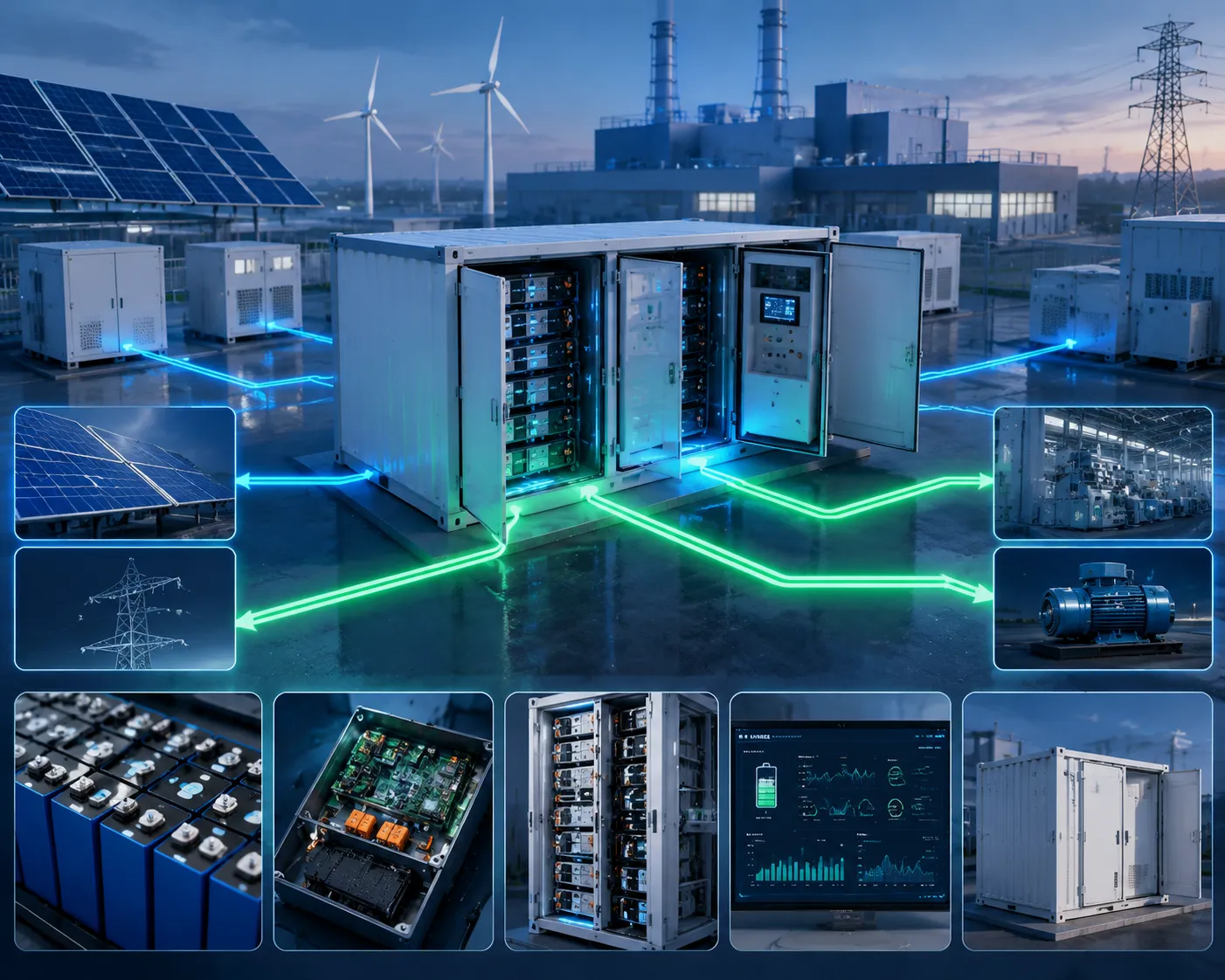
Custom ESS Engineering
Turnkey Battery Storage Engineering & Integration
Percenec Energy delivers fully integrated, multi-source energy storage capabilities tailored for complex grid conditions, harsh operating environments, and high-safety commercial deployments. Explore our core technical modules below.
Electrical Architecture & System Matching
Precision DC voltage matching from 600V to 1500V, engineered for seamless synchronization with solar PV, wind, and diesel generation.
Physical Structure & Thermal Management
Engineered liquid and forced-air cooling architectures designed to endure marine salt spray, extreme high-desert heat, and sub-zero freeze environments.
Integrated Safety & Fire Suppression
Multi-layered safety matrices fully compliant with NFPA 855 and UL 9540A, combining early off-gas detection, clean agent suppression, and aerosol containment.
Protocols & Control Software Integration
Sub-second response BMS/EMS software interconnectivity utilizing open industrial protocols for native integration with third-party controllers and SCADA.
Electrical & Topology Specifications
Percenec Energy engineers high-voltage custom battery energy storage systems designed to align seamlessly with leading power conversion systems (PCS) and demanding utility interconnect standards.
- Voltage Range: Configurable 600V to 1500V DC topologies for optimal cycle efficiency
- Microgrid Tie-In: Native multi-source synchronization for Solar PV, Wind, and Diesel Gensets
- PCS Flexibility: Broad compatibility with central, string, and hybrid bi-directional inverters
Off-the-Shelf Battery Cabinets vs. Percenec Turnkey ESS Integration
Comparing standardized off-the-shelf battery enclosures with Percenec Energy's project-specific engineering reveals significant operational advantages in cell longevity, system safety, and overall levelized cost of storage (LCOS).
| Architecture Feature | Standard Off-the-Shelf Cabinets | Percenec Custom Integrated ESS |
|---|---|---|
| DC Voltage & Topology | Fixed 1000V or 1500V DC bus options with rigid string configurations that limit inverter selection. | Flexible 600V–1500V DC topologies custom-engineered to optimize matching with selected bi-directional PCS units. |
| Thermal Management Matrix | Generic forced-air HVAC resulting in up to 5°C cell-to-cell thermal variance and accelerated degradation. | Precision glycol liquid-cooling circuits with dynamic balancing that maintains strict cell ΔT ≤ 2°C across all racks. |
| Environmental Adaptation | Standard C3 industrial paint suitable only for mild atmospheric conditions without extreme dust/salt protection. | C5-M heavy marine corrosion resistance, high-altitude thermal de-rating protection, and desert dust filtration. |
| Fire Safety Architecture | Basic single-stage sprinkler or generic aerosol discharge lacking early off-gas detection capabilities. | Multi-tiered protection integrating CO/H2 off-gas sensors, FK-5-1-12 clean agent, and automated rack isolation. |
| Protocol & Communication Stack | Proprietary closed protocol stack requiring expensive third-party translation gateways and licenses. | Native open industrial protocol stack (Modbus TCP/RTU, DNP3, IEC 60870-5-104, CAN 2.0B) for instant SCADA integration. |
Engineering Lead Time Advantage: By combining a standardized modular framework with project-specific engineering, Percenec Energy reduces battery storage integration lead times by up to 35% compared to traditional custom builds.
End-to-End Project-Specific Engineering Process
Percenec Energy enforces strict QA/QC standards across every phase of our ESS system integration process to ensure reliable performance for our commercial industrial energy storage systems under demanding field conditions.
01 1–2 Weeks Requirement Diagnosis & Feasibility
We model load profiles for optimized peak shaving load shifting, evaluate site ambient conditions, analyze grid interconnection limits, and select battery chemistry.
View Deliverables Hide Deliverables
Requirement Diagnosis & Feasibility
We model load profiles for optimized peak shaving load shifting, evaluate site ambient conditions, analyze grid interconnection limits, and select battery chemistry.
- • Load Curve Simulation Report
- • Site Ambient Risk Matrix
- • Chemistry & Topology Guide
Grid Interconnection Audit & Compliance Data Sheet.
02 2–3 Weeks Engineering Design & Simulation
Our team executes project-specific engineering with 3D spatial CAD layout, CFD thermal modeling, and short-circuit calculations.
View Deliverables Hide Deliverables
Engineering Design & Simulation
Our team executes project-specific engineering with 3D spatial CAD layout, CFD thermal modeling, and short-circuit calculations.
- • 3D Spatial CAD Drawings
- • Thermal CFD Flow Analysis
- • Electrical Topology Blueprint
Single-Line Diagram (SLD) & Short-Circuit Current Report.
03 3–4 Weeks System Assembly & Integration
We perform high-precision LFP cell matching, custom wiring harness routing, and high-voltage enclosure integration for complete battery energy storage systems.
View Deliverables Hide Deliverables
System Assembly & Integration
We perform high-precision LFP cell matching, custom wiring harness routing, and high-voltage enclosure integration for complete battery energy storage systems.
- • Matched LFP Cell Capacity Logs
- • Custom Harness Routing Map
- • Integrated BESS Containers
Build Quality Sheet & High-Voltage Torque Certification.
04 1 Week Factory Acceptance Testing (FAT)
Rigorously verifies full-power operation, insulation safety, thermal balance stability, and automated shutdown logic.
View Deliverables Hide Deliverables
Factory Acceptance Testing (FAT)
Rigorously verifies full-power operation, insulation safety, thermal balance stability, and automated shutdown logic.
- • Full-Power Load Test Audit
- • Thermal Balance Validation
- • Automated Shutdown Logs
Certified Factory Acceptance Testing (FAT) Report.
05 1–2 Weeks Field Commissioning & SAT
On-site teams handle field deployment, Site Acceptance Testing (SAT), grid compliance verification, and O&M handoff training.
View Deliverables Hide Deliverables
Field Commissioning & SAT
On-site teams handle field deployment, Site Acceptance Testing (SAT), grid compliance verification, and O&M handoff training.
- • Grid Interconnection Sign-off
- • Site Acceptance Testing (SAT)
- • O&M Staff Technical Handoff
Commercial Operation Approval & Complete O&M Pack.
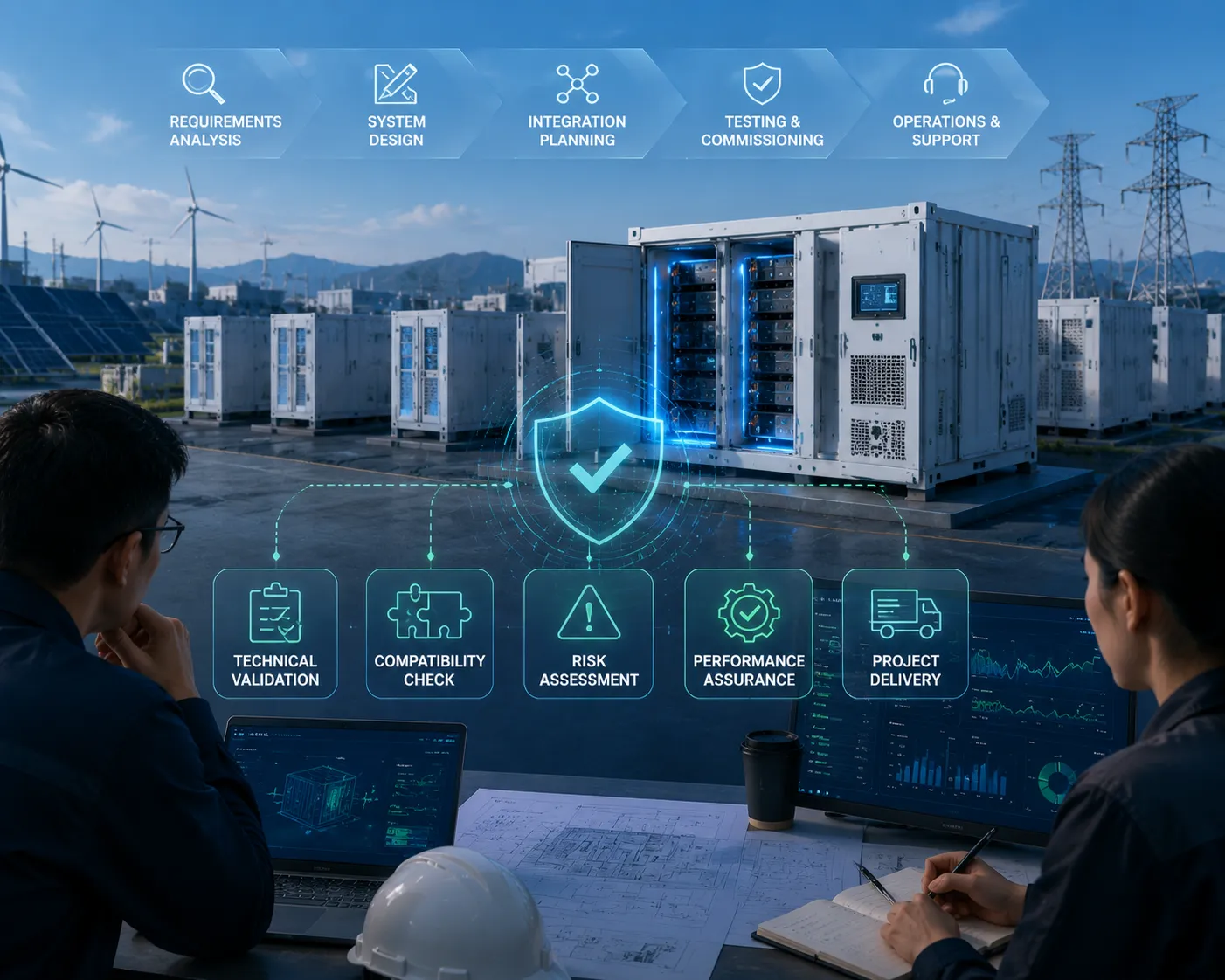
De-Risking Integration for Procurement & Engineering Teams
Our structured, milestone-driven methodology mitigates schedule risks and ensures smooth utility grid connection. Percenec Energy provides complete system traceability and verified compliance documentation across every phase of development.
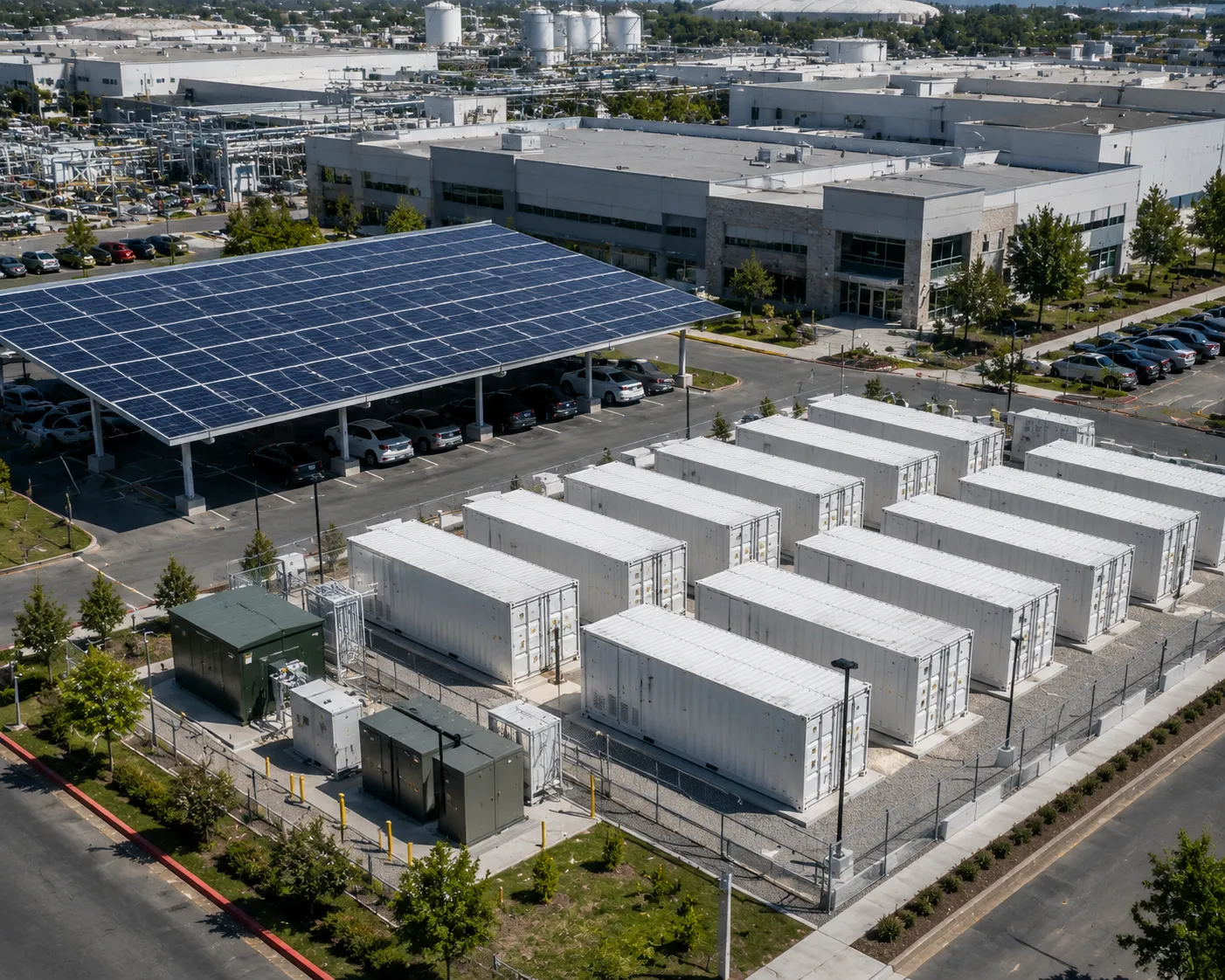
Commercial & Industrial Facilities Architecture
For manufacturing hubs, commercial plazas, and data centers, peak electrical demand charges can account for over 40% of monthly utility expenses. Percenec Energy engineers custom C&I system integration that couples high-rate LFP battery packs with fast-responding Power Conversion Systems (PCS) to mitigate demand spikes without disrupting facility operations. Explore our commercial industrial energy storage systems designed to meet diverse facility requirements.
By executing real-time load forecasting and sub-second peak shaving, our custom ESS integration enables enterprise clients to defer costly utility transformer upgrades while establishing resilient emergency backup capability (UPS grade switching under 20ms) against local grid outages. Discover tailored solutions for complex enterprise environments.
Engineering Highlights & Strategy
- ✓ Dynamic Demand Charge Shaving: Automated peak shaving algorithm syncing with facility smart meters.
- ✓ Capacity Expansion: Modular parallel architecture allowing incremental kWh expansion without full system redesign.
- ✓ Uninterruptible Backup: Automatic transfer switch (ATS) integration providing seamless transition during grid faults.
- ✓ Solar Integration: Direct DC-coupled or AC-coupled expansion for facility solar self-consumption.
| Parameter Metric | Standard C&I Specification | Percenec Integration Value Add |
|---|---|---|
| Capacity Range | 250 kWh to 2.5 MWh | Scalable Modular Cabinets |
| AC Output Voltage | 380V / 400V / 480V AC 3-Phase | Direct Low-Voltage Bus Match |
| Switching Time | < 20 Milliseconds | UPS-Grade Isolated Transfer |
| Round-Trip Efficiency (RTE) | 88% System Level | Optimized HVAC & Liquid Cooling |
Engineering Domain Expertise Across Global ESS Application Scenarios
Deploying custom ESS integration into enterprise energy infrastructure demands rigorous engineering precision. Standard off-the-shelf battery enclosures frequently force site developers to compromise on voltage matching, ambient thermal limits, or SCADA integration. Percenec Energy removes these architectural bottlenecks by taking a modular, project-specific engineering approach to every application vertical.
For commercial ESS solutions and industrial facilities, our integration engineering balances dynamic load profiles with real-time tariff structures. By matching cell discharge C-rates directly with high-efficiency Power Conversion Systems (PCS), we minimize round-trip energy losses while maintaining sub-second thermal balance inside the cabinet.
In utility-scale energy storage projects and renewable energy co-locations, the engineering challenge shifts toward grid code compliance, ramp-rate control, and active power response. Our custom BESS architectures integrate high-voltage DC bus topologies with multi-layered BMS controls that interface directly with utility SCADA via Modbus TCP, DNP3, or IEC 60870-5-104 protocols.
Whether your project requires C5-M marine-grade containerization for offshore coastal facilities or high-altitude thermal de-rating protection for mountain mining microgrids, Percenec Energy delivers turnkey custom ESS integration solutions optimized for long-term lifecycle profitability and maximum asset safety.
Architecture Matrix: Off-the-Shelf Cabinets vs. Percenec Custom Integration
| Engineering Dimension | Standard Off-the-Shelf BESS | Percenec Custom ESS Integration |
|---|---|---|
| DC/AC Voltage Matching | Fixed AC outputs (often requiring extra isolation transformers). | Custom matched to target facility bus voltage (400V - 35kV). |
| Thermal Control Strategy | Generic forced-air or standard liquid cooling with broad temp delta. | Closed-loop liquid cooling maintaining cell delta T ≤ 2°C. |
| Enclosure Rating | Basic C3/C4 anti-corrosion; limited ambient range. | ISO 12944 C5-M marine anti-corrosion & -30°C to +55°C rated. |
| SCADA & Protocol Interop | Proprietary closed software or limited Modbus registers. | Open industrial architecture supporting native Modbus, DNP3, IEC. |
Multi-Layer BESS Hardware & Controller Topology
Percenec Energy delivers fully integrated, utility-grade battery energy storage systems designed for maximum round-trip efficiency, deterministic real-time telemetry, and fail-safe multi-tier safety isolation.
Cell & Pack Subsystems
Percenec Energy utilizes high-density Lithium Iron Phosphate (LFP) chemistry paired with cell-level fusing and pack-level automated contactors. Each pack incorporates positive and negative temperature coefficient monitoring to identify micro-thermal deviations well before thermal degradation occurs.
High-Density LFP Topology
Engineered around 3.2V 306Ah prismatic cells arranged in optimized series-parallel configurations to deliver maximum volumetric energy density and 6,000+ deep discharge cycles.
Discrete Fusing & Fault Isolation
Pack-level pyrotechnic disconnect switches and individual cell-string fuses isolate electrical anomalies within 5 milliseconds, eliminating propagation risk.
Dual-Point NTC/PTC Monitoring
Embedded sensors continuously monitor thermal profiles across positive and negative terminals, streaming telemetry directly to the localized battery management system.
Structural Module Balancing
Heavy-duty anti-vibration framing withstands high seismic stresses and transport shock while maintaining strict dielectric clearances between high-voltage rails.
Subsystem Compatibility & Technical Parameters Matrix
The matrix below outlines standard technical parameters across core BESS subsystems for flexible energy storage cabinets. Every specification can be customized to meet project-specific charge/discharge profiles, local grid code requirements, or physical space limitations.
| Architecture Subsystem | Standard Hardware Spec | Custom Engineering Option | Interoperability Standards |
|---|---|---|---|
| Cell Chemistries | LFP (Lithium Iron Phosphate) 3.2V Prismatic | LTO or High-Power LFP variants | UL 1973, IEC 62619, UN 38.3 |
| DC Voltage Range | 750 VDC – 1500 VDC High Voltage Bus | Custom 600V – 1000V Low/Mid Voltage | IEC 61439, UL 9540 |
| Thermal Control | Closed-loop Glycol Liquid Cooling (ΔT ≤ 2°C) | HVAC Forced Air or Hybrid Liquid-Air | ASHRAE Thermal Guidelines |
| Fire Suppression | Off-gas Detection + Aerosol / Novec 1230 | Integrated Water Mist / Deluge Piping | NFPA 855, UL 9540A compliant |
| BMS Protocol Interface | Modbus TCP / RTU, Dual CAN 2.0B | IEC 60870-5-104, DNP3, Profinet | SunSpec, OpenADR 2.0b |
| Enclosure Rating | C4 Anti-Corrosion / IP55 Modular Cabinet | C5-M Marine Grade / 20ft & 40ft ISO Container | ISO 12944, NEMA 3R / 4X |
All system components undergo 100% Factory Acceptance Testing (FAT) before field deployment.
Custom ESS Integration Technical FAQ
Navigating custom battery energy storage system (BESS) engineering requires clear answers on component compatibility, thermal design, non-recurring engineering (NRE) costs, and regulatory compliance. Percenec Energy provides complete technical transparency from initial feasibility evaluation through factory testing and utility grid interconnection. Discover how our tailored solutions provide seamless integration from initial feasibility evaluation through factory testing.
What is the main difference between standard off-the-shelf BESS cabinets and Percenec's custom integration solutions?
Standard off-the-shelf battery energy storage system (BESS) cabinets offer pre-fixed energy capacities, static direct current (DC) bus voltages, and generic thermal management setups. While off-the-shelf options work for standardized low-demand installations, they often fail to meet stringent space constraints, specific microgrid integration needs, or extreme environmental operating conditions.
Percenec Energy delivers fully customized ESS integration tailored precisely to your project's technical requirements. Our modular customization framework spans hardware, thermal, electrical, and software engineering domains:
- Electrical Topology Optimization: Matching DC voltage ranges from 600V to 1500V DC to maximize power conversion system (PCS) efficiency and reduce conversion losses.
- Targeted Thermal Management: Engineering closed-loop liquid-cooling topologies or specialized forced-air configurations designed for high ambient temperatures (up to +55°C), high-altitude de-rating prevention, or sub-zero climates (-40°C with automated cell pre-heating).
- Flexible Component Sourcing: Integrating client-specified LFP cell chemistries, proprietary battery management systems (BMS), or specific fire suppression media into reinforced enclosures.
- Custom Structural Form Factors: Constructing compact enclosures for tight indoor mechanical rooms or heavy-duty C5-M marine-grade containerized systems built to withstand extreme salt-spray environments.
What is the typical engineering development and delivery timeline for a custom ESS project?
A tailored BESS engineering timeline typically ranges between 12 to 24 weeks from initial project diagnosis to final site delivery. Project schedules depend on customization complexity, component sourcing leads, and specialized grid compliance testing requirements.
Weeks 1–5: Load profile analysis, 3D CAD spatial design, computational fluid dynamics (CFD) thermal balance modeling, and electrical single-line diagram (SLD) approval.
Weeks 6–14: High-precision LFP cell capacity sorting, custom wiring harness routing, HVAC integration, and enclosure cabinet fabrication.
Weeks 15–18: Full-power operational load testing, insulation integrity checks, thermal balance validation, and safety shutdown simulations.
Weeks 19+: Secure transport logistics, on-site deployment guidance, Site Acceptance Testing (SAT), and operator maintenance training.
By leveraging modular component architectures and standardized internal manufacturing protocols, Percenec Energy significantly mitigates supply chain risk and reduces engineering lead times.
Can Percenec integrate customer-specified BMS, PCS, or EMS components into custom enclosures?
Yes. Percenec Energy maintains an open-architecture hardware and software strategy. We regularly integrate customer-specified components—including third-party Battery Management Systems (BMS), Power Conversion Systems (PCS), or Energy Management Systems (ems)—into our custom BESS enclosures.
Our engineering team ensures seamless protocol matching and sub-second control latency across all subsystem interfaces:
- Protocol Interoperability: Native mapping for Modbus RTU, Modbus TCP, CAN 2.0B internal buses, DNP3, and IEC 60870-5-104 for SCADA and utility grid control.
- Hardware-in-the-Loop (HIL) Testing: Rigorous pre-assembly bench testing to verify hardware communication timing and prevent data packet drops.
- Third-Party Component Sourcing: Matching customer vendor preferences while maintaining full compliance with enclosure thermal and safety limits.
How does Percenec ensure custom-integrated BESS units pass local grid codes and safety certifications?
Regulatory compliance is built into our initial CAD and electrical topologies rather than treated as an afterthought. Percenec Energy aligns custom designs directly with international and local utility safety codes:
How are BESS customization costs and non-recurring engineering (NRE) fees structured?
BESS customization costs consist of transparent bill-of-materials (BOM) hardware costs and one-time non-recurring engineering (NRE) fees. NRE expenses cover CAD spatial modeling, CFD thermal simulation, dynamic circuit design, custom harness engineering, and specialized firmware development.
Volume Amortization Options: For commercial rollouts or multi-container orders, initial NRE expenses are partially or fully amortized across production units. This significantly reduces per-unit customization overhead for enterprise procurement teams.
What warranty coverage and ongoing technical support does Percenec provide?
Percenec Energy provides industry-leading long-term backing for every custom BESS integration project. Our enterprise warranty package includes up to 10-year throughput performance guarantees covering capacity retention (e.g., 70% energy retention over 6,000 cycles).
We also offer 24/7 remote telemetry monitoring to track cell voltage balances, thermal delta variations, and insulation status in real time, preventing downtime before faults occur.