
Pre-Integrated Engineering
Why Pre-Engineered Containerized ESS Outperforms Traditional BESS Enclosures
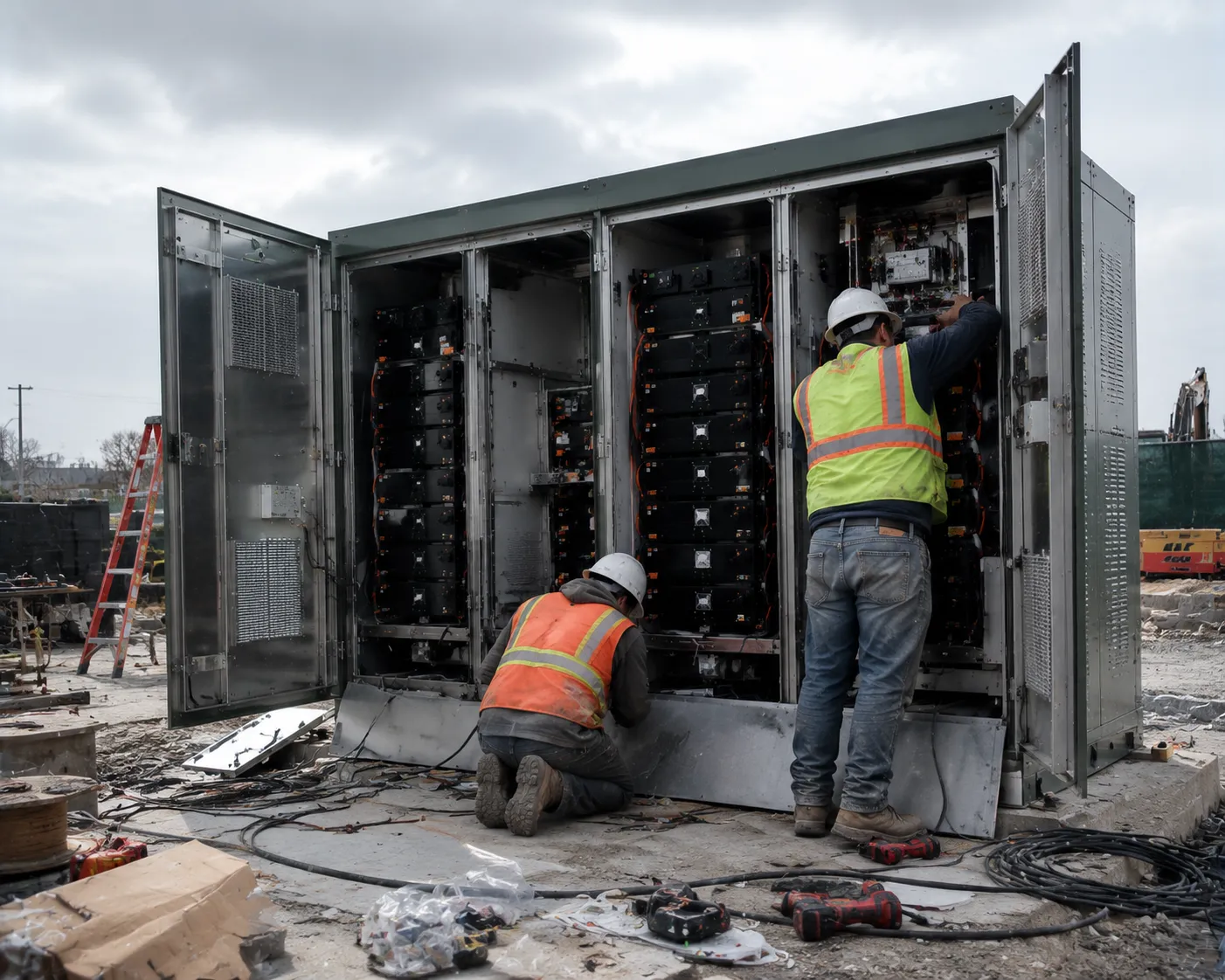
Traditional stick-built battery energy storage systems and decentralized cabinet arrays create substantial site risks: extended civil construction schedules, fragmented quality control, and unpredictable integration costs. Percenec Energy’s pre-integrated containerized energy storage systems streamline site deployment by delivering a fully assembled, factory-tested, plug-and-play energy storage system engineered for maximum energy density and immediate grid connection.
The Case Against Site-Built Battery Enclosures
Field-assembled battery enclosures depend on sequential on-site trades—civil engineering, high-voltage electrical, HVAC, and fire suppression contractors—where any single delay cascades through the entire project schedule. Field wiring and multi-vendor component matching significantly elevate the risk of wiring errors, control communication faults, and unaligned warranty terms.
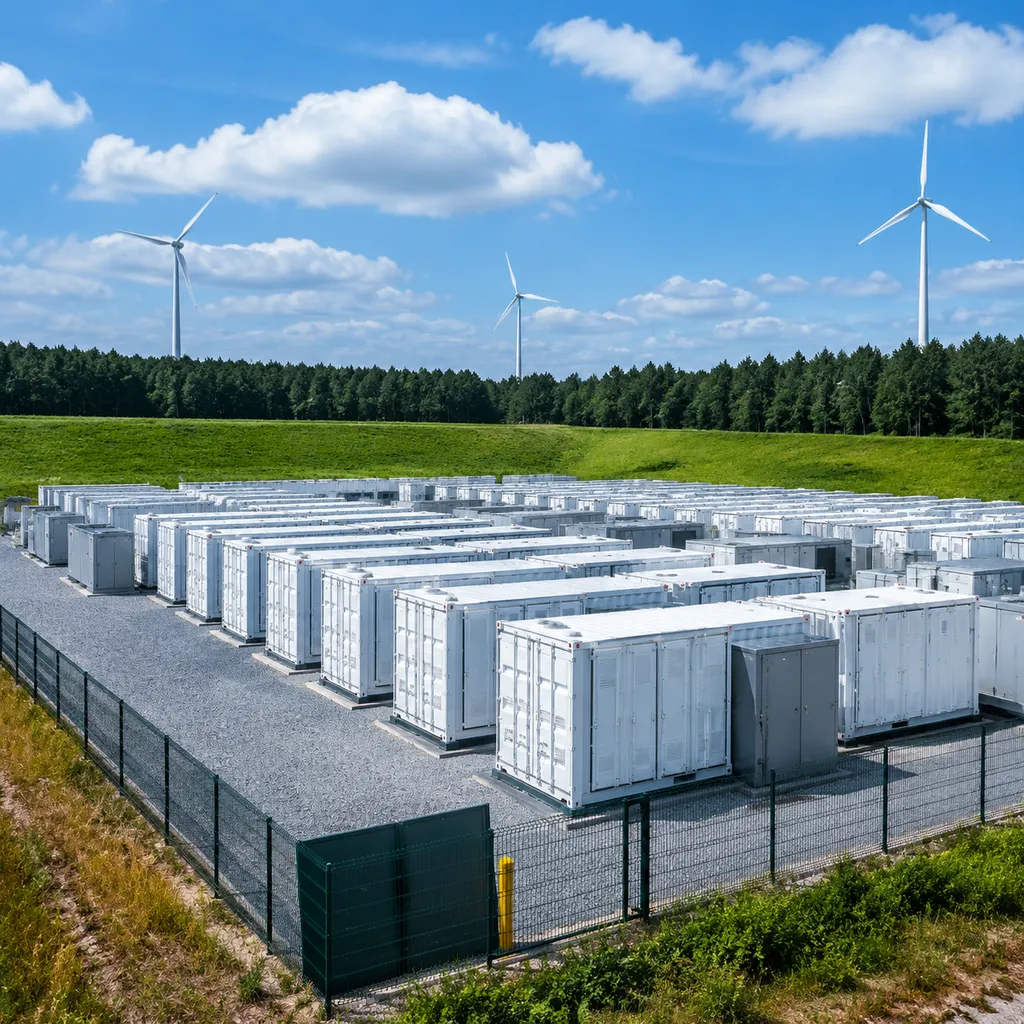
Decentralized energy storage cabinets architectures further complicate utility and industrial sites. Spreading battery string units across concrete pads requires extensive field trenching, long cable runs, and individual commissioning of every separate enclosure. This increases labor overhead while leaving system-level thermal and electrical dynamics untested until initial site energization.
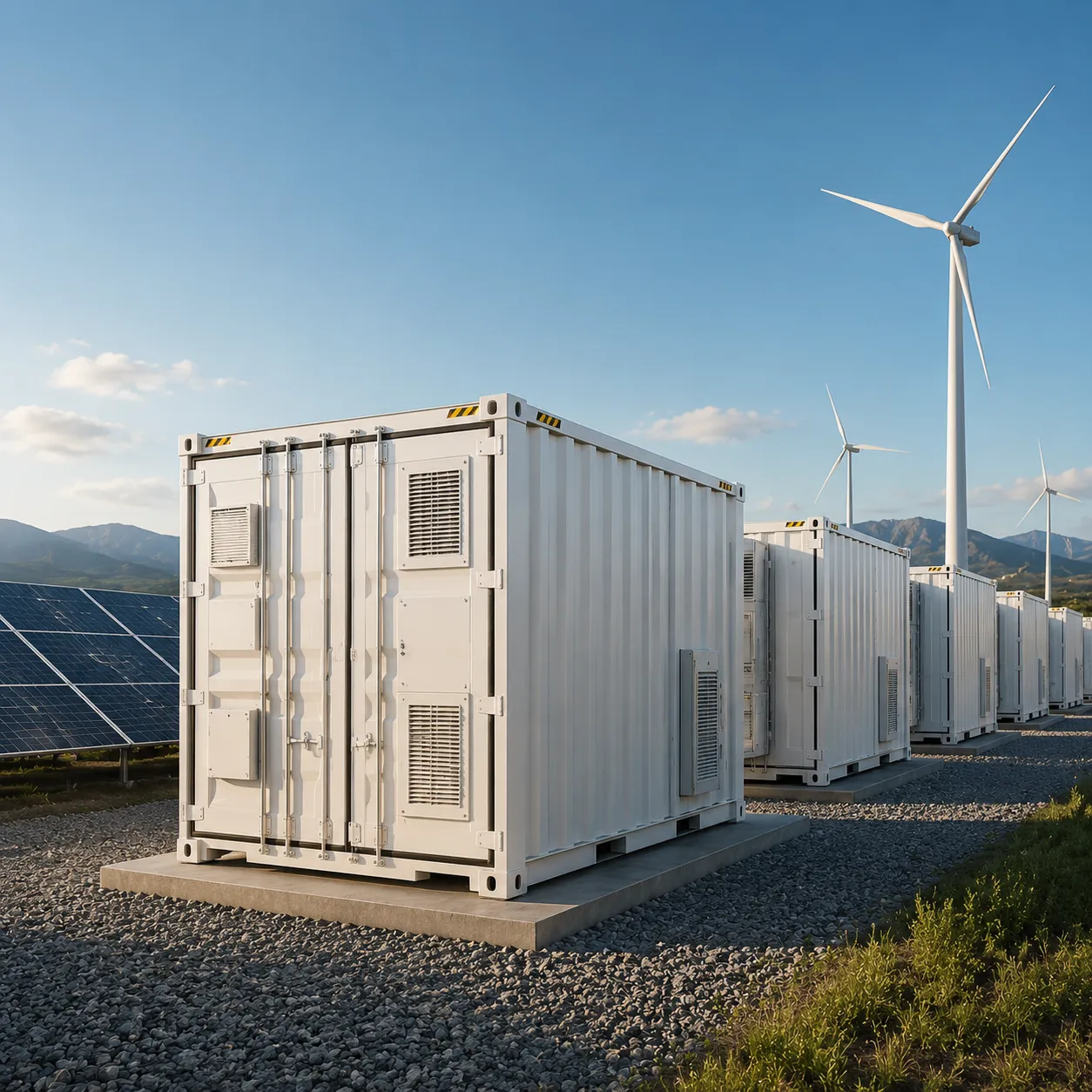
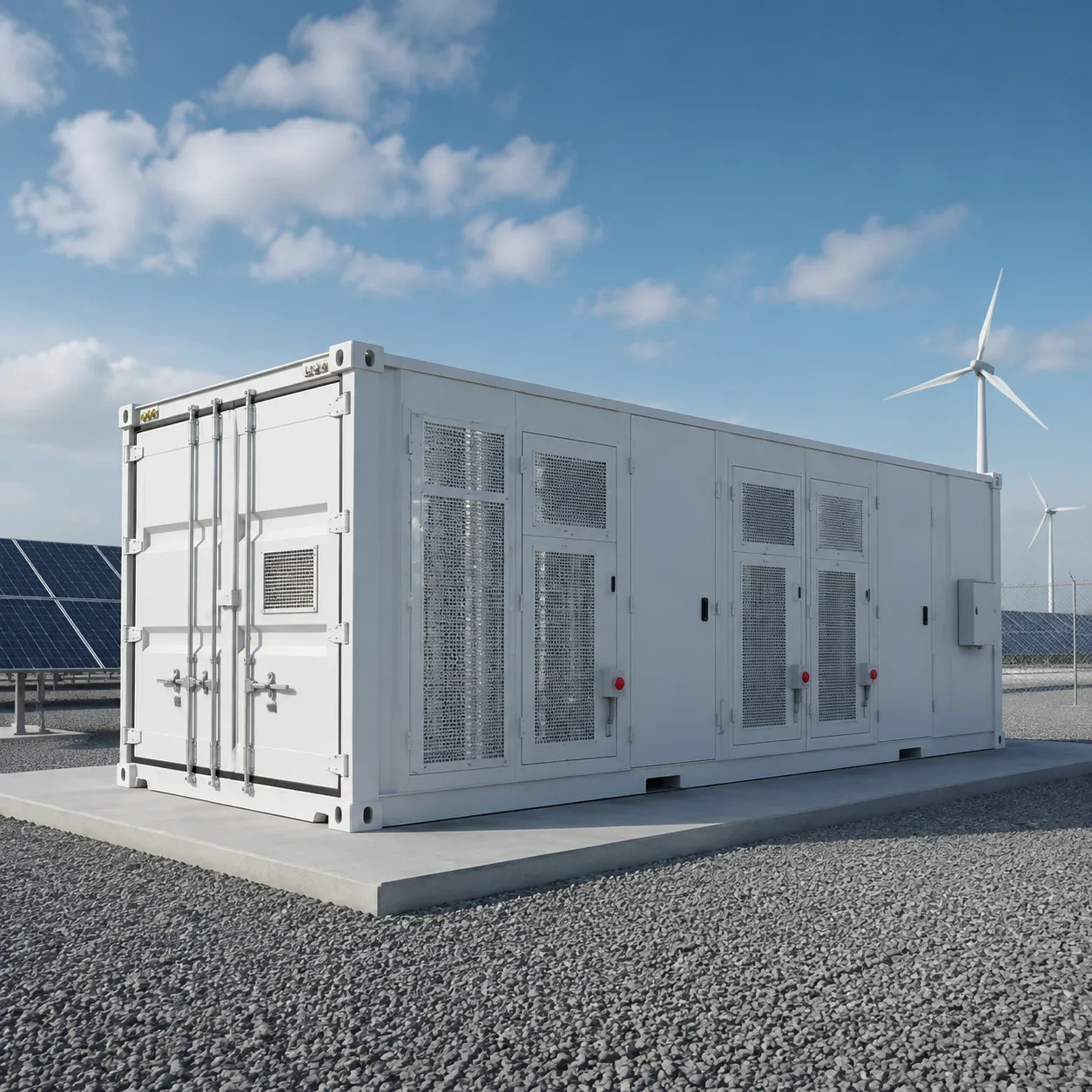
A factory-preassembled modular ESS container addresses these vulnerabilities at the manufacturing level. By integrating LFP battery racks, power conversion systems (PCS), multi-tier BMS, smart EMS, precision thermal management, and safety systems into a unified ISO shell, field work is reduced strictly to foundation setting, AC grid landing, and final communication tie-ins.
Four Core Competitive Advantages
Plug-and-Play Integration
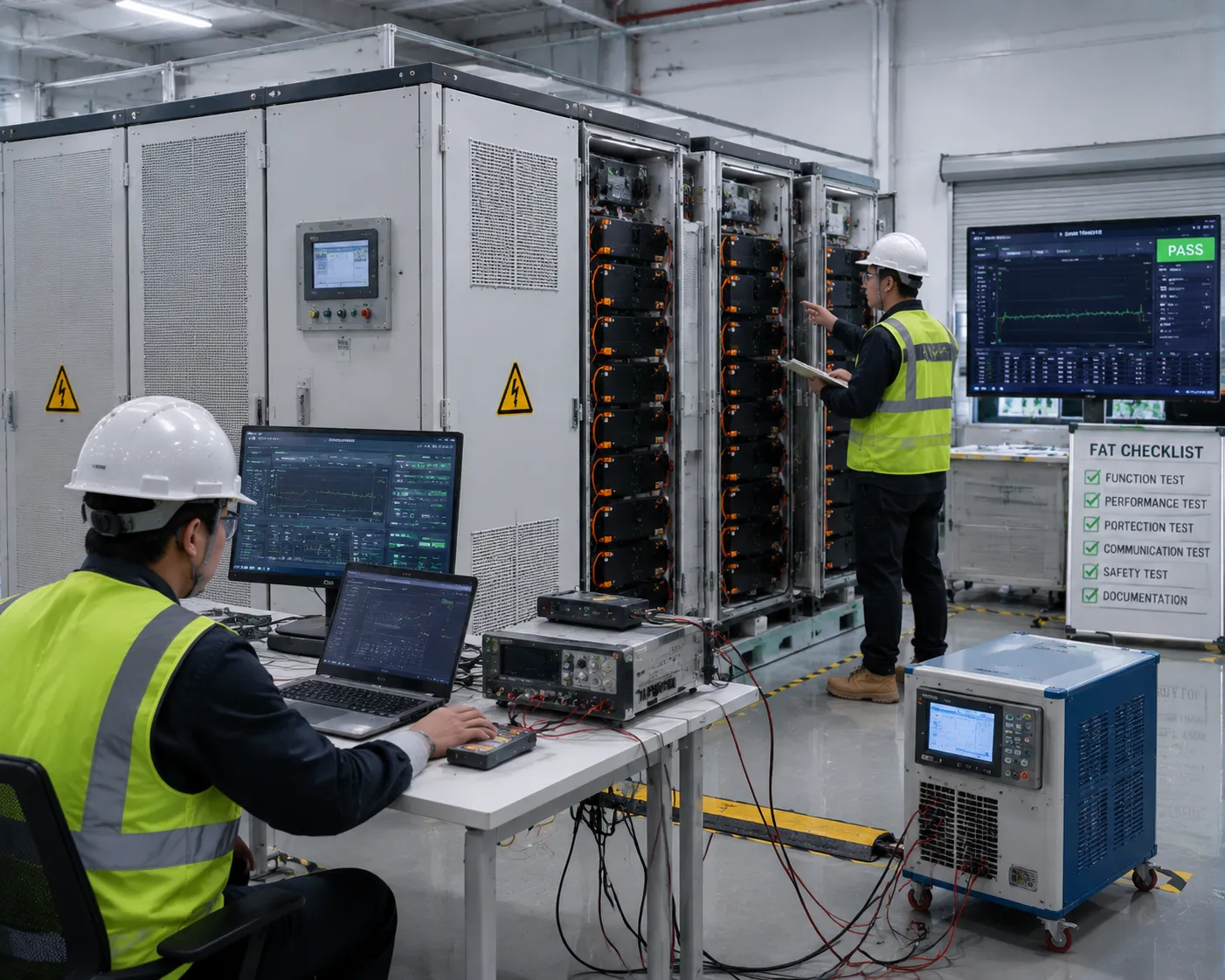
Factory assembly of battery racks, PCS, BMS, EMS, HVAC, and fire suppression units with full-power Factory Acceptance Testing (FAT) completed before dispatch, delivering true plug-and-play energy storage readiness.
- ✓ Requires only standard AC/DC grid interconnection on-site
- ✓ Eliminates multi-vendor field wiring and integration errors
- ✓ Shortens site commissioning timeframes by up to 60%
Modular & Scalable Architecture
Designed around a standardized modular ESS container footprint that supports multi-unit parallel clustering, allowing seamless expansion from single-container MWh deployments to 100MWh+ utility-scale storage farms.
- ✓ Standardized DC/AC bus links between containerized units
- ✓ Phased capacity expansion with minimal site disruption
- ✓ Flexible configuration for C&I microgrids and utility grids
All-Weather Industrial Durability
Built inside heavy-duty ISO shipping containers with anti-corrosion treatments, delivering an IP54/IP55 rated BESS structure optimized for outdoor deployment in arctic cold, high heat, salt mist, and desert environments.
- ✓ Wide operating range from -30°C to +55°C ambient temperatures
- ✓ C5-M marine anti-corrosion coating options available
- ✓ High-altitude insulation and sand-proof filtration packages
Comprehensive Multi-Level Safety
Multi-layer hazard protection engineered to NFPA 855 and UL standards, combining pack-level and container-level gas and liquid fire suppression, thermal runaway sensors, and structural deflagration venting.
- ✓ Dual gas (NOVEC 1230/FK-5-1-12) and water spray fire suppression
- ✓ Early thermal runaway detection at cell, pack, and rack levels
- ✓ Engineered deflagration explosion pressure relief panels
Pre-Integrated Container vs. Traditional Site-Built BESS
| Evaluation Criteria | Percenec Pre-Integrated Container | Traditional Site-Built Enclosure |
|---|---|---|
| System Integration | Factory-assembled; all subsystems pre-wired and digitally integrated | Multi-trade field installation; high coordination and wiring error risk |
| Quality Assurance | 100% full-power FAT under simulated duty cycles prior to dispatch | First integrated system test occurs on-site during live energization |
| Civil & Site Works | Minimal concrete foundation pad and main grid interconnection | Extensive building foundations, internal conduits, and trenching |
| Deployment Schedule | Weeks from on-site delivery to full commercial energization | Months of sequential construction, wiring, and field testing |
| Scalability | Modular parallel expansion without modifying central architecture | Capacity expansion requires new civil engineering and re-design |
| Protection Standard | Standardized IP54/IP55 rated BESS with C5-M anti-corrosion options | Varying ingress quality dependent on field labor and local trades |
| Fire Protection | Multi-tier pack/container suppression; factory-installed & tested | Separate fire vendor installation; unvalidated system integration |
Factory Acceptance Testing Eliminates On-Site Risk
Every Percenec containerized BESS undergoes full-power Factory Acceptance Testing (FAT) before leaving our manufacturing facility. Our testing protocols simulate rigorous operational duty cycles—including peak discharge rates, thermal management stresses under load, BMS safety trips, and EMS response times—ensuring every subsystem performs as a cohesive unit.
For EPC contractors, system integrators, and project developers, FAT provides a fully documented performance baseline. Field commissioning transforms from a troubleshooting process into a routine validation exercise, mitigating schedule slippage and preventing costly delays during utility grid compliance testing.
What Plug-and-Play Energy Storage Actually Means on Site
Before Delivery
All LFP battery packs are factory-torqued into racks, PCS inverters are connected to the main DC bus, BMS and EMS software are calibrated, and environmental thermal and dual fire systems are charged and tested.
On-Site Work
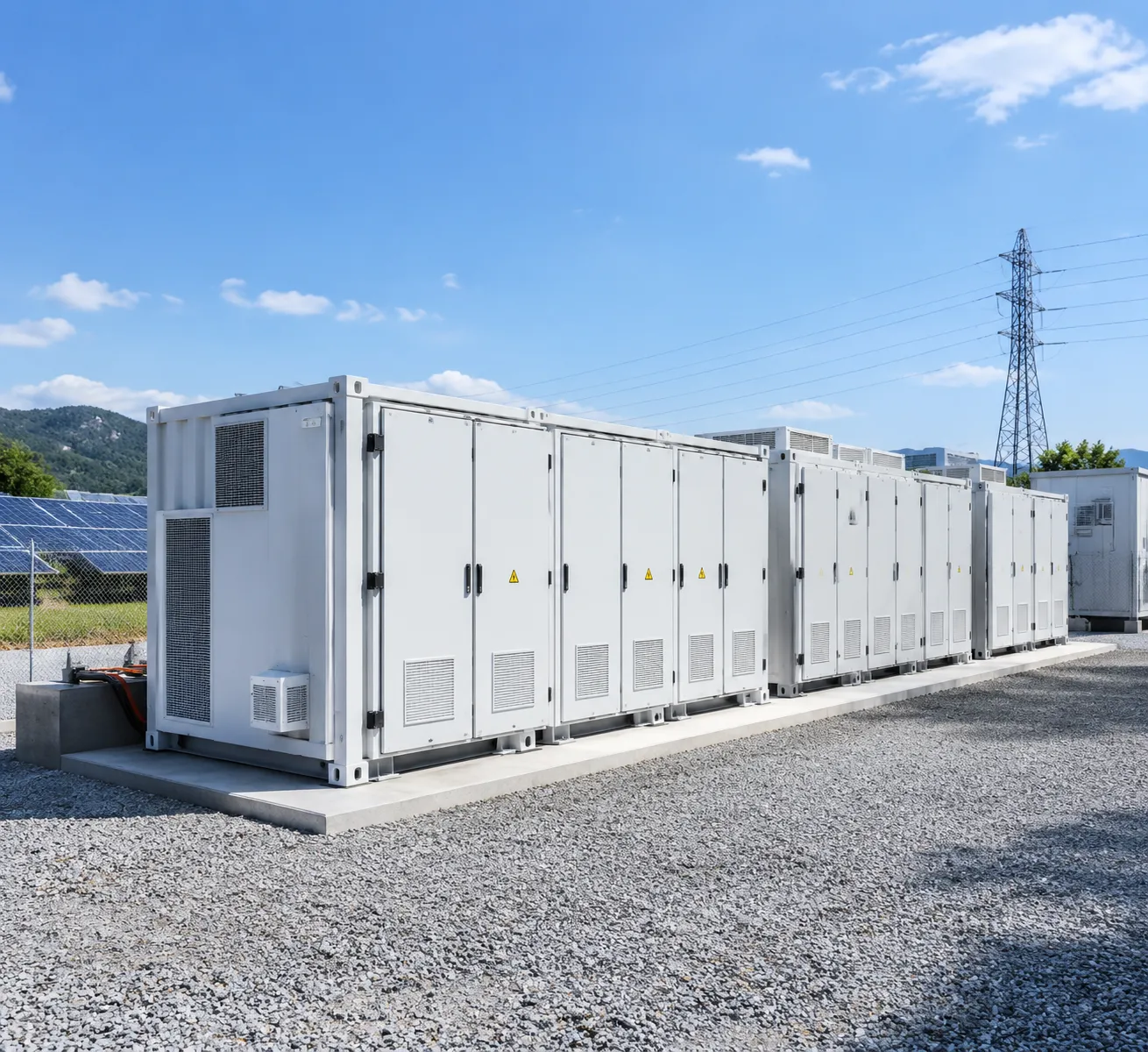
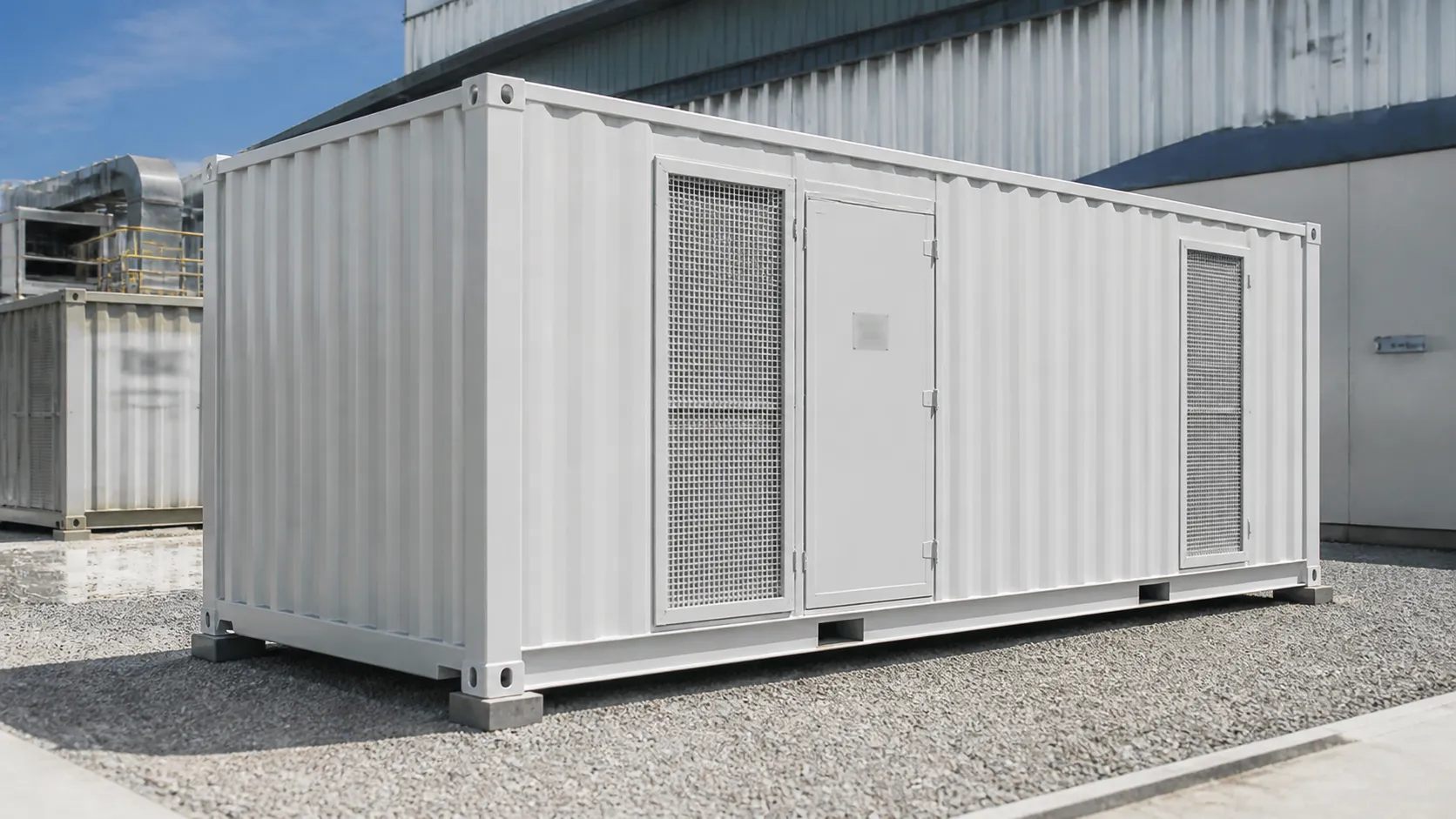
Set the modular ESS container onto concrete foundations, land the main AC/DC power cables, establish fiber or Ethernet connection to site SCADA, and execute preliminary pre-energization verification steps.
After Energization
The container immediately initiates normal charge/discharge cycles based on pre-configured operating parameters. Integrated EMS starts remote telemetry reporting directly to your control center without complex field setup.
Modular ESS Container Architecture for Utility-Scale Growth
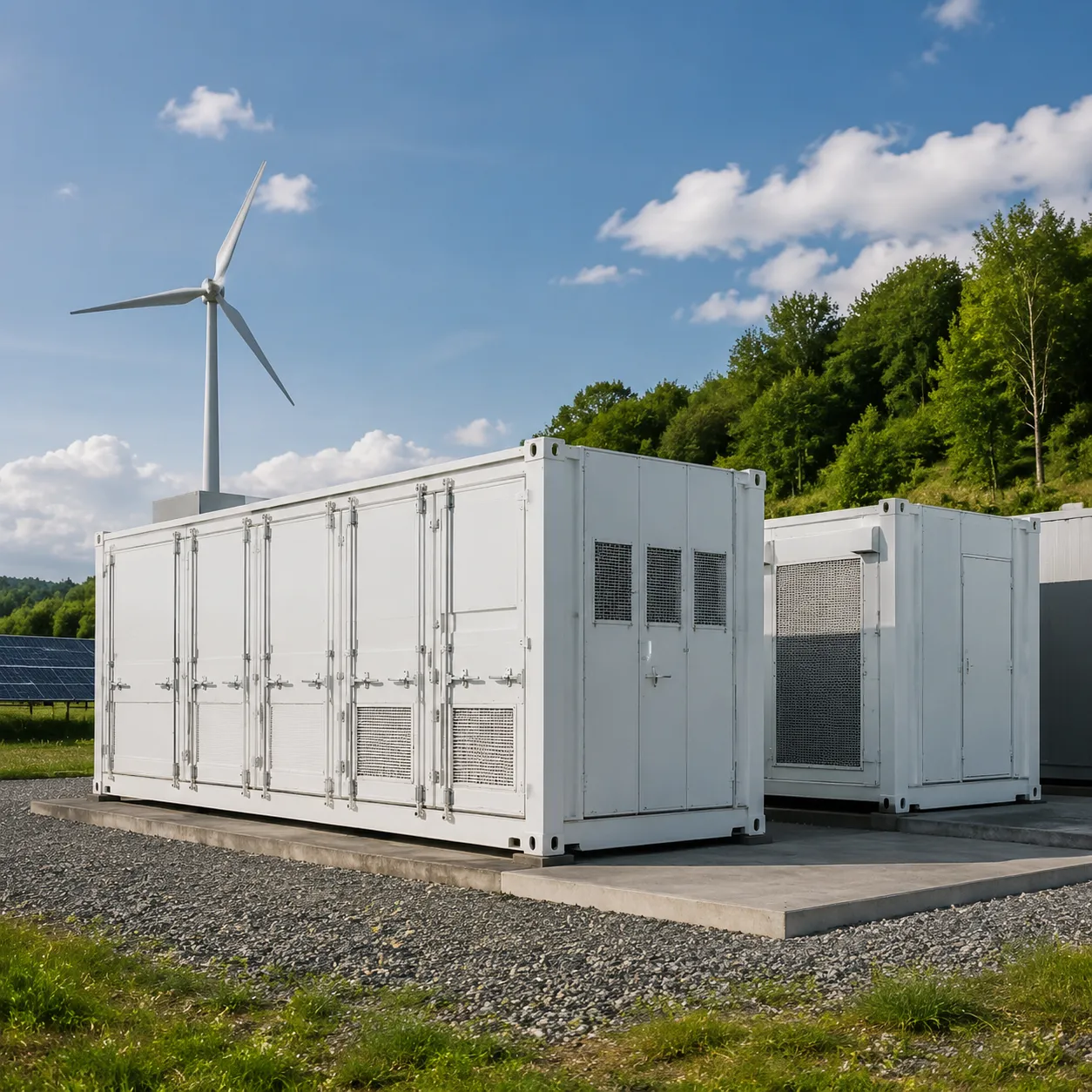
The architecture of Percenec containerized storage systems is optimized for long-term project flexibility. Developers can deploy an initial phase to meet immediate grid or commercial capacity requirements and seamlessly scale up to 100MWh+ by adding standardized container units in parallel without modifying central substation control designs. Discover how our commercial industrial energy storage systems provide modular adaptability for diverse operational needs.
Engineered to Reduce Project Risk at Every Stage
Our integrated containerized BESS solutions reduce installation complexity and engineering risks for global project developers. From factory-controlled production and full-power FAT testing to rapid field deployment, Percenec Energy delivers reliable energy storage assets with predictable performance and lifecycle value.
Standard BESS Product Lines & Specification Comparison
Percenec Energy provides both standard 20ft and 40ft containerized storage units built with high-safety LFP technology. Explore our complete portfolio of products to evaluate structural models against your specific energy density, site conditions, and spatial constraints.
20ft Liquid-Cooled BESS Container
Optimal for commercial & industrial energy storage systems, peak shaving, microgrids, and space-constrained solar-plus-storage co-location. Integrates advanced liquid cooling for long cycle life and thermal safety.
- Mid-capacity 20ft energy storage container engineered for compact site footprints.
- High-efficiency liquid cooled containerized ESS technology for uniform thermal management.
- Factory-integrated fire suppression and IP55 outdoor protective enclosure.
40ft High-Capacity BESS Container
High-density configuration designed for front-of-the-meter utility substations, large-scale wind/PV smoothing, and total grid stability services.
- Utility-grade 40ft BESS container built for large power generation sites.
- Configurable thermal management with liquid or forced air cooling options.
- High-density Tier-1 LFP architecture with multi-tier safety control logic.
Technical Specification Matrix
Engineering parameter breakdown for standardized 20ft and 40ft containerized storage platforms.
| Specification Parameter | 20ft Liquid-Cooled Container | 40ft High-Capacity Container |
|---|---|---|
| Rated Energy Capacity | 2.0 MWh - 3.44 MWh | Up to 5.0+ MWh |
| Power Rating Range | 1.0 MW - 1.72 MW | 2.5 MW - 3.0 MW |
| Thermal Management | Precision Liquid Cooling | Liquid or Forced Air Cooling |
| Battery Cell Technology | High-Safety LFP (LiFePO4) | High-Safety LFP (LiFePO4) |
| Protection Level | IP55 / NEMA 3R Enclosure | IP55 / NEMA 3R Enclosure |
| External Dimensions (L x W x H) | 20 ft x 8 ft x 9.5 ft | 40 ft x 8 ft x 9.5 ft |
| Approximate Weight | 24,000 kg - 30,000 kg | 42,000 kg - 50,000 kg |
| Primary Applications | C&I Peak Shaving, Microgrids, PV Co-location | Utility Sub-stations, Wind/PV Smoothing, Grid Stability |
CAD Drawings & Single-Line Diagrams
Need technical documentation for site layout design? Request customized Single-Line Diagrams (SLD) and 3D CAD dimensional files directly from our engineering team.
Integrated Subsystem Architecture
Percenec containerized BESS solutions unite all core hardware and software components into a single ISO enclosure. This pre-engineered architecture eliminates integration gaps common in site-built projects, delivering a measurably safer, higher-performing solution for utility-scale grid support, heavy industrial energy management, and renewable integration.
Tier-1 LFP Battery Racks and 3-Tier BMS
Percenec containerized systems leverage Tier-1 LiFePO4 (LFP) chemistry, recognized globally for superior thermal stability, long cycle life, and high abuse tolerance. Modular rack designs maximize volumetric energy density while ensuring full operational access. Advanced BMS and EMS integration ensures real-time cell-to-grid monitoring across three distinct architecture levels:
- Cell-level BMS: Continuously monitors individual cell voltage, internal resistance, and temperature, initiating instant isolation upon detecting any parameter deviation.
- String-level BMS: Dynamically balances current flow across parallel battery strings, eliminating capacity drift and preventing uneven localized aging.
- System-level BMS: Aggregates State of Charge (SOC), State of Health (SOH), and diagnostic data for master EMS control and cloud telemetry.
Engineered for 6,000 to 8,000 cycles at 80% DOD, supporting a 15 to 20-year operational lifecycle under heavy daily cycling.
Smart EMS and Grid-Interactive PCS
The central Energy Management System acts as the intelligent control core of the BESS enclosure. Through direct BMS and EMS integration, it executes complex dispatch algorithms — including peak shaving and load shifting, frequency response, microgrid balancing, and black start — driven by live grid signals and predictive load analytics.
- Bi-directional PCS: High-efficiency Power Conversion Systems deliver millisecond-level switching and sub-100ms full-power response for primary frequency control.
- Global grid compliance: Fully adaptable to IEEE 1547, IEC 61850, and regional grid code specifications throughout North American, European, and APAC energy markets.
- Utility SCADA telemetry: Industrial communication protocols including Modbus TCP, DNP3, and IEC 61968 ensure effortless integration with third-party EMS platforms.
Hardware-in-the-loop validation ensures seamless operation between BMS, EMS, and PCS prior to shipping.
Precision Liquid Thermal Management
Effective temperature regulation is critical to maximizing battery health and discharge capabilities. Percenec's thermal management BESS solution utilizes active closed-loop liquid cooling plates directly coupled to cell modules, keeping inter-cell thermal variance within ±2°C across variable discharge profiles.
- Up to 20% lifespan extension: Uniform cooling prevents hotspots, delivering significantly longer service life than conventional forced-air systems.
- Extreme weather operability: Integrated liquid heating loops enable rapid sub-zero pre-conditioning for reliable performance down to -30°C ambient temperatures.
- Leak containment & safety: Dual-point pressure monitoring, anti-corrosive coolants, and automated fluid shutoff valves guarantee complete electrical isolation.
High-efficiency chiller units reduce parasitic HVAC power consumption by up to 30–50% compared to air-cooled designs.
Active Multi-Stage Fire Suppression
High-capacity lithium installations demand proactive defense mechanisms. Percenec fire suppression energy storage architecture combines multi-tier detection, clean-agent suppression, and mechanical relief compliant with NFPA 15, NFPA 855, and NFPA 2001 standards to contain thermal events rapidly.
- Early off-gas detection: Combustible gas and multi-spectrum optical sensors detect electrolyte off-gassing 5 to 15 minutes before thermal runaway occurs.
- Clean-agent primary gas flooding: NOVEC 1230 (FK-5-1-12) automatically deploys upon confirmed signal, extinguishing active flames without residue or water damage.
- Secondary water deluge interface: Pre-installed external manifold piping allows emergency personnel to supply water directly for secondary cooling.
- Structural deflagration relief: Roof-integrated explosion relief panels vent excess pressure upward, protecting surrounding infrastructure and personnel.
Factory-Integrated and Factory-Tested
Plug & Play IntegrationAll core subsystems — Tier-1 LFP racks, 3-tier BMS, smart EMS, bi-directional PCS, liquid thermal management, and active fire suppression — are precision-assembled and factory-tested inside standard ISO enclosures at Percenec manufacturing facilities. These fully integrated battery energy storage systems undergo full-capacity Factory Acceptance Testing (FAT) under real-world electrical and thermal loads to guarantee immediate plug-and-play operation upon arrival on site.
±2°C
Max inter-cell temperature variance
8,000+
Cycles at 80% DOD
20%
Longer lifespan vs. air cooling
NFPA
15 & 2001 compliant fire suppression
International Safety Standards and Certifications
Percenec containerized BESS products undergo rigorous component- and system-level testing to meet global grid interconnection, permitting, and insurance compliance benchmarks. For smaller-scale commercial applications, explore our modular commercial industrial energy storage systems, while our comprehensive certification packages streamline regulatory approval for EPC contractors and project developers worldwide.
UL 9540
Energy Storage System Safety
UL 9540A
Thermal Runaway Fire Propagation
IEC 62619
Secondary Lithium Cell Safety
CE Mark
European Conformity
UN 38.3
Dangerous Goods Transport
NFPA 855
ESS Installation Standard
Liquid Cooling vs. Forced-Air Cooling in Containerized BESS
Thermal management is the single most critical engineering factor determining long-term ROI, battery degradation rates, and safety in containerized energy storage. The analysis below highlights why Percenec specifies advanced liquid thermal management BESS technology across all standard container product lines.
| Performance Parameter | Liquid Cooling (Percenec Standard) Standard | Forced-Air Cooling |
|---|---|---|
| Inter-Cell Temperature Variance | ≤ ±2°C across all cells via direct liquid cold plates | ±5°C to ±8°C, creating thermal hotspots and uneven cell wear |
| Container Energy Density | Up to 5MWh+ energy capacity in standard 20ft/40ft ISO footprints | Limited to ~2.5MWh - 3.4MWh due to required HVAC airflow ducts |
| Parasitic HVAC Power Consumption | 30% to 50% lower auxiliary energy consumption | High continuous blower power demand during peak ambient heat |
| Operating Lifespan Extension | Up to 20% longer cycle life (8,000+ cycles at 80% DOD) | Accelerated capacity degradation caused by uneven thermal stress |
| Enclosure Ingress Protection | Fully sealed IP55 / NEMA 3R compartment; dust and salt fog isolated | Requires continuous ambient air exchange; higher filter clogging risks |
Utility-Scale & Industrial Applications for Containerized BESS
Percenec Energy manufactures engineered containerized energy storage systems designed for critical front-of-the-meter (FTM) and behind-the-meter (BTM) deployment. Built with high-density LFP chemistry, intelligent liquid cooling, and multi-tier safety controls, our turnkey BESS enclosures deliver proven operational reliability across grid support, renewable smoothing, heavy industrial load management, and resilient microgrids. Discover how our tailored solutions fit your specific grid or industrial needs.
Our containerized BESS solutions power utility and industrial sites across demanding markets globally.
Utility-Scale Grid Support & Peak Shaving
Utility operators and independent power producers (IPPs) utilize our high-capacity 20ft and 40ft BESS containers to reinforce transmission networks. Tailored specifically for utility scale energy storage projects, these grid-interactive architectures provide sub-second dynamic response times to stabilize frequency and voltage under unpredictable load shifts.
Sub-Second Frequency Response: Delivers rapid grid support BESS services including Fast Frequency Response (FFR), Primary Frequency Response (PFR), and spinning reserve to prevent blackout events.
Black Start & Reserve: Provides autonomous black-start energization and reactive power support to re-energize localized distribution feeders following regional network outages.
Transmission Congestion Relief: Absorbs excess off-peak generation and injects power during peak demand intervals to eliminate grid bottlenecks and defer substation upgrades.
Renewable Energy Integration & Ramp Smoothing
Deploying a high-density renewable energy integration container alongside utility solar PV or wind farms eliminates output volatility. Intelligent system controllers dynamically buffer sudden cloud-induced drops and wind velocity shifts to export clean, dispatchable electricity.
Dynamic Ramp-Rate Control: Smooths high-frequency power ramp variations to satisfy stringent grid-code requirements enforced by transmission operators.
Curtailment Mitigation: Captures unassigned peak solar and wind generation, storing low-cost clean energy for high-margin discharge during peak tariff hours.
Firm Generation Capacity: Converts non-dispatchable renewable energy assets into bankable, predictable capacity backed by reliable Power Purchase Agreements (PPAs).
Heavy Industrial Power Management
Commercial and industrial facilities deploy commercial-industrial-energy-storage-systems to drastically lower utility electricity bills. By suppressing peak demand tariffs and delivering seamless backup power, our liquid-cooled containers protect heavy manufacturing lines and critical loads.
Demand Charge Mitigation: Automatically discharges during heavy machinery startup to cap site peak power draws and significantly reduce monthly demand charges.
Time-of-Use Arbitrage: Charges battery racks using low-cost off-peak power and supplies site loads during peak electricity rate pricing intervals.
Emergency Industrial Backup: Serves as high-capacity emergency backup power for steel processing, chemical plants, and hyperscale data center facilities.
Island & Remote Microgrid Systems
In remote mining regions, islanded communities, and off-grid facilities, containerized BESS installations integrate directly with solar arrays and diesel generators. Intelligent Energy Management Systems (EMS) optimize generation assets to build resilient microgrid networks.
Diesel Displacement: Replaces low-efficiency diesel generator operating hours, cutting fuel consumption and transport logistics by up to 60%.
Grid-Forming Inverters: Establishes stable local voltage and frequency references without requiring continuous spinning thermal generation.
All-Weather Protection: Heavy-duty IP55/NEMA 3R ISO container enclosures withstand saline sea air, airborne dust, and extreme temperatures from -30°C to +55°C.
Standardized ISO Footprints for Rapid On-Site Integration
By embedding Tier-1 LiFePO4 battery racks, dynamic Power Conversion Systems (PCS), closed-loop thermal liquid cooling, and multi-stage clean-agent fire suppression within standard 20ft and 40ft ISO containers, Percenec Energy simplifies complex B2B energy storage deployments worldwide.
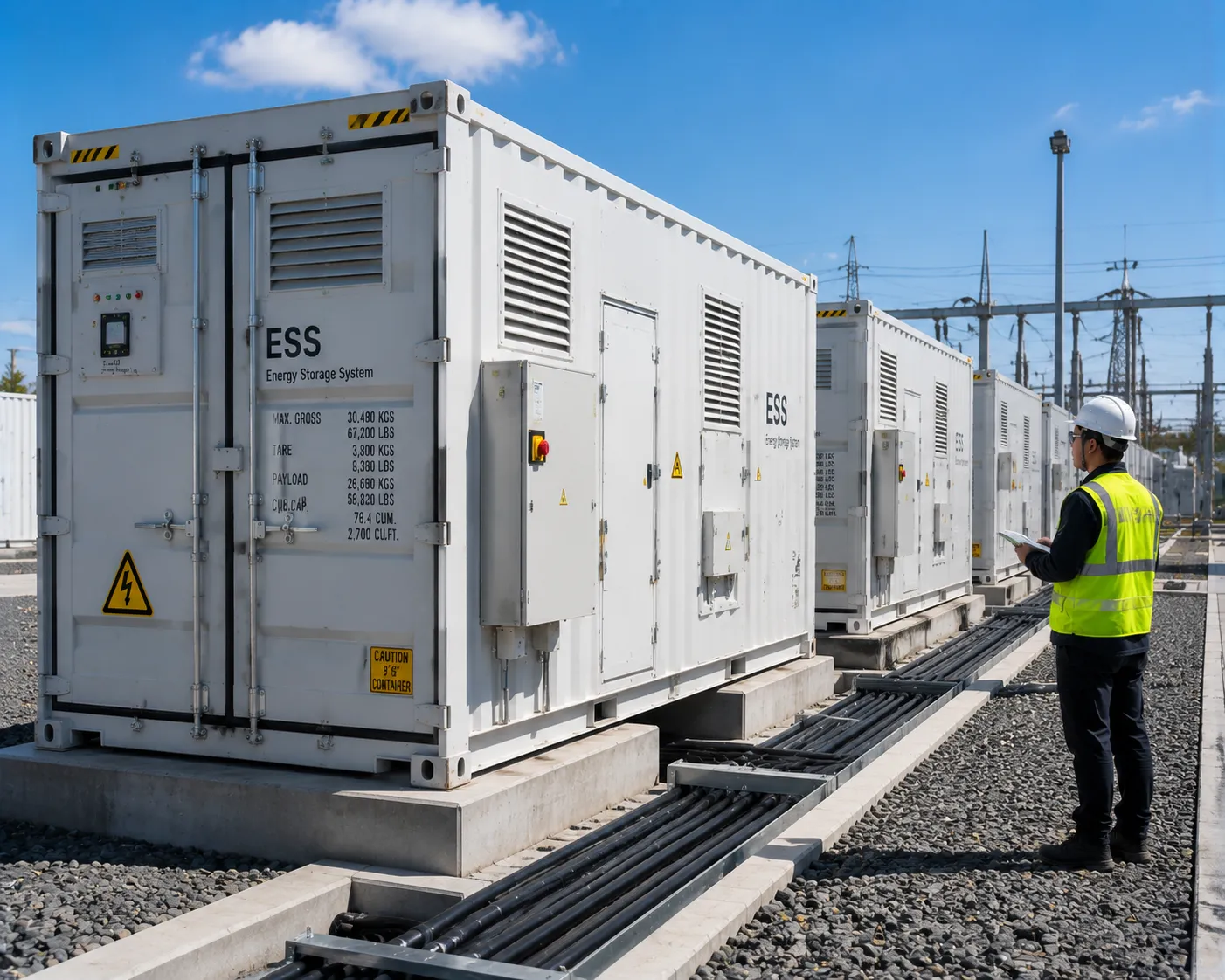
End-to-End B2B Project Delivery Workflow
Percenec Energy delivers turnkey ESS engineering and a streamlined BESS deployment workflow, supporting containerized storage projects from feasibility through grid commissioning.
Consultation & Load Sizing
In-depth technical assessment of electrical interconnections, operational duty cycles, ambient site conditions, and utility grid codes. We evaluate facility load dynamics to ensure precise system dimensioning.
- Interconnection & capacity analysis
- Operational duty cycle profiling
- Ambient site climate evaluation
Custom Engineering & System SLD
Comprehensive mechanical and electrical design, container layout drafting, auxiliary systems mapping, and Single Line Diagram (SLD) generation.
- Mechanical & electrical drafting
- BMS, EMS & fire system mapping
- Custom Single Line Diagram (SLD)
Factory Integration & FAT
Complete factory pre-assembly and full-power Factory Acceptance Testing (FAT) under simulated load conditions prior to final enclosure sealing.
- Pre-shipment enclosure integration
- Full-power simulated FAT testing
- Pre-seal quality verification
Global Logistics & Commissioning
Certified dangerous goods ocean freight handling, precision site placement, AC/DC tie-in guidance, and grid-compliance commissioning.
- UN38.3 & MSDS ocean logistics
- On-site placement & tie-in support
- Grid synchronization & testing
De-Risking BESS Deployment Through Factory Acceptance Testing
Executing full-power Factory Acceptance Testing (FAT) under simulated operating conditions eliminates field uncertainty. Percenec Energy ensures complete battery energy storage systems, liquid cooling loops, fire suppression systems, and controls operate seamlessly before arriving on site.
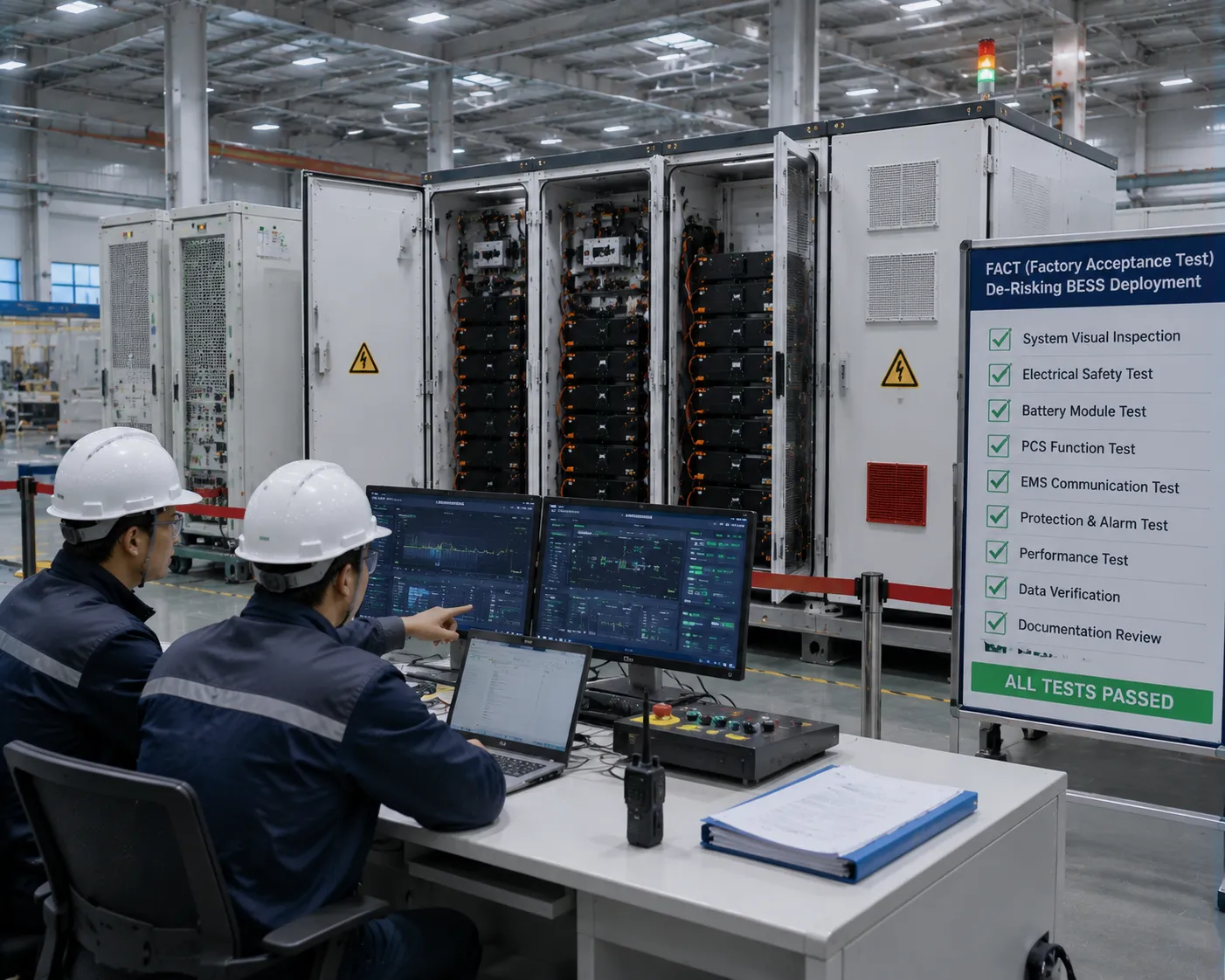
Turnkey ESS Engineering
Fully integrated BESS design, custom single line diagrams, and containerized manufacturing built for your project specs.
Fast-Track Commissioning
Accelerated field synchronization backed by comprehensive pre-seal factory validation and pre-commissioned controls.
Grid Code Compliance
Systems engineered to fulfill strict utility interconnection standards, frequency response rules, and safety mandates globally.
Frequently Asked Questions and Compliance Guidance
Navigating utility-scale energy storage procurement requires total clarity regarding safety certifications, long-term performance metrics, international freight logistics, and overall project cost structures. Percenec Energy engineers adhere to stringent global standards to guarantee seamless ocean shipping, maximum asset operational lifespan, and transparent cost of ownership for project developers, utilities, and EPC contractors worldwide. Discover how our comprehensive range of battery energy storage systems supports long-term reliability.
15 to 20 Year Operational Lifespan
Engineered for long-term utility asset management using Tier-1 LFP chemistry and closed-loop thermal management to preserve cell structural integrity.
CSC Certified ISO Freight Shipping
Standardized 20ft and 40ft high-cube footprints compliant with UN38.3 and MSDS rules for streamlined dangerous goods maritime transit.
UL 9540 and NFPA 855 Compliance
Unit-level UL 9540A thermal runaway propagation testing combined with active multi-stage clean agent gas fire suppression systems.
Core Technical and Commercial Procurement Answers
What is the typical operating lifespan and cycle durability of Percenec containerized BESS?
Built with premium Tier-1 Lithium Iron Phosphate (LiFePO4) cells, our systems achieve an exceptional BESS container lifespan exceeding 6,000 to 8,000 cycles at 80% Depth of Discharge (DOD). Under standard daily charge and discharge operational profiles, this delivers a projected asset service life of 15 to 20 years.
To maximize cell longevity and prevent localized thermal degradation, Percenec Energy integrates precision closed-loop liquid thermal management. This architecture maintains inter-cell temperature variance within 2°C across all battery racks. Consequently, capacity degradation profiles remain stable over multi-decade operational horizons, ensuring bankability for utility-scale project owners.
How are containerized energy storage systems shipped internationally?
Percenec Energy containerized systems are engineered in standard ISO 20ft and 40ft high-cube footprints, certified under International Convention for Safe Containers (CSC) standards. This standardization permits seamless transportation via regular container cargo vessels, freight rail, and heavy transport trailers without non-standard handling equipment.
For international dangerous goods shipping compliance, all containerized units adhere strictly to UN 38.3 transport safety rules and Class 9 hazardous materials shipping guidelines. Every system dispatches with complete Material Safety Data Sheets (MSDS), UN-rated hazard packaging documentation, and pre-cleared customs manifests to eliminate logistical delays at destination ports.
Can Percenec customize thermal management and container enclosures for extreme climates?
Yes. Percenec Energy custom engineers containerized enclosures and thermal systems to operate reliably across extreme ambient temperatures ranging from sub-zero environments (-30°C) to intense desert heat (+55°C).
Tailored environmental engineering options include:
- Sub-Zero Climate Package: Active internal heating systems, insulated sandwich panel lining, and thermal fluid pre-heating loops.
- Desert Environment Package: High-efficiency dual-circuit liquid chillers, sand-proof self-cleaning air intakes, and solar radiation deflection roof panels.
- Marine Coastal Package: Heavy-duty C5-M anti-corrosion marine coatings, stainless steel hardware, and IP55 / NEMA 3R outdoor ingress sealing.
What international safety standards and certifications do your containerized systems meet?
Ensuring complete containerized energy storage safety is central to our engineering architecture. System designs and internal sub-components meet key global safety codes, including:
- UL 9540 and UL 9540A: System-level certification and full unit-level thermal runaway fire propagation testing.
- NFPA 855 and NFPA 2001: Standard compliance for stationary energy storage installations and clean agent gas suppression (NOVEC 1230 / FK-5-1-12).
- IEC 62619 and CE Mark: International battery cell safety and European electrical directive compliance.
- Active Risk Mitigation: Pack-level and container-level combustible gas detectors, deflagration pressure relief vents, and secondary water deluge hookups.
What key factors determine containerized ESS cost and overall project ROI?
Evaluating total containerized ESS cost requires analyzing initial CAPEX against lifetime OPEX factors. Key cost determinants include target energy density (20ft vs 40ft container size), cooling efficiency (liquid cooling vs forced air), and integrated grid connection ratings.
A turnkey BESS container significantly reduces total installed cost compared to field-assembled stick-built enclosures. By executing interior integration, internal wiring, and comprehensive Factory Acceptance Testing (FAT) prior to shipment, Percenec Energy shortens civil construction timelines and minimizes specialized on-site engineering labor.
Global Certification and Compliance Matrix
Percenec Energy containerized BESS units are designed for rapid permitting and seamless compliance verification across North American, European, and Asia-Pacific power grids. Our engineering team supplies thorough documentation packages required by local authorities having jurisdiction (AHJ) and utility interconnection authorities, backed by tailored energy storage solutions for seamless deployment.
| Standard | Focus Area | Project Compliance Value |
|---|---|---|
| UL 9540 / UL 9540A | System Safety & Thermal Runaway | Accelerates local AHJ permitting and insurance approvals |
| NFPA 855 / NFPA 2001 | Installation & Clean Agent Fire Safety | Ensures maximum facility and site personnel protection |
| IEC 62619 / CE | Industrial Battery Cell Safety | Guarantees compliance for international energy markets |
| UN 38.3 & CSC | Dangerous Goods & ISO Transport | Enables hassle-free ocean freight and site delivery |
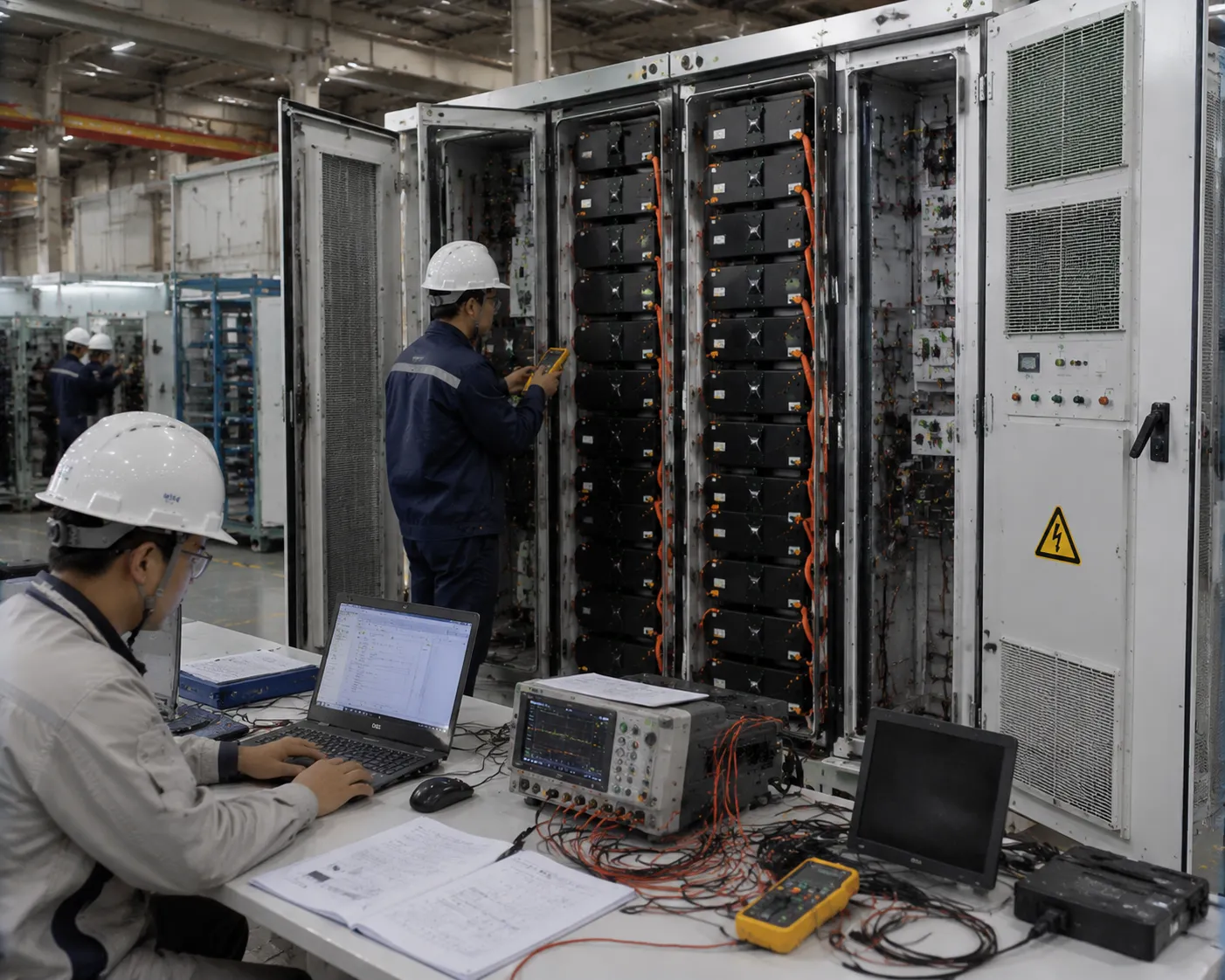
Require Technical Documentation or Regulatory Submittals?
Connect with our technical support team to receive Single Line Diagrams (SLD), mechanical dimension drawings, thermal profiling reports, and complete compliance dossiers tailored to your specific project parameters.
Ready to Deploy Your Containerized Energy Storage Project?
Work with Percenec Energy engineers to receive customized BESS system sizing, container layout design, technical documentation, and project-level solutions tailored to your grid requirements.