
Percenec Energy Procurement Blueprint
Commercial BESS Procurement Step-by-Step Guide
A strategic 5-step framework designed for facility engineers, microgrid developers, and commercial buyers to evaluate, spec, and procure utility-ready battery energy storage solutions.
Facility Load Profile and Energy Audit
Before selecting battery hardware, procurement teams must perform a comprehensive facility energy audit. Analyzing interval data allows engineering teams to identify baseline energy consumption, peak demand spikes, and duty cycle patterns across seasonal variations.
Critical Procurement Checkpoints
- ✓ Interval Utility Data Collection: Secure at least 12 months of 15-minute interval kW demand data from the utility meter.
- ✓ Peak Demand Charge Identification: Pinpoint exact utility tariff rates, coincidental peak billing windows, and time-of-use (TOU) fee structures. Discover tailored options for peak-shaving-load-shifting strategies.
- ✓ Critical Load Isolation: Differentiate non-deferrable emergency backup equipment requirements from standard facility peak shaving opportunities.
Percenec Energy provides automated load curve modeling tools that ingest facility interval data to pinpoint exact demand charge spikes and quantify financial arbitrage potential before capital commitment.
Step 1 Technical Checklist
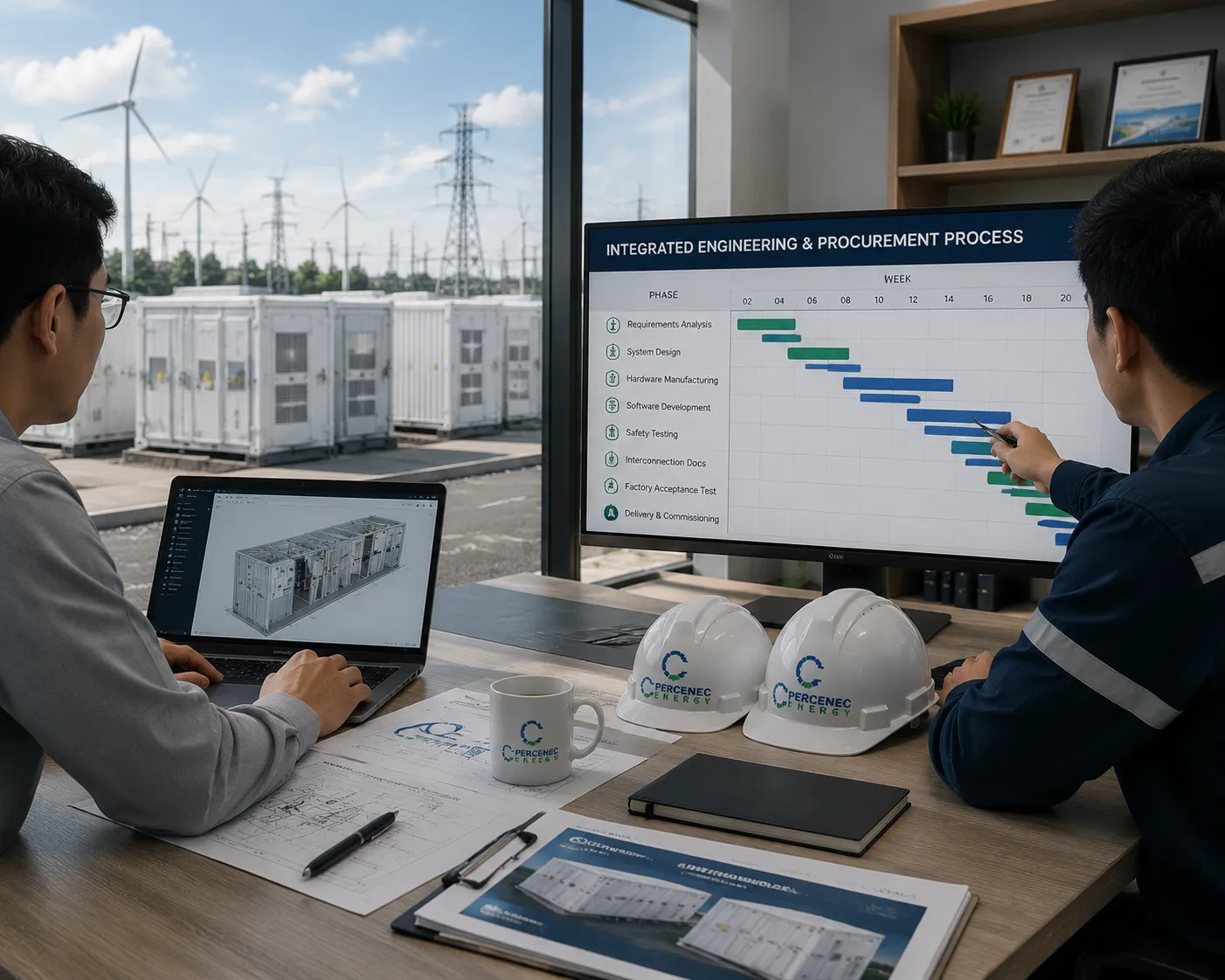
Streamlining Procurement with Integrated Engineering
Choosing the right energy storage partner removes guesswork from the procurement cycle. Percenec Energy aligns hardware manufacturing, software programming, safety testing, and interconnection documentation under a single commercial framework.
By unifying load analysis with pre-certified cabinet solutions, buyers reduce technical risk, lower balance-of-plant costs, and accelerate installation timelines for industrial facilities, solar-plus-storage microgrids, and commercial buildings.
Procurement Evaluation Matrix Overview
| Phase | Primary Objective | Key Technical Parameter | Percenec Energy Support Standard |
|---|---|---|---|
| 01. Load Analysis | Establish baseline electrical profiles | 15-minute interval kW / kWh load data | Automated Tariff & Peak Modeling |
| 02. Capacity Sizing | Optimize power and energy ratios | 0.5C to 1C discharge profiles | Modular Outdoor Cabinet Sizing |
| 03. Integration | Evaluate hardware and software specs | Tier-1 LFP cell & liquid cooling | Smart EMS & Multi-Tier BMS Control |
| 04. Compliance | Ensure grid and fire safety access | UL 9540, UL 9540A & NFPA 855 | Pre-Certified Compliance Packages |
| 05. TCO & Selection | Calculate lifecycle ROI and select vendor | 6,000+ cycle life & 10-yr warranty | Bankable Warranties & Local SLAs |
Ready to Evaluate Your Facility's BESS Requirements?
Contact the Percenec Energy application engineering team for a customized load profile assessment, precise financial ROI calculation, and tailormade energy storage solution specification.
Core BESS Technical Parameters and Evaluation Matrix
Evaluating commercial and industrial battery energy storage systems (C&I ESS) requires a rigorous technical audit of electrochemistry, cycle aging, thermal management, and safety protocols. Percenec Energy engineers modular lithium battery energy storage systems tailored to precise C&I ESS parameters—delivering high energy density, maximum round-trip efficiency, and uncompromised grid-edge reliability.
LFP Cell Chemistry
Prismatic Lithium Iron Phosphate (LiFePO4) chemistry delivers inherent thermal stability, exceptional structural integrity, and complete elimination of cobalt and nickel supply risks under continuous duty cycles.
- Cell Architecture: Prismatic LFP 280Ah / 314Ah
- Thermal Stability: Runaway Threshold > 270°C
- Environmental Profile: 100% Cobalt & Nickel Free
Cycle Life and SOH
Industrial-grade LFP cells retain over 80% State of Health (SOH) across thousands of deep discharge cycles, maintaining high asset value and predictable power output for long-term project bankability.
- Cycle Longevity: 6,000–8,000+ Cycles (@ 0.5C)
- Depth of Discharge: Up to 90% DoD
- Design Lifespan: 12–15+ Years Active Service
C-Rate Performance
Continuous and peak C-rates dictate discharge dynamics. Optimized rate matching ensures seamless operational switching between 2-to-4-hour peak shaving and sub-second grid frequency response.
- Energy Applications: 0.25C – 0.5C (2–4 Hr Duration)
- Power Applications: 1.0C Continuous / 2.0C Peak
- Response Speed: Millisecond Dispatch (<10ms)
Safety and Fire Protection
Industrial safety features multi-stage gas detection paired with module-level clean agent fire suppression, isolating potential thermal events before off-gas accumulation occurs.
- Suppression Agent: FK-5-1-12 / Novec 1230 Clean Agent
- Detection Suite: Early CO, Off-Gas & Temp Sensors
- Safety Standards: UL 9540, UL 9540A & NFPA 855
C and I BESS Technical Specification Benchmarking Matrix
Comprehensive comparison of battery hardware specifications across standard commercial, high-demand industrial, and utility-scale microgrid configurations.
| Specification Parameter | Standard Commercial BESS | Industrial High-Demand BESS | Utility and Microgrid Grade |
|---|---|---|---|
| Cell Electrochemistry | LFP (LiFePO4) Prismatic 280Ah | LFP High-Density Prismatic 314Ah | Ultra-Long Life LFP 314Ah Plus |
| Cycle Life (to 80% SOH) | 6,000 Cycles @ 25°C, 0.5C | 8,000 Cycles @ 25°C, 0.5C | 10,000+ Cycles @ 25°C, 0.25C |
| Continuous / Peak C-Rate | 0.5C Continuous / 1.0C Peak | 1.0C Continuous / 2.0C Peak | 0.25C–0.5C Continuous |
| Thermal Management | Smart HVAC Forced Air Cooling | Precision Liquid Cooling (Glycol/Water) | Advanced Microchannel Liquid Cooling |
| BMS Architecture | 2-Tier (BMU + BCU) | 3-Tier (BMU + BCU + BAMS) | 3-Tier Redundant Cloud Integrated |
| Protocol Integration | Modbus RTU / TCP, CAN 2.0 | Modbus TCP, CAN, IEC 60870-5-104 | DNP3, IEC 61850, Modbus TCP |
| Fire Protection System | Cabinet-level Gas Suppression | Pack-level Liquid/Gas + Aerosol | Pack-level FK-5-1-12 + Water Deluge |
| Round-Trip Efficiency (RTE) | 88% or Higher System Level | 90% or Higher System Level | 92% or Higher System Level |
3-Tier BMS and Cloud EMS Integration
Intelligent control architecture forms the nervous system of modern energy storage. Percenec Energy implements seamless bms-ems-integration via a hierarchical three-tier Battery Management System (BMS) coupled with intelligent edge and cloud Energy Management Systems (EMS) to maintain operational safety, execute active cell balancing, and maximize power arbitrage revenues.
- 1Cell Level (BMU): Continuously measures individual cell voltages, temperatures, and State of Charge (SOC) while executing active balancing.
- 2Rack Level (BCU): Controls string high-voltage contactors, performs continuous insulation monitoring, and balances pack-to-pack current distribution.
- 3System Level (EMS): Orchestrates site power flows, coordinates automated time-of-use peak shaving schedules, and interfaces seamlessly with SCADA and utility signals via Modbus and DNP3.
Liquid Cooling and Multi-Layer Suppression
Thermal uniformity directly dictates battery longevity and operational safety. Percenec Energy liquid-cooled BESS designs restrict cell-to-cell temperature differentials to under 3°C, eliminating localized hot spots and significantly delaying capacity degradation compared to standard air cooling.
Liquid Cooling Advantage
Consumes up to 40% less auxiliary power than traditional HVAC units while maintaining uniform thermal distribution across high-density containerized footprints.
Pack-Level Fire Suppression
Injects FK-5-1-12 clean agent gas directly into individual module enclosures upon early off-gas detection, arresting thermal events before propagation can occur.
Why Technical Parameter Precision Matters
Subtle variations in C-rate support, thermal dissipation efficiency, and BMS balancing speed can impact project Net Present Value (NPV) by over 25% across a 15-year operational lifecycle. Percenec Energy provides fully certified, bankable BESS solutions engineered to strict international safety standards including UL 9540, UL 9540A, IEC 62619, and UN 38.3.
Commercial and industrial energy storage systems cannot rely on standard off-the-shelf estimates. A manufacturing plant operating continuous multi-shift production exhibits vastly different electrical demand spikes than a regional microgrid integrating rooftop photovoltaics or a commercial office building managing HVAC surges. Peak shaving energy storage, solar plus storage solutions, and critical backup power configurations each require distinct power-to-energy ratios, battery C-rates, and power conversion system (PCS) topologies. Precise front-end engineering prevents expensive equipment over-sizing, eliminates power reliability bottlenecks, and accelerates long-term project payback.
The core application scenarios detailed below highlight the most frequent commercial power management challenges addressed by Percenec Energy across global C&I deployments. Each scenario details the targeted enterprise profile, recommended system specifications, primary financial value drivers, and critical engineering parameters to evaluate before finalizing your project request for proposal (RFQ).
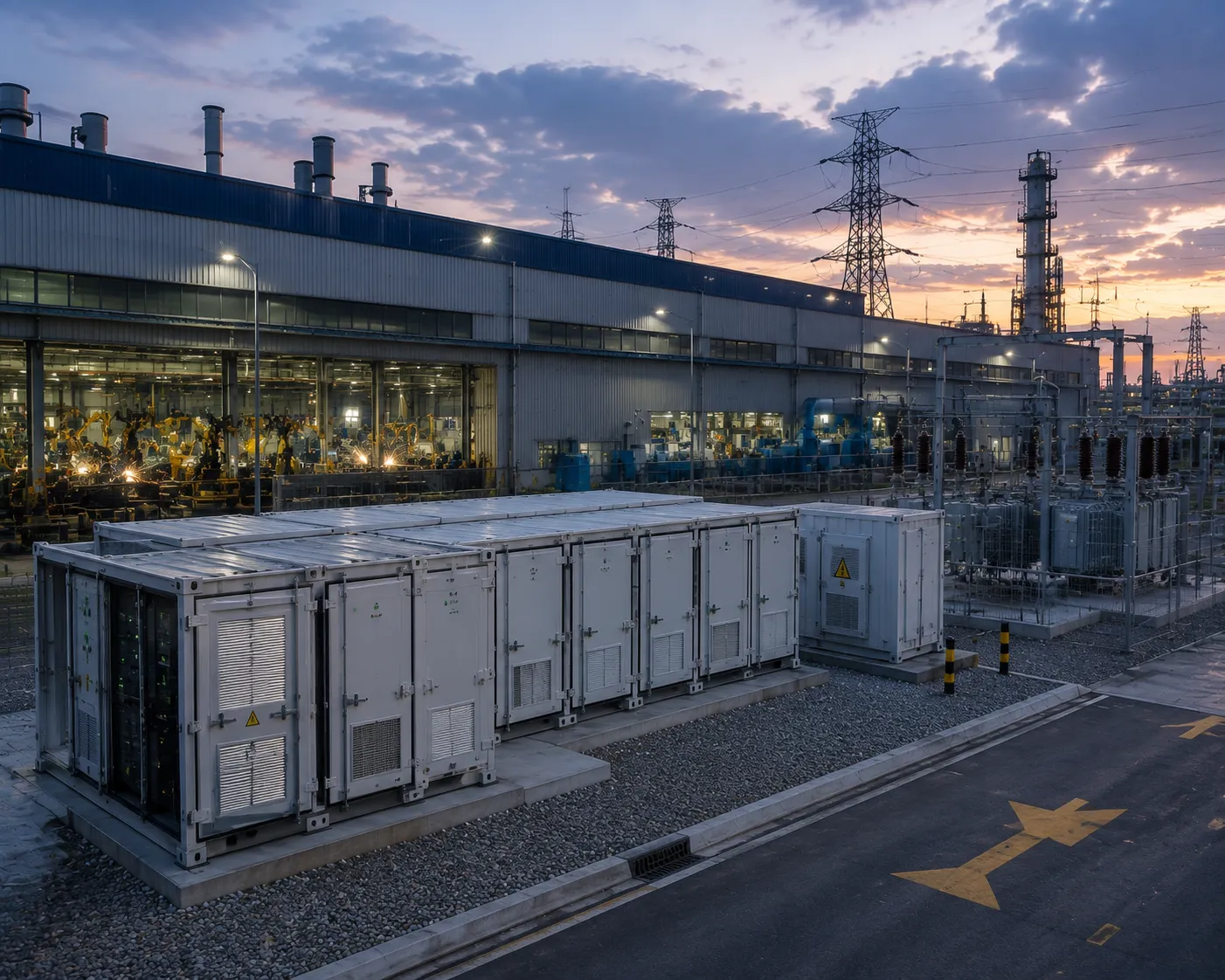
Factory Peak Shaving
Industrial manufacturing plants frequently incur prohibitive demand charges when heavy machinery operates concurrently during utility peak billing periods. Deploying a dedicated peak shaving energy storage system enables rapid discharge during peak 15- to 30-minute interval windows, trimming demand charges by 20% to 40% while preserving continuous plant productivity.
Recommended Configuration
- System type: Modular energy storage cabinet (rack-based LFP)
- Typical capacity: 200 kWh – 2 MWh
- C-rate: 0.5C–1C discharge for peak window coverage
- EMS logic: Real-time demand forecasting with automated dispatch
- Cycle requirement: 1–2 cycles/day, 6,000+ cycle life
Primary Value Driver
Demand charge reduction — directly cuts utility peak-demand fees, delivering bankable cash flow and rapid capital payback.
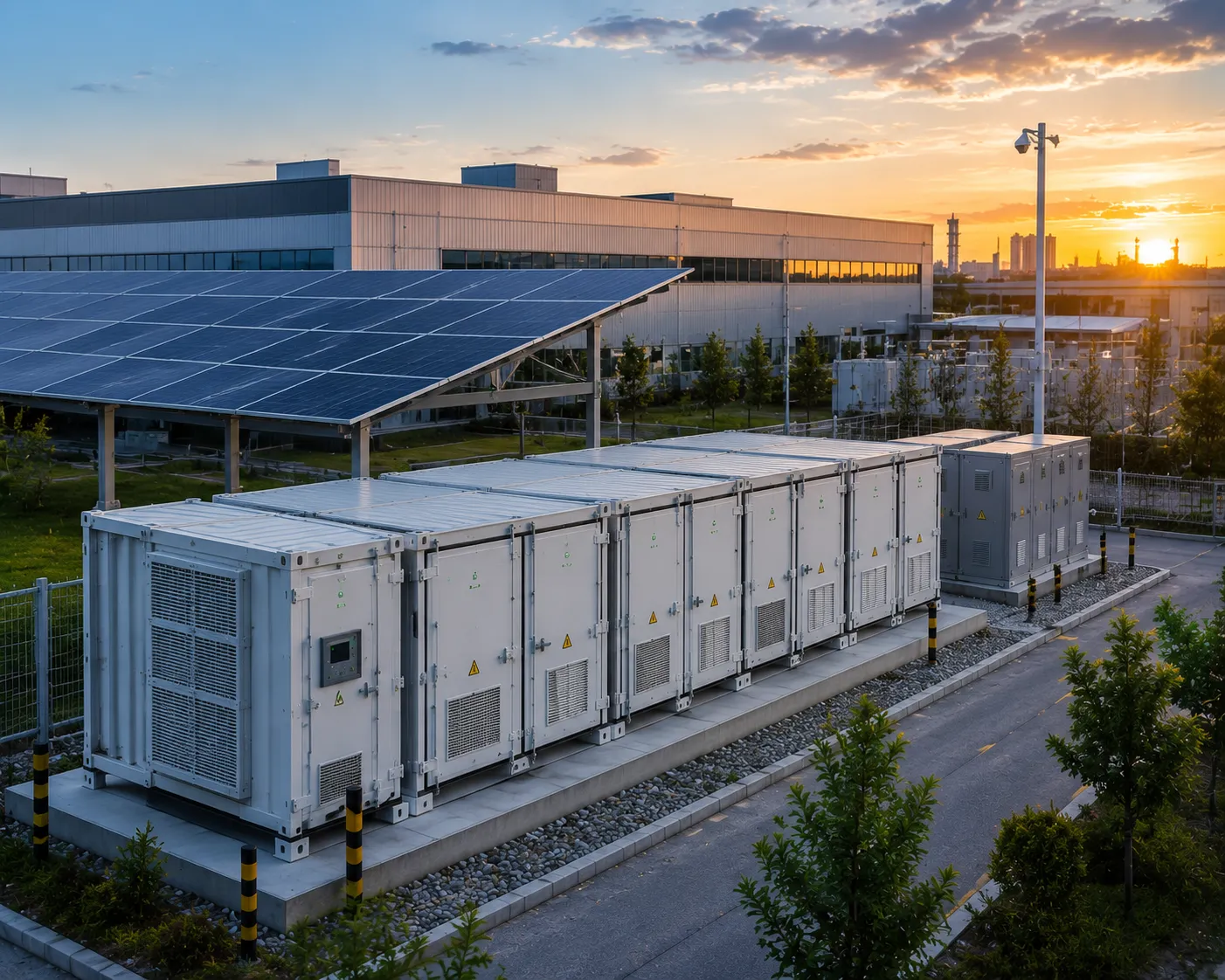
Solar-Plus-Storage Integration
Commercial facilities and industrial parks equipped with commercial rooftop or ground-mount PV assets often lose financial value when excess daytime generation is exported at unfavorable feed-in tariffs. Coupling solar plus storage solutions with containerized BESS units stores midday solar excess for dispatch during evening high-tariff hours, driving renewable self-consumption above 85%.
Recommended Configuration
- System type: Containerized ESS (20-ft or 40-ft ISO enclosure)
- Typical capacity: 500 kWh – 5 MWh
- PCS topology: AC-coupled or DC-coupled hybrid inverter
- EMS logic: Solar forecast integration, time-of-use arbitrage dispatch
- Grid mode: Island-capable for microgrid resilience
Primary Value Driver
Self-consumption optimization & TOU arbitrage — maximizes local solar value and insulates facility operations from escalating energy prices.
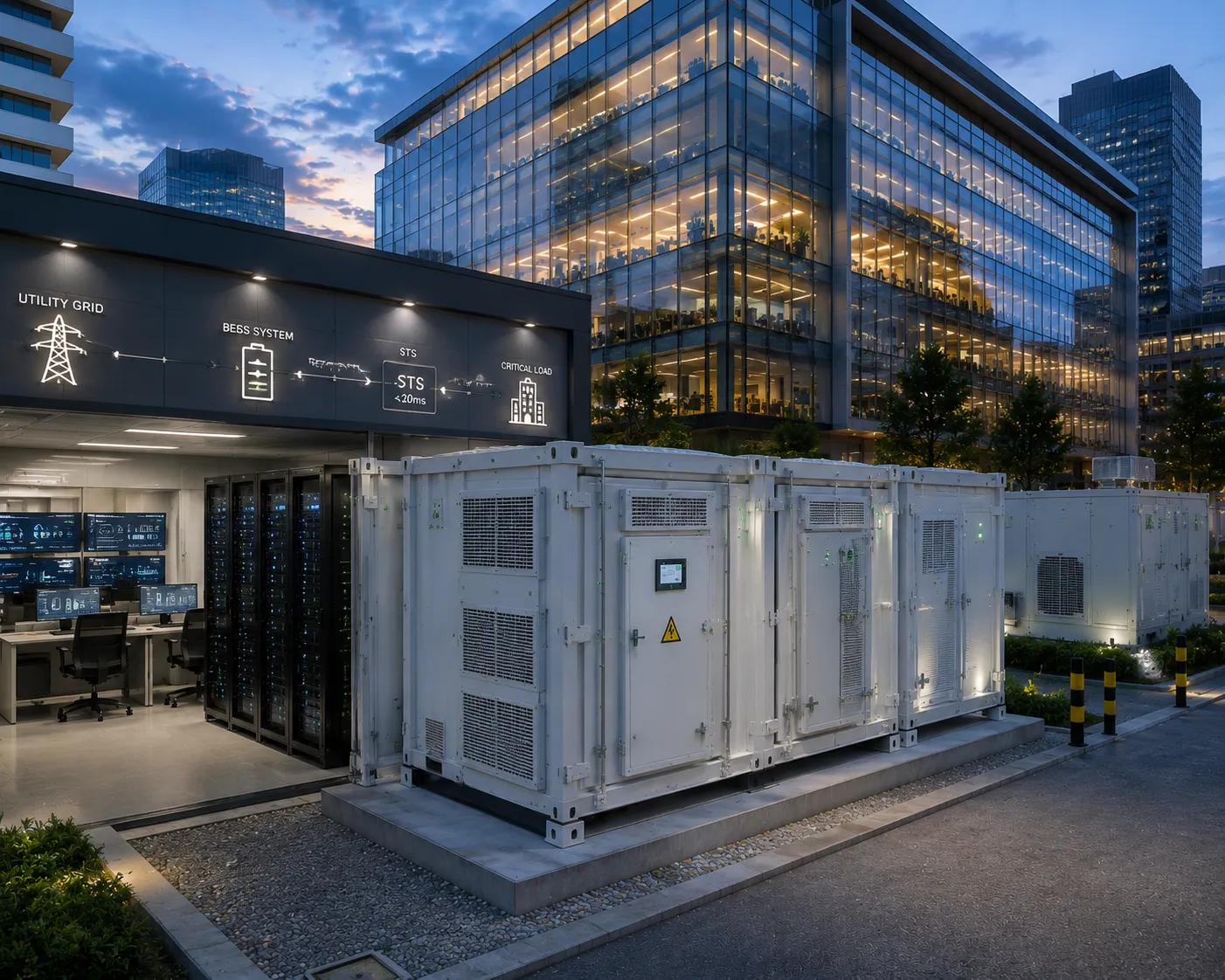
Commercial Complex Backup Power
Office towers, data centers, and multi-tenant commercial complexes cannot risk utility outages or power quality fluctuations. A high-power-density modular BESS equipped with sub-20ms static transfer switching delivers immediate uninterruptible backup power, displacing noisy diesel generators, reducing fuel OPEX, and supporting corporate sustainability mandates.
Recommended Configuration
- System type: High-power modular BESS with static transfer switch
- Typical capacity: 100 kWh – 1 MWh (load-dependent)
- Transfer time: <20 ms grid-to-battery switchover
- C-rate: 1C–2C for high-power burst capability
- Backup duration: 2–8 hours depending on critical load profile
Primary Value Driver
Uninterrupted business continuity — safeguards critical operations while eliminating generator maintenance overhead and carbon emissions.
How to Size a Commercial BESS: Core Methodology
Accurate capacity sizing is the foundation of a financially viable C&I energy storage deployment. Under-sizing leaves peak shaving savings unrealized, while over-sizing unnecessarily increases upfront capital expenditures (CAPEX) and extends payback timelines. The following four-step framework forms the basis of Percenec Energy’s engineering assessment for enterprise clients.
Step 1: Establish the Facility Load Profile
Obtain 12 consecutive months of 15-minute or 30-minute interval meter data from your electric utility or building energy management system (BEMS). Analyze peak demand spikes, operational duration, load profile seasonality, and high-tariff time-of-use windows. This historical baseline dictates your required active power rate (kW) and discharge duration (hours).
- Identify monthly peak demand events by magnitude, frequency, and duration
- Cross-reference load spikes against regional utility tariff schedules
- Calculate the exact energy (kWh) needed to shave targeted peak demand thresholds
Step 2: Define Power and Energy Requirements
Power output (kW) and energy storage capacity (kWh) are distinct variables that must be calculated independently. A factory peak shaving application may require 500 kW of power for 30 minutes (250 kWh of usable energy), whereas a emergency backup system supplying 500 kW for 4 hours requires 2,000 kWh. Clearly defining the application prevents miscalculating discharge rates (C-rate).
- Power (kW) = peak discharge rate required to meet load demand
- Energy (kWh) = required discharge power × operational duration
- Factor in depth-of-discharge (DoD) margins (typically 80%–90% usable DoD)
Step 3: Account for System Efficiency & Degradation
Real-world commercial energy storage systems experience round-trip efficiency (RTE) conversion losses, auxiliary HVAC thermal management loads, and gradual lithium-ion battery cell degradation over time. System sizing must incorporate nameplate capacity buffers to ensure guaranteed deliverable energy throughout the system’s multi-year service life.
- Round-trip efficiency: 88%–93% system-level RTE for LFP battery systems
- Auxiliary consumption (liquid/air cooling, BMS, controls): 1%–3% of total rating
- End-of-life (EOL) capacity retention: model system against 80% retained capacity at Year 10
Step 4: Validate Physical Site & Electrical Constraints
Site footprint limitations, available transformer capacities, medium-voltage interconnection standards, and local fire authority regulations constrain system placement and topology. Outdoor containerized BESS solutions offer rapid installation on concrete pads, while modular indoor battery cabinets serve facilities with dedicated electrical infrastructure rooms.
- Evaluate usable outdoor concrete pad space or indoor equipment room dimensions
- Verify existing electrical switchgear busbar limits and interconnection voltage
- Ensure full compliance with UL 9540, UL 9540A, and NFPA 855 fire safety standards
Quick-Reference Sizing Matrix by Application
The matrix below offers baseline engineering parameters across key C&I BESS scenarios. Precise capacity and system design should be finalized using actual facility load curves and site-specific tariff structures.
| Application Scenario | Target Facility Profile | Typical Capacity Range | C-Rate / Discharge Window | Key Value Benchmark |
|---|---|---|---|---|
| Factory Peak Shaving | Heavy Manufacturing, Plastics, Metal Processing | 200 kWh – 2 MWh / 100 kW – 1 MW | 0.5C – 1C (1–2 Hours) | 20%–40% demand charge reduction |
| Solar + Storage Integration | Industrial Parks, Microgrids, Logistics Centers | 500 kWh – 5 MWh / 250 kW – 2.5 MW | 0.25C – 0.5C (2–4 Hours) | 85% PV self-consumption rate |
| Commercial Backup Power | Data Centers, Multi-Tenant Office Complexes | 100 kWh – 1 MWh / 100 kW – 500 kW | 1C – 2C (0.5–2 Hours) | <20 ms transfer & zero emissions |
BESS ROI Calculation & C&I Financial Modeling Framework
Evaluating Commercial and Industrial (commercial-industrial-energy-storage-systems) and broader battery-energy-storage-systems requires a rigorous total cost of ownership (TCO) and return-on-investment (ROI) analysis. Balancing upfront turnkey capital expenditure (CAPEX) against long-term utility bill savings, multi-stream revenue stacking, and active battery degradation management ensures bankable financial returns and predictable payback timelines.
Accelerated capital recovery driven by targeted peak demand charge reduction, time-of-use arbitrage, and regional clean energy incentives.
High-yielding financial returns for facilities operating under multi-tier time-of-use (TOU) tariffs and steep capacity fees.
Direct reduction in monthly capacity fees by automatically shaving facility peak load spikes with precision energy discharge.
Extended operational lifespan optimized through liquid-cooling thermal management and health-aware EMS dispatch algorithms.
1. Cost Structure Breakdown: CAPEX and OPEX
Establishing an accurate financial model requires a granular look at initial capital expenditures and long-term operational expenses across the system's complete life cycle.
Turnkey Capital Expenditure (CAPEX)
- Hardware Core: Tier-1 LFP battery packs, bidirectional Power Conversion Systems (PCS), and modular energy-storage-cabinets with IP55/IP65 protection.
- Balance of System (BOS): Liquid cooling HVAC, multi-stage fire suppression (Novec 1230/Aerosol), transformers, and cabling.
- Soft Costs & Integration: Site engineering, civil installation, local permitting, environmental compliance, and utility grid interconnection studies.
Operational Expenditure (OPEX) Projections
- Preventative Maintenance: Scheduled annual physical inspections, thermal imaging checks, HVAC servicing, and high-voltage testing.
- Software & Cloud EMS: Intelligent EMS licensing for automated tariff optimization, load forecasting, and real-time remote telemetry.
- Capacity Insurance & Augmentation: Planned cell augmentation or performance guarantee reserves to offset natural battery degradation after year 10.
2. Revenue Generation and Value Stacking
Commercial BESS profitability is maximized by overlaying multiple financial value streams into a synchronized dispatch strategy.
Utility Bill Reduction Mechanisms
- Demand Charge Shaving: Automatically discharging BESS energy during peak facility load spikes to lower monthly capacity billing thresholds.
- TOU Energy Arbitrage: Storing low-cost energy during off-peak hours and discharging during high-cost peak rate windows.
- Onsite Solar Self-Consumption: Capturing excess rooftop PV generation during mid-day surplus to power shifts without uncompensated grid export losses.
Grid Services and Financial Incentives
- Tax Credits & Local Grants: Leveraging Investment Tax Credits (ITC), accelerated depreciation (MACRS), and regional energy grants.
- Demand Response Programs: Earning direct utility payments by participating in grid stabilization and emergency load-reduction events.
- Outage Mitigation & Resilience: Protecting critical manufacturing processes against unannounced power outages, avoiding costly production downtime.
3. Financial Modeling Projection: 500 kW / 1,000 kWh C&I BESS
Representative 10-year financial projection for a medium-scale industrial manufacturing plant operating under standard commercial utility tariffs with active peak shaving and TOU arbitrage.
| Financial Metric | Year 1 Value | 10-Year Cumulative | Primary Financial Driver & Description |
|---|---|---|---|
| Turnkey BESS CAPEX | -$450,000 | -$450,000 | Complete hardware procurement, site civil installation, transformers, and grid interconnection |
| Federal Tax Incentive (30% ITC) | +$135,000 | +$135,000 | Direct investment tax credit equity offset realized in the initial project tax filing year |
| Demand Charge Reduction | +$68,000 | +$680,000 | Automated peak load shaving across monthly utility billing cycles |
| TOU Arbitrage Yield | +$24,000 | +$240,000 | Optimized charge and discharge scheduling based on differential electricity rates |
| System OPEX & Maintenance | -$9,000 | -$90,000 | Routine preventative maintenance, cloud EMS software licensing, and remote monitoring |
| Net Accumulated Cash Flow | -$232,000 | +$515,000 | Projected Payback: 3.8 Years • Est. IRR: 22.4% • Total ROI: 214% |
Maximizing Financial Yield with Percenec Energy Intelligent EMS
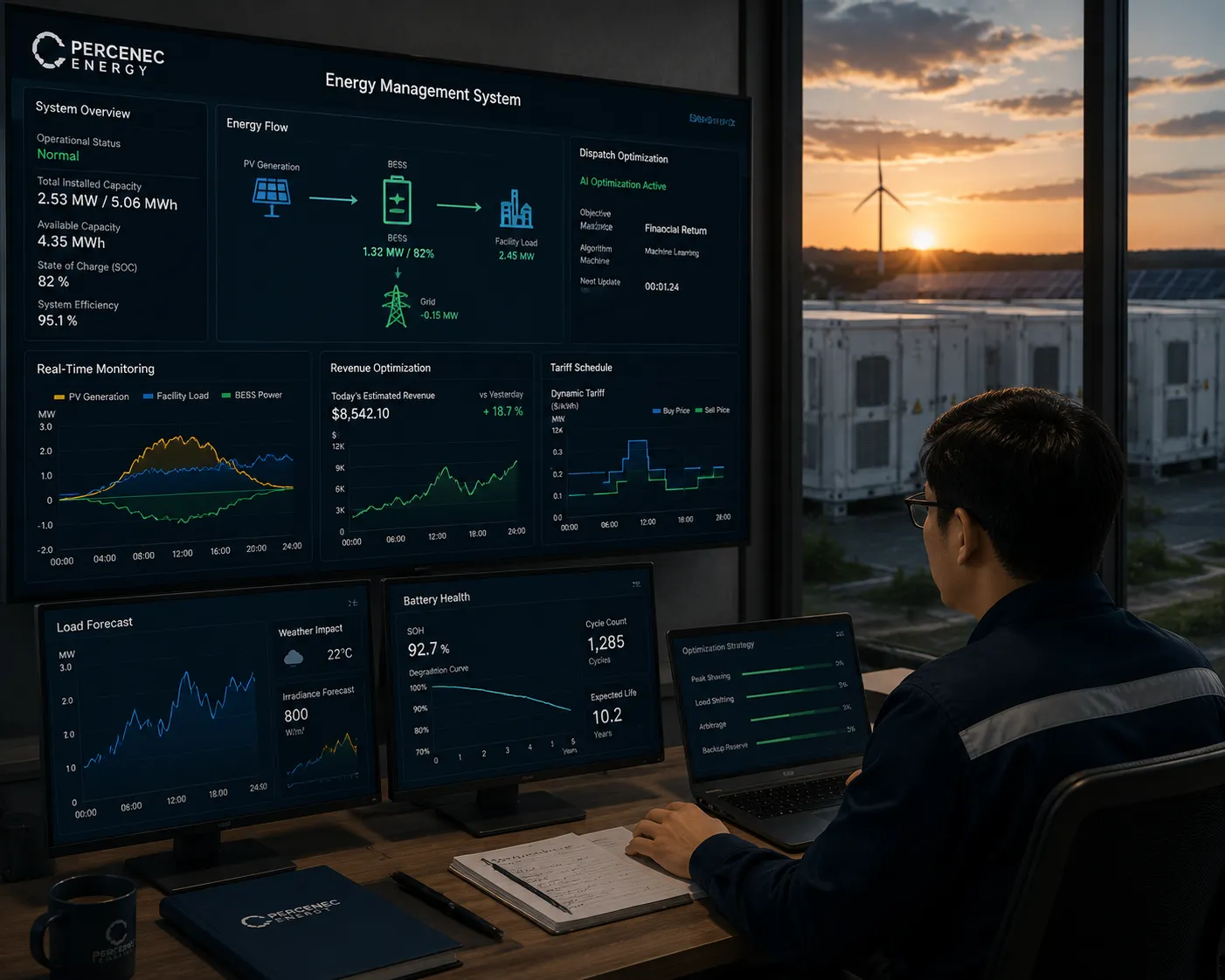
Static financial models often miscalculate real-world ROI by ignoring dynamic utility tariff changes, seasonal weather impacts, and cell degradation curves. Percenec Energy integrates proprietary Energy Management System (EMS) software that dynamically optimizes energy dispatch based on real-time facility loads and machine learning algorithms.
- ✓Predictive Load Forecasting: Machine learning models analyze historical interval load data to preemptively discharge during unexpected power spikes.
- ✓Dynamic Value Stacking: Automated algorithm switching between tariff arbitrage, peak shaving, and grid demand response markets in real time.
- ✓Degradation-Aware Dispatch: Advanced BMS control algorithms balance financial returns against cell health to maximize total lifetime throughput.
Precision Financial Projections for Bankable Commercial BESS Deployments
Percenec Energy delivers site-specific financial models engineered around your facility's exact 15-minute interval load profile and local utility structures. Our engineering and technical teams ensure that every commercial energy storage system yields verifiable ROI, bankable financial performance, and long-term operational resilience.
BESS Vendor Evaluation & Qualification Checklist
Selecting the right commercial and industrial (C&I) battery energy storage system (BESS) manufacturer is a fundamental risk-management decision for facility owners, project developers, and EPC contractors. Beyond evaluating initial CAPEX, an effective battery storage vendor selection process requires auditing system-level thermal safety certifications, proprietary software architecture, corporate bankability, and long-term lifecycle SLAs. This comprehensive framework provides decision-makers with the concrete energy storage supplier criteria required to evaluate commercial ESS manufacturers and BESS integration vendors effectively.
Safety & Compliance Standards
Verify system-level safety compliance, including UL 9540, UL 9540A thermal runaway explosion testing, IEC 62619, and NFPA 855 spacing guidelines. Review complete international quality certifications to validate overall system compliance.
Vertical Integration & Controls
Evaluate whether the supplier owns core technology layers—from Tier-1 LFP cell selection to seamless hardware and software bms-ems integration and EMS cloud control algorithms.
Bankability & Financial Depth
Confirm corporate balance sheet strength, third-party technical due diligence, and insurance-backed warranty coverage for debt financing.
Lifecycle Support & SLAs
Review capacity degradation guarantees, local field service response times, spare parts logistics, and 24/7 remote telemetry agreements.
De-Risking Energy Storage Procurement Through Systematic Auditing
A battery energy storage system is a 10-to-15-year operational infrastructure asset. Partnering with an unvetted BESS integration vendor can result in severe project permitting delays, accelerated capacity degradation, thermal safety hazards, or non-compliant utility interconnections. B2B decision-makers referencing our BESS buying guide must look beyond standard sales datasheets and execute a rigorous audit of the manufacturer's engineering and safety standards.
Commercial energy storage systems require harmonious interaction between electrochemical battery modules, power conversion systems (PCS), and high-speed energy management software. When establishing energy storage supplier criteria, engineering teams must verify whether the manufacturer provides fully integrated, factory-tested enclosures or merely compiles third-party components without single-source warranty backing.
Industry Insight:
"Over 65% of commercial BESS commissioning delays stem from software protocol mismatches between third-party PCS units and proprietary BMS firmware. Integrated single-source manufacturing by a qualified commercial ESS manufacturer eliminates these interoperability bottlenecks."
The Percenec Energy Advantage
Percenec Energy combines Tier-1 LFP cell chemistry, proprietary dual-layer BMS architecture, and fully certified UL 9540 integrated enclosures. Every system undergoes rigorous Factory Acceptance Testing (FAT) to guarantee seamless grid integration and maximum ROI.
- ✓ 100% Factory Pre-Commissioned Modular Cabinets
- ✓ Comprehensive UL 9540 & UL 9540A Certification
- ✓ End-to-End Financial & Technical Warranty Backing
Comprehensive Vendor Evaluation & Qualification Matrix
Use this technical benchmarking matrix when drafting RFPs or auditing prospective commercial ESS manufacturers for industrial complexes, microgrids, and commercial real estate.
| Evaluation Category | Required Benchmark / Standard | Risk of Non-Compliance | Percenec Energy Compliance |
|---|---|---|---|
| Thermal & Fire Safety | UL 9540A test reports at cell, module, and unit levels; NFPA 855 compliance; deflagration venting and integrated clean-agent fire suppression. | Catastrophic thermal runaway risk, zoning permit denial, uninsurable commercial facility. | Exceeds standards with multi-stage gas & smoke detection plus automated fire suppression. |
| Grid Interconnect | IEEE 1547, UL 1741 SB, Rule 21, and local utility grid code compliance for smart inverter capabilities. | Interconnection rejection by local utility, expensive retrofits, grid penalty fees. | Pre-certified grid interface configurations for rapid local utility sign-off. |
| Software & Controls | Native Modbus TCP / CAN bus support; cloud telemetry with local offline fallback; automated peak shaving algorithms. | Loss of energy arbitrage revenue, communication blackouts, improper cell balancing. | Proprietary edge-computing EMS with intelligent cloud optimization algorithms. |
| Cell Quality & Degradation | Tier-1 Automotive-grade LFP cells (UL 1642 / IEC 62619); ≥ 6,000 cycle life at 80% DoD under standard rating. | Premature capacity drop, shortened asset lifespan, degraded project ROI calculation. | Strict Tier-1 A-grade LFP cell sourcing with guaranteed linear degradation curves. |
| Bankability & Warranty | Third-party technical audit reports (e.g., DNV / Black & Veatch); 10-year throughput warranty backed by tier-1 re-insurance. | Inability to secure non-recourse project debt financing; unhonored warranty claims. | Fully bankable balance sheet with globally accepted warranty performance guarantees. |
Key Steps in the Vendor Audit and Qualification Process
To ensure long-term energy storage asset performance, commercial procurement officers should follow a structured five-stage evaluation protocol before signing procurement contracts:
Certificates & Test Data Audit
Request full UL 9540A cell, module, and unit test reports directly from third-party testing labs (UL, CSA, or Intertek). Ensure testing matches the exact model number offered.
Software Architecture Inspection
Review EMS control protocols, latency specs for demand response, cyber-security parameters, and local edge controller autonomy during internet connectivity disruptions.
Factory Acceptance Testing (FAT)
Require comprehensive FAT protocol execution prior to shipment, confirming full system integration, inverter sync, and safety shutdown responses in the factory.
Bankability & Financial Review
Evaluate financial statements, corporate solvency, and third-party warranty insurance policies to ensure warranty commitments remain enforceable over 10+ years.
Service Level Agreement (SLA) Review
Define explicit maintenance SLAs, including guaranteed field technician response times, regional spare parts stocking, and clear capacity degradation remedies.
Partner with Percenec Energy
Streamline your commercial BESS procurement with an engineering team that adheres strictly to global safety, financial, and technical standards.
Why Quality Vendor Selection Drives BESS Lifecycle Return on Investment
In the rapidly growing C&I energy storage market, battery storage vendor selection directly determines project profitability. A lower initial purchase price often masks hidden costs associated with high degradation rates, inefficient thermal management, or delayed utility approvals. By conducting a systematic evaluation using these criteria, commercial facility operators can ensure their investment delivers predictable peak shaving, demand charge reduction, and reliable backup power for years to come.
Percenec Energy delivers fully integrated, bankable BESS solutions designed to meet the rigorous demands of industrial plants, commercial real estate, microgrids, and solar-plus-storage projects. By controlling the complete engineering lifecycle, Percenec Energy ensures maximum system uptime, safety compliance, and financial returns for enterprise clients worldwide.

Need Custom BESS Sizing?
Every facility has distinct load profiles and utility rate structures. Percenec Energy offers complimentary engineering load analysis to calculate precise capacity sizing and project payback models.
Speak directly with Percenec Energy storage engineers regarding your facility specs.
BESS Procurement Checklist
Ensure your project team evaluates these key criteria prior to issuing an RFP:
- • 12-24 months of 15-minute utility interval data (.csv)
- • Available outdoor concrete pad footprint & clearance
- • Transformer voltage rating & spare breaker capacity
- • AHJ local fire code requirements (NFPA 855)
Key Technical Considerations when Evaluating C&I Battery Storage Manufacturers
Selecting the right manufacturer for commercial industrial energy storage systems requires balanced consideration of hardware reliability, degradation mitigation, and stringent safety standards. Commercial and industrial facilities cannot risk operational disruption or safety hazards from unverified battery architectures. Prioritizing Lithium Iron Phosphate (LFP) chemistry, liquid thermal management, and intelligent Battery Management Systems (BMS) ensures system integrity and maximum cycle life.
Understanding local utility rate structures—particularly peak demand charges and time-of-use (TOU) schedules—is essential for sizing energy storage systems effectively. Systems specified without sufficient capacity buffer may fail to offset critical demand spikes, impacting overall project economic return. Percenec Energy conducts detailed pre-engineering load simulations using granular billing data to determine precise system configuration.
Regulatory compliance and local safety approvals represent critical milestones for commercial BESS projects across North America and global markets. Fire marshals and Authorities Having Jurisdiction (AHJ) require validated UL 9540 and UL 9540A test reports prior to granting installation permits. Deploying factory-integrated, pre-certified energy storage cabinets minimizes field assembly risk, streamlines permitting, and reduces installation timelines.
As grid volatility increases and corporate decarbonization targets expand, energy storage systems deliver crucial financial savings and operational resilience. Partnering with an experienced BESS manufacturer like Percenec Energy ensures your commercial facility receives a bankable, scalable energy storage solution engineered for long-term value.