
Overcoming C&I Solar Limits: Curtailment, Export Caps, and Load Mismatches
Percenec Energy provides bankable commercial battery storage solutions that eliminate grid interconnection barriers, recover lost solar generation, and seamlessly align daily solar output with facility demand.
Self-Consumption Optimization
Bridge the disconnect between peak midday solar output and late-afternoon demand spikes by storing unconsumed daytime PV power.
- Capture surplus midday PV production
- Drastically reduce peak-demand charges
- Elevate solar self-use rates up to 90%+
Anti-Reverse Flow & Zero-Export
Comply with strict utility regulations prohibiting grid backfeeding through millisecond-level dynamic BESS charge scheduling.
- Sub-100ms closed-loop meter tracking
- Guaranteed zero-export grid compliance
- Automated real-time charge balancing
PV Curtailment & Ramp Smoothing
Recover energy lost to inverter clipping or export caps while absorbing rapid power flutters caused by intermittent cloud cover.
- Absorb clipped energy from high DC/AC ratios
- Smooth sharp cloud-passage power drops
- Protect site transformers from grid stress
Turn Intermittent Solar into Dispatchable, High-Value Power
Percenec Energy integrates advanced LFP battery technology with intelligent EMS solutions to transform variable solar generation into reliable and controllable energy for commercial and industrial applications.
Ultra-fast system control response time
Achievable solar self-consumption
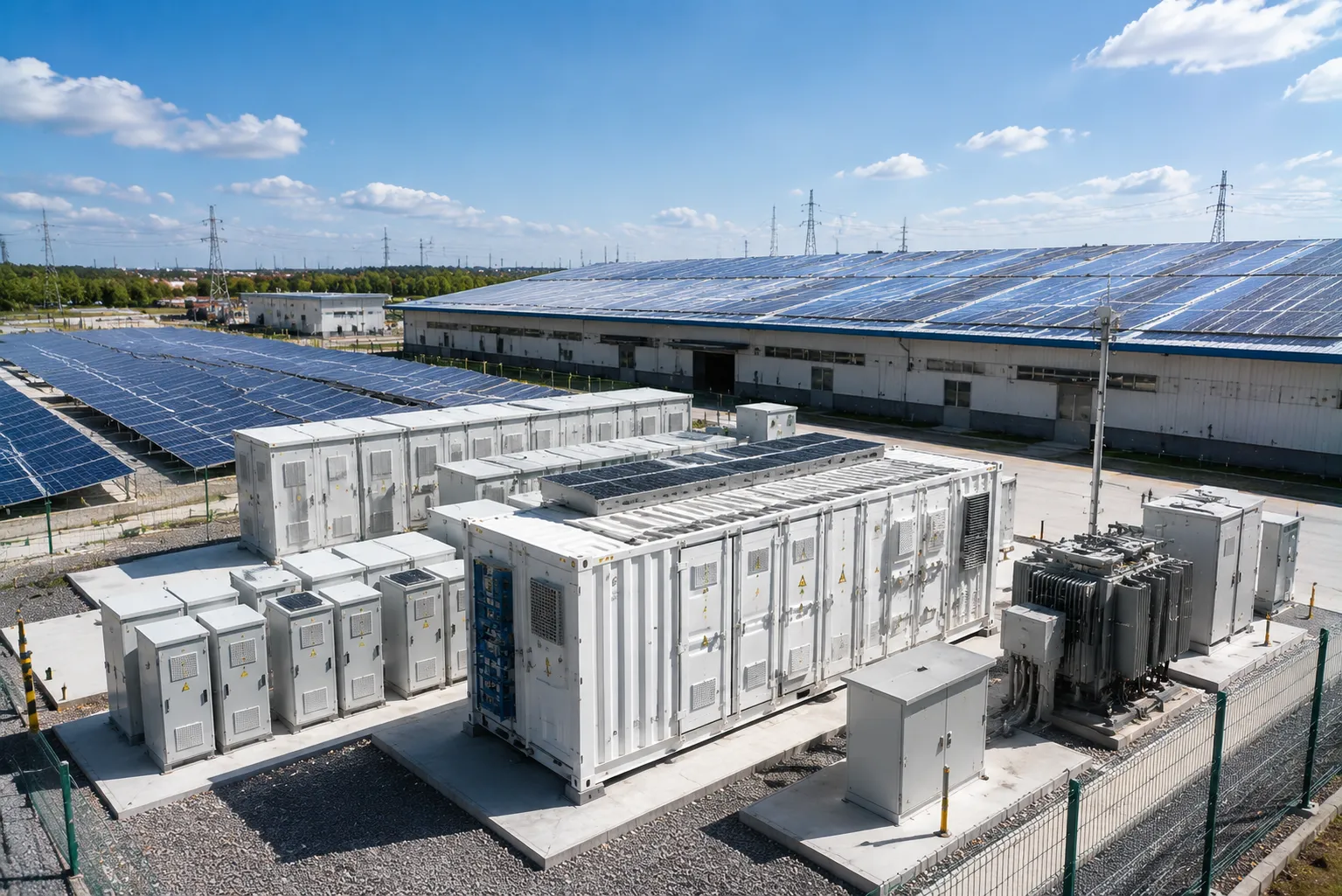
System Architecture Selection: AC-Coupled vs. DC-Coupled Storage Topology
Deploying an optimized commercial and industrial (C&I) solar-plus-storage asset requires selecting a system topology that aligns with your facility's physical layout, existing electrical infrastructure, and long-term financial goals. Percenec Energy engineers high-performance battery energy storage systems designed for both AC-coupled retrofits and DC-coupled greenfield deployments. By evaluating round-trip efficiency (RTE), balance-of-plant (BOP) complexity, inverter redundancy, and dynamic grid requirements, Percenec ensures maximum solar self-consumption, seamless curtailment mitigation, and lowest overall levelized cost of storage.
AC-Coupled Storage Systems
An AC-coupled architecture connects the Battery Energy Storage System directly to the facility's main AC distribution bus through a dedicated BESS bi-directional inverter, completely independent of installed solar PV inverters. This setup serves as the primary standard for brownfield solar retrofits, allowing commercial facility owners to integrate battery storage without disrupting existing solar array warranties, inverter certifications, or dynamic interconnect settings.
- Zero Disruption Retrofitting: Integrates smoothly with third-party PV inverters without modifying existing PV hardware or voiding factory warranties.
- Operational Decoupling: Operates battery charge and discharge cycles independently, ensuring precise export control and uninterrupted facility power.
- Flexible Capacity Scaling: Allows battery storage power and energy capacity to scale without being constrained by existing solar array sizing.
DC-Coupled BESS Architecture
A DC-coupled architecture connects the battery storage system directly to a shared DC bus behind the main solar inverter using high-efficiency DC-DC converters. Engineered primarily for greenfield solar-plus-storage projects, this topology minimizes AC-DC transformation losses, captures clipped PV energy directly from oversized solar arrays, and reduces overall balance-of-plant footprint.
- Maximum Conversion Efficiency: Eliminates duplicate inversion steps, improving overall round-trip efficiency by up to 3% to 4%.
- DC Clipping Energy Capture: Directs excess midday PV energy straight into battery storage when solar array generation exceeds inverter AC limits.
- Streamlined Infrastructure: Reduces balance-of-plant equipment requirements by sharing a unified, central grid-tied inverter.
Percenec Energy Solar Plus Storage Topology Architectural Diagram
Evaluating Your Facility's Engineering Requirements
Choosing between AC-coupled and DC-coupled topologies dictates both initial CAPEX and long-term revenue potential. For facilities with established solar installations, AC coupling offers a rapid, low-risk deployment model with zero impact on operating PV systems. For new construction or utility-constrained connections with high DC/AC ratios, DC coupling delivers superior energy yield by capturing clipped energy and consolidating power conversion hardware through specialized commercial industrial energy storage systems.
Percenec Energy delivers advanced technical consultations, techno-economic simulations, and preliminary single-line diagrams (SLD) to help commercial clients identify the ideal topology for their specific site constraints, tariff structures, and load profiles.
System Selection Matrix: Technical Comparison
Compare key performance metrics, installation requirements, and operational characteristics to select the ideal BESS architecture for your asset.
| Evaluation Criteria | AC-Coupled Topology | DC-Coupled Topology | Percenec Advantage |
|---|---|---|---|
| Retrofit Suitability | Optimal (No PV Inverter Mod Required) | Limited (Requires Integrated Inverter Stage) | Turnkey retrofit kits with zero PV inverter warranty impact. |
| Round-Trip Efficiency (RTE) | 85% – 89% (Double AC/DC Conversion) | 91% – 94% (Direct DC Bus Charging) | High-frequency bi-directional converters maximizing energy yield. |
| Inverter Redundancy | Dual Independent Paths | Single Shared Inverter Channel | AC ensures fault-isolated system uptime; DC optimizes space and wiring. |
| Initial Equipment CAPEX | Higher (Requires Dedicated Storage Inverter) | Lower Integrated CAPEX (Greenfield) | Optimized component sourcing reduces total balance-of-plant expense. |
| Clipped PV Energy Recovery | Capped by Inverter AC Capacity | Full Direct Capture | Recovers up to 12% lost clipping energy in oversized solar arrays. |
| Balance of Plant Complexity | Requires Additional AC Switchgear | Consolidated Interconnection | Pre-engineered, factory-tested modular energy storage cabinets cut installation labor. |
Unsure Which System Architecture Fits Your Commercial Site?
Percenec Energy's power systems engineering team evaluates your site load profiles, PV capacity, and local grid interconnection rules to deliver custom topology models, single-line diagrams, and detailed ROI projections.
Scenario Engineering: Zero-Export Control & PV Curtailment Prevention
Commercial and industrial energy architectures face stringent utility mandates and systemic inefficiencies. Percenec Energy engineers advanced Solar Plus Storage controls to eliminate grid backfeeding liabilities and capture stranded energy assets, turning technical operational constraints into measurable economic returns.
Figure 1: Real-time dynamic balancing loop executing sub-second grid compliance control.
Closed-Loop Zero-Export Control System
Stricter public grid interconnection standards require commercial facilities to prevent unscheduled solar feed-in to the public grid. Percenec Energy’s high-precision Export Control System actively balances local power generation with facility loads under rapid solar irradiance and load changes.
- High-Precision Power Sensing: High-accuracy smart meters at the point of common coupling (PCC) continuously monitor bidirectional grid power flow.
- Sub-100ms Response Time: Intelligent EMS algorithms dynamically adjust BESS charging rates in less than 100 milliseconds to instantly absorb excess solar output.
- Guaranteed Zero Export: Strict closed-loop control guarantees non-reverse power compliance, preventing anti-islanding trips and grid penalty fees.
PV Curtailment Prevention & Clipping Recovery
Commercial solar PV arrays are frequently designed with high DC/AC ratios (1.2 to 1.5) to maximize yield during morning and late afternoon hours. However, peak midday solar generation often exceeds inverter AC capacity, leading to severe power clipping and wasted energy. Percenec Energy delivers engineered PV Curtailment Mitigation solutions using state-of-the-art commercial industrial energy storage systems that recapture stranded solar energy for later usage.
- Direct DC-Coupled Absorption: Redirect excess DC solar generation directly into battery storage before AC inversion bottlenecking occurs.
- Peak Generation Smoothing: Store clipped midday generation spikes and shift energy output to peak pricing hours or nighttime facility loads using versatile battery energy storage systems.
- Maximized ROI & Asset Life: Recover clean energy assets that would otherwise be lost, accelerating project payback and optimizing overall plant yield.
Figure 2: Peak solar clipping recovery utilizing optimized DC-coupled hardware paths.
High-Resolution Zero-Export Solar Storage Balancing Loop
This system tracking response log illustrates millisecond-level telemetry at the point of common coupling. When onsite power production exceeds load demand, our Percenec EMS actively recalculates charge parameters to redirect excess solar energy into battery storage, ensuring absolute compliance with strict utility zero-feed-in rules.
Comprehensive Clipping Recovery Matrix Analysis
Standard solar-only installations discard midday generation when inverter AC power ratings are exceeded. By integrating Percenec DC-coupled or fast-responding AC storage architectures, surplus power flows unhindered into high-capacity LFP battery assets for strategic peak shifting.
| Parameter Spec | Without Percenec BESS | With Percenec Integration |
|---|---|---|
| DC Clipping Energy Loss | 14.2% Wasted Daily | 0.5% (Residual Loss) |
| Inverter Thermal Strain | Elevated (Max Load Stress) | Regulated & Optimally Stabilized |
| Total System ROI Acceleration | Extended Baseline Projections | Accelerated by 22 Months |
Percenec EMS: The Operational Brain of C&I Energy Storage
Hardware alone cannot deliver multi-million dollar energy savings. Percenec Energy Management System (EMS) coordinates solar arrays, battery assets, facility loads, and grid interconnections in real time to maximize financial yield and guarantee absolute uptime.
Dynamic PV Self-Consumption Maximization
When solar generation exceeds instantaneous load, Percenec EMS dynamically modulates battery charge currents to absorb 100% of excess solar power. Stored energy is later discharged during high-cost tariff hours, insulating your business against rising utility prices.
- Target Outcome: Elevates facility PV self-consumption rate from 40% up to 95%+.
- Trigger Mechanism: High-speed continuous monitoring of PCC power meters and inverter output.
- Storage Action: Adaptive C-rate charge ramping proportioned to real-time solar surplus.
Four Core Pillars of Percenec EMS Synergy
Our software suite integrates machine learning models, hardware-level safety constraints, and open industrial communication standards into a unified control core designed specifically for commercial industrial energy storage systems.
AI-Driven Solar & Load Forecasting Engine
Leveraging satellite weather feeds, global horizontal irradiance (GHI) models, and multi-year facility consumption telemetry, Percenec EMS executes real-time machine learning inference to accurately forecast solar yields and load curves 24 to 48 hours in advance.
- Hyper-local cloud cover and solar irradiance modeling algorithms
- Automated facility shift pattern learning and demand peak prediction
- Adaptive day-ahead battery charge/discharge scheduling optimization
Multi-Priority Dynamic Mode Switching
Modern energy conditions require swift tactical adjustments. Percenec EMS incorporates multi-priority control logic that seamlessly shifts operational profiles based on price signals, grid events, or weather alerts without triggering system power quality trips.
- Sub-cycle mode transitions without inverter tripping or grid disturbance
- Hierarchical safety override logic (Safety > Grid Code > Economic Arbitrage)
- Automated dispatch response to utility Demand Response (DR) signals
Cell-Level BMS Synergy & Lifespan Optimization
Direct, high-speed integration between EMS software and Tier-1 Battery Management Systems provides deep visibility into pack health. Real-time thermal profiling, State of Health (SOH) tracking, and internal impedance monitoring dynamically balance charge rates to reduce degradation.
- Extends lithium iron phosphate (LFP) cycle life by up to 15%
- Dynamic C-rate throttling during extreme thermal conditions
- Active cell balancing coordination during scheduled off-peak windows
Enterprise Fleet Management & Edge Telemetry
Monitor individual sites or geographically dispersed portfolios through our secure cloud architecture. Industrial edge gateway controllers support native communication protocols, enabling real-time telemetry, over-the-air (OTA) updates, and SCADA integration.
- Native support for Modbus TCP/RTU, MQTT, REST API, and DNP3 protocols
- Encrypted cloud telemetry with TLS 1.3 and zero-trust edge authentication
- Automated diagnostic reporting, anomaly detection, and yield analytics
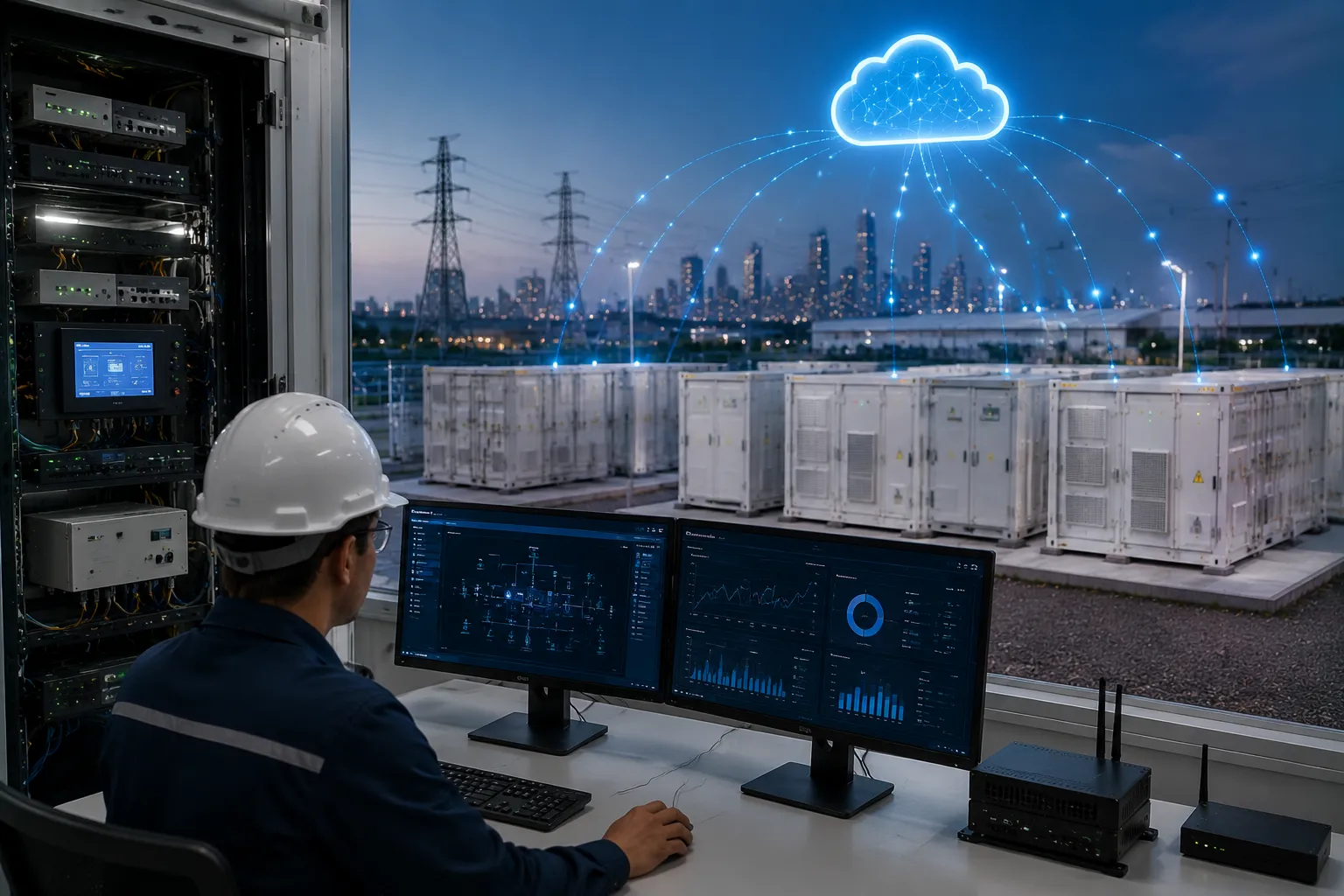
Edge Control Reliability Meets Cloud-Scale Intelligence
Percenec Energy deploys a dual-layer software architecture. At the facility level, an industrial DIN-rail edge gateway executes local closed-loop control algorithms in real time, guaranteeing zero-export enforcement, peak shaving, and islanding control even during complete internet connection outages.
Simultaneously, edge gateways stream high-frequency operational telemetry to the cloud portal. Facility managers obtain centralized dashboard monitoring, historical analytics, automated financial yield tracking, and remote parameter tuning across all energy storage assets.
EMS Dispatch Mode Technical Reference Matrix
Detailed operational parameters, control triggers, and primary financial metrics across key software dispatch modes.
| Dispatch Mode | Control Trigger | BESS Control Strategy | Grid Point State | Primary Financial ROI Driver |
|---|---|---|---|---|
| Self-Consumption | PV generation > Local facility load | Stores daytime PV surplus; discharges to meet load demand | Zero or minimal power backfeed to grid | Eliminates high retail electricity import tariffs |
| Zero-Export Control | PCC meter detects reverse power flow | Fast-charges BESS or curtails PV inverter output | Strictly 0 kW backfeed (< 100ms response) | Ensures compliance with utility interconnection rules |
| Peak Shaving Arbitrage | Facility load exceeds target kW threshold | Discharges BESS during peak windows to clip spikes | Grid import capped at pre-set kW limit | Dramatically lowers monthly peak demand charges |
| Microgrid Islanding | Grid outage or voltage deviation trip | Switches to grid-forming mode to anchor site grid | Isolates via Static Transfer Switch gear | Prevents costly factory downtime and load loss |
Hardware Matrix: Integrated Solar Plus Storage Systems
Engineered for high-efficiency PV integration, Percenec Energy delivers Tier-1 LFP battery hardware designed for maximum safety, rapid deployment, and seamless EMS control across our full range of products.
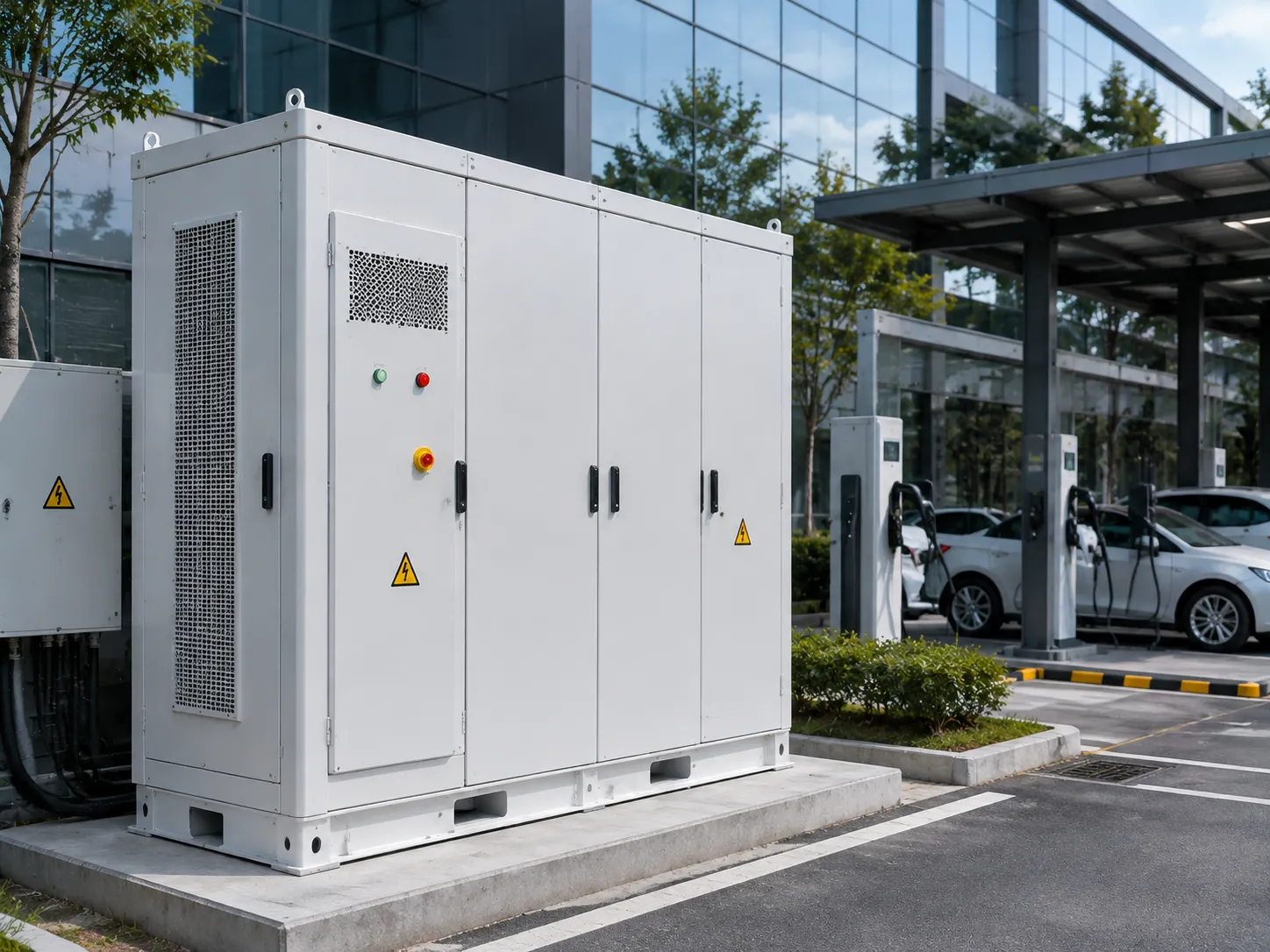 100kW / 215kWh
 Outdoor C&I Energy Storage Cabinet
Compact liquid-cooled outdoor cabinet with Tier-1 LFP cells, ideal for commercial rooftops, retail facilities, and EV charging hubs using specialized energy storage cabinets.
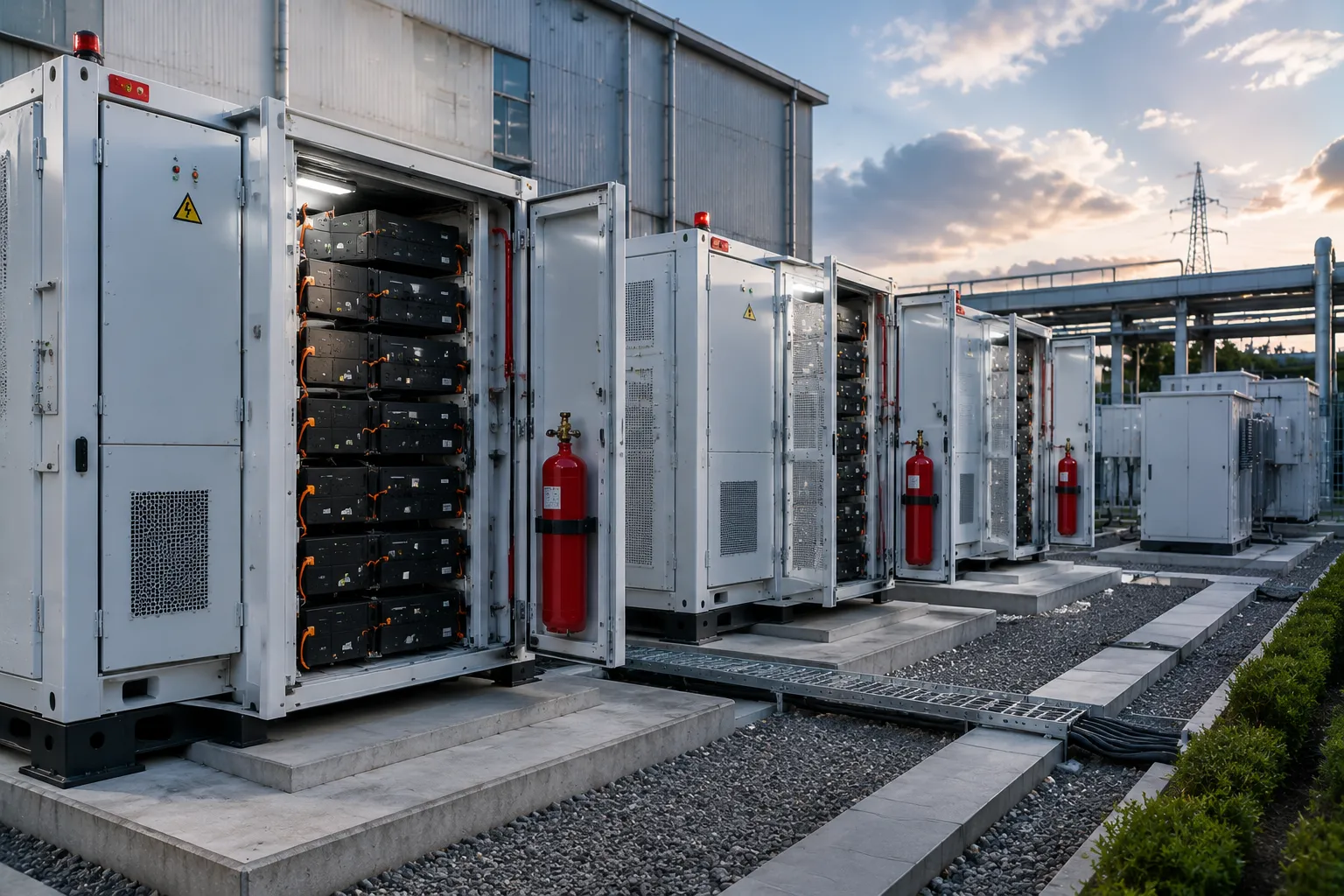 250kW / 500kWh
 Modular BESS Unit
Scalable parallel architecture featuring smart string BMS and integrated fire suppression for medium-sized factories and distributed microgrids.
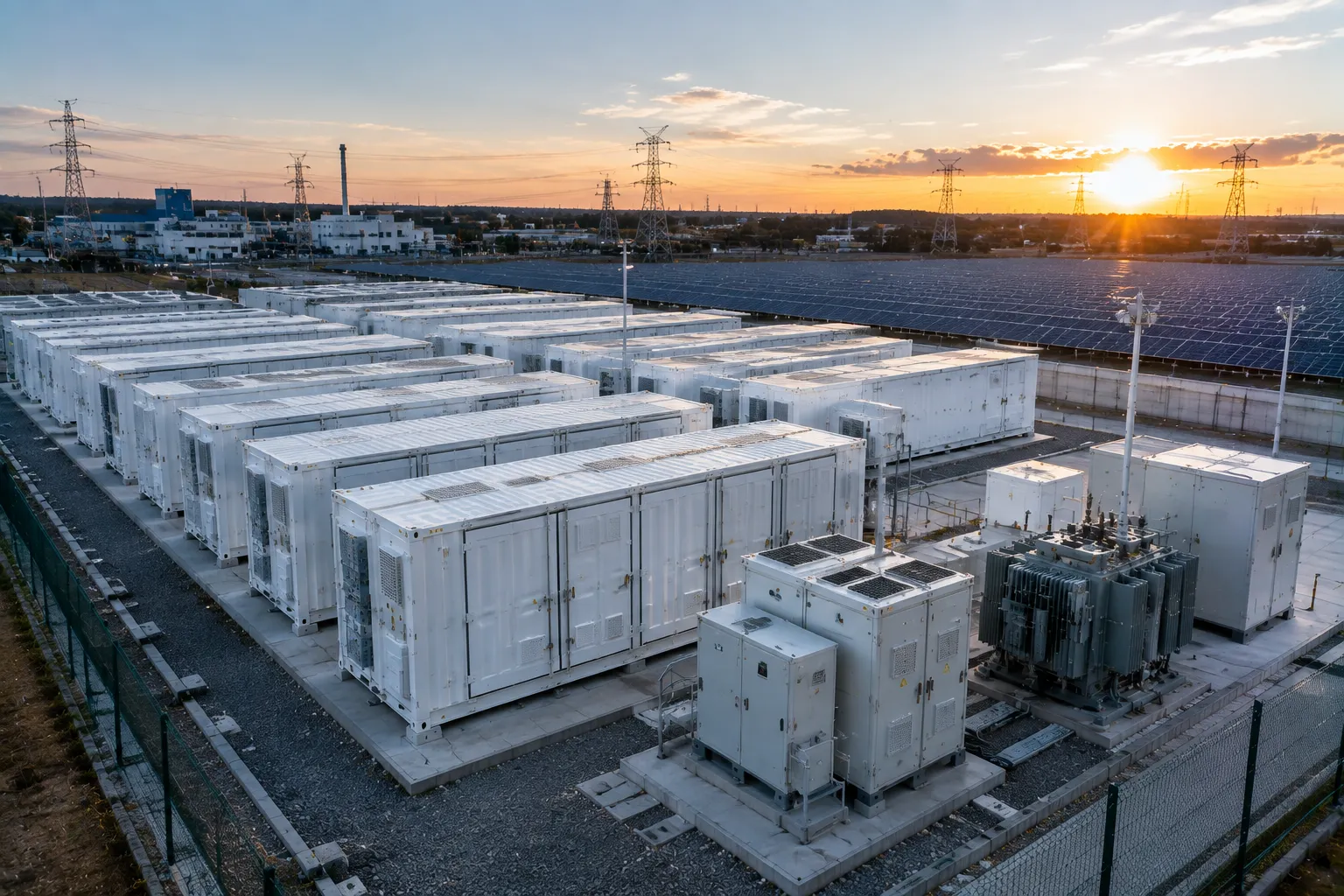 1MW / 2MWh - 3.44MWh
 Containerized Large-Scale BESS
High-density ISO containerized storage for utility-scale solar farms, industrial parks, and central grid support with robust containerized energy storage systems.
System Comparison & Applications
Compare specifications across Percenec Energy hardware configurations to match your project demands.
| System Model | Capacity Range | Key Architecture | Primary Applications |
|---|---|---|---|
| Outdoor C&I Energy Storage Cabinet | 100kW / 215kWh | Liquid-Cooled Outdoor Cabinet | Small-to-Medium Commercial Rooftops, EV Charging Hubs |
| Modular BESS Unit | 250kW / 500kWh | Scalable Parallel Architecture, Smart String BMS | Medium Factories, Distributed Microgrids |
| Containerized Large-Scale BESS | 1MW / 2MWh - 3.44MWh | High-Density ISO Container Enclosure | Utility-Scale Solar Farms, Large Industrial Parks |
Commercial Solar + Storage Integration FAQ
Explore technical insights, architectural choices, and economic models for integrating advanced energy storage into commercial and industrial operations.
01 Is it feasible to retrofit existing commercial PV setups with BESS without replacing solar inverters?
Yes, retrofitting operational commercial PV installations with a Battery Energy Storage System (BESS) is seamless using an AC-coupled storage architecture. In an AC-coupled topology, the storage inverter connects directly to the facility’s main AC distribution busbar rather than interfering with the DC wiring or string configuration of your existing solar arrays.
This operational decoupling provides critical advantages for commercial & industrial (C&I) facility owners:
- Zero Solar Inverter Replacement: Keep your existing PV inverters intact, preserving remaining factory warranties and avoiding expensive utility re-certification fees.
- Minimal Facility Downtime: Interconnection occurs at the main AC distribution board, allowing existing solar power generation to operate continuously throughout installation and commissioning.
- Independent Capacity Sizing: Battery discharge power (kW) and energy capacity (kWh) can be sized independently of original solar array dimensions to match actual load profiles.
Percenec Energy delivers fully integrated, pre-engineered AC-coupled BESS units equipped with revenue-grade smart meters at the Point of Common Coupling (PCC) to orchestrate real-time dynamic charge and discharge cycles without altering legacy solar hardware.
02 How does Percenec Energy calculate optimal battery power (kW) and capacity (kWh) for C&I projects?
Determining optimal commercial BESS capacity requires rigorous multi-variable algorithmic simulation rather than simplified estimates. Percenec Energy’s proprietary modeling engine processes four core operational datasets to pinpoint the ideal kW/kWh storage capacity:
1. 15-Minute Interval Load Data
Analyzing 8,760 annual utility data points to map facility load spikes, base load duration, power factor, and seasonal operating variations.
2. Solar Generation Profiles
Overlaying seasonal hourly PV generation curves to evaluate midday production surplus, inverter clipping, and curtailment risk.
3. Tariff & Utility Rate Structures
Evaluating Time-of-Use (TOU) energy rate spreads, monthly peak demand charges ($/kW), and feed-in tariff policies.
4. Grid Interconnection Limits
Factoring in local transformer capacities, export limitations, anti-backfeed requirements, and utility interconnection constraints.
By simulating thousands of daily dispatch iterations, our BESS Sizing Assessment defines a tailored equipment configuration engineered to maximize Net Present Value (NPV) and deliver target payback timelines typically between 3.5 and 5 years.
03 How does the Solar Plus Storage system operate during multi-day rainy or overcast weather?
During periods of low solar irradiance due to persistent cloud cover or rain, the Percenec Energy Management System (EMS) dynamically transitions from solar self-consumption mode to Smart Grid-Interactive Dispatch.
By leveraging integrated satellite weather forecasting feeds and AI-driven load prediction models, Percenec EMS anticipates solar generation shortfalls up to 24 to 48 hours in advance. When predicted daytime PV generation is insufficient to charge storage reserves, the system schedules controlled grid charging during low-cost overnight off-peak utility hours.
This proactive dispatch strategy guarantees that when morning facility operations commence, the battery bank is fully energized with low-cost grid energy—shielding your business against expensive on-peak demand charges regardless of atmospheric conditions.
04 What are the financial return models and typical commercial solar storage cost payback timelines?
Commercial solar-plus-storage projects deliver strong financial yields by stacking multiple value streams into a unified energy asset:
- Peak Demand Shaving: Automatically discharging stored power during facility peak demand events to trim costly demand penalties (often $15–$45 per kW/month). To maximize these benefits, many enterprises deploy dedicated peak-shaving load-shifting solutions.
- TOU Energy Arbitrage: Charging batteries with low-cost midday solar or off-peak grid electricity and discharging during high-cost peak rate windows.
- PV Self-Consumption Maximization: Eliminating uncompensated feed-in losses by storing 100% of excess midday solar power for evening and peak-period operational use.
- Tax Incentives & Capital Depreciation: Leveraging regional clean energy grants, Investment Tax Credits (ITC), and accelerated depreciation benefits (such as MACRS).
For commercial facilities, manufacturing plants, and logistics hubs, standard Percenec Energy C&I storage systems yield complete project payback within 3 to 5 years, with 15-year Internal Rates of Return (IRR) ranging from 18% to 26%.
05 How does Percenec Energy guarantee zero-export compliance under strict utility regulations?
In regions where local utilities enforce zero-export or strict non-feed-in rules, Percenec Energy deploys a millisecond-level closed-loop active power control system.
High-speed revenue meters at the Point of Common Coupling (PCC) stream continuous three-phase power measurement to the local Percenec EMS controller. If onsite electrical load drops suddenly during high PV output, the EMS adjusts battery charging power in less than 100 milliseconds to absorb surplus energy.
If the battery reaches 100% State of Charge (SOC), the EMS communicates directly with solar inverters via Modbus TCP to curtail PV output in real time, guaranteeing zero reverse power flow to the distribution grid and protecting against utility non-compliance penalties.
06 How is battery lifespan protected during heavy daily commercial cycling?
Percenec Energy hardware utilizes Tier-1 Automotive-Grade Lithium Iron Phosphate (LFP) cells, inherently engineered for exceptional thermal stability and rated for over 6,000 to 8,000 cycles at 80% Depth of Discharge (DoD).
To safeguard long-term health across 15+ operational years, our liquid-cooled commercial ESS enclosures maintain precise cell temperature uniformity within ±2°C. Intelligent cell-level BMS telemetry monitors State of Health (SOH) and cell thermal behavior in real time, automatically modulating charging dynamic C-rates to extend overall battery cycle life by over 15% compared to air-cooled architectures.
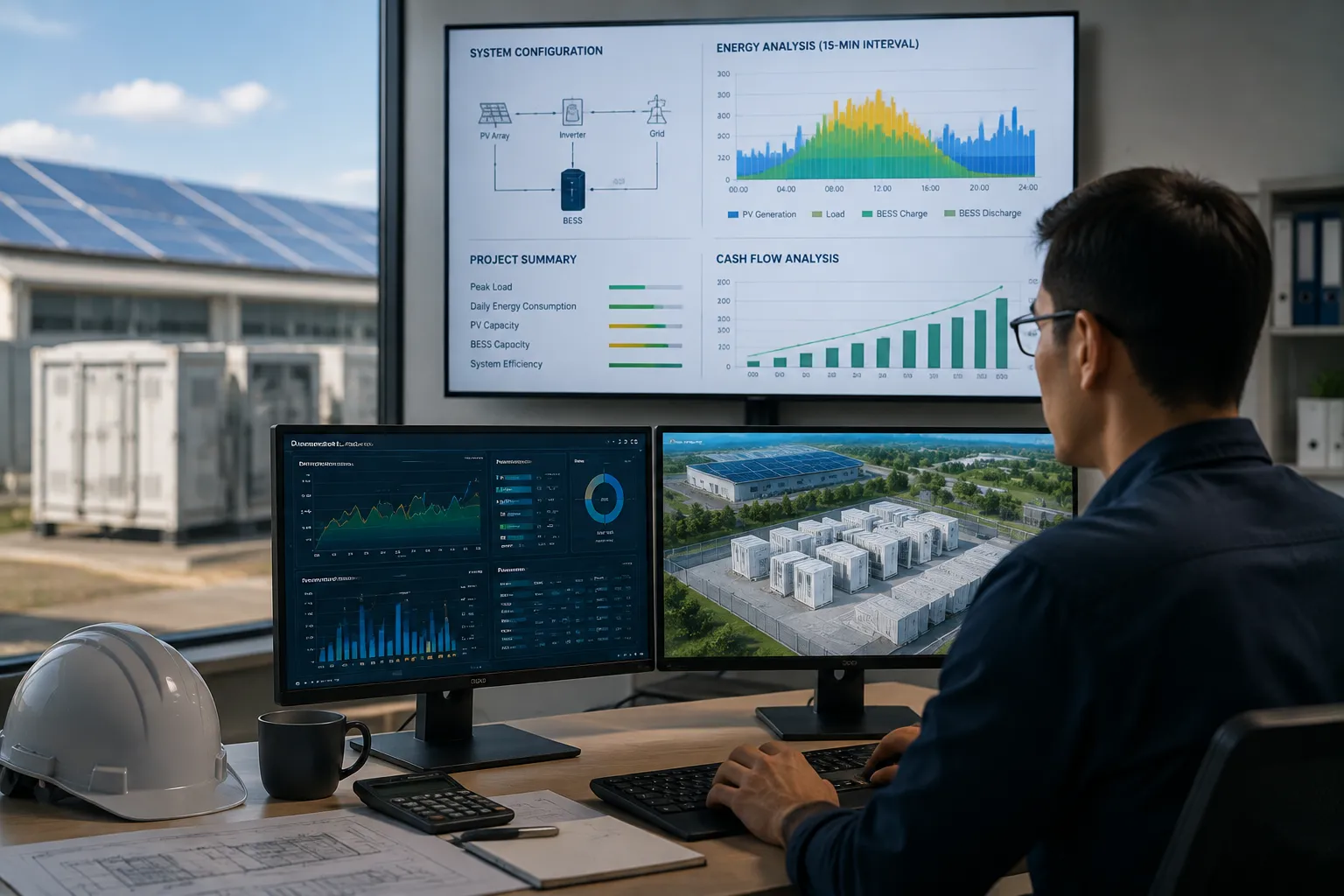 C&I Solar + BESS
Need a Custom BESS Sizing Assessment?
Our engineering team evaluates your facility's 15-minute interval data, PV layout, and local tariff structure to deliver an optimized system specification within 24 hours.
Key Integration Rules
- • AC Coupling: Ideal for retrofits; leaves existing solar inverters untouched. Explore our specialized battery energy storage systems for deployment options.
- • DC Coupling: Optimized for new builds to achieve maximum round-trip efficiency.
- • Response Time: Closed-loop zero-export control triggers in <100ms.
- • System Life: Liquid-cooled LFP delivers 6,000+ cycles at 80% DoD.
Turnkey Utility Compliance
Pre-certified for UL1741 SB, IEEE 1547, and international grid standards with rapid frequency regulation and anti-islanding capabilities.
Sub-20ms Transfer Speed
Integrated automatic transfer switching maintains uninterruptible power for critical commercial operations during unexpected utility outages.
Open Telemetry Protocols
Native Modbus TCP, MQTT, and RESTful APIs enable seamless integration with plant SCADA and building management systems (BMS).
Ready to Maximize the Value of Your Commercial Solar Asset?
Partner with Percenec Energy for a complete BESS sizing assessment, custom AC or DC architecture proposal, and detailed financial ROI analysis delivered within 24 hours.
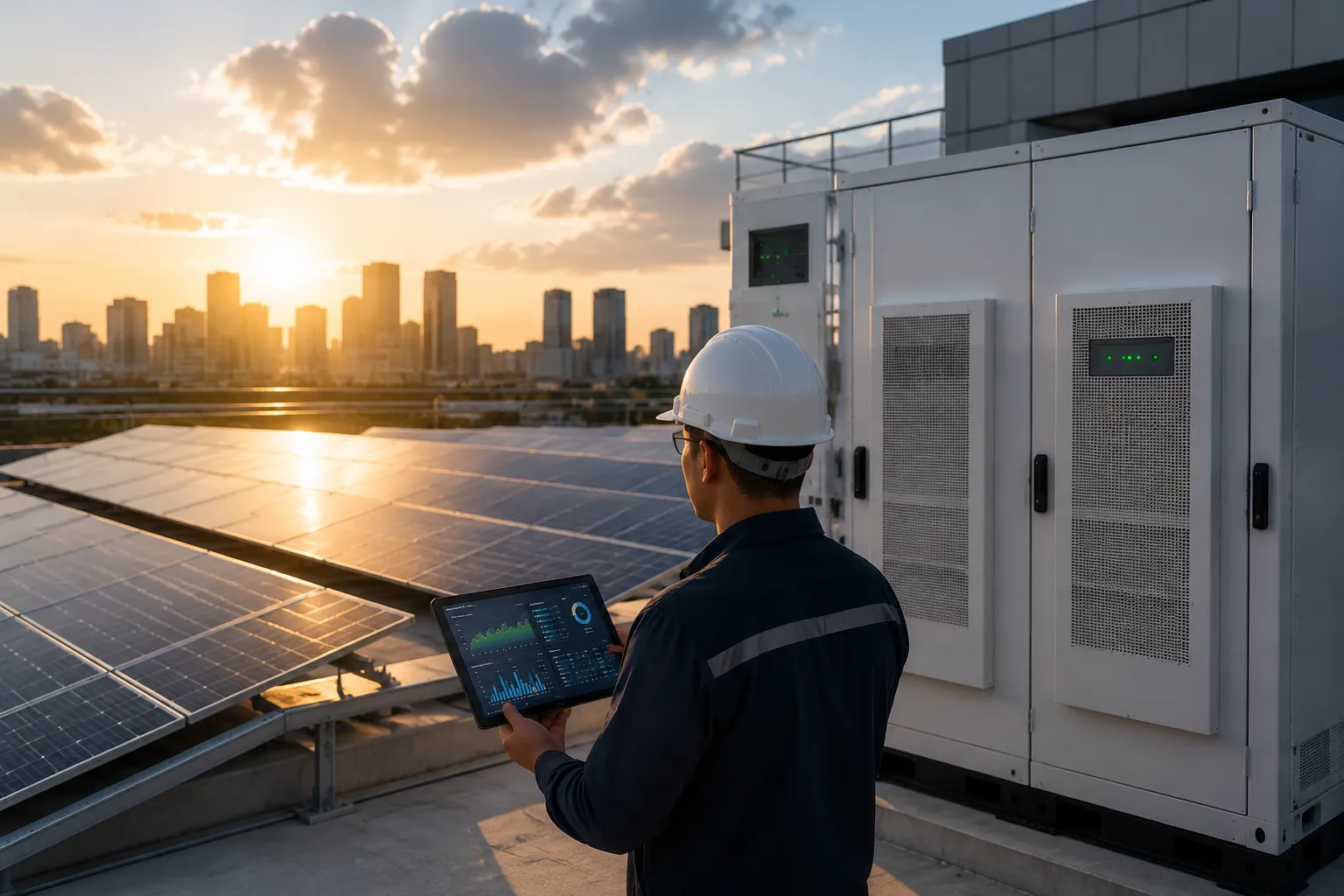
Turn curtailed solar generation into bankable, dispatchable clean energy assets with Percenec.
Request Your Custom BESS Proposal
Connect with senior energy storage engineers to accelerate your C&I project evaluation.