Are you concerned about thermal runaway risks, unexpected downtime, or rapid capacity loss in your next energy deployment? As engineers and facility operators, selecting the right hardware and control architecture dictates whether your storage investment delivers reliable ROI or turns into a maintenance headache.
Complete Technical Architecture: How a BESS Works
A high-performance lithium battery energy storage system requires tight integration across chemistry, mechanical packaging, power electronics, and control layers. At Percenec Energy, we design our systems from the cell up to eliminate failure points and optimize round-trip efficiency.
Battery Chemistry: LiFePO4 vs. NMC
Cell chemistry directly determines safety and your overall Levelized Cost of Storage (LCOS). While NMC offers high volumetric density, LiFePO4 (LFP) dominates stationary storage due to its non-toxic structure and extreme thermal stability.
| Technical Parameter | LiFePO4 (LFP) Battery Pack | NMC Battery Pack |
|---|---|---|
| Thermal Runaway Temp | ~270°C (Highly Stable) | ~210°C (Higher Risk) |
| Cycle Life (80% DoD) | 6,000 – 10,000+ Cycles | 2,000 – 3,000 Cycles |
| Chemical Toxicity | Non-toxic, Cobalt-free | Contains Cobalt & Nickel |
| Safety Profile | Superior structural tolerance | Requires heavy active cooling |
| Ideal Application | Long-duration BESS | Space-constrained EVs |
We standardize on long-life LiFePO4 battery pack designs to ensure over a decade of continuous daily cycling under heavy operation.
Cell-to-Pack Cabinet Engineering
- Battery Cell: High-density LFP prismatic cells engineered for high C-rate cycling.
- Battery Module: Laser-welded cell arrays with integrated busbars and direct thermal barriers.
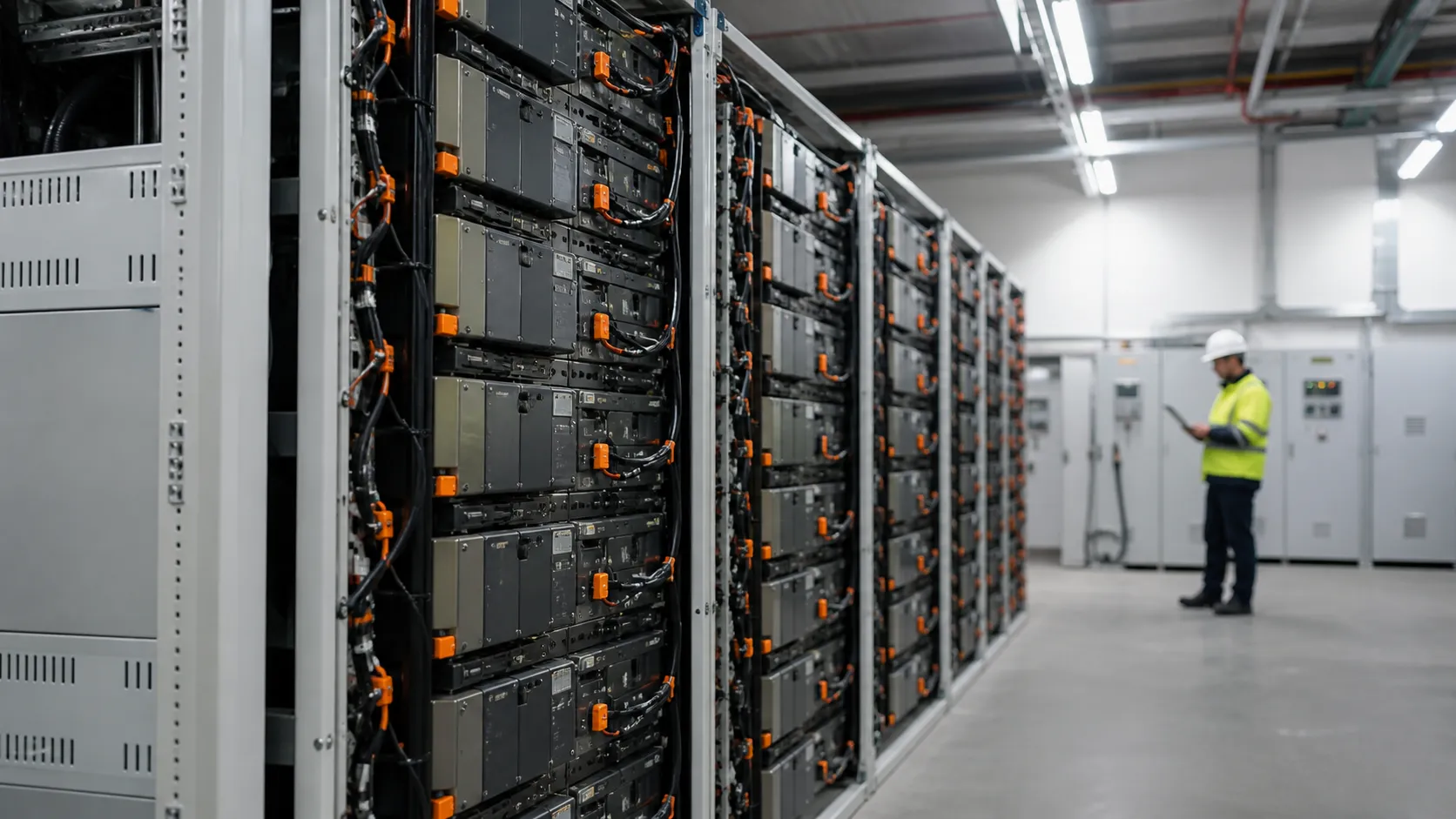
- Battery Rack: Vertical frame integration housing high-voltage disconnects and local balancing nodes.
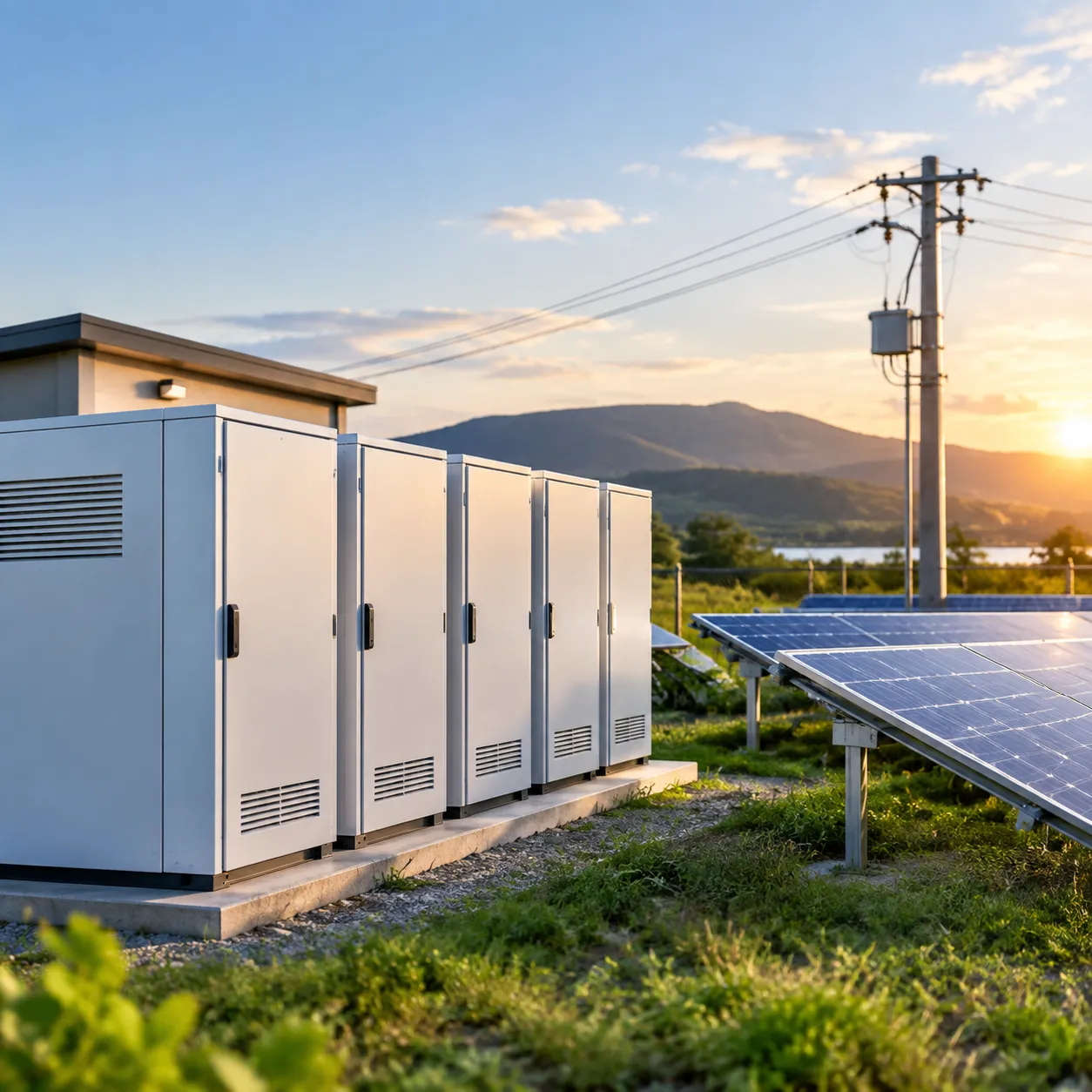
- Outdoor Cabinet: IP55/IP65 weather-sealed, fire-rated modular enclosures built for harsh field environments.
Battery Management System (BMS) Architecture
- BMU (Module Tier): Directly monitors individual cell voltages and localized temperatures.
- BCU (Rack Tier): Manages string contactors, controls passive/active balancing, and calculates precise State of Charge (SoC) and State of Health (SoH).
- BAMS (System Tier): Aggregates system telemetry, communicates with power electronics, and prevents overcharging or deep discharge.
Power Conversion System (PCS)
The power conversion system (PCS) operates as the heavy-duty muscle of the storage unit, executing bi-directional power inversion:
- DC to AC Inversion: Converts stored DC power to synchronized AC electricity for facility loads or grid export.
- AC to DC Rectification: Converts surplus solar PV or off-peak grid AC power back into stored DC energy.
- Sub-Second Response: Delivers millisecond-level power switching for grid stabilization and seamless backup transition.
Energy Management System (EMS) & SCADA Controls
- Automated Dispatch: Executes automated peak shaving, demand charge management, and dynamic grid response algorithms.
- Microgrid Integration: Coordinates with site solar inverters, backup generators, and building management controllers.
- Cloud SCADA: Delivers live operational telemetry, fault diagnostics, and remote optimization updates.
Key B2B Applications and ROI for Lithium Battery Energy Storage Systems
Are soaring demand charges and grid instability eating into your operational margins? A commercial lithium battery energy storage system turns energy management from an unpredictable cost center into an active, revenue-generating asset. Here is how enterprise clients drive down Levelized Cost of Storage (LCOS) across core commercial and industrial applications:
Peak Shaving & Demand Charge Reduction
Utility tariffs often penalize commercial facilities with heavy capacity charges based on their single highest power spike. By implementing automated peak shaving and load shifting strategies, our battery storage units automatically discharge stored power during peak hours.
- Tariff Arbitrage: Charge the battery during cheap off-peak night hours; discharge during high peak afternoon rates.
- Flattened Load Profiles: Cap facility peak draw to avoid steep demand charge penalties.
- Fast ROI: Typical payback periods range between 3 to 5 years depending on local utility rate structures.
Solar Self-Consumption Optimization
Pairing commercial PV arrays with a commercial energy storage solution prevents wasted renewable generation during midday peak solar output.
- Zero Export Losses: Store excess daytime generation directly into high-capacity LiFePO4 battery packs instead of exporting to the grid at low feed-in tariffs.
- Overnight Clean Power: Run operations on stored solar energy during evening shifts, raising solar self-consumption rates beyond 85%.
Microgrid Resilience & Emergency Backup
Grid outages cost industrial sites thousands of dollars per minute in downtime. Our behind-the-meter (BTM) storage hardware pairs with intelligent microgrid controllers to provide uninterrupted backup power.
- Millisecond Transfer: Sub-20ms switching keeps mission-critical machinery, data centers, and cold chains online without operational flicker.
- Generator Optimization: Downsize diesel backup generators or run them at peak thermal efficiency alongside the battery bank.
Grid Ancillary Services & Revenue Stacking
Front-of-the-meter (FTM) and large-scale deployments allow asset owners to participate directly in wholesale power markets:
| Application | Operational Mechanism | Revenue Drivers |
|---|---|---|
| Frequency Regulation | Rapid sub-second charge/discharge responding to grid frequency fluctuations | High-margin utility grid stability payments |
| Spinning Reserves | Standby capacity ready for immediate power injection during grid dispatch calls | Capacity availability payments |
| Energy Arbitrage | Large-scale bulk power trading across wholesale market price swings | Wholesale buy-low, sell-high spreads |
At Percenec Energy, we engineer our modular lithium ion battery cabinet architectures to excel in multi-application revenue stacking, ensuring your capital investment delivers maximum financial yield over its long operational lifespan.
Thermal Management and Safety Standards in a Lithium Battery Energy Storage System
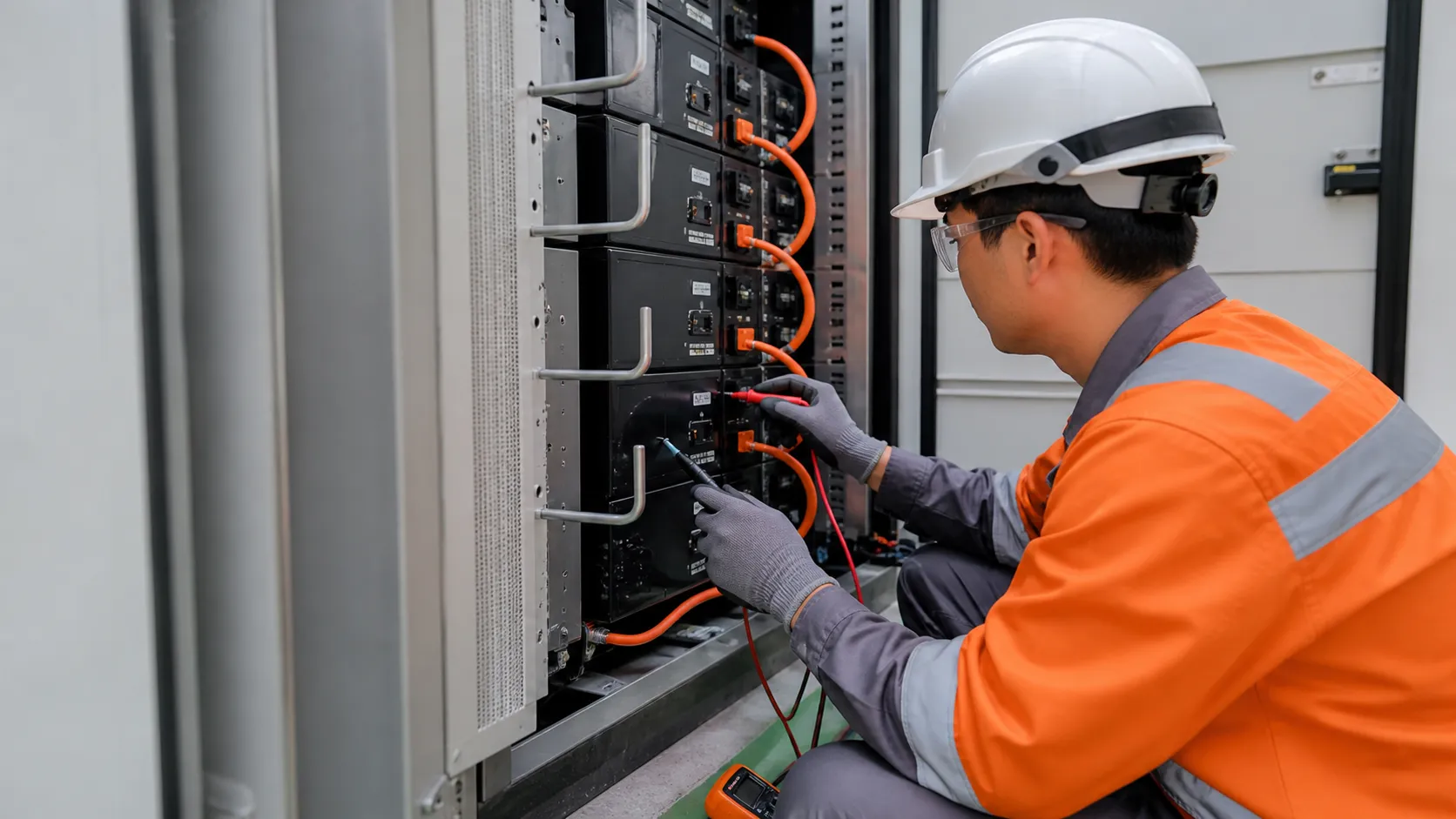
Liquid Cooling vs. Forced Air Cooling
Modern high-density storage architectures have outgrown traditional forced-air cooling. Maintaining tight thermal control across thousands of stacked cells requires precise liquid thermal management.
| Feature | Forced Air Cooling | Liquid Cooling (Our Standard) |
|---|---|---|
| Cell Temperature Variance | 5°C to 8°C spread | ≤ 2°C to 3°C uniform spread |
| Energy Density Fit | Low-to-medium density | High-density containerized systems |
| Auxiliary Power Usage | High fan power consumption | Up to 30% lower parasitic load |
| Cell Lifespan Impact | Uneven degradation & hotspots | Maximized, uniform cycle life |
Liquid cooling circulates coolant directly through micro-channel plates attached to each lifepo4 battery pack. This eliminates localized heat zones, slashes parasitic HVAC loads, and extends total operational longevity.
Multi-Level Fire Protection and Thermal Runaway Mitigation
We build multi-stage defense mechanisms directly into every lithium ion battery cabinet to isolate and suppress hazards before they escalate:
- Early-Stage Off-Gas Detection: Sensitive gas sensors track trace carbon monoxide (CO) and combustible volatile organic compounds (VOCs) minutes before thermal runaway occurs, triggering automated sub-system shutdown.
- Targeted Clean-Agent Suppression: Automated aerosol or FK-5-1-12 clean-agent fire suppression systems instantly flood localized battery compartments to quench flames without damaging surrounding electronics.
- Structural Deflagration Venting: Exterior cabinet explosion vents direct high-pressure gas release safely upward and away from adjacent equipment and site personnel.
Global Certifications Checklist
Every lithium battery energy storage system we supply meets rigorous global benchmarks. You can inspect our complete list of international safety and quality certifications to ensure full compliance for your project region:
- UL 9540: Essential UL 9540 fire safety certification covering complete BESS system integration and grid interconnection.
- UL 1973: Standard for stationary battery packs, testing electrical, mechanical, and environmental endurance.
- IEC 62619: International safety requirements for secondary lithium cells and modules used in industrial applications.
- UN 38.3: Transport safety testing, ensuring safe international shipping across sea and land freight networks.
Form Factors & Sizing Matrix for a Lithium Battery Energy Storage System
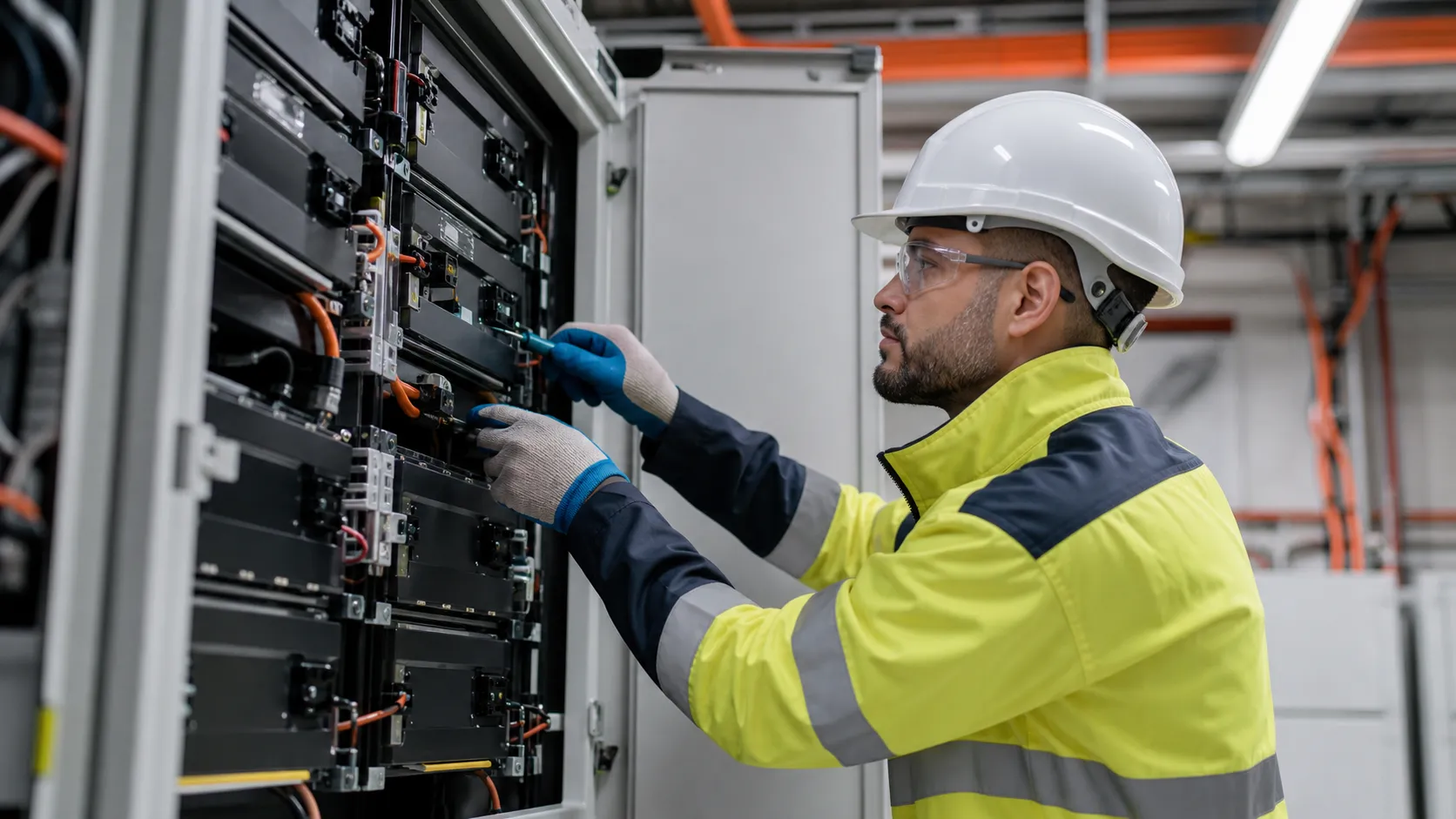
Sizing a lithium battery energy storage system requires matching total battery capacity kWh, peak discharge rates, and physical site constraints. We engineer BESS configurations across three distinct form factors to address specific deployment scales and duty cycles.
Residential & Light Commercial Capacity (10 kWh – 50 kWh)
Designed for retail sites, light offices, and residential properties where footprint efficiency is critical:
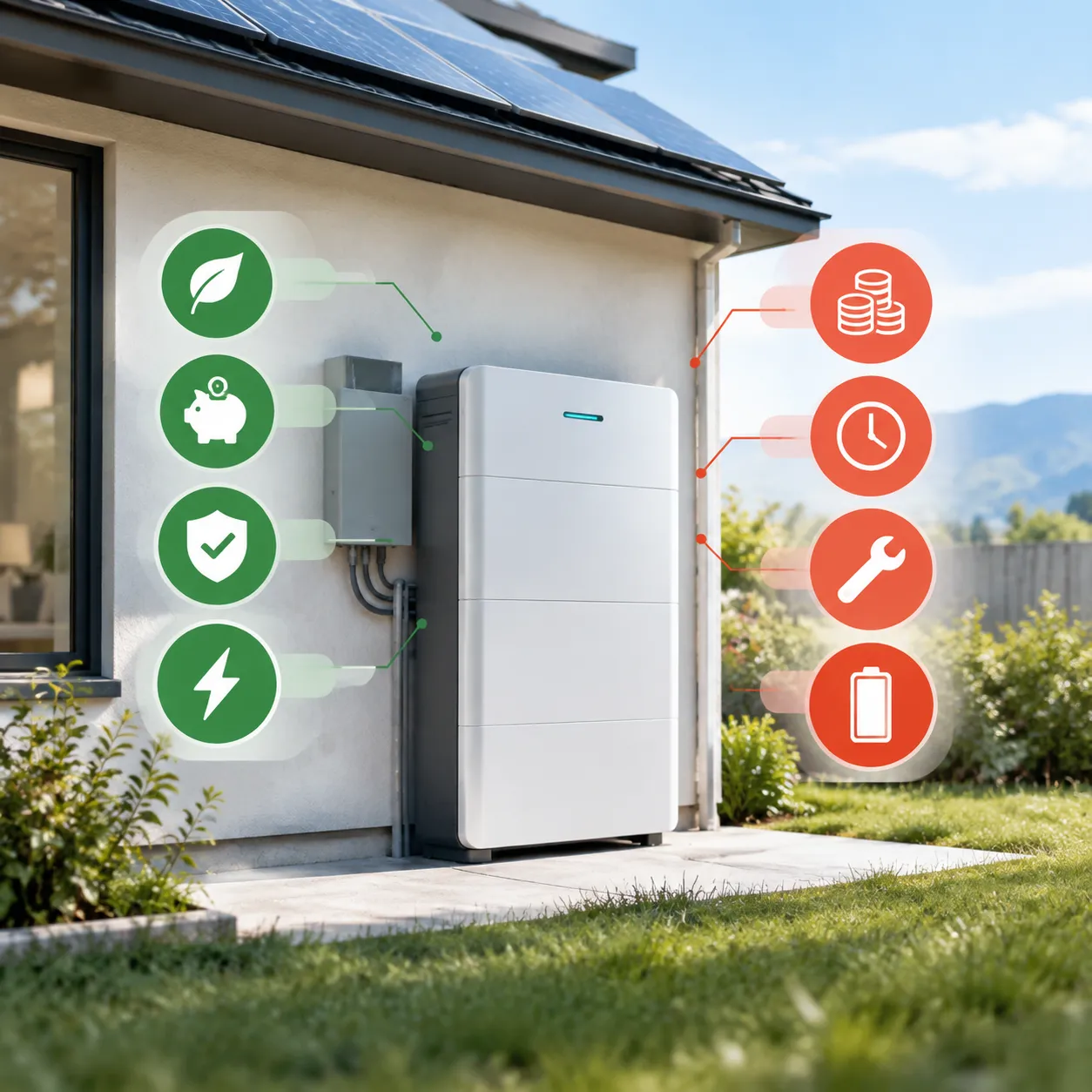
Form Factor: Compact wall-mounted units or ultra-slim floor-standing enclosures.
Primary Applications: Maximizing daily PV energy yield, shifting solar energy to high-tariff evening hours, and providing seamless emergency load backup.
Integration: Direct DC-coupling or AC-coupling options compatible with standard hybrid inverters for fast installation.
Commercial & Industrial C&I Capacity (100 kWh – 500 kWh)
Targeted at manufacturing plants, commercial real estate, logistics facilities, and EV charging hubs:
Form Factor: All-in-one IP55 / IP65 outdoor lithium energy storage cabinets.
Primary Applications: Executing automated peak shaving, mitigating steep demand charges, buffering high-power EV fast chargers, and providing emergency factory standby power.
Integration: Fully integrated units containing battery modules, liquid cooling loops, dynamic BMS, bi-directional PCS, and localized fire protection.
Utility & Large Industrial Capacity (1 MWh – 5 MWh+)
Built for utility substations, IPP renewable plants, and heavy industrial complexes:
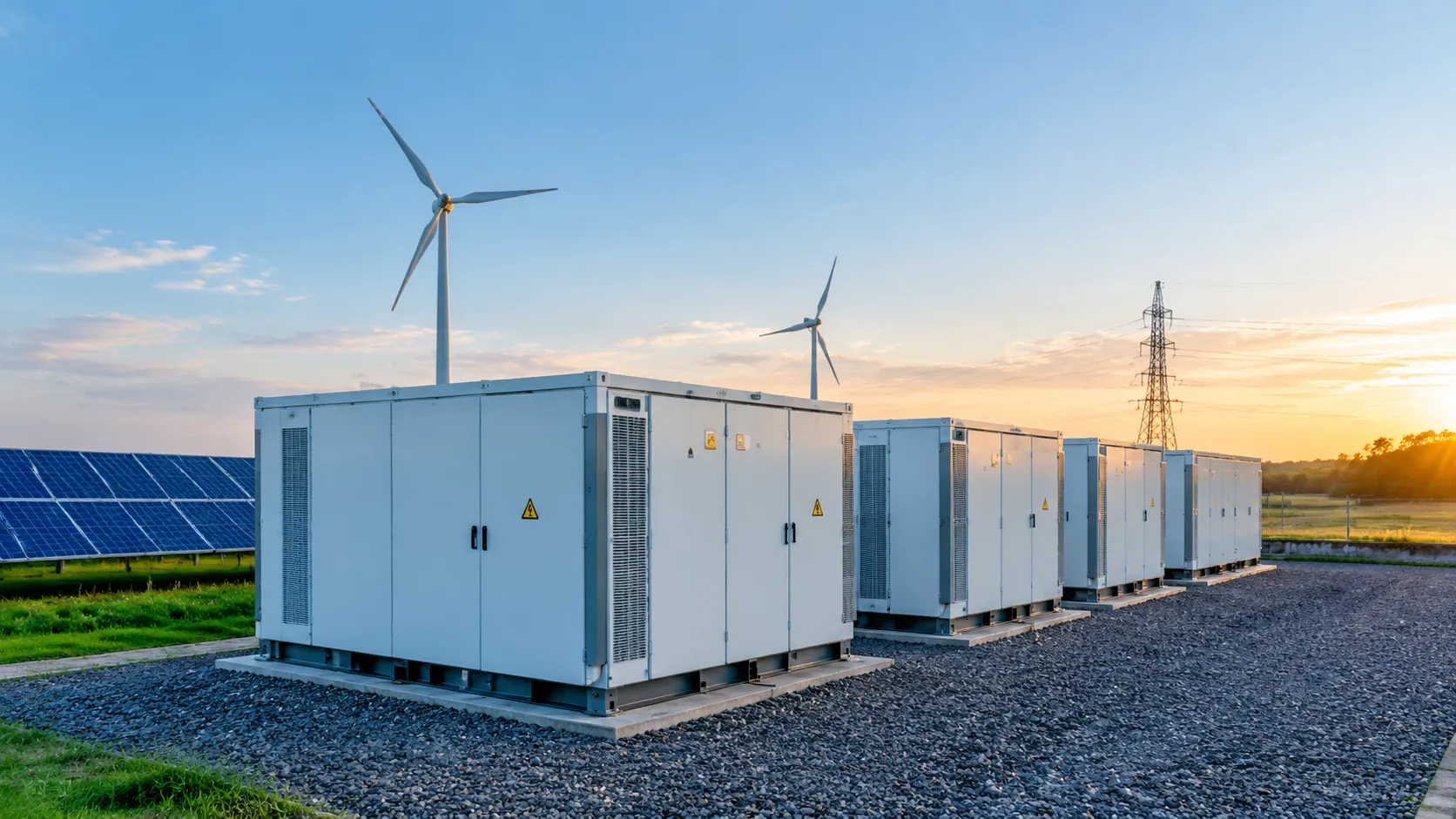
Form Factor: Modular 20ft and 40ft ISO shipping containers.
Primary Applications: Grid frequency regulation, spinning reserves, energy arbitrage, and smoothing large-scale renewable generation output.
Integration: Heavy-duty containerized infrastructure housing high-voltage rack systems, centralized thermal management, explosion venting, and SCADA interfaces.
BESS Capacity & Application Matrix
| Capacity Tier | Energy Scale | Enclosure Form Factor | Core Operational Focus |
|---|---|---|---|
| Light Commercial | 10 kWh – 50 kWh | Wall-Mount / Slim Cabinet | Solar-plus-storage optimization & essential backup |
| Commercial & Industrial | 100 kWh – 500 kWh | Outdoor All-in-One Cabinet | Peak shaving & facility demand charge reduction |
| Utility & Grid Scale | 1 MWh – 5 MWh+ | 20ft / 40ft ISO Container | Grid stabilization & renewable power buffering |
Why System Integrators Partner with Percenec Energy for Lithium Battery Energy Storage Systems
Modular and Scalable BESS Architecture
We design flexible, turnkey DC blocks and fully integrated AC energy storage systems that scale effortlessly from 100 kWh industrial installations to multi-megawatt grid applications. Our modular engineering simplifies site planning, shortens commissioning times, and lowers civil balance-of-system (BOS) costs. Through our specialized custom ESS integration solutions, we tailor system voltage, enclosure ratings, and footprint constraints to exact project specs.
Rigorous Quality Control and Low LCOS
Maximizing round-trip efficiency (RTE) and extending cycle life directly reduces your Levelized Cost of Storage (LCOS).
- Tier-1 LiFePO4 Chemistry: High thermal stability with long-life cell chemistry delivering 6,000 to 10,000+ cycles.
- Multi-Tier BMS Logic: Active monitoring of voltage, current, SoC, and SoH to prevent overcharging, deep discharge, and cell imbalance.
- Liquid Thermal Management: High-efficiency cooling loops maintain cell-to-cell temperature variances within 2–3°C for maximum operational life.
End-to-End OEM/ODM Support for Global Energy Installers
Our structured project delivery framework ensures every lithium-ion battery cabinet is fully assembled, pre-commissioned, and ready for grid connection.
| Engineering Feature | Standard Industry Average | Percenec Energy BESS Solution |
|---|---|---|
| System Flexibility | Fixed capacity layouts | Scalable modular DC blocks & turnkey AC solutions |
| Cell Temperature Delta | $\le$ 5°C (Forced Air Cooling) | $\le$ 2–3°C (Uniform Liquid Cooling) |
| Cell Screening & Diagnostics | Basic batch sorting | 100% automated cell grading and impedance matching |
| Global Compliance | Single-region focus | Multi-region certified (UL 9540, UL 1973, IEC 62619, UN 38.3) |
We empower energy installers across Europe, Southeast Asia, the Middle East, and Africa with direct engineering consultation, pre-tested hardware configurations, and certified compliance for local grid codes.
Related Sources
- https://www.polinovelbess.com/info/liquid-
- https://www.ul.com/services/energy-storage-system-testing-and-certification
- https://www.ccreee.org/wp-content/uploads/2021/06/Battery-Storage-for-Resilience-NREL.pdf
- https://www.ul.com/resources/your-guide-battery-energy-storage
- https://www.polinovelbess.com/info/liquid-cooling-vs-air-cooling-in-bess-which-i-1034686