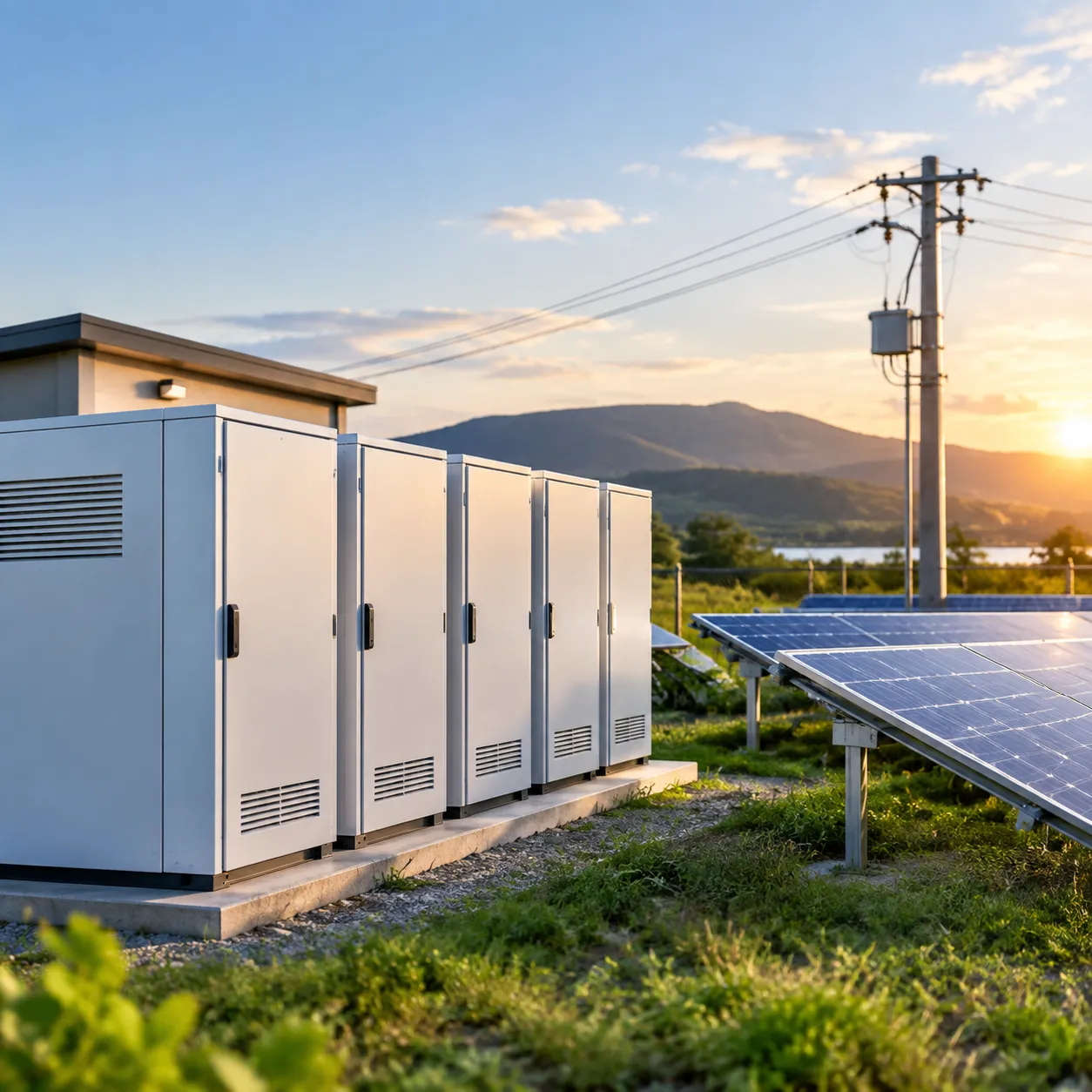
Are you thinking about investing in energy storage, but wondering if the payoff actually justifies the cost?
The right setup can slash your electricity bills and guarantee total energy resilience—but a misstep can turn into a massive financial headache.
That’s why understanding the real battery energy storage system advantages and disadvantages is critical before spending a single dollar.
In this guide, we cut through the industry hype to give you the honest pros, the hidden drawbacks, and everything you need to make the right decision.
Let's dive in.
How a Battery Energy Storage System (BESS) Works
A Battery Energy Storage System (BESS) captures electrical power from the grid or generation sources—like solar and wind—stores it in electrochemical cells, and releases it precisely when demand spikes or outages occur. It transforms intermittent power into a dispatchable, on-demand asset.
Core Components of a BESS
An industrial-grade BESS relies on four integrated hardware and software layers to ensure safe, continuous operation:
- Battery Modules & Racks: The physical backbone. Individual cells (predominantly lithium-ion) are grouped into modules and stacked in racks to achieve the required voltage and capacity.
- Power Conversion System (PCS / Inverter): A bidirectional inverter that converts alternating current (AC) from the grid or generator into direct current (DC) for storage, and instantly converts DC back to AC upon discharge.
- Battery Management System (BMS): The critical safety layer. It monitors individual cell health, voltage, state of charge (SOC), and temperature to prevent overcharging and mitigate thermal runaway risks.
- Energy Management System (EMS): The operational brain. This intelligent software analyzes energy market pricing, load profiles, and weather data to automate charge and discharge cycles for maximum efficiency.
The Basic Charge and Discharge Cycle
The operational flow of a BESS follows a streamlined three-step sequence:
- Charging Phase: During low-tariff hours or peak renewable generation, the EMS directs surplus AC power through the PCS, rectifying it to DC to charge the battery cells.
- Retention & Monitoring: The system holds energy at high round-trip efficiency while the BMS continuously logs thermal stability and cell equalization.
- Discharge Phase: When local electricity rates surge, the grid destabilizes, or primary power cuts out, the EMS triggers an instantaneous discharge, pushing AC power back into the facility or grid within milliseconds.
Grid-Scale vs. Commercial and Residential Applications
| System Tier | Primary Scale | Key Purpose | Typical Setup |
|---|---|---|---|
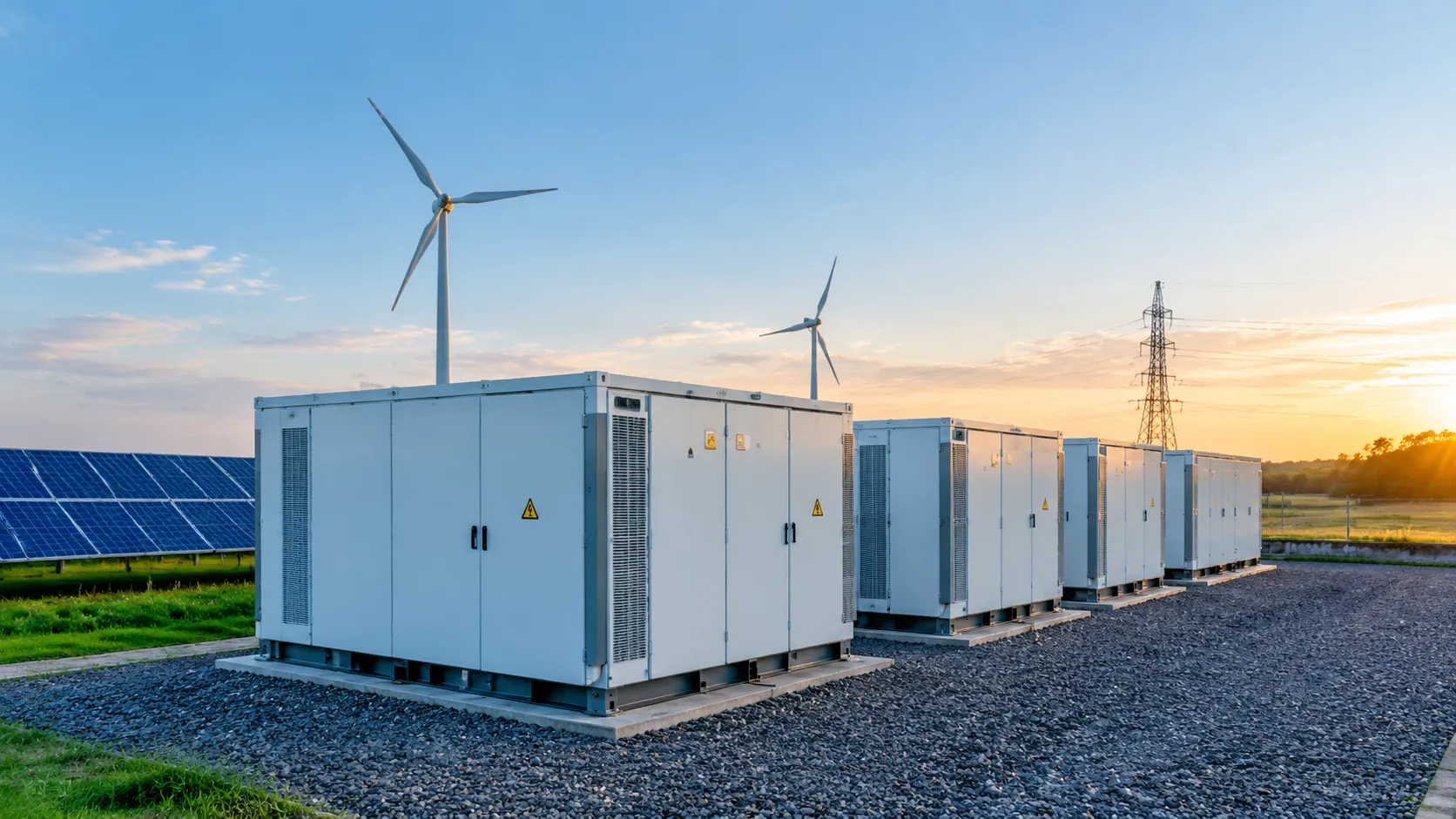
| Grid-Scale (Front-of-the-Meter) | 10 MW to 1+ GW | Grid stabilization, frequency response, renewable curtailment reduction | Large containerized outdoor enclosures directly tied to transmission lines. |
| Commercial & Industrial (Behind-the-Meter) | 100 kW to several MW | Peak shaving, demand charge management, facility backup power | Skid-mounted or containerized indoor/outdoor units integrated into facility switchgear. |
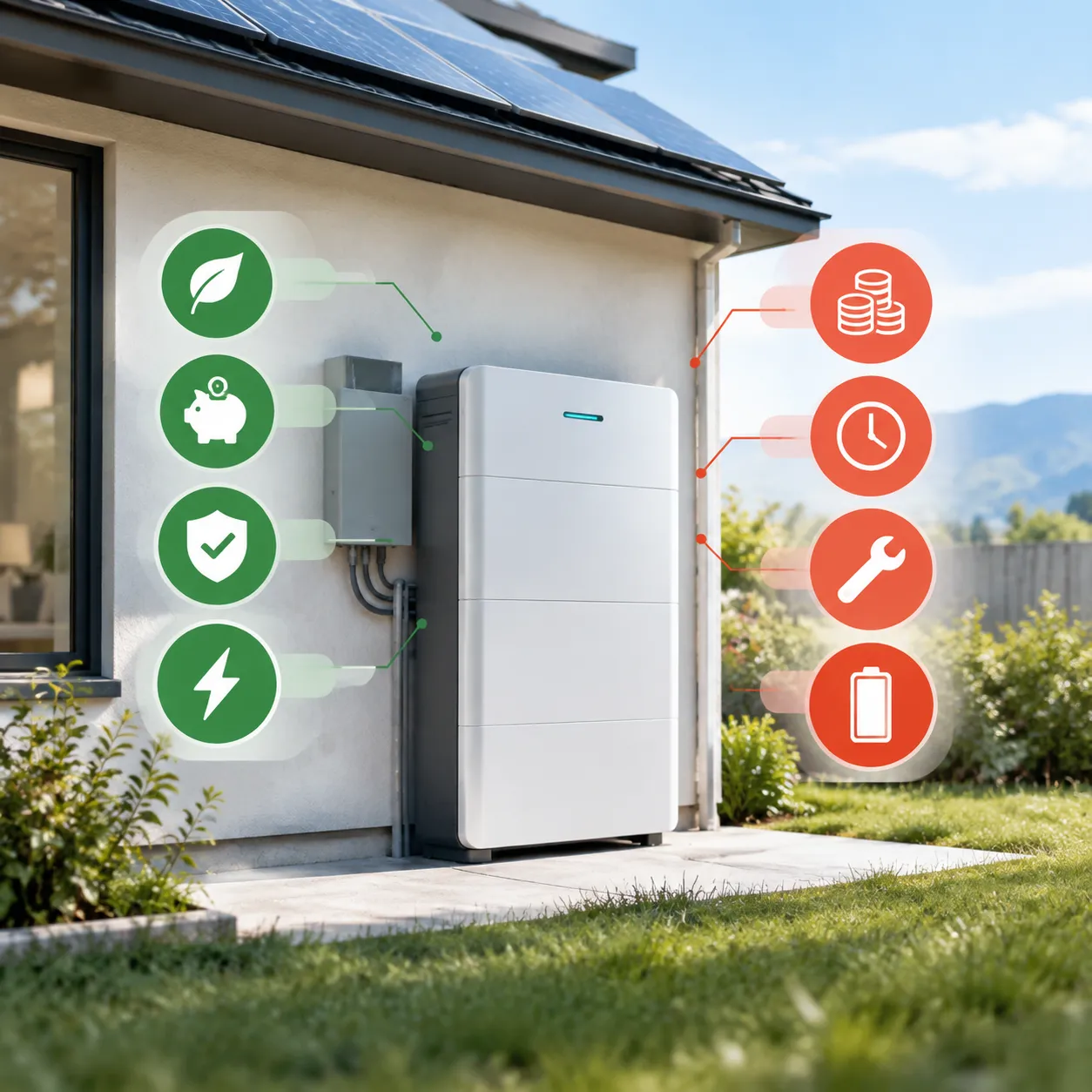
| Residential (Behind-the-Meter) | 5 kW to 30 kW | Solar self-consumption, emergency home backup, time-of-use optimization | Wall-mounted or compact floor units paired with rooftop PV arrays. |
Major Advantages of Battery Energy Storage Systems
When we deploy a battery energy storage system, the primary goal is eliminating volatility—both in grid stability and energy costs. Modern storage turns intermittent power into an on-demand, predictable asset.
Seamless Renewable Energy Integration
Solar and wind generate power when the weather allows, not necessarily when your operations need it most. By pairing generation assets with utility-scale battery storage containers for solar and wind, we eliminate curtailment and capture every kilowatt generated. The stored energy smooths out production curves, turning intermittent clean energy into reliable, 24/7 dispatchable power.
Peak Shaving and Load Shifting to Cut Electricity Bills
Demand charges and time-of-use (TOU) tariffs can account for up to 50% of a commercial electricity bill. Utilizing a BESS allows us to implement two proven cost-saving strategies:
Load shifting: Charge the battery pack during off-peak hours when grid electricity is cheapest or when on-site solar is producing excess energy.
Peak shaving: Discharge the battery during high-tariff periods or facility consumption spikes to keep utility meter readings below costly demand thresholds.
Enhanced Grid Reliability and Emergency Backup Power
Power outages and voltage sags can shut down critical industrial lines in seconds. We deploy commercial and industrial backup power systems to act as high-capacity uninterruptible power supplies (UPS). Unlike traditional diesel generators that require warm-up time and fuel logistics, a battery system switches on in milliseconds, keeping sensitive machinery, data centers, and cold storage facilities fully operational.
Fast Response Time for Frequency and Voltage Regulation
Grid stability requires instant balancing between supply and demand. Conventional fossil-fuel peaker plants can take anywhere from 10 to 30 minutes to ramp up to full capacity. In contrast, advanced lithium-ion BESS assets respond in milliseconds. This rapid-response capability allows operators to:
Stabilize local grid frequency and correct voltage fluctuations immediately.
Monetize capacity by participating in lucrative grid ancillary service markets.
Absorb sudden power surges and mitigate harmonic distortions.
Reduced Carbon Footprint and Fossil Fuel Dependency
Battery storage directly replaces inefficient, carbon-heavy peaker plants and backup diesel generators. By maximizing the self-consumption of clean energy and eliminating reliance on fossil-fuel spinning reserves, a BESS drastically reduces Scope 1 and Scope 2 emissions, helping operations meet regulatory compliance and corporate sustainability benchmarks.
Key Disadvantages and Challenges of BESS
High Upfront CapEx and Installation Costs
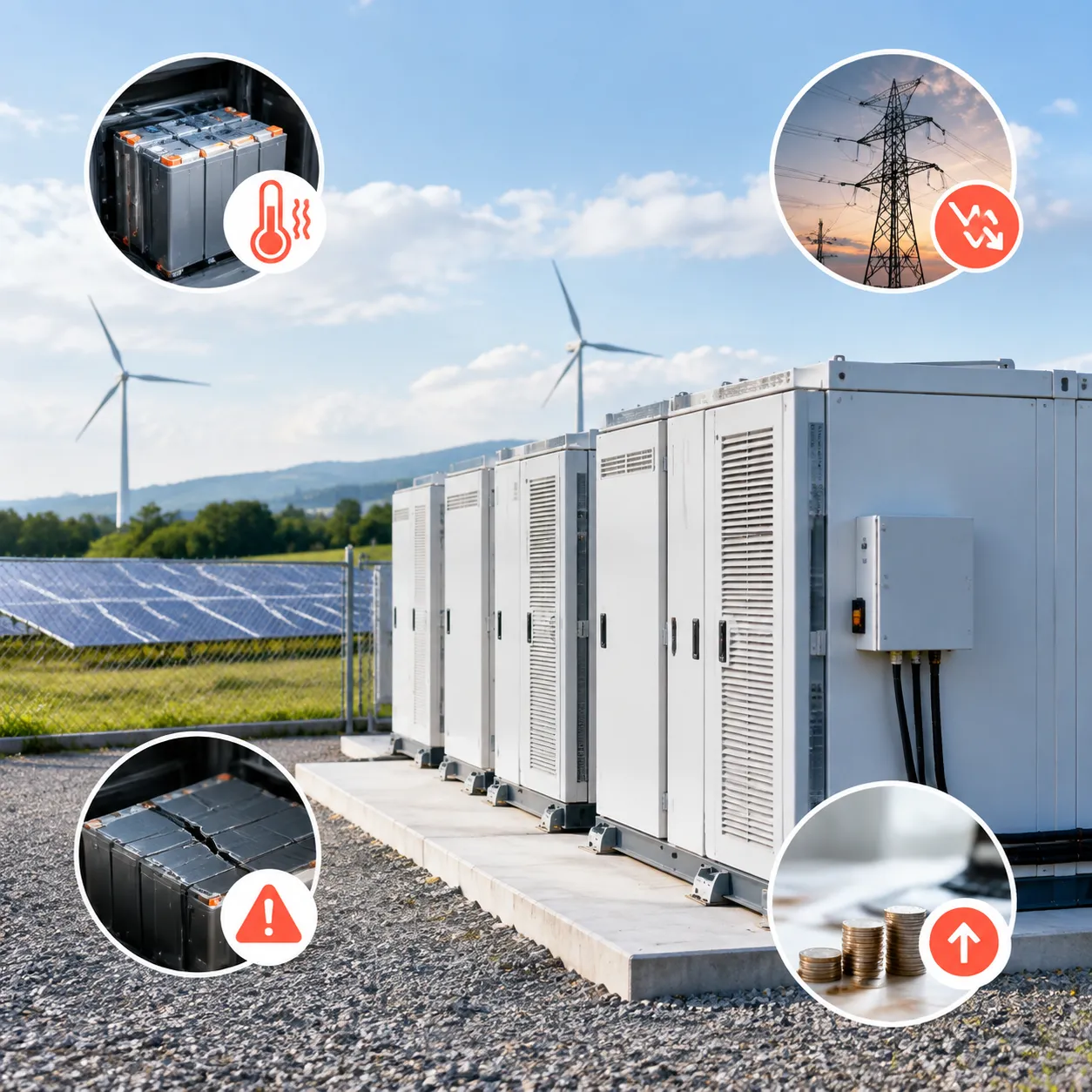
The initial capital expenditure remains a major barrier for both commercial projects and grid-scale installations. Beyond the purchase price of the battery racks, you must account for:
Power conversion systems (inverters and transformers)
Balance of Plant (BOP) infrastructure and civil construction
Grid interconnection studies and permitting fees
Advanced fire suppression and HVAC installation
Battery Degradation and Limited Operational Lifespan
No electrochemical battery lasts forever. Every charge and discharge cycle causes gradual capacity loss. The typical battery degradation rate accelerates under extreme ambient temperatures, continuous high C-rate cycling, or deep discharges. Understanding long-term performance and choosing chemistries optimized for lithium iron phosphate battery safety and cycle life is critical to prevent premature module replacement before achieving full project payback.
Safety Hazards: BESS Thermal Runaway Risks
Fire safety is the primary operational concern in high-density storage facilities. A defect, physical impact, or external heat source can trigger thermal runaway risks, where a single cell overheats, ruptures, and propagates through adjacent cells. Containing these incidents requires multi-layered protection:
Real-time monitoring via an intelligent Battery Management System (BMS)
Integrated gas detection and explosion venting
Automated liquid cooling loops and dedicated fire-suppression systems
Supply Chain Constraints for Critical Raw Materials
Global battery production relies heavily on critical raw materials such as lithium, cobalt, and nickel. Supply bottlenecks, geopolitical tensions, and mining limits lead to price volatility and extended project lead times, making long-term procurement planning essential.
End-of-Life Recycling and Environmental Disposal Concerns
Decommissioning large-scale battery banks presents substantial environmental challenges. Traditional recycling infrastructure for lithium batteries is still maturing globally. To minimize environmental waste and manage disposal costs, sustainable strategies like utilizing second-life BESS with tested EV battery modules are becoming essential for extending asset usability before final material recycling.
BESS Types and Chemistry Comparison: Pros and Cons
Choosing the right chemistry dictates your project's performance, safety profile, and total cost of ownership. Different installations demand different trade-offs between physical footprint, cycle life, and thermal stability. For a deeper breakdown of system architectures, explore our types of battery energy storage systems comparison guide.
| Battery Chemistry | Energy Density | Cycle Life | Safety Profile | Primary Use Case |
|---|---|---|---|---|
| Lithium Iron Phosphate (LFP) | Moderate | 4,000–8,000+ | High (Thermal stability) | Stationary C&I and Grid Storage |
| Nickel Manganese Cobalt (NMC) | High | 2,000–3,000 | Moderate (Thermal management required) | Space-constrained & EV applications |
| Vanadium Redox Flow | Low | 15,000–20,000+ | Very High (Non-flammable electrolyte) | Long-duration utility-scale storage |
| Lead-Acid | Very Low | 500–1,500 | High (Mature standard) | Basic backup & low-budget UPS |
| Sodium-Ion | Moderate-Low | 2,000–4,000 | High (Wide temp tolerance) | Emerging stationary & budget storage |
Lithium-Ion (LFP vs. NMC): Energy Density vs. Safety
Lithium-ion remains the dominant technology across commercial and grid installations, but the choice between sub-chemistries matters significantly:
- Lithium Iron Phosphate (LFP): The industry benchmark for stationary storage. An LFP battery energy storage system delivers superior thermal stability, virtually eliminating violent thermal runaway risks while offering an exceptional cycle life at a competitive price point.
- Nickel Manganese Cobalt (NMC): Packs higher energy density into smaller spaces. While preferred for electric vehicles and ultra-tight footprints, NMC carries a higher fire risk profile and degrades faster under heavy daily cycling.
Flow Batteries (Vanadium): Long Duration vs. Footprint and Cost
Vanadium redox flow batteries separate energy capacity from power output by storing liquid electrolytes in external tanks.
- Pros: Near-zero degradation over 20+ years, non-flammable water-based chemistry, and ideal for 8 to 24-hour long-duration discharge cycles.
- Cons: Low energy density requires massive physical space, lower round-trip efficiency (65%–75%), and high upfront equipment costs.
Lead-Acid Batteries: Low Upfront Cost vs. Short Lifespan
Lead-acid is a mature, low-cost baseline technology, but it faces severe operational limitations in modern energy setups.
- Pros: Extremely low initial capital cost, universal availability, and well-established global recycling streams.
- Cons: Shallow depth of discharge (50%), short operational lifespan requiring frequent replacements, and poor performance under heavy cycling loads.
Sodium-Ion Batteries: Low Material Cost vs. Emerging Market Status
Sodium-ion uses abundant, inexpensive raw materials to bypass lithium supply chain bottlenecks.
- Pros: No reliance on lithium, cobalt, or nickel, excellent cold-temperature performance, and strong inherent safety.
- Cons: Lower energy density than standard lithium formulations and a developing manufacturing supply chain with limited long-term field validation data.
Is a Battery Energy Storage System Worth It?
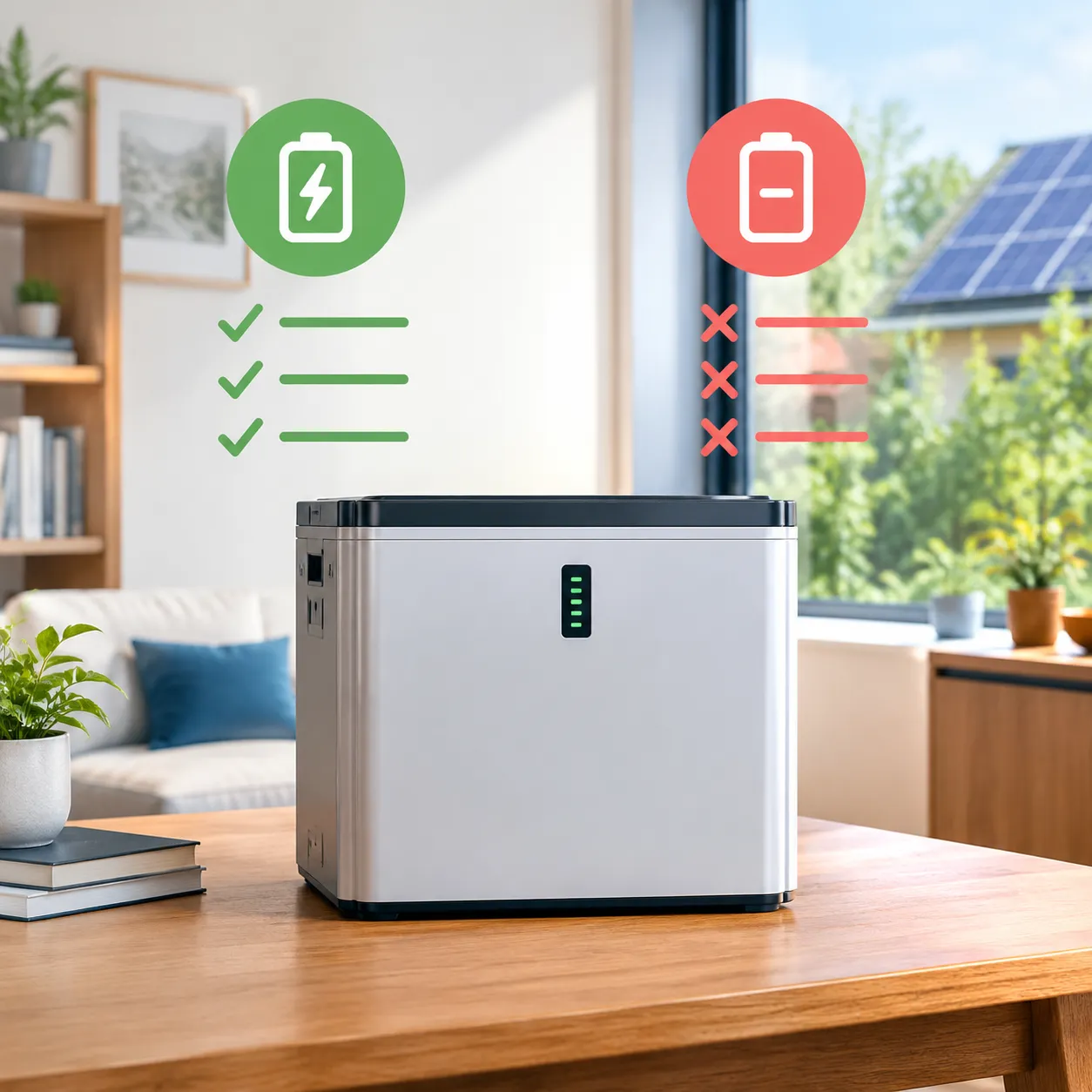
Calculating Levelized Cost of Storage (LCOS) and ROI
Evaluating actual profitability goes beyond initial equipment tags:
- Levelized Cost of Storage (LCOS): This metric factors in total capital expenditures, ongoing maintenance, charging power costs, round-trip efficiency losses, and expected capacity degradation over time.
- BESS Return on Investment (ROI): Most commercial and industrial setups achieve full payback within 4 to 7 years. Facilities that aggressively combine peak shaving, energy arbitrage, and grid service participation recover their capital fastest.
Available Government Incentives, Tax Credits, and Rebates
Financial policies substantially reduce initial expenditures:
- Investment Tax Credits (ITC): Regional programs like the US clean energy credits can deduct 30% or more of total system hardware and commissioning costs.
- Accelerated Depreciation: Commercial asset write-offs reduce taxable income rapidly during the initial operating years.
- Capacity Market & Grid Rebates: Local utilities provide direct grants and revenue-sharing contracts for facilities that provide grid stabilization support.
Key Factors to Consider Before Investing in a BESS
Evaluate these core variables before committing capital:
- Utility Rate Structure: Facilities with steep demand charges or extreme peak-to-off-peak price spreads see the most dramatic operational savings.
- Hardware Sourcing & Chemistry: Procuring high-quality cells directly from an established LiFePO4 BESS factory ensures optimal cycle life, strong thermal stability, and low degradation rates.
- Application Fit: Compare electrochemical storage against alternative setups like hydrogen, pumped, and battery energy storage systems to match your exact discharge duration requirements.
- Interconnection and Permitting: Local fire codes, space requirements, and utility interconnection queues directly dictate deployment speed and commissioning expenses.
Frequently Asked Questions About Battery Energy Storage Systems
What is the typical lifespan of a commercial BESS?
Most commercial installations last between 10 to 15 years, or roughly 4,000 to 8,000 complete cycles, before capacity drops below 70% of its original rating. Lifespan depends heavily on daily cycling depth, ambient operating temperatures, and active cell balancing. Deploying an engineered commercial lithium battery energy storage system with BMS protects individual cells from voltage imbalances and thermal stress, maximizing operational life.
Are battery energy storage systems prone to catching fire?
Catastrophic fires are rare in modern installations, but thermal runaway remains a core engineering challenge we design around. High-grade systems minimize this risk by utilizing:
Stable Chemistries: Lithium Iron Phosphate (LFP) cells offer significantly higher thermal runaway thresholds than traditional NMC chemistries.
Active BMS Protection: Instant shutdown protocols for overvoltage, overcurrent, and temperature spikes.
Integrated Suppression: Built-in aerosol fire suppression, deflagration venting, and liquid cooling channels engineered directly into the cabinet architecture.
How do battery storage systems save money on utility bills?
We reduce electricity expenses through three direct mechanisms:
Peak Shaving: Discharging battery power during peak demand intervals to eliminate costly utility demand surcharges.
Energy Arbitrage: Charging batteries during off-peak hours when rates are low and discharging during peak rate windows.
Self-Consumption Optimization: Storing excess on-site solar or wind generation during the day instead of exporting it back to the grid at low feed-in tariffs.
Can a BESS function completely off-grid?
Yes. When paired with grid-forming inverters and renewable generation, an off grid energy storage system with battery operates as a standalone microgrid. The system creates its own stable AC voltage and frequency reference, delivering uninterrupted power to remote industrial sites, telecommunications hubs, and isolated facilities without any grid connection.
How long does it take to see a return on investment for a BESS?
The average payback period for an industrial or commercial BESS ranges between 3 to 7 years. Projects with high local demand charges, substantial time-of-use (TOU) price spreads, and access to regional tax credits or capacity market revenue streams achieve the fastest return on investment (ROI).