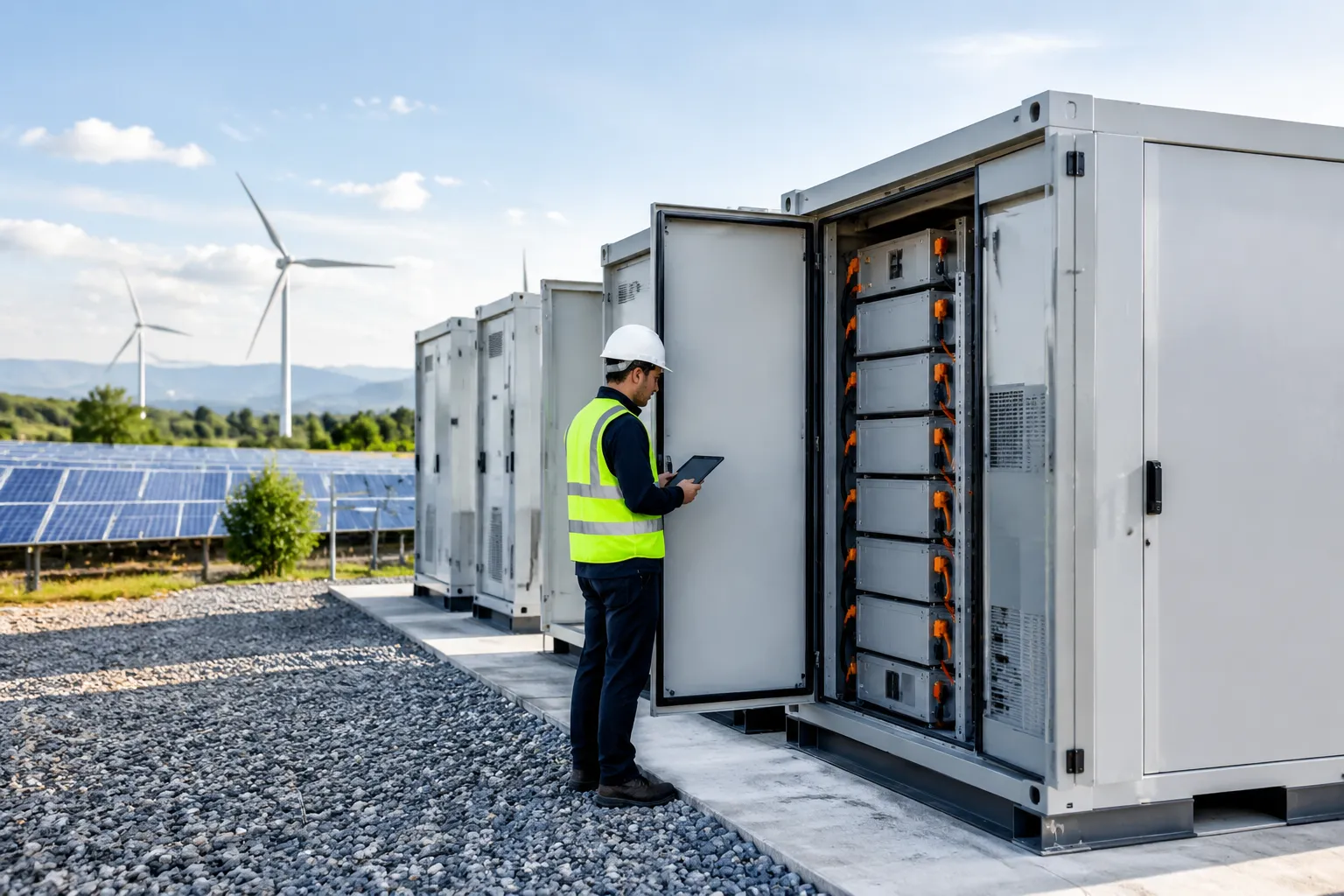
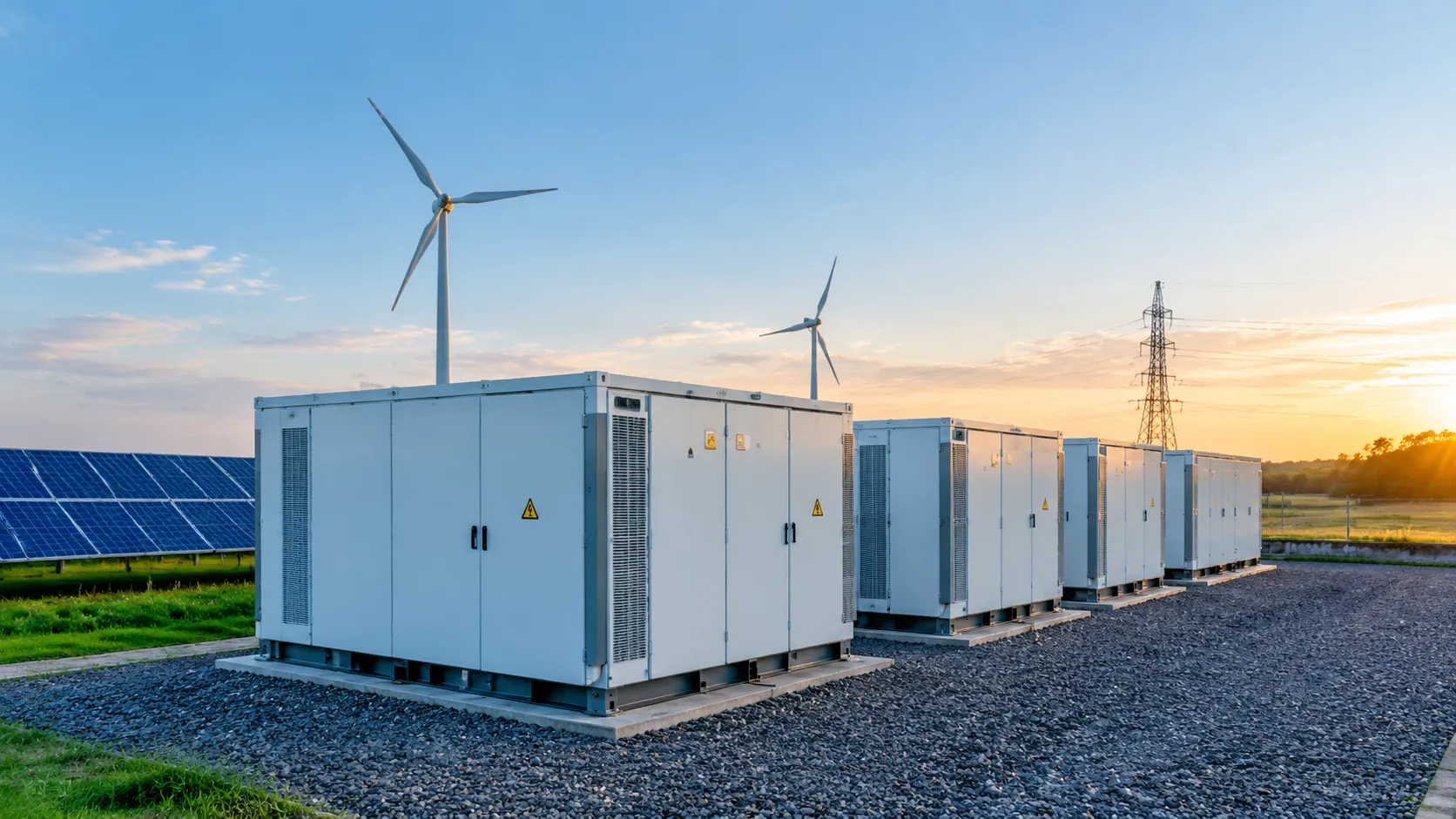
Technical Benchmark Matrix: Hydrogen vs. Pumped Hydro vs. Battery vs. Flywheel
Evaluating grid-scale utility assets requires benchmarking each technology across core operational dynamics. Below is our engineering comparison matrix covering hydrogen storage, pumped storage, battery storage, and flywheel energy storage system architectures.
| Engineering Parameter | Battery Storage (LiFePO4 BESS) | Pumped Hydro Storage (PHES) | Hydrogen Energy Storage (HES) | Flywheel Storage (FESS) |
|---|---|---|---|---|
| Round-Trip Efficiency (RTE) | 85% – 95% | 70% – 85% | 30% – 45% (P2P) | 85% – 92% |
| Discharge Duration | Minutes to 8+ Hours | 6 to 24+ Hours | Days to Seasonal (Months) | Sub-seconds to 15 Minutes |
| Response Time | < 20 Milliseconds | 1 to 5 Minutes | Seconds to Minutes | < 4 Milliseconds |
| Energy Density | High (100–180 Wh/kg pack) | Low (Site-dependent) | Very High (Gravimetric) | Low (5–30 Wh/kg) |
| Power Density | High | Low to Medium | Low to Medium | Ultra-High |
| Cycle Life | >= 6,000 Cycles | 40–60+ Year Asset Life | Stack-dependent (~10–15 yrs) | > 100,000 Cycles |
| Geographic Dependency | Zero (Modular Deployment) | Strict Topography & Water | Industrial Zoning & Pipeline | Minimal (Pad-mounted) |
| Footprint Requirement | Compact Containerized | Vast Reservoir Land | Medium-to-Large Safety Zones | Compact Enclosures |
Round-Trip Efficiency (RTE) Benchmarks
- Lithium Iron Phosphate (LiFePO4) Battery Storage: Delivers top-tier operational efficiency of 85% to 95%, minimizing parasitic losses in dynamic daily cycling.
- Flywheel Energy Storage Systems (FESS): Delivers up to 92% RTE, but loses efficiency over prolonged hold times due to parasitic friction and magnetic bearing drag.
- Pumped Hydro Energy Storage (PHES): Maintains consistent 70% to 85% efficiency, standard for large-scale bulk energy transfers.
- Hydrogen Storage: Constrained by electrolysis, gas compression, and fuel cell regeneration losses, netting a 30% to 45% power-to-power round-trip efficiency.
Discharge Duration and Ramping Capabilities
- Sub-Second to Fast Ramping: Flywheels and lithium battery storage systems achieve instantaneous grid synchronization. BESS responds in < 20 milliseconds, making it ideal for primary frequency stabilization and microgrid load-following.
- Intraday Balancing (2–8 Hours): Containerized battery storage dominates multi-hour peak shaving and renewable firming.
- Long-Duration to Seasonal (8+ Hours to Months): Pumped hydro provides steady multi-hour discharge across bulk grid nodes, while green hydrogen serves as the primary vector for multi-week and seasonal energy shifts.
Energy Density vs. Power Density Dynamics
- Power-Dense Assets: Flywheels deliver immense megawatt bursts for brief durations, serving high-rate power quality needs.
- Energy-Dense Configurations: Chemical hydrogen storage carries unmatched gravimetric density for bulk fuel storage, whereas LiFePO4 modular container systems achieve an optimal balance of high energy density, thermal safety, and compact land usage.
Cycle Life Limits and Degradation Rates
- Mechanical Systems (PHES & FESS): Flywheels sustain over 100,000 duty cycles without electrochemical fade; pumped hydro civil assets operate reliably for over half a century.
- Electrochemical BESS: Advanced LiFePO4 cells provide >= 6,000 full cycles under precision thermal management (liquid or industrial air cooling) before reaching standard capacity retirement thresholds.
- Hydrogen Infrastructure: Degradation is concentrated in the electrolyzer membranes and fuel cell stacks, requiring planned overhauls after specified operating hours.
Land Footprint and Siting Constraints
- Pumped Hydro: Strictly constrained by geological elevation changes, water rights, and massive environmental permitting lead times.
- Hydrogen Systems: Require specialized high-pressure vessels, safety setback perimeters, and specialized gas handling zoning.
- Battery Energy Storage: Offers complete geographic flexibility. Turnkey IP54 to IP65 containerized enclosures install rapidly on commercial, industrial, or utility-scale balance-of-plant footprints without geological prerequisites.
Battery Energy Storage Systems (BESS) for Fast-Response Grid Balancing
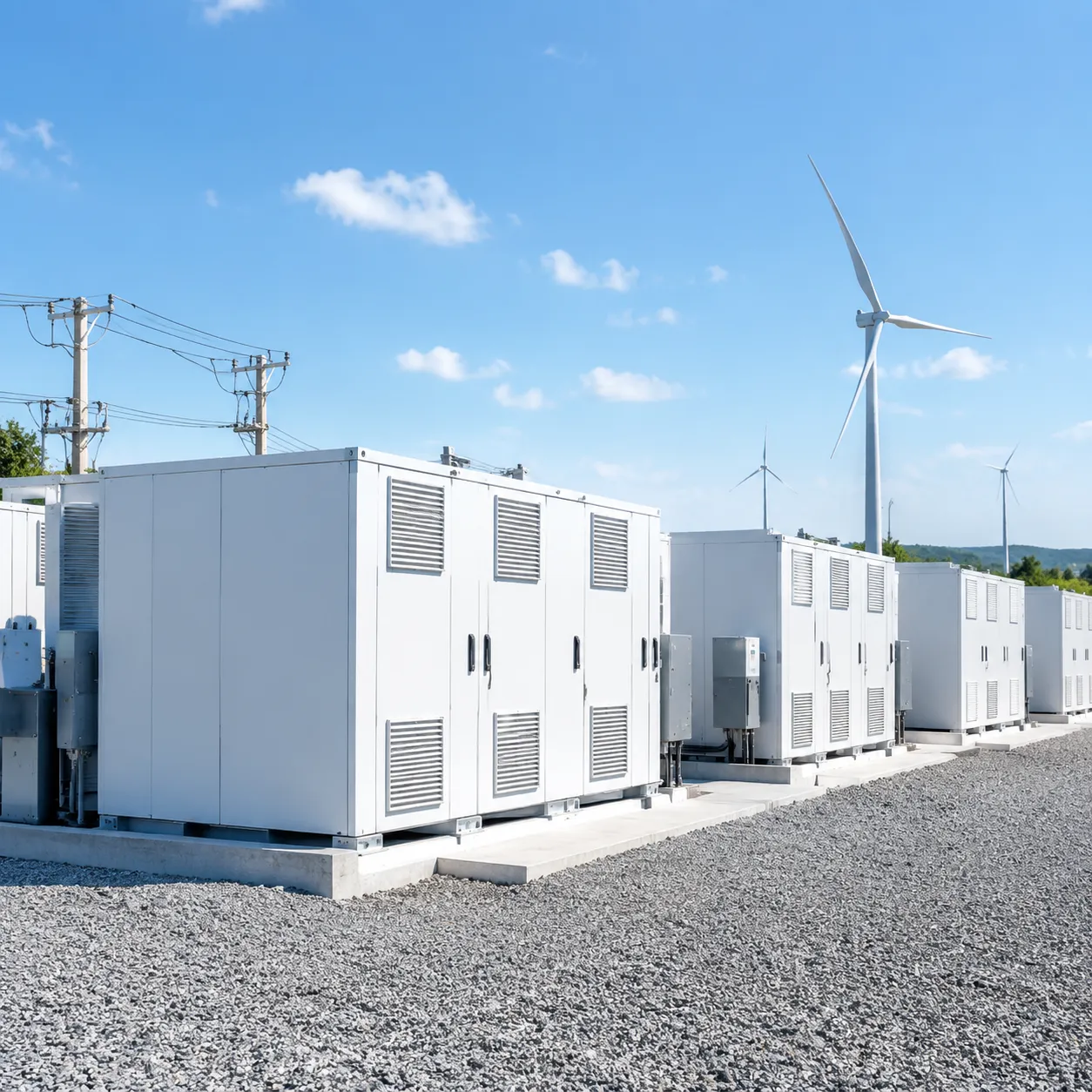
When comparing grid-scale solutions like hydrogen storage, pumped storage, flywheel energy storage, and battery storage systems, electrochemical BESS stands out as the most versatile, high-efficiency technology for dynamic power networks. We build our energy storage architectures around high-grade Lithium Iron Phosphate (LiFePO4) chemistry to deliver immediate grid synchronization, high safety margins, and predictable long-term performance.
Working Principle of LiFePO4 Electrochemical Storage
Battery energy storage operates through reversible electrochemical reactions. During charging, lithium ions move from the positive cathode to the negative graphite anode through an electrolyte. During discharge, the chemical gradient forces ions back to the cathode, releasing electrical current directly to the power conversion system (PCS).
We prioritize LiFePO4 cells due to their superior chemical and thermal stability. Our technical analysis shows that understanding lithium iron phosphate battery system safety and cycle life is critical for evaluating operational reliability, as LFP eliminates the risk of thermal runaway associated with high-nickel chemistries while delivering a minimum lifespan of 6,000 cycles.
Core Strengths of Lithium-Ion Battery Storage
- High Round-Trip Efficiency (RTE): Delivers 85% to 95% overall AC-to-AC efficiency, significantly outperforming mechanical and chemical storage alternatives.
- Millisecond Response Time: Inverters switch from full idle to maximum rated output in under 20 milliseconds, providing crucial sub-second frequency response.
- Modular Scalability: Compact, pre-engineered enclosures allow flexible scaling from commercial kilowatt-hour capacities to multi-megawatt grid nodes.
- Minimal Civil Footprint: Requires no specialized geological formations or water resources, speeding up deployment across diverse site conditions.
Thermal Management: Liquid Cooling vs. Industrial Air Cooling
Cell longevity depends heavily on thermal consistency across the battery pack. Temperature variations across cells lead to uneven impedance, accelerated degradation, and premature module retirement.
- Industrial Air Cooling: Effective and cost-efficient for lower C-rate applications (0.5C or below) and temperate operating environments.
- Smart Liquid Cooling: Delivers uniform cell-to-cell thermal distribution within a delta of less than 2°C to 3°C. It handles high continuous C-rates, reduces internal parasitic power loads, and maximizes overall asset life in demanding climates.
Best-Fit Grid Applications
We deploy modular battery storage across several operational environments where dynamic response and modular footprint provide a decisive advantage:
- Commercial & Industrial (C&I) Peak Shaving: Mitigating peak demand charges and providing uninterruptible backup power for critical commercial facilities.
- Renewable Curtailment Mitigation: Absorbing midday solar spikes and evening wind generation via turnkey utility-scale battery storage containers for solar and wind.
- Off-Grid Microgrid Integration: Hybridizing with solar PV and backup generators to deliver continuous, reliable power for remote industrial installations and island networks.
Pumped Hydro Energy Storage (PHES) for Large-Scale Bulk Capacity
Pumped hydro energy storage remains the foundation of global bulk energy storage capacity. While electrochemical systems handle fast-ramping distribution demands, pumped storage provides the massive multi-gigawatt-hour energy reserves necessary to stabilize regional transmission networks over extended operating windows.
Working Principle of Gravitational Bulk Cycling
The operating mechanism of pumped hydro relies on simple gravitational potential energy managed across two water reservoirs at different elevations:
- Charging Mode (Off-Peak Pumping): When surplus renewable generation or low-cost off-peak power enters the grid, electric pumps push water from the lower reservoir to the upper reservoir.
- Discharging Mode (Peak Generation): During peak demand or low renewable output, water releases downward through high-pressure penstocks, driving reversible Francis or Pelton turbines to generate dispatchable AC electricity.
[Upper Reservoir (Elevated Head)]
│ ▲
(Peak Discharge) (Off-Peak Pump)
▼ │
[Reversible Pump-Turbine / Motor-Generator]
│ ▲
▼ │
[Lower Reservoir (Tailrace Level)]
Core Strengths of Mechanical Hydro Storage
- Multi-GWh Bulk Capacity: Capable of continuous 8 to 24-hour full-load discharge cycles at single installations exceeding 1,000 MW.
- 40 to 60+ Year Operating Life: Unlike chemical systems requiring mid-life cell augmentation, civil structures and hydraulic machinery operate reliably for decades with predictable mechanical overhaul intervals.
- Low Self-Discharge: Retains stored potential energy with zero electrical degradation over multi-day periods, subject only to surface evaporation and minor seepage.
Technical and Operational Parameters
| Engineering Parameter | Typical Pumped Hydro Benchmark |
|---|---|
| Round-Trip Efficiency (RTE) | 70% – 80% |
| Discharge Duration | 6 to 24+ Hours (Continuous) |
| Asset Operational Lifespan | 40 to 60+ Years |
| Response Time to Full Load | 60 to 180 Seconds (Synchronized) |
| Civil Development Timeline | 6 to 12 Years |
Project Bottlenecks and Deployment Constraints
Despite its operational scale, modern energy transition planning faces significant barriers when developing new pumped hydro infrastructure:
- Topographical and Geological Limits: Requires substantial elevation drop (head) and massive water source availability, limiting geographic deployment.
- Capital Intensity and Long Lead Times: High upfront CAPEX and complex civil tunneling translate into multi-year permitting and construction schedules.
- Grid Coupling Realities: Because pumped storage cannot provide sub-second frequency control, developers frequently deploy our scalable battery energy storage systems for utilities alongside legacy hydro to handle fast local balancing and millisecond grid response.
Best-Fit Grid Applications
Pumped hydro operates as a long-duration energy storage asset for inter-day energy shifting, firming variable utility wind farms, and black-start grid restoration. When integrated within a multi-tier infrastructure alongside battery storage, pumped hydro handles bulk base load while batteries resolve dynamic, fast-ramping fluctuations.
Hydrogen Energy Storage Systems for Seasonal Long-Duration Shifting
Hydrogen energy storage systems (HES) provide a distinct pathway for multi-week and seasonal energy shifting. By converting surplus electricity into chemical energy through water electrolysis, green hydrogen can be stored indefinitely and converted back to power via fuel cells or specialized turbines when generation falls short.
Surplus Renewable Power ➔ Water Electrolysis (H2 Production) ➔ Compression & Storage ➔ Fuel Cells / Turbines ➔ Grid Dispatch
Core Strengths of Power-to-Gas-to-Power
- Massive Energy Density: Unmatched capacity for storing gigawatt-hours (GWh) to terawatt-hours (TWh) of chemical energy over months without parasitic degradation.
- Decoupled Power and Energy: Sizing generation capacity (electrolyzers) independently from energy capacity (storage vessels or salt caverns) enables scalable, multi-month reserves.
- Deep Decarbonization Pathways: Serves dual roles as a grid balancer and as clean feedstock for heavy industry, refining, and synthetic fuel production.
Operational Challenges and Conversion Losses
While hydrogen stands out for seasonal duration compared to mechanical systems like pumped storage or flywheel units, round-trip efficiency (RTE) remains a major engineering bottleneck.
| Parameter | Technical Benchmark |
|---|---|
| Round-Trip Efficiency (RTE) | 30% – 45% (Power-to-Gas-to-Power) |
| Discharge Duration | Multi-day, weekly, to seasonal (months) |
| Storage Infrastructure | High-pressure tanks (350–700 bar), cryogenic liquid, underground caverns |
| Response Speed | Seconds to minutes (electrolyzers/fuel cells) |
| Primary Limitation | Significant thermodynamic losses in conversion stages |
Evaluating hydrogen storage alongside mechanical and electrochemical options in our types of battery energy storage systems comparison guide demonstrates how chemical storage functions as an inter-seasonal hedge rather than a daily cycling solution.
Critical Infrastructure and Safety Requirements
- High-Pressure Compression: Compressing hydrogen to 350–700 bar requires robust multi-stage compressor stations, demanding continuous maintenance and parasitic electrical load.
- Permeation and Embrittlement: Mitigating material degradation requires specialized austenitic stainless steels or composite liners to prevent hydrogen embrittlement.
- Leak Detection and Venting: Fast-acting optical and electrochemical sensor networks are mandatory to address hydrogen’s wide flammability range and high diffusivity.
Best-Fit Applications
- Cross-Season Renewable Balancing: Capturing summer solar or spring wind surpluses for deep-winter grid reliability.
- Renewable Energy Export: Transporting clean chemical energy via pipelines or carrier molecules across long distances.
- Heavy Industrial Integration: Providing resilient backup and zero-emission fuel for high-heat manufacturing and steel manufacturing facilities.
Flywheel Energy Storage Systems (FESS) for Sub-Second Frequency Regulation
A flywheel energy storage system operates purely on mechanical principles, converting electrical energy into rotational kinetic energy. The core design features a high-speed rotor suspended in a vacuum enclosure using frictionless magnetic bearings. When grid frequency dips, the motor acts as a generator, discharging energy back to the grid within milliseconds.
Grid Input (Charging) ---> Electric Motor ---> Rotor Accelerates (Kinetic Storage)
Grid Demand (Discharging) <--- Generator Mode <--- Rotor Decelerates (Power Export)
Core Strengths of Mechanical Flywheel Storage
- Instantaneous Sub-Cycle Response: Ramps to full output capacity within milliseconds to stabilize grid transients.
- Extensive Cycle Life: Delivers over 100,000 deep cycles with virtually zero capacity degradation over a 20+ year operating life.
- High Power Density: Delivers large bursts of immediate power from a compact physical footprint.
- Low Maintenance Overhead: Friction-free magnetic levitation in a sealed vacuum eliminates routine mechanical wear.
Operational Limits and Constraints
While powerful for rapid power delivery, a flywheel energy storage system faces clear operational boundaries when evaluated against chemical solutions like our modular battery energy storage systems:
- Parasitic Self-Discharge: High idle losses of 1% to 20% per hour make flywheels unsuitable for medium- or long-duration holding.
- Limited Discharge Duration: Most commercial flywheels sustain full output for only 15 seconds to 15 minutes.
- High Capital Cost per Kilowatt-Hour: Extremely expensive when scaled for sustained energy capacity rather than peak power.
Best-Fit Applications
| Application | Operational Function |
|---|---|
| Primary Frequency Response | Absorbing fast grid frequency variations |
| Dynamic Voltage Stabilization | Mitigating sags and momentary outages |
| UPS & Critical Ride-Through | Bridging gaps during generator start-up |
| Heavy Industrial Cycling | Buffering crane and rail dynamic loads |
For facility operators requiring sustained energy over hours rather than seconds, deploying high-density containerized energy storage systems offers a more cost-effective, scalable path for managing long-duration grid demands.
Economic and Lifecycle Cost Analysis: CAPEX, OPEX, and LCOS

Upfront CAPEX vs. Long-Term OPEX
Each storage asset presents a distinct cost structure across its operating lifecycle:
- Battery Energy Storage Systems (BESS): Feature moderate upfront equipment CAPEX with rapid, low-risk modular deployment. OPEX remains low to moderate, driven primarily by scheduled thermal management upkeep and standard battery cell augmentation around year 10 to 15. For detailed financial projections, see our LFP battery energy storage system cost and lifespan guide.
- Flywheel Energy Storage Systems (FESS): Incur high upfront power-conversion and mechanical hardware costs per kilowatt-hour, but deliver near-zero performance degradation and exceptionally low maintenance costs over 20+ years of high-frequency operation.
- Pumped Hydro Energy Storage (PHES): Demands massive upfront civil engineering CAPEX and decades-long payback windows. However, operational lifespans exceeding 50 years yield minimal per-cycle OPEX once commissioned.
- Hydrogen Energy Storage (HES): Involves high initial system CAPEX across electrolyzers, high-pressure compression units, and fuel cells, paired with substantial recurring overhaul expenses for chemical membranes and stack replacements.
Levelized Cost of Storage (LCOS) Across Duration Windows
LCOS measures the total lifetime cost of an asset divided by its cumulative energy throughput. The optimal technology shifts drastically based on dispatch duration:
- Sub-Second to 15 Minutes (Fast Regulation): Flywheels provide the lowest LCOS in continuous cycling duty cycles where electrochemical cells face rapid cycle fatigue.
- 1 to 8 Hours (Intraday Shifting and C&I Peak Shaving): Lithium-ion systems—such as our modular 250 kW / 575 kWh parallel battery energy storage system—consistently deliver the lowest LCOS due to high round-trip efficiency (RTE) and decreasing pack costs.
- Multi-Day to Seasonal Durations (Over 24 Hours): Pumped hydro and green hydrogen offer the most viable long-term LCOS because expanding storage capacity simply requires larger reservoirs or caverns rather than duplicating expensive power conversion hardware.
Civil Engineering Timelines and Land Acquisition Constraints
Site acquisition and civil works heavily dictate project risk profiles:
- PHES: Requires 6 to 12 years for geological surveys, environmental permitting, and heavy civil construction, often subject to geographical constraints.
- HES: Requires specialized safety zoning, explosive-gas management infrastructure, and specialized transport pipeline access, with construction taking 2 to 4 years.
- BESS & Flywheels: Deliver the fastest return on investment with pre-engineered, factory-tested containerized footprints that install on standard concrete pads in 3 to 9 months.
Optimizing Investment Returns via Duty Cycle Profiling
Maximizing commercial returns requires matching the technology to grid duty cycles. Assets deployed for multi-cycle daily frequency arbitrage benefit from the degradation-free operation of mechanical flywheels or highly durable lithium iron phosphate chemistries operating 1 to 2 equivalent full cycles per day. Conversely, intermittent long-duration assets prioritize low idle-holding costs over round-trip conversion efficiency.
Hybrid Energy Storage Architectures for Resilient Power Systems
No single storage technology solves every grid challenge on its own. By pairing different assets, we combine the ultra-fast response of kinetic systems, the versatile flexibility of electrochemical storage, and the long-duration endurance of mechanical or chemical assets. This multi-tier approach maximizes asset lifespan and cuts overall operational costs.
Flywheel + BESS Integration: Protecting Electrochemical Cells
Using a mechanical flywheel alongside a battery storage system creates a durable first line of defense for grid stabilization:
- Absorbing micro-cycles: The flywheel energy storage system handles sub-second frequency regulation and rapid grid spikes, preventing high-frequency, shallow cycles from degrading battery cells.
- Extending battery life: Diverting short bursts of power preserves the cycle life of Lithium Iron Phosphate (LiFePO4) packs, keeping them available for deeper, multi-hour discharge cycles.
- Lower thermal stress: Reduced high-C peak pulsing lowers cell operating temperatures, improving efficiency and reducing the burden on container liquid cooling loops.
BESS + Hydrogen or Pumped Hydro: Intraday Balancing Meets Seasonal Capacity
Large-scale energy security requires bridging the gap between intraday shifts and long-duration storage needs:
- Short-to-medium dispatch: Battery storage delivers millisecond response times and high round-trip efficiency for dynamic load tracking, peak shaving, and daily solar-wind firming.
- Bulk seasonal shifting: Excess renewable energy that exceeds battery capacity is routed to green hydrogen electrolysis or pumped hydro storage reservoirs for multi-day or seasonal energy reserves.
- Optimized capital spending: Developers avoid overbuilding expensive multi-day battery banks by using scalable microgrid energy storage solutions alongside bulk mechanical or chemical storage.
The Central Role of Unified Energy Management Systems (EMS)
A unified control layer orchestrates these hybrid assets in real time to ensure reliable power flow:
- Automated asset dispatch: Our smart EMS monitors grid frequency, state of charge (SOC), and power tariffs to route energy to the most efficient technology in milliseconds.
- Telemetry and health tracking: Integrated communication via Modbus TCP, CAN, and Ethernet continuously balances loads between fast-response flywheels, centralized commercial lithium battery systems, and bulk storage plants.
- Revenue stacking: The platform automatically splits operations between frequency ancillary services, demand response, and energy arbitrage to maximize project returns.
Frequently Asked Questions About Grid-Scale Energy Storage
Which energy storage system delivers the highest round-trip efficiency?
Lithium-ion battery storage delivers the highest round-trip efficiency (RTE) among practical grid-scale technologies, typically operating between 85% and 95%. In comparison:
Mechanical flywheels: Achieve 85% to 90% RTE, but suffer from high self-discharge over extended hold times.
Pumped hydro storage: Averages 70% to 80% RTE due to mechanical and pipe friction losses.
Hydrogen energy storage: Yields 30% to 45% power-to-power efficiency caused by thermal losses during water electrolysis and fuel cell reconversion.
For dynamic grid support and daily cycling, modern high-efficiency battery systems—such as our 5 MWh battery energy storage system 20ft container—ensure minimal energy loss per charge-discharge cycle.
Can hydrogen storage replace pumped hydro for long-duration energy storage?
Hydrogen cannot fully replace pumped hydro storage (PHES), but it serves a complementary role. Pumped hydro remains the most cost-effective bulk medium for 8 to 24-hour discharge windows where geography permits. However, hydrogen energy storage excels at multi-week and seasonal energy shifting because hydrogen gas can be stored in large underground salt caverns or tanks without degradation, entirely free from mountainous terrain constraints.
How do flywheels compare to lithium-ion batteries for fast frequency response?
Both technologies provide sub-second reaction times, but they handle different operational duties:
Flywheel energy storage systems (FESS): Best for continuous, high-frequency micro-cycling (seconds to minutes). They offer over 100,000 cycles with zero capacity fade.
Battery storage systems (BESS): Deliver millisecond-level response while also sustaining output for 1 to 4 hours, making them far more versatile for combined frequency regulation and energy shifting.
What is the best energy storage technology for commercial and industrial microgrids?
Lithium Iron Phosphate (LiFePO4) battery storage is the industry standard for commercial and industrial (C&I) microgrids. Solutions like our outdoor battery energy storage system with LiFePO4 battery provide the compact footprint, modular scalability, and high round-trip efficiency required for on-site peak shaving, emergency backup, and direct solar-plus-storage integration.
How does cycle degradation impact the levelized cost of battery storage vs. mechanical systems?
Electrochemical battery cells experience gradual capacity fade based on operating temperature, depth of discharge (DoD), and C-rate, which requires scheduled augmentation or replacement over a 15- to 20-year project life. This increases the long-term Levelized Cost of Storage (LCOS) for high-cycle applications. In contrast, mechanical systems like pumped hydro and flywheels incur higher initial capital costs but maintain their base storage capacity across 30 to 60+ years with virtually zero cell-level degradation. Integrating advanced liquid thermal management and smart EMS dispatch keeps LiFePO4 degradation predictable, maximizing return on investment across commercial and utility assets.