Formula details
Product Details
Overview
Scalable LFP BESS Configurations & Hardware Modules
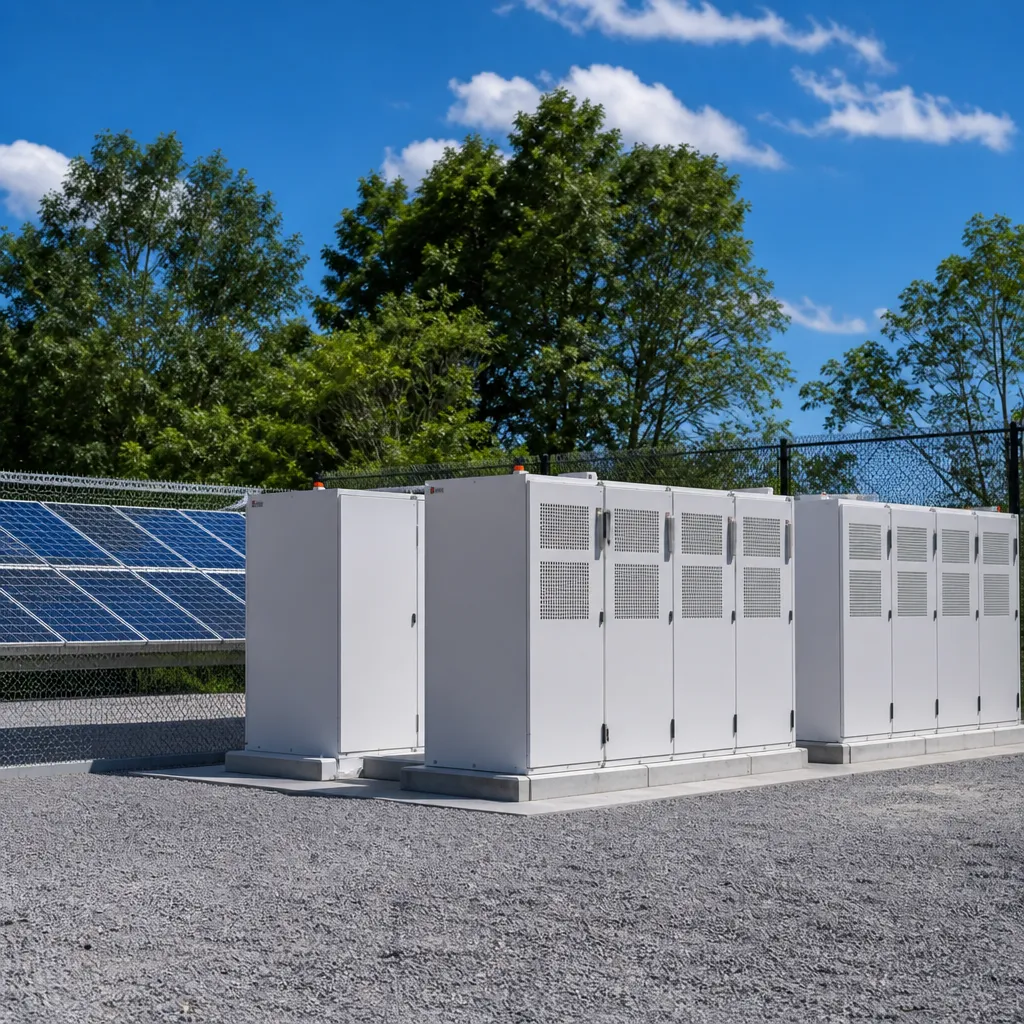
C&I Modular Energy Storage Cabinets
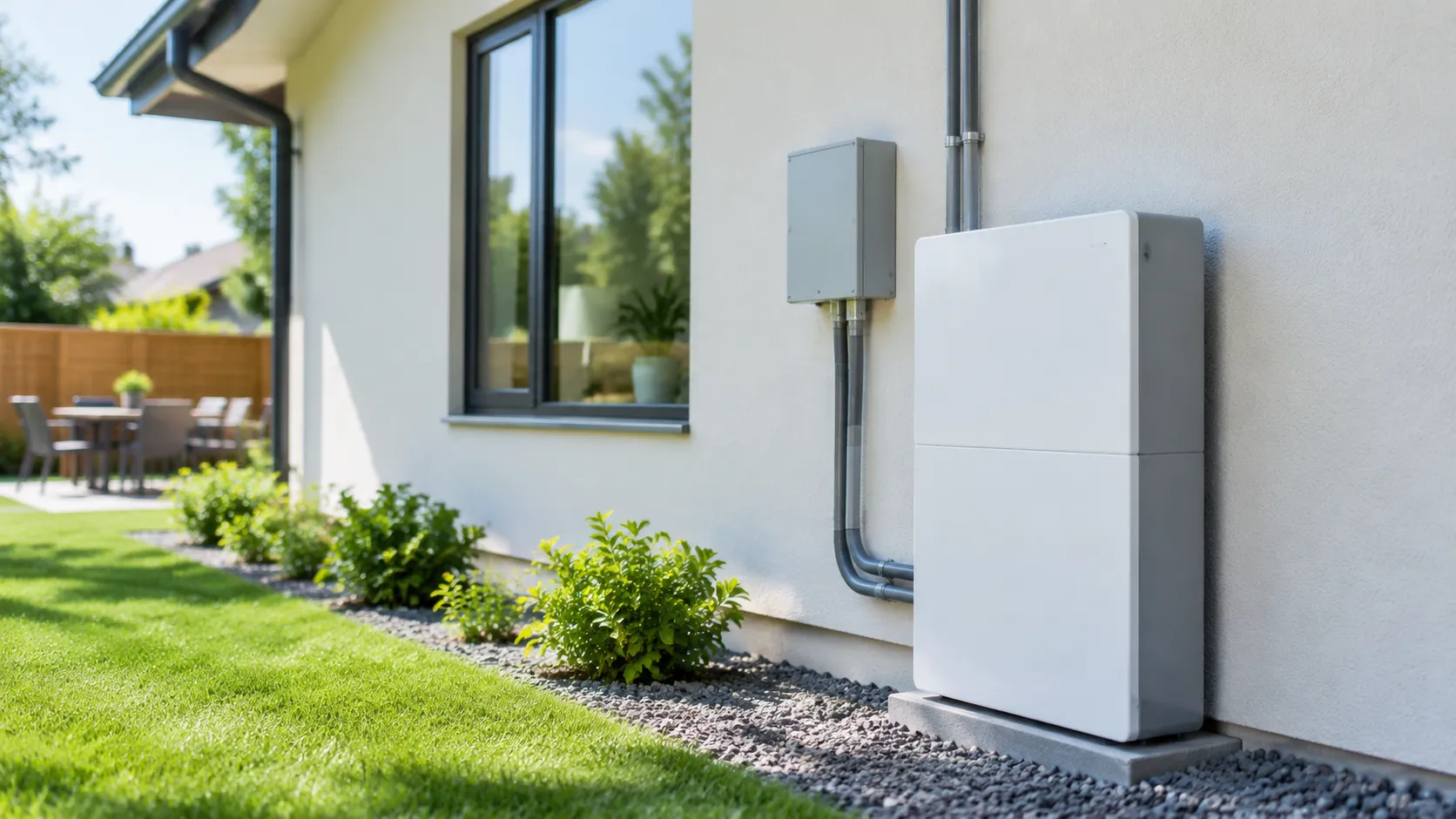
Our C&I energy storage cabinet platforms deliver compact, high-performance energy management for indoor and outdoor commercial facilities.
- Dynamic Capacity Scaling: Scalable storage capacity from 100kWh to multi-MWh through parallel modular cabinet configurations.
- All-Weather Protection: Heavy-duty IP54 / NEMA 3R enclosures engineered for extreme ambient temperatures and demanding environments.
- Minimized Footprint: High-density hardware layout optimizes site space usage while maintaining clear service access.
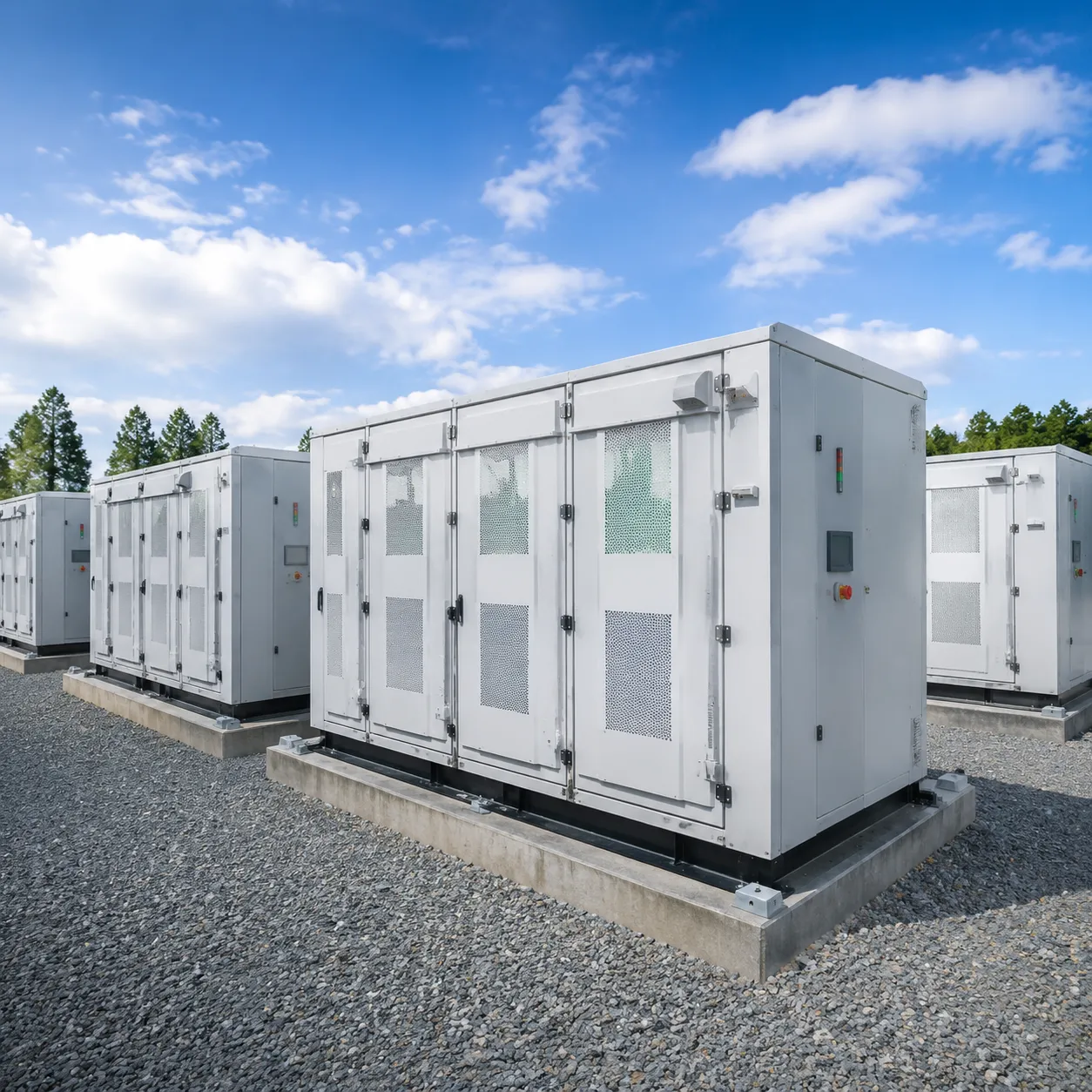
5MWh Containerized Grid-Scale BESS
Engineered for utility-scale applications, renewable integration, and grid stabilization, our containerized energy storage system packs up to 5MWh of capacity into a standardized 20-foot ISO unit.
- Turnkey Grid Architecture: Plug-and-play design reduces civil engineering requirements and speeds up site installation.
- Grid Stabilization: Provides automatic frequency regulation, peak load management, and solar-plus-storage smoothing.
- High Density: Maximizes megawatt-hour rating per container footprint using specialized cell positioning and integrated busbars.
Smart Power Inverter & Microgrid Controller Integration
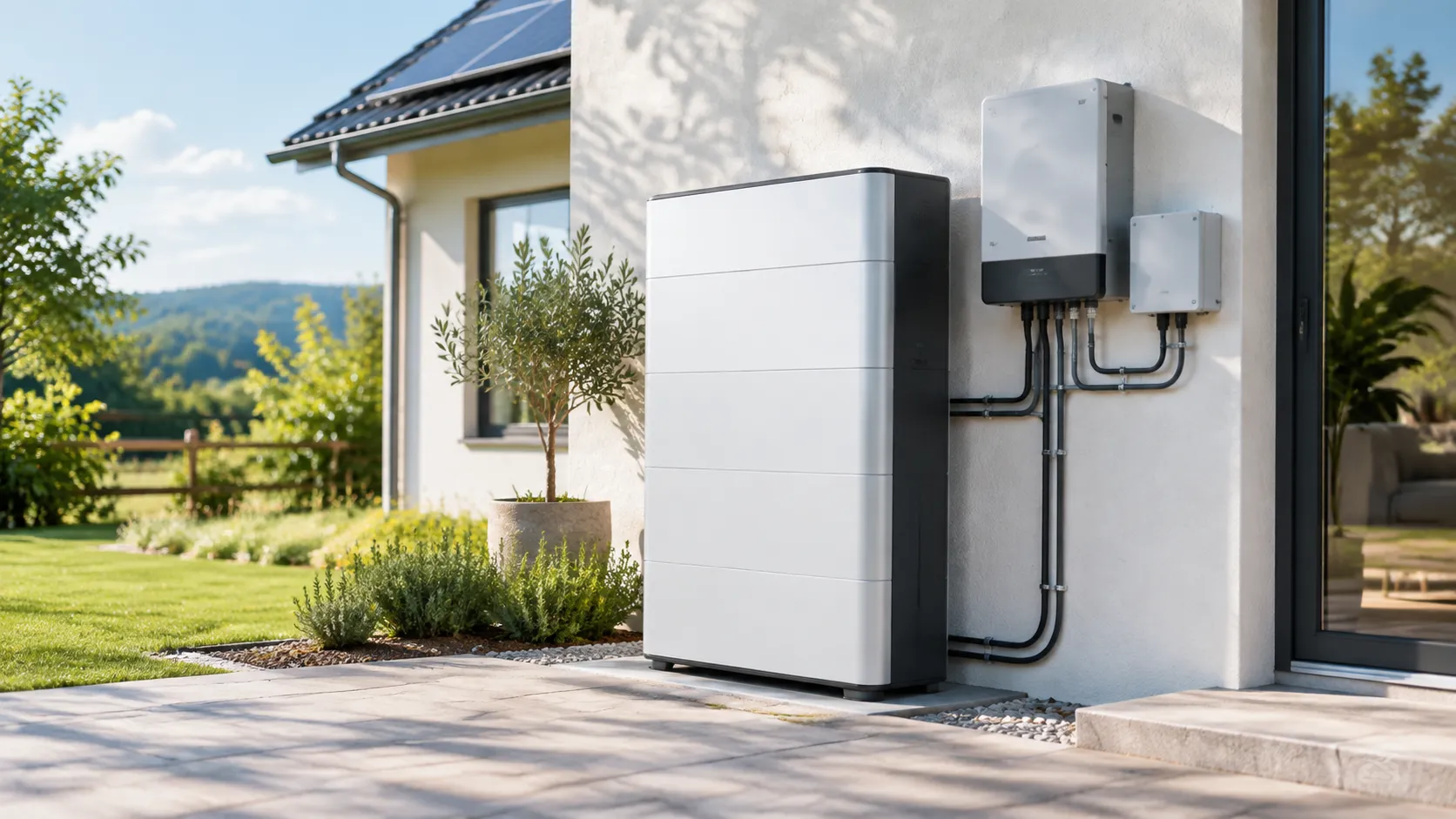
Our hardware systems integrate commercial-grade Power Conversion Systems (PCS) with active microgrid controllers for full energy independence and power reliability.
- Microgrid Energy Storage: Bi-directional inverters manage real-time power routing across solar arrays, local loads, grid inputs, and backup generators.
- Seamless Islanding: Intelligent transfer switches detect utility failures and isolate the local grid to maintain continuous power.
- High Efficiency: Optimizes system-level round-trip efficiency (RTE) up to 90%+ across operational charging cycles.
LFP Cell Chemistry & Advanced Technical Architecture
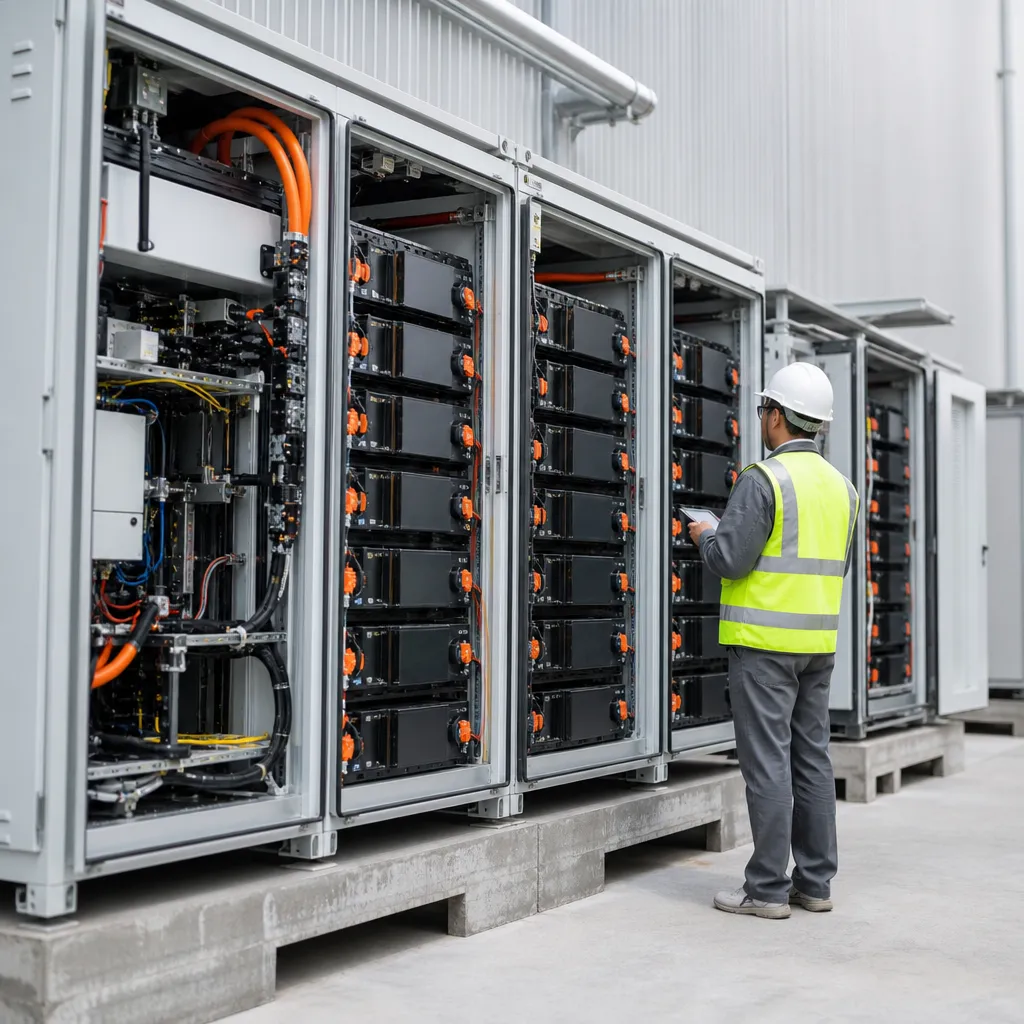
Why LiFePO4 Leads Energy Storage Applications
When engineering our LFP battery energy storage system, safety and long-term asset value come first. Lithium iron phosphate (LiFePO4) chemistry stands as the industry benchmark for stationary applications due to its core physical advantages:
- High Thermal Runaway Threshold: Tolerates temperatures up to ~270°C before chemical breakdown, virtually eliminating self-ignition risks.
- Cobalt-Free & Non-Toxic: 100% free of heavy metals and hazardous raw materials, simplifying site permitting and recycling.
- Minimal Degradation: Supports thousands of deep discharge cycles while maintaining peak cell capacity.
Proprietary 3-Tier BMS Protection Architecture
We safeguard every LFP energy storage battery rack using a continuous telemetry framework. Integrating our robust commercial lithium battery energy storage system with BMS technology ensures real-time oversight from single cell parameters to complete plant operations.
| Protection Level | Monitoring Focus | Core Function |
|---|---|---|
| Tier 1: Cell Level | Voltage & Temperature | Active balancing, micro-fault detection, and overcharge prevention. |
| Tier 2: Module & Rack | Current & String Health | String isolation, circuit protection, and thermal monitoring. |
| Tier 3: System Level | System Telemetry | Cloud-edge analytics, SCADA integration, and emergency shutdown routines. |
Smart Liquid Thermal Management System
Temperature consistency dictates system lifespan and round-trip efficiency (RTE). Our active liquid cooling architecture maintains intra-pack temperature variance ≤ 2.5°C across all operating modes.
By delivering targeted coolant flow directly to module heat-generating zones, we prevent localized hotspots and slow down thermal aging—a design standard scaled directly into our 5MWh liquid-cooled containerized BESS.
Multi-Layered Fire Suppression & Off-Gas Safety
Safety is integrated directly into our hardware design to neutralize threats before flame initiation:
- Multi-Sensor Off-Gas Detection: Detects trace hydrogen and volatile organic compounds (VOCs) at the earliest stages of cell stress—providing early warning alerts minutes before thermal escalation.
- Targeted Pack-Level Aerosol Suppression: Non-conductive, specialized aerosol suppressants deploy directly inside the affected module enclosure, extinguishing localized threats without disrupting neighboring racks.
Commercial Use Cases & ROI Financial Impact
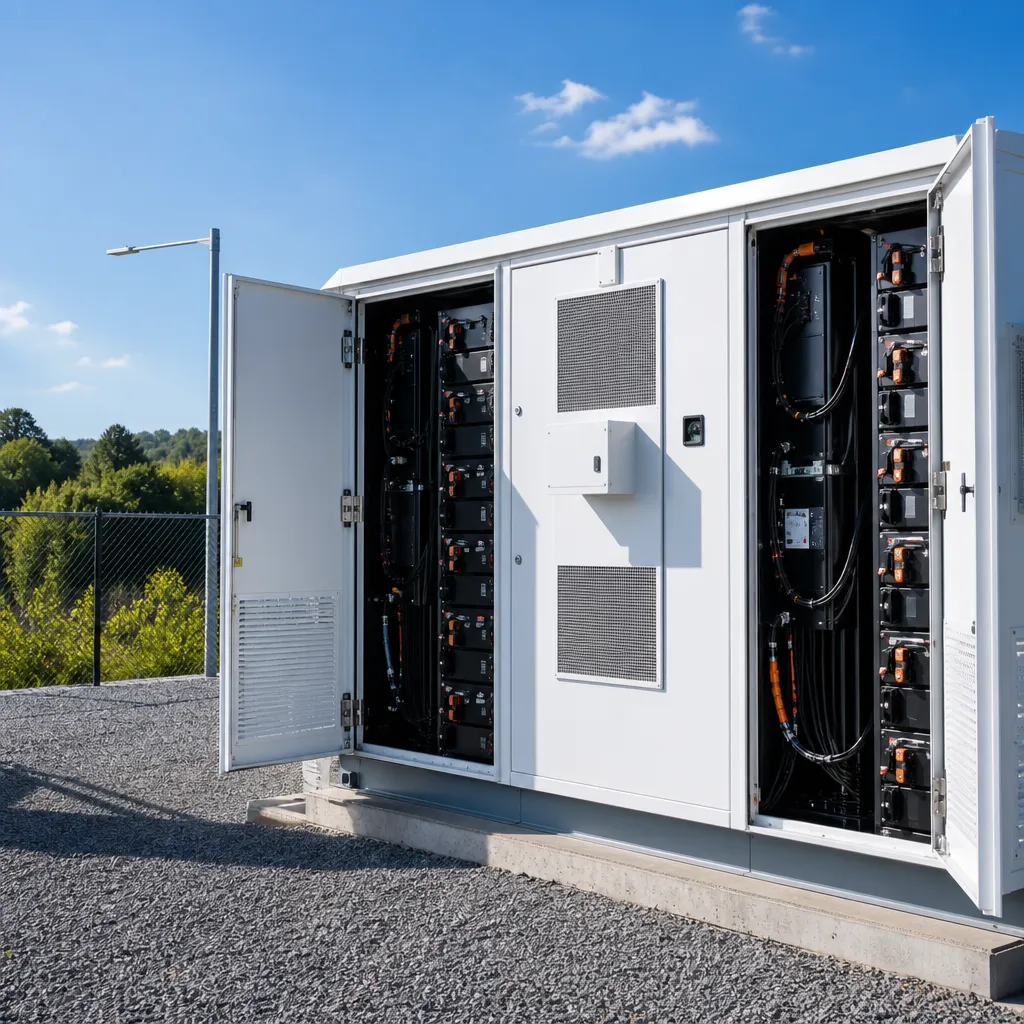
Industrial Peak Shaving & Demand Charge Reduction
Peak demand surcharges can account for up to 50% of a commercial electricity bill. Our LFP energy storage battery automatically dispatches power during high-tariff periods to cap site demand. By implementing automated peak shaving and load shifting strategies, industrial facilities routinely slash average peak demand surcharges by up to 35%.
Solar Self-Consumption Optimization
Grid feed-in tariffs offer diminishing returns for rooftop solar generation. Our systems capture excess daytime solar energy and store it for high-demand evening hours or peak pricing windows. Integrating our high-efficiency solar-plus-storage architecture enables commercial operators to achieve a 90%+ solar self-consumption rate, dramatically improving project payback timelines.
Critical Load Backup & Seamless Switchover
Power sags and utility outages risk costly downtime and hardware damage for sensitive industrial operations.
Switchover Speed: < 10ms automatic transfer time for continuous, uninterrupted power delivery.
Operational Continuity: Instantaneous switchover eliminates power flickers and equipment reboot delays for manufacturing lines, data centers, and healthcare facilities.
Grid Independence: Integrated microgrid control provides full islanding capability for extended off-grid support.
EV Fast-Charging Infrastructure Buffering
High-power EV fast charging places massive momentary loads on local utility grid connections, often triggering expensive transformer upgrades and penalty tariffs. Operating an LFP battery cabinet as an energy buffer absorbs high-rate demand spikes from charging events, mitigating transformer overload fees while delivering up to 50% savings on site infrastructure upgrades.
Comprehensive Technical Specifications Matrix
We build each LFP battery energy storage system to deliver maximum round-trip efficiency, operational longevity, and multi-layered safety across commercial, industrial, and grid-scale environments. Explore our range of high-performance battery energy storage systems designed for demanding utility and industrial applications.
| Feature Category | Technical Performance Benchmark |
|---|---|
| Cell Chemistry | Premium Grade-A LiFePO4 (Cobalt-Free) |
| Cycle Life | ≥ 6,000 Cycles @ 25°C, 90% DoD (to 80% EOL) |
| Thermal Management | Active Smart Liquid Cooling / Forced Air |
| BMS Architecture | 3-Tier Protection (Cell, Rack, and System Level) |
| Backup Transfer Time | < 10 ms UPS-Grade Automatic Switchover |
| Control & Telemetry | Modbus TCP, CAN, SCADA, Cloud-Edge EMS |
| Safety & Certifications | UL 9540A, UL 1973, IEC 62619, CE, UN 38.3 |
Cell Chemistry and Cycle Life
Our LFP energy storage battery solutions rely exclusively on top-tier lithium iron phosphate chemistry. Delivering over 6,000 full operational cycles at 90% Depth of Discharge (DoD), our system guarantees long-term energy density retention and over 15 years of reliable daily cycling.
Cooling Method and BMS Architecture
We offer both forced-air and liquid-cooled LFP battery pack architectures. Active liquid cooling maintains intra-pack temperature variance within 2.5°C, drastically reducing thermal stress and degradation. Safety is driven by a 3-tier hardware and software protection suite integrated with our enterprise-grade BMS and EMS integration for real-time diagnostics and automated preventive controls.
Transfer Time, Communication, and Compliance
With an automatic transfer time of less than 10 ms, our storage systems provide instantaneous power backup during sudden grid outages. Industrial-standard communications—including Modbus TCP, CAN, and SCADA—ensure fast setup with on-site building management systems, while full UL 9540A certified BESS testing verifies fire propagation protection at the highest industry standards.
Turnkey 6-Phase Execution for Your LFP Battery Energy Storage System
Phase 1: Site Assessment & Load Analysis
We perform a comprehensive site audit and detailed 15-minute interval historical load profile analysis. Our engineering team evaluates peak demand patterns, power quality requirements, and utility tariff structures to establish precise feasibility baselines.
Phase 2: Custom Engineering & ROI Modeling
Using precise operational data, we generate complete electrical schematics, structural plans, and financial payback simulations. Whether deploying standalone commercial setups or multi-source microgrid energy storage systems, our designs minimize levelized cost of storage (LCOS).
Phase 3: Automated Manufacturing & Testing
Every LFP battery energy storage system is assembled in our automated ISO-certified facilities. We execute comprehensive Factory Acceptance Testing (FAT) with fully pre-programmed Battery Management System (BMS) and Energy Management System (EMS) protocols prior to dispatch.
Phase 4: Field Deployment & Grid Interconnection
Our field engineers oversee physical integration on-site, including:
Civil foundation preparation and enclosure mounting
High-voltage cabling and transformer integration
Utility interconnection coordination and protective relay configuration
Phase 5: Commissioning & Optimization
Prior to full commercial energization, we conduct rigorous thermal load testing, off-gas sensor calibration, and transfer-switch validation to guarantee seamless performance under full load.
Phase 6: 24/7 Global O&M Support
We maintain continuous cloud-edge telemetry across your fleet to monitor cell health, dynamic state-of-charge (SoC), and system temperatures. Through our scalable deployment architecture and tailored service programs featured in our custom solutions, we dispatch automated predictive maintenance to eliminate unplanned downtime.
Global Certifications & Compliance Badges for LFP Battery Energy Storage Systems
Safety, regulatory compliance, and long-term operational reliability form the core of our LFP battery energy storage system engineering.
Review our core compliance portfolio and active quality certifications below:
| Certification | Standard Scope & Purpose | BESS Deployment Impact |
|---|---|---|
| UL 9540A | Fire propagation testing for thermal runaway | Guarantees zero thermal runaway propagation across adjacent battery cells, modules, and enclosures. |
| UL 1973 | Safety standard for stationary energy storage batteries | Verifies structural integrity, electrical insulation, and electrical fault protection under extreme loads. |
| IEC 62619 | Industrial lithium battery safety requirements | Ensures safe operation of secondary cells and modules in heavy C&I and grid-scale environments. |
| CE & UN 38.3 | European conformity & safe transport protocol | Certifies safe international transit and compliance with European health, safety, and environmental standards. |
| ISO 9001 | Quality management system certification | Enforces strict, automated manufacturing quality control and traceability from cell to system level. |
Key Compliance Highlights for System Integrators & Permitting
- UL 9540A Certified BESS Architecture: Complete test reports speed up local AHJ (Authority Having Jurisdiction) sign-offs and NFPA 855 fire safety approvals.
- Grid Interconnection Ready: Meets global utility compliance frameworks, allowing plug-and-play integration into complex commercial and industrial microgrids.
- Full Supply Chain Traceability: Manufactured under ISO 9001 standards to maintain premium cell quality, consistent round-trip efficiency, and reliable long-term cycle life.
Frequently Asked Questions: LFP Battery Energy Storage System
What is the typical ROI payback timeline for a Percenec Energy C&I LFP system?
Most commercial and industrial facilities achieve full capital payback within 3 to 6 years. The exact return timeline depends on local utility tariff structures, demand charge peaks, and solar-plus-storage integration. We model your facility's historical load profile to calculate exact project payback before manufacturing—explore our commercial BESS buying guide for detailed financial models and tariff reduction strategies.
How does LFP chemistry compare to NMC for stationary energy storage?
An LFP energy storage battery is engineered specifically for stationary reliability, whereas Nickel Manganese Cobalt (NMC) prioritizes gravimetric energy density for lightweight EV packaging.
- Thermal Safety: LiFePO4 cells feature a high thermal runaway threshold of ~270°C (compared to ~210°C for NMC) and do not release oxygen during severe cell stress.
- Cycle Life: Our LFP cells deliver ≥ 6,000 cycles at 90% DoD, more than doubling the 2,000–3,000 cycle lifespan typical of NMC.
- Cost & Sustainability: LFP chemistry is cobalt-free and non-toxic, eliminating critical mineral supply risks and delivering a significantly lower Levelized Cost of Storage (LCOS).
Can Percenec Energy BESS integrate with our existing building management system or SCADA?
Yes. Every LFP battery energy storage system we build includes open communication protocols for rapid site integration. The system natively supports Modbus TCP/IP, Modbus RTU, CANbus, and IEC 61850, enabling automated dispatch and telemetry syncing with your facility EMS, microgrid controller, or master SCADA network. Review our hardware interface options across our modular energy storage cabinets.
How does the liquid cooling system affect battery degradation over time?
Standard air cooling often allows cell temperature variance of 5°C to 8°C across a single rack, accelerating localized cell aging. Our active liquid thermal management system keeps intra-pack temperature variance ≤ 2.5°C across all charge and discharge cycles.
- Capacity Retention: Restricts annual capacity degradation to under 2% under standard operational profiles.
- Hotspot Mitigation: Prevents localized cell overheating during high C-rate peak shaving and EV fast-charging support.
- Extended Asset Life: Maintains high round-trip efficiency (RTE ≥ 90%) over a 15+ year operational lifespan.
Related Sources
- https://library.e.abb.com/public/b81115d3d39444e8ad97
- https://library.e.abb.com/public/b81115d3d39444e8ad971f0f05aa4ef7/9AKK108469A4315%20WHITE%20PAPER%20Peak%20Shaving.pdf?x-sign=yefz0BSrckBvu4NcMtftKT15SGBuJyeZfTrtQWwco7NjTP0wvgSa2e1mWeK5XDGM
- https://library.e.abb.com/public/b81115d3d39444e8ad971f0f05aa4ef7/9AKK108469A431
- https://percentecenergy.com/