Formula details
Product Details
Overview
Product Overview: Off-Grid Energy Storage System with Battery
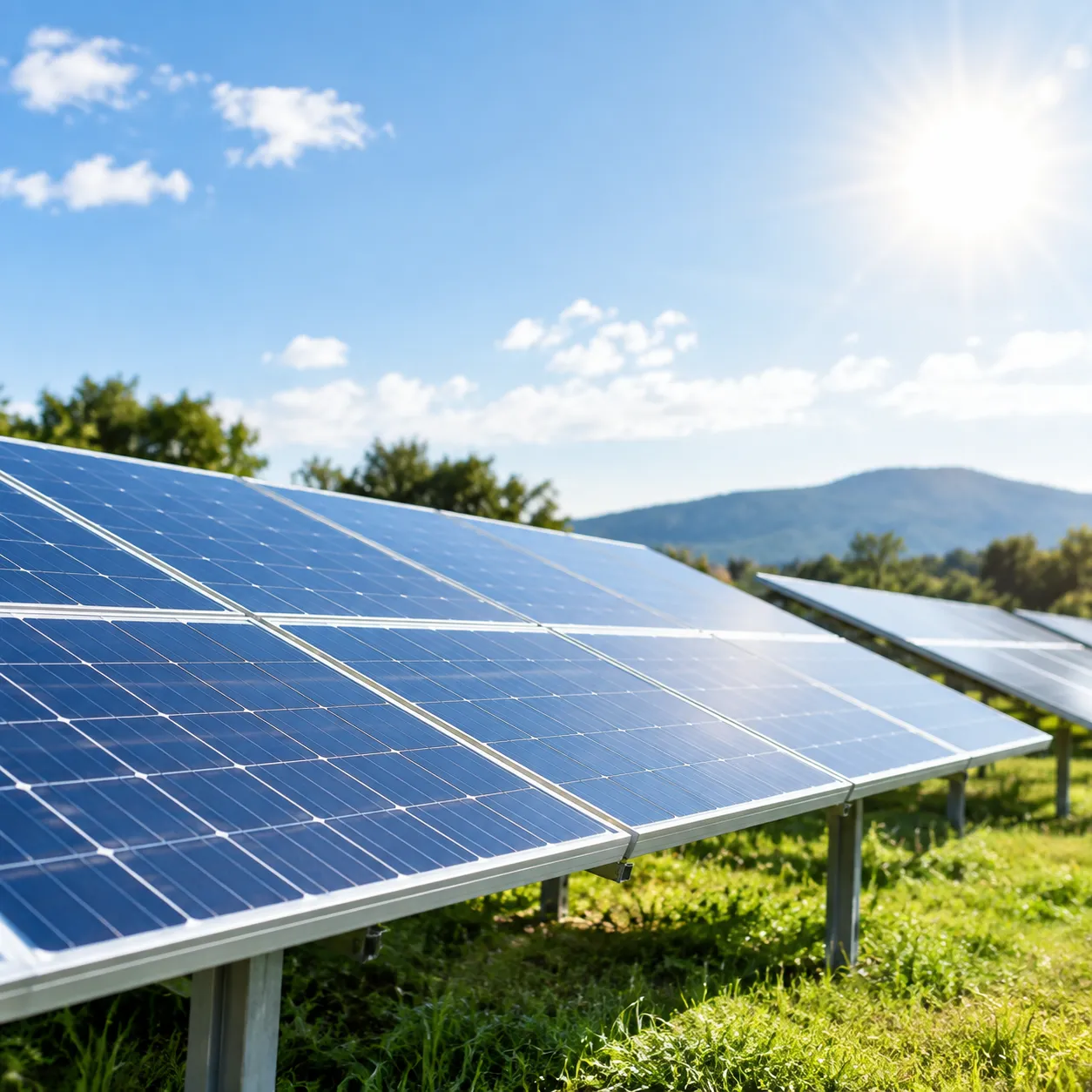
Living or working beyond the reach of the traditional power grid requires total energy independence. Our off grid energy storage system with battery provides a dependable, round-the-clock power supply for properties operating without utility access. Engineered with safe, Grade-A Lithium Iron Phosphate (LiFePO4) chemistry, our systems capture excess renewable energy during peak generation hours and store it for instant use whenever demand peaks or the sun sets.
Whether powering an isolated residence, an agricultural operation, or a critical remote telecommunications facility, our off-grid solar battery storage systems deliver stable voltage, rapid power delivery, and exceptional thermal resilience in demanding operating environments.
Typical System Components and Equipment
A complete stand-alone solar power system integrates multiple hardware and control layers to ensure uninterrupted electricity. We engineer our systems with high-standard, interoperable equipment:
- LiFePO4 Battery Storage Bank: Deep-cycle lithium iron phosphate battery bank configurations (available in standard 48V/51.2V rack modules, wall-mounted units, or stackable architectures) storing clean DC power.
- Intelligent Battery Management System (BMS): Integrated control electronics that safeguard individual cells against overcharging, deep discharge, thermal spikes, and short circuits while maintaining cell balance.
- Off-Grid Inverter and Charger: High-efficiency power conversion unit converting stored DC battery energy into standard AC power for household or commercial loads, while managing auxiliary generator inputs.
- Solar Charge Controller (MPPT): Maximum Power Point Tracking electronics that optimize solar harvest from photovoltaic panels to charge the battery bank at peak efficiency.
- Integrated Monitoring & Communication Interfaces: Multi-protocol communication modules supporting CAN and RS485 for real-time diagnostics, load tracking, and parameter optimization.
How the System Supports Off-Grid Power Generation
Operating an off-grid power generation system requires precise energy balancing to prevent blackouts and equipment fatigue. Our battery systems act as the primary operational anchor of your microgrid:
- Daytime Energy Harvesting: Solar PV panels generate DC electricity during sunlight hours, powering active loads directly while our intelligent BMS routes surplus current into the lithium battery bank.
- Zero-Interruption Load Shifting: As generation drops in the late afternoon and night, the system shifts automatically to battery discharge mode, delivering steady AC electricity without flicker or voltage sag.
- Peak Surge Suppression: High-draw appliances—such as well pumps, compressors, and power tools—require heavy inrush current. Our LiFePO4 batteries handle instantaneous surge demands that would otherwise trip standard generators.
- Auxiliary Power Integration: If prolonged bad weather depletes reserves, the system communicates with standby fuel generators to auto-start, charge the batteries safely, and shut down automatically once optimal capacity is restored.
Key Features of Off-Grid LiFePO4 Battery Systems
When you operate off the grid, your battery is your power line. An off grid energy storage system with battery must deliver rock-solid stability, withstand deep daily cycling, and protect itself automatically.
LiFePO4 Chemistry Safety and Cycle Life
Safety and longevity dictate off-grid success. We build every LiFePO4 off-grid battery system using Grade-A cells that resist thermal runaway and chemical breakdown even under heavy continuous loads.
- Extreme Longevity: Delivers 6,000+ cycles at standard Depth of Discharge (DoD), ensuring over a decade of daily solar cycling.
- Thermal Stability: LiFePO4 chemistry remains chemically stable at elevated ambient temperatures without catching fire or releasing toxic gases.
- Deep Usable Capacity: Discharges up to 90%–95% of its rated capacity daily without the voltage collapse or plate degradation seen in traditional lead-acid banks.
Understanding our lithium iron phosphate battery safety and cycle life ensures you invest in equipment built for true energy independence.
Intelligent Battery Management System (BMS) Protection
Every battery bank includes an integrated Smart BMS that actively monitors cell health in real time. It acts as an internal circuit guard to keep your setup balanced and fully protected.
- Cell Balancing: Automatically equalizes voltage across all individual cells to prevent premature capacity loss.
- Multi-Tier Fault Cutoff: Instantly isolates the battery during overcharge, over-discharge, overcurrent, and external short circuits.
- Thermal Sensors: Shuts down charge or discharge pathways if operating temperatures exceed safe high or low thresholds.
Modular Capacity and Parallel Expansion
Energy requirements grow over time. We design our modular off-grid energy storage hardware for plug-and-play scaling. You can start with a baseline battery module and expand storage simply by adding units in parallel on the same DC bus.
| Architecture Feature | Benefit for Off-Grid Setups |
|---|---|
| Modular Form Factors | Choose between compact wall mounts, 19-inch rack units, or floor-stack modules. |
| Parallel Scaling | Easily link multiple modules to boost amp-hour (Ah) capacity and backup hours. |
| Flexible Upgrades | Add extra storage capacity without replacing your initial battery investment. |
Inverter Communication and Protocol Compatibility
A dependable lithium iron phosphate battery bank must communicate directly with your power conversion hardware. Our battery management systems come pre-configured with industry-standard CAN and RS485 communication protocols.
This closed-loop communication enables the battery to transmit real-time state of charge (SOC), voltage, and charge current limits directly to leading off-grid and hybrid solar inverters. The inverter automatically adjusts its charge curves to match the battery’s exact status, preventing overcharging and maximizing round-trip efficiency.
Off-Grid Battery System Configurations
Wall-Mounted Off-Grid Battery Solutions
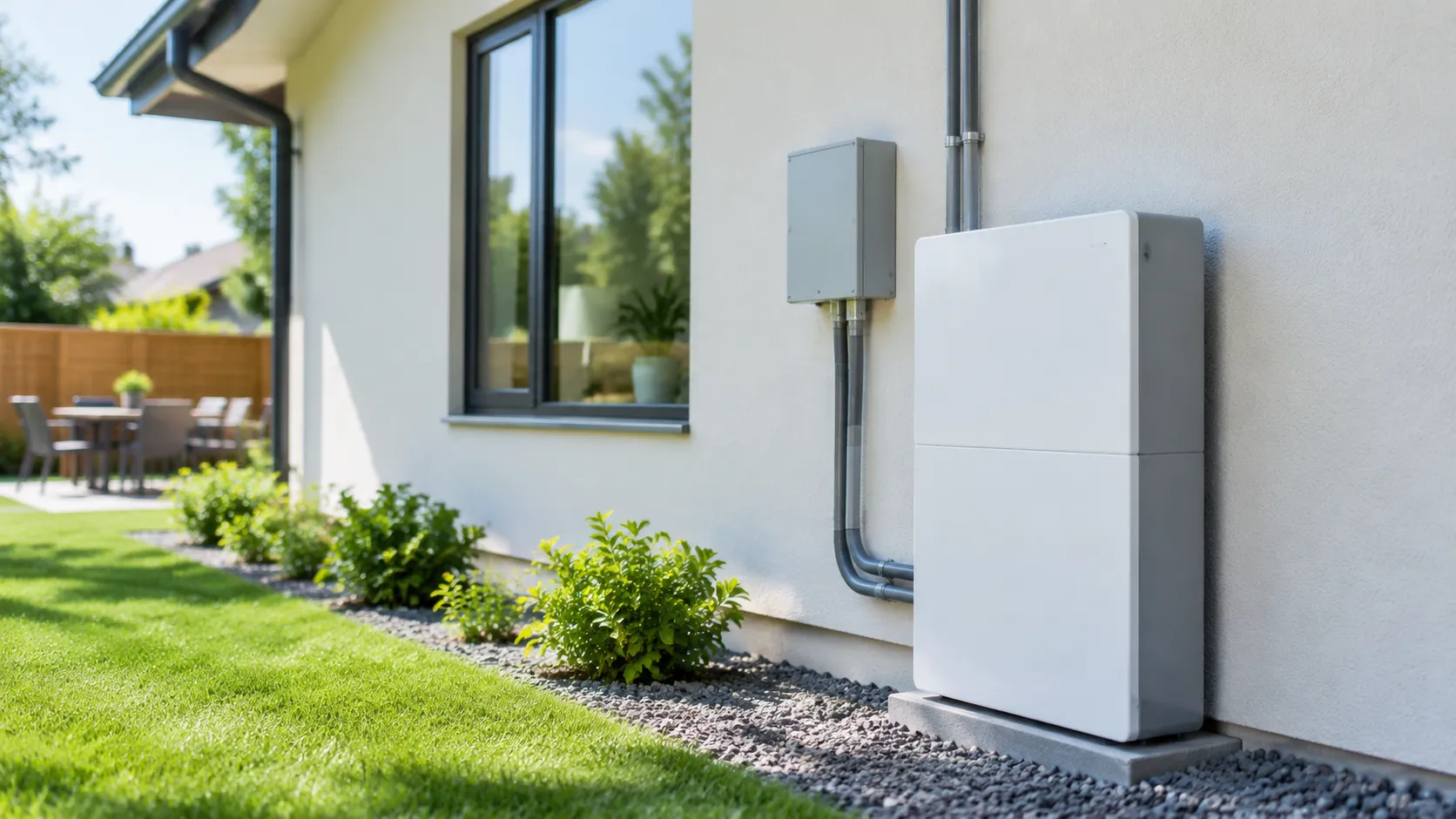
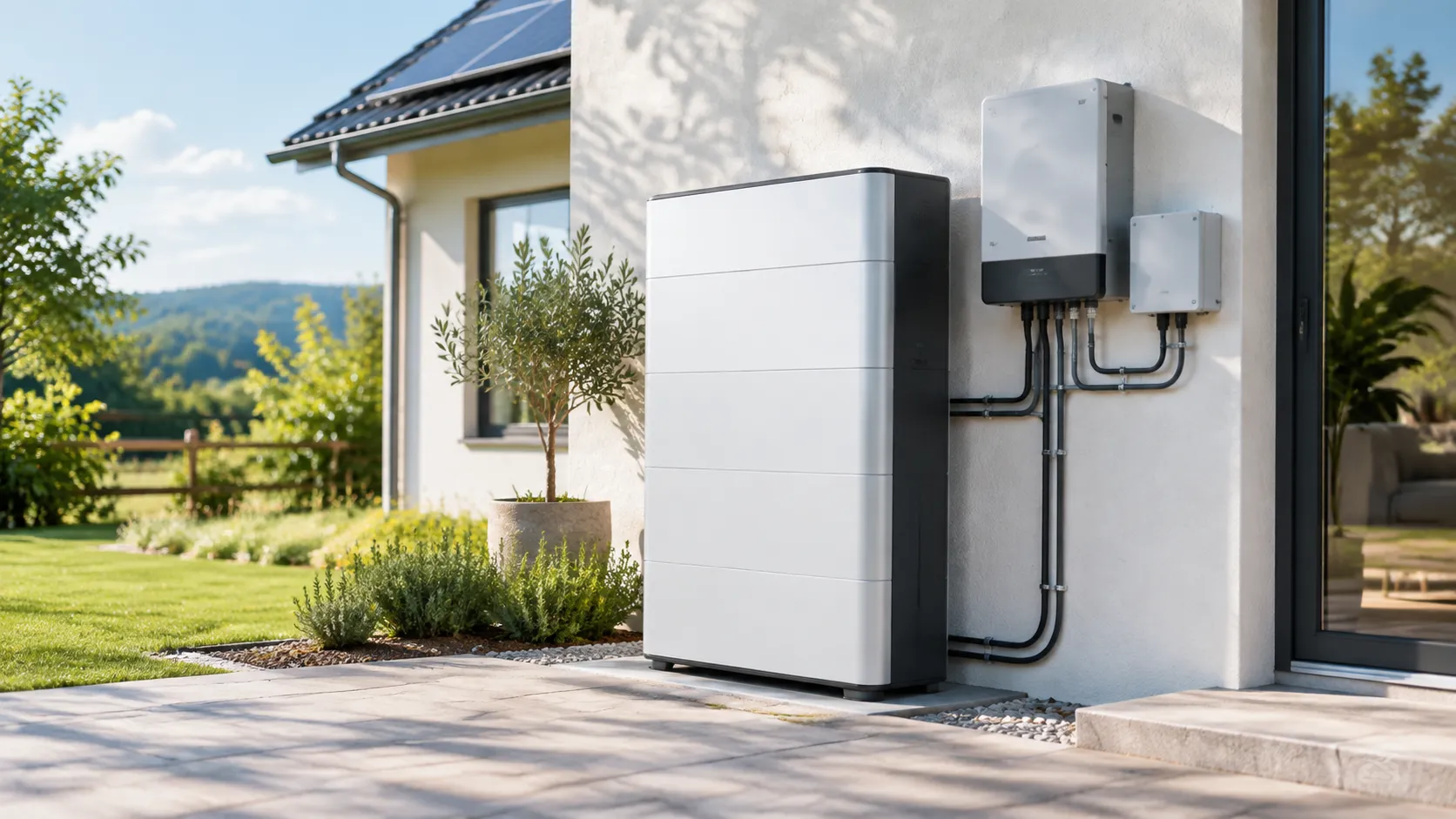
Our wall-mounted lithium batteries deliver a slim, space-efficient profile engineered for homes, remote cabins, and light commercial properties.
- Space-Saving Footprint: Mounts securely to vertical surfaces, keeping floor space completely clear.
- Plug-and-Play Integration: Direct DC coupling with standard hybrid and off-grid inverters via CAN and RS485 communication protocols.
- Modern Aesthetic: Clean, protective enclosures designed for garages, utility rooms, and indoor storage areas.
Rack-Mounted 48V and 51.2V Battery Banks
For scalable power rooms, telecom sites, and expandable setups, our standard 19-inch rack-mounted modules offer unmatched modularity.
- Standardized Sizing: Built on reliable 48V and 51.2V LiFePO4 architecture.
- Parallel Scalability: Connect multiple units in parallel within a single server rack to scale storage capacity from 5 kWh to over 100 kWh.
- Serviceability: Individual modules can be installed, maintained, or expanded without dismantling the entire battery bank.
Stackable Low-Voltage and High-Voltage Battery Units
Stackable battery systems eliminate complex external cable trays by utilizing integrated plug-in connectors between blocks.
- Low-Voltage (LV) Stacks: Modular 48V/51.2V blocks designed for straightforward residential energy expansion.
- High-Voltage (HV) Stacks: Series-connected configurations that minimize DC transmission current, reduce thermal losses, and optimize efficiency for larger three-phase off-grid inverters.
- Tool-Less Stacking: Interlocking modules allow rapid physical deployment and clean cable-free appearances.
Outdoor Integrated Energy Storage System (ESS) Cabinets
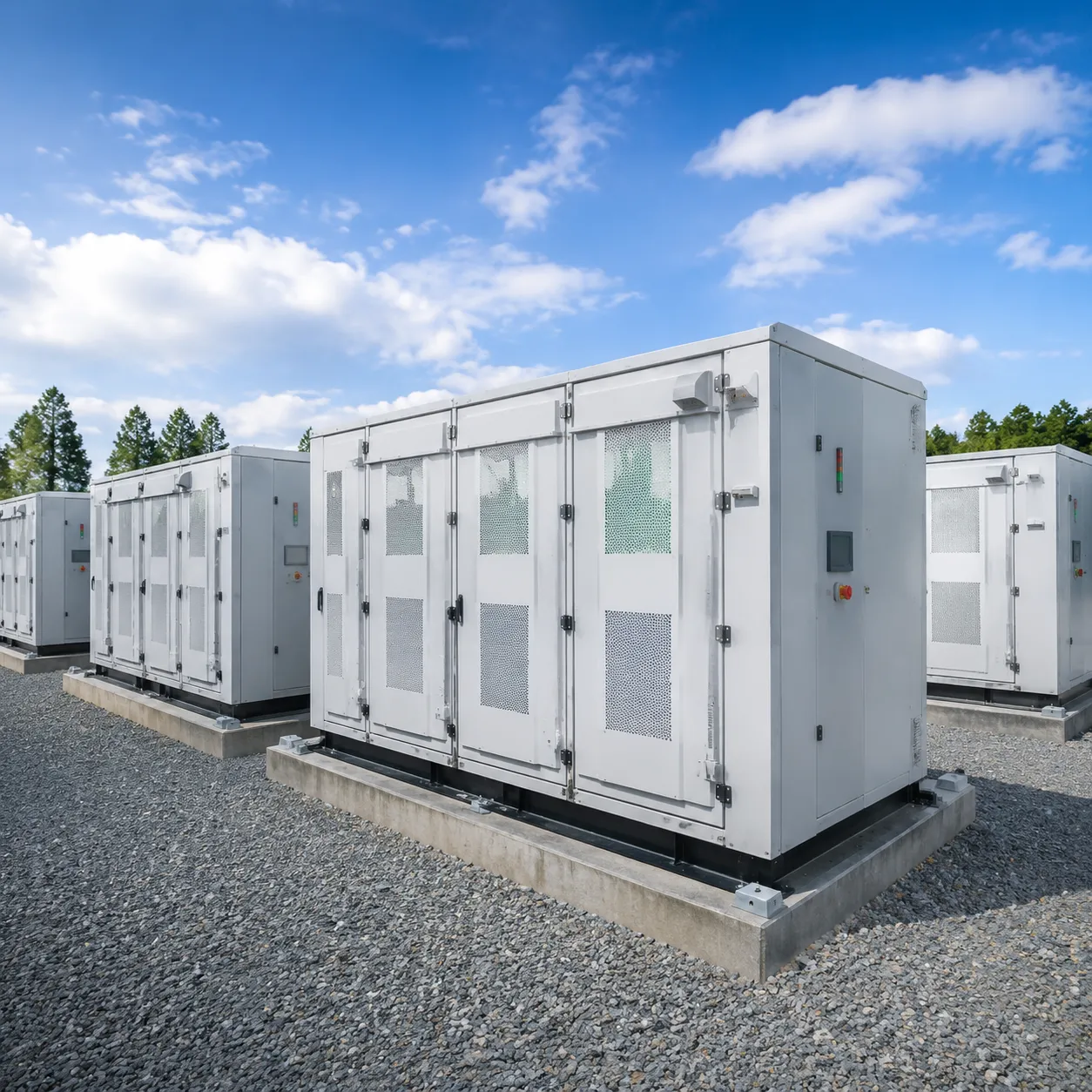
For commercial microgrids, agricultural operations, and decentralized utility projects, our all-in-one outdoor ESS cabinets deliver a self-contained, turnkey solution. Manufactured directly at our LiFePO4 BESS manufacturing facility, these systems integrate high-capacity battery racks, thermal management, and intelligent system protection.
| Configuration Feature | Specification Highlight |
|---|---|
| Enclosure Rating | Weather-resistant, IP-rated outdoor enclosure |
| Thermal Control | Integrated industrial HVAC / liquid cooling for extreme climates |
| Safety Systems | Multi-stage aerosol fire suppression and comprehensive BMS monitoring |
| Application Scope | C&I microgrids, agricultural power, and large off-grid energy storage |
For utility-scale deployments and heavy-duty industrial sites requiring complete turn-key infrastructure, we also supply high-capacity systems built to standard BESS container specifications.
Technical Specifications and Performance Metrics

Core Electrical and Mechanical Specifications
Our modular platforms adapt to residential loads, remote worksites, and light industrial microgrids.
| Specification Parameter | Low-Voltage (LV) Systems | High-Voltage (HV) Systems |
|---|---|---|
| Battery Chemistry | Grade-A LiFePO4 (Lithium Iron Phosphate) | Grade-A LiFePO4 (Lithium Iron Phosphate) |
| Nominal Voltage Classes | 48V / 51.2V | Multi-module series configurations |
| Cycle Life | 6,000+ cycles (standard DoD at 25°C) | 6,000+ cycles (standard DoD at 25°C) |
| Communication Protocols | CAN, RS485 | CAN, RS485 |
| Installation Form Factors | Wall-mount, 19-inch rack-mount, stackable | Floor stackable, integrated outdoor cabinets |
| BMS Protective Functions | Voltage, current, short-circuit, temp monitoring | Cell balancing, multi-tier electrical & thermal protection |
Critical Factors Affecting Off-Grid Battery Performance
Maintaining maximum capacity and longevity from your LiFePO4 off-grid battery system involves several primary operating variables:
- Ambient Temperature Management: Extreme cold slows lithium-ion reaction rates, while excess heat accelerates cell aging. Our integrated smart BMS tracks thermal sensors in real time to throttle or cut off charging if temperatures breach safe thresholds.
- Depth of Discharge (DoD) Optimization: Operating your lithium iron phosphate battery bank within standard DoD limits preserves cell health and ensures you achieve 6,000+ operational cycles.
- Continuous and Peak Discharge Handling: Remote properties often run heavy inductive loads, such as water well pumps and workshop machinery. Ensuring the battery bank and inverter handle these sudden inrush currents avoids unexpected system trips.
- Closed-Loop Inverter Sync: Direct communication over CAN or RS485 keeps your inverter and battery synchronized, eliminating inaccurate voltage-based State of Charge (SoC) calculations and preventing overcharging.
To evaluate how these operating conditions influence daily storage capacity, review our BESS key factors and sizing guide for detailed system engineering recommendations.
Practical Applications for Off-Grid Battery Storage
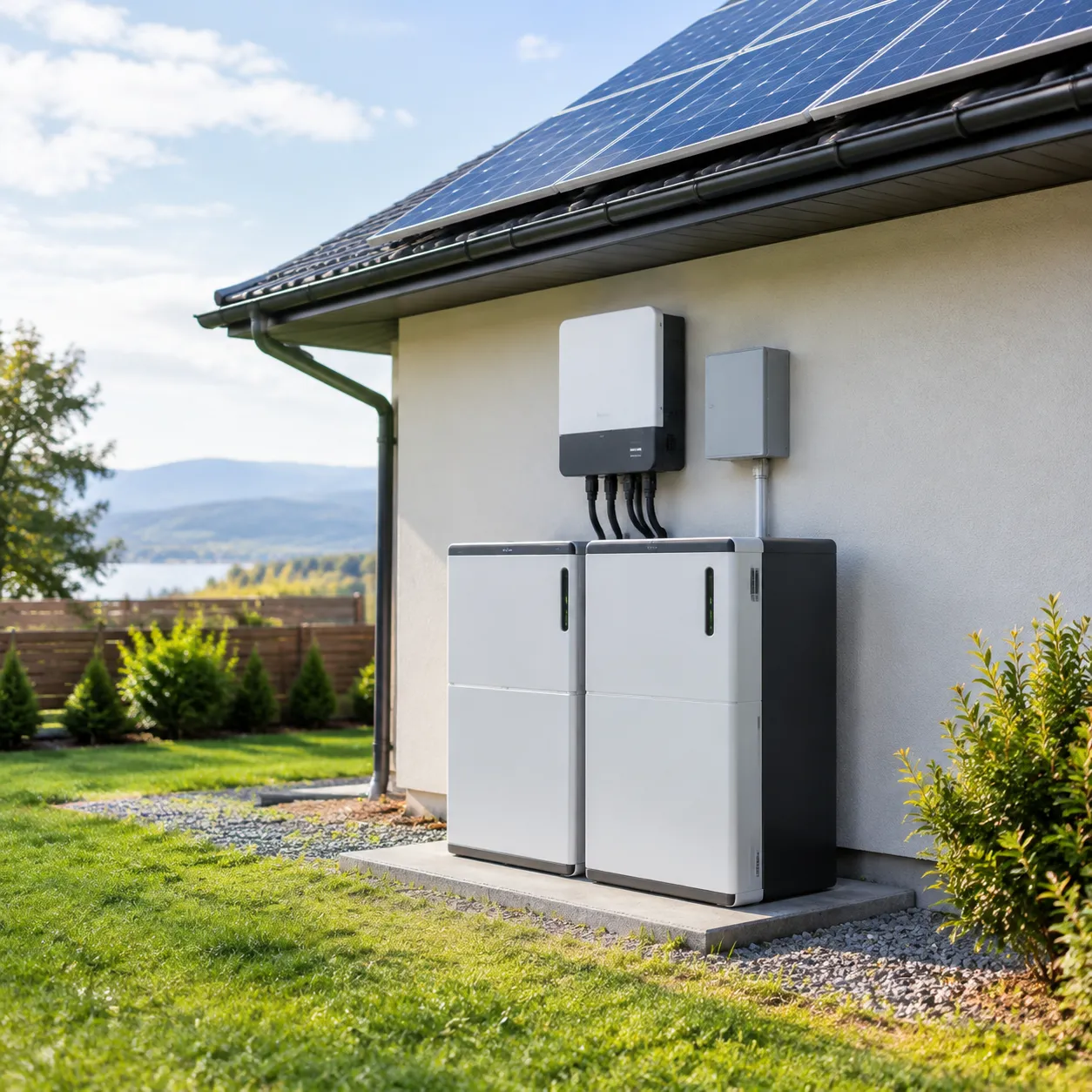
Residential Off-Grid Solar Storage
For modern households operating away from public utilities, our residential off-grid battery backup setups store daytime solar generation to power daily living around the clock:
All-Day Baseload Support: Smooth delivery of electricity for refrigeration, lighting, HVAC, and electronics.
Nighttime Discharging: Reliable deep-cycle capability delivering continuous power through long evening hours without generator noise.
Clean Inverter Integration: Direct pairing with residential off-grid inverters via high-speed CAN and RS485 communication.
Remote Cabins and Rural Off-Grid Properties
Cabins, vacation retreats, and rural residences face unique logistics, seasonal temperature swings, and intermittent occupancy:
Zero Self-Discharge Worries: Long shelf retention allows systems to hold energy reliably between seasonal visits.
Compact Footprints: Wall-mount and slim stackable profiles save valuable living space inside small utility rooms or cabins.
Plug-and-Play Maintenance: Maintenance-free lithium chemistry replaces toxic, high-maintenance lead-acid banks in secluded spots.
Farms and Agricultural Operations
Modern agricultural setups rely heavily on stable power for productivity, animal welfare, and harvest preservation:
Irrigation and Pumping: High surge handling easily starts heavy inductive loads from well pumps and water filtration setups.
Cold Storage & Milking Parlors: Uninterrupted operation keeps perishable goods safe and daily processing on schedule.
Greenhouse Climate Control: Constant automation of ventilation, fans, and supplemental lighting without utility downtime risks.
Telecom and Remote Monitoring Stations
Cell towers, radio repeaters, and environmental monitoring platforms often sit on mountain ridges or unpaved corridors where grid hookups are cost-prohibitive:
True 24/7 Continuity: Continuous DC or AC power keeps communication networks and data links online.
Autonomous Protection: Intelligent BMS units safeguard cells against thermal swings and unexpected current spikes in unmanned locations.
Generators Run Less: Solar-plus-battery coordination minimizes generator runtime, slashing remote refueling and service runs.
Commercial and Industrial Microgrids
For off-grid eco-resorts, mining compounds, construction bases, and island grids, centralized utility access is non-existent. Our scalable microgrid energy storage architectures link parallel battery cabinets to create stable standalone distribution networks. These high-capacity setups balance dynamic load changes, integrate large solar arrays, and deliver dependable power across entire facilities.
Emergency Backup and Outage Resilience
Facilities in regions with volatile utility infrastructure require immediate, fail-safe power security. Utilizing dedicated commercial and industrial backup power systems ensures seamless transitions during blackouts, safeguarding essential machinery, data servers, security hardware, and life-safety systems without voltage sag.
How to Size an Off-Grid Energy Storage System with Battery
Properly sizing your off grid energy storage system with battery ensures dependable power without overspending on excess capacity or risking blackouts during poor weather. A reliable setup balances your daily power draw, peak surge requirements, and reserve storage.
Calculate Total Daily Energy Consumption (kWh)
To determine the battery bank size, list all electrical loads, their power ratings in watts, and expected daily runtimes:
Formula: (Wattage × Operating Hours) / 1,000 = Daily Consumption in Kilowatt-Hours (kWh)
Sum the consumption of all critical appliances, lighting, and electronics to establish your daily energy baseline.
Identify Peak Loads and Motor Starting Surges
Continuous running power differs significantly from startup power. Appliances with compressors or electric motors—such as well pumps, refrigerators, and HVAC units—draw momentary surge power up to 3 times their nominal rating. Your inverter and lithium iron phosphate battery bank must deliver enough continuous discharge current to absorb these spikes without tripping the battery management system (BMS).
Determine Required Days of Backup Autonomy
Autonomy refers to how many days your property can run solely on battery storage without solar input or generator support:
Standard Cabins & Homes: 1 to 2 days of autonomy.
Critical Sites & Remote Telecommunications: 2 to 3+ days of autonomy.
Multiplying your daily kWh usage by the required days of autonomy gives your base off-grid battery backup reserve.
Account for Depth of Discharge (DoD) and Efficiency Losses
Usable capacity is influenced by operating parameters:
LiFePO4 Chemistry: Safely operates at up to 80%–90% Depth of Discharge (DoD) over thousands of cycles.
System Losses: Inverter conversion, wiring resistance, and ambient temperatures introduce roughly a 10%–15% efficiency loss.
To account for these variables, divide your gross required capacity by 0.85 to ensure adequate headroom.
| Sizing Parameter | Calculation Rule | Typical Target Value |
|---|---|---|
| Base Load (Daily kWh) | Sum of all appliance runtimes | 10 kWh – 30 kWh/day |
| Surge Current Support | Peak motor startup current check | 2x – 3x continuous rating |
| Days of Autonomy | Days of operation without generation | 1 to 2 days |
| Depth of Discharge (DoD) | Recommended standard discharge limit | 80% – 90% DoD |
| System Efficiency | Combined DC-AC inverter & cable losses | ~85% – 90% |
Match Battery DC Voltage to the Inverter Platform
System voltage determines cable thickness, current loads, and inverter compatibility:
48V / 51.2V DC Low Voltage: The industry benchmark for residential off-grid solar storage and remote cabins. It minimizes current losses and integrates with standard off-grid inverters via CAN and RS485 protocols.
High Voltage (HV) Stacks: Best suited for larger whole house battery storage systems and commercial microgrids where high continuous discharge is necessary.
For applications requiring flexible growth, choosing a modular battery energy storage system for scalable power allows you to expand capacity in parallel as energy needs evolve.
Request a Tailored Technical System Sizing Assessment
Every site features unique usage patterns, peak loads, and environmental demands. We provide full engineering support to calculate exact battery capacity, run compatibility checks with third-party inverters, and configure a reliable off-grid energy storage system tailored to your exact load profile.
Installation and Operating Best Practices
Proper deployment and maintenance ensure your off grid energy storage system with battery runs reliably, delivers maximum round-trip efficiency, and reaches its full 6,000+ cycle service life.
Environmental and Temperature Requirements
LiFePO4 chemistry provides exceptional thermal stability, but optimal ambient conditions are essential to preserve cell health and charging performance:
- Operating Temperature Range: Maintain ambient temperatures between 0°C and 45°C (32°F to 113°F) for charging, and -20°C to 55°C (-4°F to 131°F) for discharging.
- Moisture and Ingress Protection: Install indoor wall-mounted and rack-mounted units in clean, dry spaces with less than 90% non-condensing relative humidity. Use IP55- or IP65-rated outdoor ESS enclosures for extreme environments.
- Ventilation and Clearances: Maintain at least 100 mm to 150 mm (4 to 6 inches) of clearance around battery enclosures and heat sinks for natural convection and passive cooling.
| Installation Factor | Recommended Condition | Operational Risk if Exceeded |
|---|---|---|
| Ambient Charge Temp | 0°C to 45°C (32°F to 113°F) | BMS limits charge rate below freezing to prevent lithium plating |
| Ambient Discharge Temp | -20°C to 55°C (-4°F to 131°F) | Reduced temporary capacity at sub-zero temperatures |
| Relative Humidity | 5% to 85% (Non-condensing) | Terminal corrosion or tracking faults on DC busbars |
| Enclosure Airflow | Unobstructed passive/active ventilation | Accelerated thermal aging and BMS over-temperature throttling |
Professional System Wiring and Integration
Solid electrical integration prevents voltage drops and ensures reliable power delivery across all DC loads:
- DC Conductor Sizing: Size DC cables according to maximum continuous charge and discharge current rather than nominal ratings to prevent thermal losses.
- Communication Bus Configuration: Connect CAN and RS485 communication cables between the master battery module and compatible off-grid inverters for closed-loop charging control.
- Overcurrent Protection: Install dedicated DC circuit breakers or Class-T fuses on positive conductors sized accurately for short-circuit interruption.
- Balanced Parallel Connections: Use busbars with equal-length power cables for multi-module battery energy storage systems to ensure identical resistance and uniform cell degradation across the entire bank.
Ongoing Monitoring and Routine Battery Maintenance
Our smart BMS handles continuous cell balancing, thermal protection, and state-of-charge (SoC) management automatically. Routine operational practices include:
- Digital BMS Diagnostics: Monitor individual cell voltages, temperature sensors, and state-of-health (SoH) metrics regularly via CAN/RS485 communication ports or digital display interfaces.
- Hardware Connection Checks: Inspect and re-torque high-current DC terminal bolts annually to ensure low contact resistance and prevent localized hotspots.
- Full Cycle Calibration: Perform a complete charge-to-discharge cycle every few months during prolonged low-solar periods to allow the BMS to recalibrate SoC metrics and balance cell strings evenly.
Comparing Off-Grid Battery Storage to Alternative Solutions
LiFePO4 Batteries vs. Traditional Lead-Acid Batteries
While lead-acid (AGM/Gel) batteries have historically been used for remote setups, our Grade-A Lithium Iron Phosphate (LiFePO4) systems deliver far superior longevity, safety, and efficiency.
| Feature / Metric | Percentec LiFePO4 Battery Bank | Traditional Lead-Acid (AGM/Gel) |
|---|---|---|
| Cycle Life (@ Standard DoD) | 6,000+ cycles | 500 – 1,200 cycles |
| Usable Depth of Discharge (DoD) | 80% – 90%+ | 50% max (to avoid damage) |
| Round-Trip Efficiency | >95% | ~75% – 85% |
| Maintenance | Zero maintenance (automated Smart BMS) | Regular terminal checks, acid risk |
| Weight & Footprint | Compact, lightweight, modular | Heavy, bulky, low energy density |
| Expected Service Life | 10+ years | 2 – 4 years |
A deep-cycle lithium iron phosphate battery bank provides twice the usable power per charge cycle without voltage sag, drastically reducing replacement frequency and long-term costs.
Solar Battery Storage vs. Fuel-Powered Generators
Fossil-fuel generators are prone to mechanical failure, constant refueling, noise, and high operating expenses. Pairing an off grid energy storage system with battery alongside solar generation provides an autonomous, clean alternative:
- Zero Fuel Logistics: Generates free energy directly from the sun, eliminating the hassle and expense of transporting fuel to remote locations.
- Silent, Continuous Operation: Delivers instant, uninterrupted power 24/7 without exhaust fumes, vibration, or engine noise.
- Low Operating Expenditure: Eliminates regular oil changes, spark plug replacements, and engine rebuilds.
- Hybrid Backup Compatibility: If a backup generator is already present, our storage units easily integrate via smart inverter controls to run the generator only when emergency bulk charging is required.
Standalone Battery Modules vs. Complete Integrated ESS
We provide both modular battery building blocks and turnkey integrated cabinets to fit different project scopes:
- Standalone Battery Modules (Wall-Mount / Rack-Mount): Ideal for residential systems, modular expansion, and custom off-grid setups where you already have a compatible inverter. These units allow you to scale capacity incrementally using standard 48V/51.2V rack architectures.
- Complete Integrated ESS: Engineered for streamlined installation, our all-in-one units integrate battery packs, power conversion systems (PCS), and thermal management into a single enclosure. For mid-sized to commercial microgrids, deploying a pre-engineered 75 kW / 600 kWh parallel battery energy storage system or a complete 10kW solar system with battery storage eliminates on-site wiring complexity and accelerates commissioning.
Custom OEM and ODM Off-Grid Battery Solutions
Standard off-the-shelf equipment does not always meet the exact electrical, spatial, or aesthetic demands of specialized projects. We engineer and manufacture complete off grid energy storage system with battery solutions tailored to the precise requirements of system integrators, EPC contractors, distributors, and brand partners worldwide through our custom solutions program.
From cell selection to exterior industrial design, our production line provides end-to-end original equipment manufacturing (OEM) and original design manufacturing (ODM) services.
Tailored Voltage, Capacity, and Enclosure Options
Our manufacturing capabilities allow complete flexibility across every layer of the battery architecture:
- Voltage and Capacity Configurations: Build low-voltage 48V/51.2V modules for residential systems or engineered high-voltage (HV) series strings for commercial microgrids.
- Form Factor Engineering: Choose from slim wall-mounted enclosures, standard 19-inch rack-mount chassis, stackable floor units, or fully integrated outdoor weather-resistant ESS cabinets.
- Protocol and BMS Adaptation: Seamless firmware programming for CAN and RS485 communication protocols, ensuring instant plug-and-play integration with designated off-grid inverter platforms via dedicated custom ESS integration.
- Branding and Private Labeling: Custom chassis sheet metal, tailored powder coating colors, silk-screened logos, and customized packaging to support your brand identity.
| Customization Scope | Available Options | Key Benefit |
|---|---|---|
| Chemistry & Cells | Grade-A LiFePO4 (LFP) | High thermal stability and 6,000+ cycle life |
| System Voltage | 48V / 51.2V (LV) up to high-voltage stacks | Scalable to residential or industrial power demands |
| Form Factor | Wall, Rack, Floor-Stack, Outdoor Cabinet | Flexible fit for restricted indoor or harsh outdoor sites |
| Communication | Multi-protocol CAN / RS485 | Full compatibility with major hybrid and off-grid inverters |
| OEM Branding | Silk-screen logo, custom colors, packaging | Complete private-label brand readiness |
Project Specifications Required for a Custom RFQ
To provide an accurate engineering assessment and factory-direct quotation for your custom off-grid battery storage setup, we evaluate your specific project parameters:
- Nominal DC Voltage: Target operating voltage (e.g., 48V, 51.2V, or high-voltage specs).
- Usable Energy Capacity: Desired baseline kilowatt-hour (kWh) rating and target expansion limits.
- Peak and Continuous Discharge Requirements: Maximum continuous load and expected surge currents.
- Inverter Model & Protocol: The specific inverter brand and communication standard (CAN or RS485).
- Enclosure & Environmental Demands: Indoor installation, rack integration, or outdoor weather-rated cabinet specs.
- Order Volume & Target Timeline: Initial sample verification requirements and batch production volume.
Frequently Asked Questions (FAQs)
What is an off-grid energy storage system with a battery?
An off-grid energy storage system with battery technology captures electricity generated from renewable sources, such as solar PV panels, and stores it in high-capacity lithium iron phosphate (LiFePO4) battery banks. It delivers dedicated, autonomous electricity to residential, commercial, or remote setups without relying on a public utility grid.
Can this storage system operate completely without the utility grid?
Yes. Our systems are specifically engineered for full grid independence. Working in tandem with solar arrays or backup generators, the battery bank manages daily charge-discharge cycling, power surges, and overnight loads to maintain reliable, continuous power anywhere.
Can I connect this battery system to existing solar panels?
Yes. You can integrate our battery units into existing solar installations using compatible off-grid or hybrid inverters and charge controllers. We ensure smooth retrofitting by matching system DC voltage (such as 48V or 51.2V) and charge profiles to your existing solar infrastructure.
Does the battery storage system include an inverter?
We offer flexible configurations based on your setup. You can choose modular, standalone battery units (wall-mounted, rack-mounted, or stackable) to connect with external inverters, or select a pre-wired all-in-one lithium-ion battery energy storage system that integrates the battery bank, inverter, and balance-of-system hardware inside a single enclosure.
How long will an off-grid battery power my loads during an outage?
Runtime depends on your total kilowatt-hour (kWh) capacity, active electrical loads, and available daytime solar recharging. By calculating your daily consumption and sizing the battery bank with adequate days of autonomy, the system can supply uninterrupted power for hours, days, or indefinitely in self-sustaining solar configurations.
How many battery modules can be connected in parallel?
Our low-voltage (48V/51.2V) and high-voltage battery modules feature plug-and-play parallel expansion. Depending on the model and system design, you can parallel multiple battery units to scale storage capacity from basic residential needs up to multi-megawatt commercial energy banks.
Are these batteries compatible with third-party off-grid inverters?
Yes. Our intelligent Battery Management System (BMS) supports standard CAN and RS485 communication protocols, ensuring seamless plug-and-play closed-loop communication with major global off-grid and hybrid inverter manufacturers.
What makes LiFePO4 chemistry safer for off-grid installations?
We use Grade-A Lithium Iron Phosphate (LiFePO4) chemistry because of its exceptional thermal and chemical stability. It resists thermal runaway, operates safely under demanding temperature ranges, and delivers an extensive lifespan of over 6,000 cycles at standard Depth of Discharge (DoD). For heavy-duty applications, we also house these cells within rugged outdoor battery energy storage systems with LiFePO4 battery enclosures for complete environmental protection.
Are OEM and ODM customization services available?
Yes. We provide complete OEM/ODM manufacturing services, including custom battery voltages, energy capacities, custom form factors, private labeling, and tailored communication protocols to match your project specifications.
How do I request pricing and a custom quotation?
To receive a technical consultation and factory-direct quote, submit your project details through our inquiry form. Include your daily energy demand (kWh), peak load wattage, preferred DC voltage, and any specific OEM/ODM requirements, and our engineering team will provide a tailored system proposal.