Types of Battery Energy Storage Systems by Chemistry
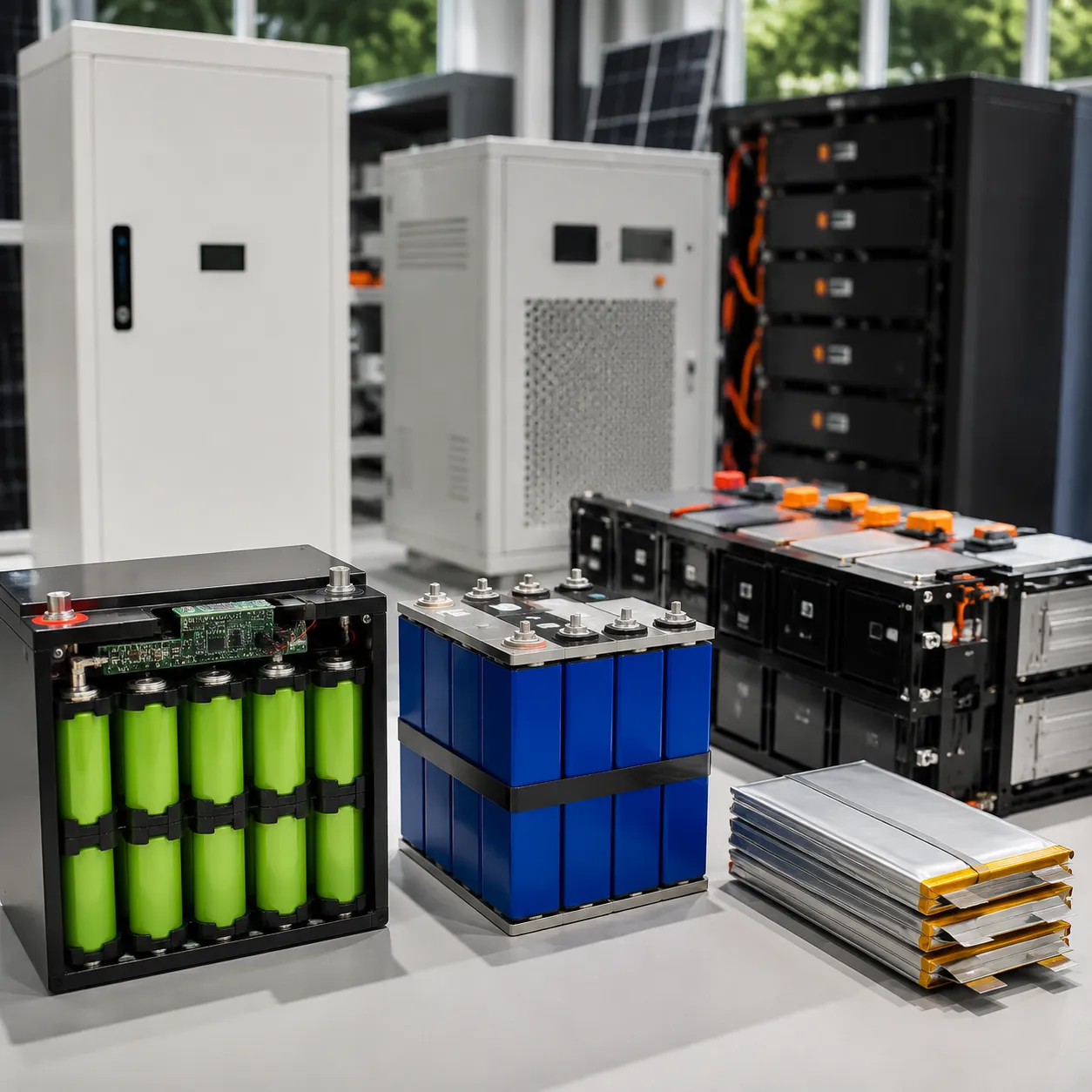
Selecting the right electrochemical chemistry dictates your project's footprint, degradation rate, safety profile, and total Levelized Cost of Storage (LCOS). As system integrators, we evaluate these five primary chemistry types based on operating conditions and performance targets:
| Battery Chemistry | Cycle Life | Thermal Stability | Energy Density | Primary Application |
|---|---|---|---|---|
| Lithium Iron Phosphate (LFP) | ≥ 6,000 cycles | High | Moderate | C&I cabinets, solar-plus-storage, grid-scale |
| Nickel Manganese Cobalt (NMC) | 2,500 – 4,000 cycles | Moderate | Very High | Space-constrained indoor installations |
| Flow Batteries (VRFB/Zinc-Br) | Unlimited (20+ yrs) | Very High | Low | Long-duration energy storage (> 8 hours) |
| Sodium-Based (Na-Ion/NaS) | 3,000 – 4,500 cycles | High | Low–Moderate | Extreme cold/heat, low-cost stationary storage |
| Lead-Carbon / Lead-Acid | 1,000 – 1,800 cycles | Low–Moderate | Low | Legacy UPS, telecom backup |
Lithium Iron Phosphate (LiFePO4 / LFP)
LFP is the industry baseline for stationary lithium ion battery storage. Its stable iron-phosphate chemical bond minimizes thermal runaway risk and eliminates active oxygen release during failure events.
Key Characteristics: Exceptional thermal stability, low raw material toxicity, and long operational life (≥ 6,000 cycles at 80% Depth of Discharge).
Best For: Stationary grid-scale storage, solar-plus-storage projects, and every modular battery energy storage system for scalable power we deploy in commercial facilities.
Nickel Manganese Cobalt (NMC)
NMC offers high volumetric and gravimetric energy density, making it valuable where physical square footage is at a premium.
Key Characteristics: Compact footprint and high C-rate capability, offset by stricter thermal management requirements.
Best For: Indoor installations or urban facilities with tight spatial boundaries requiring maximum energy density.
Flow Batteries (Vanadium Redox & Zinc-Bromine)
Flow battery energy storage utilizes liquid electrolytes stored in external tanks, completely decoupling system power (kW) from capacity (kWh).
Key Characteristics: Zero capacity degradation over 20+ years of operation, non-flammable water-based chemistry, and long discharge durations (> 8 hours).
Best For: Multi-day grid firming and long-duration energy storage (LDES).
Sodium-Based Batteries (Sodium-Ion & Sodium-Sulfur)
Sodium chemistry replaces cobalt and lithium with abundant sodium, reducing supply chain volatility and operating costs.
Key Characteristics: Wide operating temperature windows (-40°C to 60°C), low risk of thermal runaway, and lower upfront bill of materials.
Best For: Alternative stationary storage deployed in harsh or remote environmental conditions.
Lead-Acid & Advanced Lead-Carbon
While legacy lead-acid systems face low depth-of-discharge limits, advanced lead-carbon variants add carbon to the negative electrode to slow sulfation.
Key Characteristics: Low initial capital expenditure, mature recycling streams, heavy footprint, and limited cycle life under continuous deep cycling.
Best For: Lower-duty telecom stations and legacy backup power setups where daily cycling is not required.
BESS Hardware Design and Form Factors
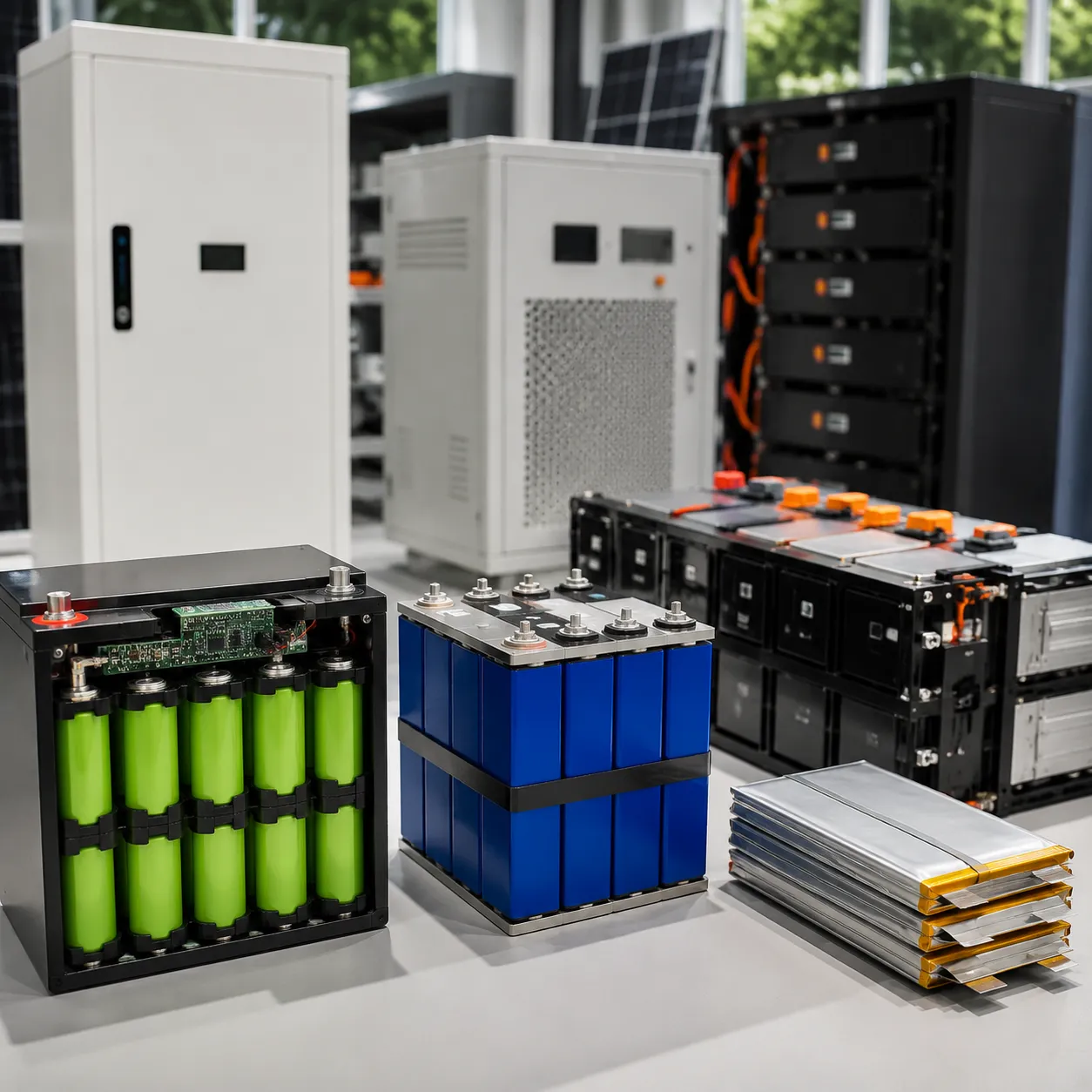
We engineer battery energy storage systems into two primary physical form factors to match specific footprint limits, thermal demands, and grid interconnection requirements.
Commercial and Industrial (C&I) Energy Storage Cabinets
For facility managers and commercial site operators, space efficiency and plug-and-play installation are critical. We construct C&I energy storage cabinets as compact, pre-engineered enclosures optimized for both indoor and outdoor deployments.
- Primary Applications: Factory power management, EV charger load buffering, and critical commercial backup power.
- Integrated Safety & Control: Built-in liquid or high-efficiency air thermal management, localized aerosol fire suppression, and smart bi-directional inverters.
- Scalable Architecture: Modular layout allowing fast capacity expansion alongside your growing site demand.
Implementing high-performance commercial and industrial backup power systems ensures seamless operational resilience without consuming valuable floor space.
Grid-Scale Containerized Energy Storage Systems
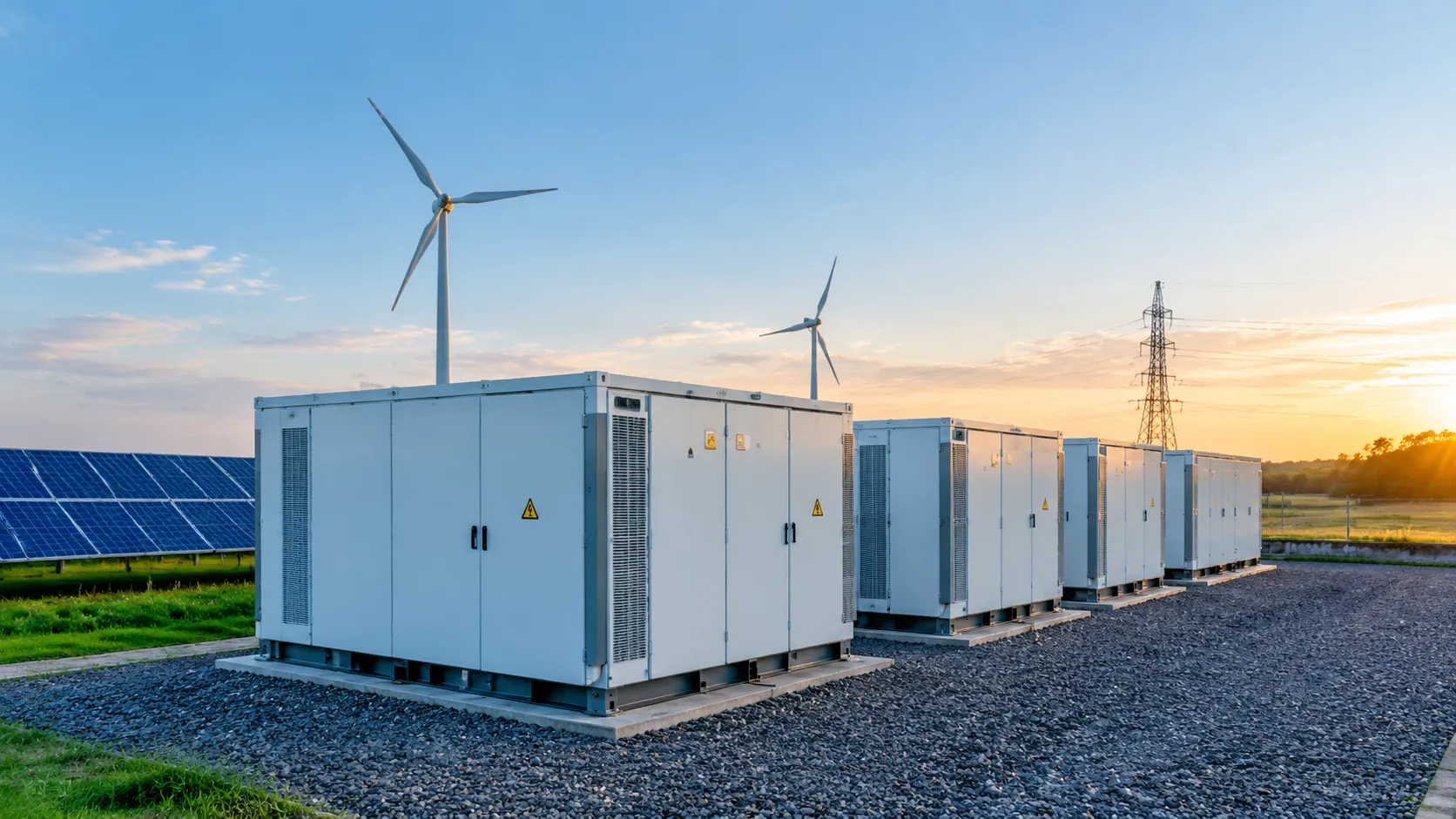
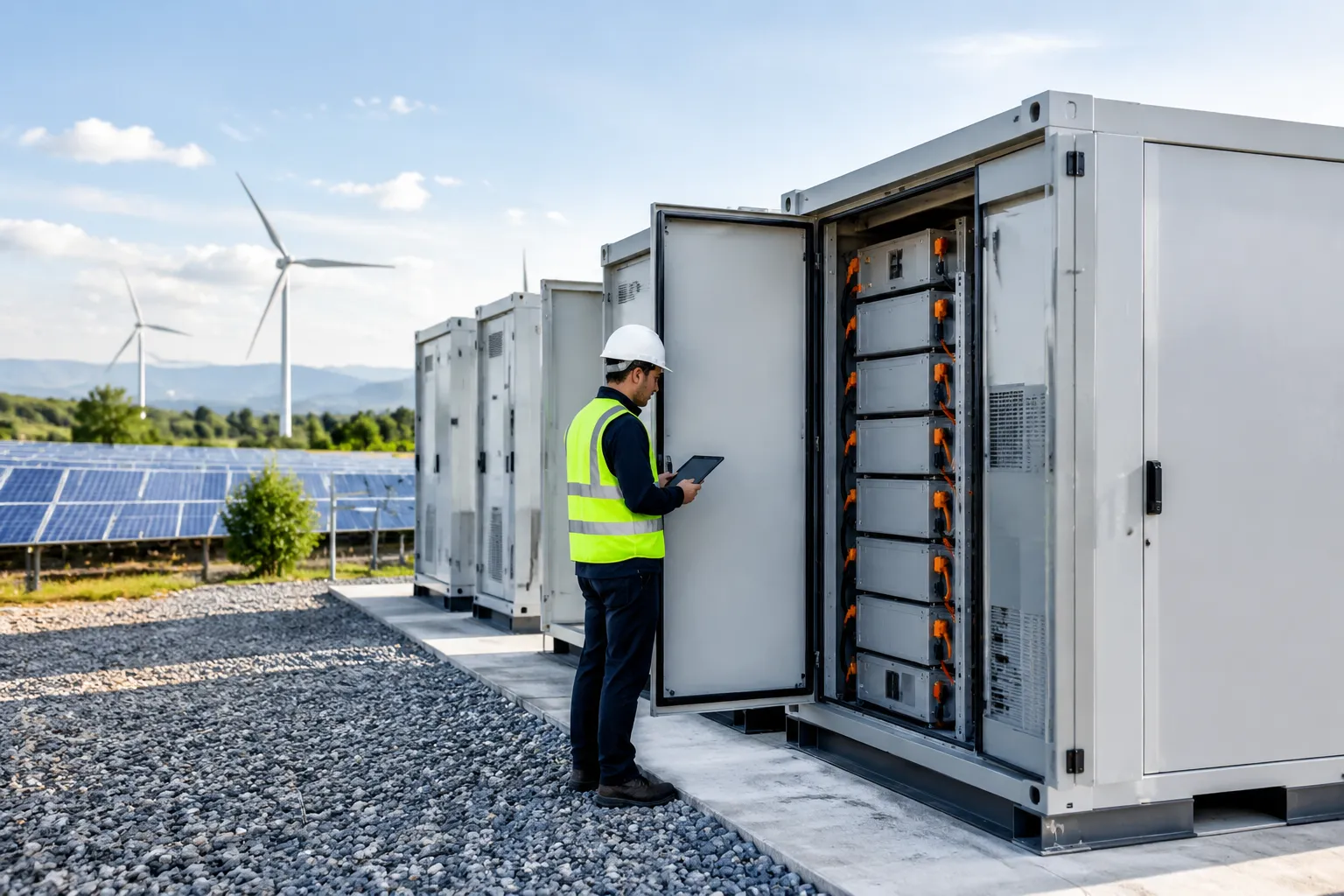
For utility-scale assets and IPP projects, containerized BESS hardware delivers maximum energy density, rugged environmental protection, and fast civil installation.
- Standardized Form Factors: Engineered within heavy-duty 20ft and 40ft ISO shipping container frames built to withstand harsh outdoor conditions.
- High-Density Configuration: High-capacity layouts, such as our high-density 20ft 5MWh liquid-cooled battery energy storage system, maximize MWh per square meter.
- Grid Operations: Ideal for utility solar integration, primary frequency response, and substation capacity deferral.
- Structural Infrastructure: Equipped with multi-tier HVAC liquid loops, walk-in maintenance access, reinforced structural frame construction, and multi-stage off-gas safety monitoring.
| BESS Hardware Features | C&I Storage Cabinets | Containerized BESS |
|---|---|---|
| Enclosure Type | Modular Indoor/Outdoor Cabinets | Standard 20ft / 40ft ISO Containers |
| Typical Capacity | 50 kWh to 1 MWh | 1 MWh to 5 MWh+ per container |
| Target Deployments | EV Buffering, Peak Shaving, Microgrids | Grid Firming, Solar-Plus-Storage, Ancillary Services |
| Thermal System | Direct Liquid-Cooled / Air-Cooled Packs | Multi-Zone Industrial HVAC & Liquid Chiller Loops |
Operational Application & Grid Placement Types
Where you connect a battery energy storage system determines its market role, control strategy, and return on investment. We classify these installations into two primary operational categories based on grid placement: Behind-the-Meter (BTM) and Front-of-the-Meter (FTM).
Behind-the-Meter (BTM) Systems
BTM systems operate on the commercial or industrial site side of the utility meter. They directly optimize local energy use, lower operating costs, and protect critical business processes.
- Peak Shaving and Load Shifting: We design BTM commercial energy storage systems to automatically discharge during peak electricity tariff windows. Implementing target-driven peak shaving and load shifting directly lowers monthly utility demand surcharges.
- Solar Self-Consumption: Capturing surplus daytime solar generation lets facilities boost onsite PV self-consumption above 90%, avoiding low-value grid feed-in rates.
- Microgrids & Uninterruptible Backup: During grid disturbances or blackouts, our BTM systems deliver fast transfer times (< 10ms) to ensure continuous operation for mission-critical industrial loads.
Front-of-the-Meter (FTM) Utility Systems
FTM assets connect directly to transmission or distribution networks. Utility companies and independent power producers deploy these grid-scale assets to balance energy supply, provide ancillary services, and capture wholesale market revenues.
- Ancillary Services & Frequency Response: FTM assets react in milliseconds to supply or absorb power, maintaining grid frequency and power factor stability.
- Wholesale Energy Arbitrage: Utility-scale plants buy and store power during low-cost, off-peak periods and discharge energy during high-demand, high-tariff price spikes.
- Transmission & Distribution Deferral: Strategic FTM battery positioning relieves localized grid congestion, delaying expensive legacy infrastructure and substation upgrades.
Core BESS Control Software and Safety Infrastructure
A robust hardware setup is only as effective as the software and safety mechanisms protecting it. We build our energy storage architectures around multi-layered control systems and proactive safety controls to ensure continuous uptime, maximum round-trip efficiency, and long-term asset protection.
3-Tier Battery Management System (BMS) Architecture
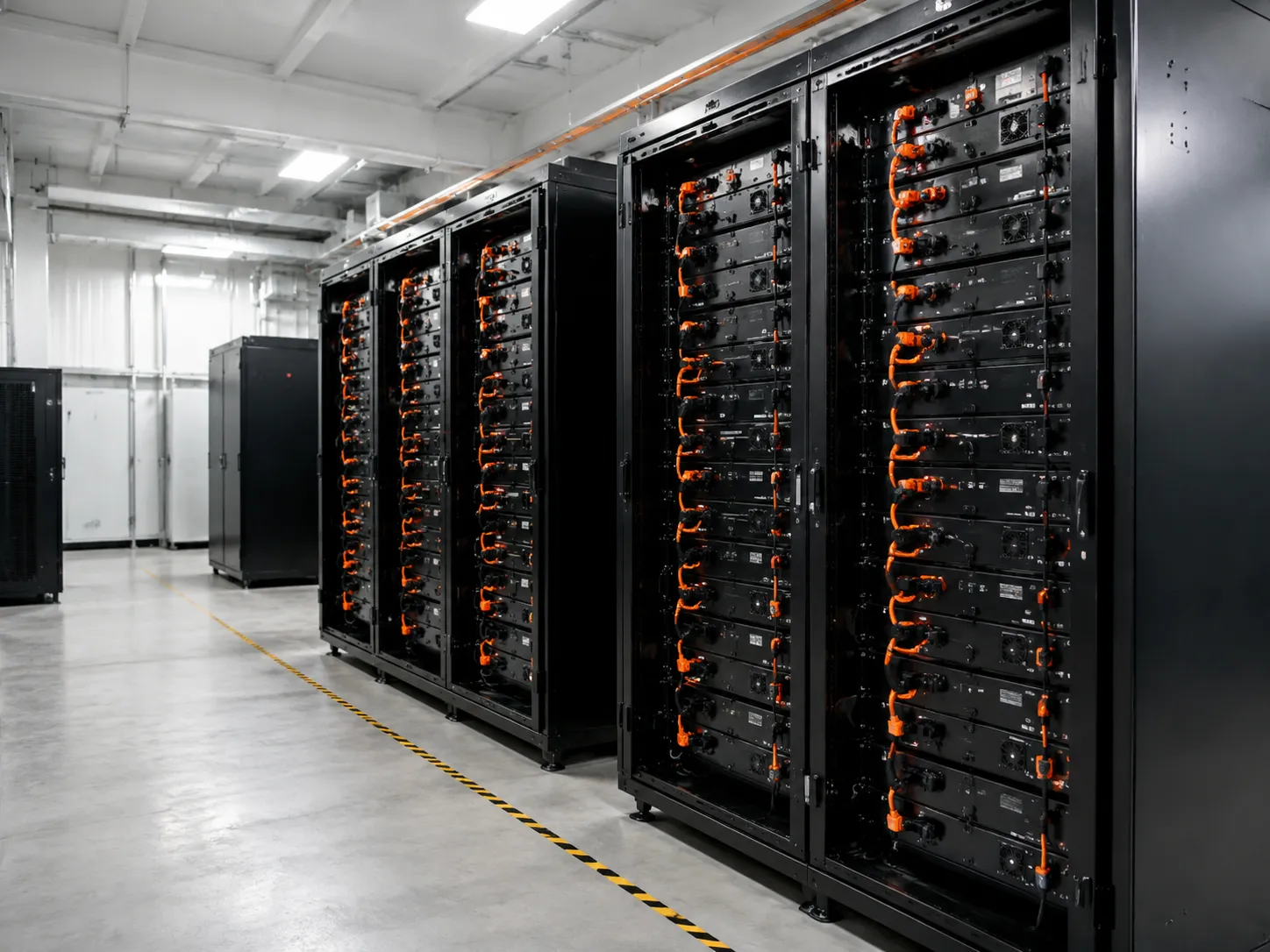
Our three-tiered battery management system (BMS) operates across cell, rack, and system levels to prevent electrical faults and optimize lifespan:
- Tier 1 (Cell & Module Level): Real-time tracking of individual cell voltage, temperature, and localized resistance.
- Tier 2 (Rack Level): High-voltage protection, string-level current monitoring, and dynamic calculation of State of Charge (SOC) and State of Health (SOH).
- Tier 3 (System Level): Coordinates multi-rack data streams and executes active cell balancing to eliminate string mismatch and prevent premature capacity degradation.
For specialized industrial deployments, our dedicated BMS and EMS integration ensures reliable communication between localized battery hardware and high-level control networks.
Cloud-Edge Energy Management System (EMS)
The energy management system (EMS) acts as the central brain of the installation. Operating on an edge-computing controller linked to cloud analytics, it optimizes dispatch strategy based on real-time operational data:
- AI Energy Optimization: Predictive algorithms process historical load patterns, solar generation curves, and dynamic electricity pricing to automate peak shaving and load shifting.
- Open Protocol Interoperability: Native compatibility with Modbus TCP, CAN bus, and SCADA allows seamless connection to factory automation and utility management platforms.
- Automated Grid Response: Instantaneous dispatch triggering for frequency regulation, voltage support, and millisecond-level backup power switchover.
Thermal Runaway Mitigation and Compliance
Safety is built directly into our system design rather than treated as an add-on. We deploy complete defense-in-depth hardware and software in our commercial lithium battery energy storage systems to detect and isolate thermal issues before they escalate.
| Safety Level | Primary Infrastructure | Functional Goal |
|---|---|---|
| Early Warning | Off-gas / VOC & hydrogen sensors | Identifies electrolyte venting minutes before smoke detectors or thermal sensors trigger. |
| Active Fire Suppression | Target aerosol / gas suppression systems | Releases localized fire suppression agents directly inside affected modules or cabinet racks. |
| Passive Containment | Structural fire barriers | Prevents cell-to-cell and rack-to-rack thermal propagation. |
Key Industry Standards & Certifications:
UL 9540A: Thermal runaway fire propagation testing at the cell, module, and unit level.
UL 1973 & IEC 62619: Safety standards for stationary energy storage systems and industrial lithium batteries.
ISO Compliance: ISO 9001 and ISO 14001 certified manufacturing for consistent quality control and environmental management.
Evaluating BESS System ROI and Integration Workflow
Deploying commercial BESS technology requires balancing technical performance against long-term financial returns.
Key Financial Metrics and System Sizing
To optimize the levelized cost of storage (LCOS), system parameters must align precisely with your facility's operational load profile.
| Technical Parameter | Engineering Impact | Financial ROI Factor |
|---|---|---|
| Battery Storage Capacity (kWh/MWh) | Dictates total energy available for daily dispatch | Limits maximum demand charge penalties |
| C-Rate (Charge/Discharge) | Measures charge/discharge speed relative to capacity | Determines response capability during sharp demand spikes |
| Depth of Discharge (DoD) | Usable percentage of overall capacity (typically 80%–90%) | Extends overall battery cycle life and asset longevity |
| Round-Trip Efficiency (RTE) | Ratio of energy retrieved vs. energy injected (>88%) | Minimizes wasted energy during conversion cycles |
Matching these variables with your site's peak demand windows ensures high efficiency without over-allocating capital expenditure on excess capacity.
Percenec Energy 6-Phase Turnkey Execution Process
We streamline integration through a fully vertically integrated engineering methodology, taking projects from initial site audits to long-term asset management:
- 1. Site Assessment & Load Profiling: Analyzing interval billing data, transformer limits, and facility load curves to establish baseline ROI projections.
- 2. Custom System Engineering: Designing tailored hardware configurations, selecting between scalable outdoor battery energy storage systems and larger utility-scale architecture.
- 3. Automated Manufacturing: Fabricating battery racks, PCS units, and liquid-cooled enclosures under strict quality control standards.
- 4. Field Installation: Deploying site infrastructure, foundation pads, and grid interconnections with minimal operational disruption.
- 5. System Commissioning: Conducting pre-functional testing, grid compliance validation, and multi-tier safety checks.
- 6. 24/7 O&M Support: Monitoring real-time telemetry, predictive maintenance alerts, and software optimization through our proprietary management platform.
Our modular commercial energy storage systems allow facilities to scale energy capacity as operational needs grow, protecting upfront capital while securing long-term grid independence.
Frequently Asked Questions
Safest Battery Chemistry for Industrial Energy Storage
Lithium Iron Phosphate (LiFePO4 / LFP) is the gold standard for commercial and industrial energy storage systems due to its robust chemical stability and structural safety. Unlike nickel-based chemistries, LFP does not release oxygen during structural breakdown, drastically reducing thermal runaway risks.
- Thermal Stability: Maintains cell stability up to 270°C before experiencing thermal breakdown, compared to NMC's ~210°C limit.
- Extended Cycle Life: Offers over 6,000 deep cycles at 80% depth of discharge (DoD) while retaining over 80% baseline capacity.
- Regulatory Compliance: Easily satisfies rigorous UL 9540A safety certification, UL 1973, and IEC 62619 field requirements for indoor and outdoor installations.
C&I Energy Storage Cabinets vs. Containerized BESS
The main distinction comes down to physical footprint, capacity scale, and grid placement.
- C&I Storage Cabinets: Modular, pre-engineered enclosures ranging from 50 kWh to 500 kWh. Designed for behind-the-meter energy storage, factory load management, and seamless solar-plus-storage integration.
- Grid-Scale Containerized BESS: Built inside heavy-duty 20ft or 40ft ISO containers delivering up to 5 MWh per unit. Built specifically for front-of-the-meter utility services, frequency regulation, and power grid firming.
Key Factors Determining Commercial BESS ROI
Most commercial installations achieve full payback within 3 to 5 years. Key financial drivers include:
- Utility Rate Structures: High demand charges and wide time-of-use (TOU) price spreads maximize energy cost reductions through automated peak shaving and load shifting.
- Round-Trip Efficiency (RTE): High system RTE (>88%) reduces energy losses during charge-discharge cycles, keeping the overall Levelized Cost of Storage (LCOS) low.
- Incentives & Project Sizing: Federal tax credits, regional grid rebates, and accurate C-rate matching accelerate financial payback.
Check out our comprehensive BESS buying guide to evaluate facility load profiles and calculate project ROI.