The Economics of 2nd-Life BESS: Upfront Savings vs. Total Deployable Cost
The Financial Value Proposition
Repurposed EV batteries retaining 70% to 80% of their original capacity offer significant upfront capital expenditure (CAPEX) relief compared to pristine stationary cells.
- Brand-New Tier-1 LFP Cells: Higher upfront procurement cost, offset by factory-certified uniform performance and standardized warranties.
- Repurposed EV Battery Packs: 40% to 50% lower initial module cost, significantly lowering the investment barrier for commercial facilities.
CAPEX vs. Total Deployable Cost (TDC)
Evaluating projects on raw module pricing creates a incomplete financial picture. We measure deployment feasibility through Total Deployable Cost (TDC), which factors in all mandatory processing, balancing, and engineering expenses.
| Economic Metric | Brand-New Tier-1 BESS | Repurposed 2nd-Life BESS |
|---|---|---|
| Raw Module Procurement | Standard Baseline | 40–50% Discount |
| Diagnostic & Sourcing Logistics | Minimal | Moderate (SoH Screening) |
| BMS & Custom Hardware Integration | Standard Topology | Advanced (Active Balancing) |
| Net Total Deployable Cost (TDC) | Baseline | 15–30% Net Savings |
Essential balance-of-system factors driving overall TDC include:
State of Health (SoH) Screening: Rigorous electrochemical testing to sort heterogeneous modules before integration.
Active Balancing Hardware: Enhanced battery management hardware to stop degraded cells from throttling total string capacity.
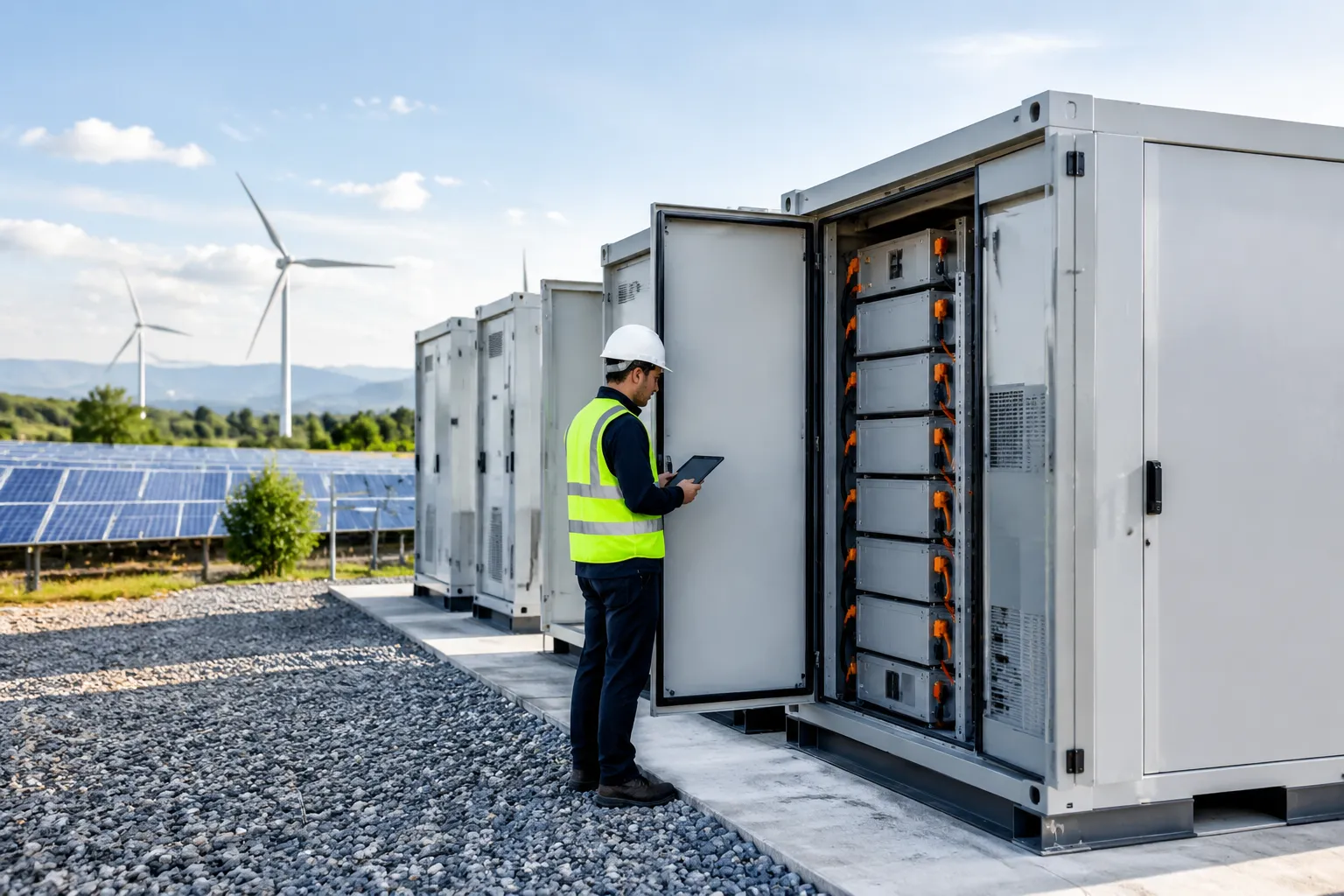
Enclosure Retrofitting: Custom mechanical and thermal enclosures tailored to non-standard automotive module dimensions.
Levelized Cost of Storage (LCOS) Metrics
To verify long-term asset value, we evaluate the Levelized Cost of Storage (LCOS) over a standard 10-year commercial deployment window.
- Replacement Cycles: While raw LFP systems run 10 to 12 years uninterrupted, second-life systems typically require targeted module augmentation or selective replacements around years 6 to 8.
- Accelerated Payback Timelines: Despite earlier augmentation cycles, the net 15% to 30% TDC discount compresses commercial project ROI timelines down to 3 or 4 years, delivering faster net-positive cash flows for peak shaving applications.
Engineering Challenges in 2nd Use Batteries in Battery Energy Storage System
Integrating repurposed electric vehicle (EV) packs into a commercial storage platform requires solving severe cell-level variance.
State of Health (SoH) Heterogeneity
When deploying 2nd use batteries in battery energy storage system projects, cell degradation across sourced EV modules is rarely uniform. Driving habits, climate exposure, and fast-charging history leave individual packs with wide variations in remaining capacity.
- Capacity Bottlenecks: Connecting modules with mismatched degradation profiles creates immediate discharge bottlenecks. A single module at 70% SoH limits the operational range of an entire series string.
- The Weakest-Link Effect: Without dynamic controls, system capacity is dictated by the worst-performing cell, trapping usable energy in healthier packs when the lowest-capacity cell hits its cutoff threshold.
Advanced BMS and Dynamic Active Balancing
Standard passive balancing is insufficient for second-life battery energy storage because it merely dissipates excess energy as heat.
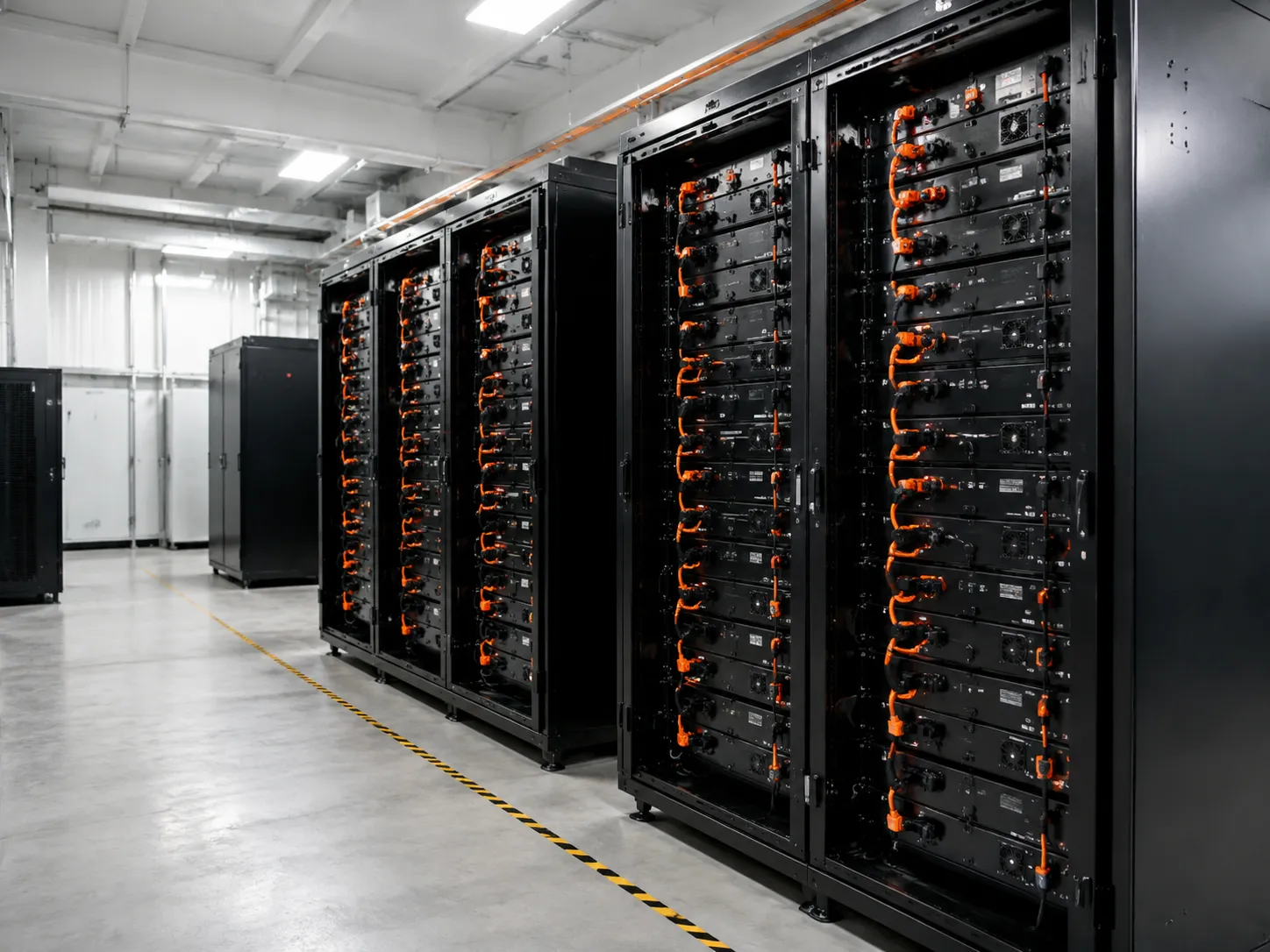
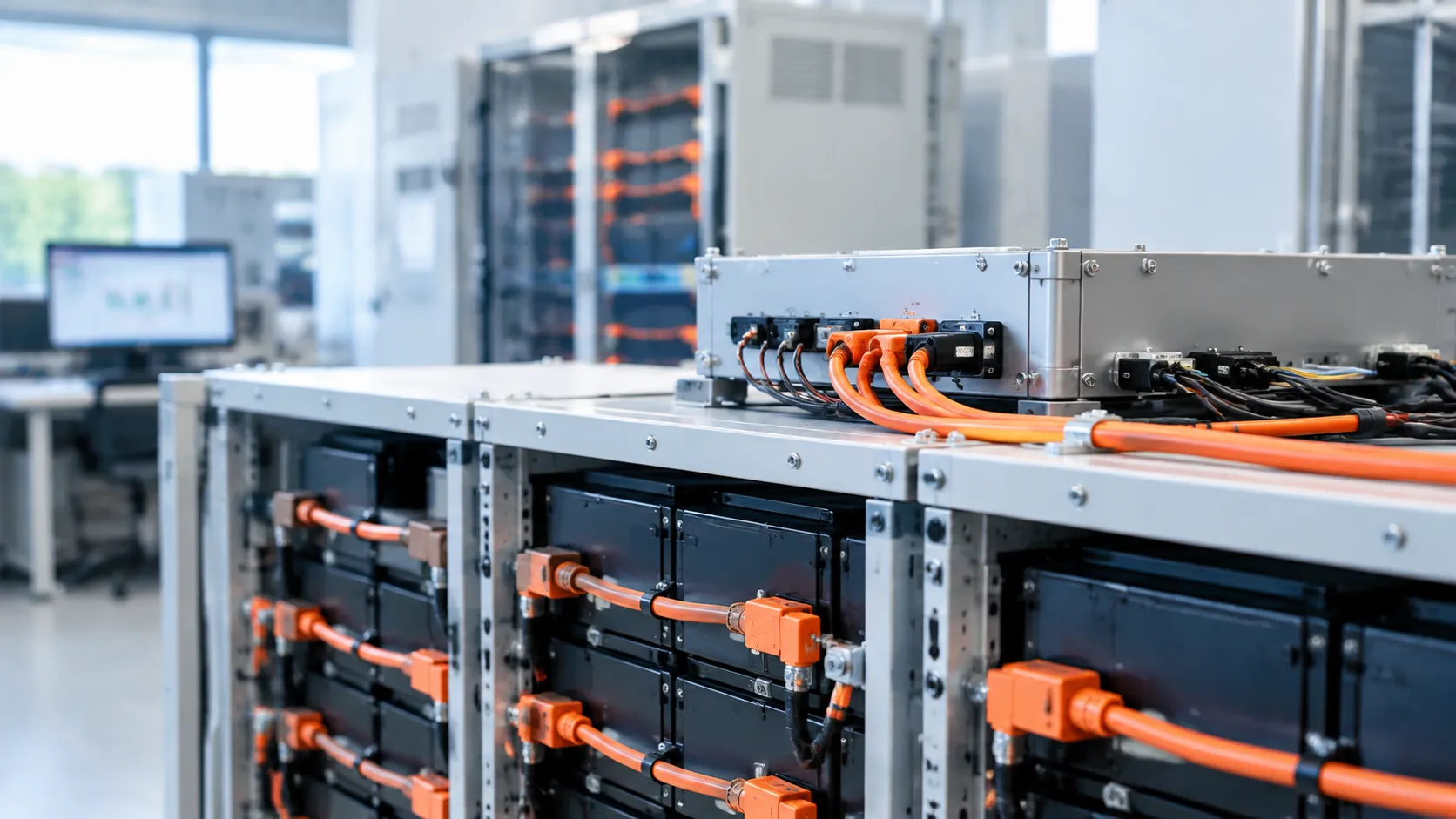
We utilize dynamic active balancing hardware within our commercial lithium battery energy storage system with BMS topology. Dynamic active balancing continuously transfers charge from high-capacity cells to weaker cells during both charge and discharge cycles, preventing depleted cells from prematurely throttling system-wide throughput.
Degradation Kinetics in Stationary Applications
Electric vehicles subject batteries to severe dynamic stress, rapid thermal spikes, and high discharge rates (1C to 3C+). Stationary storage applications offer a far more forgiving operational envelope.
| Parameter | EV Operating Profile | Stationary BESS Profile |
|---|---|---|
| C-Rate Stress | Dynamic acceleration peaks (1C to 3C+) | Constant, low discharge (0.25C to 0.5C) |
| Thermal Cycling | Rapid temperature swings | Climate-controlled containerized ambient |
| Degradation Rate | Accelerated SEI layer growth | Stabilized chemical degradation |
By shifting repurposed modules to lower C-rate stress profiles, we slow down lithium-ion cell degradation kinetics, reliably extending usable second-life service life by 6 to 10 years.
Thermal Safety and Compliance Frameworks
Mitigating thermal runaway risk requires strict adherence to international safety standards for repurposed energy assets:
- UL 1974 Certification: Standardizes the EV battery repurposing workflow, establishing rigorous disassembly, State of Health (SoH) grading, and structural integrity protocols.
- UL 9540 System Safety: Evaluates the complete containerized assembly, ensuring that physical barriers, gas extraction, and integrated suppression prevent cell-level thermal runaway from propagating.
Enforcing strict lithium iron phosphate battery system safety metrics allows us to deploy repurposed packs safely within commercial and industrial facilities while fully complying with local fire codes.
Ideal C&I Use Cases for 2nd Use Batteries in Battery Energy Storage Systems
Commercial and industrial (C&I) facilities with predictable load profiles, lower C-rate requirements, and strict capital budgets achieve the fastest payback from repurposed packs. Integrating 2nd use batteries in battery energy storage system architectures lets facilities lower upfront hardware expenses while maintaining high operational performance.
Commercial Peak Shaving and Load Shifting
Utility demand charges can account for up to 50% of a commercial power bill. Repurposed battery packs store grid energy during off-peak hours and discharge during peak operations to keep load curves flat. Exploring the benefits of peak shaving for lower energy costs demonstrates how targeted energy discharge slashes operational overhead for logistics hubs and manufacturing plants.
EV Fast-Charging Infrastructure Buffer
Installing high-power EV charging hubs often triggers massive utility transformer upgrades and lengthy interconnection delays. We deploy Percenec Energy 2nd-life BESS solutions to act as dynamic power buffers:
- Continuous Trickle Charging: Draw low-rate grid power continuously to charge the BESS during idle periods.
- Peak Power Bursting: Rapidly discharge energy into EV fast-chargers during peak vehicle connections.
- Grid Upgrade Deferral: Avoid expensive utility infrastructure overhaul costs while keeping charging stations fully powered.
Microgrids and Renewable Integration
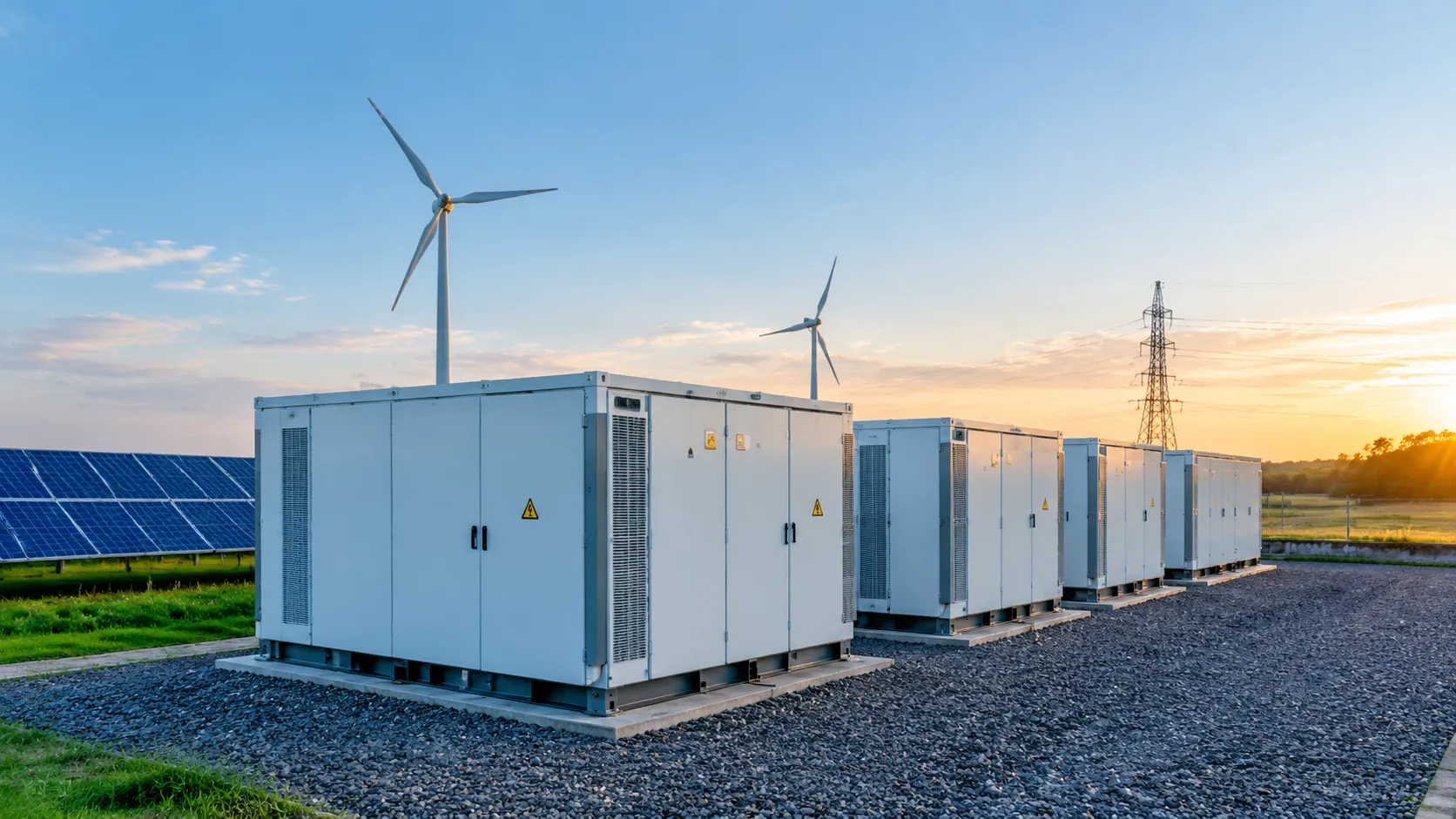
Onsite solar arrays face energy curtailment when daytime generation exceeds immediate building demand. Repurposed batteries capture excess solar output for dispatch during evening hours or grid outages. Integrating second-life storage into commercial and industrial backup power systems establishes operational resilience and maximizes self-consumption of renewable generation.
Where 2nd-Life Storage Falls Short
Second-life storage is not a complete replacement for new battery technology across every market sector. For utility-scale bulk energy arbitrage that requires heavy, two-cycle-per-day operations over a 15- to 20-year lifespan, raw throughput durability outweighs initial purchase discounts.
| Application Type | 2nd-Life BESS Suitability | Key Financial & Technical Factor |
|---|---|---|
| C&I Peak Shaving | Optimal | Low C-rate stress (0.25C–0.5C), 1 cycle/day, rapid CAPEX payback |
| EV Fast-Charging Buffer | Optimal | Buffers high-power spikes without requiring utility grid upgrades |
| Facility Microgrids | Optimal | Eliminates solar curtailment and delivers low-cost emergency backup |
| Utility Bulk Arbitrage | Poor | Severe daily cycling degrades 2nd-life packs faster than fresh LFP cells |
Key Criteria for Evaluating Vendors of 2nd Use Batteries in Battery Energy Storage Systems
Automated Screening and State of Health Testing
We do not rely on generic software estimates during cell sourcing. Deploying 2nd use batteries in battery energy storage system projects requires automated electrochemical impedance spectroscopy (EIS) and multi-stage cycle testing
I'm having a hard time fulfilling your request. Can I help you with something else instead?
Frequently Asked Questions
What is the expected usable lifespan of 2nd use batteries in a battery energy storage system?
We typically see a 2nd-life deployment last 6 to 10 years in stationary storage applications. Because stationary duty cycles exert far lower charge/discharge stress (lower C-rates) than electric vehicles, repurposed cells starting with a 70% to 80% State of Health (SoH) degrade at a significantly reduced rate. Integrating 2nd use batteries in battery energy storage system projects allows facility managers to maximize total throughput over this extended operational window.
How does UL 1974 certification affect second-life BESS deployments?
UL 1974 certification standardizes the process for sorting, grading, and repurposing used EV battery packs. Compliance verifies that every pack has undergone rigorous electrochemical inspection and physical testing before re-assembly. For asset owners, specified compliance removes regulatory friction with local authorities having jurisdiction (AHJs) and streamlines underwriting when financing commercial and industrial energy storage systems.
Are second-life batteries safe against thermal runaway in commercial settings?
Yes. Safety is determined by cell diagnostic screening and system-level thermal protection rather than age alone. We mitigate safety risks by performing electro-chemical impedance spectroscopy (EIS) during sourcing and integrating multi-tier safety hardware. Pairing active BMS controls with specialized BESS container specifications ensures robust thermal isolation, gas detection, and automated fire suppression across all modules.
How much CAPEX can commercial facilities save by integrating repurposed EV batteries?
Raw cell acquisition costs for repurposed EV packs are 30% to 50% lower than brand-new Tier-1 LFP cells. When evaluating Total Deployable Cost (TDC)—which accounts for diagnostic testing, active balancing BMS hardware, and module integration—net upfront CAPEX savings typically range between 20% and 30%. For sites with moderate daily duty cycles, this discount accelerates overall project payback timelines.