Key Selection Criteria: What Defines a Top-Tier BESS Company?
Vertical Technology Integration
Assembling fragmented, third-party components introduces communication latency, system integration risks, and split vendor accountability. We eliminate these failure points through complete in-house subsystem engineering:
- Proprietary BMS: Cell-, module-, and rack-level dynamic active balancing.
- AI-Driven Cloud EMS: Sub-second grid control, predictive analytics, and automated C&I energy arbitrage.
- Custom Enclosure Engineering: Precision thermal management and structural IP55/NEMA 3R weatherproofing.
Proven Cell Chemistry & Cycle Longevity
Lithium Iron Phosphate (LiFePO4) is the non-negotiable chemistry standard for stationary battery energy storage systems due to superior chemical stability and thermal resilience.
- Lifespan: ≥6,000 cycles at 80% Depth of Discharge (DoD).
- Thermal Runaway Threshold: High chemical decomposition temperature (>270°C).
- Operational Horizon: 15+ year operational life with predictable linear degradation.
Safety Architecture & Compliance
System safety requires rigorous verification at the cell, module, and enclosure levels. Our grid-scale and commercial energy storage solutions maintain complete compliance with mandatory international standards:
| Certification | Application Scope |
|---|---|
| UL 9540A | Thermal runaway fire propagation testing at the unit level |
| UL 1973 | Industrial stationary battery pack safety standards |
| IEC 62619 | Global safety requirements for industrial secondary lithium cells |
| UN 38.3 | International hazardous material transport certification |
Financial Bankability & Track Record
A top-tier BESS company must deliver verifiable economic performance backed by real-world field data.
- Global Footprint: Over 500+ MWh deployed across utility-scale and commercial industrial projects.
- Commercial Payback: Proven 3 to 5-year ROI payback windows achieved via peak shaving, self-consumption optimization, and demand charge reduction.
Core BESS Technology Architecture: Hardware and Software Integration
As an engineering-driven BESS company, we design our hardware and software ecosystems concurrently. This vertical integration eliminates component friction, optimizes round-trip efficiency, and ensures absolute reliability across utility-scale and enterprise deployments. You can explore our foundational approach in our energy storage system architecture and design guide.
Utility-Grade & C&I System Hardware
Our hardware lineup provides high energy density, rugged outdoor protection, and rapid grid response:
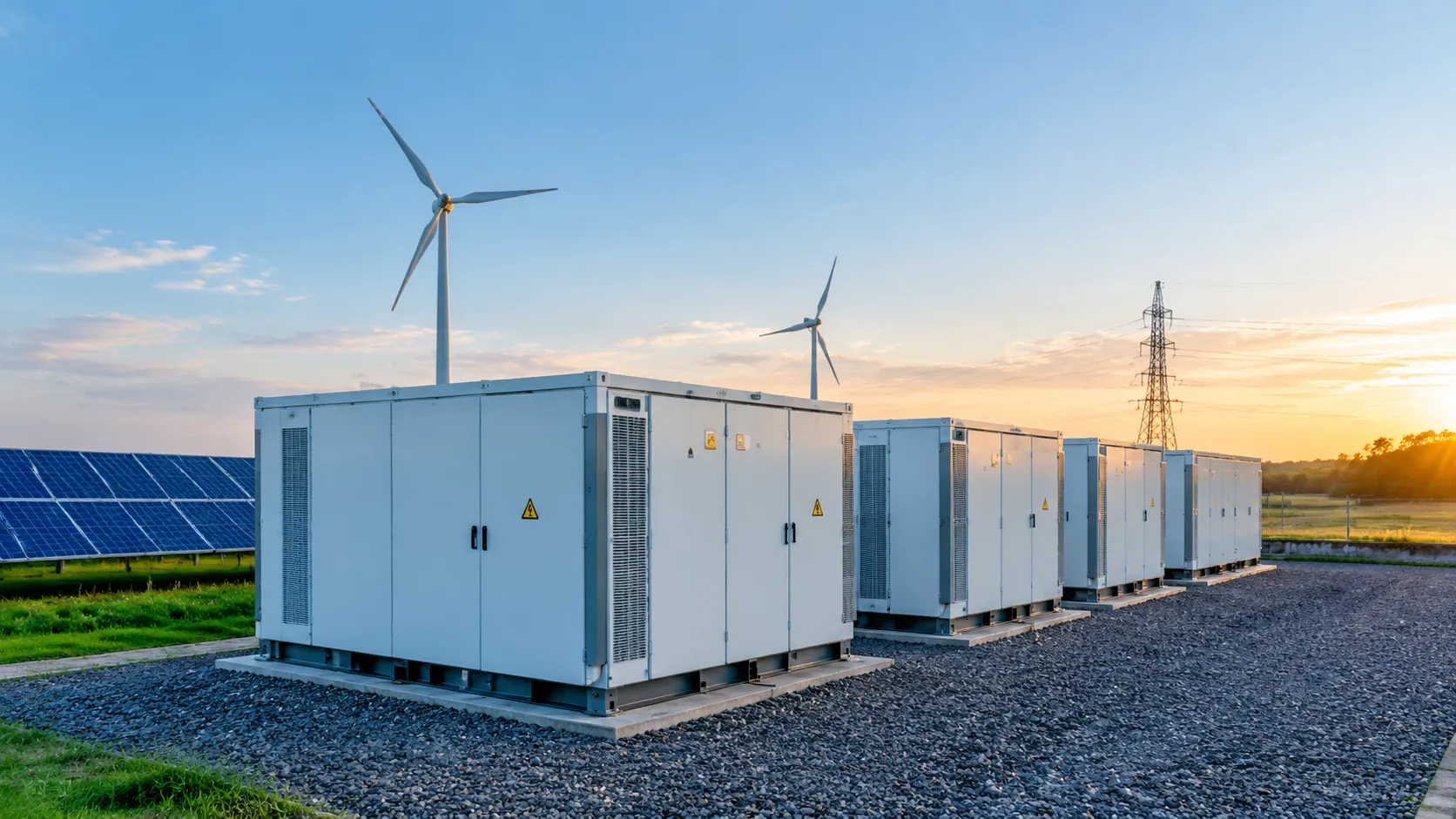
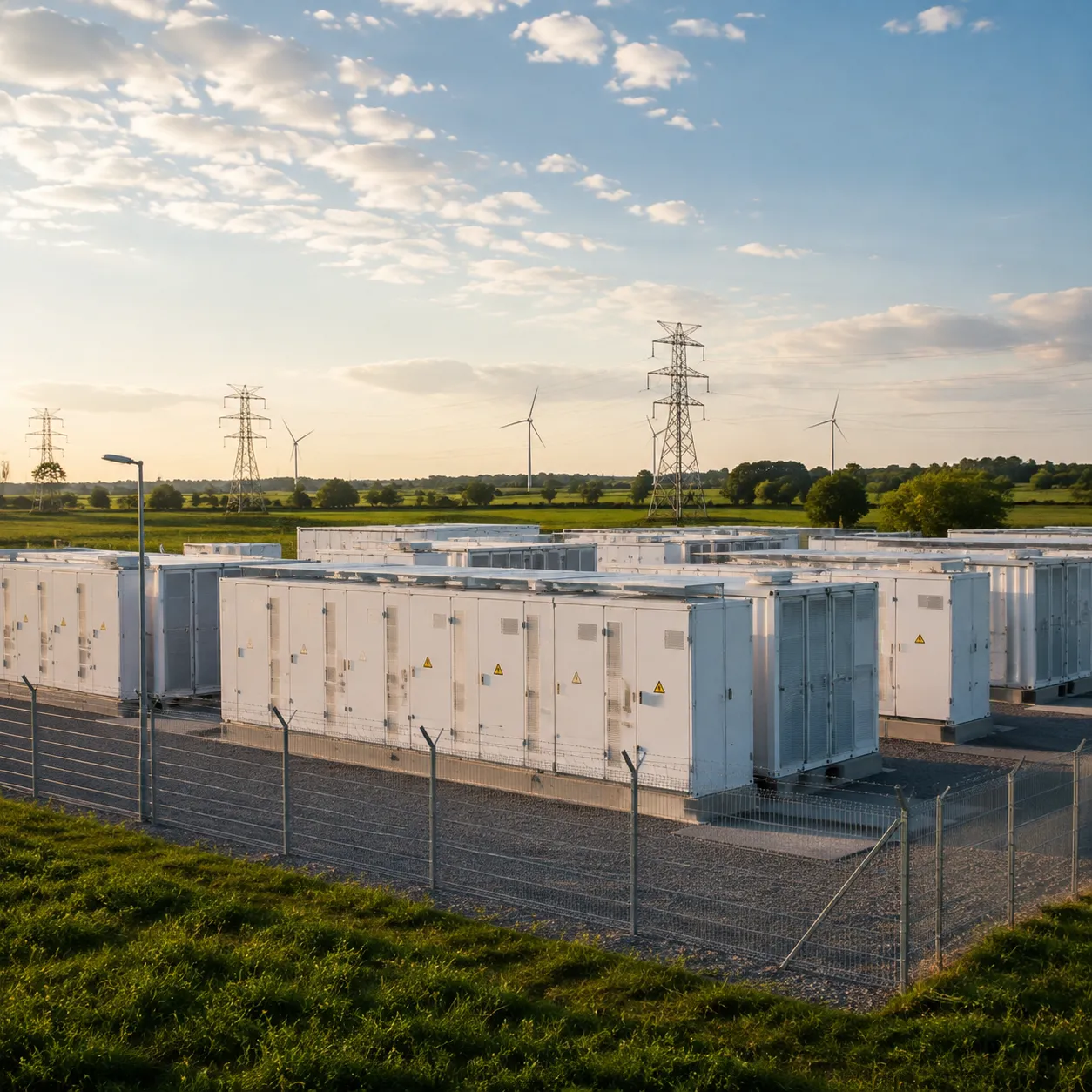
- Grid-Scale Containerized BESS (5MWh): High-density 20ft liquid-cooled enclosures optimized for utility peak shaving, frequency regulation, and large solar-plus-storage balancing.
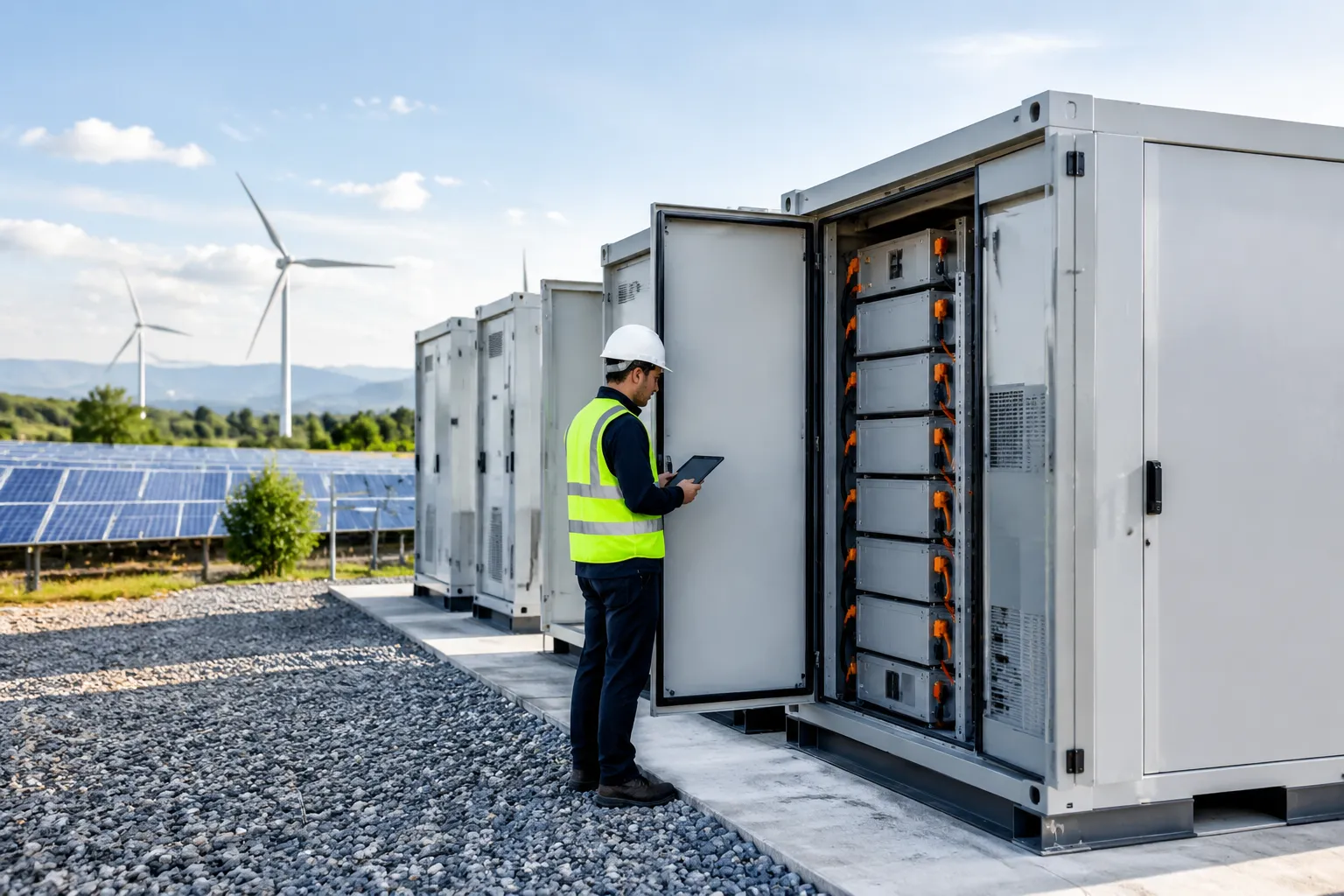
- Modular C&I Battery Cabinets: Compact, scalable outdoor units engineered for manufacturing plants, logistics centers, and cold storage operations. Learn more about our specialized commercial and industrial backup power systems tailored for critical facility resilience.
- Smart Power Inverters & Microgrid Controllers: Bidirectional conversion units delivering ultra-fast grid switchover with < 10ms backup failover for uninterruptible operations.
Proprietary Software Architecture: Percenec Energy Engine
Hardware performance depends entirely on control software. The Percenec Energy Engine combines hardware-level telemetry with cloud intelligence:
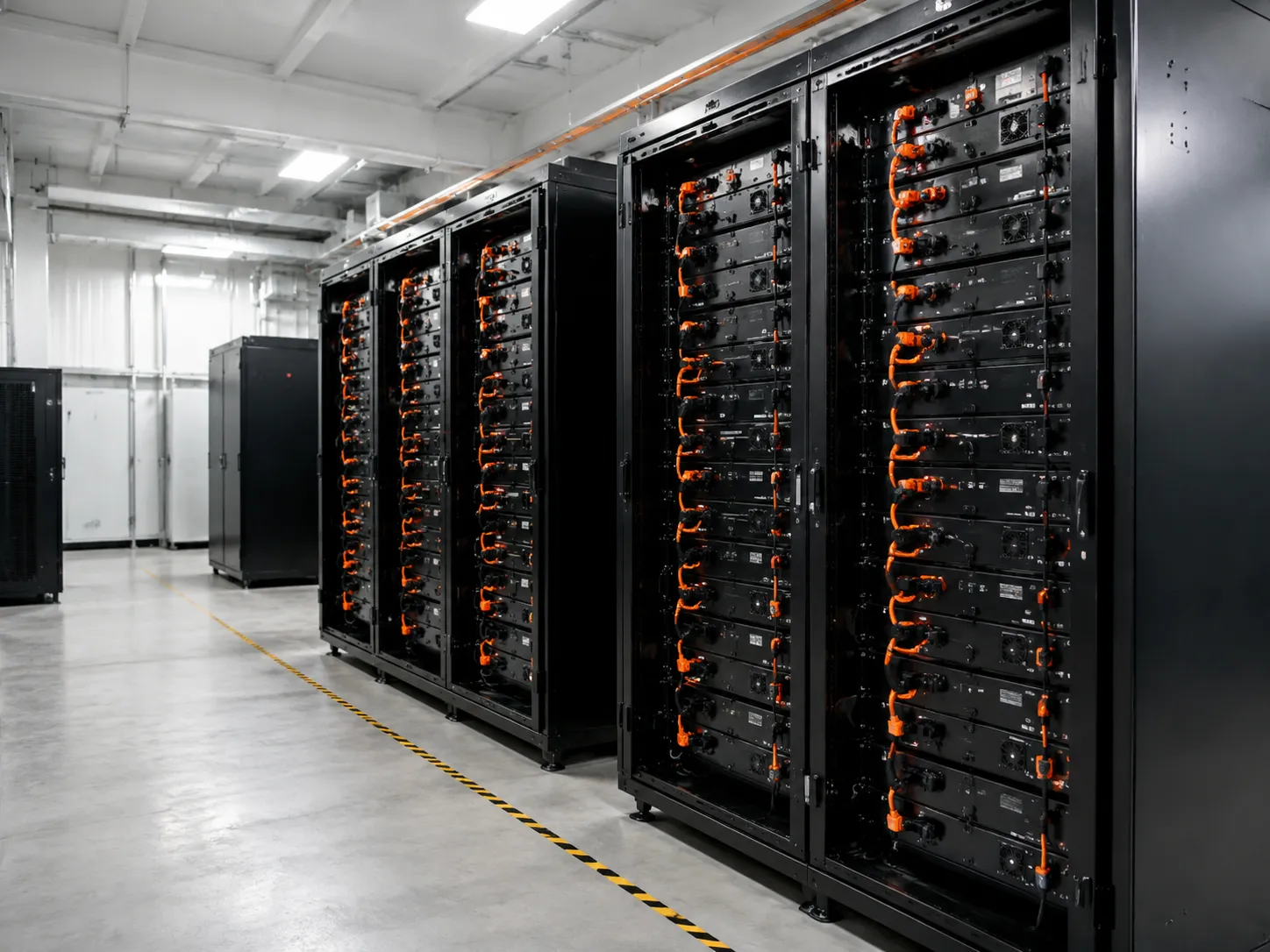
- 3-Tier BMS Architecture: Granular real-time tracking at the cell, module, and rack levels. System controls actively monitor State of Charge (SOC), State of Health (SOH), and voltage variances while applying dynamic active cell balancing.
- AI-Driven Cloud & Edge EMS: Embedded predictive algorithms automate peak shaving and dynamic energy arbitrage based on real-time tariff structures. Direct SCADA integration is native via Modbus TCP and CAN bus protocols.
Safety First: Thermal Management & Multi-Tier Fire Protection
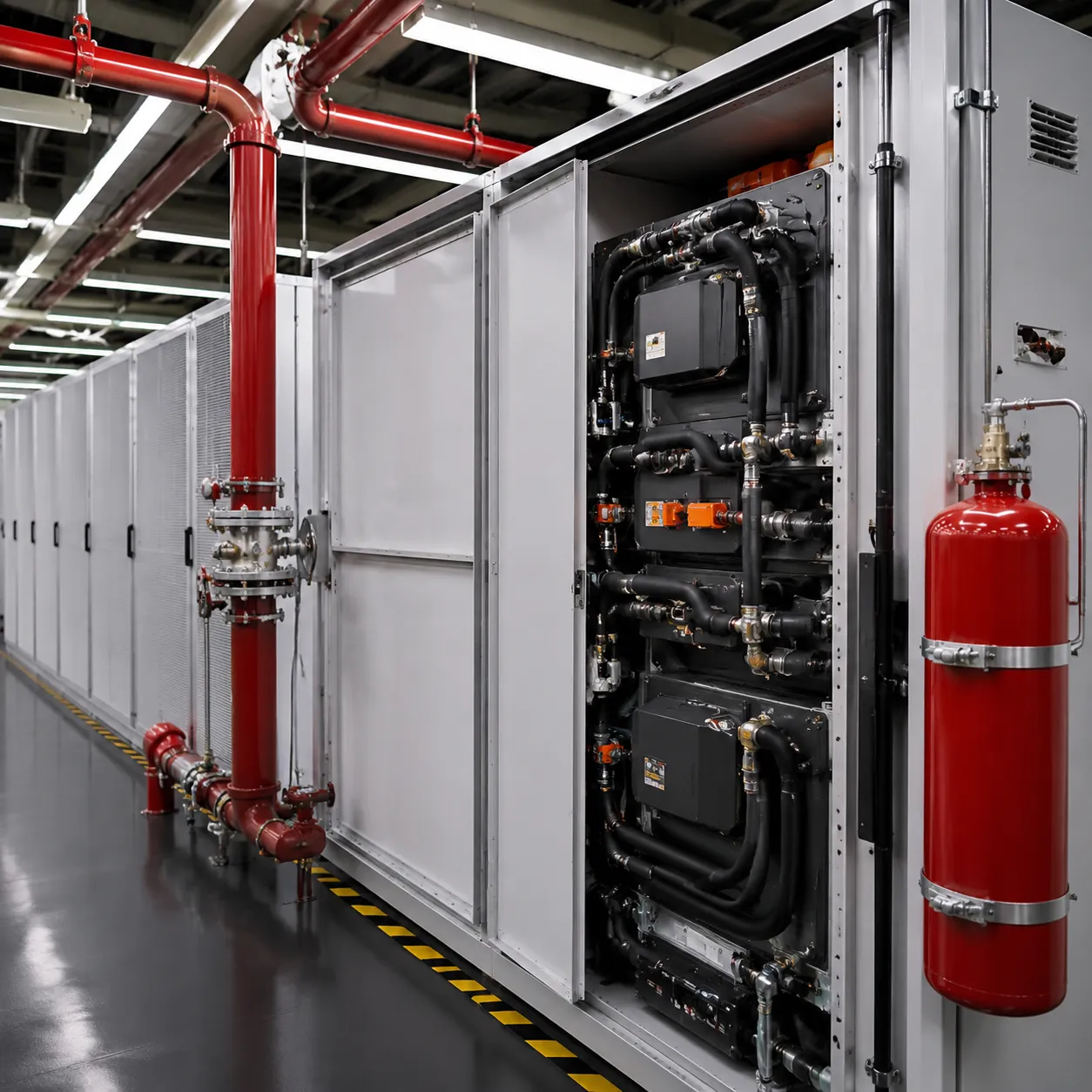
Smart Liquid Cooling Thermal Management
Traditional forced-air cooling creates significant temperature gradients across battery modules, leading to localized hot spots and uneven cell degradation. We engineer our enclosures with advanced liquid cooling thermal management to maintain strict core-level temperature uniformity (\Delta T \le 3 °C).
- 20% Longer Cell Life: Maintaining uniform operational temperatures extends overall battery cell lifespan by up to 20% compared to traditional air-cooled systems.
- High-Density Efficiency: Liquid cooling dissipates heat faster and uses significantly less parasitical auxiliary power, preserving high round-trip efficiency (RTE) even during aggressive duty cycles.
- Integrated Enclosure Design: Our specialized outdoor battery energy storage system with LiFePO4 battery integrates direct-to-pack liquid cooling plates for maximum thermal transfer and operational safety.
Multi-Layer Thermal Runaway Prevention
Preventing thermal runaway requires early detection and immediate, localized action. We deploy a proactive safety architecture that stops potential fire risks long before catastrophic failure occurs.
- Off-Gas Early Warning Telemetry: High-precision sensors detect micro-ppm off-gas emissions (such as CO and hydrogen) at the module level within seconds of initial cell venting—triggering automated isolation before temperatures spike.
- Pack-Level Targeted Suppression: Dedicated pack-level aerosol battery fire suppression systems release fire-extinguishing agents directly into the affected enclosure module, neutralizing the threat while keeping adjacent packs safe.
- Rigorous Compliance Standards: Every system is tested to satisfy the highest international safety benchmarks, including full-scale UL 9540A thermal runaway testing, UL 1973, and IEC 62619.
To evaluate how these engineering controls mitigate project risk and lower insurance costs, consult our detailed LFP battery energy storage system safety guide.
Industry Applications & Measurable Financial ROI
As an integrated BESS company, we turn battery hardware into an active cost-reduction engine and revenue generator across high-demand industrial and commercial environments.
High-Impact Industrial Applications
- Industrial Peak Shaving: By discharging stored energy during peak load spikes, our systems achieve an average 35% reduction in monthly demand charges. Implementing automated peak shaving and load shifting solutions flattens site load profiles without requiring adjustments to core manufacturing schedules.
- Solar Self-Consumption Optimization: We integrate energy storage directly with high-yield solar arrays to capture excess daytime generation, boosting onsite solar self-consumption rates above 90%.
- EV Infrastructure Buffering: High-power EV fast-charging stations create massive localized load surges. Our battery buffering mitigates utility grid stress, reducing required transformer upgrade costs by up to 50%.
Capital Payback & Financial Modeling
Every system we deploy is backed by precise financial forecasting. By combining demand charge management, energy arbitrage, and grid stabilization, commercial clients achieve a realistic payback window of 3 to 5 years.
| Facility Type | Primary Financial Driver | Average ROI Payback |
|---|---|---|
| C&I Logistics & Warehousing | Peak shaving + EV fleet buffering | 3.5 Years |
| Heavy Manufacturing | Tariff reduction & demand capping | 3.8 Years |
| Commercial Real Estate | Solar self-consumption + resilience | 4.2 Years |
Leveraging the key benefits of peak shaving for lower energy costs ensures long-term asset bankability while maximizing daily operational savings.
Turnkey Project Execution: The 6-Phase Engineering Framework
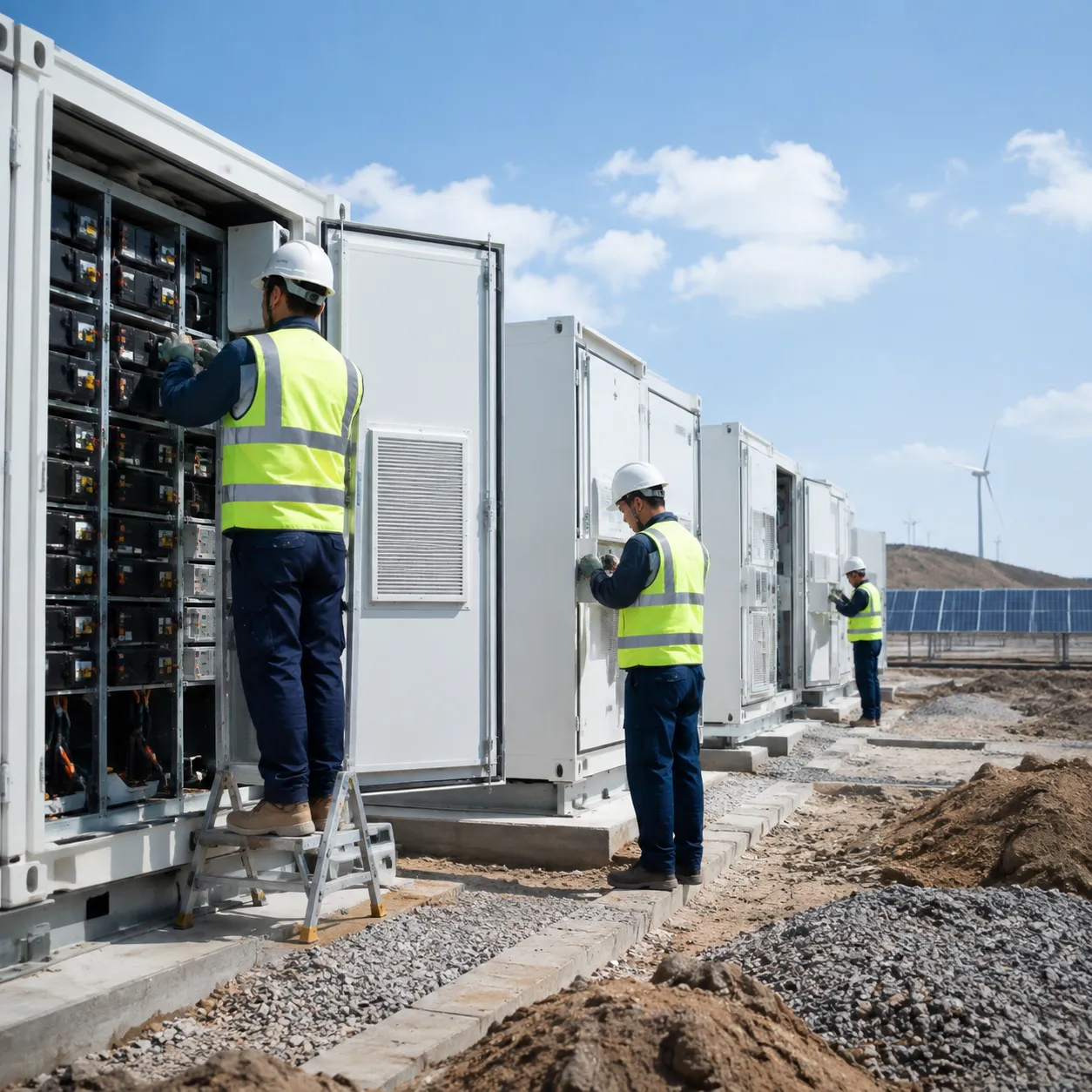
As a vertically integrated turnkey BESS company and primary battery energy storage system integrator, we eliminate technical friction and performance risk by managing every project stage under one roof. Our 6-phase engineering process ensures seamless grid interconnection, complete safety compliance, and predictable project yields.
- Phase 1: Site Load Profile Analysis
We perform on-site energy audits and run detailed load-profiling algorithms on your historical energy data to pinpoint demand spikes and optimal storage capacities. - Phase 2: Custom Engineering & ROI Forecast
We design site-specific electrical schematics, structural layouts, and financial payback projections. You can evaluate your project parameters using our BESS selection and sizing guide. - Phase 3: Automated Manufacturing & FAT
System enclosures, liquid cooling loops, and battery racks undergo precision automated assembly and pass multi-point Factory Acceptance Testing (FAT) before dispatch. - Phase 4: On-Site Mechanical & Electrical Deployment
Our field engineering teams manage physical placement, pad anchoring, high-voltage cabling, and primary grid interconnection assembly on location. - Phase 5: Grid Synchronization & Commissioning
We conduct full Site Acceptance Testing (SAT), execute system protection testing, and secure official utility compliance sign-off for immediate operational approval. - Phase 6: 24/7 Global O&M Support
We deliver continuous cloud monitoring, automated predictive maintenance, and operational guarantees. For facilities requiring resilient off-grid or backup capabilities, we back our hardware with complete microgrid energy storage solutions for long-term reliability.
- Phase 1: Site Load Profile Analysis
Vendor Evaluation Checklist: BESS Company Comparison Matrix
Selecting the right BESS company dictates whether your project delivers maximum financial ROI or suffers from operational risk and integration delays. Comparing suppliers across core hardware, control architecture, thermal management, and ongoing support scope helps ensure long-term system reliability.
We eliminate multi-vendor friction by providing single-source accountability across hardware manufacturing, software controls, deployment, and lifetime maintenance.
BESS Company Selection Matrix
| Feature | Standard Suppliers | Our Integrated Approach |
|---|---|---|
| System Architecture | Third-party outsourced components | In-house vertically integrated BMS and EMS integration and custom enclosures |
| Thermal Management | Standard forced air cooling | Smart liquid cooling with low core temperature variance ($\Delta T$) |
| Failover Speed | Standard grid relay switchover (>100ms) | Microgrid instant backup switchover (<10ms) |
| Execution Scope | Hardware delivery only | Full 6-phase turnkey delivery and lifetime O&M |
| Safety Standards | Basic UL component listing | Full system-level UL 9540A and international safety certifications (UL 1973, IEC 62619) |
Key Selection Factors
- Vertical Engineering Control: In-house BMS, EMS, and structural engineering remove third-party compatibility risks and streamline firmware updates.
- Smart Thermal Regulation: Advanced liquid cooling keeps core cell temperatures uniform, protecting lifespan and maximizing energy yield.
- Instant Microgrid Backup: Failover response under 10ms keeps critical operations running smoothly during unexpected grid interruptions.
- Full Lifecycle Accountability: A single contract covers site load modeling, manufacturing, grid interconnection, and 24/7 continuous cloud monitoring.
Frequently Asked Questions
How does liquid cooling impact the long-term ROI of a commercial BESS?
Smart liquid cooling thermal management directly boosts total return on investment by maintaining uniform temperature control across battery cores (Delta T within 2.5°C). Compared to standard forced-air cooling, liquid cooling provides key financial and operational benefits:
- Extended Lifespan: Extends total cell cycle life by up to 20%, pushing operational lifespans past 15 years.
- Lower Parasitic Power Draw: Reduces internal auxiliary power consumption by up to 30%, leaving more stored energy available for revenue generation.
- Slower Degradation: Minimizes capacity loss over time, maximizing yields from peak shaving and energy arbitrage.
Can Percenec Energy systems interface with existing site SCADA and building management systems?
Yes. As a vertically integrated BESS company, our systems use open industrial communication protocols—including Modbus TCP, CAN bus, and IEC 61850—to integrate with legacy site SCADA and facility control hardware. Whether deployed in heavy industrial plants, commercial buildings, or off-grid assets managed by renewable energy developers, our AI-driven cloud EMS delivers automated telemetry, peak charge mitigation, and dynamic load control without requiring site control overhauls.
What is the typical installation timeline from load assessment to final grid synchronization?
Our turnkey 6-phase engineering process generally spans 12 to 20 weeks, depending on local utility interconnection requirements:
| Phase | Core Deliverables | Average Timeline |
|---|---|---|
| 1–2. Design & Modeling | Historical load profiling, custom engineering, and precise financial ROI forecasting | Weeks 1–3 |
| 3. Manufacturing & FAT | Factory assembly, 3-tier BMS calibration, and Factory Acceptance Testing | Weeks 4–10 |
| 4–5. Delivery & Integration | Site civil placement, wiring interconnection, SAT, and utility compliance testing | Weeks 11–16 |
| 6. Synchronization & O&M | grid synchronization, 24/7 cloud telemetry activation, and operational handover | Weeks 17–20 |
How does LFP battery safety compare to standard NMC chemistry in C&I environments?
LiFePO4 (LFP) battery chemistry is the industry benchmark for commercial and industrial energy storage due to its chemical stability and safety profile:
- Higher Thermal Runaway Point: LFP resists structural degradation up to 270°C, compared to NMC which breaks down around 210°C.
- Chemical Stability: LFP releases no oxygen during chemical decomposition, preventing self-sustaining cell fires.
- Extended Cycle Longevity: Delivers ≥6,000 cycles at 80% Depth of Discharge (DoD), yielding a lower levelized cost of energy (LCOE).
- Full Certification: Certified under UL 9540A, UL 1973, IEC 62619, and UN 38.3 standards for high-density deployments.