Formula details
Product Details
Overview
Multi-Tier Fire Detection & Early Warning Architecture
Electrolyte Off-Gas Sensors & Early Abuse Monitoring
Our multi-stage gas detection system identifies battery stress at the molecular level, giving facility operators critical minutes to intervene before BESS thermal runaway or ignition takes hold.
- Stage 1 Battery Abuse: Detects initial cell overheating, overcharging, and mechanical stress prior to physical cell venting.
- Stage 2 Off-Gas Detection: Identifies trace volatile organic compounds (VOCs) and hydrogen accumulation ahead of open flames.
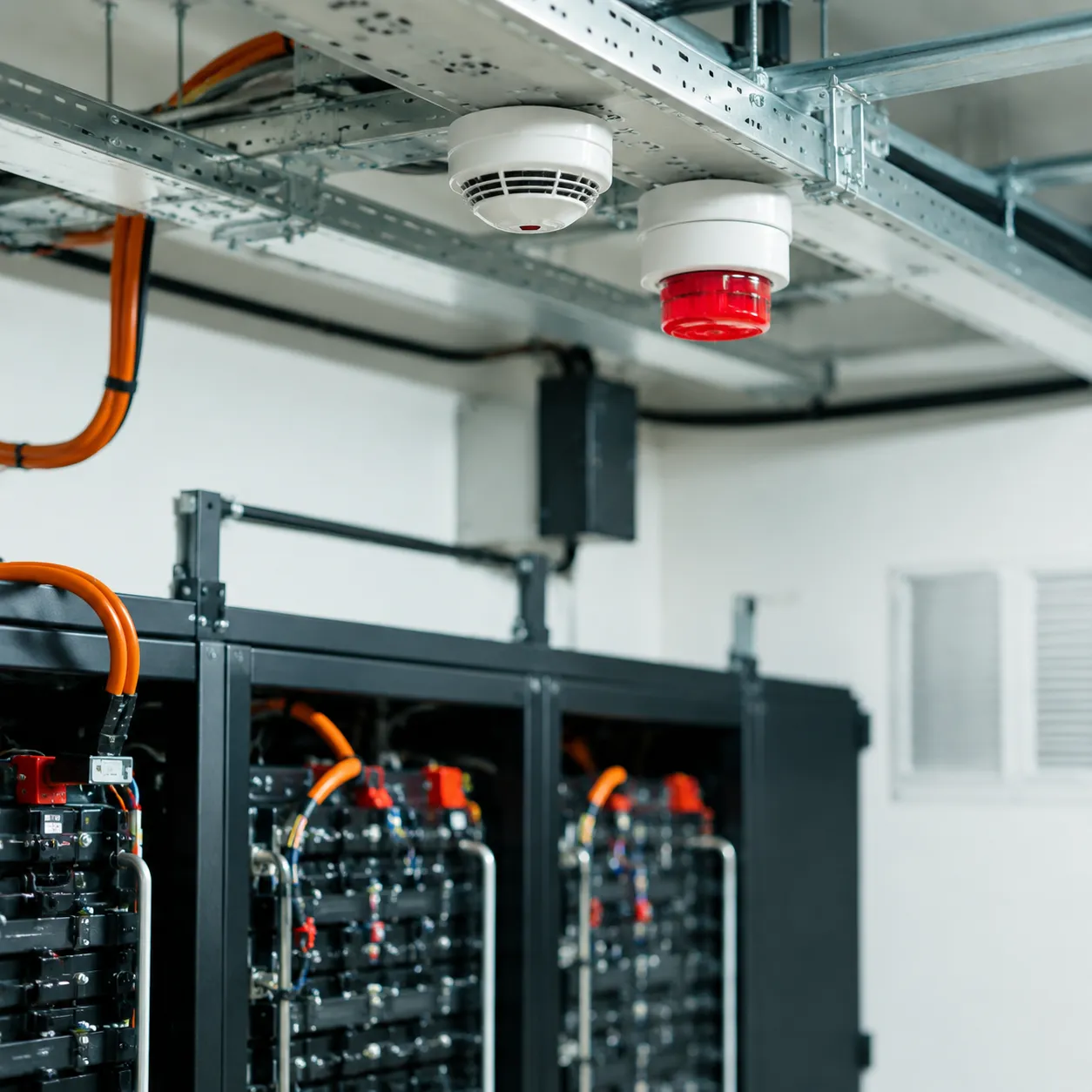
- Strategic Sensor Placement: Deployed across module racks, DC bus conduits, and HVAC exhaust zones to capture gas release regardless of airflow patterns.
3-Tier BMS Cell Telemetry & Active Mitigation
We combine continuous cell-level diagnostics with automated intervention interlocks to maintain strict thermal stability across every battery string.
| Safety Parameter | Monitoring Action | Automated Response |
|---|---|---|
| State-of-Charge (SOC) & Voltage | Continuous cell-level tracking | Triggers automated emergency shutdown protocols |
| Thermal Variance | Micro-channel temperature monitoring | Keeps inter-cell variance under 2°C to prevent hot spots |
| System Interlocks | Hardwired signal integration | Instant load isolation via the central Energy Management System (EMS) |
Air-Sampling Smoke Detection (ASD) & Micro-Environment Sensing
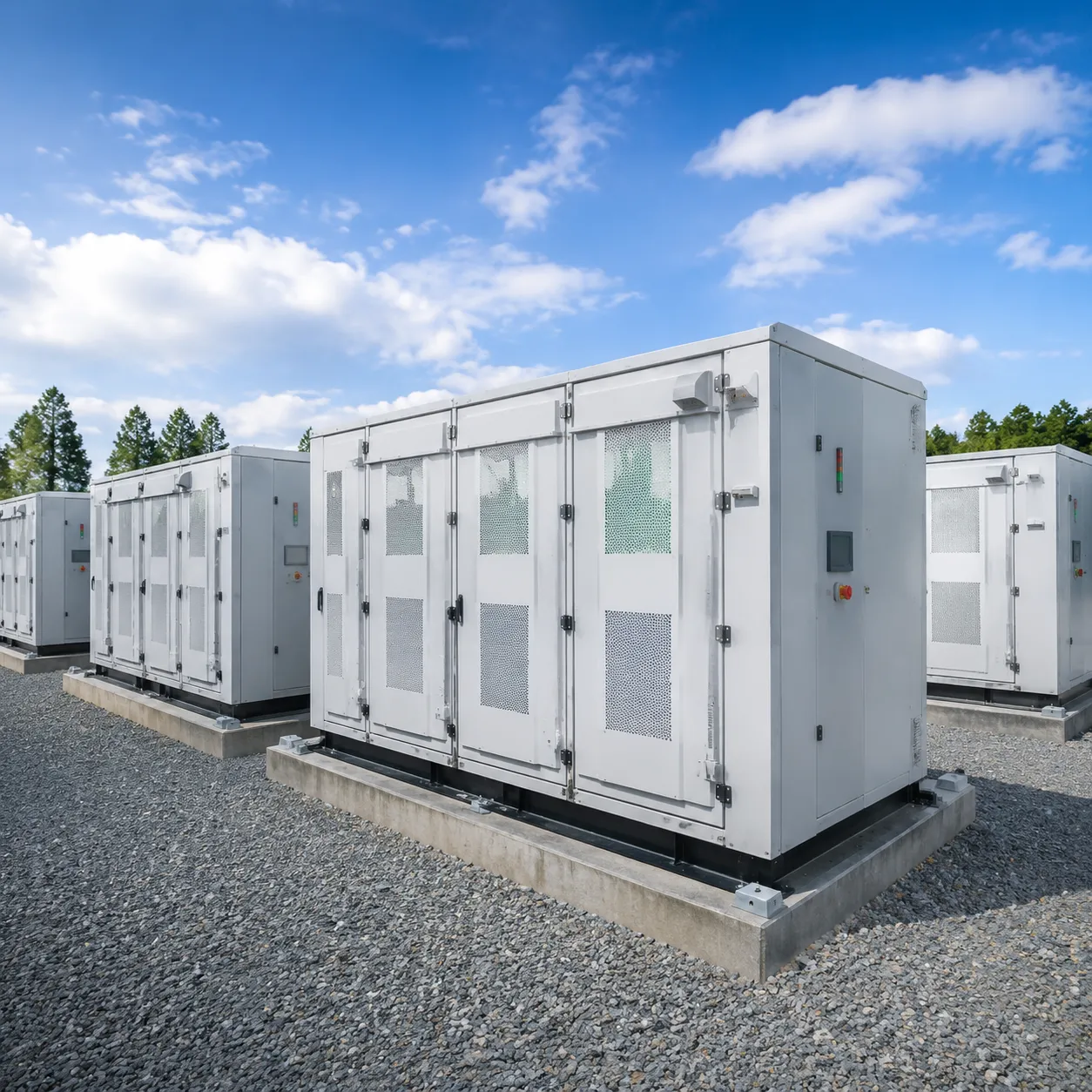
We design specialized air-sampling smoke detection (ASD) setups engineered for sealed outdoor C&I cabinets and 20ft/40ft ISO utility container platforms.
- High-Flow Optical Detection: High-sensitivity optical sensors tuned specifically for high-airflow HVAC environments, eliminating false triggers.
- Particulate Detection: Continuous air sampling extracts trace particulates from micro-environments to deliver early warning alerts before smoke density rises.
Integrated Fire Suppression & Explosion Control Systems
We engineer multi-layered safety directly into every energy storage tier. By pairing module-level containment with enclosure-wide gas flooding and active liquid cooling, our safety architectures neutralize thermal events at the source before cascade propagation can take hold.
Multi-Layer Safety Architecture
| Defense Layer | System Technology | Primary Protection Role | Key Compliance & Features |
|---|---|---|---|
| Pack-Level | Targeted Condensed Aerosol | Localized module fault extinguishment | Non-conductive, residue-free, electronics-safe |
| Enclosure-Level | Total Flooding FK-5-1-12 / Inert Gas | Full-volume fire suppression & gas suppression | NFPA 68 & NFPA 69 deflagration venting |
| Thermal Control | Micro-Channel Liquid Cooling | Continuous heat extraction during high C-rates | Closed-loop thermal stress prevention |
Targeted Pack-Level Aerosol Suppression
- Instant Localization: Condensed aerosol fire suppression units install directly inside individual battery modules to extinguish localized faults before heat spreads to neighboring cells.
- Electronics Protection: Formulated with non-conductive, residue-free agents that protect sensitive power conversion systems (PCS), micro-inverters, and system control electronics.
- Cascade Prevention: Halts thermal propagation at the module level, preventing domino-effect failures across the rack.
Enclosure-Level Clean Agent & Explosion Control
- Total Flooding Systems: We deploy FK-5-1-12 environmental clean agents and inert gas configurations designed to protect multi-megawatt storage sites and containerized systems like our utility-scale battery storage containers for solar and wind.
- Deflagration Venting: Integrated explosion control systems incorporate dedicated pressure relief panels fully compliant with NFPA 68 and NFPA 69 standards.
- Interlocked Safety Isolation: Interlocked emergency ventilation automatically shuts down airflow and activates clean agent discharge upon gas or thermal signal detection.
Active Micro-Channel Liquid Thermal Management
- Targeted Heat Extraction: Closed-loop liquid cooling architectures deliver direct thermal control during rapid charge and discharge cycles.
- Preventative Cooling: Maintains balanced cell temperatures across the entire enclosure, eliminating hot spots and preventing thermal stress buildup before cell degradation occurs.
Global Fire Safety Codes & Regulatory Compliance

We design every safety layout to pass the toughest local Authority Having Jurisdiction (AHJ) reviews without project delays. As trusted fire detection system suppliers for battery storage facilities, we build our safety architectures to comply directly with international fire codes and regulatory standards.
UL 9540A Fire Propagation Testing
We provide full UL 9540A test documentation verifying zero cell-to-cell thermal runaway fire propagation across all operational tiers:
Cell & Module Tier: Stops localized thermal runaway at the source before it damages surrounding cells.
Unit & Installation Tier: Prevents flame spread between racks and cabinets, backed by proven lithium iron phosphate battery system safety validation.
NFPA 855 & IFC Section 1207 Alignment
We streamline facility permitting by aligning our hardware and suppression logic directly with NFPA 855 (2026 Edition) and IFC Section 1207:
Unit Separation Distances: Engineered cabinet spacing to comply with mandatory site clearance standards.
Explosion Control Protocols: Integrated deflagration venting and gas management built into our overall energy storage system architecture.
Emergency Response Readiness: Pre-packaged Hazard Mitigation Analysis (HMA) reports designed for quick local fire department approval.
International Certification Standards
Our integrated safety hardware aligns with global quality, transport, and operational safety baselines:
UL 1973: Stationary battery system safety standards.
IEC 62619 & CE: Industrial lithium battery safety and electromagnetic compatibility compliance.
UN 38.3: Certified transport safety for lithium batteries.
ISO 9001: Strict quality management controls across all production and assembly processes.
Hardware Integration, SCADA Protocols & Turnkey Execution
Open Communication Protocol Integration
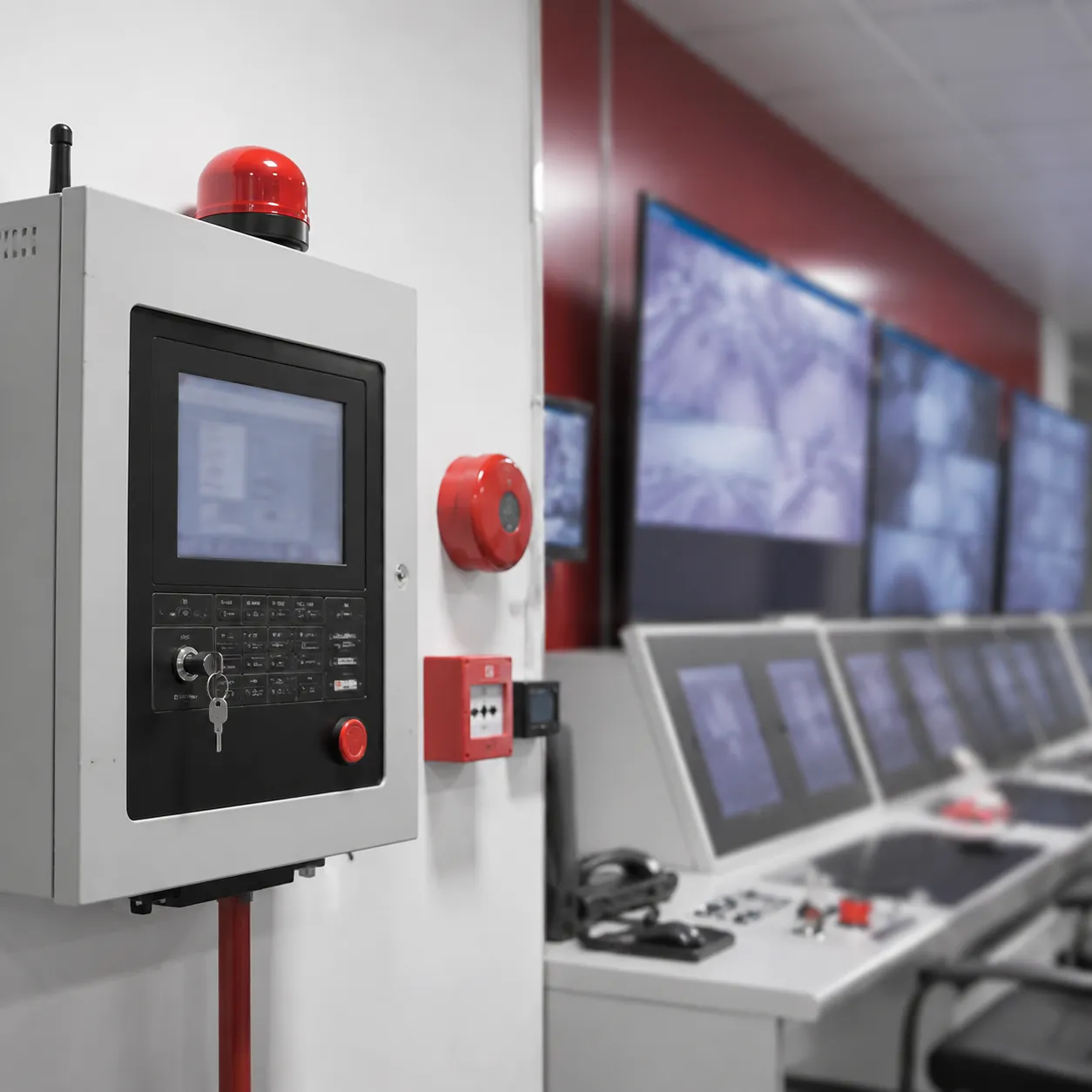
We design our safety infrastructure for direct, native communication across all industrial control layers. Using standard Modbus TCP, CAN bus, and open REST APIs, our hardware links directly into facility SCADA platforms and master plant controllers. As leading fire detection system suppliers battery storage facilities depend on, we ensure every addressable fire alarm control panel alert and thermal data point feeds directly into your central operating system.
Our deployment supports complete BMS and EMS integration, granting project operators real-time visibility into cell thermal trends, off-gas alerts, and automatic isolation interlocks from a single interface.
Turnkey 6-Phase Execution Framework
We manage your project from initial hazard evaluation to live utility operation, backing every system with sub-10ms automatic safety switchovers:
- 1. Site Assessment & HMA Generation: Comprehensive site survey and risk evaluation to produce a project-specific BESS Hazard Mitigation Analysis (HMA).
- 2. Topology Customization: Engineering specialized sensor arrays and safety controls matched to your site layout through custom ESS integration.
- 3. Manufacturing & FAT Validation: Automated hardware production certified by strict Factory Acceptance Testing (FAT) protocol.
- 4. Field Installation & Grid Connection: On-site mounting, control wiring, and physical integration with local grid infrastructure.
- 5. Live System Commissioning: String-level fire detection and suppression commissioning to confirm full automated response readiness.
- 6. 24/7 Cloud-Edge Telemetry: Continuous remote thermal monitoring, predictive analytics, and instant sub-10ms string-level safety isolation.
Modular BESS Specification Matrix
We build multi-layer safety directly into every unit we ship. Review our full battery energy storage system container specifications to see how our safety technology integrates across both C&I cabinets and large-scale container platforms.
| Feature / Metric | Commercial & Industrial Cabinets | ISO Containerized Utility Platforms |
|---|---|---|
| Energy Capacity | 50 kWh – 1.5 MWh | 2.5 MWh – 5.0 MWh+ |
| Thermal Management | Micro-channel liquid cooling | Dual-loop HVAC & active liquid cooling |
| Ingress Rating | IP55 / NEMA 3R outdoor rated | IP54 / IP65 utility grade |
| Early Warning Safety | Off-gas VOC sensors & module telemetry | Aspirating smoke detection (ASD) & multi-gas sampling |
| Integrated Suppression | Pack-level aerosol fire suppression | Clean agent total flooding (FK-5-1-12) + aerosol |
Asset Protection & ROI Financial Impact
We engineer our fire safety architecture to protect both operational uptime and financial returns. Stopping thermal incidents at the off-gas stage eliminates facility destruction, avoids costly grid disconnections, and keeps insurance premiums low.
- Accelerated Payback Period: Achieve full project payback in under 3.5 years through high asset availability and reduced risk premiums.
- Operating Cost Optimization: Cut utility bills by up to 35% with automated load shifting. Learn more about the benefits of peak shaving for lower energy costs to see how safety and energy optimization drive ROI.
- Zero-Propagation Risk: Sub-second fault isolation prevents cell-to-cell thermal runaway, eliminating downtime and total facility rebuild costs.
Permitting & Safety FAQ: BESS Fire Protection Systems
How do early off-gas sensors interface with our 3-tier BMS safety shutdown loop?
Our electrolyte off-gas sensors constantly monitor module interiors for trace volatile organic compounds (VOCs) and hydrogen. When abuse is detected, the sensor sends a high-priority dry-contact and Modbus signal directly to our 3-tier battery management system. Within milliseconds, the BMS trips string-level DC contactors, isolates the affected rack, and triggers active ventilation before thermal runaway occurs. You can review how this functions within our complete commercial lithium battery energy storage system with BMS.
What UL 9540A test documentation is provided to satisfy local AHJ permitting requirements?
We provide a complete engineering packet designed for rapid Authority Having Jurisdiction (AHJ) review and NFPA 855 approval:
- Full UL 9540A Test Reports: Documented verification across cell, module, unit, and installation levels proving zero cell-to-cell fire propagation.
- Hazard Mitigation Analysis (HMA): Site-specific thermal runaway analysis and failure modes mitigation plan.
- Deflagration Calculations: NFPA 68 explosion venting and NFPA 69 gas concentration management documentation.
Are clean agent and aerosol fire suppression systems safe for sensitive PCS and inverter electronics?
Yes. Both our FK-5-1-12 clean agent and pack-level condensed aerosol solutions are electrically non-conductive, non-corrosive, and leave zero residue upon discharge. They extinguish thermal faults cleanly without damaging sensitive micro-inverters, control electronics, or power conversion systems (PCS).
Can Percenec fire control panels connect directly into third-party building management systems?
Our addressable fire alarm control panels feature open architecture native support for Modbus TCP, CAN bus, and REST APIs. They integrate directly into third-party Building Management Systems (BMS) and plant SCADA platforms without requiring proprietary gateways.
| Safety & Permitting Feature | System Specification | Compliance Benchmark |
|---|---|---|
| Off-Gas Signal Response | Sub-10ms logic trip to BMS isolation loop | Stage 1 Abuse Detection |
| Extinguishing Media | FK-5-1-12 Clean Agent & Pack Aerosol | Non-conductive / Residue-Free |
| SCADA / BMS Protocol | Modbus TCP, CAN Bus, REST API | Plug-and-Play Integration |
| AHJ Permitting Packet | UL 9540A, HMA Report, NFPA 68/69 vent sizing | NFPA 855 & IFC Section 1207 |