Formula details
Product Details
Overview
Product Overview
What Is a Battery Energy Storage System Container?
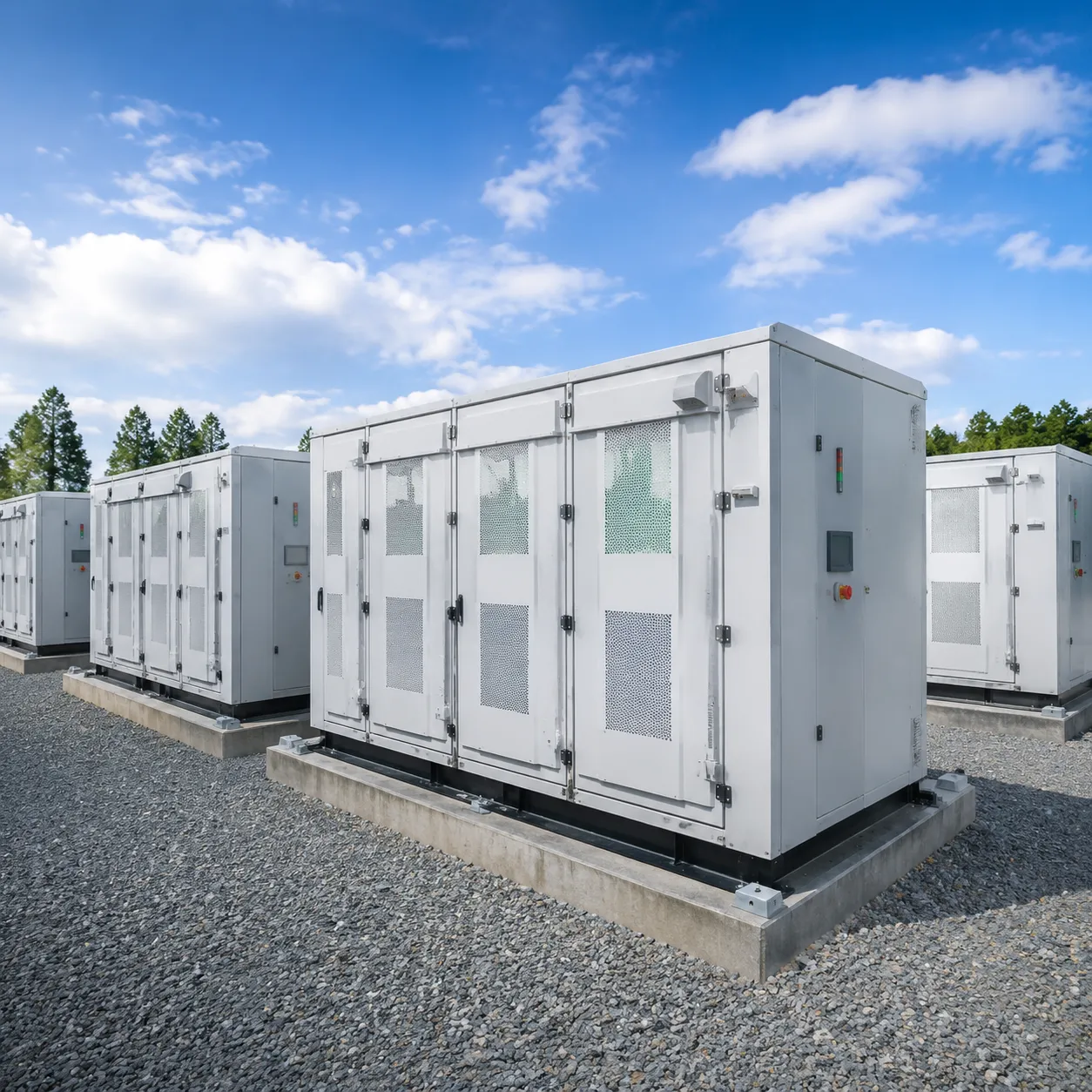
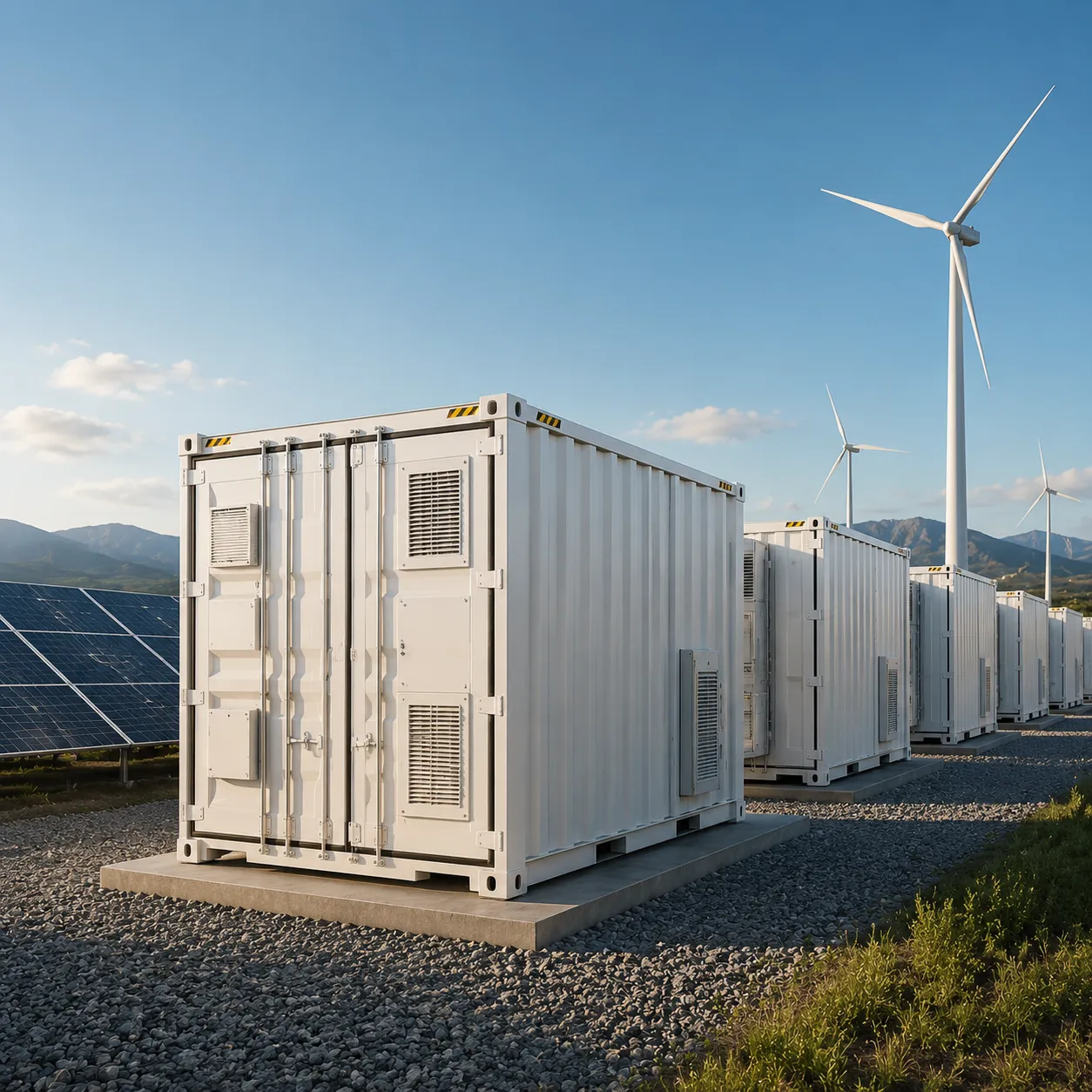
A battery energy storage system container (containerized BESS) integrates high-density battery racks, thermal management, fire protection, power conversion interfaces, and control software into an all-in-one shipping enclosure.
We utilize standardized 20ft and 40ft ISO container architectures for utility-scale deployments because they deliver extreme structural durability, lower freight logistics costs, and simplify site prep work. In modern renewable energy facilities, the battery storage container acts as an intelligent buffer—charging during excess generation and discharging when grid demand peaks.
Why Choose Percenec Energy BESS Containers
At Percenec Energy, we engineer utility-scale energy storage solutions built specifically to withstand heavy operational cycles in harsh outdoor environments.
- Engineered for Renewables: Purpose-built architectures optimized for seamless coupling with solar farms and wind farms.
- Factory-Built & Pre-Integrated: Racks, thermal units, and safety systems are pre-installed and tested in our factory, reducing on-site construction complexity and labor costs.
- Modular Utility Scalability: Modular block design allows easy parallel expansion from megawatt-hour (MWh) units to multi-gigawatt-hour (GWh) project scale.
- Flexible Grid Application: Fully compatible with both Front-of-the-Meter (FTM) utility projects and large Behind-the-Meter (BTM) industrial installations.
- Bankable Long-Term Operation: Built using tier-1 LFP cells and heavy-duty enclosures designed for 15+ years of daily cycling.
| Platform Feature | System Value |
|---|---|
| Architecture | ISO 20ft / 40ft modular enclosure design |
| Chemistry | Ultra-safe LiFePO4 (LFP) cells |
| Integration | Factory pre-engineered & turnkey ready |
| Deployment | Front-of-meter (FTM) & Behind-the-meter (BTM) |
| Cooling | Advanced liquid cooling for tight cell-to-cell delta-T |
Typical Project Applications
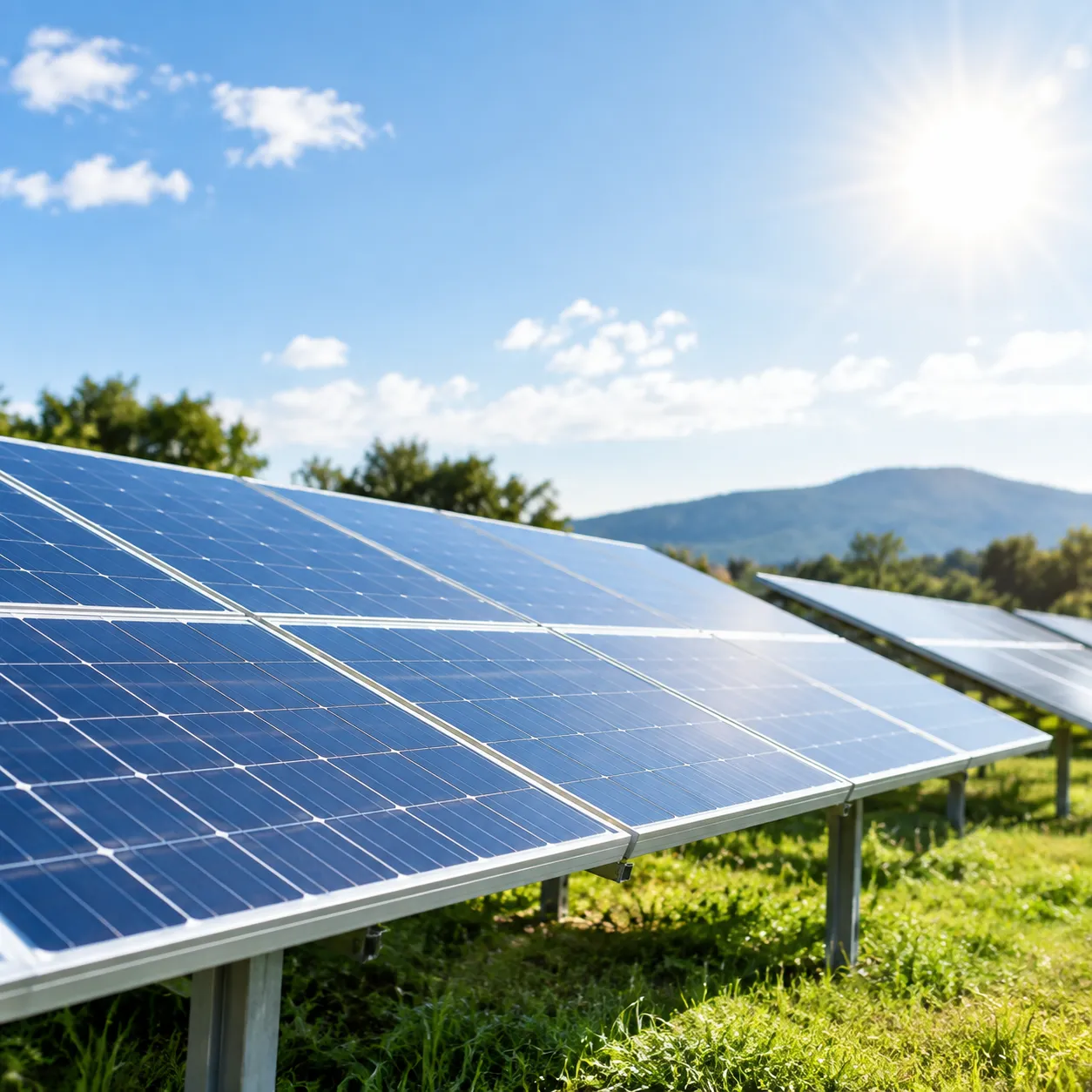
Integrating a battery energy storage system container solar farm or battery energy storage system containers wind farm setup maximizes plant revenues while maintaining strict grid code compliance. Our containerized solutions support multiple utility-scale use cases:
- Solar Farm Energy Shifting: Capture peak daytime solar output and discharge energy during lucrative evening demand hours.
- Wind Farm Power Smoothing: Dampen sudden power spikes and ramp-rate fluctuations caused by changing wind conditions.
- Curtailment Reduction: Store excess clean power when grid transmission capacity is constrained instead of shutting down generation assets.
- Frequency Regulation & Grid Support: Provide sub-second active/reactive power response to support grid frequency and voltage stability.
- Peak Shaving & Energy Arbitrage: Charge during low-cost off-peak hours and sell energy back to the grid when prices peak.
- Hybrid Renewable Integration: Combine solar, wind, and storage into a single dispatchable, firm power plant asset.
Application Scenarios
Battery Energy Storage System Container for Solar Farm
Deploying a battery energy storage system container solar farm setup resolves the fundamental mismatch between maximum solar generation and peak power demand. Solar plants often face heavy output clipping during midday hours when production outpaces grid capacity.
Our containerized solutions store excess daytime photovoltaic (PV) generation and dispatch it strategically when power prices peak in the evening.
- Curtailment Mitigation: Capture un-cleared solar power instead of throttling inverter output.
- Peak Shifting: Hold cheap midday energy and discharge during high-revenue evening windows.
- Flexible Coupling: Support both new build DC-coupled configurations and retrofit AC-coupled designs.
- Revenue Maximization: Unlocks dual revenue streams through energy arbitrage and capacity market participation.
For a deeper dive into topology selection, explore our energy storage system architecture and design guide.
Battery Energy Storage System Containers for Wind Farm
Wind power generation is inherently volatile, often surging during off-peak hours or dropping rapidly due to weather shifts. Integrating battery energy storage system containers wind farm configurations stabilizes this fluctuation, transforming unpredictable generation into a controllable grid asset.
- Generation Smoothing: Absorb aggressive ramp rates and smooth out high-frequency generation spikes.
- Ramp-Rate Control: Prevent grid disconnects by managing rapid power increases or drops.
- Grid Power Quality: Deliver fast-response frequency regulation and voltage support to meet utility grid codes.
- Optimized Dispatch: Schedule wind power delivery based on demand forecasts rather than immediate wind availability.
Utility-Scale Battery Energy Storage System Containers for Solar Farm
For front-of-meter (FOM) applications, utility scale battery energy storage system containers solar farm deployments require massive capacity, high reliability, and tight integration with utility SCADA systems. We supply modular megawatt-hour (MWh) storage blocks tailored for utility IPPs and grid operators.
| Feature | Utility Impact |
|---|---|
| Grid Interconnection Support | Meets stringent utility interconnection requirements at the point of common coupling (PCC). |
| Energy Arbitrage | Optimizes wholesale power trading across day-ahead and real-time markets. |
| Spinning Reserves | Provides fast power injection during sudden generation losses across the network. |
| Modular Scalability | Easily scale from 5 MWh to multi-hundred MWh systems using standardized containers. |
To see how our utility architecture handles large power requirements, check out our scalable battery energy storage system for utilities.
Other Compatible Use Cases
While engineered primarily for utility solar and wind plants, our BESS containers serve several adjacent energy infrastructure applications:
- Microgrids: Provide primary frequency and voltage reference in islanded or off-grid power systems.
- Industrial Parks: Lower demand charges through high-capacity peak shaving for heavy power consumers.
- Commercial and Industrial Systems: Offer site-level energy security, solar self-consumption, and back-up power.
- Substation Support: Defer expensive utility transformer and line upgrades by managing local peak loads.
- Resilience and Backup: Provide black-start capability and emergency standby power for critical infrastructure.
Product Advantages
High Energy Density, Modular Design
We build our BESS solutions around a standardized ISO containerized footprint to deliver maximum power in a compact layout. Whether you are building a utility scale battery energy storage system containers solar farm layout or expanding an existing site, our modular architecture makes scaling up seamless.
- Scalable Deployment: Expand capacity effortlessly from megawatt-hour to gigawatt-hour scale by adding modular units.
- Plug-and-Play Consistency: Standardized engineering ensures project uniformity across all installation phases.
- Space Optimization: High energy density minimizes land footprint and reduces civil site preparation costs.
Long Cycle Life and High Reliability
Utility workloads demand rugged durability. We utilize premium Lithium Iron Phosphate (LiFePO4) chemistry to deliver exceptional thermal stability and extended operational life. Learn more about how our cell design maximizes longevity in our detailed guide to lithium iron phosphate battery system safety and cycle life.
- Extended Service Life: Engineered for 6,000+ deep discharge cycles under heavy daily cycling.
- Thermal Stability: LFP chemistry eliminates thermal runaway risks associated with other lithium chemistries.
- Utility-Grade Reliability: Maintains steady output even under harsh grid support and frequency regulation duties.
Faster Deployment
On-site construction delays increase project costs. Our containerized storage units are pre-engineered, pre-wired, and fully integrated before leaving the factory.
- Turnkey Delivery: Integrated battery racks, HVAC, thermal management, and fire suppression arrive ready for field connection.
- Reduced On-Site Complexity: Minimal field assembly drastically reduces labor costs and site risk.
- Accelerated Time-to-Market: Fast-track grid interconnection and start generating project revenue sooner.
Strong Environmental Adaptability
Renewable power sites are often located in extreme environments. We design every battery energy storage system container solar farm and battery energy storage system containers wind farm unit to endure tough outdoor conditions.
| Environmental Factor | Our Containerized Solution |
|---|---|
| Temperature Range | Operates reliably from -30°C to +55°C with advanced climate control |
| Ingress Protection | Heavy-duty IP55 / NEMA 3R+ outdoor enclosure prevents dust and moisture ingress |
| Corrosion Resistance | Anti-corrosive coatings designed for coastal wind sites and high-humidity zones |
| Remote Durability | Built to withstand high wind loads, heavy snow, and harsh solar radiation |
Lower System Risk
Safety and maintenance efficiency are engineered into every layer of our hardware. As an established BESS company for utility-scale turnkey storage systems, we prioritize risk mitigation across the entire operational lifespan.
- Integrated Thermal Management: Liquid-cooling architecture keeps cell-to-cell temperature deltas within strict limits.
- Multi-Layer Protection: Comprehensive electrical, thermal, and mechanical safety controls prevent system faults.
- Simplified O&M: Smart diagnostics allow remote monitoring and fast, low-cost maintenance troubleshooting.
4. Technical Specifications
4.1 System Form Factor
Our enclosures utilize standard ISO container architecture for straightforward logistics and fast on-site installation:
20ft Containerized BESS: Compact footprint designed for modular expansion and tighter site layouts.
40ft Containerized BESS: High-density enclosure optimized for large utility projects.
Custom Enclosure Solutions: Tailored container designs built around specific structural or footprint requirements.
4.2 Energy Capacity
We deliver customizable MWh-level energy storage configurations to match specific generation profiles:
MWh-Level Systems: Scalable block sizing from single-megawatt units up to multi-gigawatt-hour utility installations.
Flexible Sizing: Easily match duration requirements (1-hour to 4-hour+ storage) for your battery energy storage system container solar farm project.
Optimized Configuration: Review our BESS sizing guide to evaluate optimal capacity configurations for your site.
4.3 Battery Chemistry
We use high-grade Lithium Iron Phosphate (LiFePO4) chemistry across our containerized energy storage systems for unmatched stability and lifecycle economics:
LiFePO4 (LFP) Safety: Superior thermal and chemical stability compared to traditional lithium-ion formulations.
Long Service Life: Designed for over 6,000 deep discharge cycles, maintaining high capacity retention.
Renewable Integration: Built to withstand heavy daily cycle demands typical of battery energy storage system containers wind farm and solar installations.
4.4 Cooling System
Thermal management is critical to cell longevity and system safety:
Liquid-Cooled Thermal Management: Advanced liquid cooling keeps temperature variance across cells strictly controlled (≤ 3°C).
Enhanced Lifespan: Uniform cooling reduces cell degradation and extends operational service life.
Low Auxiliary Consumption: Energy-efficient cooling loops minimize internal system power losses.
4.5 Technical Specification Summary
| System Parameter | Specifications |
|---|---|
| Form Factor | 20ft / 40ft ISO High-Cube Container or Custom Size |
| Cell Chemistry | Premium Utility-Grade LiFePO4 (LFP) |
| Thermal Management | High-Efficiency Liquid Cooling (Air-cooling optional) |
| System Voltage | Up to 1500V DC Bus Architecture |
| Cycle Life | ≥ 6,000 cycles @ 80% DoD |
| Ingress / Environment | IP54 / IP55 Outdoor Enclosure, Anti-Corrosion C4/C5 |
4.6 Power and Voltage Configuration
Our systems easily interface with existing or new power conversion hardware:
1500V DC Architecture: High voltage design reduces cabling losses and balance-of-system cost.
Renewable Compatibility: Direct integration with central or string PCS units in solar and wind plants.
Flexible Adaptation: Fully adaptable to local grid interconnection standards globally.
4.7 Communication and Control
Complete visibility and control across every layer of the installation:
3-Tier BMS Integration: Cell-, module-, and rack-level monitoring for real-time voltage and temperature balancing.
EMS Integration: Intelligent control algorithms for automated dispatch, peak shaving, and power smoothing.
SCADA-Ready: Compatible with standard industrial protocols (Modbus TCP/IP, IEC 60870-5-104, DNP3).
Remote Monitoring: Telematics dashboard provides real-time system performance tracking and diagnostics.
4.8 Protection and Safety Features
Multi-layered protective measures safeguard site assets and personnel:
Fire Suppression System: Built-in multi-stage detection and gas/aerosol fire suppression (NFPA 855 compliant design).
Environmental & Gas Detection: Smoke, temperature, and off-gas monitoring detect thermal runaway risks early.
Electrical Safety: Integrated DC fuses, automated contactors, and surge suppression.
Emergency Shutdown (ESD): Hardwired local ESD buttons and remote trip capabilities for instant emergency response.
System Architecture
Core Components of the Containerized BESS
We engineer every containerized solution as a complete, turnkey energy package. Our utility scale battery energy storage system containers solar farm design integrates all critical engineering subsystems into an ISO-standard enclosure, minimizing site labor and accelerating grid interconnection.
- LiFePO4 Cells & Modules: Long-life lithium iron phosphate cells assembled into high-density battery racks.
- Battery Management System (BMS): Multi-tier commercial lithium battery energy storage system with BMS architecture monitoring cell voltage, current, state of charge (SOC), and temperature in real time.
- Power Conversion System (PCS): Bidirectional inverter interface enabling high-efficiency AC/DC conversion with millisecond-level response times.
- Energy Management System (EMS): Plant-level software platform running custom dispatch logic, load shifting algorithms, and economic optimization.
- Thermal Management System: Advanced liquid cooling with uniform flow distribution to eliminate hot spots and extend battery life.
- Fire Suppression System: Multi-layer safety system featuring early off-gas detection, smoke/thermal sensors, and automated clean-agent suppression.
- Rugged Container Enclosure: Heavy-duty, IP55/NEMA 3R+ rated outdoor enclosure available in standard sizes like our 40ft battery energy storage system container.
- Communication & SCADA Interface: Standardized protocols (Modbus TCP, CAN, DNP3, IEC 60870-5-104) for full plant integration.
How the System Works
Our systems bridge intermittent generation curves and grid demand cycles seamlessly through a simple five-step operational loop:
- Surplus Energy Capture: Stores excess daytime PV generation or off-peak wind production that would otherwise face curtailment.
- Continuous BMS Safeguards: Multi-level control systems track cell dynamics, automatically balancing charge states and maintaining strict safety limits.
- Automated EMS Dispatch: Optimization algorithms process grid requests and market prices to schedule the ideal discharge times.
- Grid Power Conversion: The PCS converts stored DC power back to precise grid-compliant AC electricity, offering active frequency regulation and voltage support.
- Peak Load Delivery: Energy dispatches to the grid during evening demand peaks, unlocking maximum revenue per megawatt-hour.
AC-Coupled and DC-Coupled Options
Selecting the ideal system topology depends on your site architecture and whether you are deploying a greenfield build or retrofitting an operational facility.
| Topology Feature | AC-Coupled System | DC-Coupled System |
|---|---|---|
| Best For | Site retrofits & wind farm integration | New solar farm installations |
| Point of Interconnection | Connects directly to the AC bus | Connects to the DC bus before the PV inverter |
| System Application | Battery energy storage system containers wind farm & brownfield PV | Greenfield battery energy storage system container solar farm |
| Charging Efficiency | Standard multi-stage AC/DC conversion | Maximum solar-to-battery charging efficiency |
| Layout Flexibility | High; place anywhere on the plant site | Tied closely to solar array field inverters |
| Balance of Plant (BOP) | Separate inverter hardware required | Shared inverter architecture reduces equipment cost |
How to Choose the Right System
- Choose AC-Coupled if you are upgrading an operating wind farm or existing solar facility. It requires no changes to your current inverter architecture and minimizes installation downtime.
- Choose DC-Coupled if you are building a new solar power plant from the ground up. Combining the solar array and battery storage on a shared DC bus cuts total inverter hardware costs and captures clipped solar energy far more efficiently.
6. Safety and Compliance
6.1 Safety Design Philosophy
Safety isn't an option in large-scale energy projects—it is the foundation of every battery energy storage system container for solar farm and wind installations we engineer. We deploy a multi-layered defense architecture designed to prevent, contain, and isolate potential thermal events long before they escalate.
- Cell-Level Thermal Isolation: Physical barriers and insulation prevent thermal propagation between individual cells.
- Thermal Runaway Mitigation: Liquid-cooling loops maintain uniform cell temperature, keeping operating ranges well within safe thresholds.
- Container-Level Containment: Heavy-duty enclosure design with deflagration venting safely releases pressure away from surrounding equipment.
- Grid-Scale Resilience: Engineered to withstand electrical transients, seismic activity, and harsh weather without compromising system integrity.
6.2 Fire Protection and Emergency Response
When deploying a battery energy storage system containers wind farm setup in remote environments, early detection is critical. Our containerized solutions feature multi-stage monitoring and automated emergency response protocols to protect personnel and grid infrastructure.
- Early Warning Detection: Off-gas monitoring, multi-spectrum smoke sensors, and localized heat detectors identify anomalies before thermal runaway occurs.
- Automated Alarm & Shutdown: System-wide fault detection triggers instant high-voltage contactor opening and rapid HVAC isolation.
- Dedicated Fire Suppression: Integrated clean-agent gas suppression (e.g., FK-5-1-12) coupled with water sprinkler backups for complete risk mitigation.
- Emergency Isolation Design: External manual E-stop interface and isolated emergency control circuits ensure safe access for first responders.
6.3 Standards and Certifications
Securing project financing, insurance, and local authority approval (AHJ) requires strict adherence to global safety codes. Every utility scale battery energy storage system containers solar farm project we build aligns with stringent international certifications.
| Standard / Code | Application & Target |
|---|---|
| UL 9540 & UL 9540A | System-level safety certification & unit-level fire propagation testing |
| UL 1973 | Battery pack, module, and cell-level electrical safety |
| NFPA 855 | Standard for the installation of stationary energy storage systems |
| IEC 62619 / IEC 62933 | Global safety, testing, and performance requirements for grid-scale BESS |
| UN 38.3 | International transportation safety compliance for lithium battery units |
We support your procurement team with complete compliance documentation and recognized quality certifications and compliance standards to simplify permitting, lower insurance premiums, and accelerate project commissioning.
Performance Benefits for Solar and Wind Projects
Energy Arbitrage
We maximize the financial yield of every generated megawatt by shifting energy sales to peak tariff periods. Integrating a battery energy storage system container solar farm setup allows operators to store low-cost solar electricity during mid-day generation peaks and discharge power into the grid when demand and wholesale prices spike.
Curtailment Reduction
Grid bottlenecks and oversupply frequently force asset owners to throttle generation. Our containerized storage systems capture excess power during peak generation windows that would otherwise be discarded, converting curtailed gigawatt-hours into revenue-generating dispatchable assets.
Peak Shaving and Load Shifting
Flattening output spikes helps operators avoid heavy transmission capacity fees and grid overload penalties. Designed specifically for renewable energy developers, our targeted peak shaving and load shifting solutions provide millisecond-level power management to smooth plant discharge profiles and improve long-term facility economics.
Grid Stability Support
Modern power grids demand strict compliance with power quality standards. Our battery energy storage system containers wind farm configurations act as dynamic grid assets:
| Stability Function | Grid Support Benefit |
|---|---|
| Frequency Response | Delivers sub-second active power injection or absorption to mitigate grid frequency deviations. |
| Voltage Support | Provides dynamic reactive power (VAR) management at the point of interconnection. |
| Ramp-Rate Control | Buffers sharp power drops caused by cloud cover over solar arrays or sudden wind drops. |
| Power Smoothing | Converts volatile generation into clean, predictable baseload-style power curves. |
ROI Improvement
Deploying a utility scale battery energy storage system containers solar farm infrastructure accelerates capital recovery through multiple revenue streams. Combining ancillary service participation, arbitrage, and reduced curtailment increases overall asset utilization, directly lowering Levelized Cost of Storage (LCOS) and improving project payback timelines.
8. Engineering and Customization Options
Every utility project presents unique grid requirements and site constraints. We engineer custom utility scale battery energy storage system containers solar farm configurations and wind storage solutions matched directly to your asset's revenue strategy and physical footprint.
8.1 Capacity and Duration Customization
We scale MW power output and MWh energy capacity to align with your interconnection limits and generation profile:
Power & Energy Sizing: Modular block designs ranging from 1 MW / 2 MWh up to multi-hundred MWh utility installations.
Duration Flexibility: 1-hour, 2-hour, 4-hour, and 8+ hour discharge configurations tailored for peak shaving, frequency regulation, or capacity markets.
Seamless Expansion: Pre-engineered interfaces allow easy capacity expansion over time through our turnkey custom ESS integration services.
8.2 Thermal Management Options
We optimize thermal management strategies based on your project location and operational duty cycle:
Liquid-Cooled Systems: Precise temperature control keeping cell-to-cell delta T under 3°C, extending battery cycle life and cutting auxiliary power draw.
Tailored Thermal Routing: Customized liquid loops and redundant chillers designed for heavy cycling during high ambient temperature spikes.
8.3 Deployment Environment Adaptations
Our ruggedized battery energy storage system container solar farm enclosures are engineered to withstand extreme outdoor conditions across remote global installations:
| Environment | Customized Engineering Features |
|---|---|
| Extreme Heat (>50°C) | High-efficiency liquid cooling, solar heat radiation shields, and thermal insulation panels. |
| Extreme Cold (-30°C) | Internal heating mats, insulated enclosure walls, and automated battery pre-heating cycles. |
| Coastal & Marine | C5-M rated anti-corrosion coatings, stainless steel fasteners, and IP65/NEMA 4X sealed enclosures. |
| High Altitude & Remote Sites | Voltage clearance derating adjustments, reinforced structural framing, and low-maintenance components. |
8.4 Control Systems and Grid Integration
Smooth power dispatch requires tight integration between local controllers and overall plant management. For both solar and battery energy storage system containers wind farm projects, we supply complete system controls via our robust BMS and EMS integration solutions:
Custom EMS Logic: Automated dispatch routines engineered for energy arbitrage, curtailment prevention, and ramp-rate control.
SCADA & Protocol Support: Native communication via Modbus TCP, DNP3, and IEC 60870-5-104 for real-time telemetry.
Grid Code Compliance: Custom power plant controller (PPC) interfaces designed to meet regional utility interconnection codes.
Installation and Deployment
Streamlined Project Deployment Process
We streamline the deployment process to get your battery energy storage system container solar farm or wind site operational on schedule. Factory pre-integration minimizes field labor and reduces project risk.
| Deployment Stage | Focus Area | Core Activities |
|---|---|---|
| 1. Requirements & Design | Solution Engineering | We evaluate grid codes, site capacity, and engineer custom energy solutions tailored to project specs. |
| 2. Factory Assembly | Quality Control | Pre-integration of LFP batteries, BMS, liquid cooling, and fire suppression systems inside standard ISO containers. |
| 3. Testing & Validation | Pre-Shipment Check | Comprehensive Factory Acceptance Testing (FAT) ensures full operational readiness before delivery. |
| 4. Site Delivery & Placement | Civil & Mechanical | Transporting containers directly to the site, crane positioning onto foundations, and mechanical anchoring. |
| 5. Commissioning | Grid Interconnection | Site Acceptance Testing (SAT), grid synchronization, control system integration, and system handover. |
Essential Site Preparation Requirements
Deploying utility scale battery energy storage system containers solar farm projects requires straightforward civil and electrical prep. We collaborate directly with EPC contractors to make site integration fast and seamless.
- Foundation Design: Reinforced concrete slab or strip foundation designed for heavy enclosure loads (up to 30 tons for a 40ft container).
- Space & Safety Clearances: Minimum 1.5m to 3m perimeter spacing for thermal airflow, maintenance access, and fire safety compliance.
- Electrical Connections: Pre-planned trenching for medium-voltage AC/DC power cables, auxiliary power supply, and fiber-optic communications.
- Site Drainage & Access: Graded terrain with perimeter drainage and clear turn radii for heavy transport and crane operation.
Rigorous Commissioning and Acceptance
We execute a complete testing framework to verify safety, reliability, and grid compliance before final activation on your battery energy storage system containers wind farm or solar facility.
- Factory Acceptance Testing (FAT): Complete verification of thermal controls, emergency shutoffs, alarms, and module performance prior to factory release.
- Site Acceptance Testing (SAT): Post-delivery insulation checks, cable integrity tests, high-voltage connection checks, and control signal validation.
- System Testing & Grid Sync: End-to-end testing covering dynamic response, full charge/discharge cycles, thermal stability, and SCADA communication.
- Handover: Complete handover package with operating manuals, as-built documentation, warranty coverage, and team training.
Operation and Maintenance
We support every utility scale battery energy storage system containers solar farm and wind installation with end-to-end operation and maintenance (O&M) protocols.
Remote Monitoring
Our central management software provides 24/7 visibility into every containerized battery energy storage system in your fleet:
- Real-Time Visibility: Instant tracking of state of charge (SoC), state of health (SoH), cell temperatures, and busbar voltages.
- Performance Tracking: Automated data logging for round-trip efficiency (RTE) and daily energy throughput across your battery energy storage system container solar farm.
- Automated Diagnostics: Instant fault alarms and root-cause diagnostic reporting simplify field technician dispatch and reduce downtime.
Maintenance Support
Proactive care ensures high system availability for both solar and battery energy storage system containers wind farm deployments.
| O&M Service | Core Tasks | Key Impact |
|---|---|---|
| Preventive Maintenance | Scheduled electrical, structural, and connection checks | Prevents unexpected component failures |
| Battery Health Monitoring | Active cell balancing and degradation analytics | Maximizes usable capacity and service life |
| Cooling System Inspection | Liquid coolant check, leak detection, and radiator cleaning | Keeps operating temperatures in optimal range |
| Software Optimization | Remote BMS/EMS firmware updates and control tuning | Maintains compliance with evolving grid codes |
Lifecycle Support
We stand behind our utility scale battery energy storage system containers solar farm hardware throughout its multi-year operating life:
- Spare Parts Logistics: Priority dispatch for certified cells, modules, sensors, and thermal management parts.
- 24/7 Technical Assistance: Direct tier-3 engineering support for dispatch troubleshooting and emergency response.
- Capacity Augmentation: Tailored long-term expansion planning to offset natural cell degradation and maintain project power purchase agreements (PPAs).
Whether managing utility assets or looking to expand your renewable portfolio, explore our specialized solutions across diverse renewable energy industries or connect with our engineering team to become a partner.
Why Choose Percenec Energy
Direct OEM Manufacturer Strength
As a direct OEM manufacturer with deep power electronics and electrochemical engineering expertise, we eliminate middleman overhead while ensuring total technical quality control.
- In-House OEM Production: Fully integrated manufacturing from module assembly to containerized BESS integration.
- Utility-Scale Engineering: Specialized teams dedicated to grid interconnection requirements, high-voltage safety, and liquid-cooled thermal management.
- Tailored Project Customization: Custom MWh sizing, specific EMS control logic, and multi-environment enclosure ratings.
Discover more about our manufacturing background and engineering capabilities for utility-scale energy storage assets.
Maximizing Long-Term Project Value
Every containerized BESS we ship is engineered for bankability, fast commissioning, and a dependable operational lifespan.
| Value Driver | Percenec Energy Advantage | Real-World Impact |
|---|---|---|
| System Reliability | Tier-1 LFP cells with advanced liquid cooling | Extends battery cycle life and maintains cell-to-cell thermal uniformity |
| Safety Architecture | Multi-layer fire suppression and early gas detection | Prevents thermal runaway and minimizes overall site risk |
| Fast Deployment | Factory-tested, pre-integrated plug-and-play architecture | Cuts field labor costs and shortens overall commissioning timelines |
| Operating Performance | High round-trip efficiency (RTE) and low auxiliary power draw | Maximizes revenue generation across multi-decade project lifespans |
Perfect Industry Fit for Utility Renewables
We build specialized storage assets engineered specifically to solve the unique dispatch and stability challenges of clean power generation.
- Solar Farm Integration: Deploying a battery energy storage system container solar farm setup turns intermittent PV generation into fully dispatchable firm capacity. Our customized solar plus storage solutions help operators eliminate daytime curtailment and capture peak energy prices during evening hours.
- Wind Farm Integration: Integrating battery energy storage system containers wind farm units smooths output ramp rates, balances rapid wind generation fluctuations, and delivers critical frequency support to ensure grid compliance.
- Utility-Scale Power Plants: Implementing a utility scale battery energy storage system containers solar farm design gives IPPs and utility operators the precise voltage regulation, capacity firming, and energy arbitrage capabilities needed to maximize project ROI.
Frequently Asked Questions
What is a battery energy storage system container?
A containerized battery energy storage system (BESS) is a factory-built, turnkey power system housed inside a standard ISO shipping container (typically 20ft or 40ft). We integrate high-density LiFePO4 battery modules, intelligent thermal management, safety controls, and power conversion interfaces into a single enclosure built for immediate deployment.
How is a containerized BESS used in a solar farm?
In a battery energy storage system container solar farm setup, our system captures excess energy produced during peak sunlight hours when grid demand or prices might be low. We discharge this stored energy during evening peak hours, drastically reducing curtailment, improving plant yield, and stabilizing grid feed-in.
Can the system be used for wind farms?
Yes. Integrating battery energy storage system containers wind farm units solves the core issue of wind intermittency. The containerized BESS smooths rapid power ramps, regulates frequency, and stores sudden power surges so you can dispatch steady, predictable power to the grid operator.
What capacity options are available?
We provide modular MWh-level system configurations tailored to your project requirements.
| Container Size | Typical Capacity Range | Core Target Application |
|---|---|---|
| 20ft BESS Container | 2.0 MWh – 3.7 MWh | Medium utility, microgrids, and commercial sites |
| 40ft BESS Container | 4.0 MWh – 5.0 MWh+ | Large grid-scale solar and wind power plants |
| Custom Enclosures | Site-specific sizing | Extreme climates and specialized voltage setups |
Is liquid cooling better than air cooling?
For high-density utility scale battery energy storage system containers solar farm applications, liquid cooling offers significant performance advantages. It maintains strict temperature uniformity across all battery cells (within ±2 °C variance), reduces auxiliary power consumption by up to 30%, and significantly extends battery cycle life compared to traditional HVAC air cooling.
Can the system integrate with SCADA and EMS?
Yes, our containerized architecture is built for full grid integration. We support standard industrial protocols, including Modbus TCP/IP, IEC 60870-5-104, and CAN bus, enabling smooth communication with plant-level SCADA systems and third-party Energy Management Systems (EMS). Review our BESS buying guide to learn more about selecting the right control architecture for your site.
What safety features are included?
We engineer safety directly into the container architecture using a multi-layered defence system:
Cell Safety: Long-life, inherently stable LiFePO4 chemistry.
Intelligent Monitoring: Multi-tier BMS tracking cell voltage, temperature, and state of health in real time.
Fire Protection: Early aerosol/gas detection, active fire suppression, and gas-venting isolation panels.
Enclosure Protection: Rugged IP55-rated enclosures equipped with automatic electrical isolation switches.
Can the solution be customized for my project?
Yes, we provide fully tailored solutions including specialized voltage outputs, custom EMS control logic, and reinforced HVAC designs for high-altitude, hot, or coastal environments. Browse our customizable utility-scale storage solutions to see how we adapt our modular containers for complex renewable projects.