Formula details
Product Details
Overview
Addressing Modern Grid Challenges with Percenec Energy
Modern industrial power grids face unprecedented challenges, primarily driven by the increasing intermittency of renewable energy sources and rising demand volatility. As facilities integrate more solar and wind power, maintaining a consistent energy supply becomes increasingly complex. Percenec Energy provides robust industrial battery storage solutions designed to serve as the primary anchor for grid stability. By leveraging high-capacity, modular BESS architectures, we empower commercial and industrial operations to bridge the gap between supply fluctuations and operational demand, ensuring reliable power delivery and grid-tied resilience.
Core Grid Stability Applications
As specialized battery energy storage system suppliers, grid stability is at the heart of what we provide. Our systems are engineered to handle the dynamic demands of the modern electrical grid through several key operational capabilities:
- Frequency Regulation: We deliver sub-second response times, essential for balancing real-time supply and demand to maintain grid frequency within strict operational limits.
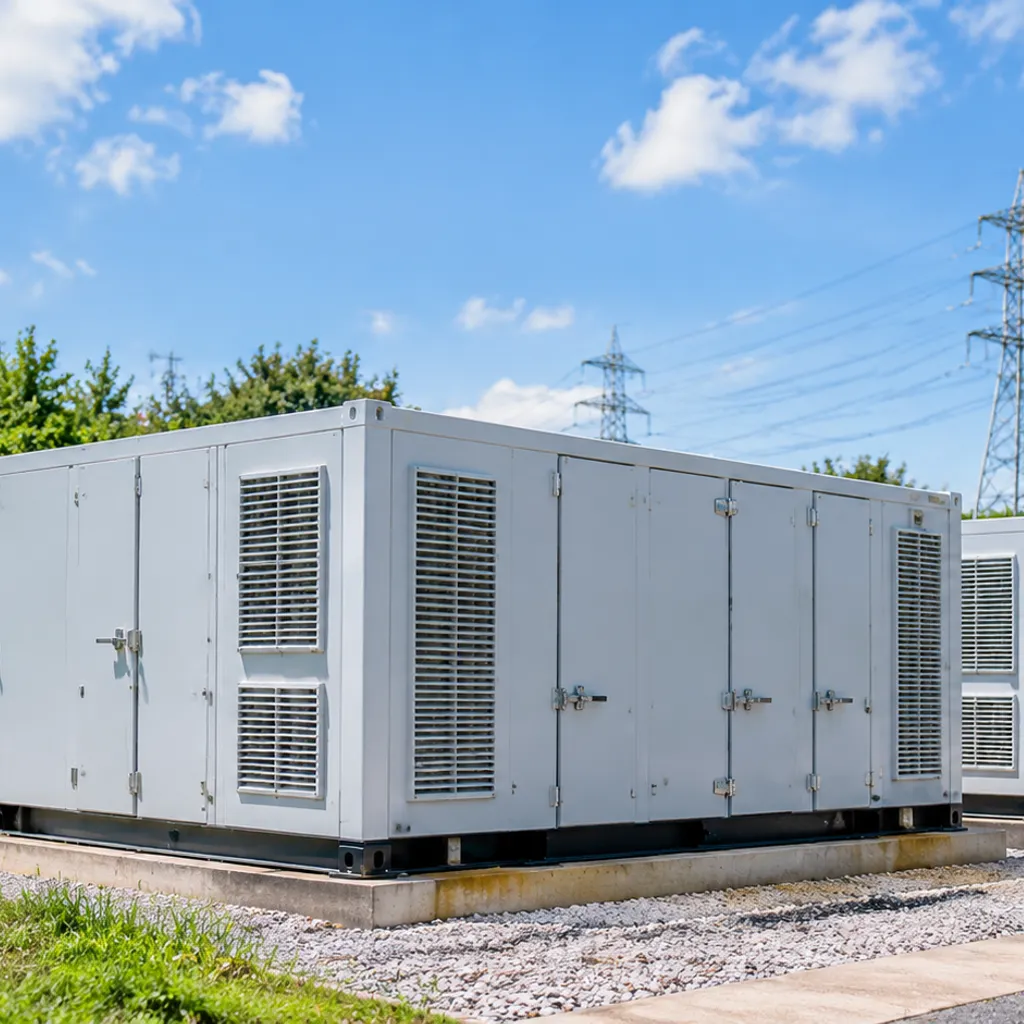
- Peak Shaving and Load Shifting: By deploying our utility-scale battery storage containers, industrial facilities can proactively manage peak demand charges and shift energy consumption to off-peak hours, significantly reducing operational overhead.
- Renewable Energy Buffering: Our BESS solutions mitigate the inherent intermittency of solar and wind inputs, ensuring a smooth, reliable, and consistent power injection into the grid.
- Ancillary Services: We strengthen grid resilience through critical ancillary services, including black-start capabilities for rapid recovery after outages and precise voltage support to protect local distribution infrastructure.
Percenec’s Technical Architecture
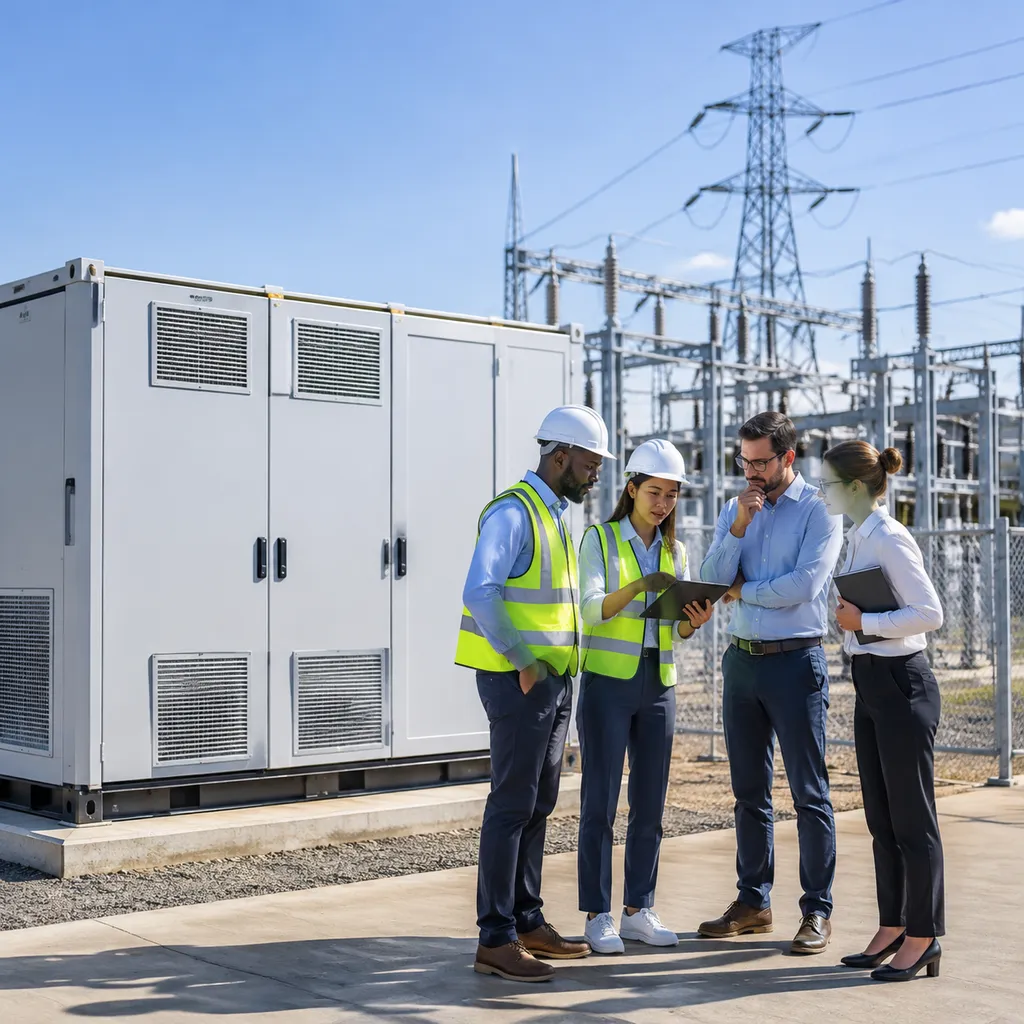
At Percenec, our architecture centers on high-safety Lithium Iron Phosphate (LFP) chemistry, which provides superior thermal stability and cycle life compared to traditional battery technologies. By integrating a commercial lithium battery energy storage system with BMS, we ensure that every cell operates within safe parameters through active, real-time balancing.
We engineer our solutions for harsh industrial environments, ensuring consistent performance regardless of external conditions. Our modular approach allows us to scale capacity precisely to meet your specific grid-tied requirements.
Key Technical Specifications
| Feature | Specification | Benefit |
|---|---|---|
| Battery Chemistry | Lithium Iron Phosphate (LFP) | Enhanced thermal safety and longevity |
| BMS Intelligence | Active Cell Balancing | Optimizes energy output and system health |
| Environmental Rating | IP54 / IP55 | Robust protection against dust and moisture |
| Design Architecture | Modular & Scalable | Flexible deployment for diverse C&I sites |
Our focus remains on the reliability of the entire system. By utilizing advanced thermal management and robust physical enclosures, we minimize operational risks and maximize the uptime required for frequency regulation and load management applications. This combination of hardware and software intelligence makes our battery energy storage system suppliers grid stability efforts both predictable and high-performing.
Intelligent Energy Management Systems (EMS) for Grid Stability
Our proprietary Energy Management System (EMS) serves as the digital intelligence behind every battery energy storage system (BESS) we deploy. By integrating advanced software with hardware infrastructure, we provide a factory energy management solution for real-time monitoring that ensures seamless synchronization with local grid requirements.
Precision Control and Optimization
The EMS acts as the central command, executing automated responses to maintain grid equilibrium. Our systems are engineered to handle complex dispatch signals, ensuring high reliability for industrial grid-scale energy storage. Key capabilities include:
- Dynamic Dispatch: Optimizes charge and discharge cycles based on real-time grid signals to maximize the economic and operational value of the installation.
- Automated Frequency Response: Delivers sub-second software responses to grid frequency fluctuations, providing the ancillary services necessary to maintain stability.
- Real-Time Data Analytics: Processes granular performance metrics to enable market-driven peak management and load shifting.
- Predictive Load Balancing: Leverages historical usage data to anticipate demand spikes, ensuring the system is prepared to mitigate stress on the grid during peak hours.
By automating these processes, our EMS minimizes human error and ensures the BESS operates at peak efficiency. This intelligence is critical for industrial facilities seeking to stabilize their local grid connection while lowering operational costs through intelligent peak shaving and efficient energy utilization.
The Percenec Turnkey Advantage: EPC & O&M

We simplify the complexities of energy infrastructure by providing a fully integrated approach to your projects. By choosing us as your partner for utility-scale turnkey storage systems, you eliminate the risks associated with fragmented supply chains and disjointed service providers. Our team manages the entire lifecycle of your asset, ensuring that technical specifications, site civil requirements, and grid compliance align seamlessly from day one.
Our comprehensive project delivery model covers:
- Integrated Engineering & Procurement: We handle the end-to-end design and sourcing of high-performance components to meet specific industrial load profiles.
- Civil Construction & Site Integration: Our experts manage on-site development, ensuring your infrastructure is built to support the weight and environmental demands of large-scale battery banks.
- Proactive O&M Strategies: We utilize remote monitoring and scheduled maintenance to ensure consistent performance.
This unified approach is essential for modern battery energy storage system suppliers grid stability efforts. By maintaining full oversight from initial design through to commissioning and long-term maintenance, we maximize system efficiency and reliability. Our commitment to operational excellence is driven by a singular goal: ensuring 99.9% system uptime for your critical industrial applications, keeping your facility resilient against grid volatility and demand spikes.
Compliance, Safety, and Global Standards
We prioritize comprehensive BESS protection and safety requirements throughout every stage of development. By aligning our hardware with global benchmarks, we ensure our solutions provide consistent performance while mitigating operational risks.
Standardized Safety and Performance Framework
| Standard | Focus Area | Benefit for Grid Stability |
|---|---|---|
| IEEE 1547 | Grid Interconnection | Ensures seamless, secure synchronization with the local utility network. |
| IEC 62477 | Power Electronics | Guarantees robust, reliable energy conversion during peak load events. |
| UL 9540A | Fire Safety | Validates thermal management effectiveness and minimizes system-wide risk. |
Our commitment to these standards ensures that every project functions as a stable, high-performance asset. By integrating these safety-first engineering practices, we provide the technical confidence necessary for modern grid-tied infrastructure.
Project Lifecycle: From Consultation to Commissioning
Step-by-Step Feasibility and Design
Our process begins with a comprehensive site assessment and feasibility study to align system capacity with your specific industrial demands. Before we finalize the architecture, we provide critical guidance on how to select BESS by evaluating your peak load profiles and frequency regulation needs. This foundational phase includes:
- Load Analysis: Identifying the exact storage requirements for effective peak shaving and load shifting.
- Custom System Engineering: Designing modular, scalable LFP configurations tailored to your facility's energy footprint.
- Regulatory Compliance: Mapping out the necessary standards for seamless grid interconnection.
On-Site Installation and Synchronization
We transition from design to physical deployment with a focus on precision and safety. Our EPC team executes the installation to maintain the integrity of our high-safety battery chemistry and climate-controlled enclosures.
- Integrated Procurement & Construction: Managing the delivery and installation of all core BESS components to meet strict project timelines.
- Rigorous Commissioning: Performing exhaustive testing of the Battery Management System (BMS) and thermal protection layers to ensure operational safety.
- Final Grid Synchronization: We oversee the technical handshake with grid operators, ensuring your facility is fully synchronized and ready to provide real-time frequency regulation and auxiliary grid services immediately upon activation.
Frequently Asked Questions on Grid-Scale Energy Storage
As we assist industrial partners in building more reliable power infrastructure, we often address specific technical inquiries regarding our solutions. Below are the core technical and operational advantages of our systems.
Understanding BESS Performance and Implementation
| FAQ Topic | Key Insight for Industrial Operations |
|---|---|
| Grid Stability | Acts as a buffer to balance supply and demand fluctuations, providing sub-second frequency regulation. |
| LFP Safety | Utilizes Lithium Iron Phosphate (LFP) for superior thermal stability compared to alternative chemistries. |
| Real-Time Dispatch | Our EMS autonomously triggers charge and discharge cycles based on grid demand signals. |
| Turnkey EPC | Provides unified accountability from initial engineering design through final maintenance. |
Technical Capabilities Explained
How does a battery energy storage system improve grid stability?
Our systems improve grid reliability by acting as a dynamic resource. When the grid experiences excess demand, the utility-scale battery energy storage system injects stored power instantly, providing frequency regulation and peak shaving. This prevents the operational disruptions often caused by power intermittency in renewable energy integration.
What makes LFP chemistry safer for utility-scale applications?
Lithium Iron Phosphate (LFP) is the industry standard for high-safety installations. It features a robust thermal profile and high structural integrity, significantly reducing the risk of thermal runaway. When paired with our active battery management system (BMS), it provides the most secure foundation for industrial power reliability.
How does the EMS manage real-time power dispatching?
The Advanced Energy Management System (EMS) serves as the intelligence layer of the project. It monitors grid frequency and facility load in real-time, executing automated commands to either store surplus energy or deploy it when utility rates peak or grid stability is compromised.
What are the benefits of choosing a turnkey EPC supplier for energy projects?
Managing the entire project lifecycle—from engineering and procurement to construction and commissioning—ensures a seamless transition between project phases. By consolidating these services under one turnkey EPC energy storage provider, we eliminate the communication gaps found in fragmented supply chains, resulting in higher system uptime and reduced operational risk.