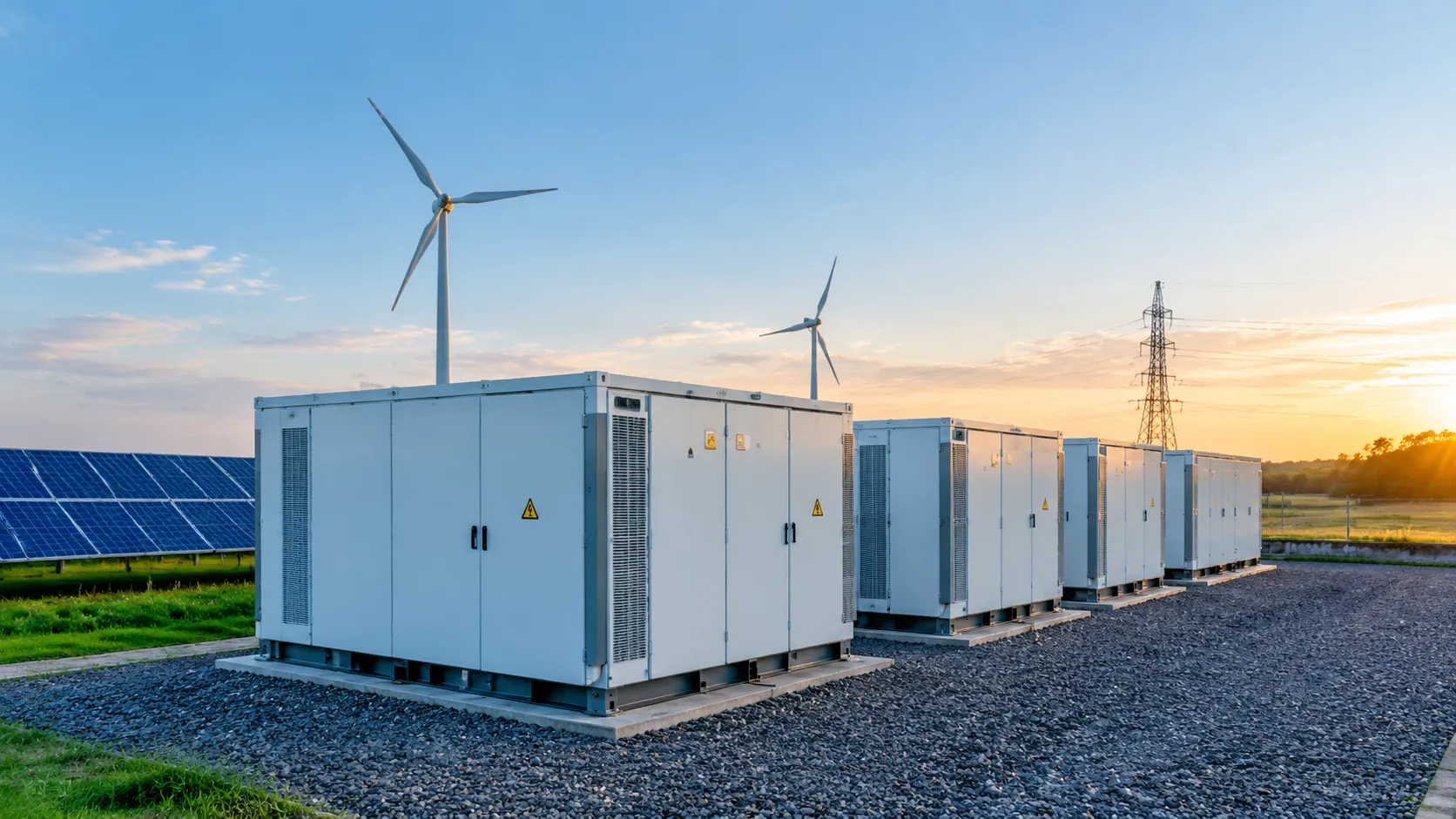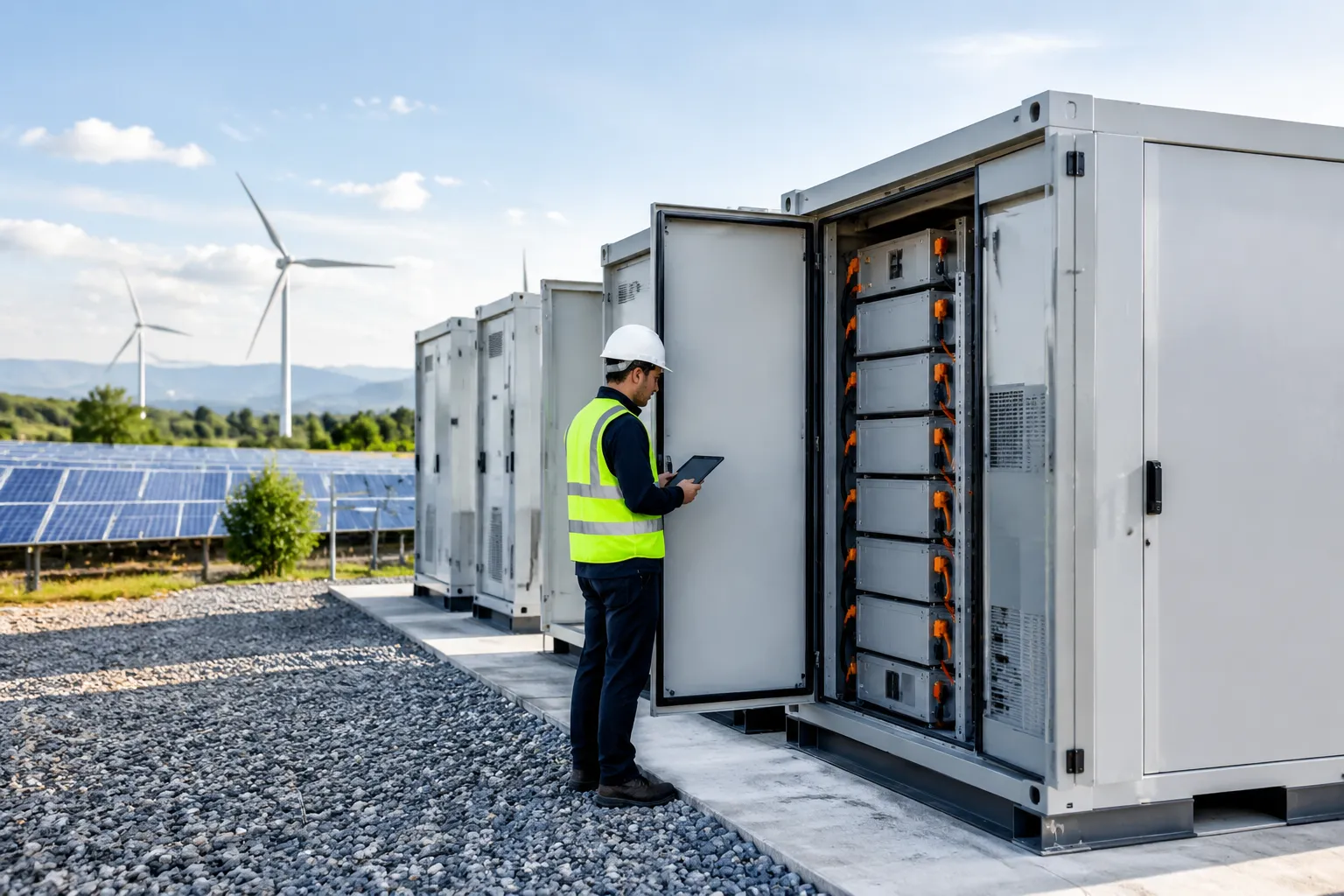
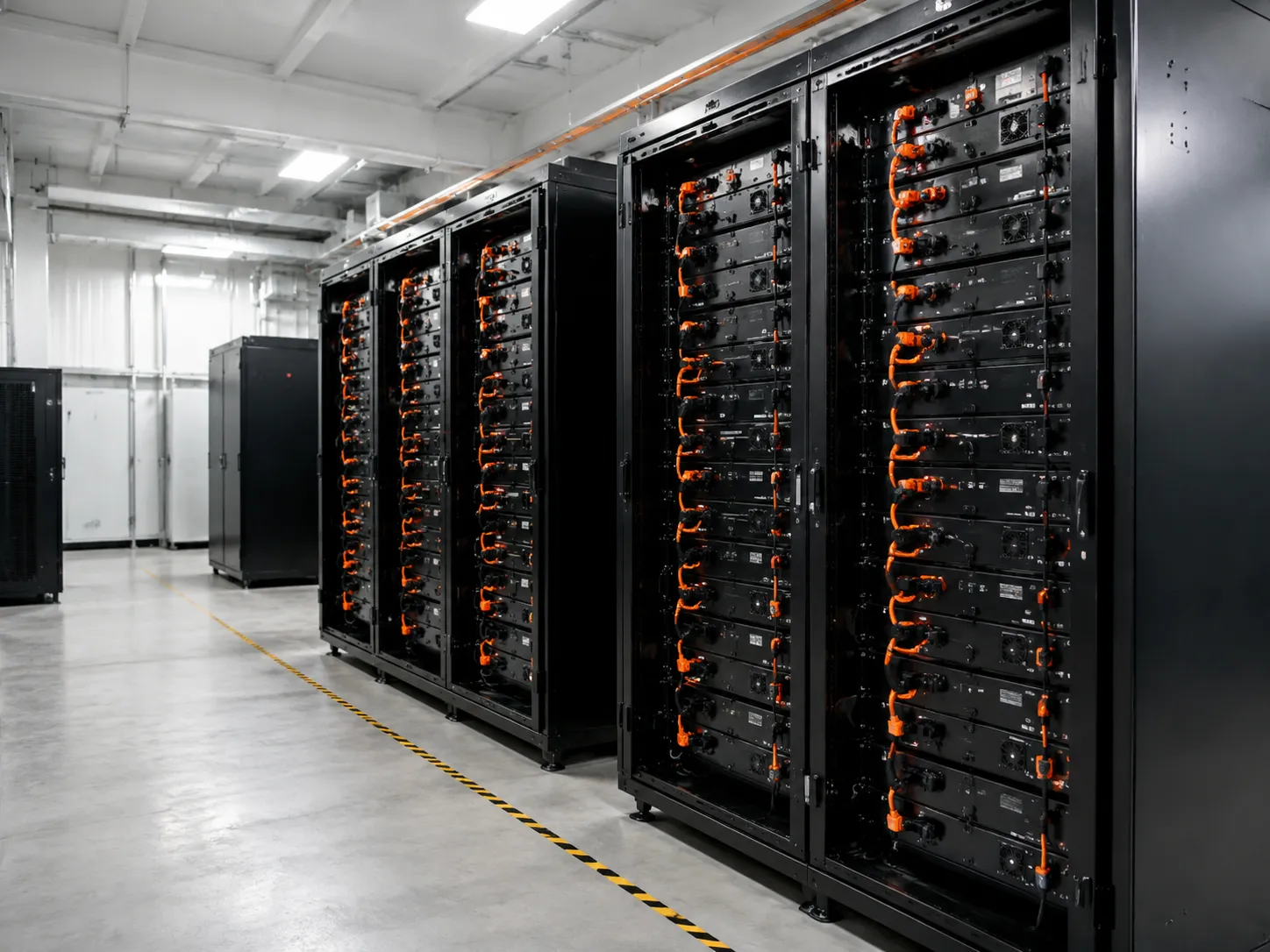
Selecting the right battery energy storage system bess manufacturers can make or break your project's long-term ROI, safety compliance, and grid performance.
With dozens of vendors claiming tier-1 status—ranging from multi-MWh utility containers to compact C&I systems—cutting through the technical specs isn't easy.
Whether you need proven LFP battery chemistry, strict UL 9540 and NFPA 855 fire safety certifications, or advanced microgrid software, this updated 2026 guide breaks down the industry's top BESS suppliers so you can procure with total confidence.
Let's dive right in.
What a Battery Energy Storage System Manufacturer Actually Does
As leading battery energy storage system BESS manufacturers, our role extends far beyond simply assembling battery cells. A true energy storage partner delivers a fully integrated, turnkey asset engineered to operate reliably under demanding grid and commercial conditions. We bridge the gap between electrochemistry and power grid integration, controlling the entire architecture to guarantee maximum performance, safety, and longevity.
Beyond Battery Cells: The Full BESS Scope
A complete BESS is a sophisticated, multi-layered ecosystem. We design and manufacture each subsystem to work in perfect synchronization:
- Battery Modules and Packs: High-density, robust cell assemblies optimized for maximum thermal dissipation, electrical isolation, and structural integrity.
- Battery Management System (BMS): A multi-tiered architecture that continuously monitors voltage, current, and temperature at the cell, pack, and system level to prevent operational anomalies.
- Energy Management System (EMS): The brain of the operation, executing intelligent control algorithms for peak shaving, demand response, microgrid balancing, and grid trade optimization.
- Power Conversion System (PCS): High-efficiency, bi-directional inverters that manage seamless DC-to-AC power conversion and rapid grid response.
- Thermal Management: Precision air or liquid cooling systems designed to maintain optimal operating temperatures across all cells, extending cycle life.
- Fire Protection and Enclosure Design: Custom-engineered, weather-proof enclosures (NEMA 3R / IP55) equipped with multi-stage fire detection, off-gas monitoring, and automated suppression systems.
Why Manufacturer Capability Matters
When evaluating BESS suppliers, engineering capability directly dictates project bankability and operational ROI. Controlling the manufacturing process from end to end yields distinct project advantages:
| Key Advantage | Operational Impact |
|---|---|
| Performance Consistency | Standardized cell matching and pack assembly deliver predictable energy output and lower degradation rates over thousands of cycles. |
| System Safety | Deep integration between the BMS, thermal controls, and physical fire barriers minimizes thermal runaway risks at the root. |
| Deployment Speed | Pre-commissioned, factory-tested containerized systems drastically reduce on-site engineering, wiring, and installation timelines. |
| Integration Reliability | Native communication between the PCS, BMS, and EMS eliminates protocol incompatibilities and costly field troubleshooting. |
| Long-Term Serviceability | Direct access to original components, firmware updates, and factory technical support simplifies ongoing operation and maintenance (O&M). |
Why Businesses Are Searching for BESS Manufacturers Now
Rising Demand for Energy Resilience
- Peak Demand Pressure: Utilities charge extreme premiums during peak operating hours, drastically driving up monthly operating costs.
- Grid Instability: Extreme weather events and aging transmission networks cause frequent voltage sags, brownouts, and sudden blackouts.
- Renewable Energy Integration: Solar and wind power are intermittent; systems need rapid-response storage to smooth out generation curves.
- Backup Power Needs: Businesses are replacing noisy, high-maintenance diesel generators with instantaneous, zero-emission battery power.
Core Business Drivers Behind BESS Adoption
Deploying modern energy storage turns power management into a predictable, revenue-generating strategy:
| Business Driver | Operational Mechanism | Key Benefit |
|---|---|---|
| Peak Shaving | Automatically discharges stored energy when facility power draw spikes. | Unlocks the direct benefits of peak shaving for lower energy costs. |
| Demand Charge Reduction | Clamps peak power draw below utility-mandated capacity thresholds. | Cuts heavy demand charges on monthly electric bills. |
| Solar Self-Consumption | Captures unused daytime solar power for deployment during peak evening hours. | Eliminates waste and maximizes existing solar investment returns. |
| Energy Arbitrage | Charges the system when off-peak electricity prices are lowest; discharges during peak rates. | Capitalizes on dynamic, time-of-use utility tariffs. |
| Microgrid & Backup Support | Transitions critical facility loads into island mode instantly during a blackout. | Utilizes scalable microgrid energy storage for 100% operational uptime. |
| EV Fast-Charging Support | Buffers high-voltage power spikes caused by ultra-fast EV chargers. | Prevents costly, time-consuming utility grid infrastructure upgrades. |
Types of Systems Offered by Battery Energy Storage System BESS Manufacturers
Commercial and Industrial (C&I) BESS
We build commercial battery storage systems tailored for energy-intensive operations, including factories, logistics hubs, retail complexes, data centers, and corporate campuses.
- Peak Shaving & Demand Charge Reduction: Automatically caps high demand spikes to minimize monthly utility penalties.
- Solar Self-Consumption: Stores excess onsite generation for use during high-cost peak tariff hours.
- Operational Continuity: Protects sensitive machinery and processing lines from utility power sags and outages.
Deploying our advanced commercial and industrial backup power systems ensures your facility reduces energy expenditure while maintaining full power resilience.
Grid-Scale and Utility-Scale BESS
Utility-scale energy storage forms the foundation of modern grid stabilization and clean energy integration. Designed for multi-MWh power plants, these systems balance renewable intermittent generation and maintain grid frequency.
- Renewable Smoothing: Buffers solar and wind ramp rates to feed smooth, predictable power into the grid.
- Frequency & Voltage Regulation: Responds within milliseconds to keep grid frequency stabilized.
- Grid Support: Delivers rapid energy discharge during emergency capacity shortages.
Our factory-assembled utility-scale battery storage containers for solar and wind provide rapid deployment and maximum energy density for utility operators and IPPs.
Microgrid and Backup Power Systems
When primary grid power fails, microgrid energy storage solutions keep critical infrastructure operational.
- Seamless Switchover: Switches from grid-tied to island mode in milliseconds, preserving uptime.
- Island Mode Operation: Operates independently alongside local diesel generators or renewable assets.
- Critical Load Protection: Prevents costly operational downtime for mission-critical facilities.
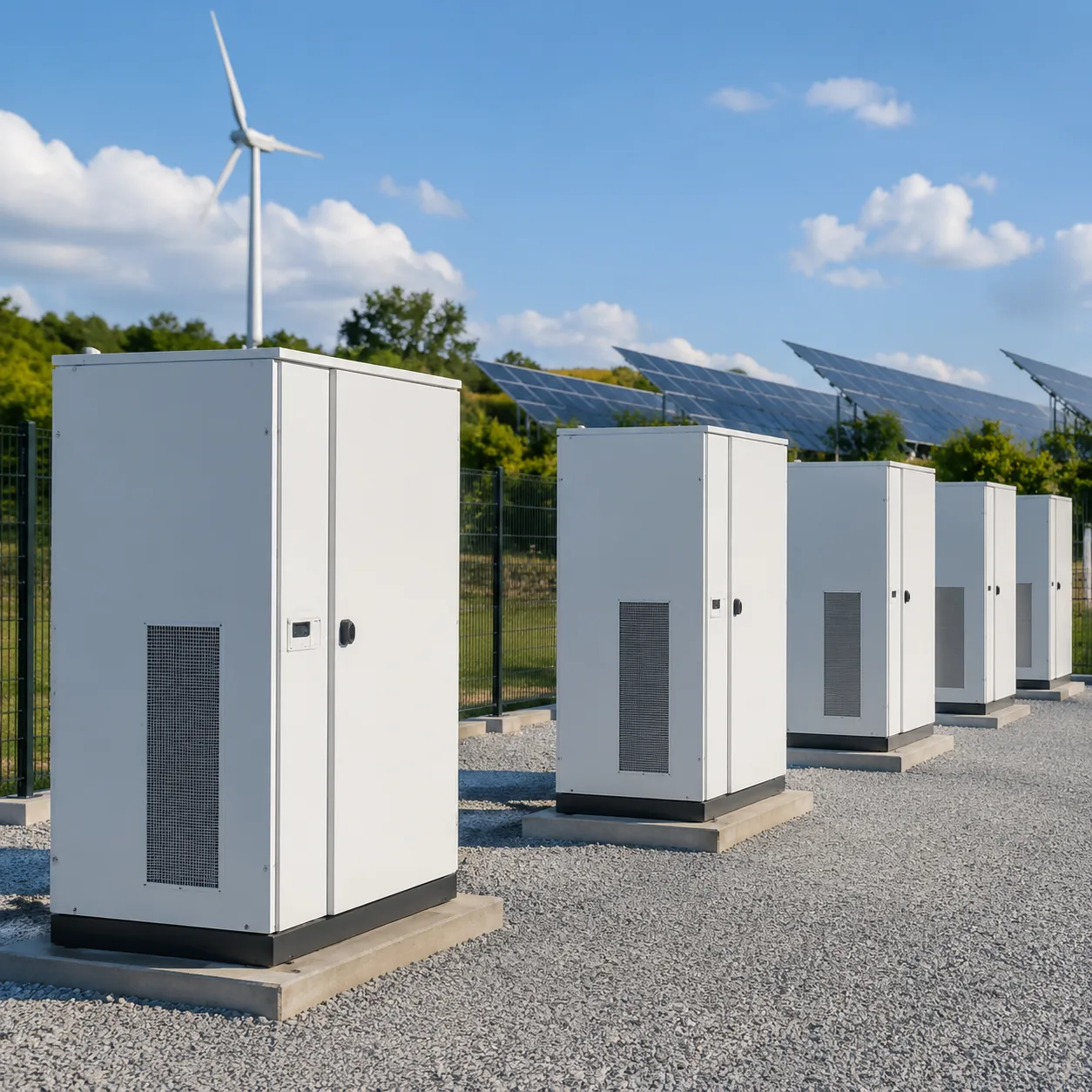
Format Comparison: Cabinets, Racks, and Containers
Selecting the right physical configuration depends on your available footprint, voltage targets, and environmental requirements.
| System Format | Typical Capacity | Ideal Applications | Key Advantages |
|---|---|---|---|
| Modular Cabinets | 50 kWh – 250 kWh | Small commercial sites, retail, urban buildings | Minimal footprint, plug-and-play setup, low sound output |
| Rack Systems | Scalable (50 kWh+) | Server rooms, indoor industrial plants | High architecture flexibility, easy cell maintenance, modular expansion |
| Containerized BESS | 1 MWh – 5 MWh+ | Large industrial complexes, solar farms, substations | Heavy-duty outdoor enclosure, fast installation, integrated HVAC & fire safety |
Key Factors to Compare When Evaluating Battery Energy Storage System BESS Manufacturers
Evaluating battery energy storage system BESS manufacturers requires a clear focus on long-term safety, modular scalability, and proven field reliability. Selecting the right supplier involves looking past upfront equipment costs to verify technical design, compliance, and ongoing service support.
Product Scalability and System Architecture
Modern energy projects demand hardware that scales seamlessly without requiring full engineering overhauls.
- Expansion Flexibility: Look for system designs that expand effortlessly from kilowatt-hour (kWh) commercial units to multi-megawatt-hour (MWh) containerized utility blocks.
- Parallel Architecture: A modular parallel system architecture prevents single points of failure, allowing individual strings or racks to isolate for maintenance while keeping the main system online.
- Footprint Efficiency: High-density cabinet and enclosure layouts minimize space requirements without compromising thermal airflow or maintenance clearance.
Battery Chemistry Selection
Choosing the proper cell chemistry dictates safety boundaries, thermal characteristics, and system longevity.
| Feature | Lithium Iron Phosphate (LFP) | Alternative Chemistries (e.g., NMC) |
|---|---|---|
| Thermal Stability | High resistance to thermal runaway (>270 °C) | Lower thermal runaway threshold |
| Cycle Life | $6,000–10,000+$ cycles | $2,000–4,000$ cycles |
| Safety Profile | Extremely stable, low risk of fire propagation | Higher energy density, requires stricter cooling |
| Best Application | Stationary C&I and grid-scale storage | Space-constrained specialty deployments |
LFP remains the industry gold standard for stationary storage due to its exceptional operational safety profile and cycle performance. You can review our technical breakdown on lithium iron phosphate battery system safety and cycle life to evaluate how chemistry choices impact project lifetime economics.
Multi-Layer Safety Architecture
Safety design must be embedded at every layer of the hardware stack—from individual cells to the full enclosure.
- Cell and Pack Level Monitoring: Real-time tracking of voltage, current, and temperature at every cell prevents localized stress.
- Early Off-Gas Detection: Advanced sensor arrays detect battery venting minutes before thermal runaway occurs. We partner closely with specialized battery storage fire detection suppliers with off-gas sensor technology to ensure instant automated shutdown warnings.
- Active Fire Suppression: Integrated clean-agent gas systems (NFPA 2001) paired with localized aerosol or water deluge backups isolate fires before they spread.
Essential Certifications and Compliance
Never shortlist a manufacturer without full, verifiable third-party testing documentation.
- UL 9540A: Validates thermal runaway fire propagation prevention at the unit, module, and system level.
- UL 1973: Confirms battery safety for stationary energy applications.
- IEC 62619: Covers safety requirements for industrial secondary lithium cells and modules.
- UN 38.3 & CE: Ensures safe international transport and European electrical compliance.
- NFPA 855 Compatibility: Critical for meeting local fire codes, set-back distances, and enclosure spacing requirements.
Warranty and Lifecycle Support
A BESS manufacturer must stand firmly behind their product performance for a decade or more.
- Performance Guarantees: Ensure clear capacity retention terms (e.g., 70% capacity at $10$ years or $6,000$ cycles) backed by throughput limits ($MWh$ cycled).
- O&M and Response Times: Verify guaranteed SLA response times for technical support and on-site field maintenance.
- Spare Parts Availability: Confirm local warehousing of critical components like BMS boards, contactors, and inverter modules to prevent prolonged downtime.
Bankability and Project Credibility
A manufacturer’s financial standing is just as critical as their engineering capabilities. Top-tier tier-1 manufacturers demonstrate proven deployment track records across multi-MWh sites, robust balance sheets to honor long-term warranty obligations, and extensive global delivery experience across varying grid environments.
Crucial Technical Specs to Request from Battery Energy Storage System (BESS) Manufacturers
Before shortlisting battery energy storage system bess manufacturers, we always advise requesting granular technical data sheets to verify real-world field performance and safety. Relying on vague product summaries leads to costly integration delays and unexpected capacity fading.
Core Electrical & Performance Metrics
Demand factory-certified test reports verifying the system's baseline electrical output under actual grid operating conditions:
| Parameter | Target Benchmark | Commercial & Utility Impact |
|---|---|---|
| Round-Trip Efficiency (RTE) | ≥ 88% – 92% (AC-to-AC) | Minimizes parasitic losses during energy arbitrage |
| Cycle Life & DoD | ≥ 6,000 cycles @ 80% Depth of Discharge | Ensures a reliable 10–15 year operational lifespan |
| Response Time | < 100 ms | Crucial for fast frequency response and seamless switchover |
| Operating Temp Range | -20°C to +55°C | Guarantees full output without derating in extreme climates |
Thermal Management Architecture
Thermal design directly governs safety, degradation rates, and overall energy density.
- Liquid Cooling vs. Air Cooling: High-density cabinet and container systems require liquid cooling to maintain cell-to-cell temperature deltas within 3°C. Air cooling works well for light C&I applications, but liquid cooling delivers superior heat transfer efficiency.
- Temperature Uniformity: Balanced thermal dissipation prevents localized hotspots and premature aging across the entire pack, which is vital for long-term reliability in an outdoor battery energy storage system.
Advanced Monitoring & Control Capabilities
A complete BESS asset must provide deep visibility down to the individual cell level.
- Granular Data Telemetry: Real-time tracking of State of Charge (SOC), State of Health (SOH), cell voltage, and module thermal profiles.
- Remote Analytics & Diagnostics: Cloud-based predictive maintenance, automated alarm triggers, and remote over-the-air (OTA) updates.
- Energy Management Integration: Deploying a multi-layered factory energy management solution for real-time monitoring ensures intelligent load management and maximum demand charge reduction.
Integration Readiness & Protocol Compatibility
Your storage system must interface smoothly with existing facility hardware and utility control networks without expensive custom engineering.
- Industrial Communications: Native support for Modbus TCP, CAN bus, and DNP3 protocols.
- System Interoperability: Open API architecture for simple integration into SCADA networks, Building Management Systems (BMS), and microgrid controllers.
How to Evaluate Battery Energy Storage System BESS Manufacturers
Automated Manufacturing and Quality Control
High-capacity energy storage demands precision assembly. Minor variances in module assembly lead to cell imbalance, premature degradation, and safety risks.
- Factory Automation: Robotic cell sorting, automated laser welding, and precision torque tightening maintain cell-to-cell consistency across large rack configurations.
- Quality Control Systems: Multi-stage inspection checkpoints—from incoming raw material validation to final high-voltage burn-in testing—guarantee zero-defect production.
- Production Consistency: Adherence to international quality certifications and standards ensures every manufactured enclosure meets identical electrical and structural benchmarks.
Factory Acceptance Testing (FAT) and System Validation
A reliable manufacturer tests complete, integrated systems before shipping—not just standalone components.
- Standardized FAT Process: Complete functional testing including full charge/discharge cycling, rated power output checks, and response-time verification.
- Safety System Verification: Real-time simulation of thermal events, off-gas sensor triggers, BMS alarm cutoffs, and fire suppression releases.
- Documentation Package: Delivery of detailed factory test reports, single-line diagrams (SLD), and compliance records required for local utility interconnect approvals.
| Evaluation Area | Key Inspection Criteria | Target Benchmark |
|---|---|---|
| Manufacturing | Automation degree & inline QA | ISO 9001 certified, automated cell grading |
| System Testing | Full-load Factory Acceptance Testing | 100% FAT completion with full-power burn-in |
| Supply Chain | Cell chemistry & supplier tier | Tier-1 LFP cell direct supply contracts |
| Field Support | Service Level Agreement (SLA) | On-site response within 24 hours & 24/7 telemetry |
Supply Chain Resilience and Global Delivery
Top-tier BESS suppliers mitigate project delays through direct control over core component sourcing and logistics pipelines.
- Tier-1 Cell Sourcing: Direct long-term agreements with top-tier LFP cell producers guarantee batch uniformity, traceable cell provenance, and reliable warranty backing.
- Module Consistency: Strict cell matching prevents capacity bottle-necking across large parallel battery strings.
- Predictable Logistics: Managed global freight channels and pre-integrated shipping formats shorten delivery lead times and reduce site handling costs.
After-Sales Service and O&M Support
The relationship with a manufacturer extends well past delivery. Comprehensive lifecycle management protects capital investment across a 15- to 20-year operational lifespan.
- Turnkey Commissioning: Field engineering support on site during final energization, utility synchronization, and microgrid controller integration.
- 24/7 Remote Monitoring: Cloud-connected telemetry continuously tracks state-of-charge (SOC), state-of-health (SOH), module temperatures, and system efficiency.
- Structured Maintenance Plans: Defined preventive maintenance intervals, localized spare parts inventory, and guaranteed technical response windows minimize operational downtime.
What Industries Benefit Most from BESS Manufacturers
Manufacturing and Industrial Facilities
High energy usage and severe demand charges make industrial facilities primary candidates for energy storage integration.
Peak Demand Control: Automatically cap power draw during peak utility hours to drop demand charges.
Load Shifting: Leverage automated peak shaving and load shifting to store low-cost off-peak power and release it when utility rates spike.
Power Quality Support: Mitigate voltage sags, harmonics, and momentary interruptions that cause machinery downtime.
Commercial Buildings and Campuses
Commercial real estate, retail centers, and educational campuses face rising electricity bills and strict sustainability targets.
Utility Bill Reduction: Flatten facility load profiles to secure predictable monthly operational expenses.
Backup Resilience: Maintain critical facility functions, lighting, and security systems during grid outages.
Solar Optimization: Store excess daytime solar power for evening use, accelerating payback on onsite clean energy systems.
Logistics and Cold Storage
Cold storage operations and logistics hubs run high, constant baseline loads where even brief power failures risk massive inventory loss.
High-Load Operations: Manage high continuous cooling and EV fleet charging loads without overloading local grid capacity.
Reliability and Cost Savings: Protect temperature-sensitive goods while cutting facility energy spend.
Fast Payback Potential: Combine peak shaving with demand response programs for rapid system payback.
Data Centers and Critical Infrastructure
Uninterrupted operation is mandatory for data infrastructure, where a fraction of a second in power loss causes catastrophic downtime.
Uptime Protection: Provide instantaneous power transfer to eliminate disruption to server racks.
Emergency Power Support: Act as a primary emergency bridge to buy time for generator startup.
Grid Event Resilience: Isolate sensitive electronic equipment from grid brownouts and frequency fluctuations.
Utilities and Renewable Developers
For utilities and renewable energy developers, energy storage systems provide essential grid balance and capacity expansion.
Solar and Wind Smoothing: Buffer intermittent generation output to deliver steady, dispatchable green power.
Frequency Regulation: Deliver sub-second active power adjustments to keep localized grid frequency stable.
Grid Support Applications: Upgrade virtual grid capacity and defer expensive physical substation investments.
Pricing Considerations When Working with BESS Manufacturers
BESS pricing is rarely a single static number. Every project requires tailored engineering, meaning equipment costs vary based on site requirements, system architecture, and operational goals. When evaluating quotes from battery energy storage system bess manufacturers, understanding how technical choices translate into long-term financial returns is essential for accurate budget forecasting.
Why BESS Pricing Is Rarely One-Size-Fits-All
| Pricing Driver | Direct Impact on Project Cost |
|---|---|
| Project Scale & Density | Larger MWh deployments lower the per-kWh cost, though custom footprints add site engineering overhead. |
| Battery Chemistry | LFP (Lithium Iron Phosphate) offers superior safety and extended cycle life at a competitive, predictable price point. |
| Enclosure & Thermal Architecture | Liquid-cooled outdoor enclosures cost more upfront than basic air-cooled racks but extend asset life significantly. |
| Safety & Code Compliance | Integrated explosion venting, off-gas detection, and NFPA 855-compliant fire suppression add direct hardware value. |
| Integration Scope | Turnkey systems incorporating BMS, PCS, and EMS carry higher initial hardware costs but drastically lower site labor. |
What Affects Total Cost of Ownership
The purchase price of hardware represents only a portion of your total investment. Evaluating total cost of ownership (TCO) ensures accurate ROI projections over a 15- to 20-year operational window.
- Installation & Commissioning: Site preparation, concrete pads, high-voltage wiring, transformer integration, and grid interconnect testing.
- Operations & Maintenance (O&M): Scheduled maintenance, thermal management servicing, remote monitoring, and rapid-response field support.
- Degradation & Augmentation: All lithium systems experience capacity loss over time. Factoring in planned cell augmentation at year 7 or 10 maintains guaranteed energy capacity. Reviewing clear containerized energy storage system specifications helps clarify initial degradation curves and long-term sizing needs.
- Auxiliary Power Losses: Liquid cooling systems and controls draw power, which affects net system efficiency and daily operating revenue.
How Buyers Should Compare Quotes
Comparing vendor proposals requires looking beyond the baseline hardware price tag ($/kWh).
- Scope Transparency: Verify whether quotes include balance of plant (BOP), factory acceptance testing (FAT), freight, and site commissioning support.
- Warranty Terms & Throughput: Compare warranty length against maximum annual cycle limits, throughput capacity, and guaranteed end-of-life (EOL) retention.
- Integrated vs. Component Sourcing: Selecting an integrated commercial lithium battery energy storage system with BMS reduces field integration risks and accelerates commissioning timelines compared to piecemeal sourcing.
- Lifecycle Financial Modeling: Calculate net present value (NPV) using round-trip efficiency (RTE), auxiliary loads, and degradation rates rather than focusing strictly on initial CAPEX.
Mistakes to Avoid with Battery Energy Storage System BESS Manufacturers
| Common Buyer Mistake | Hidden Technical Risk | Operational Impact |
|---|---|---|
| Focusing solely on upfront price | Substandard battery cells, weak structural design, and missing safety features. | Higher degradation, frequent failures, and early system replacement. |
| Ignoring integration requirements | Incompatible communication protocols between system components. | Delayed commissioning and erratic control loop responses. |
| Overlooking safety documentation | Missing UL 9540A test reports or incomplete thermal runaway validation. | Permitting rejections from local Fire Marshals (AHJ). |
| Not verifying project references | Unproven field track record under real grid operating conditions. | Unpredictable performance during peak demand hours. |
| Underestimating service needs | Lack of localized technical support, spare parts, or O&M contracts. | Extended system downtime during critical grid events. |
Critical Pitfalls in BESS Procurement
- Buying on CapEx Alone: Low initial bids usually mean compromised component quality or missing long-term support. Lower upfront costs quickly disappear when early cell degradation and unexpected downtime destroy project economics.
- Ignoring Software Integration Protocols: Your energy storage hardware must communicate effortlessly with facility controls. Failing to plan for robust BMS and EMS integration leads to serious communication bottlenecks between the power conversion system (PCS), battery management system, and onsite energy management controls.
- Overlooking Safety Documentation & Compliance: Never assume compliance. Missing UL 1973, UL 9540A, or NFPA 855 safety documentation can completely stall project permitting. Review our comprehensive BESS buying guide to verify critical compliance checklists before committing to a contract.
- Skipping Real-World Track Record Verification: Lab testing cannot replace actual site performance. Unverified BESS suppliers often struggle with extreme thermal conditions and aggressive cycle profiles once installed.
- Disregarding Long-Term O&M Support: An energy storage deployment is a 10-to-15-year operational asset. Without guaranteed response times, available spare parts, and remote diagnostic coverage, minor fault events can shut down operations for weeks.
How to Shortlist the Right BESS Manufacturer

Define Your Project Parameters
Before contacting BESS suppliers, map out your site and operational requirements:
- Primary Application: Specify whether you need peak shaving, demand charge reduction, solar-plus-storage integration, or emergency backup power.
- Capacity & Power Requirements: Determine required power output (kW/MW) and storage duration (kWh/MWh).
- Site & Environmental Conditions: Note footprint limitations, ambient temperature swings, seismic ratings, and enclosure needs.
- Compliance Requirements: Identify necessary local utility grid codes, NFPA 855 clearance rules, and site-level safety mandates.
- Budget & Financing: Define upfront capital expenditure (CapEx) against long-term operational expenditure (OpEx) targets.
BESS Supplier Evaluation Matrix
Use this checklist to evaluate and compare top commercial battery storage manufacturers:
| Selection Criteria | Key Technical & Commercial Factors | Impact on Project Success |
|---|---|---|
| Certifications | UL 9540A, UL 1973, IEC 62619, UN 38.3 | Guarantees safety compliance and smooth utility interconnection. |
| System Architecture | Cabinet, rack, or containerized modular design | Dictates footprint flexibility and future expansion capability. |
| Battery Chemistry | Lithium Iron Phosphate (LFP) | Delivers superior thermal stability and long cycle life for high-use systems. |
| Delivery & Logistics | Lead times, factory capacity, shipping channels | Minimizes site delays during installation phases. |
| Warranty & Service | 10+ year capacity retention guarantees, SLA response | Protects asset value and ensures ongoing revenue availability. |
To streamline installation and mitigate operational risks, we always recommend reviewing a supplier's complete turnkey BESS project delivery process before signing hardware agreements.
Essential Questions for Storage Manufacturers
When shortlisting industrial energy storage solutions providers, ask these targeted technical and commercial questions:
- Scalability: Can your system architecture expand in parallel from kWh to multi-MWh without replacing the central Energy Management System (EMS)?
- Protocol Support: Which native communication protocols (Modbus TCP, CAN, SCADA, Open API) are available for building management system integration?
- Lifecycle Performance: What is the projected cycle life at 80% Depth of Discharge (DoD) under standard operating temperatures?
- Safety Integration: How do your multi-layer BMS, off-gas detection, and thermal runaway mitigation systems operate together during a thermal event?
- Commissioning Scope: Does your delivery scope include Factory Acceptance Testing (FAT), site commissioning, and on-site operator training?
Why Percenec Energy Is a Strong Partner for BESS Projects
Selecting the right partner among battery energy storage system bess manufacturers comes down to evaluating core engineering capability, safety standards, and long-term project execution. We design, engineer, and manufacture BESS solutions engineered to withstand demanding operational conditions while maximizing lifetime financial ROI.
In-House Manufacturing and Engineering Capability
We deliver modular, high-efficiency equipment tailored to specific site conditions and utility interconnection requirements:
C&I and Grid-Scale Systems: High-density hardware ranging from modular energy storage cabinets for commercial facilities to multi-megawatt containerized grid assets.
Smart Inverter Systems: Integrated PCS technology ensuring sub-second response times, precise power conditioning, and high round-trip efficiency.
Microgrid Controller Integration: Advanced control algorithms that coordinate solar PV, diesel gensets, and battery systems seamlessly.
Uncompromised Safety and Performance Focus
Safety and long service life are built directly into our hardware and software architecture:
LFP-Based Systems: Lithium iron phosphate chemistry selected for superior thermal stability, extended cycle life, and zero risk of thermal runway propagation.
Multi-Layer BMS Architecture: Continuous monitoring at the cell, module, and system levels to prevent overcharge, overdischarge, and electrical stress.
Smart Thermal Management: Precision liquid-cooling systems that maintain optimal cell temperatures, minimizing thermal gradients and slowing capacity degradation.
Fire Protection Design: Multi-stage off-gas and smoke detection paired with integrated aerosol or clean-agent fire suppression systems built to strict NFPA safety guidelines.
End-to-End Turnkey Project Delivery
We handle every phase of your deployment through our specialized team and custom ESS integration capabilities:
1. Site Assessment: Detailed load profiling, utility rate analysis, and payback modeling.
2. Engineering & Design: System sizing, electrical schematics, mechanical layouts, and local permitting support.
3. Production & Factory Acceptance Testing (FAT): Automated assembly and rigorous pre-shipment performance testing.
4. Deployment & Commissioning: On-site installation oversight, control integration, and grid interconnection testing.
5. 24/7 O&M Support: Continuous cloud monitoring, predictive maintenance, and local technical service teams.
Purpose-Built for Real Business Outcomes
Our energy storage solutions directly target operating expense reductions and asset resilience:
Peak Shaving: Automatically discharge energy during high-tariff periods to slash demand charges.
Backup Power Reliability: Seamless island mode switchover keeps critical machinery and facility operations running during grid outages.
Solar Self-Consumption: Store excess daytime solar generation for use during evening peak hours.
EV Charging Support: Buffer high power spikes caused by fast-charging infrastructure without requiring costly utility transformer upgrades.
Frequently Asked Questions About BESS Manufacturers
What is the difference between a BESS manufacturer and a BESS integrator?
A direct manufacturer engineers and produces core hardware and software components—including battery packs, management systems, and enclosures—providing single-source accountability and direct warranty backing. An integrator sources separate components from multiple vendors to assemble a package. Working directly with established battery energy storage system BESS manufacturers ensures tighter hardware-software optimization, streamlined service, and lower long-term risk.
How do I know if a manufacturer is bankable?
Bankability reflects financial stability and proven field reliability. Tier-1 project lenders evaluate BESS suppliers using specific operational benchmarks:
| Evaluation Metric | Target Benchmark |
|---|---|
| Track Record | Multi-gigawatt-hour global deployment history |
| Warranty Backing | Non-cancellable, third-party insurance coverage |
| Certifications | Complete UL and IEC test report packages |
| Financial Health | Audited balance sheets and solid liquidity ratios |
What certifications should a commercial BESS have?
To ensure system safety, grid compliance, and straightforward local permitting, demand the following certifications:
UL 9540 & UL 9540A: Essential for system-level safety and full-scale thermal runaway fire testing.
UL 1973 & IEC 62619: Core safety standards for stationary battery modules and packs.
UN 38.3: International transportation safety compliance for lithium modules.
IEEE 1547 / UL 1741 SB: Mandatory interconnection and smart inverter standards for utility grid tie-in.
For more details on compliance standards and technical parameters, refer to our comprehensive BESS FAQ repository.
Is LFP still the best chemistry for most projects?
Yes. Lithium iron phosphate battery storage (LFP) remains the optimal choice for stationary commercial and grid applications. LFP delivers exceptional thermal stability, eliminates thermal runaway risks associated with cobalt-based formulations, delivers cycle lives exceeding 6,000 to 8,000 cycles, and offers superior levelized cost of storage (LCOS).
How long does a typical BESS project take from inquiry to commissioning?
A standard commercial or industrial project schedule typically spans 4 to 8 months:
1. Engineering & Sizing: 2–4 weeks (Load profile analysis, single-line diagrams, site design)
2. Manufacturing & Testing: 8–14 weeks (Cell assembly, enclosure integration, Factory Acceptance Testing)
3. Shipping & Delivery: 4–6 weeks (Logistics, freight, on-site staging)
4. Installation & Commissioning: 2–4 weeks (Electrical hookup, BMS/EMS configuration, grid synchronization)
Can BESS systems integrate with existing SCADA or BMS platforms?
Yes. Modern battery systems feature open communication protocols, including Modbus TCP/RTU, CANbus, DNP3, and RESTful APIs. This architecture ensures native compatibility with existing facility Building Management Systems (BMS), site Energy Management Systems (EMS), microgrid controllers, and utility SCADA networks.
What size BESS do I need for my facility?
System sizing depends on your peak demand charges (kW), required backup duration (hours), daily energy consumption patterns (kWh), and on-site generation like solar PV. To evaluate tailored load profiles and footprint requirements for facility upgrades, explore our specialized commercial building energy storage solutions.