Core Architecture: How Thermal Energy Storage vs. Battery Energy Storage Systems Differ
| CORE ARCHITECTURES | |
| BATTERY ENERGY STORAGE (BESS) | THERMAL ENERGY STORAGE (TES) |
| Electrons → Chemical Potential (Lithium-Ion / Flow Chemistries) | Electricity / Heat → Thermal Media (Sensible Solids / Phase Change PCMs) |
| [ Cathode | Electrolyte | Anode ] | [ Insulated Vessel | Storage Medium ] |
| ↓ Fast Discharge ↓ | ↓ Direct Heat / Steam ↓ |
| Grid Balancing & Peak Power | High-Temp Heat & Deep Shifting |
The Physics of Electrochemical Battery Storage Systems
Battery energy storage systems (BESS) rely on reversible reduction-oxidation (redox) reactions. During charging, an external power supply drives ions—typically lithium, sodium, or flow-battery electrolytes—from the positive cathode through an ion-permeable separator to the negative anode. Discharge reverses this chemical flow to release electrons back to an external circuit.
- Reversible chemistry: Direct electricity-in, electricity-out operation with high initial response rates.
- Degradation mechanisms: Every charge-discharge cycle induces microstructural degradation, electrode cracking, and solid electrolyte interphase (SEI) layer growth.
- Thermal overhead: Cells require continuous, active liquid cooling or HVAC balancing to avoid degradation outside narrow operating bands (15°C to 30°C).
Thermal Energy Storage Mechanics: Sensible vs. Latent Heat
Thermal energy storage (TES) decouples storage from chemical reaction kinetics. We store energy directly as thermal energy using electricity, waste heat, or solar inputs, retaining it inside heavily insulated containment structures until dispatched as steam, hot gas, or power.
- Sensible Heat Storage: Energy is stored by raising the temperature of a solid or liquid medium without changing its physical phase. Utilizing materials such as solid refractory ceramic bricks, concrete, or thermal oils, sensible systems offer mechanical simplicity, predictable thermal output, and cycling resilience over decades.
- Latent Heat Storage: Energy is absorbed or released during an isothermal phase change (typically solid-to-liquid) utilizing phase change materials (PCMs). Latent storage provides high energy density within narrow temperature bands, making it well-suited for tight thermal process parameters.
Architectural Tradeoffs: Energy Density, Footprint, and Materials
Selecting between electrochemical storage systems and thermal media introduces clear operational tradeoffs across site footprint, materials, and infrastructure risk:
| Architectural Metric | Battery Energy Storage Systems (BESS) | Thermal Energy Storage (TES) |
|---|---|---|
| Primary Storage Media | Lithium iron phosphate (LFP), NMC, flow electrolytes | Refractory ceramics, cast solids, molten salts, PCMs |
| Material Sourcing | Refined critical minerals (Lithium, Nickel, Cobalt) | Earth-abundant minerals and standard industrial compounds |
| Volumetric Density | High: 150–350+ kWh/m³ at pack level | Medium to High: 80–250 kWh/m³ (depends on operating $\Delta T$) |
| Parasitic Operational Loads | High: Auxiliary HVAC/chillers run continuously | Negligible: Passive, multi-layer high-efficiency insulation |
| Fire & Hazard Class | Risk of thermal runaway, toxic off-gassing, fire suppression required | Non-combustible, inert solid media; zero runaway risk |
BESS delivers high volumetric density for purely electrical power injection, but the chemistry requires active auxiliary systems to manage thermal volatility. TES architectures utilize earth-abundant materials with zero thermal runaway risk, trading a marginally larger containment footprint for direct industrial heat integration, extended cycling endurance, and reduced containment complexity.
Performance Comparison: BESS vs. TES Operational Metrics
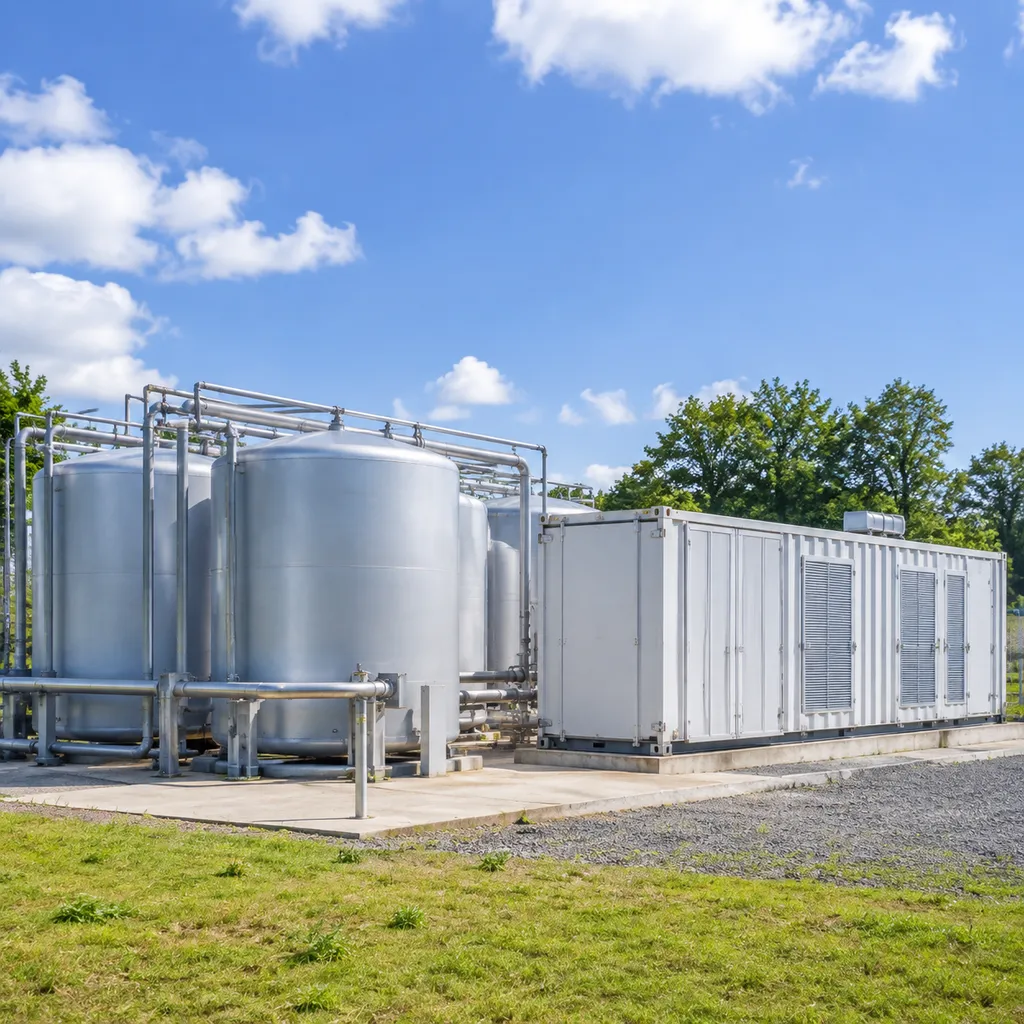
Evaluating thermal energy storage vs. battery energy storage systems comes down to matching the physical asset to operational duty cycles. When we look past high-level marketing claims, operational metrics like cycle fatigue, dispatch speeds, and conversion losses define actual project returns.
| Metric | Battery Energy Storage Systems (BESS) | Thermal Energy Storage (TES) |
|---|---|---|
| Response Time | Milliseconds to seconds | Minutes (steam/fluid ramp times) |
| Asset Lifespan | 8 to 15 years (cell replacement needed) | 25 to 30+ years |
| Round-Trip Efficiency (Power) | 85% – 92% (AC to AC) | 40% – 55% (Power-to-Heat-to-Power) |
| Efficiency (Direct Heat) | Low economic viability for heat | 90% – 95% (Power-to-Process Heat) |
| Degradation Impact | Direct loss of usable capacity | Minimal media degradation |
Battery Degradation Profiles vs. Long-Term Thermal Cycle Life
Electrochemical cells degrade continuously based on ambient operating temperatures, depth of discharge (DoD), and C-rates.
- BESS cell replacement: Chemical batteries typically hit a replacement threshold at 70% to 80% state of health after 3,000 to 6,000 equivalent full cycles. Plant operators must budget for system augmentation or full module swaps around year 8 to 10.
- TES stable capacity: Solid media, molten salts, and refractory bricks do not suffer from chemical degradation. The thermal energy storage capacity remains stable over several decades, requiring upkeep only for standard mechanical balance-of-plant components like pumps, valves, and heat exchangers.
Response Time and Ramp Rates for Grid Balancing Technologies
If the application requires dynamic grid stability, electrochemical systems are unmatched. Modern BESS installations inject active and reactive power within milliseconds to manage frequency deviations. Integrating an advanced grid-forming inverter battery energy storage system allows facilities to deliver immediate synthetic inertia and instantaneous black-start capabilities.
Thermal systems rely on thermodynamic fluid loops and heat transfer dynamics. Moving heat from a storage medium to a steam turbine or heat exchanger takes minutes to ramp up, making TES unsuitable for primary frequency regulation or rapid synthetic inertia.
Round-Trip Efficiency (RTE) in Electricity vs. Industrial Heat Applications
Round-trip efficiency depends entirely on the energy form required at the point of consumption:
- Pure electricity demand: BESS is the clear winner. A modern lithium-based system achieves 85% to 92% AC-to-AC round-trip efficiency, losing only modest power to inverter switching and thermal cooling parasitic loads.
- Industrial process heat demand: Converting renewable power into heat stored in thermal media delivers thermal RTEs exceeding 90%. Conversely, routing electricity through a battery, running that power through electric boilers, and cycling it introduces multiple conversion stages and higher operational wear. If the facility needs high-pressure steam rather than electricity, TES delivers significantly superior economics.
Economics and Viability: Levelized Cost of Storage (LCOS)
When evaluating long-term infrastructure, the Levelized Cost of Storage (LCOS) serves as the primary metric for determining return on investment.
CAPEX and Material Constraints
The initial capital expenditure (CAPEX) for electrochemical systems is often tied to volatile global commodity markets for lithium and cobalt. In contrast, thermal energy storage typically utilizes earth-abundant materials, which stabilizes upfront investment costs. While we often manage LFP battery energy storage system deployments, we recognize that thermal media avoids the price sensitivity associated with rare-earth battery components.
Operational Maintenance
Maintenance profiles differ significantly between these technologies:
Battery Systems: Require active thermal management, sophisticated software monitoring, and periodic module balancing to prevent premature degradation.
Thermal Systems: Function as largely stationary, passive setups with fewer moving parts, leading to lower ongoing operational maintenance and reduced auxiliary power consumption.
Scalability and Duration
Cost-effectiveness shifts based on discharge requirements. As your storage duration needs extend beyond 8 hours, thermal storage becomes increasingly competitive. While lithium-ion systems see costs rise linearly with added capacity, thermal storage allows for modular, lower-cost scaling. By storing energy as heat, you can achieve extended discharge durations without the exponential cost burden of scaling up chemical cells.
Application Fit: Choosing the Right Technology for Your Facility
Every facility faces a distinct operational profile. When we evaluate thermal energy storage vs. battery energy storage systems, the optimal choice comes down to one fundamental question: are you trying to manage dynamic electrical demand, or are you trying to supply continuous thermal energy?
Matching storage chemistry and physics to actual site demand prevents costly oversizing and reduces operational downtime.
Best Applications for BESS: Microgrids, Fast Charging, and Rapid Peak Shaving
Electrochemical storage systems excel where millisecond response times and high power output are mandatory. We deploy battery energy storage systems (BESS) primarily for dynamic electrical applications:
- Sub-Second Frequency Regulation: Stabilizing local voltage and frequency during grid swings or intermittent generation drops.
- Demand Charge Management: Fast-ramping discharge during utility peak windows. Operators leverage the direct benefits of peak shaving for lower energy costs without interrupting production lines.
- Critical Microgrid Backup: Providing black-start capability and instant islanding for data centers, hospitals, and critical manufacturing.
- EV Fleet Charging Hubs: Buffering high-rate DC fast chargers from blowing out local utility substation capacity.
- Solar Self-Consumption: Capturing midday generation using a dedicated lithium battery energy storage system for solar applications to offset evening power rates.
Best Applications for TES: Process Heat Decarbonization and Long-Duration Energy Storage
Thermal energy storage (TES) is the practical choice when the primary end-use demand is heat, or when storage durations exceed 8 to 12 hours. Converting electricity to heat and storing it in thermal media avoids the high cyclic degradation associated with batteries:
- Industrial Process Heat Decarbonization: Delivering high-pressure steam, hot water, or hot air directly to food processing, pulp and paper, chemical, and textile plants.
- Boiler Electrification: Replacing natural gas boilers with electric heaters charged during low-cost or negative renewable pricing periods.
- Long-Duration Energy Storage (LDES): Storing energy for multi-day shifts or weather-driven renewable lulls where lithium-ion capacity costs become prohibitive.
- District Heating and Cooling: Centralized thermal balancing for campuses and municipal networks requiring massive energy capacity with minimal degradation over decades.
Hybrid Storage Configurations for Comprehensive Facility Resilience
For large industrial campuses with both high power peaks and heavy thermal baselines, picking a single technology often leaves money on the table. A hybrid architecture combines the distinct strengths of both platforms:
| Operational Priority | BESS Role | TES Role | Hybrid Advantage |
|---|---|---|---|
| Response Speed | Instant sub-second response | Slower ramp, steady delivery | Zero power interruption while thermal output stabilizes |
| Primary Output | Electricity (AC/DC) | Steam, hot water, hot air | Direct thermal conversion without secondary electrical losses |
| Duration Target | Short-duration (1 to 4 hours) | Long-duration (8 to 24+ hours) | Lower overall CAPEX per delivered megawatt-hour |
| Degradation Impact | Absorbs high-value power spikes | Takes continuous, heavy thermal cycles | Prolongs battery energy storage lifespan by offloading bulk heat cycles |
Deploying both systems in parallel allows the BESS to buffer rapid machinery startups and peak electrical rates, while the TES system handles continuous baseload heat. This split-duty approach protects battery health, cuts boiler fuel expenses, and maximizes overall facility resilience.
Commercial Implementation with Percentec Energy
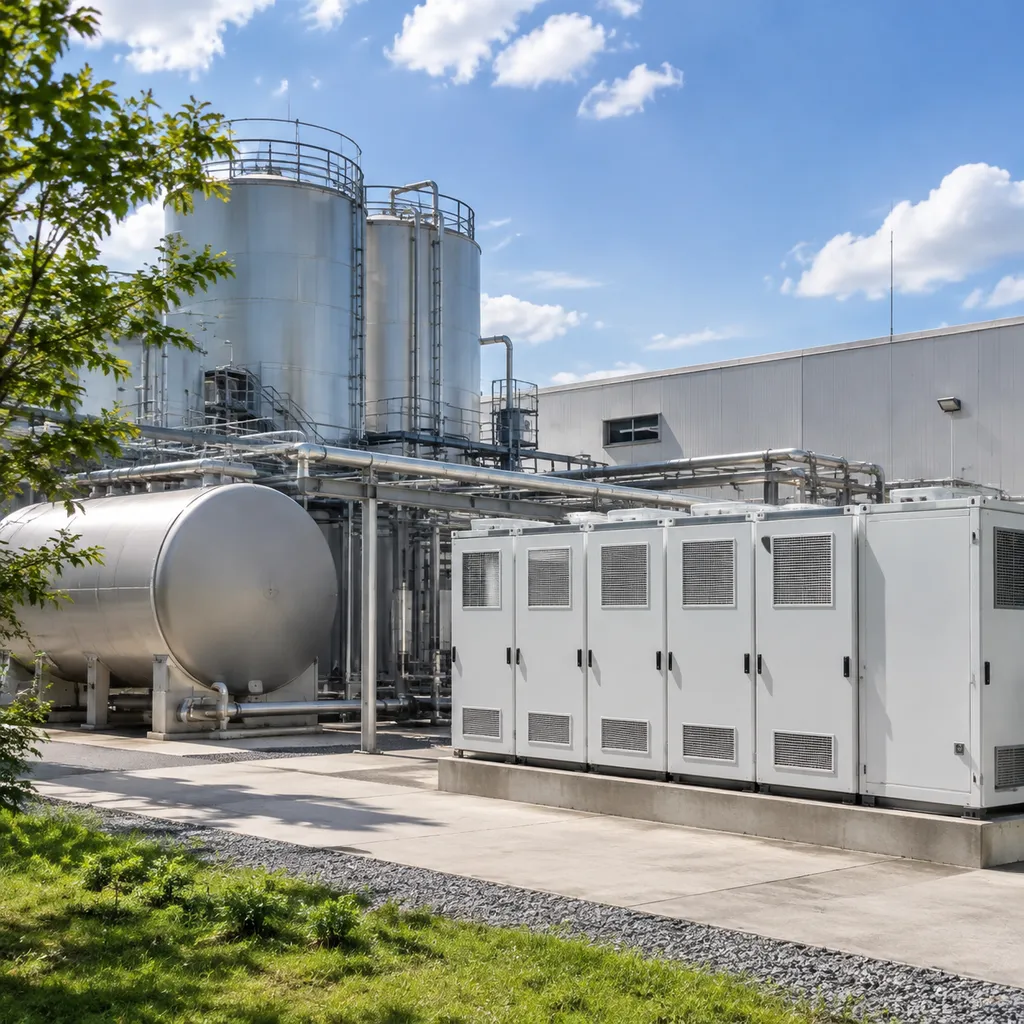
Engineered Storage Architectures Tailored for Longevity
Every facility runs on a distinct operational rhythm. We design storage architectures focused on system longevity, low operational friction, and predictable thermal and electrical dynamics:
- Duty-Cycle Matching: We match system hardware directly to your site’s demand profile—preventing premature degradation caused by continuous deep cycling.
- Turnkey Hardware Integration: Our high-safety commercial & industrial energy storage systems deliver reliable power quality, robust enclosure protection, and integrated thermal management.
- Modular System Design: By utilizing a modular battery energy storage system, plants can scale electrical capacity incrementally as load requirements expand, avoiding excessive upfront capital deployment.
- Balance-of-Plant Optimization: We integrate switchgear, control interfaces, and monitoring systems to minimize auxiliary parasitic losses and maintain consistent round-trip efficiency over decades of operation.
Practical Feasibility Studies for Industrial Retrofits
Retrofitting storage into an existing operational site introduces physical and structural boundaries. We run detailed, data-driven feasibility assessments before any hardware moves to production:
| Evaluation Stage | Key Focus Areas | Deliverable to Facility Operators |
|---|---|---|
| Load Profile Audit | High-resolution electrical metering and process heat demand curves. | Identification of peak demand penalties and baseload thermal consumption. |
| Site Constraint Analysis | Available footprint, indoor vs. outdoor layout, fire safety zones, and weight limits. | Clear spatial allocation plan verifying structural and safety compliance. |
| Interconnection Review | Substation headroom, electrical switchgear rating, and boiler feed compatibility. | Direct retrofit roadmap minimizing operational downtime during commissioning. |
| Lifecycle LCOS Modeling | Utility tariffs, fuel costs, cycle expectations, and replacement intervals. | Comprehensive Levelized Cost of Storage comparison between TES, BESS, and hybrid setups. |
Our engineering team works directly with your plant managers to eliminate integration risk, ensuring your chosen storage technology delivers measurable cost reductions and reliable site resilience from day one.
Frequently Asked Questions: Thermal Energy Storage vs. Battery Energy Storage Systems
Can thermal energy storage be integrated directly into existing grid infrastructure?
Yes, but the integration pathway depends on whether you need heat or electricity:
- Power-to-heat-to-power: TES absorbs off-peak or surplus renewable power through electric heaters, stores it at high temperatures, and runs a steam or gas turbine to deliver electricity back to the grid. This setup works well for long-duration bulk power, though it involves thermodynamic conversion losses.
- Direct electrical response: When instantaneous power injection and frequency regulation are the primary goals, an industrial facility battery energy storage system (BESS) connects via bi-directional inverters to deliver sub-second electrical response without mechanical turbines.
How do the fire and thermal runaway risks of BESS compare to TES?
Safety architecture is one of the most critical differentiators between both systems:
- Electrochemical BESS: Lithium-based systems require robust safety enclosures, continuous gas detection, and dedicated liquid cooling or fire suppression systems to prevent cascading thermal runaway. Weighing these balance-of-plant requirements is an essential step when assessing overall battery energy storage system advantages and disadvantages for indoor industrial plants.
- Thermal Energy Storage: TES systems typically use non-combustible media such as solid ceramic bricks, crushed rock, sand, or specialized molten salts. Because the system stores thermal energy rather than reactive chemical energy, there is zero risk of chemical combustion, toxic off-gassing, or runaway cell fires.
How does industrial thermal storage support corporate net-zero targets?
Most industrial facilities consume over half of their total energy footprint as heat rather than electricity. While standard battery systems eliminate peak electrical demand, they do not replace fossil-fired steam boilers.
TES directly decarbonizes manufacturing facilities by:
Converting intermittent wind and solar power into continuous, dispatchable industrial steam or hot water.
Eliminating baseline natural gas and fuel oil consumption for manufacturing processes.
Providing 8 to 24+ hours of continuous thermal dispatch to eliminate Scope 1 emissions at the source.
What is the expected operating lifespan difference between BESS and TES installations?
TES assets generally last more than twice as long as chemical batteries before requiring major hardware overhauls:
| Metric | Battery Energy Storage (BESS) | Thermal Energy Storage (TES) |
|---|---|---|
| Typical Operating Lifespan | 8 to 15 years | 25 to 35+ years |
| Capacity Degradation | 1.5% to 3% capacity fade per year | Negligible storage medium degradation |
| Cycle Sensitivity | Heavy cycling accelerates degradation | Thousands of deep thermal cycles without media fatigue |
| Major Refurbishment | Stack/cell augmentations required at mid-life | Minor valve, pump, or insulation servicing only |
| End-of-Life Profile | Battery recycling and toxic material processing | Inert disposal or standard industrial scrap recycling |