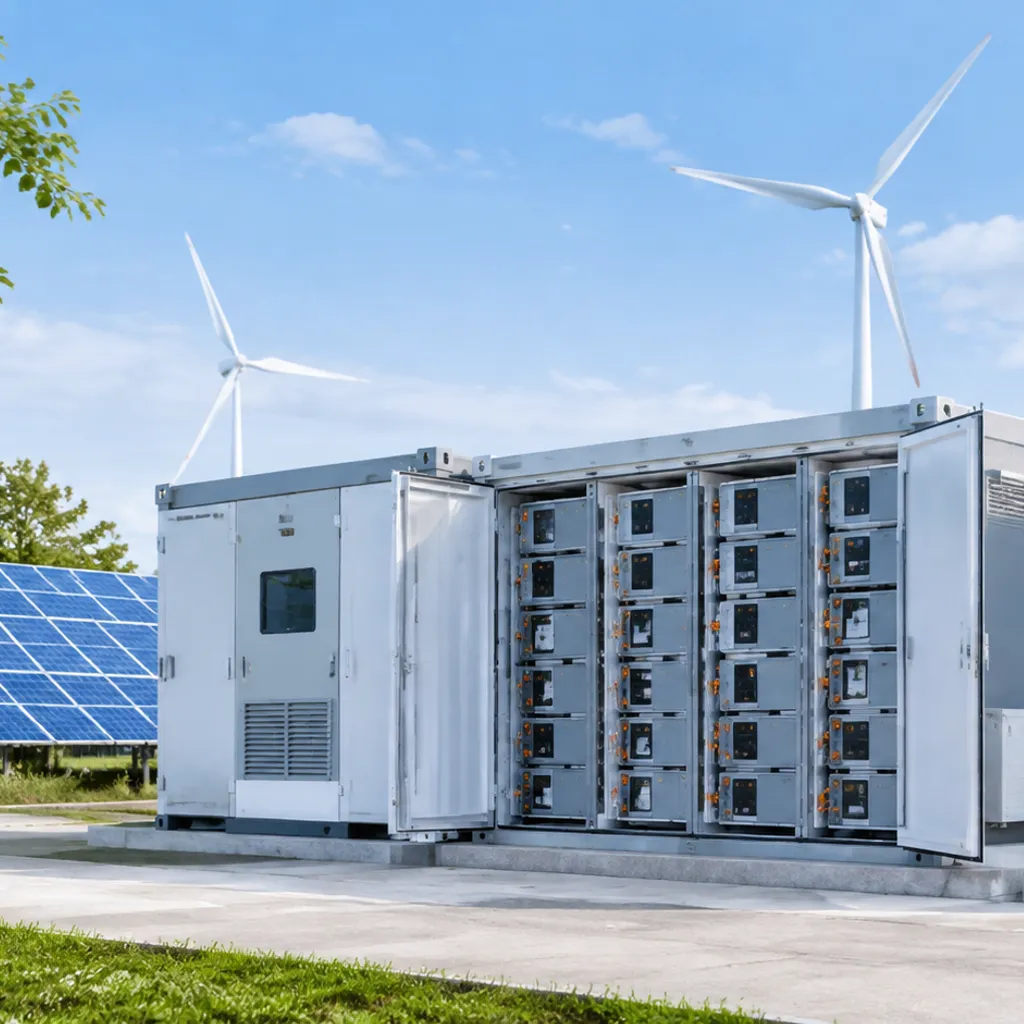

Are you worried that minor battery faults could escalate into costly downtime or severe thermal runaway?
Mastering battery energy storage system BESS maintenance best practices is the single most effective way to protect your assets, extend cell lifespan, and ensure strict safety compliance.
Whether you manage a commercial installation or a utility-scale plant, keeping a BESS running at peak round-trip efficiency requires more than just occasional visual checks. From balancing cell voltages and verifying HVAC handoffs to maintaining audit-ready NFPA 855 logs, every routine action directly impacts your bottom line.
In this guide, you’ll discover actionable preventive maintenance schedules, subsystem checklists, and proven diagnostic protocols built on real-world O&M experience.
Let’s dive in.
Battery Energy Storage System (BESS) Maintenance Best Practices
If you manage a commercial or grid-scale storage site, you likely ask the same practical questions every week: how often does the system need physical service, which alarms demand an immediate shutdown, and why is usable energy output drifting downward? Answering these questions requires structured battery energy storage system (BESS) maintenance best practices rather than reactive troubleshooting after a fault trips your breaker.
Set maintenance goals for safety, availability, and battery life
When I build an operations and maintenance (O&M) plan, I anchor every task to three measurable outcomes:
- Zero-incident safety: Preventing thermal anomalies, electrical faults, and fire hazards in compliance with standards like UL 9540A, UL 1973, and IEC 62619.
- High system availability: Keeping uptime near 99.9% so the asset is ready for peak shaving, solar self-consumption, or grid dispatch whenever tariffs spike.
- Long-term cell longevity: Protecting Lithium Iron Phosphate (LiFePO4) cells so they reach or exceed their 6,000-cycle lifespan without premature capacity fade.
Use the equipment manual, warranty, and site conditions to set priorities
Never rely on a generic checklist alone. I prioritize service tasks by cross-referencing three baselines:
- Manufacturer manuals and warranty terms: Skipping required inspections on thermal loops or fire suppression hardware can void coverage and compromise bankability.
- Site environment: High ambient heat, coastal humidity, or heavy industrial dust require faster filter changes and stricter enclosure seal checks than clean, temperate indoor rooms.
- Duty cycle: A system running daily peak-shaving or energy arbitrage cycles experiences far greater thermal and electrical stress than an emergency backup unit sitting in standby.
Combine preventive maintenance with condition-based maintenance
Relying solely on calendar-based inspections wastes technician hours while missing sudden component drift. Modern storage architecture allows you to pair scheduled physical checks with real-time, condition-based maintenance:
- Preventive maintenance (calendar-driven): Routine visual walkdowns, coolant level verification, torque checks on busbars, and scheduled testing of off-gas sensors and targeted aerosol or gas/liquid fire suppression systems.
- Condition-based maintenance (data-driven): Using a 3-tier Battery Management System (BMS) and cloud-edge telemetry to monitor cell-level State of Charge (SOC), State of Health (SOH), voltage spread, and core temperature variances in real time. When bidirectional active balancing or smart liquid cooling metrics drift outside normal baselines, you dispatch technicians before a fault occurs.
Assign responsibilities to site operators, qualified technicians, and the equipment supplier
Clear ownership prevents critical alarms from falling through the cracks during shift changes.
| Role | Primary Maintenance Responsibilities | Escalation Trigger |
|---|---|---|
| Site Operators | Daily SCADA/EMS alarm reviews, perimeter walkdowns, checking airflow clearances, and logging operating status. | Any active BMS warning, coolant leak, or abnormal enclosure temperature. |
| Qualified Technicians | Lockout/tagout (LOTO) isolation, DC connection torque checks, electrical thermal imaging, HVAC/liquid cooling service, and fire system testing. | Internal battery module defects, persistent cell imbalance, or inverter hardware faults. |
| Equipment Supplier (OEM) | Remote diagnostics via cloud-edge telemetry, over-the-air (OTA) firmware and EMS updates, deep SOH analytics, and 24/7 global O&M engineering support. | Component warranty claims, root-cause failure analysis, or system capacity augmentation. |
Build a BESS Maintenance Schedule
When I organize a battery energy storage maintenance schedule, I break tasks down by frequency and operational impact. A clear cadence prevents minor faults from causing unplanned downtime and helps maintain 99.9% system availability across the equipment's lifecycle.
| Interval | Focus Area | Key Actions |
|---|---|---|
| Daily / Shift | Remote Telemetry | Review active alarms, communication links, and operating status via cloud-edge telemetry. |
| Routine (Weekly/Monthly) | Physical Walkdowns | Check enclosures for physical damage, cooling leaks, blocked vents, and site housekeeping. |
| Planned Outages | Deep Inspection | Test fire suppression hardware, inspect internal connections, and verify protective relays. |
| Event-Driven | Post-Incident Recovery | Conduct immediate diagnostic checks after severe weather, trips, or extended downtime. |
Daily and Shift Checks for Alarms and Communications
Start every shift by reviewing your monitoring dashboard. With a 3-tier Battery Management System (BMS) and cloud-edge Energy Management System (EMS), you can track real-time cell voltages, temperatures, and communication links (such as Modbus TCP or CAN) without opening a cabinet. Flag any recurring warning codes or telemetry dropouts immediately so technicians can troubleshoot remotely before an unexpected trip occurs.
Routine Site Walkdowns
Visual inspections catch physical issues that software sensors might miss. During regular site walkdowns around your utility-scale battery storage containers, look for:
Cooling leaks: Check around smart liquid cooling loops and heat exchangers for any signs of fluid loss.
Airflow blockages: Clear debris, dust, or snow away from intake vents and HVAC units.
Enclosure integrity: Inspect door seals, cable entries, and structural panels for physical damage, corrosion, or moisture ingress.
Housekeeping: Keep perimeter clearances free of flammable materials and weeds.
Planned Service Windows for Outage Inspections
Some battery energy storage system BESS maintenance best practices require de-energizing equipment. Schedule planned outages—typically semi-annually or annually—to perform intrusive checks safely. During these windows, qualified technicians verify torque on accessible DC connections, validate off-gas sensors and fire suppression systems, and run diagnostic stress tests.
Checks After Severe Weather and Abnormal Shutdowns
Never restart a system blindly after an unplanned event. Following severe storms, grid disturbances, abnormal protective trips, or extended downtime, complete a structured post-event inspection:
1. Verify enclosure dryness and check for water or dust intrusion before restoring power.
2. Review fault logs in the EMS and BMS to pinpoint the exact root cause of any shutdown.
3. Confirm all safety interlocks and communication channels are online before re-enabling grid dispatch.
Adjust Service Intervals for Site Conditions
A static calendar rarely fits every facility. Adjust your maintenance frequency based on real-world operating stress:
Climate extremes: High ambient heat, coastal salt air, or heavy dust demand more frequent filter changes and seal inspections.
Cycling intensity: Systems running daily peak-shaving cycles accumulate wear faster than units sitting in emergency backup standby.
Equipment age and repeat faults: Tighten inspection intervals as lithium iron phosphate (LFP) cells approach higher cycle counts, or whenever a specific subsystem triggers repeat alarms.
Prepare for Safe BESS Service
Before I let anyone open an enclosure door, I treat safety preparation as the non-negotiable foundation of battery energy storage system BESS maintenance best practices. Utility-scale and commercial enclosures pack high-voltage DC buses, high-energy Lithium Iron Phosphate (LiFePO4) modules, and automated suppression hardware into tight spaces.
Identify Electrical, Stored-Energy, Arc-Flash, and Chemical Hazards
Every technician stepping onto the pad needs a clear picture of what can hurt them before tools come out. On a site walkdown, I verify that our team accounts for four core risks:
- Electrical and Arc-Flash Hazards: High-voltage DC strings and AC inverter outputs can cause severe shock or arc-flash events during switching and inspection.
- Stored Energy: Unlike a standard generator, batteries hold live electrical energy even when disconnected from the grid.
- Chemical and Off-Gas Risks: Damaged cells can vent flammable or toxic gases, making early off-gas detection and proper ventilation critical before entry.
- Suppression System Discharge: Accidental triggering of pack-level aerosol or gas fire suppression systems poses asphyxiation and visibility hazards inside closed containers.
Follow Site Procedures for Permits, Lockout/Tagout, and PPE
Rushing a routine check is how accidents happen. When planning work on battery energy storage EPC projects, I enforce strict adherence to site-specific work permits and lockout/tagout (LOTO) protocols.
- Secure Work Permits: Confirm written authorization and verify that remote energy management system (EMS) dispatch commands are blocked so the system cannot start mid-service.
- Apply Lockout/Tagout: Isolate both AC and DC disconnects, apply personal locks, and verify zero energy at the point of work with calibrated meters.
- Wear Rated PPE: Require arc-flash suits, insulated gloves, and eye protection matched to the incident energy ratings posted on the equipment.
Account for Energy Remaining in Battery Modules After Shutdown
Opening the main DC breaker does not make a battery rack dead. Even after a full system shutdown and LOTO verification at the combiner box, individual battery modules and strings remain energized at lethal DC voltages. Technicians must never bridge module terminals, wear conductive jewelry, or use uninsulated tools inside battery cabinets.
Define Stop-Work and Escalation Criteria
I give every technician explicit authority to halt work the second something looks wrong. Establish clear stop-work triggers before the shift starts:
- Physical Damage: Swollen enclosures, leaking liquid coolant, cracked busbar insulators, or corroded terminals.
- Abnormal Readings: Unexpected cell voltage spread, elevated core temperatures, or active off-gas and smoke alarms.
- Escalation Path: Immediately evacuate the enclosure, secure the perimeter, and escalate the fault to qualified engineers or 24/7 OEM support for remote diagnostics before anyone re-enters.
Keep Emergency Response Plans and Access Details Current
A response plan buried in a binder won't help during an incident. I keep a laminated emergency packet right at the site entrance and update it whenever hardware or site contacts change. Ensure local fire responders have current site maps, emergency shutdown (E-stop) locations, fire suppression details, and gate access codes so they can act fast without guessing.
Inspect Battery Racks and DC Connections

Routine visual and thermal inspections of your battery racks and direct current (DC) connections catch physical wear before it triggers system trips or safety hazards. Even with modular hardware and a 3-tier Battery Management System (BMS) tracking cell-level telemetry, physical walkdowns remain an essential part of battery energy storage system BESS maintenance best practices.
Check Accessible Rack and Module Surfaces
During scheduled walkdowns, examine the exterior of every rack and battery module for early signs of physical stress or environmental exposure. Understanding lithium iron phosphate battery system safety and cycle life helps you recognize when physical wear threatens long-term reliability.
- Physical damage and swelling: Look for dented enclosures, cracked housings, or bulging module casings. Stop work and escalate immediately if you see any signs of casing deformation or off-gassing.
- Corrosion and residue: Check rack frames, fasteners, and module seams for rust, white oxidation powder, or electrolyte residue.
- Moisture and condensation: Inspect the base of the racks and surrounding cabinet floors for standing water, dampness, or condensation buildup.
Inspect Accessible Cables, Busbars, and Grounding Bonds
Loose or degraded electrical paths increase resistance, generate excess heat, and reduce overall system availability. Focus on all accessible connection points without disturbing sealed high-voltage barriers.
- Cables and insulation: Check power and communication harnesses (such as Modbus TCP and CAN lines) for chafing, pinched jackets, or heat discoloration.
- Busbars and connectors: Visually verify that accessible busbars and DC lugs sit flush and show no signs of arcing, pitting, or loose hardware.
- Grounding bonds: Confirm that rack-to-ground straps and cabinet bonding jumpers remain intact, tight, and free of corrosion.
Schedule Thermal Imaging and Connection Checks
High-current cycling during daily peak shaving places repeated thermal stress on DC joints. I prioritize infrared thermography during active charge or discharge cycles—when current flow is high enough to reveal hidden resistance—strictly following site lockout/tagout and personal protective equipment (PPE) rules.
| Inspection Task | What to Look For | Action Threshold |
|---|---|---|
| Electrical Thermal Imaging | Localized hot spots on busbars, lugs, or breakers | Flag abnormal temperature spreads against adjacent phases |
| Torque & Connection Audits | Backed-out fasteners or loose terminal blocks | Re-torque only during planned outages using calibrated tools |
| Cable Routing Review | Sagging cables or rubbing against sharp rack edges | Add protective loom or re-secure cable ties immediately |
Document Component Condition and Escalate Defects
Consistent recordkeeping turns a routine battery rack inspection into actionable maintenance data. Log every finding—including photos, thermal images, and rack IDs—directly into your maintenance management system. If you spot a damaged module, discolored busbar, or failed ground bond, tag the affected unit out of service per site procedures and refer the defect to qualified technicians or OEM support for formal assessment.
Monitor the Battery Management System (BMS)
When I follow battery energy storage system BESS maintenance best practices, I treat the BMS as my main early-warning dashboard. A 3-tier BMS tracks cell-level State of Charge (SOC), State of Health (SOH), voltage, and temperature in real time, letting you catch small cell shifts before they force an unscheduled outage.
Track Cell Voltage Spread, Temperature, and SOC
Daily telemetry reviews keep your Lithium Iron Phosphate (LiFePO4) cells operating inside safe electrical and thermal boundaries. I check three core metrics every shift:
- Cell voltage spread: Look for individual cells drifting away from the pack average during peak charge or discharge.
- Temperature differences: Watch for uneven core temperatures across modules, which often point to restricted cooling or loose connections.
- State of Charge (SOC): Confirm reported SOC matches actual charge/discharge throughput so you do not over-discharge a rack during peak shaving.
Review SOH, Cell Balancing Trends, and Protective Trips
Long-term trends show whether your preventive maintenance is preserving usable capacity over a 6,000+ cycle lifespan.
- State of Health (SOH): Compare current capacity retention against your commissioning baseline to spot early cell degradation.
- Cell balancing trends: Verify that bidirectional active balancing is transferring energy cleanly between cells without continuous, heavy balancing cycles.
- Recurring protective trips: Log repeated over-voltage, under-voltage, or over-temperature trips—they signal an underlying hardware or cooling issue rather than a one-time grid glitch.
Check Sensor Readings, Alarm History, and Data Gaps
Sometimes a sudden spike is a telemetry fault rather than a failing battery. Before dispatching a crew, inspect your cloud-edge telemetry and factory energy management solution for real-time monitoring for communication drops over Modbus TCP or CAN.
- Flatlined or erratic sensors: A cell reading stuck at a single temperature or jumping wildly usually points to a bad harness or sensor board.
- Alarm history: Review acknowledged warnings to see if minor alerts are clustering before a major fault occurs.
- Data gaps: Missing telemetry intervals mean local edge computing or cloud sync lost visibility, leaving blind spots in your protection log.
Use Manufacturer Limits and Site Baselines for Escalation
Do not guess when a reading requires action. Pair your equipment manual limits with the baseline performance data recorded during commissioning to set clear escalation rules.
| BMS Metric | What to Watch | Action Threshold |
|---|---|---|
| Cell Voltage Spread | Divergence during charge/discharge | Escalate when spread exceeds manual limits or active balancing fails to equalize cells |
| Core Temperature | Variance between modules | Inspect cooling if temperature spread widens beyond your commissioning baseline |
| SOH & Capacity | Accelerated drop vs. cycle count | Schedule diagnostics if SOH drops faster than expected for your daily cycle profile |
| Telemetry & Alarms | Repeated trips or Modbus TCP/CAN gaps | Investigate immediately on any repeat trip or loss of cell-level visibility |
Maintain Cooling and Enclosures
Heat is the fastest way to shorten battery life and hurt system uptime. When I review battery energy storage system BESS maintenance best practices, thermal control always sits near the top of the list. Even a slight rise in core temperature variances across lithium iron phosphate (LFP) cells accelerates wear and triggers power derating during peak demand.
Service HVAC and Air-Cooled Components
For air-cooled units and container HVAC systems, airflow restrictions quickly create hot spots. I stick to the equipment manual intervals for routine cleaning and swap parts before dust chokes the system.
- Filters and Vents: Clean or replace air intake filters on schedule, and clear debris from exterior louvers.
- Fans and Blowers: Listen for bearing noise and verify fan speed modulation during high-load cycles.
- Heat Exchangers: Wash condenser coils gently to remove dust, pollen, or salt buildup without bending fins.
Check Liquid-Cooled Loops
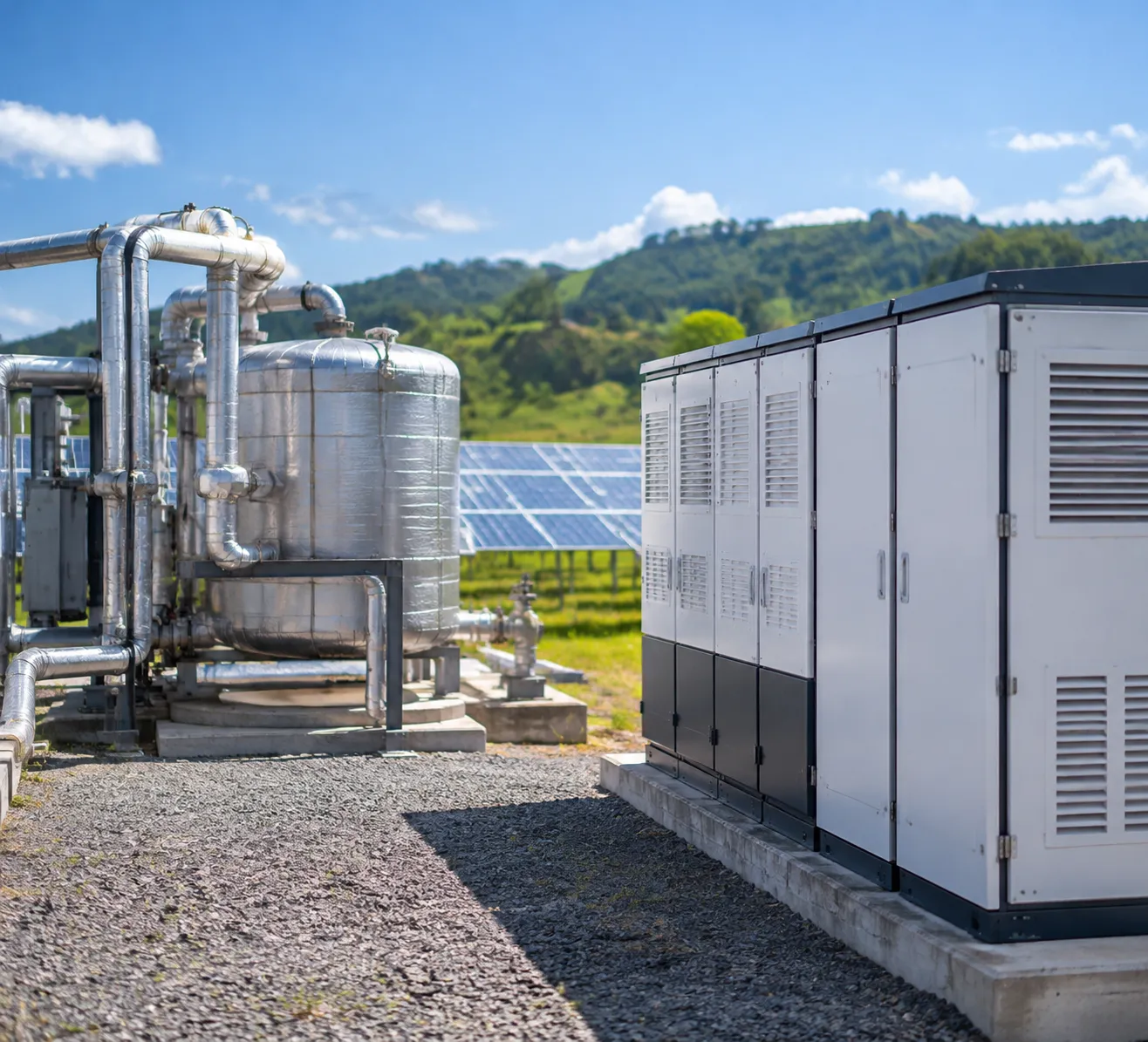
Modern high-density setups—such as a scalable battery energy storage system for utilities—rely on smart liquid cooling to hold cell temperatures steady under heavy cycling. A small leak or air pocket in the loop can cause localized overheating.
| Inspection Point | What to Check | Action Threshold |
|---|---|---|
| Coolant Level | Sight glass or reservoir sensor reading | Top off with OEM-approved fluid if below the minimum mark |
| Loop Pressure & Flow | Pump differential pressure and flow rate telemetry | Investigate immediately if flow drops or pressure fluctuates |
| Piping & Fittings | Dryness around quick-disconnects, manifolds, and valves | Escalate any visible dampness or residue for immediate repair |
Inspect Enclosure Seals, Drains, and Clearances
Moisture and dust inside a battery container create short-circuit risks and corrode electronics. I treat the enclosure shell as the first line of defense for the hardware inside.
- Door Seals and Gaskets: Check rubber weatherstripping for cracks, compression set, or gaps where water can blow in.
- Drains and Cable Entries: Confirm condensate drain lines are clear and cable glands are tightly sealed around all penetrations.
- Condensation Control: Verify enclosure heaters and dehumidifiers kick on properly during humid nights or sharp temperature swings.
- Site Clearances: Keep vegetation, snow, and stored gear well outside the manufacturer's required airflow perimeter around the container.
Service the Power Conversion System and Switchgear
Batteries store energy, but the power conversion system (PCS) and switchgear actually move that power to and from the grid. When I review battery energy storage system BESS maintenance best practices, I always point out that a healthy battery pack still goes offline if an inverter overheats or a breaker fails to trip. Modular power architectures and high-voltage energy storage cabinets for reliable power keep critical loads running during fast grid switchovers under 10 ms, so keeping the power stage clean and tight is essential.
Inspect Inverter Cooling, Fault Logs, and Power Connections
Start every routine check at the inverter cabinet before opening any live panels. I prioritize three straightforward steps here:
Check cooling airflow and heat sinks: Clear dust and debris from inverter vents and fans. Restricted airflow forces the inverter to derate output during peak-shaving cycles.
Pull inverter fault logs: Review recent warnings, grid-tie disturbances, and over-temperature events via your local display or Energy Management System (EMS). Repeat minor faults usually point to an underlying grid or thermal issue.
Inspect accessible power connections: Look for discoloration, loose lugs, or damaged insulation on AC and DC terminals.
Schedule Qualified Checks for Breakers, Contactors, and Fuses
High-voltage switching components wear down mechanically over thousands of charge and discharge cycles. Have certified technicians inspect breakers, contactors, fuses, and auxiliary power supplies during scheduled maintenance windows. Contactors experience heavy electrical stress every time the system connects or disconnects, so worn contact tips or sluggish auxiliary power supplies must be replaced before they cause an unplanned outage.
Verify Protective Relay and Interlock Functions During Outages
Never test safety interlocks on a live, loaded system unless the equipment manual explicitly allows it. During planned outages, verify that protective relays and mechanical or electrical interlocks operate according to site safety rules. Confirm that opening an enclosure door or triggering an emergency stop immediately isolates the PCS and blocks accidental re-energization.
Include Transformers and Balance-of-Plant Equipment
A complete BESS preventive maintenance checklist extends beyond the main battery and inverter enclosures. Include step-up transformers, metering cabinets, and grounding grids in your service schedule:
Check transformer oil levels, gauges, and cooling fins for leaks or blockages.
Verify surge arrestors and grounding bonds remain intact after severe weather.
Confirm communication cables linking balance-of-plant gear to your main controller are secure.
Test Fire Detection and Emergency Systems
Verify Smoke, Heat, and Off-Gas Detection
Early warning stops a minor cell fault from turning into a major thermal event. When inspecting multi-tier safety setups—such as systems built to UL 9540A, UL 1973, and IEC 62619 standards—I verify that every sensor layer communicates clearly with the main controller:
- Early Off-Gas Sensors: Confirm sensor calibration dates, clear airflow paths, and fault-free status on any battery storage fire detection system with off-gas sensors designed to catch electrolyte venting before smoke appears.
- Smoke and Heat Detectors: Check detector LEDs for normal polling, clean away dust buildup, and verify zone mapping so an alarm points technicians to the exact container or rack.
- Sensor Health: Flag any sensor communication dropouts in the Battery Management System (BMS) or Energy Management System (EMS) immediately.
Check Alarm Reporting and Suppression Readiness
Detection means nothing if the suppression hardware cannot fire or if remote teams never get the alert. I break these checks into physical and digital verifications:
- Suppression Agent Status: Inspect pressure gauges, cylinder weights, and release circuits on pack-level targeted aerosol units as well as container-wide gas or liquid fire suppression systems.
- Local and Remote Notifications: Trigger test signals to verify that local strobes and horns activate, and confirm that alerts route through your SCADA or cloud-edge telemetry to the 24/7 monitoring center.
- Physical Obstructions: Ensure discharge nozzles and pressure-relief panels are completely clear of tools, spare parts, or debris.
Test Emergency Shutdown and Ventilation Functions
During a planned maintenance outage, I run functional interface tests under the approved site emergency plan:
- Emergency Stop (E-Stop) Loops: Test local and remote E-Stop buttons to confirm they immediately open DC contactors, trip the Power Conversion System (PCS), and isolate stored energy.
- Ventilation and Dampers: Verify that exhaust fans, purge sequences, and fire dampers respond automatically to off-gas or fire alarm states as required by your site design.
Coordinate Certified Inspections and Log Follow-Up
While site operators handle daily visual checks and alarm verification, certified fire protection technicians must perform invasive agent testing, sensor calibration, and compliance sign-offs. Always coordinate these visits with qualified providers, log every test result in your maintenance records, and track corrective actions until any failed component is replaced and retested.
Verify BESS Capacity and Performance

Running regular capacity and efficiency tests tells me whether a system is aging normally or hiding an early fault. As part of our core battery energy storage system BESS maintenance best practices, I never rely on rough daily dispatch numbers to judge battery health. Instead, I schedule repeatable performance checks so I can compare apples to apples across seasons.
Measure Usable Energy Capacity and Round-Trip Efficiency
To get clean data, run a controlled full charge-and-discharge cycle under repeatable conditions:
- Hold charge and discharge rates steady: Run the test at the rated power specified during commissioning. Changing C-rates alters voltage drop and skews usable energy readings.
- Record both AC and DC energy: Measure energy at the grid connection point as well as the DC bus. Comparing the two separates battery cell losses from inverter and transformer losses.
- Verify cell balancing beforehand: Let the system complete a full charge and active balancing cycle first. If cells are out of balance, the Battery Management System (BMS) will cut off discharge early, making a healthy Lithium Iron Phosphate (LFP) bank look degraded.
Compare Results Against Commissioning Baselines
Raw test numbers mean little without context. I always plot new test data directly against three benchmarks:
- Commissioning stress-test baselines: Compare current usable kilowatt-hours (kWh) and round-trip efficiency against the Factory Acceptance Testing (FAT) and site commissioning logs.
- Ambient and core cell temperatures: Check liquid cooling or HVAC logs during the test window. Cold cells show temporary capacity loss, while high core temperatures force power derating.
- Operating limits and State of Health (SOH): Cross-check your physical discharge test against the 3-tier BMS SOH estimate. A major gap between calculated SOH and actual delivered energy signals a calibration drift or a weak module.
Track Availability, Downtime, and Throughput Over Time
One-off tests catch sudden drops, while continuous telemetry tracks gradual wear. Using cloud-edge monitoring, I track three core operational metrics month over month:
| Metric | What I Track | Maintenance Decision Trigger |
|---|---|---|
| System Availability | Percentage of scheduled hours the BESS is ready to dispatch (targeting 99.9% uptime) | Investigate recurring inverter trips, sensor faults, or communication dropouts |
| Unplanned Downtime | Total hours offline due to protective trips or hardware faults | Review alarm logs and tighten preventive service intervals |
| Energy Throughput | Cumulative megawatt-hours (MWh) cycled toward the 6,000+ cycle design life | Adjust annual capacity guarantees and forecast end-of-life timelines |
For operations managing high-demand sites, reviewing how an industrial facility battery energy storage system handles daily peak shaving helps benchmark realistic throughput and payback expectations.
Use Performance Trends to Plan Repairs and Augmentation
Steady degradation curves let me budget ahead rather than react to emergencies. When usable capacity approaches contractual minimums or a single string consistently drags down rack performance, I use historical trend logs to choose the right fix:
- Targeted repair: Re-calibrate BMS sensors, service cooling loops, or tighten high-resistance DC bus connections when efficiency drops without permanent cell wear.
- Module replacement: Swap isolated weak battery modules when cell voltage spread widens on a single rack while the rest of the system stays near baseline.
- Capacity augmentation: Add parallel battery cabinets or containers when normal multi-year cycling reduces usable capacity below site peak-shaving or backup requirements.
Troubleshoot BESS Alarms and Recurring Faults
Triage Alarms by Severity and Follow Isolation Rules
Not every alert demands an immediate site shutdown, so I categorize incoming faults into three clear buckets before taking action:
- Critical Safety Alarms: Any sign of off-gas detection, fire suppression activation, or severe over-temperature requires immediate isolation and emergency escalation per your site rules.
- Protective Trips: Over-voltage, under-voltage, or inverter fault trips lock out affected strings automatically. Leave them isolated until you pinpoint the root cause.
- Informational Warnings: Minor communication hiccups or early thermal variances allow normal operation while you schedule a diagnostic check.
Capture Operating Data Before Any Authorized Reset
Before you clear a fault, lock down the evidence. Once a system resets, transient data often disappears, making remote troubleshooting nearly impossible.
- Record exact timestamps alongside the active charge or discharge rate.
- Pull event logs from the 3-tier Battery Management System (BMS) and local edge controller.
- Note ambient conditions, including enclosure temperature and cooling loop status.
Investigate Recurring Temperature, Imbalance, and Communication Alarms
Chasing the same nuisance trip week after week wastes time and wears down contactors. When a fault repeats, look deeper into the underlying subsystem:
- Temperature Spikes: Check smart liquid cooling loops for flow restrictions or air pockets, and verify that active balancing isn't overworking a weak cell group.
- Cell Voltage Imbalance: Review State of Charge (SOC) and State of Health (SOH) spreads across modules. Persistent drift points to an aging Lithium Iron Phosphate (LiFePO4) cell or a loose sensing harness.
- Inverter and Communication Drops: Inspect physical Modbus TCP and CAN connections for loose terminations or electromagnetic interference before blaming software. If you are still evaluating hardware partners, our BESS buying guide covers what diagnostic visibility to demand upfront.
Confirm Fault Resolution Before Returning to Service
Never put a tripped rack back into full peak-shaving duty on a guess. After applying a fix or remote over-the-air (OTA) update, run a controlled low-rate charge and discharge test while watching cell-level telemetry in real time. Only return the unit to automated dispatch once voltage spreads, core temperatures, and SCADA heartbeats stay steady under load.
Manage Controls, Firmware, and Maintenance Records
Following solid battery energy storage system BESS maintenance best practices means treating software and documentation with the same rigor as physical hardware. If telemetry drops or records go missing, you lose visibility into system health and risk voiding warranty coverage.
Validate Data Exchange Among BMS, EMS, and SCADA
Reliable communication across your control stack prevents blind spots during high-load operation. I always verify that your 3-tier Battery Management System (BMS), AI-driven Energy Management System (EMS), and local Supervisory Control and Data Acquisition (SCADA) platforms sync cleanly via standard protocols like Modbus TCP, CAN, and open APIs.
- Confirm telemetry accuracy: Cross-check cell-level State of Charge (SOC), State of Health (SOH), voltage, and temperature values between local edge controllers and cloud dashboards.
- Test failover and latency: Ensure cloud-edge telemetry keeps logging locally if external network links drop, preventing data gaps during grid switchovers.
- Verify third-party handshakes: Check that external building management systems or microgrid controllers receive clean status signals without polling timeouts.
Reviewing a clear battery energy storage system architecture diagram helps teams trace these communication pathways before troubleshooting protocol mismatches.
Back Up Configurations and Apply Approved Firmware Updates
Uncontrolled software changes cause avoidable downtime. Treat every control update through a strict change-control process:
- Export baseline configurations: Back up existing EMS dispatch rules, BMS protection thresholds, and network maps before making any changes.
- Validate approved releases: Only deploy vendor-verified over-the-air (OTA) updates or local firmware patches tested for your specific hardware configuration.
- Schedule low-impact windows: Push updates during low-demand periods and confirm normal system availability (targeting 99.9% uptime) immediately after reboot.
Log Readings, Test Results, and Corrective Actions
Clean service records turn raw operational data into actionable maintenance decisions and simplify root-cause analysis when alarms repeat.
| Record Category | What to Log | Maintenance Purpose |
|---|---|---|
| Telemetry & Baselines | SOC, SOH, cell temperature spreads, and cooling loop status | Tracks gradual degradation and flags abnormal drift early |
| Test & Inspection Results | Fire suppression checks, off-gas sensor tests, and thermal scans | Verifies compliance with UL 9540A, UL 1973, and IEC 62619 standards |
| Corrective Actions | Fault timestamps, root-cause notes, and firmware patch versions | Prevents repeat dispatches for recurring alarms |
| Parts & Consumables | Serial numbers of replaced modules, sensors, filters, or fuses | Maintains accurate configuration tracking across parallel units |
Track Warranty Requirements, Spare Parts, and Service History
Protecting your project's long-term return on investment requires disciplined lifecycle tracking alongside 24/7 operations and maintenance (O&M) support.
- Enforce warranty conditions: Log proof of scheduled inspections, environmental operating limits, and authorized service work so warranty claims remain valid.
- Audit critical spare parts: Keep essential consumables and long-lead replacement components tracked and stocked based on site response targets.
- Maintain a unified asset history: Tie every service ticket, OTA update, and component swap to its specific container or cabinet ID to guide long-term battery energy storage system life prediction
BESS Maintenance FAQs
Which maintenance tasks can operators handle, and which require a qualified technician?
Site operators handle daily visual checks, alarm monitoring, and exterior housekeeping. Any work inside energized cabinets, high-voltage DC compartments, or fire suppression hardware requires a certified high-voltage technician or OEM engineer.
| Role | Approved Maintenance Tasks |
|---|---|
| Site Operators | Check EMS/BMS dashboards, log daily alarms, clear external airflow vents, and verify door seals during walkdowns. |
| Qualified Technicians | Perform DC torque checks, electrical thermal imaging, coolant loop service, protective relay testing, and module replacements. |
| OEM / Vendor Support | Execute remote cloud diagnostics, push over-the-air (OTA) firmware updates, and validate warranty-covered cell replacements. |
How should I plan maintenance for a battery system that cycles daily versus one that sits in standby?
Daily cycling systems—such as those used for industrial peak shaving or commercial energy arbitrage—accumulate mechanical and thermal stress faster, so I schedule cooling inspections and cell balancing reviews more frequently. Standby backup systems run fewer charge cycles, meaning maintenance shifts toward preventing parasitic drain, verifying State of Charge (SOC) readiness, and testing < 10 ms emergency switchover relays so the system responds instantly during a grid outage.
Does lithium iron phosphate (LFP) require different maintenance from nickel manganese cobalt (NMC)?
Yes. Lithium iron phosphate (LiFePO4) chemistry offers higher thermal stability and longer cycle life (often 6,000 cycles or more), which lowers thermal runaway risks compared to NMC. However, LFP has a very flat voltage curve, so accurate SOC calibration and bidirectional active cell balancing are critical to prevent voltage drift and maintain usable capacity over multi-year operation.
How can I tell whether low output comes from battery degradation, temperature, or a dispatch limit?
I check three specific data points in the Energy Management System (EMS) and 3-tier BMS logs to isolate the root cause:
- Dispatch or EMS Limits: Check active power setpoints, peak-shaving schedules, or grid export caps in the controller. If State of Health (SOH) and temperatures are normal, the software is intentionally throttling output.
- Temperature Derating: Compare cell temperature readings against OEM limits. If liquid cooling variances spike during heavy loads, the BMS automatically reduces charge/discharge current to protect the cells.
- Battery Degradation: Review historical SOH trends and usable kilowatt-hour throughput against your commissioning baseline. A steady, permanent drop in available energy across normal operating temperatures indicates cell aging.
When can I replace one battery module instead of an entire rack?
You can replace a single module when a fault is isolated to one pack and the surrounding modules in the string have a similar State of Health (SOH). Because mismatched impedance and capacity cause severe cell imbalance, installing a brand-new module into an older string requires pre-charging the replacement to match the string's exact voltage and verifying that your modular LiFePO4 battery energy storage system supports active cell-to-cell balancing. If overall rack SOH has degraded uniformly near end-of-life, replacing the full string or adding parallel capacity is usually more cost-effective.
What changes in the maintenance plan once the BESS is out of warranty?
Once OEM warranty coverage ends, financial liability for hardware failures shifts to the asset owner, making condition-based maintenance and spare parts inventory top priorities. I increase the frequency of infrared thermal scans on busbars and inverters, stock critical wear items like cooling pumps, fans, and fuses on-site, and transition from basic vendor monitoring to an independent O&M contract with guaranteed response times to protect long-term system availability.
Related Sources
- https://www.pvb.com/blog/bess-operation-and-maintenance-guide-for-ci-energy-storage/
- https://storagewiki.epri.com/index.php/Battery_Energy_Storage_Roadmap/RELIABLE
- https://www.sandia.gov/ess-ssl/
- https://powerup-technology.com/nmc-vs-lfp-safety-and-performance-in-operation/
- https://sunlithenergy.com/nfpa-855-guide/