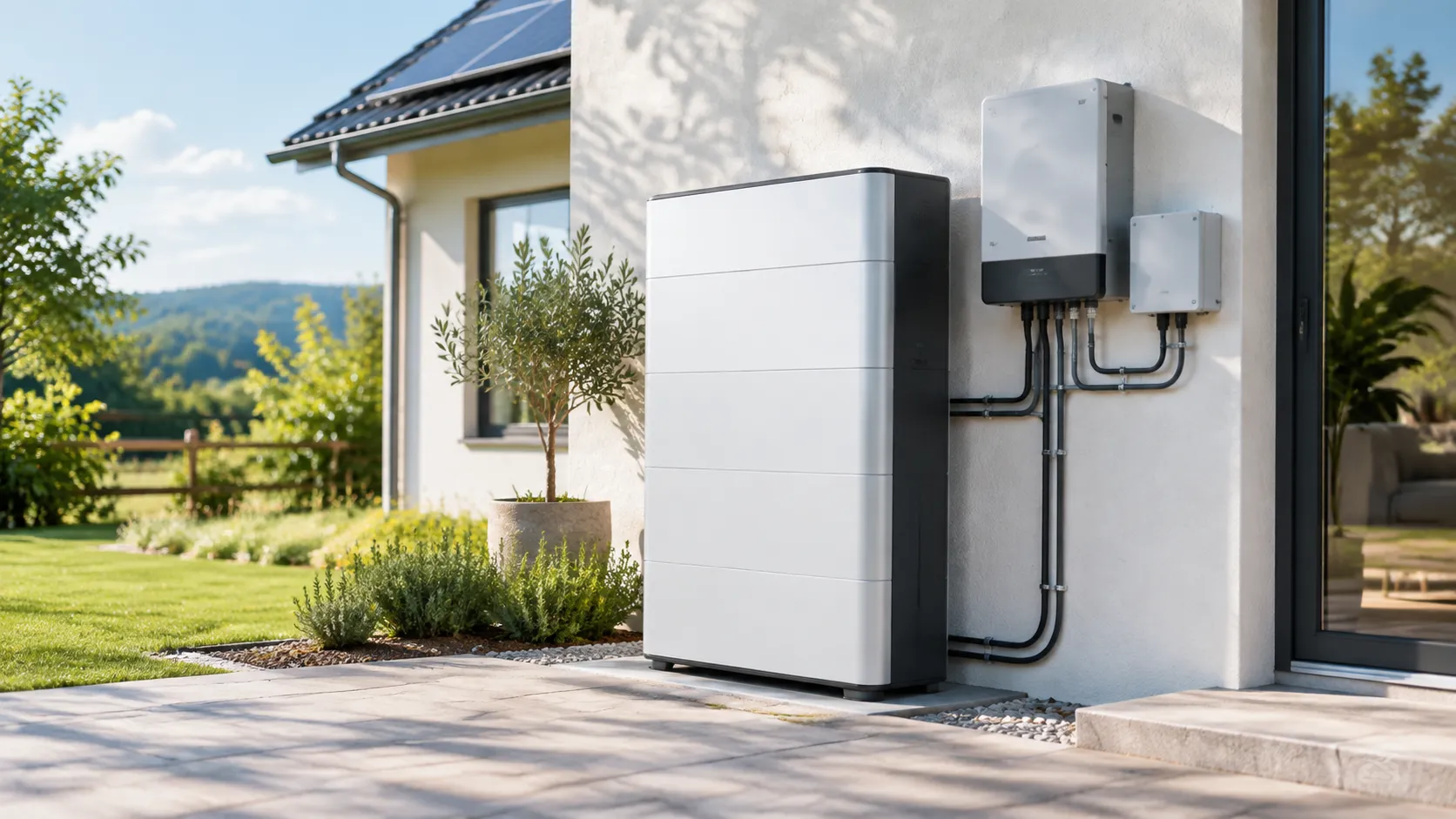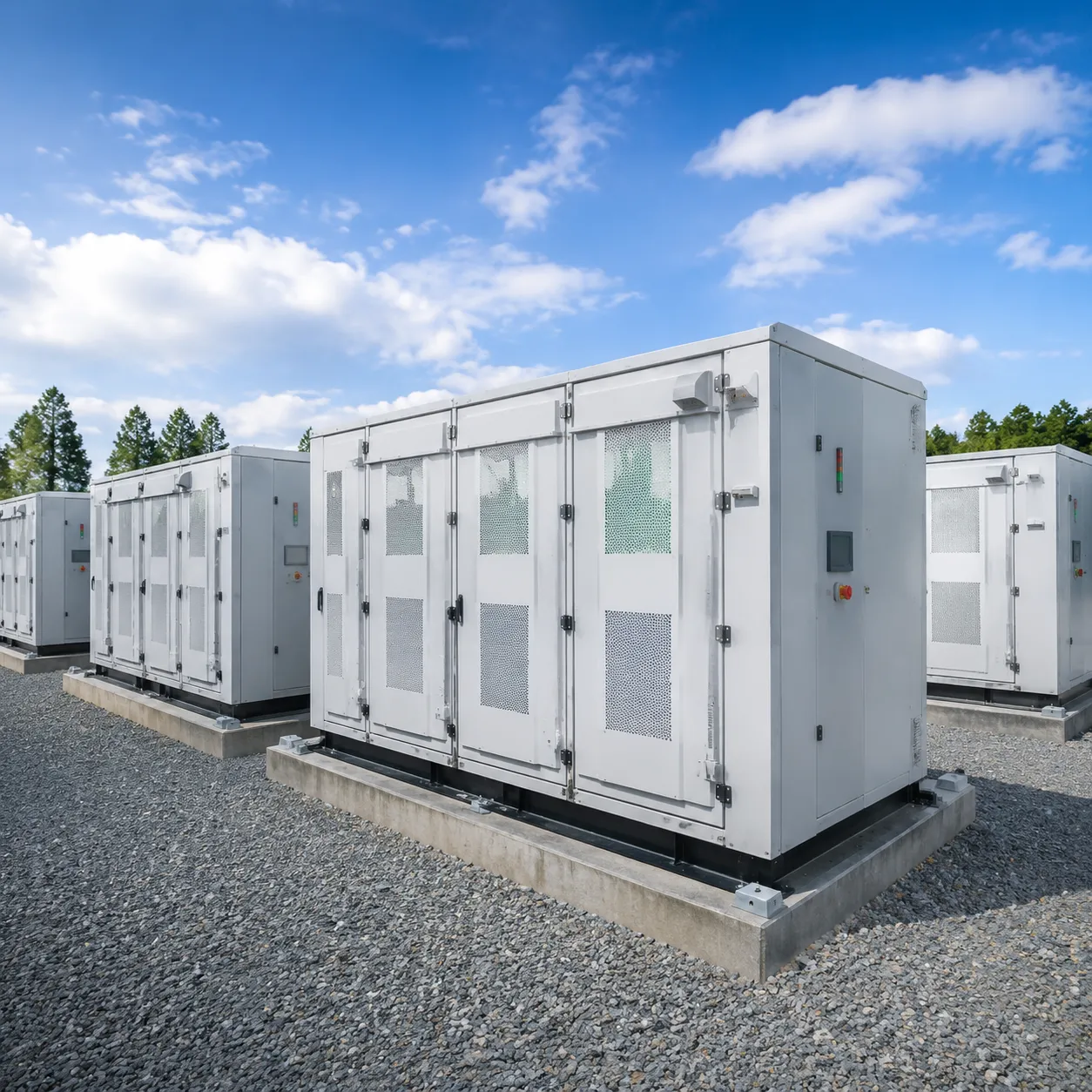

Formula details
Product Details
Overview
What Is a Solar Battery Storage Retrofit System?
Grid-tied photovoltaic setups into fully functional solar-plus-storage power stations. A retrofit system allows property owners to capture excess solar power without replacing or re-wiring their existing solar panels.
[Existing Solar Panels] → [Existing PV Inverter] → [AC Busbar / Home Panel]
↕
Bi-directional AC Power
↕
[Retrofit Storage Inverter / PCS]
↕
Bi-directional DC Power
↕
[Modular LiFePO4 Battery Pack]
Definition and Core Function of PV Retrofit Storage
A solar battery storage retrofit integrates a secondary energy storage unit into an already operational PV array. Instead of exporting surplus daytime generation to the utility grid for minimal feed-in credits, the system directs excess electricity into high-efficiency LiFePO4 solar battery storage.
Our retrofit systems perform three primary functions:
Energy Self-Consumption Optimization: Stores daylight energy for use during expensive evening peak-rate hours.
Emergency Backup Power: Automatically isolates from the utility grid during blackouts to supply continuous power to critical loads.
Grid Support & Peak Shaving: Suppresses demand spikes for commercial connections to eliminate steep utility capacity charges.
Main System Components from Battery Modules to Storage Inverters
We manufacture and supply the complete hardware stack required for seamless field integration:
| Component | Technical Role | Our Factory Standard |
|---|---|---|
| LiFePO4 Battery Modules | Chemical energy storage core | Tier-1 prismatic cells, 6,000+ deep cycles, modular LV (51.2V) & HV (100V–800V) stacks |
| Retrofit Storage Inverter | Bi-directional AC/DC conversion | High-efficiency AC-coupled or DC-coupled power conversion with sub-10ms switchover |
| Integrated BMS & EMS | Safety management and logic control | Cell-level monitoring, active balancing, customizable charge/discharge scheduling |
| Smart Meter & CT Clamps | Real-time power flow measurement | Ultra-fast data sampling to prevent reverse grid feeding and ensure dynamic load matching |
| Critical Load Backup Box | Grid isolation & switchover | Automated transfer switching (ATS) for safe off-grid islanding |
Target Users: From Solar Installers to Commercial Facility Operators
Our factory-direct manufacturing line supplies scalable retrofit hardware tailored for diverse B2B distribution and deployment channels:
- Solar Installers & EPC Contractors: Upgrade existing grid-tied residential clients to battery backup without altering the certified PV array.
- Wholesale Solar Distributors: Stock standardized, highly compatible retrofit solar storage inverters and modular lithium battery packs for broad market distribution.
- Commercial Facility Managers: Deploy scalable energy storage to existing commercial rooftop PV systems to reduce demand charges and secure operational continuity.
- Microgrid Developers: Integrate resilient battery storage into existing diesel-solar hybrid installations to cut runtime fuel consumption.
How Battery Storage Operates With Existing Solar Arrays
As a dedicated China lithium battery storage manufacturer, we engineer our retrofit systems to integrate seamlessly with existing grid-tied PV arrays. Adding energy storage does not require tearing out your functional grid-tied inverters. Instead, the storage hardware works in synchronization with the on-site generation to balance power flows in real time.
Understanding the operational stages helps installers and facility managers maximize solar self-consumption and financial payback. For detailed structural topologies, consult our energy storage system architecture and design guide.
[PV Array] ──> [Existing Inverter] ──> [AC Panel / Critical Loads]
│ ▲
Charge │ │ Discharge
▼ │
[Retrofit Storage Unit]
Daytime Solar Charging and Self-Consumption Flow
During peak sunlight hours, the existing PV system generates power for immediate facility loads:
Direct Load Priority: Solar energy runs local appliances and machinery first.
Surplus Capture: Any excess solar generation that would normally export to the utility grid at low feed-in tariffs is redirected automatically into the lithium battery bank.
Dynamic Regulation: Our smart bidirectional meters monitor export points within milliseconds to ensure zero wasted generation.
Evening Discharge and Nighttime Energy Utilization
When the sun goes down and solar production drops to zero, the power flow reverses:
Stored Solar Utilization: The battery discharges stored daytime energy directly to building circuits.
Minimized Grid Draw: High evening utility rates are avoided by powering loads directly from clean, stored reserves.
Continuous Cycle Management: Our integrated BMS ensures safe depth-of-discharge (DoD) rates to preserve LiFePO4 cell longevity over thousands of cycles.
Grid Outage Emergency Backup and Load Isolation
When the main utility grid fails, conventional grid-tied solar systems automatically shut down to prevent islanding hazards. Our retrofit solutions solve this:
Automatic Transfer Switch (ATS): Isolates critical loads from the main grid in under 10–20 milliseconds.
Microgrid Formation: The storage unit forms a local AC voltage reference, allowing existing solar inverters to stay online and continue powering backed-up loads while recharging batteries during extended blackouts.
Commercial Peak Shaving and Time-of-Use (TOU) Rate Optimization
For industrial and commercial facilities, high demand charges inflate electricity bills. Our commercial solar energy storage solution delivers automated bill reduction:
Peak Shaving: Automatically discharges when peak factory loads exceed preset kW thresholds, avoiding costly utility penalty charges.
TOU Arbitrage: Charges during off-peak rate periods and discharges during mandatory peak pricing windows.
Smart Energy Management and Remote Diagnostics
Every unit we manufacture features built-in communication interfaces (CAN, RS485, Wi-Fi, 4G) linked to our centralized Energy Management System (EMS):
Real-Time Visibility: Installers monitor cell voltages, state of charge (SoC), temperatures, and system efficiency via web and mobile portals.
Remote Firmware & Diagnostics: Update operating parameters, schedule discharge timers, and troubleshoot faults remotely without dispatching on-site service teams.
AC-Coupled vs. DC-Coupled Retrofit Storage Options
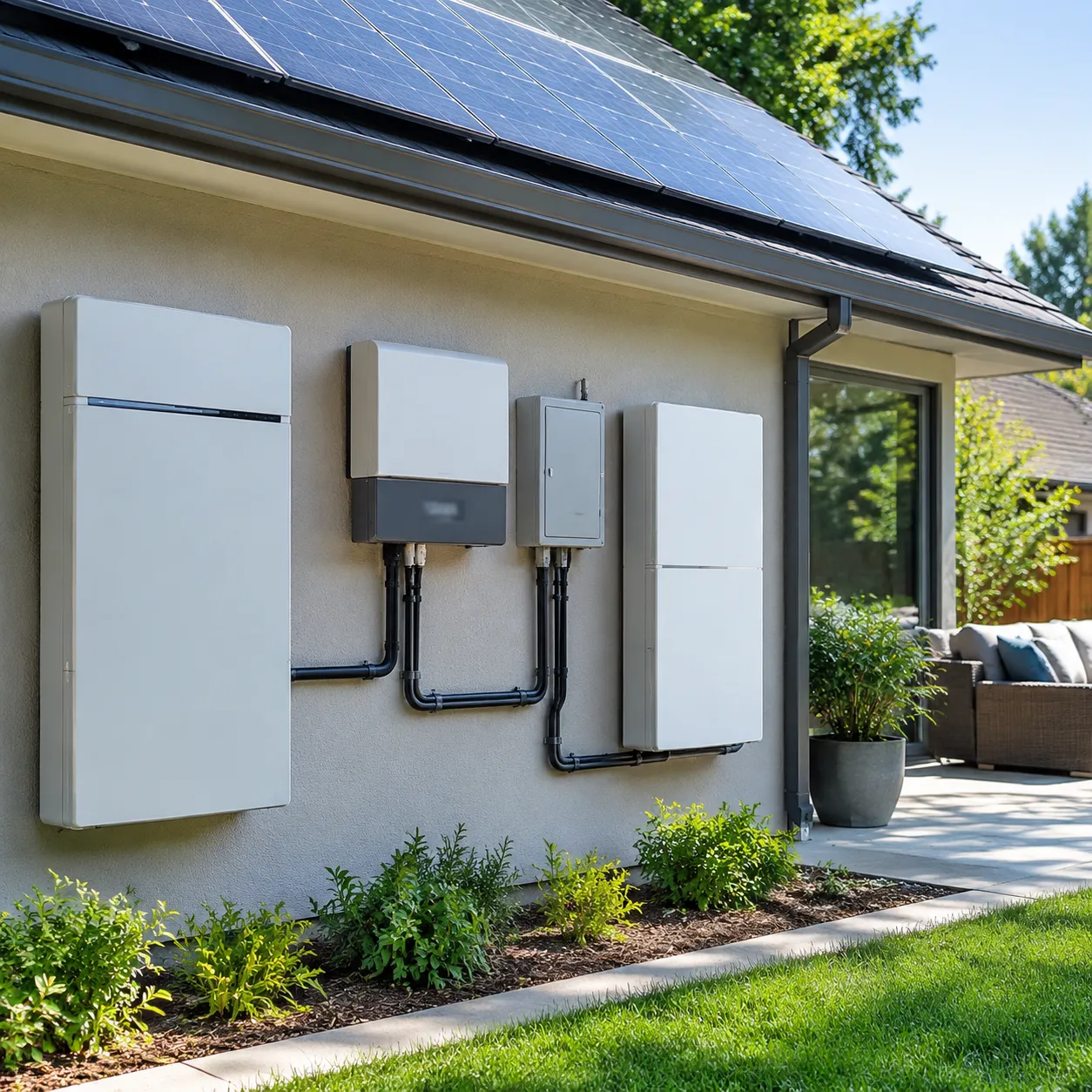
Understanding how these two topologies interact with an existing array allows installers and EPCs to select the most cost-effective path forward. For a deeper breakdown of system topologies, check out our types of battery energy storage systems comparison guide.
AC-Coupled Battery Retrofit Advantages and Compatibility
An AC-coupled battery storage retrofit connects directly to the AC bus of the building rather than the high-voltage DC solar strings.
- Universal Inverter Compatibility: Works alongside any existing grid-tied string inverter or microinverter brand without modifying the original PV array wiring.
- Non-Disruptive Installation: The original solar array remains entirely untouched, preserving existing installer warranties and utility interconnection agreements.
- Flexible System Placement: The dedicated retrofit solar storage inverter and battery bank can be positioned independently of the PV inverter location.
- Streamlined Permitting: Retrofitting on the AC side simplifies local electrical sign-offs since the existing PV generation circuit is not re-engineered.
DC-Coupled Storage Retrofit Design and Hybrid Inverter Integration
A DC-coupled solar storage retrofit ties the battery into the DC side of the system, typically requiring the replacement of the existing grid-tied inverter with an advanced hybrid solar inverter.
- Higher Round-Trip Efficiency: Solar energy flows straight from the PV strings into the battery bank over DC, eliminating double conversion losses (DC to AC, then back to DC).
- Consolidated Hardware Footprint: A single hybrid inverter manages both the PV input and battery charge/discharge cycles, saving wall and floor space.
- Enhanced Solar Clipping Capture: Oversized solar arrays can direct excess DC power straight into the battery bank during peak production hours instead of clipping output.
- Complete System Modernization: Ideal for older PV installations where the original string inverter is nearing the end of its operational lifespan.
Direct Technical Comparison: AC vs. DC Retrofit Setups
| Technical Parameter | AC-Coupled Retrofit | DC-Coupled Hybrid Retrofit |
|---|---|---|
| Existing Inverter Status | Kept in place (100% independent) | Usually replaced with a hybrid inverter |
| System Wiring Impact | Minimal; connects directly to AC distribution | High; rewires DC PV strings into hybrid unit |
| Round-Trip Efficiency | ~85% – 89% (multiple conversions) | ~90% – 94% (direct DC charging) |
| PV Brand Dependency | Brand-agnostic (universal fit) | Requires hybrid unit compatibility |
| Installation Labor Time | Low to moderate | Moderate to high |
| Best-Fit Application | Newer PV systems, microinverters, C&I retrofits | Aging inverters, new expansions, high-efficiency needs |
Hardware Architecture and Core Configurations
Modular LiFePO4 Battery Chemistry and Voltage Ratings
Our LiFePO4 solar battery storage systems utilize Tier-1 prismatic lithium iron phosphate cells rated for over 6,000 cycles at 80% Depth of Discharge (DoD). We build both low-voltage (LV) and high-voltage (HV) modular stacks to match any project size:
- Low-Voltage Modules (51.2V): Standard 5kWh to 10kWh rack-mount and wall-mount units, scalable up to 15 units in parallel (up to 150kWh) for standard residential retrofits.
- High-Voltage Stacks (100V – 600V+): Direct series-connected modular blocks ranging from 10kWh to over 100kWh per tower, delivering higher round-trip efficiency (≥95%) with lower line losses for commercial upgrades.
BMS Protection Functions and Cell-Level Balancing
Every battery cluster contains our proprietary, automotive-grade Battery Management System (BMS). The BMS performs continuous cell-level monitoring and dynamic active/passive balancing to extend pack longevity.
| Protection Layer | Parameters Monitored | Triggered Response |
|---|---|---|
| Overcharge / Overdischarge | Individual cell voltage (<2.5V or >3.65V) | Instant disconnect via solid-state relay/contactor |
| Thermal Management | Multi-point NTC sensors (-20°C to +60°C) | Charge current throttling, cooling fan trigger, shutdown |
| Short-Circuit & Overcurrent | DC bus current spikes | Sub-millisecond hardware breaker interruption |
| Cell Balancing | Inter-cell voltage drift (>30mV) | Active energy transfer across adjacent cells |
Energy Storage Inverter Power Ratings and Grid Parameters
Our retrofit solar storage inverter lineup operates directly on the AC output side of your existing PV setup.
- Single-Phase Output: 3kW, 5kW, 6kW, and 8kW (120V/240V split-phase or 230V single-phase).
- Three-Phase Output: 10kW to 50kW (208V, 380V, 400V, 480V) for commercial three-phase distribution panels.
- Grid Support & Compliance: Integrated anti-islanding, adjustable power factor (0.8 leading to 0.8 lagging), ultra-fast transfer time (<10ms), and full frequency/voltage ride-through functions.
Smart EMS Scheduling and Export Control Features
Our integrated Energy Management System (EMS) processes real-time load, PV generation, and utility tariff data through external current transformers (CTs) or smart power meters.
+-----------------------------+
| Smart EMS Engine |
+--------------+--------------+
|
+-------------------------+-------------------------+
| | |
v v v
+-----------------+ +-----------------+ +-----------------+
| Self-Use Mode | | TOU Arbitrage | | Zero-Export |
| PV covers loads | | Charge off-peak | | Fast CT meter |
| excess to pack | | discharge peak | | power throttling|
+-----------------+ +-----------------+ +-----------------+
- Remote Diagnostic Gateway: Built-in Wi-Fi, 4G, and Ethernet interfaces with CAN/RS485 Modbus communications for factory-level remote firmware updates and diagnostics.
Enclosures, Protection Hardware, and Backup Boxes
For outdoor industrial and residential deployments, our engineering team supplies complete turnkey enclosures such as an outdoor battery energy storage system with LiFePO4 battery integration, engineered to simplify mechanical installation:
- NEMA 3R / IP55 & IP65 Enclosures: Powder-coated galvanized steel with integrated forced-air cooling or optional HVAC thermal regulation.
- Automatic Backup Switch (ABS): Standalone external bypass and transfer switchboxes that isolate backup circuits from the grid in under 10 milliseconds during blackouts.
- Integrated Safety Hardware: Pre-wired DC disconnect switches, Type II surge protective devices (SPD) on both AC and DC rails, and rapid-shutdown compliance interfaces.
Existing Solar Inverter Compatibility and Upgrade Rules
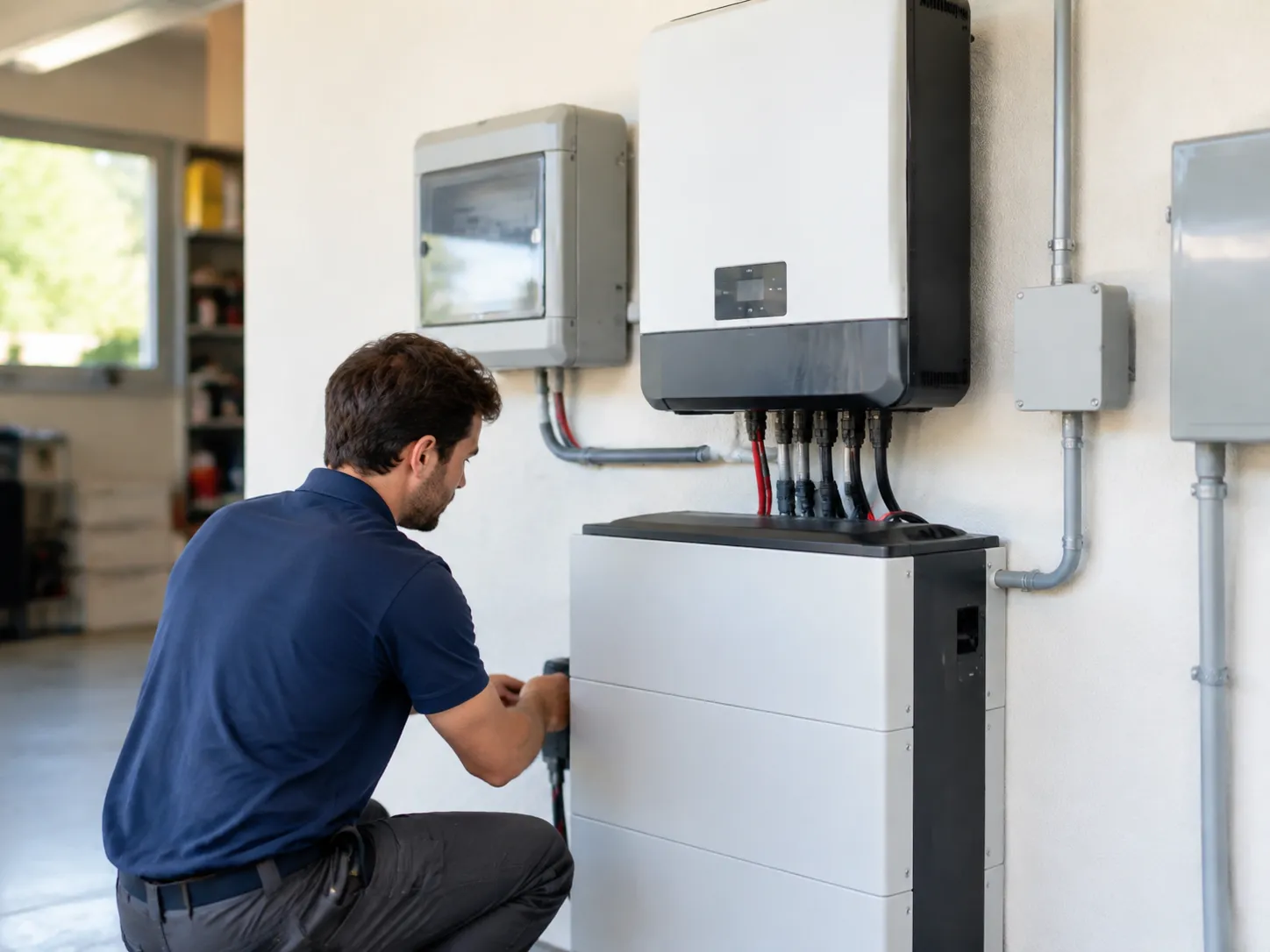
When retrofitting a client's site, deciding whether to keep the existing string inverter or replace it with a hybrid unit comes down to system age, site goals, and electrical wiring.
PV System Data Checklist for Retrofit Evaluation
Before selecting equipment for an existing solar system battery integration, our engineering team reviews several core parameters to verify compatibility and prevent onsite bottlenecks:
- Existing Inverter Brand & Model: Verifies whether the unit supports frequency shifting for off-grid Curtailment and anti-islanding.
- PV Array Voltage (Voc) and Current (Isc): Determines string configurations if considering a DC-coupled retrofit.
- Current Feed-in Tariff & Grid Connection Rules: Dictates whether zero-export limits or bi-directional metering hardware are needed.
- Main Service Panel Capacity: Checks busbar ratings (e.g., 100A, 200A) to ensure the panel can handle the added breaker for the storage inverter.
- Critical Load Requirements: Identifies sub-panel wiring requirements for backup circuits during grid outages.
Connecting Storage Alongside Existing Grid-Tied Inverters
For most commercial and residential upgrade jobs, an AC-coupled battery retrofit is the most cost-effective path. We connect our dedicated retrofit solar storage inverter and battery bank directly to the site’s AC distribution panel.
This setup allows the existing PV inverter to continue operating without changes to the DC string wiring. We deploy an intelligent current transformer (CT) meter at the grid entrance. This allows our system to read real-time power flows and direct surplus solar power into the modular battery energy storage system for scalable power without interfering with existing solar warranties.
When to Retain Existing Inverters vs. Upgrading to Hybrid Units
Choosing between keeping the current inverter or swapping it out depends on the installation age and overall system condition:
| Evaluation Factor | Keep Existing Inverter (AC-Coupled) | Replace with Hybrid Inverter (DC-Coupled) |
|---|---|---|
| Inverter Age | Under 5–7 years old; under active factory warranty | Over 8–10 years old; near end of design life |
| Labor & Roof Work | Zero roof labor; all work happens at the AC panel | Requires rewiring DC strings from roof to inverter |
| Component Warranty | Leaves existing solar system warranty intact | Replaces old inverter with a fresh 5 to 10-year warranty |
| Round-Trip Efficiency | ~85%–89% (dual DC-AC-DC conversion) | ~90%–94% (direct DC-DC charging from solar) |
| Best Scenario | Quick installations, commercial retrofits, diverse microinverter sites | Aging central inverters, complex repowering projects |
Sizing Guide for Solar Storage Retrofits
Getting the battery capacity right ensures high ROI and system reliability when adding battery storage to existing solar panels.
Power Capacity (kW) vs. Energy Storage Capacity (kWh)
Before running calculations, separate continuous output from storage duration:
- Power Output (kW): Determines how many appliances or machines the system can run simultaneously. If a commercial facility has peak loads of 150 kW, the storage inverter must supply that instantaneous power.
- Energy Capacity (kWh): Determines how long those loads can run. A 200 kWh battery discharging at 50 kW provides approximately 4 hours of backup (accounting for depth of discharge).
| Metric | Focus | System Component | Primary Goal |
|---|---|---|---|
| Kilowatts (kW) | Power delivery speed | Inverter / Power conversion system | Starting motors, handling peak surges |
| Kilowatt-hours (kWh) | Usable energy volume | LiFePO4 battery rack / module | Overnight self-consumption, extended backup |
Residential Sizing: Daily Load and Backup Goals
For homes with an existing grid-tied solar setup, sizing depends on the primary goal:
- Self-Consumption (Evening Use): Calculate total kWh consumed between sunset and sunrise. Standard homes usually require a 5 kWh to 15 kWh battery pack to eliminate evening grid imports.
- Essential Load Backup: Identify critical circuits (refrigerator, Wi-Fi, lighting, water pump). Multiply running watts by desired outage duration hours. A typical 5 kW / 10 kWh retrofit satisfies essential residential backup.
- Whole-Home Off-Grid Security: Requires matching both peak continuous load (often 8 kW to 12 kW) and 24-hour baseline consumption (20 kWh to 30 kWh).
Commercial Sizing: Demand Charge Reduction
Commercial solar-plus-storage upgrades focus heavily on peak shaving and time-of-use (TOU) arbitrage rather than simple daily self-consumption.
- Peak Demand Shaving: We analyze 15-minute interval utility data. If maximum demand peaks at 300 kW for 2 hours each afternoon, deploying a targeted commercial lithium battery energy storage system with BMS cuts those utility demand surcharges immediately.
- TOU Arbitrage: Charge the battery pack using daytime surplus PV, then discharge during peak rate hours to avoid high commercial tariff tiers.
- Scalable Architecture: For facilities with large load variations, our parallel battery energy storage systems allow modular expansion from 100 kWh up to multi-megawatt-hour capacities.
Step-by-Step Battery Capacity Calculation Formula
Our engineering team uses this standard formula to size retrofit battery banks:
$Required Battery Capacity (kWh) = frac{Daily Critical Load (kWh) × Days of Autonomy}{DoD × System Efficiency}$
- Daily Critical Load (kWh): Total watt-hours needed per day during solar non-generation hours.
- Days of Autonomy: Number of backup days required without solar input (typically 1 day for grid-tied retrofits).
- Depth of Discharge (DoD): Set to 90% (0.90) for our Grade-A LiFePO4 cells to maximize cycle life.
- System Efficiency: Account for inverter and round-trip losses (typically 88% to 92%, or 0.90).
Quick Example:
For a small business needing 45 kWh of overnight coverage:
$Battery Bank Sizing = frac{45 kWh × 1}{0.90 × 0.90} approx 55.5 kWh$
A standard 60 kWh LiFePO4 rack configuration delivers the required energy without straining the cells.
Target Applications for Solar Storage Retrofits
Residential Self-Consumption and Blackout Protection
For homeowners with existing grid-tied arrays, our AC-coupled retrofit battery systems capture surplus daytime solar energy that would otherwise be exported to the grid at low feed-in tariffs.
Self-Sufficiency: Maximizes nighttime self-consumption up to 80–90%.
Seamless Backup: Automatically transitions to emergency power supply (EPS) mode in less than 10 milliseconds during utility grid failures.
Plug-and-Play Integration: Installs directly on the AC distribution panel alongside any standard string inverter brand.
Commercial Building Peak Demand Management
Commercial properties face steep utility bills driven by peak demand surcharges. Our commercial & industrial energy storage systems integrate directly with existing commercial rooftop solar setups to shave costly power spikes.
Demand Charge Reduction: Discharges stored solar during peak facility draw intervals to smooth out load profiles. Understanding the benefits of peak shaving for lower energy costs helps EPCs deliver rapid ROI to commercial clients.
Time-of-Use (TOU) Arbitrage: Stores low-cost solar or off-peak grid energy to power HVAC and lighting during expensive peak tariff windows.
Small Industrial Energy Shifting and Operational Continuity
Industrial operations with legacy solar arrays rely on our scalable high-voltage LiFePO4 battery banks to ensure power stability and reduce operational overhead.
Load Shifting: Buffers intermittent PV output to match heavy machinery startup schedules.
Voltage Stabilization: Protects sensitive CNC machines, robotics, and production lines from voltage sags and short-term grid anomalies.
Scalable C&I Capacities: Modular rack-mounted battery units scale effortlessly from 50 kWh up to multi-megawatt-hour systems.
Microgrid, Agricultural, and Remote Backup Power
Farms, cold storage facilities, and remote industrial stations require continuous reliability beyond standard grid infrastructure.
Agrivoltaics & Cold Storage: Provides continuous power for irrigation pumps, ventilation, and refrigeration during routine rural grid drops.
Hybrid Microgrid Configurations: Pairs existing solar panels with diesel generators and our storage inverters to slash fuel consumption by up to 60%.
Rugged Outdoor Durability: Pre-engineered IP55/IP65 outdoor battery cabinets withstand extreme temperature variations, dust, and humidity in remote regions.
Installation Workflow, Safety Protection, and Certifications
As a dedicated China adding battery storage to existing solar system manufacturer, we design our systems for fast installation, maximum electrical safety, and global compliance. Retrofitting energy storage into an existing PV array requires minimal disruption to the existing setup when following our standardized workflow and safety architecture.
Site Requirements, Ventilation, and Cable Routing
Proper site preparation ensures long service life and high round-trip efficiency:
- Location & Clearance: Install units on a level, fire-resistant surface (concrete floor or wall-mounted brackets). Maintain at least 300 mm clearance around the unit for natural heat dissipation.
- Environmental Control: IP55/IP65-rated enclosures allow outdoor or indoor mounting. The ideal ambient operating window is 0°C to 45°C (32°F to 113°F).
- Cable Routing: Keep DC runs between the battery and the retrofit inverter as short as possible to reduce voltage drop. Use dedicated, double-insulated cables with secure conduits for AC grid ties and communication lines (CAN/RS485).
Step-by-Step Retrofit Commissioning Procedure
Our modular hardware allows installers to complete an AC-coupled battery storage retrofit in a single working visit:
- Isolate Existing System: De-energize the existing PV string inverter and main distribution panel breakers.
- Mount Hardware: Secure the battery rack/enclosure and the retrofit storage inverter adjacent to the main service panel.
- Connect CTs / Smart Meter: Install current transformers (CTs) at the main grid connection point to measure bi-directional energy flow.
- Make Electrical Connections: Connect the battery DC cables, AC backup output, AC grid feed, and CANbus communication lines.
- Power-up & Quick Setup: Power on the battery management system (BMS), boot the inverter, and configure grid profiles via our mobile commissioning app.
Multi-Level LiFePO4 Safety Protection
Our factory builds defense-in-depth safety directly into every module, aligning with our comprehensive LiFePO4 battery energy storage system safety standards:
- Cell-Level Safety: High-stability Lithium Iron Phosphate (LiFePO4) chemistry eliminates thermal runaway risks associated with standard lithium-ion chemistries.
- Hardware BMS Protections: Real-time monitoring of cell voltages, temperatures, over-charge, over-discharge, short circuit, and over-current conditions with microsecond cut-off response.
- Integrated Thermal Management: Aluminum heat sinks and internal thermal sensors prevent hot-spot accumulation during high-rate charge/discharge cycles.
- Physical Protection: Built-in DC disconnect switches, fast-blow fuses, and Type II surge protection devices (SPD) on both AC and DC sides.
Global Grid Certifications and Compliance Standards
To help our distribution and EPC partners streamline local utility interconnection and permitting, all our retrofit storage equipment complies with strict international standards and factory quality certifications.
| Region | Standards & Compliance | Target Scope |
|---|---|---|
| North America | UL 1973, UL 9540, UL 9540A, IEEE 1547 | Cell, pack, system fire safety, and grid interconnection |
| Europe / UK | CE, IEC 62619, IEC 62040, EN 50549, G98/G99 | Battery safety, EMC, and distribution network compatibility |
| Australia / NZ | AS/NZS 4777.2, AS/NZS 5139 | Inverter grid connection and battery safety installation |
| Global Transport | UN 38.3, MSDS | Safe international maritime and air freight transit |
China Battery Storage Manufacturer Capabilities and OEM Support
Factory Production Capacity and Integrated System Design
Our manufacturing facility operates multiple automated assembly lines dedicated to low-voltage (48V/51.2V) and high-voltage (100V–800V) storage setups. We engineer our hardware for seamless existing solar system battery integration, eliminating communication errors between existing string inverters and new battery packs. Every retrofit package includes matching high-current wiring harnesses, quick-connect terminals, and pre-configured smart meters for fast field deployment.
Rigorous Quality Control, Cell Screening, and Aging Tests
Reliability in the field depends entirely on factory testing protocols:
Cell Grading & Capacity Matching: We sort every cell by voltage, internal resistance, and capacity to ensure 100% balance across all modules.
Full Thermal & Load Cycles: As a dedicated battery energy storage system factory in China LiFePO4 BESS producer, we submit each assembled pack to continuous 1C charge/discharge cycles under controlled thermal conditions.
BMS Safety Validation: Automated testing checks over-voltage, short-circuit, ground-fault, and high-temp cutoffs before packaging.
| Testing Stage | Test Parameters | Standard Met |
|---|---|---|
| Incoming Cell QC | Internal resistance, OCV delta, capacity sort | Grade-A matching (<2% variance) |
| BMS Communication | CAN/RS485 handshake with major inverter brands | Multi-protocol auto-switching |
| Aging Chamber | 48-hour continuous cycle under elevated load | Zero thermal drift tolerance |
| High-Voltage Hipot | Dielectric withstand & insulation resistance | IEC 62619 / UL 1973 compliant |
Custom OEM Branding, ODM Development, and Private Labeling
We support regional brands and distributors with complete OEM and ODM customization:
Branded Enclosures: Silk-screened logos, custom powder-coat colorways, and bespoke metal housing designs.
Firmware Tailoring: Pre-configured CANbus/RS485 protocols matching your market's top string inverter brands.
Software White-Labeling: Customized mobile monitoring apps and desktop fleet management portals with your company branding.
Wholesale Ordering, Export Packaging, and Global Logistics Support
As a trusted wholesale solar battery supplier, we protect your hardware through every transit stage:
Export-Grade Crating: UN-certified heavy-duty wooden crates lined with moisture barriers and anti-shock foam.
Complete Documentation: Full compliance packages including UN38.3 test summaries, MSDS reports, and sea/air freight transport certificates.
Flexible Shipping Support: Direct container-load (FCL) dispatch, consolidated LCL options, and DDP shipping arrangements to major international ports.
Frequently Asked Questions About Retrofit Storage
Can battery storage be added to any existing solar installation?
Yes. As a dedicated China lithium battery storage manufacturer, we engineer retrofit systems that integrate with virtually all existing grid-tied setups. Whether the site uses single-phase string inverters, three-phase commercial units, or microinverters, we deliver compatible AC-coupled battery storage retrofit hardware or hybrid conversion kits to bring energy storage online without voiding existing equipment warranties.
Is it necessary to replace our current solar inverter?
No. An AC-coupled upgrade keeps your existing string or microinverters completely intact. Our retrofit solar storage inverter connects directly to the AC distribution panel, managing battery charging and discharging independently. If the existing solar inverter is old or underperforming, upgrading to an all-in-one hybrid inverter is also an option, but it is never mandatory.
| Retrofit Approach | Current PV Inverter Status | Best Suited For |
|---|---|---|
| AC-Coupled Retrofit | Retained (No wiring changes to PV array) | Fast installs, warranty protection, microinverters |
| DC-Coupled Retrofit | Replaced with Hybrid Storage Inverter | Older systems, full system overhauls, maximum efficiency |
What is the main difference between AC-coupled and DC-coupled retrofits?
- AC-Coupled: Captures power on the AC grid side. It offers the fastest installation and works with 100% of existing solar setups without rewiring PV strings.
- DC-Coupled: Requires routing the solar array directly into a hybrid inverter. While it reduces conversion losses, it requires adjusting DC wiring and string voltages.
Will the retrofit battery provide power during a grid blackout?
Yes, when paired with our automated transfer switch (ATS) or backup gateway. During a utility grid failure, the system physically disconnects from the grid within 10 to 20 milliseconds, switching critical loads to battery power and establishing an isolated microgrid so the existing solar array can continue generating power.
[Utility Grid Offline] ──> [ATS Disconnects Grid] ──> [Battery Powers Critical Loads in <20ms]
How do we calculate the right battery capacity for our system?
We calculate storage capacity based on daytime PV export, overnight baseline consumption, and backup run-time requirements. For commercial and industrial facilities, explore our pre-configured battery energy storage systems designed specifically for demand charge management and high-yield operational continuity.
$Required Battery Capacity (kWh) = frac{Daily Essential Load (kWh) × Days of Autonomy}{Depth of Discharge (DoD) × System Efficiency}$
What technical information is required to get a factory quotation?
To help our engineering team size and quote your project rapidly, provide:
Existing PV inverter brand, model, and rated power (kW).
Grid configuration (single-phase 120V/240V, three-phase 208V, 380V, or 480V).
Daily energy usage profiles and average peak export numbers.
Backup load requirements (whole-home vs. dedicated critical sub-panel).
What OEM and private label services are available for distributors?
As a complete battery energy storage system manufacturer, we offer end-to-end OEM and ODM support for wholesale distributors and solar brands:
Branded Enclosures: Custom sheet metal design, colors, and laser-engraved client logos.
Software Localization: White-label mobile monitoring apps, web dashboards, and custom firmware protocols.
Packaging & Documentation: Private-label unboxing experiences, localized manuals, and regional compliance documentation.