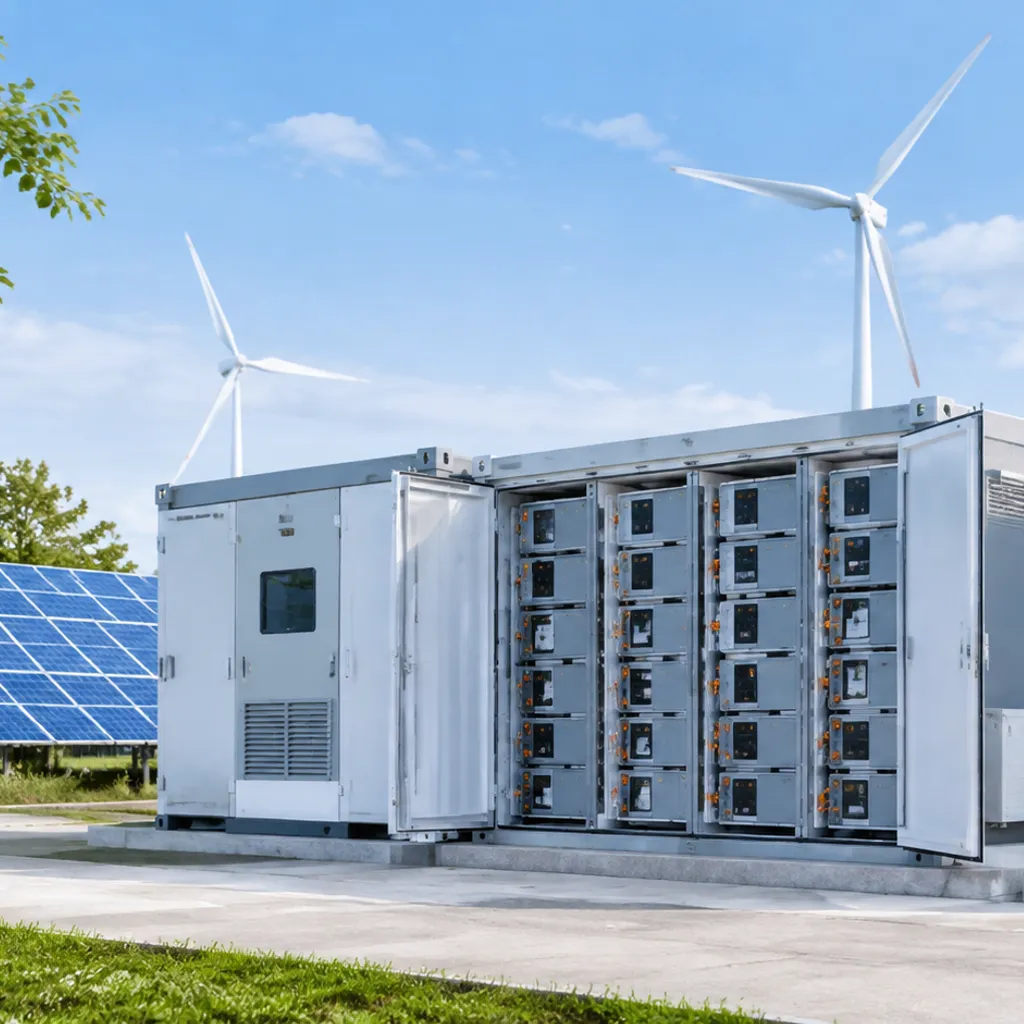

What Is a BESS Integrator, EPC Contractor, and Equipment Supplier?
Navigating a utility-scale or commercial battery storage deployment requires a clear understanding of who builds the technology, who makes it communicate, and who puts it in the ground. When we evaluate project delivery frameworks, we break these three central stakeholders down by their core responsibilities, engineering boundaries, and contractual liabilities.
Asset Owner / Developer
↓
BESS Integrator ↔ EPC Contractor ↔ Equipment Suppliers
BESS Integrator
Software, BMS/EMS & system architecture
EPC Contractor
Civil works, eBOP/mBOP & grid interconnection
Equipment Suppliers
Battery cells, PCS & transformers
The BESS System Integrator: Hardware-Software Orchestration
A BESS system integrator takes discrete electrochemical, electrical, and thermal components and transforms them into a unified, high-performing energy asset. Rather than just bolting parts together, the integrator owns the complex interface between hardware mechanics and digital control layers.
- EMS and BMS Pairing: Direct integration between the lower-level Battery Management System (BMS) and the site-level Energy Management System (EMS) to manage state-of-charge (SOC), cell balancing, and millisecond dispatch.
- System Architecture Design: Specifying containerized layouts, thermal management loops (liquid cooling vs. HVAC), and integrated fire detection/suppression systems.
- System-Level Performance Wrapping: Providing single-point accountability for Round-Trip Efficiency (RTE), state-of-health degradation curves, and response times required by wholesale markets.
The EPC Contractor: Site Execution and Grid Interconnection
An Engineering, Procurement, and Construction (EPC) contractor manages the physical delivery of the project from raw land to commercial operation date (COD). They handle the heavy civil and electrical engineering needed to connect the battery asset to the point of common coupling (PCC).
- Civil & Mechanical Balance of Plant (mBOP): Geotechnical surveys, grading, foundation pad pouring, containment berms, drainage, and structural physical security.
- Electrical Balance of Plant (eBOP): Medium- and high-voltage cable runs, collection systems, step-up transformers, switchgear, and on-site substations.
- Site Safety and Permitting: Local building code adherence, environmental permitting, local AHJ (Authority Having Jurisdiction) sign-offs, and field labor management.
- Grid Interconnection Execution: Managing utility interconnection studies, commissioning high-voltage switchyards, and running energization testing under strict utility protocols.
The Equipment Supplier (OEM): Component Manufacturing
An equipment supplier (Original Equipment Manufacturer) fabricates the individual physical building blocks of an energy storage project. Their engineering focuses on factory-level chemistry, manufacturing tolerances, and unit-level economics.
- Electrochemical Hardware: Battery cells, modules, and pre-assembled high-voltage DC racks (primarily Lithium Iron Phosphate/LFP).
- Power Conversion Systems (PCS): Bidirectional inverters converting DC battery energy to grid-compliant AC electricity.
- Auxiliary Hardware: Liquid-cooling chillers, high-voltage junction boxes, container enclosures, and dry-type or oil-filled transformers.
- Defect Warranties: Providing pass-through, component-level warranties against manufacturing defects, material failure, and factory workmanship.
Core Roles at a Glance
| Role | Primary Deliverable | Core Engineering Focus | Typical Risk Boundary |
|---|---|---|---|
| BESS Integrator | Fully integrated DC/AC storage block + EMS | Control logic, thermal safety, BMS orchestration | System-level RTE, degradation, uptime guarantees |
| EPC Contractor | Complete, energized, grid-tied facility | Civil works, eBOP, high-voltage cabling, permits | Construction schedule, civil defects, interconnection |
| Equipment Supplier | Discrete hardware components | Chemical energy density, inverter efficiency, build quality | Component-level factory defects (pass-through) |
Core Scope of Work Across the Energy Storage Lifecycle

Executing a utility-scale or C&I energy storage project requires clear boundaries between software integration, physical construction, and hardware manufacturing. When we evaluate a project's lifecycle, the scope divides into four distinct operational phases across the BESS integrator, EPC contractor, and equipment supplier.
BESS Project Lifecycle
| 1. Pre-Construction | 2. Procurement & FAT | 3. Civil & BOP | 4. Commissioning |
|---|---|---|---|
| Sizing & simulation | Hardware fabrication | Site preparation | Cold / hot SAT |
| EMS/BMS design | Factory Acceptance Testing (FAT) | eBOP / mBOP | Grid synchronization |
Pre-Construction Engineering and Sizing Simulation
Before pouring concrete or ordering cells, engineering teams must lock in system performance models based on the site's revenue strategy:
- Degradation and Sizing Modeling: The integrator and supplier model battery capacity loss over a 10-to-20-year horizon, matching throughput to market use cases (frequency regulation, energy arbitrage, or peak shaving).
- System Topology & Architecture: Specifying DC block layouts, inverter-to-battery ratios, and thermal management demands. For a deep dive into electrical topologies, check our energy storage system architecture and design guide.
- Interconnection Studies: The EPC contractor leads the initial load flow, short circuit, and dynamic stability studies required by the local grid operator.
Equipment Procurement, Supply Chain Logistics, and FAT
Procurement requires tight coordination between component manufacturers and integration specialists:
- Hardware Manufacturing: The BESS equipment supplier builds Tier-1 lithium-ion (LFP/NMC) racks, enclosures, liquid cooling units, and Power Conversion Systems (PCS).
- Factory Acceptance Testing (FAT): We verify hardware safety mechanisms, DC string performance, and initial communication interfaces at the factory before shipping.
- Logistics & Staging: Integrators and EPCs manage customs clearance, heavy-haul freight, and drop-ship scheduling to keep crane and labor costs aligned with site readiness.
Civil Construction, Electrical Balance of Plant (eBOP), and Mechanical BOP
Physical execution on-site belongs almost entirely to the EPC contractor:
- Civil Works: Site grading, foundation slabs, drainage, access roads, and thermal runaway containment barriers.
- Electrical Balance of Plant (eBOP): Installation of medium-voltage (MV) transformers, switchgear, protection relays, raceways, underground trenching, and substation grid connections. To review breakdown costs and labor requirements, see our battery energy storage EPC scope, cost, and contractor guide.
- Mechanical Balance of Plant (mBOP): Rigging battery enclosures, interconnecting external HVAC chillers, and landing fire suppression (NFPA 855) piping networks.
Commissioning, Site Acceptance Testing (SAT), and Utility Grid Compliance
The final phase brings the hardware, controls, and utility network together:
[ Cold Commissioning ] --> [ Hot Commissioning ] --> [ Grid Compliance / COD ]
• Insulation & Torque Checks • Energization & String Sync • Frequency/Voltage Response
• Dry Contact Loop Tests • EMS/SCADA Signal Mapping • Utility Interconnection (SAT)
- Cold & Hot Commissioning: The EPC handles point-to-point wiring checks, while the integrator powers up the Energy Management System (EMS) and Battery Management System (BMS).
- Site Acceptance Testing (SAT): The team runs full charge-discharge cycles to prove actual Round-Trip Efficiency (RTE) and rated capacity against contractual baselines.
- Grid Compliance & Interconnection: We tune inverter controls for IEEE 1547 and local utility requirements, executing real-power curtailment, reactive power support, and black-start tests to secure the formal Permission to Operate (PTO).
BESS Integrator vs EPC Contractor vs Equipment Supplier: Direct Comparison

| Evaluation Metric | BESS System Integrator | EPC Contractor | BESS Equipment Supplier (OEM) |
|---|---|---|---|
| Core Technical Focus | EMS/BMS orchestration, safety controls, grid modeling | Civil works, foundation, eBOP/mBOP, substation build | Cell, module, rack, and containerized hardware manufacturing |
| Hardware Sourcing | Technology-agnostic (matches tier-1 cells, PCS, HVAC) | Procurement-agnostic (installs owner-furnished or bundled gear) | Proprietary (locked to their specific hardware ecosystem) |
| Primary Risk Managed | System uptime, round-trip efficiency (RTE), degradation wrap | Interconnection delays, construction timeline, safety compliance | Factory defects, cell-level performance degradation |
| Typical Cost Model | Software licensing + equipment packaging + integration margin | Fixed-price turnkey EPC contract with contingency margin | Pure CAPEX hardware supply pricing per kWh/MW |
Technical Capability: Software Orchestration vs. Physical Construction
- BESS Integrators specialize in the digital and electrical nexus. They fine-tune the Energy Management System (EMS) and Battery Management System (BMS) to ensure active and reactive power responses meet local interconnection codes.
- EPC Contractors excel in civil execution, structural mounting, trenching, medium-to-high-voltage transformers, and physical grid interconnection. Partnering with specialized EPC contractors ensures physical site installation aligns with strict local utility requirements.
- Equipment Suppliers focus on factory-level hardware yield, cell thermal dissipation, and module-level fire containment.
Hardware Flexibility: Technology-Agnostic vs. Proprietary Stacks
- Pure-Play Integrators: Source best-in-class batteries, bi-directional inverters (PCS), and HVAC units based on project lifecycle demands rather than pushing a specific factory's inventory.
- OEM Suppliers: Offer tightly integrated, containerized systems. While this simplifies factory testing, it locks you into their proprietary communications and replacement components.
- EPC Contractors: Typically favor standard, pre-packaged blocks that minimize field labor and shorten installation hours on site.
Risk Profiles and Performance Guarantees
- Integrator System Wrap: Absorbs the interface risk between the batteries, inverters, and utility grid controls. They provide single-point capacity and efficiency guarantees across the entire DC and AC block.
- EPC Construction Liability: Manages liquidated damages tied to commercial operation dates (COD), mechanical completion, and civil permitting milestones.
- OEM Defect Warranty: Confines liability strictly to component repair or replacement under standard factory warranties, leaving system-level troubleshooting to the asset owner.
Cost Structures: Turnkey Margins vs. Direct Procurement
- Turnkey EPC Delivery: Higher upfront project pricing due to the general contractor layering margin and contingency over all subcontracts, but delivers total project risk isolation.
- Integrator Procurement Packages: Eliminates multi-layered markups on battery cells while maintaining full controls integration and software support.
- Direct OEM Purchasing: Lowers upfront hardware CAPEX, but shifts interface risk, field engineering, and software debugging onto the developer’s in-house team. Reviewing our guide on how to select BESS can help determine which pricing model matches your capital expenditure strategy.
Primary Project Procurement and Contracting Models
Choosing how to structure contracts determines who takes the technical risk, how fast the site goes live, and the total capital expenditure. In our experience across multi-megawatt deployments, developers typically rely on four main delivery structures.
Full Turnkey EPC Model
Under a turnkey EPC contract, a single entity assumes complete responsibility for design, procurement, civil works, electrical balance of plant (eBOP), installation, and commissioning.
- Single point of contact: You deal with one prime contractor responsible for the entire delivery schedule and performance wrap.
- Risk transfer: Technical mismatches between hardware, software, and local grid connection requirements fall entirely on the EPC contractor.
- Trade-off: You pay a premium for contractor contingency margins and equipment markups.
For developers prioritizing speed and non-recourse bank financing, working with an established BESS company for utility-scale turnkey storage systems significantly reduces delivery friction and utility interconnection delays.
Project Developer
↓
Turnkey EPC Lead
Single-point responsibility: Engineering + Procurement + Construction + Grid Interconnection
↓
Battery & Inverter OEMs ↔ BESS System Integrator ↔ Sub-EPCs
Split-Scope Procurement
Split-scope procurement divides the project into two distinct packages: the technology package and the balance-of-plant (BOP) execution. We frequently see this approach used on large utility-scale BESS sites to optimize capital efficiency.
- Technology Island: The developer directly contracts a specialized BESS system integrator to deliver pre-configured battery enclosures, inverters, Battery Management Systems (BMS), and Energy Management Systems (EMS).
- EPC / Balance of Plant: A separate EPC contractor for energy storage manages civil foundations, structural racking, high-voltage substations, cabling, and local utility tie-ins.
This model cuts out the middleman markup on core storage equipment. However, the developer’s in-house engineering team must actively manage the physical and electrical boundary between the integrator's hardware and the EPC's site infrastructure.
Direct OEM Procurement with Third-Party System Integration
For asset owners with deep technical expertise, direct procurement from a tier-1 BESS equipment supplier yields the lowest hardware cost.
- The developer purchases battery racks and enclosures directly from the OEM manufacturer.
- An independent software and controls integrator steps in to handle power plant controllers (PPC), SCADA integration, and cloud-based EMS orchestration.
- A local electrical contractor executes the physical installation.
While this maximizes cost savings, it exposes the project to cross-party finger-pointing if system-level integration issues or communication delays between the inverter and BMS arise during site acceptance testing (SAT).
Long-Term Service Agreements (LTSA) and Capacity Maintenance
Deploying hardware is only half the battle. Maintaining revenue generation over a 15-to-20-year asset lifespan requires a structured service and degradation strategy.
| Agreement Component | Primary Coverage Scope | Key Performance Indicator (KPI) |
|---|---|---|
| Preventive & Corrective Maintenance | Routine thermal management checks, HVAC servicing, inverter filter replacements, and scheduled physical inspections. | System Uptime Guarantee (typically 97%–99%) |
| Capacity Augmentation | Planned addition of new utility-scale battery storage containers for solar and wind in years 5 to 10 to offset cell degradation. | Maintained Rated Energy Capacity (MWh) |
| Performance Wraps | Software updates, round-trip efficiency (RTE) tuning, and real-time response monitoring under market dispatch conditions. | Guaranteed RTE & Availability Thresholds |
Structuring an effective LTSA directly with your system integrator or OEM ensures battery degradation guarantees remain valid, protecting long-term project IRR.
Warranty, Performance Guarantees, and Liability Mapping
In my experience executing storage assets, the real test of a project structure isn't commissioning day—it’s year three when an inverter trips or a rack underperforms. Understanding who holds the financial risk across hardware, software, and civil execution is critical to protecting project IRR.
Component Warranties vs. System-Level Wrap Guarantees
One of the biggest pitfalls we see developers face is confusing individual component warranties with a true performance guarantee.
- Component Warranties: Provided by the equipment supplier (OEM). These cover factory defects for discrete parts (e.g., 10-year cell capacity, 5-year inverter warranty). If an auxiliary HVAC system fails and overheats a rack, the battery OEM will not cover the resulting degradation.
- System-Level Wrap Guarantees: Provided by a BESS integrator or a turnkey EPC contractor. This wraps the entire architecture—inverters, thermal management, BMS, and EMS—under a single performance umbrella, guaranteeing operational output at the Point of Interconnection (POI).
For mission-critical installations, deploying factory-integrated battery energy storage systems with unified warranty wraps removes the administrative burden of chasing multiple vendors when issues arise.
| Feature | Component Warranty (OEM) | System Wrap Guarantee (Integrator) |
|---|---|---|
| Point of Measurement | DC terminals / battery rack | AC Point of Interconnection (POI) |
| Coverage Scope | Manufacturing defects only | Full-system throughput & uptime |
| Degradation Liability | Dependent on specified operating conditions and usage logs | Bound to contracted use-case profile |
| Dispute Resolution | Multi-party coordination | Single point of contact |
Managing RTE, Capacity Degradation, and Uptime
Long-term revenue hinges on three core performance metrics:
- Round-Trip Efficiency (RTE): Measures the AC-to-AC energy loss. A low RTE directly increases charging costs.
- Capacity Degradation Guarantees: Sets an allowable threshold for annual capacity loss based on defined cycling profiles and depth of discharge (DoD).
- System Availability (Uptime): Integrators typically back 97% to 99% uptime via liquidated damages, ensuring the system responds to dispatch signals.
Resolving the Hardware vs. Software Liability Gap
When an asset underperforms, the most common dispute occurs between the battery supplier and the EMS provider. The hardware OEM claims aggressive software dispatch exceeded thermal limits; the software provider claims cell balancing failed.
To eliminate this finger-pointing:
Define Clear Telemetry Thresholds: Log all cell temperatures, C-rates, and auxiliary power loads immutably.
Assign Single-Source Software Control: Ensure the BESS system integrator validates that the EMS control algorithms strictly adhere to the OEM's Battery Management System (BMS) safety envelope.
Safety Standard Certifications and Grid Compliance
A solid warranty is worthless if local authorities or utilities reject the installation. A bankable delivery partner must secure and document key safety and grid certifications:
- UL 9540 & UL 9540A: Validates system-level electrical safety and evaluates thermal runaway fire propagation characteristics.
- NFPA 855: Mandates installation spacing, unit separation, and fire suppression system design.
- IEEE 1547-2018: Governs grid interconnection, anti-islanding, and reactive power capabilities, which is especially critical for maintaining operational stability during weak grid applications.
How to Choose the Right Delivery Model for Your BESS Project
Picking between a BESS integrator, an EPC contractor, or an equipment supplier comes down to three factors: project scale, in-house technical capacity, and your appetite for risk. We find that mismatching the contracting structure to the project scope is the most common cause of budget blowouts and commissioning delays.
Project Scale: Utility-Scale vs. C&I Behind-the-Meter
Project scale directly determines how interface risks are distributed:
- Utility-Scale Solar-Plus-Storage: Large-scale front-of-the-meter (FTM) assets face intense grid compliance hurdles, complex civil works, and high interconnection liabilities. For hybrid assets like solar-plus-storage solutions, deploying a dedicated BESS integrator alongside a qualified balance of plant (BOP) contractor—or handing the entire scope to a full-wrap EPC—is crucial for managing joint inverter controls and utility testing. Evaluating leading utility-scale battery storage providers helps match vendor capabilities to specific grid interconnection requirements.
- Commercial & Industrial (C&I) Behind-the-Meter: C&I installations feature lower site complexity and standard low-to-medium voltage switchgear. In these cases, buying pre-integrated, skid-mounted enclosures directly from an equipment supplier or specialized integrator avoids excessive EPC management markups.
BESS Delivery Model Matrix
| Delivery Model | Best Suited For | Primary Risk | Margin |
|---|---|---|---|
| Turnkey EPC | Large utility-scale projects with limited in-house engineering resources | Higher management overhead costs | High |
| Split-Scope (Integrator + BOP) | Developers with experienced project management teams | Interface and handoff friction | Medium |
| Direct OEM / Supply Only | Mega-scale portfolios with robust internal controls engineering | Full integration and warranty risk | Low |
Assessing In-House Technical Bandwidth
Before signing contracts, audit your team's real engineering and field management bandwidth:
- Lean Teams: If your organization lacks dedicated power systems engineers, battery controls specialists, and site managers, choose a Turnkey EPC or a full-wrap BESS Integrator. Paying a 10% to 15% procurement premium is cheaper than absorbing utility non-compliance fines or extended commissioning timelines.
- Experienced Developers: If you have in-house power engineering, SCADA expertise, and procurement power, a Split-Scope approach yields significant capital savings. You buy the integrated battery enclosures directly from the OEM or integrator, while separately bidding civil, structural, and electrical Balance of Plant (eBOP) to regional electrical contractors.
Key Selection Criteria
When vetting potential partners across the value chain, focus on these four non-negotiable requirements:
- Bankability & Balance Sheet Strength: Ensure the entity taking the system-level performance wrap has the liquidity and parent guarantees to back multi-year capacity degradation and round-trip efficiency (RTE) guarantees.
- Demonstrated Field Track Record: Look past announced pipelines and evaluate operating MWh. Ask for operating data on system availability and response times in your specific grid operating environment.
- Tier 1 Supply Relationships: Ensure your partner has secured direct cell and inverter allocations, backed by robust Factory Acceptance Testing (FAT) protocols that prevent manufacturing delays.
- Local Grid Code Familiarity: Verify previous project approvals under relevant regional standards (such as IEEE 1547, UL 9540A, and local ISO/RTO dynamic modeling requirements). Missing local interconnection nuances will stall final commercial operation.
Frequently Asked Questions (FAQs)
Can a BESS integrator act as the general EPC contractor?
Yes, some large-scale integrators offer full turnkey engineering, procurement, and construction packages. However, in our experience across utility-scale and C&I deployments, most integrators prefer a split-scope model. They focus on delivering the core integrated storage block, power conversion system (PCS), and controls, while subcontracting or leaving civil works, high-voltage substations, and mechanical installation to a localized EPC contractor energy storage specialist.
What is the difference between an OEM battery manufacturer and a pure-play integrator?
An OEM equipment supplier produces the raw battery cells, modules, and standard enclosures. A pure-play BESS system integrator takes those core DC components, pairs them with proprietary Battery Management Systems (BMS) and Energy Management Systems (EMS), sources third-party inverters and safety systems, and writes the control architecture. While evaluating top battery energy storage system BESS manufacturers, remember that pure-play integrators offer vendor-agnostic hardware flexibility, whereas OEMs tie you directly to their proprietary cell chemistry and enclosure designs.
| Feature | OEM Battery Manufacturer | Pure-Play BESS Integrator |
|---|---|---|
| Core Focus | Cell/module manufacturing, hardware scaling | Software orchestration, multi-vendor packaging |
| Hardware Agility | Locked to proprietary hardware lines | Flexible sourcing across tier-1 cell/inverter vendors |
| Software Scope | Module/rack BMS, basic diagnostics | Full-stack EMS, cloud analytics, market trading dispatch |
| Warranty Scope | Component defect & throughput guarantees | End-to-end system wrap (RTE, availability, capacity) |
Who is held liable if a commissioned BESS fails grid interconnection tests?
Liability is determined by your contract structure:
Turnkey EPC Contract: The EPC holds single-point liability and absorbs liquidated damages until the utility signs off on the grid interconnection agreement and issues Permission to Operate (PTO).
Split-Scope Procurement: Liability divides at the point of failure. If the failure is caused by power plant controller (PPC) response tuning, active/reactive power ramps, or IEEE 1547 compliance, the BESS integrator is liable. If the issue stems from incorrect substation transformer taps, faulty wiring, or utility switchgear sizing, the electrical contractor assumes responsibility.
How does software like EMS and BMS dictate the choice between an integrator and a supplier?
Hardware suppliers only provide low-level rack BMS controls and basic alarms. If your project demands automated revenue stacking, dynamic grid support (such as frequency response and voltage regulation), or multi-asset orchestration, you need an integrator's high-level Energy Management System (EMS). Choosing an integrator gives you access to advanced software algorithms that actively manage cell thermal balance, regulate round-trip efficiency (RTE), and mitigate accelerated capacity degradation over a 15- to 20-year asset lifecycle.
Is it cheaper to buy directly from an equipment supplier or use a turnkey EPC?
Direct procurement from a supplier yields the lowest initial equipment CapEx, cutting 8% to 15% in EPC markups when purchasing direct factory LiFePO4 BESS enclosures. However, buying direct shifts total project integration risk, shipping logistics, site assembly, and UL 9540/NFPA 855 compliance management onto your in-house team. A turnkey EPC contract carries a higher upfront cost but provides complete financial insulation against costly commissioning delays, supply chain bottlenecks, and warranty finger-pointing.