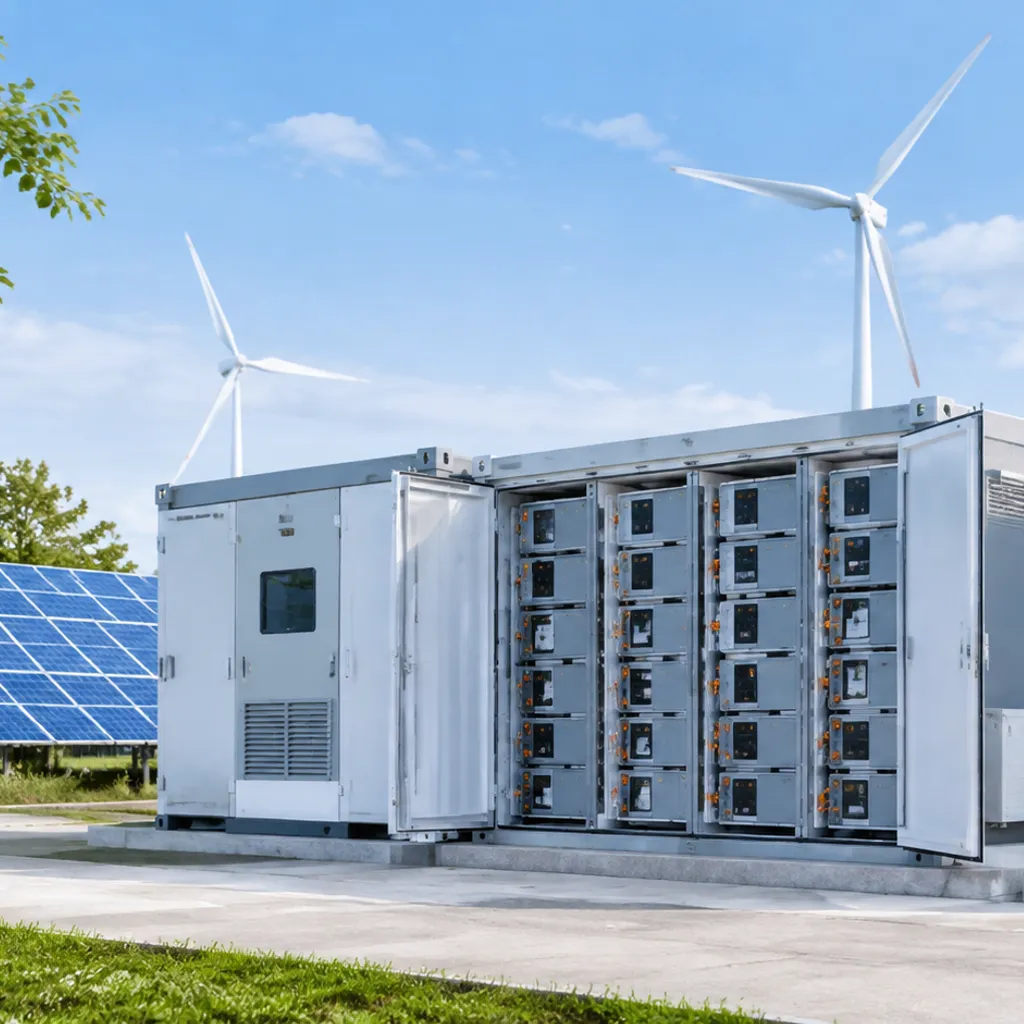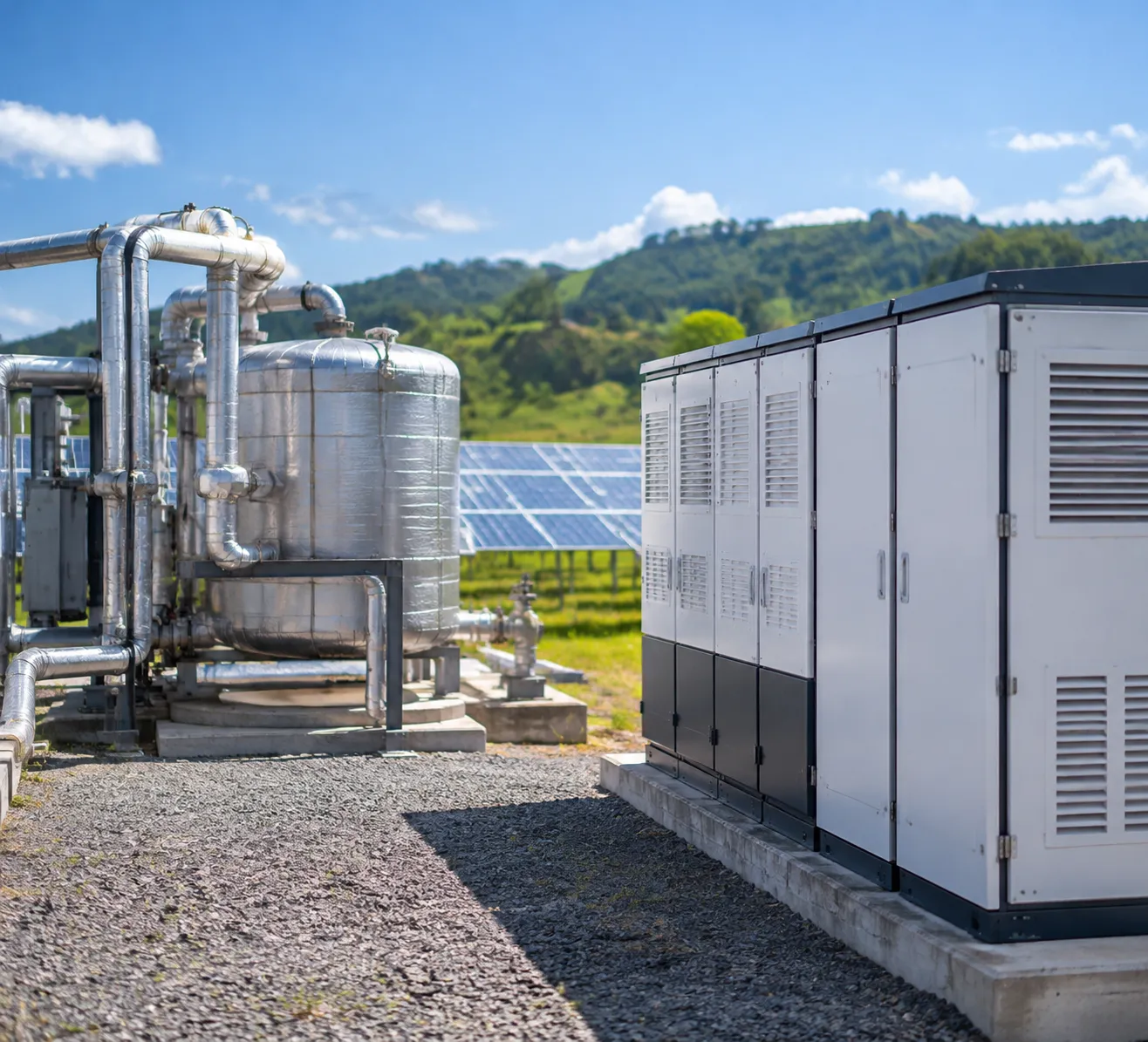

Deploying a high-performance energy storage project is high-stakes. One misstep in engineering, procurement, or grid interconnection can cost you millions—and months of costly delays.
That is why getting your Battery Energy Storage EPC strategy right from day one is critical.
In this comprehensive guide, we cut through the noise to give you a clear, actionable roadmap. You will learn:
- The exact EPC scope required for utility-scale and commercial projects
- The step-by-step project process from design to commissioning
- A transparent breakdown of real-world BESS capital costs and budget drivers
- A proven framework for successful EPC contractor selection and risk mitigation
If you want to protect your ROI, avoid costly bottlenecks, and build a reliable storage asset, let’s dive right in.
Understanding the Full Scope of BESS EPC
Executing a utility or commercial-scale battery energy storage system (BESS) requires a seamless integration of design, supply, and execution. As an end-to-end BESS EPC contractor, we manage the entire project lifecycle under a single point of responsibility, mitigating interface risks between equipment vendors, grid operators, and civil contractors.
A turnkey EPC scope encompasses four critical pillars:
- Engineering (E): Complete system modeling, safety design, and utility-compliant interconnection planning.
- Procurement (P): Direct sourcing of core storage components, power electronics, and balance-of-plant hardware.
- Construction (C): Civil site development, high-voltage electrical installation, and mechanical integration.
- Commissioning: Rigorous site acceptance testing (SAT), energization, and grid compliance certification.
Detailed Engineering and System Architecture
Our engineering phase translates project energy requirements into buildable, fully compliant system blueprints. We focus on structural integrity, thermal stability, and strict adherence to global fire safety standards.
- Site Assessment and Grid Modeling: Initial geotechnical surveys, topographic studies, load profile matching, and dynamic grid connection simulations.
- Electrical System Design: Development of single-line diagrams (SLDs), protection schemes, short-circuit calculations, and medium-to-high voltage transformer sizing.
- Safety and Compliance Architecture: Fire protection and hazard mitigation engineering aligned with NFPA 855 and UL 9540 safety frameworks.
- Thermal Management Design: Optimized HVAC and liquid cooling layout engineering to ensure uniform cell temperatures and prevent thermal runaway risks.
Tier-1 Procurement and Equipment Sourcing
Reliable procurement ensures high system availability, safety, and long-term asset performance. We handle direct component sourcing, quality assurance, and factory-level inspection before equipment arrives on site.
- Battery Enclosures and Racks: Pre-integrated, modular containerized battery systems fitted with integrated thermal controls and fire suppression.
- Power Conversion Systems (PCS): High-efficiency, bi-directional inverters configured for grid-forming or grid-following functionality.
- Control Systems (BMS & EMS): Multi-tier Battery Management Systems (BMS) integrated with high-speed Energy Management Systems (EMS) for real-time telemetry and dispatch.
- Balance of Plant (BOP) Equipment: Step-up transformers, medium-voltage switchgear, auxiliary power supplies, and cabling infrastructure.
- Factory Acceptance Testing (FAT): Rigorous factory-floor inspection protocols to verify hardware-software compatibility prior to shipping.
On-Site Construction and Civil Balance of Plant
The construction phase covers physical site preparation, equipment installation, and all high-voltage electrical balance-of-plant works.
- Civil and Structural Works: Site grading, drainage management, perimeter security, and reinforced concrete foundation pouring for heavy battery containers and PCS skids.
- Mechanical Placement: Crane rigging, container positioning, seismic anchoring, and environmental sealing.
- Electrical Integration: Laying underground conduit, pulling medium/low-voltage AC and DC cabling, terminating switchgear, and installing auxiliary auxiliary distribution boards.
- Safety System Hookups: Integration of gas detection, aerosol/water-based fire suppression mechanisms, and emergency shutdown (ESD) loops.
Testing, Commissioning, and Handover Protocols
Before a BESS asset goes live, it undergoes extensive validation to satisfy utility interconnection requirements and performance guarantees.
- Cold and Hot Commissioning: Continuity checks, insulation resistance testing, and step-by-step system energization.
- Site Acceptance Testing (SAT): On-site validation of charge/discharge rates, capacity benchmarks, and round-trip efficiency (RTE).
- Safety Interlock and Protection Verification: Functional testing of thermal safety cut-offs, fire alarms, and emergency shut-down responses under simulated fault conditions.
- Grid-Compliance Validation: Harmonics, frequency regulation, reactive power control, and utility sign-off for commercial operation.
- Handover Documentation: Delivery of as-built drawings, operations and maintenance (O&M) manuals, warranty certifications, and SCADA access configuration.
The 6-Stage BESS EPC Project Lifecycle

Stage 1: Preliminary Feasibility and Interconnection Screening
Every successful storage installation starts with thorough site screening and commercial alignment. We evaluate the physical footprint, geotechnical conditions, and network hosting capacity before committing capital.
- Load & Application Profiling: Defining revenue streams, such as peak shaving, frequency regulation, or renewable energy integration.
- Grid Interconnection Study: Performing initial queue screening and power flow modeling to assess thermal capacity, fault levels, and transformer headroom.
- System Sizing & LCOS Modeling: Running techno-economic simulations to determine optimal MWh capacity and initial hardware architecture using an established BESS sizing and feasibility assessment.
Stage 2: Permitting, Safety Clearances, and Approvals
Navigating local zoning and safety regulations early prevents costly project delays. We secure all mandatory clearances from authorities having jurisdiction (AHJs) and utility partners.
- Safety & Fire Compliance: Submitting hazard mitigation analyses adhering to NFPA 855 and UL 9540A testing documentation.
- Zoning & Environmental Clearances: Securing land-use permits, stormwater plans, noise compliance certificates, and environmental impact sign-offs.
- Interconnection Agreement (IA): Finalizing utility studies, protection coordination designs, and the formal grid connection contract.
Stage 3: Procurement, Manufacturing, and Logistics Management
With designs approved, we manage the procurement of long-lead electrical and battery equipment to protect the project timeline.
- Hardware Sourcing: Locking in factory allocations for utility-scale battery storage containers, bi-directional Power Conversion Systems (PCS), and medium-voltage transformers.
- Factory Acceptance Testing (FAT): Rigorously inspecting and testing assembled battery racks, BMS communications, and power electronics under simulated loads before shipping.
- Logistics & Delivery Coordination: Managing port customs, specialized heavy-haul transport, and on-site delivery sequencing to prevent laydown congestion.
Stage 4: Mechanical and Electrical Construction
On-site execution turns engineering plans into energized infrastructure through synchronized civil, mechanical, and electrical workflows.
- Civil Balance of Plant (BOP): Site clearing, grading, drainage installation, and pouring reinforced concrete equipment pads.
- Enclosure Placement & Rigging: Craning battery containers and PCS skids onto foundations according to strict thermal separation guidelines.
- Electrical Integration: Pulling and terminating MV/LV power cables, laying communication conduits, installing grounding grids, and setting up fire suppression systems.
Stage 5: Commissioning, Utility Interconnection, and SAT
Transitioning hardware into an active electrical asset requires comprehensive testing to satisfy safety protocols and utility requirements.
- Site Acceptance Testing (SAT): Verifying individual string voltages, BMS communication loops, thermal management performance, and emergency shutdown mechanisms.
- Grid Interconnection & Energization: Safely energizing the medium-voltage switchgear and transformers under utility supervision.
- Capacity & Efficiency Validation: Performing baseline charge-discharge cycles to prove nameplate capacity, verify Round-Trip Efficiency (RTE), and tune SCADA/EMS dispatch controls.
Stage 6: Commercial Operation Date (COD) and O&M Handover
Reaching COD marks the formal operational launch of the energy storage facility, followed by a structured asset transition.
- Final Utility Certification: Achieving formal permission to operate (PTO) and commercial operation status.
- Documentation & As-Builts: Handing over complete electrical single-line diagrams, firmware licenses, operation manuals, and warranty documentation.
- O&M Transition: Onboarding field service teams, enabling 24/7 remote EMS monitoring, and scheduling baseline preventative maintenance routines.
BESS EPC Cost Breakdown and Financial Drivers
When we evaluate project budgets, we look beyond the initial price tag to analyze the total Levelized Cost of Storage (LCOS). Every engineering choice directly influences both day-one capital expenditure and recurring operational overhead.
Turnkey CAPEX Component Breakdown
A turnkey BESS EPC contract consolidates hardware, installation, and balance-of-plant works into a single capital expenditure (CAPEX) framework. Factoring in equipment quality, such as that detailed in our LFP battery energy storage system guide on safety, cost, and lifespan, helps clarify upfront cost allocations:
- Core Equipment: Battery racks and enclosures, Power Conversion Systems (PCS), Energy Management Systems (EMS), and step-up transformers.
- Balance of Plant (BOP): Civil foundation works, thermal management infrastructure (liquid cooling/HVAC), advanced fire suppression systems, switchgear, and high-voltage/low-voltage cabling.
- Soft Costs and EPC Execution: Pre-construction grid interconnection studies, engineering and design labor, site permitting fees, logistics, project management, and construction insurance.
| Cost Category | Key Line Items Included |
|---|---|
| Core Hardware | Battery modules/racks, PCS inverters, BMS, master EMS |
| Civil & Electrical BOP | Structural pads, medium-voltage switchgear, cabling, thermal control, fire suppression |
| EPC Services & Soft Costs | Detailed engineering, grid modeling, permits, project management, commissioning |
Long-Term OPEX Drivers and Lifecycle Cost Considerations
Operational expenditure (OPEX) ensures the asset delivers its promised availability and Round-Trip Efficiency (RTE) across a 10- to 20-year operational life. As an experienced BESS company delivering turnkey storage systems, we structure lifecycle operations around predictable maintenance and performance preservation:
- Scheduled Preventative Maintenance: Routine inspections of thermal loops, electrical connections, transformer oil, and fire detection systems.
- Battery Degradation and Augmentation: Planning periodic capacity additions (augmentation) to offset natural cell capacity fade and maintain contractual output.
- EMS Monitoring and Software Updates: Continuous remote monitoring, firmware upgrades, and safety interlock health checks.
- Warranty Management and Insurance: Extended service agreements, spare parts inventory, and asset performance underwriting.
Key Variables Influencing Total Project Cost
Several external and technical variables directly impact the final installation cost of a BESS facility:
- Grid Interconnection Scope: Utility requirements for dedicated substations, line extensions, or grid-compliance hardware can significantly impact the electrical balance of plant.
- Fire Safety and Permitting Requirements: Compliance with standards like NFPA 855 and UL 9540 may require specialized setback distances, blast-deflection walls, or dedicated water supplies.
- Thermal Architecture Choices: Advanced liquid cooling systems slightly raise initial hardware costs but lower parasitic loads, reduce cell degradation, and improve long-term project economics.
- Site-Specific Civil Conditions: Seismic ratings, soil load-bearing capacity, and flood mitigation measures dictate foundation engineering and site prep investments.
How to Select the Right BESS EPC Contractor
Demonstrated Grid Interconnection Track Record
Utility interconnection is the most common bottleneck in utility-scale storage. A competent BESS EPC contractor must show deep experience navigating local utility interconnection processes, managing power flow studies, and satisfying dynamic grid-compliance requirements.
- Study Execution: Proven handling of system impact, dynamic stability, and power quality analyses.
- Switchgear & Substation Know-How: Expertise across medium-voltage (MV) and high-voltage (HV) substations, protection relay programming, and SCADA integration.
- Fast-Track Approvals: Established workflows to clear utility witness testing and site acceptance testing without costly delays.
Safety Standards and Multi-Layered Protection Expertise
Safety is non-negotiable in lithium-based storage systems. A qualified EPC must implement multi-tier safety architectures compliant with strict local and international fire codes.
- Core Standards Compliance: Strict alignment with NFPA 855, UL 9540, UL 9540A, and IEC 62619.
- Thermal Management: Engineering liquid or forced-air cooling systems tailored to local ambient extremes to prevent hot spots.
- Active & Passive Fire Defense: Deflagration venting, gas detection, aerosol or clean-agent suppression, and integrated water deluge connections.
Tier-1 Hardware Agnosticism and Supply Chain Strength
Reliable contractors do not lock projects into rigid hardware setups. Instead, they maintain robust supply networks across Tier-1 cell manufacturers, Power Conversion System (PCS) providers, and Energy Management System (EMS) developers. We work closely with specialized EPC contractors to secure components with validated factory acceptance testing (FAT) records, ensuring projects stay on schedule despite broader supply chain constraints.
Performance Guarantees and EPC Warranty Structure
Bankable contracts require clear commercial warranties and operational guarantees that protect project cash flows over the entire asset life cycle.
- Round-Trip Efficiency (RTE): Enforceable baseline RTE levels measured at the point of interconnection.
- Availability & Uptime: System availability guarantees, typically targeting 98% or higher.
- Degradation Profiles: Clear capacity retention guarantees tied to defined cycling profiles and battery augmentation plans.
- Performance Liquidated Damages (LDs): Firm financial backstops for delayed completion or underperforming output.
Turnkey vs Split-Contracting Capabilities
Deciding between a single full-wrap turnkey EPC contract and a split-scope model depends on risk tolerance and in-house management capacity.
- Turnkey EPC: A single entity assumes complete responsibility for engineering, procurement, construction, commissioning, and system performance wraps. This approach eliminates interface risks between equipment vendors and site installers.
- Split-Contracting (Multi-Prime): The asset owner buys major equipment directly while contracting separate balance of plant (BOP) and installation providers. While this can reduce EPC margins, it shifts integration, delay, and warranty interface risks entirely onto the owner.
BESS Contractor Evaluation Checklist and Red Flags
Choosing the wrong partner for a battery energy storage EPC project can cause severe commissioning delays, budget overruns, or safety hazards. We evaluate energy storage EPC partners against a strict qualification matrix to ensure every asset operates reliably over its entire lifecycle.
Critical EPC Selection Matrix
Before signing a contract, we benchmark each potential BESS EPC contractor across five core technical and commercial areas:
| Evaluation Area | Key Criteria & Standards | Ideal Scorecard Indicator |
|---|---|---|
| Grid Interconnection | Utility study execution, IEEE 1547 compliance, substation and switchgear design | Verified history of successful utility sign-offs and energizations |
| Safety & Compliance | Strict adherence to NFPA 855 and full UL 9540 / UL 9540A fire test standard reports | Third-party verified unit and installation-level fire test data |
| System Integration | Compatibility across BMS, EMS, and PCS architectures | Proven integration matching standard battery energy storage system container specifications |
| Quality Control | Comprehensive Factory Acceptance Testing (FAT) and Site Acceptance Testing (SAT) | Documented inspection checklists and rigorous witness testing protocols |
| Commercial Guarantees | Wrap-around warranties, Round-Trip Efficiency (RTE) guarantees, performance bonds | Single-point accountability with liquid damages tied to real uptime |
Major Red Flags to Avoid in Energy Storage Contractors
When reviewing bids and comparing utility-scale battery storage providers, watch out for these critical red flags:
- Vague Safety Certification: If a contractor cannot provide full-scale UL 9540A thermal runaway test reports and relies only on individual component spec sheets, walk away. NFPA 855 compliance requires system-level safety validation.
- Lack of Direct Utility Experience: A contractor might have solar experience, but high-voltage storage integration is a completely different discipline. Avoid teams without documented, hands-on interconnect experience with regional utilities.
- Fragmented Warranty Coverage: Be cautious of contractors who pass through separate component warranties without offering an overarching EPC performance wrap. If the battery racks and PCS do not communicate properly, split warranties leave you holding the financial risk.
- No Battery Augmentation Strategy: Cells degrade over time. A reliable battery storage EPC partner must provide a clear multi-year capacity retention plan and a realistic augmentation roadmap from day one.
- Inflexible Supply Chains: Contractors locked into a single unvetted hardware brand expose your project to major lead-time delays. Look for teams with strong, established Tier-1 component supply lines.
Frequently Asked Questions About BESS EPC
What is the difference between a BESS integrator and an EPC contractor?
A battery energy storage system integrator focuses primarily on packaging the technology—combining battery racks, the Battery Management System (BMS), the Power Conversion System (PCS), and the Energy Management System (EMS) into a unified operational unit.
A full battery energy storage EPC contractor takes on turnkey project delivery. We manage everything from preliminary civil and structural engineering to utility interconnection studies, equipment procurement, site construction, balance of plant (BOP), and final utility sign-off. Integrators supply the core technology package, while the EPC delivers the fully energized, grid-compliant asset.
| Role Attribute | System Integrator | Turnkey BESS EPC Contractor |
|---|---|---|
| Primary Focus | Hardware/software integration & controls | Complete project lifecycle execution |
| Scope of Work | Battery modules, BMS, EMS, PCS packaging | Civil works, HV/LV cabling, grid tie-in, permitting |
| Grid Compliance | Subsystem-level certification | Full site-level interconnect & utility acceptance |
| Single-Point Accountability | Equipment warranty & integration support | Total wrap on CAPEX, schedule, and performance |
How long does a utility-scale BESS EPC project take from start to finish?
A typical project lifecycle spans 9 to 18 months, largely governed by local utility interconnection queues and equipment lead times:
- Feasibility, Interconnection & Permitting: 2 to 6 months
- Procurement & Factory Acceptance Testing (FAT): 3 to 6 months (parallel to civil site prep)
- On-Site Civil & Electrical Construction: 2 to 4 months
- Testing, Commissioning, and SAT Handover: 1 to 2 months
Projects utilizing standardized architectures, such as a modular battery energy storage system for scalable power, often experience reduced civil build times and faster on-site deployment schedules.
What are the most critical safety standards for battery energy storage?
Safety compliance governs the entire engineering and permitting phase. We design and build battery storage systems around key international standards:
- UL 9540 & UL 9540A: Validates overall energy storage system safety and evaluates thermal runaway fire propagation at the cell, module, and unit levels.
- NFPA 855: Defines standard requirements for the installation of stationary energy storage systems, including spacing, containment, and fire suppression.
- IEC 62619 & UL 1973: Covers industrial lithium battery cell and pack safety requirements.
- IEEE 1547: Sets technical requirements and safety protocols for interconnecting distributed energy resources with the electric grid.
How does battery degradation affect long-term EPC planning and costs?
Battery degradation directly impacts usable capacity and system Round-Trip Efficiency (RTE) over the project life. During initial engineering, we model degradation curves against operational duty cycles to calculate the Levelized Cost of Storage (LCOS).
To address degradation, EPC planning relies on two primary approaches:
- Initial System Oversizing: Installing additional capacity on day one so the system meets minimum contracted performance thresholds across early operating years.
- Planned Augmentation Strategy: Designing the civil foundation, medium-voltage infrastructure, and busbar capacity upfront to allow seamless addition of battery racks in future years.
Choosing the right design approach depends heavily on your specific operational use case, which can be evaluated through our types of battery energy storage systems comparison guide to protect long-term project ROI.