Formula details
Product Details
Overview
Inside the 100 kWh Modular Battery Energy Storage System
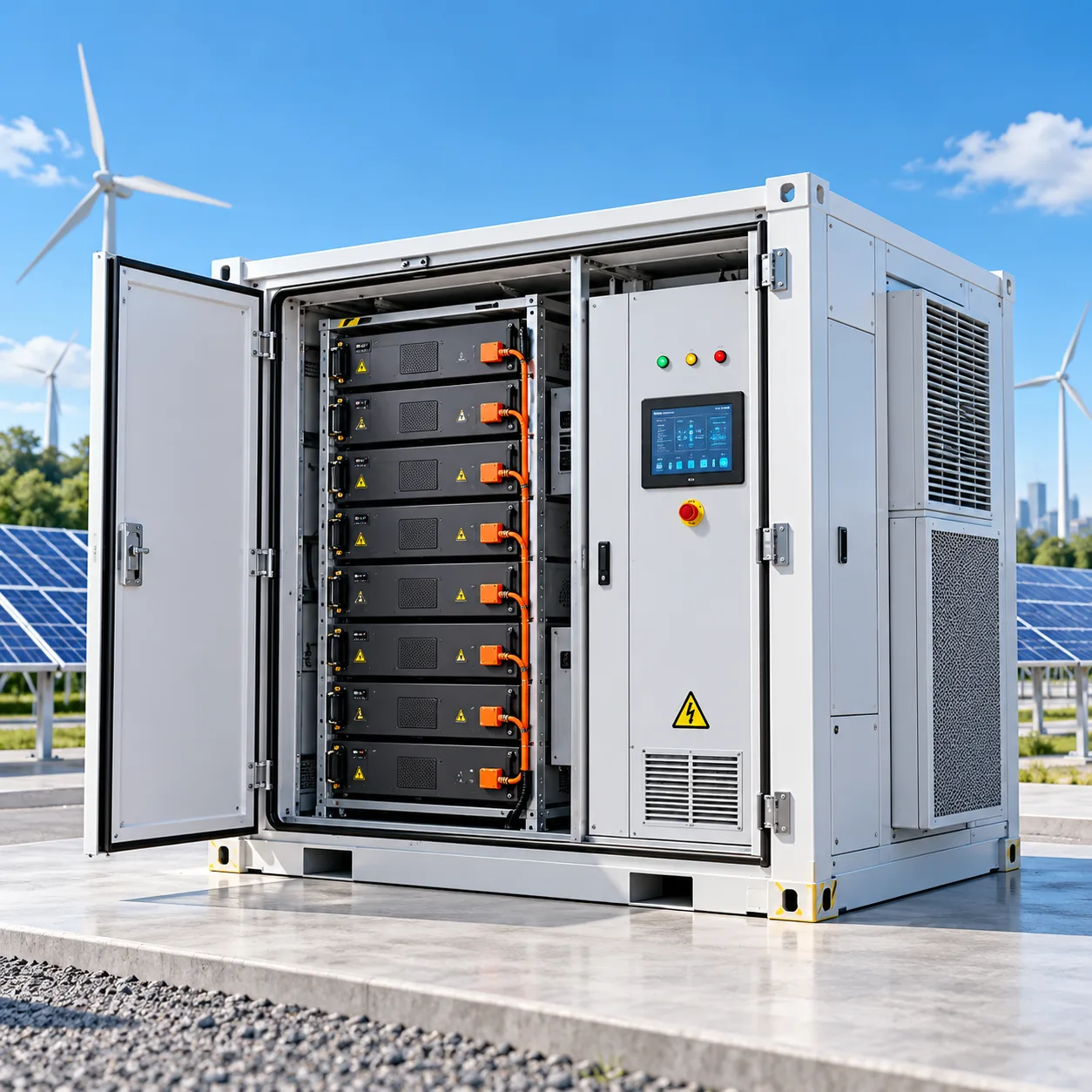
Core Components: LiFePO4 Modules, Smart BMS, and Bidirectional PCS
Every tier of our 100 kWh modular BESS architecture works in synergy to maintain high round-trip efficiency and reliable runtimes:
- LiFePO4 Battery Modules: Built with premium lithium iron phosphate (LFP) chemistry, offering exceptional thermal stability, zero cobalt exposure, and high cycle endurance under rigorous daily usage.
- Smart Battery Management System (BMS): Our multi-layer BMS continuously tracks cell-level voltage, module temperatures, and current flows to eliminate cell balancing drift and prevent over-discharge.
- Bidirectional Power Conversion System (PCS): High-efficiency integrated PCS manages clean AC-to-DC rectification and DC-to-AC inversion, providing smooth grid synchronization and rapid backup switching.
Modular Cabinet Design: Scalable Voltage and Capacity Configuration
Our modular cabinet layout gives you full control over system voltage and energy sizing without redesigning the facility's electrical infrastructure.
| Feature | Engineering Parameter | Core Benefit |
|---|---|---|
| Module Topology | Hot-swappable sub-rack modules | Rapid replacement without full-cabinet shutdowns |
| System Voltage | Wide DC operating window | Matches varied inverter and commercial transformer specs |
| Expandability | Parallel rack linking | Seamlessly step up capacity beyond 100 kWh as loads grow |
Integrated Thermal Management: Liquid Cooling vs. Smart HVAC Air Cooling
Cell longevity depends directly on thermal uniformity. We offer two targeted thermal management options to suit your site's climate profile:
- Liquid Cooled BESS: Closed-loop liquid distribution delivers balanced cell temperatures within a strict variance (under 2.5°C). This setup cuts auxiliary power consumption and maximizes cycle life in high-ambient, heavy-cycling environments.
- Smart HVAC Air Cooling: An efficient, direct-expansion industrial air conditioning system that delivers reliable cooling for moderate climates, reducing upfront hardware costs while maintaining steady cabinet temperatures.
Built-In Safety: Fire Suppression, Gas Detection, and Deflagration Venting
Safety is non-negotiable in our commercial battery energy storage units. Every cabinet contains integrated, multi-stage hazard mitigation protocols:
- Combustible Gas Detection: Early-warning internal sensors detect off-gas events long before temperatures elevate.
- Aerosol Fire Suppression: Automatic, clean-agent suppression units rapidly knock down potential thermal runaway at the module and rack levels without leaving water damage.
- Deflagration Pressure Relief: Engineered top-panel blast vents divert overpressure away from service personnel and adjacent facility equipment, meeting stringent commercial building codes.
Why Go Modular with Your 100 kWh Energy Storage?
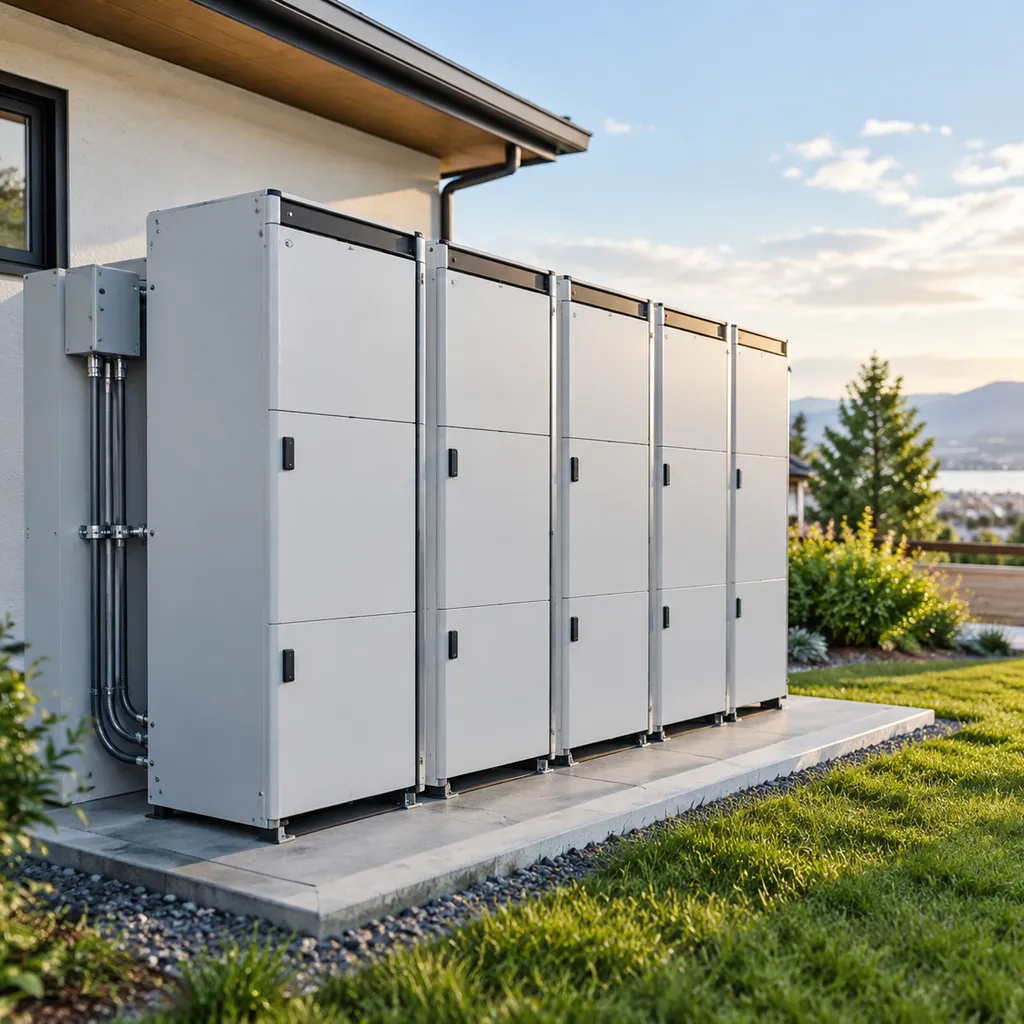
True Plug-and-Play Expansion: 100 kWh to Megawatt Scale
Our modular BESS architecture allows businesses to deploy precisely the storage capacity required today while retaining full flexibility for tomorrow:
Linear capacity scaling: Connect individual 100 kWh cabinets in parallel to reach 500 kWh, 1 MWh, or multi-megawatt configurations without overhaul engineering.
Integrated clustering: Pre-engineered communication protocols allow unified control across multiple cabinets via our master BMS and energy management system (EMS).
Future-proof investment: Add capacity as fleet electrification expands or peak charges increase, avoiding heavy initial capital outlays.
Zero-Downtime Maintenance via Hot-Swappable Modules
System outages equal lost operational revenue. With a modular rack design, servicing does not require cutting power to your entire facility:
Independent rack isolation: Individual lithium battery packs can be isolated and serviced while the remaining modules continue to power facility loads.
Rapid swap-out: Slide-in, slide-out module hardware simplifies field maintenance and slashes technical labor requirements.
Continuous runtime: Critical manufacturing lines and data infrastructures remain operational during routine inspections and component upgrades.
Lower Transport and On-Site Installation Costs
Standard large-scale containerized systems demand heavy transport permits, industrial cranes, and extensive site prep. Our modular cabinets significantly reduce deployment friction:
Standard logistics footprint: Individual all-in-one cabinets transport easily via standard freight without oversized permits.
Forklift-ready positioning: Maneuver units into tight outdoor spaces, parking structures, or electrical rooms using standard material handling equipment.
Simplified civil work: Minimal foundation footprint requirements dramatically lower balance-of-system (BOS) spending. For a deeper breakdown of site preparation and deployment steps, review our battery energy storage system advantages and setup guide.
High Redundancy for Mission-Critical Loads
Reliability depends on eliminating single points of failure throughout the energy storage loop:
N+1 architectural redundancy: If a single module encounters a fault or cell-level imbalance, the smart BMS disconnects only that branch.
Uninterrupted peak shaving: The remaining battery packs automatically balance the output, ensuring commercial peak shaving and backup power continue without tripping the main PCS.
Operational peace of mind: Commercial facilities maintain stable grid compliance and uninterrupted power quality even under heavy cycling demands.
Top Use Cases for a 100 kWh Commercial BESS
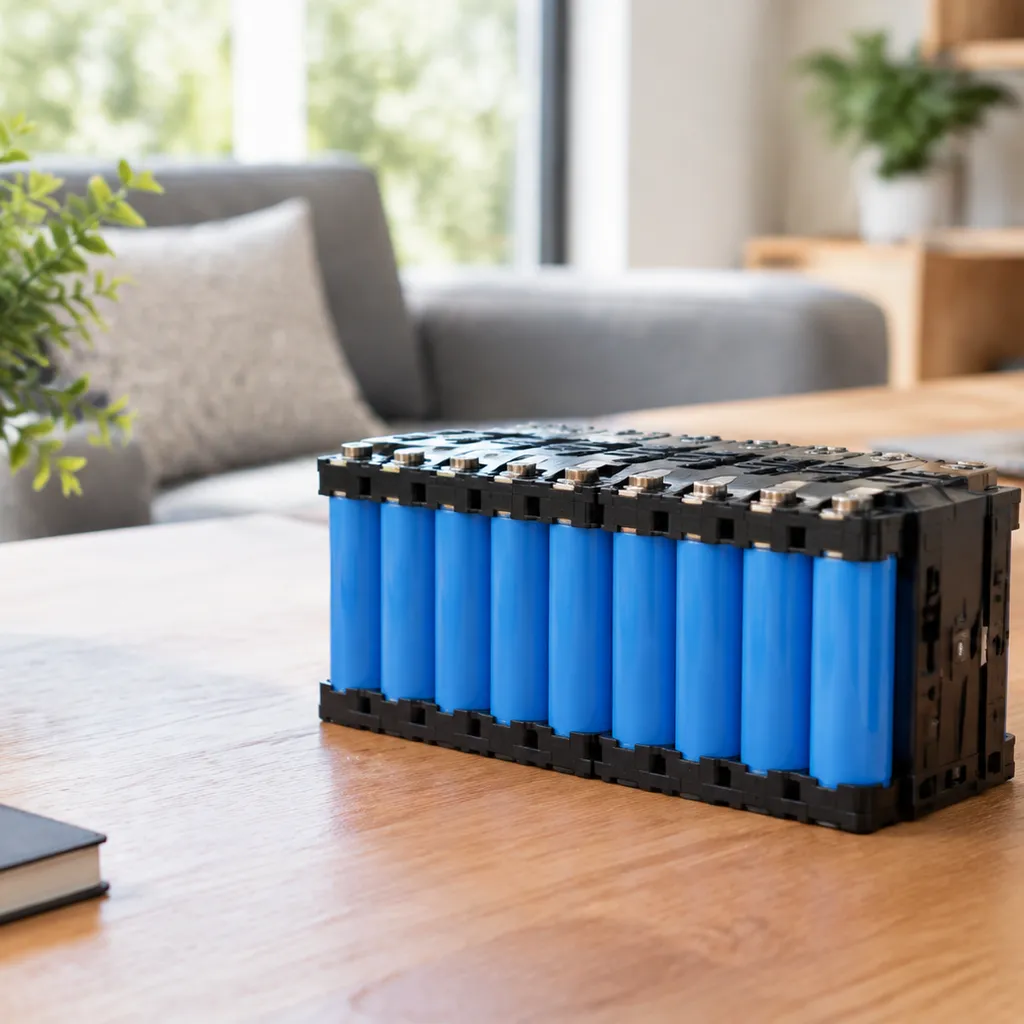
Every business faces distinct operational hurdles, but soaring utility bills and unexpected grid outages top the list.
Commercial Peak Shaving and Demand Charge Management
Utility demand charges can account for up to 50% of a commercial electricity bill. A brief 15-minute spike in heavy machinery usage or HVAC load can dictate your tariff costs for an entire billing cycle.
- Automatic Threshold Capping: Our 100 kWh modular BESS continuously monitors facility draw at the point of common coupling (PCC). When demand approaches expensive peak thresholds, the battery automatically discharges to absorb the surge.
- Flattened Load Profiles: By shaving spikes off your consumption curve, our system lowers your utility billing baseline month after month without interrupting operations.
- Predictable Operational Expenses: Eliminating demand volatility provides long-term budgeting stability for manufacturing facilities, cold storage warehouses, and office parks.
Maximizing On-Site Solar Self-Consumption
Installing rooftop or ground-mount solar panels solves only half of your energy challenge. Without an integrated storage solution, surplus generation during midday yields low net-metering buyback rates, while peak evening production gaps force you to buy expensive grid power.
- Capture Daytime Surplus: Our system channels excess commercial solar output directly into high-efficiency LiFePO4 battery modules instead of exporting it back to the grid for pennies.
- Time-of-Use (TOU) Arbitrage: We program the modular rack to release stored solar power during the late afternoon and early evening when utility rates spike.
- True Grid Independence: Shifting your clean kilowatt-hours directly cuts grid reliance and maximizes the return on your solar assets.
Seamless Microgrid Integration and EV Charging Support
The surge in fleet electrification and heavy fast-charging equipment puts severe stress on local transformer capacities. Upgrading high-voltage grid connections can cost hundreds of thousands of dollars and take months to approve.
- EV Buffer Stations: A 100 kWh modular setup acts as a high-output energy buffer, delivering rapid DC bursts to fast chargers while drawing a slow, continuous trickle from the grid.
- Off-Grid Resiliency: For remote logistics hubs, agricultural processing plants, or construction sites, the system pairs smoothly with diesel generators and local solar arrays to form an autonomous microgrid.
- Scalable Sizing: If you need deeper guidance on matching storage size to fleet demand, review our sizing guide for commercial BESS to calculate your exact kilowatt-hour profile.
Critical Backup Power and Black-Start Capabilities
When grid failure strikes, every minute of lost production equates to lost revenue, wasted inventory, and stalled workflows. Our modular energy storage system acts as an uninterruptible, industrial-grade power reservoir that keeps core processes running.
| Feature | Performance Benefit |
|---|---|
| Instantaneous Switching | Sub-20ms switchover protects sensitive electronics, servers, and automated assembly lines from downtime. |
| Black-Start Functionality | Restores facility power independently after a total blackout without requiring initial grid excitation. |
| Industrial Protection | Direct integration into our dedicated commercial and industrial backup power systems architecture ensures total operational safety. |
By combining modular reliability with high-efficiency LiFePO4 cells, our 100 kWh platform bridges the gap between everyday energy cost control and emergency continuity.
Technical Specs and Performance Benchmarks
When evaluating our 100 kwh modular battery energy storage system, real-world operational ratings matter far more than theoretical figures. We engineer our systems to deliver continuous, heavy-duty cycling with minimal degradation, ensuring your commercial operation gets every kilowatt-hour paid for.
System Performance Overview
| Specification Parameter | Standard Benchmark | Operational Notes |
|---|---|---|
| Nominal Energy Capacity | 100 kWh | Standard modular rack configuration |
| Usable Energy Capacity | Up to 95 kWh | Configured at 90%–95% Depth of Discharge (DoD) |
| Continuous C-Rate Output | 0.5C (50 kW) continuous / 1C peak | Ideal for commercial demand reduction & backup |
| Round-Trip Efficiency (RTE) | ≥ 88% – 92% | Full AC-to-AC charge and discharge cycle |
| Rated Cycle Life | 6,000 – 8,000 cycles | Tested at 80%–90% DoD under controlled thermal conditions |
| Cell Chemistry | LiFePO4 (LFP) | High thermal stability and non-toxic chemistry |
| Enclosure Rating | NEMA 3R / IP55 | Outdoor industrial deployment standard |
Usable Energy and Continuous C-Rate Output
Our standard 100 kWh modular BESS architecture pairs a high-density lithium iron phosphate battery rack with a matched power conversion system (PCS). We deliver up to 95 kWh of usable capacity per cabinet. With continuous 0.5C ratings (delivering 50 kW sustained power for two hours) and short-duration 1C burst capability, the system easily mitigates sudden plant load spikes and heavy motor inrush currents.
High Round-Trip Efficiency (RTE)
Internal conversion losses directly impact your project’s return on investment. Our all-in-one cabinet achieves an AC-to-AC round-trip efficiency between 88% and 92%. Low parasitic draw from our internal thermal management systems and advanced bidirectional inverters ensures that energy losses during time-of-use (TOU) arbitrage remain minimal.
Cycle Life Ratings: 6,000 to 8,000 Cycles
We build our modules using high-grade LFP cells rated for 6,000 to 8,000 full operational cycles before reaching 70% state of health (SoH). Operating at 80% to 90% Depth of Discharge under stable thermal monitoring keeps cell degradation predictable over a 10- to 15-year operational lifespan. You can review detailed longevity engineering in our technical overview on lithium iron phosphate battery system safety and cycle life.
Stringent Safety and Interconnection Standards
Grid interconnects and municipal permitting demand rigorous safety verification. Every modular unit we deploy meets or exceeds critical international and North American safety codes:
UL 9540 & UL 9540A: Validated system-level safety and rigorous large-scale fire and thermal runaway testing.
UL 1973: Module-level certification for stationary industrial battery packs.
NFPA 855: Standard for the installation of stationary energy storage systems, simplifying local fire marshal (AHJ) plan approval.
IEEE 1547: Grid-tied interoperability and utility anti-islanding compliance for reliable synchronization with local power networks.
System Sizing, AC vs. DC Coupling, and Grid Hookup
Getting the integration right makes or breaks your project timeline. When we install a 100 kwh modular battery energy storage system, we focus on selecting the proper electrical coupling, matching inverter power to your peak load spikes, and ensuring seamless compliance with local utility interconnection rules.
AC-Coupled vs. DC-Coupled Architectures
Selecting between AC and DC coupling comes down to your existing electrical layout:
- AC-Coupled Systems (Best for Retrofits): The storage unit operates independently on your facility's AC bus. If you already have rooftop solar with functioning inverters, an AC-coupled setup connects directly to your main distribution panel via a dedicated battery power conversion system (PCS). This avoids rewiring your existing solar arrays.
- DC-Coupled Systems (Best for New Builds): Both the PV array and the battery share a common DC bus before converting power to AC. This yields higher round-trip conversion efficiency for solar charging but requires specialized hybrid inverters.
For most commercial facilities adding storage to an active site, an AC-coupled commercial battery storage design offers the fastest installation and lowest electrical reconfiguration costs. If your facility requires higher energy density down the line, deploying a modular battery energy storage system for scalable power allows you to expand capacity directly onto the shared bus without overhauling existing gear.
Cabinet Footprint and Enclosure Standards
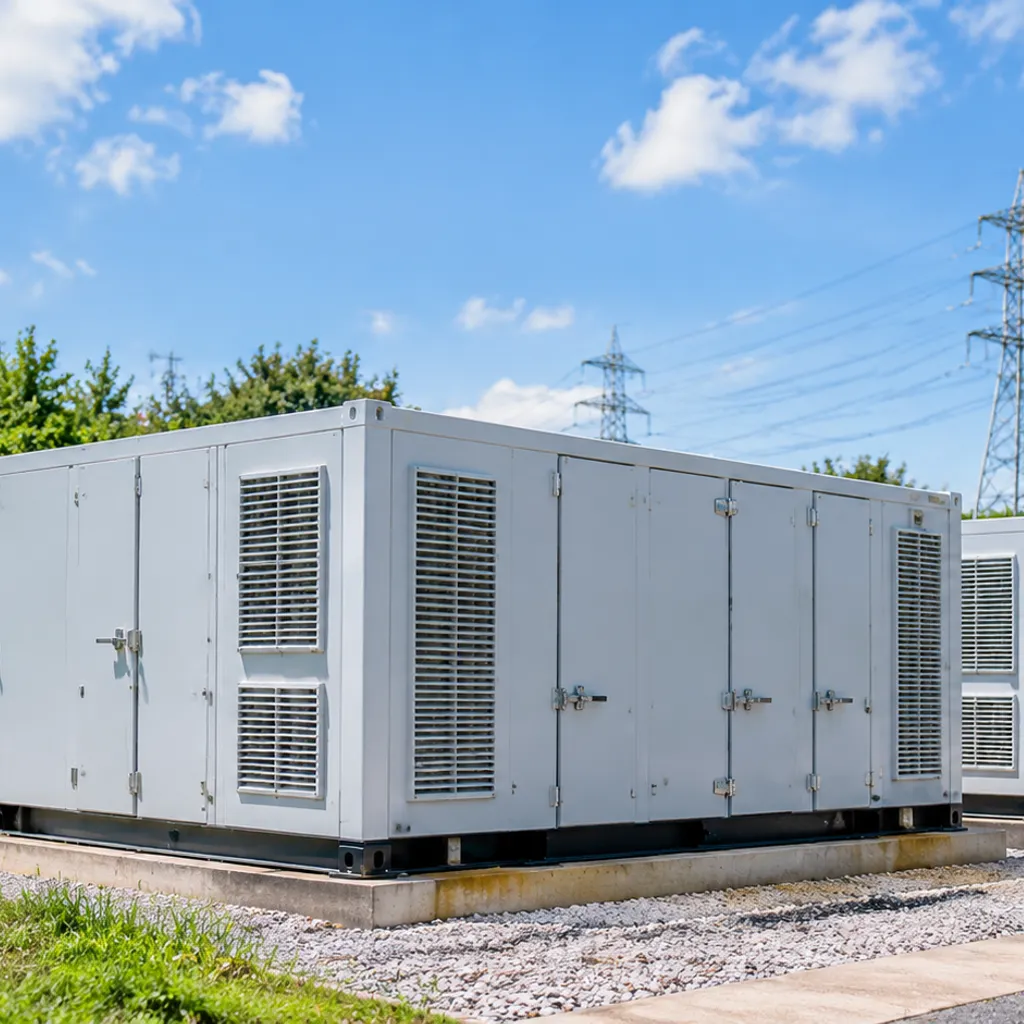
Space constraints are a reality on commercial sites. Our 100 kWh systems use outdoor-rated, all-in-one energy storage cabinets engineered to minimize site prep:
- Enclosure Rating: Weatherproof NEMA 3R / IP55-rated enclosures shield battery modules from driving rain, dust, and coastal humidity.
- Compact Footprint: Typical dimensions require less than 1.5 to 2.0 square meters of pad space, allowing placement on exterior concrete pads, utility yards, or adjacent parking structures.
- Clearance Requirements: Integrated rear and side clearances align with local fire department setback codes, simplifying standard zoning reviews.
Interconnection Approvals and Grid Integration
Hooking into the local electrical grid requires clear documentation and verified equipment certifications. We engineer these systems to meet strict utility standards:
- Grid Standards Compliance: Certified to IEEE 1547 and UL 1741 SA/SB standards for anti-islanding, voltage ride-through, and frequency regulation.
- Permitting Readiness: UL 9540 system certification accelerates plan approvals with local authorities having jurisdiction (AHJs).
- Net-Metering & Export Control: Built-in zero-export controls and smart metering prevent unauthorized back-feeding into the local grid, keeping your net-metering status compliant with utility agreements.
Matching Peak Loads: Sizing the PCS to Your Facility
A 100 kWh battery pack defines how much energy you have stored, while the PCS defines how fast that energy can flow to your equipment. Matching this power-to-energy ratio directly dictates your demand charge reduction.
| System Configuration | PCS Power Rating | Usable Storage | Discharge Duration | Best Application Profile |
|---|---|---|---|---|
| 50 kW / 100 kWh (0.5C) | 50 kW | ~90–95 kWh | ~2 Hours | Sustained peak shaving, multi-hour TOU shifting, baseline building support |
| 100 kW / 100 kWh (1.0C) | 100 kW | ~90–95 kWh | ~1 Hour | High-draw motor starts, sharp demand spike suppression, EV fast-charge buffer |
| 30 kW / 100 kWh (0.3C) | 30 kW | ~90–95 kWh | ~3+ Hours | Extended commercial backup, continuous overnight solar self-consumption |
A 50 kW / 100 kWh configuration is the industry benchmark for commercial sites. It delivers two solid hours of heavy peak load mitigation during expensive utility rate windows while keeping thermal stress low on the lithium iron phosphate cells.
100 kWh Modular BESS Cost, Payback, and ROI
Investing in a 100 kwh modular battery energy storage system requires a clear view of capital expenses, operating returns, and long-term asset value. We evaluate storage economics by looking past the initial hardware tag and focusing on total delivered cost, daily bill reduction, and lifecycle return.
Upfront Hardware vs. Turnkey Installation Costs
Total project expenses split into two main buckets: hardware acquisition and on-site EPC execution.
- Equipment Costs (60–70% of CapEx): Covers the factory-integrated 100 kWh lithium battery cabinet, modular racks, bi-directional power conversion system (PCS), and smart battery management system (BMS).
- Turnkey Installation & Balance of Plant (30–40% of CapEx): Includes civil pad prep, electrical conduit, utility interconnection approvals, regional permitting, and final on-site commissioning.
Because our modular cabinets arrive pre-wired and factory-tested, on-site labor and engineering hours are kept to a minimum compared to complex field-assembled storage setups.
Bill Reduction Through Time-of-Use (TOU) Arbitrage
Daily operational savings stem primarily from avoiding high commercial electric rates. A 100 kWh modular BESS shifts grid reliance by automatically charging when power prices drop and discharging during peak-rate operational windows.
Pairing this dispatch with peak demand suppression yields substantial compounding returns. You can review the operational mechanics behind the benefits of peak shaving for lower energy costs to see how shaving high-demand intervals protects your bottom line every billing cycle.
Financial Incentives and Rebates
Government programs significantly reduce the net expenditure for commercial battery energy storage:
- Federal Investment Tax Credit (ITC): Deducts up to 30% or more of the total system equipment and turnkey installation costs.
- Accelerated Depreciation (MACRS): Allows businesses to write off significant capital equipment value within the first few years of operation.
- Utility Demand Response & Grid Programs: Provides recurring revenue streams by allowing grid operators to tap stored reserve capacity during grid emergencies.
Financial Benchmarks and Payback Metrics
| Metric | Commercial Benchmark | Impact on Financial Return |
|---|---|---|
| Typical Payback Window | 3 to 6 Years | Accelerated by high local peak rates and commercial solar pairing |
| Asset Lifecycle | 10 to 15 Years | Delivers pure operational margin well past the initial payback point |
| Levelized Cost of Storage (LCOS) | $0.07 – $0.12 / kWh | Outperforms standard peak retail electricity rates across most utility markets |
| Demand Charge Reduction | 20% to 40% Monthly | Direct reduction on maximum registered facility kW spikes |
Targeting a low Levelized Cost of Storage (LCOS) ensures that every cycle delivered across the system's operational life creates measurable cash flow, making a 100 kWh modular setup a practical, self-funding infrastructure upgrade.
Frequently Asked Questions About 100 kWh Modular Battery Systems
How long can a 100 kWh battery power an average commercial facility?
Backup runtime depends directly on your facility's active load profile and power draw. A 100 kWh modular battery energy storage system provides 100 kilowatt-hours of nominal energy, delivering steady power based on how many kilowatts your equipment draws simultaneously:
| Continuous Facility Load | Estimated Usable Backup Runtime (at 90% DoD) | Common Commercial Application |
|---|---|---|
| 10 kW | ~9.0 Hours | Small retail shops, light commercial offices, critical servers |
| 25 kW | ~3.6 Hours | Gas stations, small cold storage, commercial workshops |
| 50 kW | ~1.8 Hours | Mid-sized manufacturing lines, supermarket refrigeration |
| 100 kW | ~50 Minutes | Peak demand spike coverage, high-draw motor startups |
For facilities managing critical baseloads during utility outages, we configure the system to prioritize life-safety circuits, IT infrastructure, and refrigeration to stretch battery runtime significantly.
Can I start with 100 kWh and add more battery modules later?
Yes. True modularity is the core strength of our rack-level architecture. You can install an initial 100 kWh modular unit today to handle baseline peak shaving or basic backup needs, and scale upward as your energy demand grows.
- Parallel Cabinet Scaling: Combine multiple 100 kWh cabinets in parallel on the same AC bus to scale capacity seamlessly to 200 kWh, 500 kWh, or beyond.
- Large Project Growth: If your operation transitions into heavy industrial production, integrating an expanded industrial facility battery energy storage system (BESS) utilizes the same operational controls without requiring you to scrap your initial hardware investment.
- Plug-and-Play Matching: Integrated communication buses allow our master energy management software to auto-detect new battery modules and racks upon installation.
What is the difference between air-cooled and liquid-cooled modular systems?
Both thermal management methods maintain cell stability, but they serve different operational environments:
| Feature | Smart HVAC Air Cooling | Advanced Liquid Cooling |
|---|---|---|
| Cell Temperature Delta | Keeps cells within ±3°C to ±5°C | Tighter regulation within ≤2°C |
| Footprint Density | Standard footprint | Up to 20–30% higher energy density |
| Auxiliary Power Usage | Slightly higher fan power in extreme heat | Lower continuous parasitic energy loss |
| Best Suited For | Mild climates, standard 0.5C duty cycles | Heavy 1C cycling, hot climates, continuous duty |
Liquid cooling runs coolant loops directly adjacent to each LiFePO4 cell, providing uniform heat dissipation that protects cycle life during rapid charge and discharge cycles.
What routine maintenance does a 100 kWh modular BESS require?
Because our lithium iron phosphate modules eliminate moving parts inside the energy core, physical maintenance is minimal:
- Quarterly / Semi-Annual Inspections: Clean or replace external HVAC intake air filters, inspect door seals, and verify coolant levels (for liquid-cooled units).
- Electrical Checks: Annual thermal imaging scans of AC/DC disconnects, terminals, and breakers to confirm tight, corrosion-free connections.
- Safety System Audits: Verify pressure gauges on the aerosol fire suppression canisters and test alarm sensors.
- Automated Cloud Monitoring: Our team and your site managers track individual cell voltages, temperatures, state-of-health (SOH), and operational events remotely 24/7, eliminating the need for weekly manual readings.
Are 100 kWh outdoor battery storage cabinets safe for extreme weather?
Our outdoor enclosures are engineered specifically for harsh perimeter installations. With standard NEMA 3R / IP55 or higher ingress ratings, the cabinet keeps out driving rain, drifting snow, dust, and sand.
- Temperature Regulation: Internal smart climate control keeps battery cells within their optimal 15°C to 35°C operating window, even when ambient temperatures swing between -20°C and 50°C.
- Corrosion Protection: Marine-grade C4 or C5 powder coating prevents rust in high-humidity or coastal environments.
- Safety Certifications: Each enclosure incorporates multi-point gas detection, internal thermal barriers, deflagration relief vents, and automated fire suppression designed in accordance with UL 9540, UL 9540A, and NFPA 855 standards.