Formula details
Product Details
Overview
Modular Architecture of the 46-Megawatt Battery Electric Storage System (BESS)
Deploying utility-scale assets requires solving complex layout constraints, interconnection bottlenecks, and auxiliary power losses before breaking ground. We engineer our 46-megawatt battery electric storage system (BESS) around a standardized, factory-integrated modular architecture. By standardizing physical, electrical, and control interfaces across the entire array, our system minimizes site civil work, shortens commissioning schedules, and ensures repeatable electrical performance for front-of-the-meter utility installations.
Modular LFP Energy Storage Enclosures
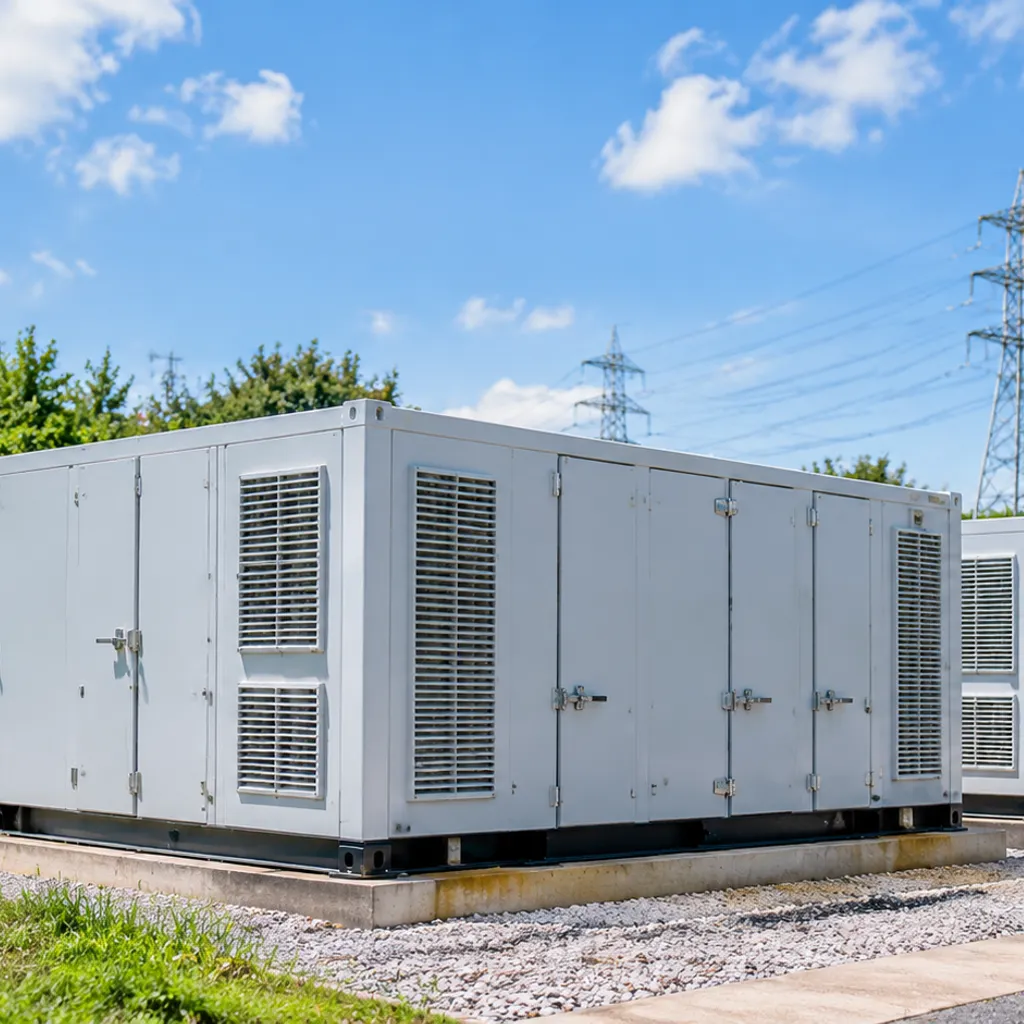
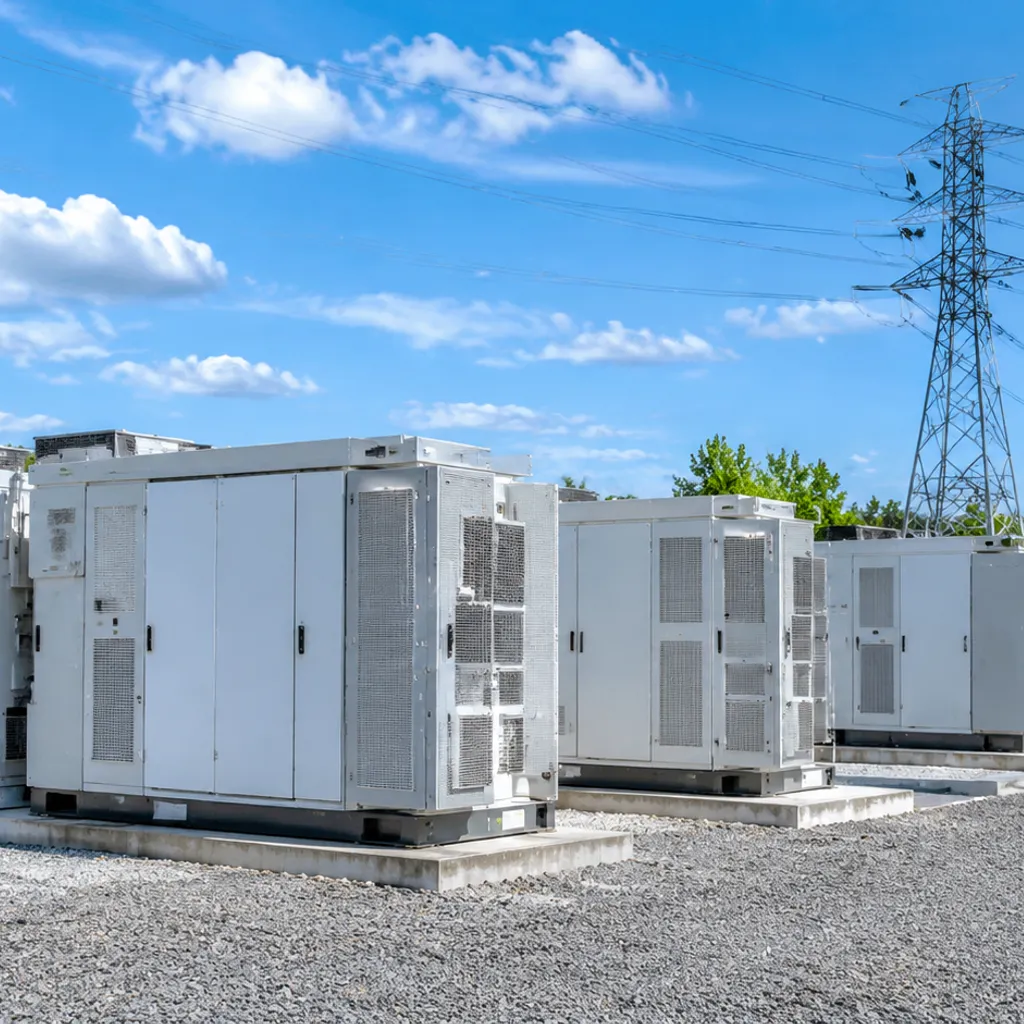
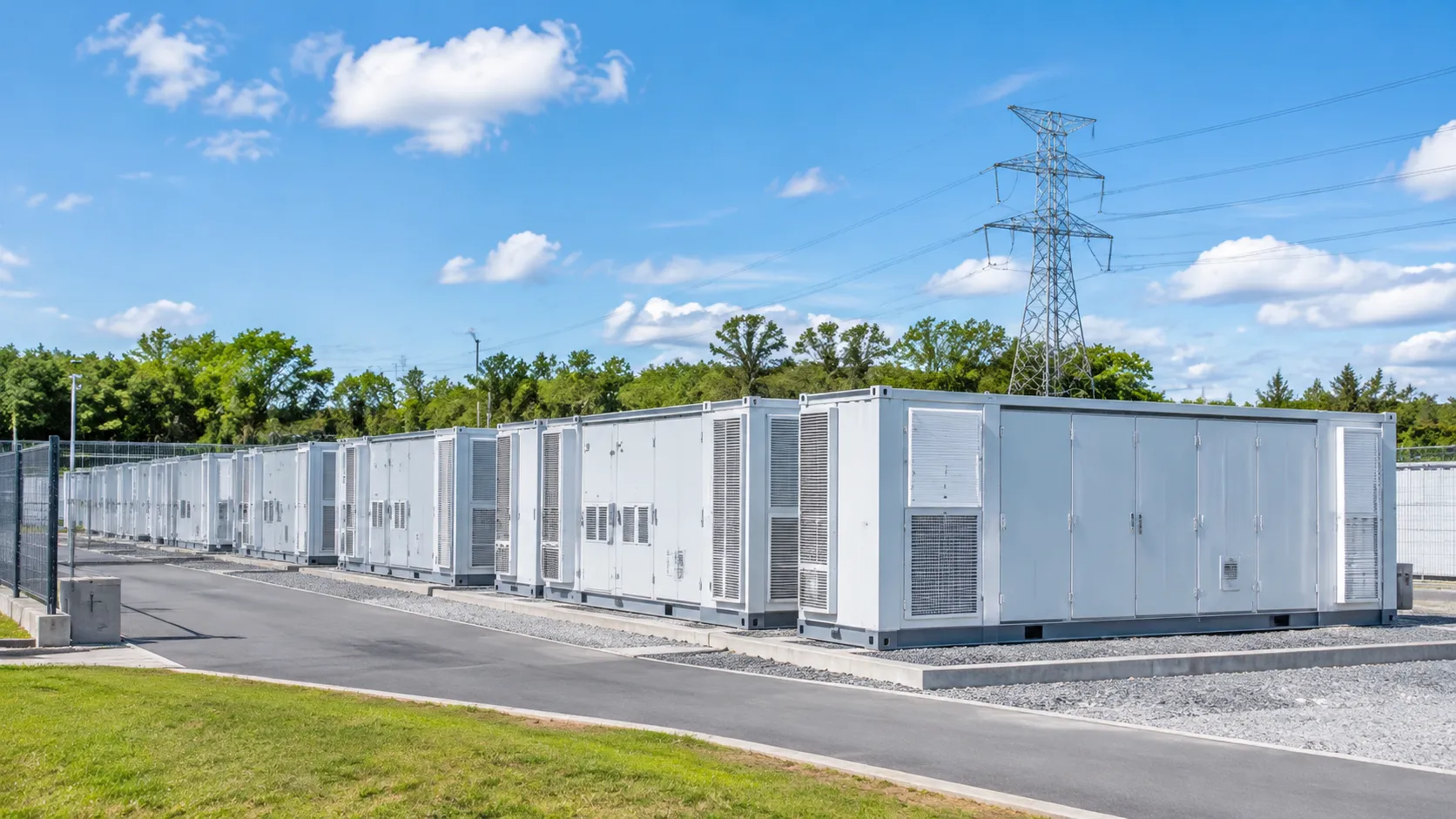
Our enclosure layout relies on high-density lithium iron phosphate (LFP) chemistry packaged into pre-engineered, modular outdoor enclosures. This architecture isolates individual battery strings to protect overall system availability while simplifying project scaling.
- Pre-Assembled Density: Factory-integrated battery racks arrive pre-tested, reducing on-site wiring and installation timelines.
- Thermal and Electrical Isolation: Enclosures house isolated battery segments with dedicated thermal management, preventing localized issues from impacting the wider 46MW asset.
- Service Access: Purpose-built maintenance access points allow rapid field servicing, module replacements, and routine thermal inspections without disrupting adjacent units.
Bi-Directional Power Conversion Systems (PCS)
Grid integration for a 46MW block demands high-yield, flexible power conversion capable of dynamic response across changing grid conditions.
- Four-Quadrant Operation: Enables full four-quadrant control for rapid switching between active power dispatch (MW) and reactive power support (MVAR).
- High Inverter Efficiency: Silicon-carbide or advanced IGBT-based bi-directional inverters ensure low conversion losses during continuous cycling.
- Decentralized Inverter Topologies: Multiple conversion blocks operate in parallel across the 46MW field, mitigating single-point failure risks and improving system availability during maintenance.
Skid-Mounted Medium-Voltage Step-Up Stations
To link DC power generation with high-voltage utility interconnects, our architecture utilizes turnkey skid-mounted transformer and switchgear units.
- Plug-and-Play Civil Integration: Step-up transformers, vacuum circuit breakers, and auxiliary distribution equipment are factory-mounted on a shared, heavy-gauge steel skid.
- Voltage Customization: Transforms low-voltage PCS AC output directly to standard distribution or sub-transmission medium voltages (typically 13.8kV up to 34.5kV).
- Integrated Safety & Protection: Includes built-in relay protection, surge arrestors, and oil containment systems compliant with regional utility interconnection standards.
Intelligent Utility-Grade EMS and BMS Integration
Stable operation of a 46-megawatt battery electric storage system relies on deterministic, multi-layer monitoring and control platforms running from cell to grid tie.
| Architecture Layer | Core Functionality | Primary Operational Benefit |
|---|---|---|
| Battery Management System (BMS) | Real-time cell monitoring, voltage balancing, state-of-charge (SOC) / state-of-health (SOH) calculation | Prevents overcharge/overdischarge, mitigates thermal divergence, and maximizes pack longevity |
| Energy Management System (EMS) | Autonomous dispatch, millisecond-level automated frequency tracking, market signal ingestion | Executes dynamic revenue dispatch and grid support commands without operational lag |
| SCADA & Fleet Interface | Industrial protocol support (DNP3, Modbus TCP, IEC 61850), remote telemetry, automated fault logging | Direct, secure integration into regional transmission operator (RTO/ISO) operational centers |
Engineering Specifications and Performance Benchmarks for 46MW BESS
Rated Power and Duration Configurations
We deploy the 46MW platform across three primary duration profiles to serve distinct market mechanisms, from fast ancillary support to multi-hour shifting. Detailed planning parameters can be reviewed in our mega BESS dimensioning and grid integration guide to balance land use against discharge requirements.
| Metric | 1-Hour Configuration | 2-Hour Configuration | 4-Hour Configuration |
|---|---|---|---|
| Rated Power (AC) | 46 MW | 46 MW | 46 MW |
| Nominal Energy Storage | 46 MWh | 92 MWh | 184 MWh |
| Primary Use Case | Fast frequency response, spinning reserve | Peak shaving, wholesale arbitrage | Capacity firming, renewable smoothing |
| C-Rate | 1.0C | 0.5C | 0.25C |
| Coupling Interface | Medium-voltage AC bus | Medium-voltage AC bus | Medium-voltage AC bus |
Closed-Loop Liquid Cooling Thermal Management
Maintaining uniform cell temperatures across a 46MW installation directly determines operational lifespan and warranty compliance. Our architecture uses closed-loop liquid cooling manifolds routed through each battery rack:
- Thermal Uniformity: Keeps cell-to-cell temperature variances within ≤ 2.5°C, preventing localized hotspots and uneven string aging.
- Parasitic Load Reduction: Consumes up to 30% less auxiliary power than standard forced-air HVAC systems under heavy cycling.
- Operating Range: Engineered to sustain nominal charging and discharging profiles in ambient temperatures from -30°C to +55°C.
Round-Trip Efficiency (RTE) and Cycling Degradation Curves
Project bankability depends on minimizing conversion losses and projecting accurate capacity fade over a 20-year operational horizon.
- AC-to-AC Round-Trip Efficiency: Achieves ≥ 86% to 88% total system efficiency, measured at the medium-voltage skid terminals including inverter, transformer, and thermal management loads.
- Predictable Degradation: Optimized lithium iron phosphate (LFP) chemistry delivers 6,000 to 8,000 cycles at 80% Depth of Discharge (DoD) before hitting end-of-warranty capacity thresholds.
- Multi-Cycle Capability: Supports back-to-back dispatch cycles per day without violating cell thermal envelopes.
Physical Footprint, Civil Foundation, and Layout Clearance
To streamline engineering, procurement, and construction (EPC) civil works, the system uses modular, high-density enclosures mounted on standard concrete slab or pier foundations:
- Acreage Requirement: A typical 46MW / 92MWh layout requires roughly 1.8 to 2.5 acres, inclusive of PCS skids, transformers, and switchgear.
- Maintenance Clearances: Engineered with 3-meter service clearances between enclosure rows to meet local fire codes and ensure unhindered forklift access.
- Civil Readiness: Pre-cast trenching channels handle medium-voltage collection lines, DC cabling, and auxiliary power distribution with minimal on-site civil disruption.
Grid Services and Wholesale Market Applications for 46MW BESS
Operating a 46-megawatt battery electric storage system (BESS) allows developers and independent power producers (IPPs) to capture multiple revenue streams across wholesale markets and ancillary service programs. We engineer our utility-scale systems to interface directly with transmission operators, delivering sub-second response times and continuous operational flexibility. Understanding the battery energy storage system advantages and disadvantages across different operational modes is key to maximizing plant return on investment.
Revenue Stacking and Dispatch Capabilities
| Application | Market Target | Primary Benefit |
|---|---|---|
| Fast Frequency Response (FFR) | Ancillary Services | Sub-second active power injection to arrest grid frequency drops |
| Synthetic Inertia | System Reliability | Emulated rotational inertia via grid-forming inverters |
| Renewable Capacity Firming | Bilateral Contracts / PPA | Smoothing solar and wind output variations in real time |
| Curtailment Mitigation | Energy Markets | Capturing surplus generation during local transmission bottlenecks |
| Peak Demand Shaving | Capacity Markets | Relieving distribution transformers during peak seasonal hours |
| Energy Arbitrage | Day-Ahead / Real-Time | Charging at off-peak or negative pricing, discharging at peak |
| Black Start Functionality | Transmission Support | Restoring local substation balance without relying on external power |
Fast Frequency Response (FFR) and Synthetic Inertia
Our 46MW utility-scale battery storage architecture responds to grid transients in under 100 milliseconds. Utilizing advanced control algorithms, the system injects active power instantly during unexpected generation trips:
Emulates conventional synchronous generator behavior to support grid inertia.
Dampens frequency deviations before mechanical reserves activate.
Unlocks top-tier ancillary payments in fast-acting balancing markets.
Renewable Capacity Firming and Curtailment Mitigation
Co-located or front-of-the-meter (FTM) storage stabilizes intermittent generation profiles:
Output Stabilization: Buffers rapid ramps from passing cloud cover or wind lulls to maintain strict interconnect schedule agreements.
Curtailment Recovery: Stores excess energy that transmission operators would otherwise curtail, releasing it when line capacity clears.
Peak Demand Shaving and Transmission Relief
A 46MW asset injects substantial active capacity directly at high-congestion nodes:
Mitigates thermal overload on transmission lines and substation transformers during extreme summer or winter peaks.
Defers costly utility transmission and distribution (T&D) upgrades.
Generates dependable, recurring capacity market revenue via committed resource adequacy.
Arbitrage Operations in Day-Ahead and Real-Time Markets
We integrate intelligent bidding and automated dispatch systems into our energy management platform:
Executes high-margin charging during negative-price or off-peak hours.
Delivers bulk power injection to capture high clearing prices in Day-Ahead and Locational Marginal Price (LMP) markets.
Optimizes depth of discharge (DoD) to balance daily trading yield against asset lifecycle degradation.
Black Start and Grid-Forming Inverter Functionality
Using true grid-forming (GFM) inverter controls, our 46-megawatt battery electric storage system BESS operates as an independent voltage source:
Establishes a stable reference voltage and frequency during local or regional blackouts.
Energizes auxiliary systems, balance-of-plant transformers, and transmission paths without grid support.
Provides vital baseline stability to restart neighboring thermal or renewable generating stations.
Safety Architecture and Fire Mitigation Compliance
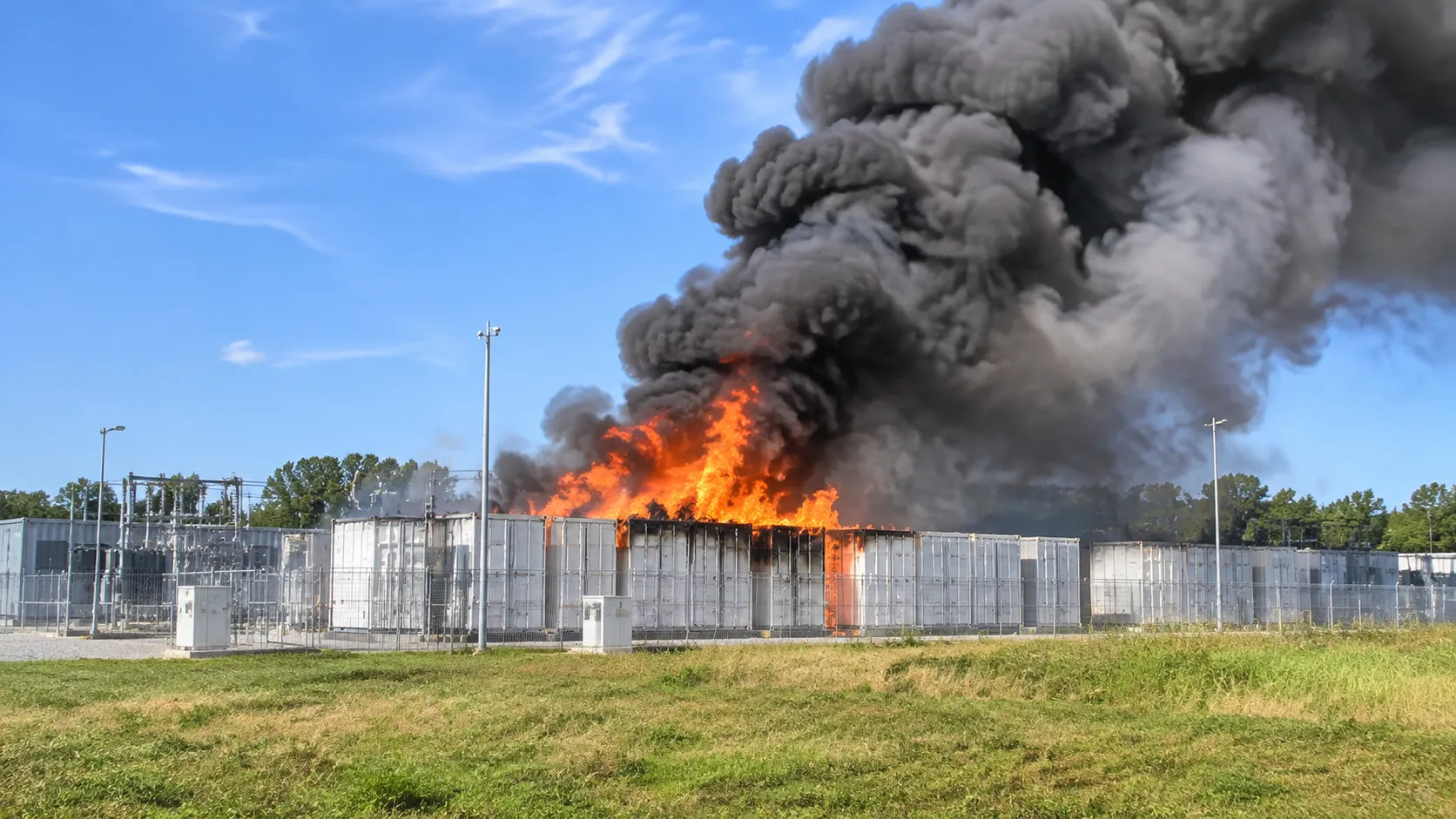
Managing thermal risk is the foundation of our engineering for any 46-megawatt battery electric storage system (BESS). To prevent cascading events and ensure strict permitting compliance across North American and international grid jurisdictions, our architecture incorporates multi-tier hazard mitigation from individual cells to the complete balance of plant.
Cell-Level Off-Gas Detection and Early Warning Sensors
Catching thermal instability before temperatures escalate is the most effective way to eliminate fire risk. We integrate specialized battery storage fire detection systems with off-gas sensors inside every enclosure to spot cell venting at the earliest chemical breakdown phase.
- Continuous Gas Monitoring: Dedicated sensing arrays measure localized concentrations of hydrogen (H2), carbon monoxide (CO), and volatile organic compounds (VOCs).
- Automated Rack Isolation: If off-gassing occurs, our controls isolate the affected rack electrically within milliseconds, cutting off electrical stress before thermal runaway starts.
- Environmental Telemetry: Enclosure air is constantly sampled alongside module-level temperature diagnostics to rule out false positives while ensuring immediate response.
NFPA 68 and NFPA 69 Explosion Mitigation and Deflagration Venting
Grid-scale installations must withstand catastrophic worst-case scenarios without structural enclosure failure. Our utility-scale BESS enclosures are engineered directly around NFPA standards to control pressure waves and flammable gas accumulation:
- Deflagration Venting (NFPA 68): Calibrated burst panels release internal pressure spikes upward and away from service aisles, shielding personnel and adjacent enclosures.
- Combustible Gas Control (NFPA 69): High-volume exhaust systems automatically purge flammable gas mixtures, keeping internal atmospheres well below lower flammability limits (LFL).
- Structural Integrity: Robust exterior construction prevents enclosure breaches and projectile hazards during rapid overpressure releases.
| Mitigation Layer | Standard Applied | Primary Function |
|---|---|---|
| Explosion Venting | NFPA 68 | Safe directional release of deflagration overpressure |
| Purge Ventilation | NFPA 69 | Mechanical extraction to dilute flammable gases below 25% LFL |
| System Certification | UL 9540 / UL 9540A | Evaluates fire spread resistance at cell, module, and unit levels |
| Secondary Suppression | NFPA 15 / NFPA 855 | External water deluge interface for boundary cooling |
UL 9540, UL 9540A, and UL 1973 Safety Certification Compliance
Deploying a 46 MW grid-scale asset requires strict regulatory clearance from authorities having jurisdiction (AHJs) and off-takers. We construct our systems using hardware validated by top testing protocols, backed by verified lithium iron phosphate battery safety benchmarks.
- UL 1973 Compliance: Validates the mechanical, electrical, and environmental safety of our battery packs and battery management systems (BMS).
- UL 9540A Testing: Full-scale fire testing reports verify that thermal runaway events cannot propagate from cell to cell, module to module, or unit to unit.
- UL 9540 System Listing: Covers the entire containerized energy storage assembly, integrating electrical switchgear, inverters, and thermal management into a compliant system.
Integrated Clean-Agent Fire Suppression and Water Deluge Systems
Our suppression framework employs a dual-stage setup designed to handle internal electrical faults while offering localized perimeter defense:
- Total Flooding Clean Agent: Aerosol or clean-agent fire suppression (such as Novec 1230 or FM-200) discharges instantly upon confirmed thermal detection, extinguishing active flame without damaging surrounding electrical components or leaving conductive residue.
- Internal Water Deluge Piping: Dry-pipe sprinkler systems with standardized external fire department connections (FDC) allow regional emergency crews to cool enclosures directly without entering the container.
- Complete Zoning Separation: Physical spacing and fire barrier walls ensure that an incident in one modular block remains isolated, protecting overall plant uptime across the 46MW asset.
Turnkey Scope of Delivery and Balance of Plant (BoP)
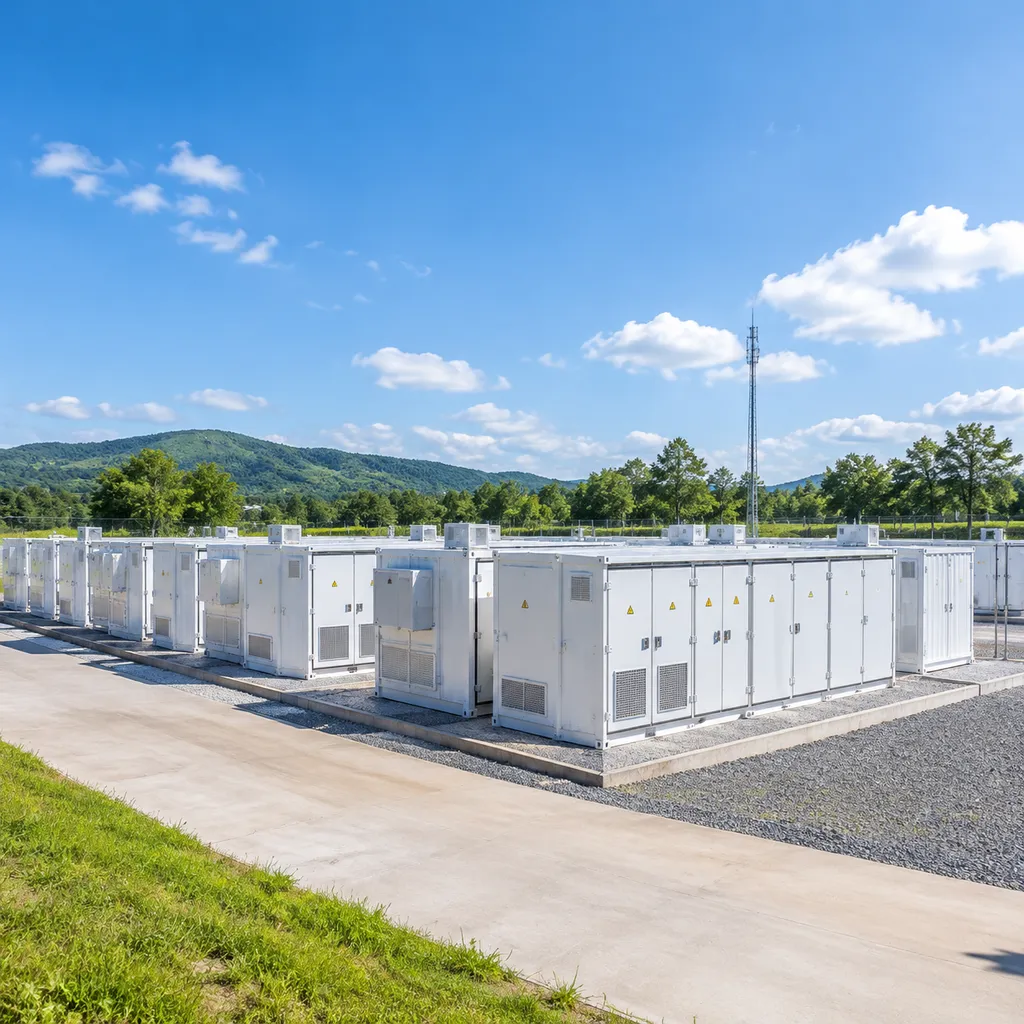
Engineering Studies, SLD Drafting, and Interconnection Design
Grid compliance starts long before hardware arrives on-site. We align project engineering directly with regional transmission organization (RTO) and independent system operator (ISO) requirements:
- System Impact & Interconnection Studies: Dynamic stability modeling, power flow, short-circuit, and reactive capability simulations.
- Detailed Electrical Drafting: Utility-grade Single-Line Diagrams (SLD), three-line schematics, protection and control schemes, and relay coordination plans.
- Civil & Structural Design: Pad layout, foundation structural engineering, thermal setback compliance, stormwater management, and access road planning.
Our structured project delivery approach ensures your engineering package moves through utility interconnection reviews without prolonged redesign cycles.
Factory-Integrated Container Supply and Auxiliary BoP
We minimize site labor and civil risk by supplying standardized, pre-tested equipment blocks designed for rapid deployment. As an integrated provider of turnkey storage systems, our complete balance of plant (BoP) scope includes:
| Equipment Category | Included Scope Elements |
|---|---|
| Energy Storage Enclosures | Pre-cabled battery enclosures, liquid thermal distribution, onboard fire safety systems |
| Power Conversion | Utility-scale bi-directional PCS skids with integrated DC disconnects and harmonic filtering |
| Medium-Voltage BoP | Step-up transformers (LV/MV), pad-mounted MV switchgear, circuit breakers, and auxiliary transformers |
| Auxiliary Infrastructure | Station service power supplies, redundant DC control power (UPS), site grounding grids, and civil raceways |
| Communications & SCADA | Fiber-optic site rings, industrial Ethernet switches, local controller cabinets, and remote terminal units (RTUs) |
Site Acceptance Testing (SAT) and Utility Commissioning Protocols
Bringing a 46MW asset online demands seamless field execution. Our field commissioning engineers execute structured testing protocols to secure final utility sign-off:
- Cold Commissioning: Complete DC string polarity verification, megger insulation testing, torque audits, grounding integrity checks, and dry-run auxiliary power tests.
- Hot Commissioning: Controlled MV energization, phase rotation verification, inverter-transformer synchronization, and point-to-point SCADA validation.
- Capacity & Grid Acceptance Runs: Full charge and discharge acceptance runs, round-trip efficiency audits, step-response time logging, and reactive power tests.
- Utility Witness Testing: Formal execution of ISO-mandated performance runs to reach Commercial Operation Date (COD) on schedule.
Lifecycle Maintenance, Warranties, and Capacity Augmentation
Long-term revenue for a 46-megawatt battery electric storage system (BESS) hinges on controlling cell degradation and eliminating unexpected downtime. We structure our asset management around predictable operating costs, flexible field retrofits, and bankable performance guarantees over a 20-year design life.
Flexible Battery Augmentation Schedules Across a 20-Year Project Life
Degradation profiles vary significantly based on cycling frequency, depth of discharge (DoD), and local ambient temperatures. Rather than requiring heavy upfront overbuilds that inflate initial CAPEX, we design our DC bus architecture and container layouts to support staged augmentation:
- Year 5 to 7 Augmentation: Targeted addition of DC racks or string replacements to restore nameplate energy capacity as wholesale market requirements demand.
- DC-Coupled Flexibility: Drop-in rack capability allows newer, higher-energy-density cells to integrate without redesigning medium-voltage infrastructure.
- Data-Driven Planning: Utilizing advanced modeling from our battery energy storage system life prediction guide, we forecast accurate capacity fade to time capital deployments for maximum project IRR.
| Strategy | Initial Sizing | Capital Timing | Best Suited For |
|---|---|---|---|
| Upfront Overbuild | 115%–125% of rated MWh | High Day-1 CAPEX | Strict capacity-firming contracts with zero early degradation tolerance |
| Staged Augmentation | 100% of rated MWh | Distributed OPEX (Years 5–8) | Dynamic merchant arbitrage and frequency regulation balancing cash flow |
AC Energy Yield, RTE, and Uptime Availability Guarantees
We back every utility-scale installation with performance contracts engineered to satisfy project finance lenders and off-takers:
- Uptime Availability: Guaranteed system availability of ≥ 98%, covering battery racks, PCS skids, thermal management loops, and master controls.
- Round-Trip Efficiency (RTE): Baseline AC-to-AC efficiency warranties measured directly at the medium-voltage skid terminals to ensure minimal parasitic loss.
- Capacity Retention: Multi-year degradation bands mapped to your daily equivalent full cycles (EFC), ensuring predictable dispatch capabilities year after year.
24/7 Remote NOC Telemetry and Preventative Maintenance
System reliability is maintained through proactive oversight and standardized field response protocols:
- Continuous Remote Monitoring: Our 24/7 Network Operations Center (NOC) monitors thousands of data points across the 46MW asset, tracking rack-level insulation resistance, cell delta voltages, liquid-coolant pressures, and HVAC efficiency.
- Predictive Anomaly Detection: Machine learning telemetry detects abnormal thermal gradients or off-gas traces before a single module breaches safe operating limits.
- Scheduled Field Service: Factory-certified technicians execute semi-annual inspections, coolant loop flushes, torque checks, and breaker testing to prevent forced outages and preserve warranty compliance.
Frequently Asked Questions About 46-Megawatt BESS Installations
What footprint is needed for a 46-megawatt battery electric storage system?
Site acreage depends primarily on system duration, transformer spacing, and local fire code setbacks:
- 1-Hour to 2-Hour (46 MWh – 92 MWh): Typically occupies 1.5 to 2.5 acres, including power conversion skids, medium-voltage switchgear, and NFPA 855 perimeter clear zones.
- 4-Hour (184 MWh): Generally requires 2.5 to 3.5 acres to accommodate the doubled battery enclosure count, thermal management loops, and maintenance access corridors.
- Layout Optimization: We use high-density container layouts with integrated deflagration spacing to minimize civil grading, trenching, and balance of plant (BoP) costs on tight project parcels.
How do 1-hour, 2-hour, and 4-hour configurations compare for a 46MW asset?
Duration defines your primary revenue streams and duty cycles across wholesale power markets:
| Configuration | Energy Rating | Primary Revenue Engine | Target Grid Applications |
|---|---|---|---|
| 1-Hour | 46 MWh | Ancillary Services | Fast frequency response (FFR), spinning reserves, transient stability |
| 2-Hour | 92 MWh | Capacity & Reserves | Peak capacity contracts, ramp-rate control, transmission congestion relief |
| 4-Hour | 184 MWh | Energy Arbitrage & Firming | Day-ahead energy shifting, solar-plus-storage firming, wholesale market trading |
What grid interconnection standards apply to this utility-scale system?
A 46-megawatt battery electric storage system BESS connects directly at transmission or sub-transmission voltages (typically 34.5 kV stepped up to 69 kV–230 kV). Interconnection compliance mandates:
- IEEE 2800-2022 & IEEE 1547: Inverter-based resource standards governing voltage ride-through (VRT), frequency ride-through (FRT), and reactive power control.
- NERC Reliability Standards: PRC-024 (frequency/voltage protection settings), MOD-032 (dynamic modeling), and CIP cybersecurity compliance for remote telemetry.
- Grid Support Protocols: For constrained or islanded networks, evaluating the performance of battery energy storage system in weak grid applications ensures proper phase-locked loop (PLL) tracking and synthetic inertia delivery without tripping.
How does liquid cooling reduce degradation in high-cycling environments?
High ambient temperatures and uneven thermal distribution are the primary drivers of accelerated LFP cell degradation. Our liquid-cooled thermal architecture addresses this directly:
- Uniform Cell Temperatures: Keeps temperature differentials between individual cells within ≤ 2°C to 3°C, preventing localized overstressing and uneven cell aging.
- Reduced Parasitic Loads: Liquid thermal loops consume up to 30% less auxiliary power than standard HVAC forced-air units, preserving project round-trip efficiency (RTE).
- Extended Service Life: By keeping core cell temperatures within the optimal 20°C to 25°C window during full 1C charge and discharge cycles, we significantly reduce capacity fade across daily multi-cycle operations.
What augmentation strategy best preserves project IRR over 20 years?
Rather than massive day-one oversizing—which locks up capital and creates unnecessary parasitic loads—we recommend a planned batch augmentation strategy:
- Targeted Top-Offs: We design the initial balance of plant, switchgear, and busbars with pre-allocated bays, adding fresh DC capacity at Year 5 to 7 and Year 12 to 14 as capacity degrades.
- CAPEX Optimization: Staging capacity additions defers upfront equipment expenditures, allowing you to capture projected declines in cell pricing and capitalize on higher energy density blocks later in the project lifecycle.
- Turnkey Execution: Whether deploying a 46MW transmission-tied asset or evaluating a standalone grid-connected battery energy storage system for sale, our modular design guarantees that newly added DC blocks integrate seamlessly into existing power conversion skids without requiring complete plant outages.