Formula details
Product Details
Overview
System Architecture & Turnkey Integration
Our grid connected battery energy storage system delivers an all-in-one, factory-integrated architecture designed for utility-scale and heavy commercial deployments.
Grid Connected BESS Turnkey Architecture
| Energy Storage Subsystem (DC) | Power Conversion Subsystem (AC) | Digital Control & Safety |
|---|---|---|
| • Prismatic LFP | • Bi-directional 1500V PCS | • Multi-Tier BMS |
| • Liquid-Cooling (ΔT ≤ 2.5°C) | • Grid-Forming & Grid-Following | • Site-Level EMS |
| • IP55 / NEMA 3R | • NFPA 68/69 Fire Suppression |
Core Subsystem Breakdown
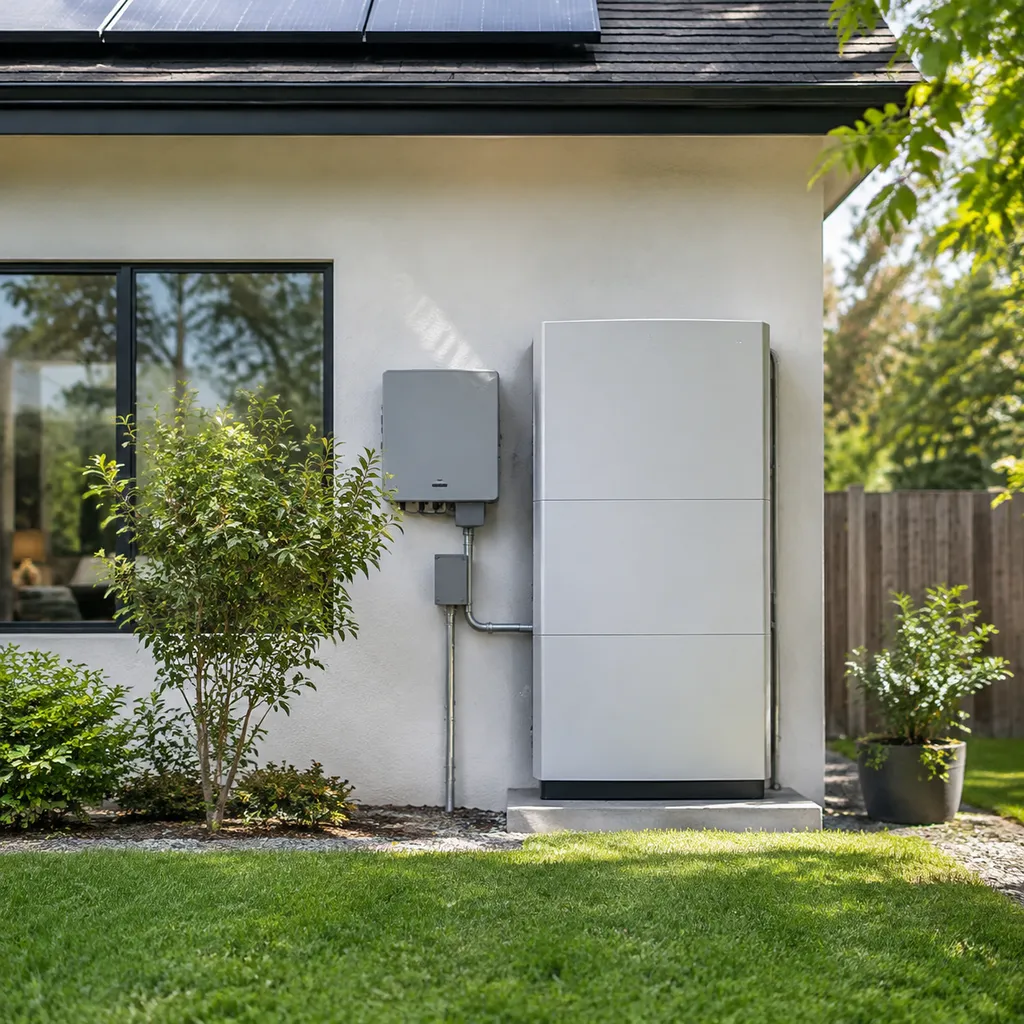
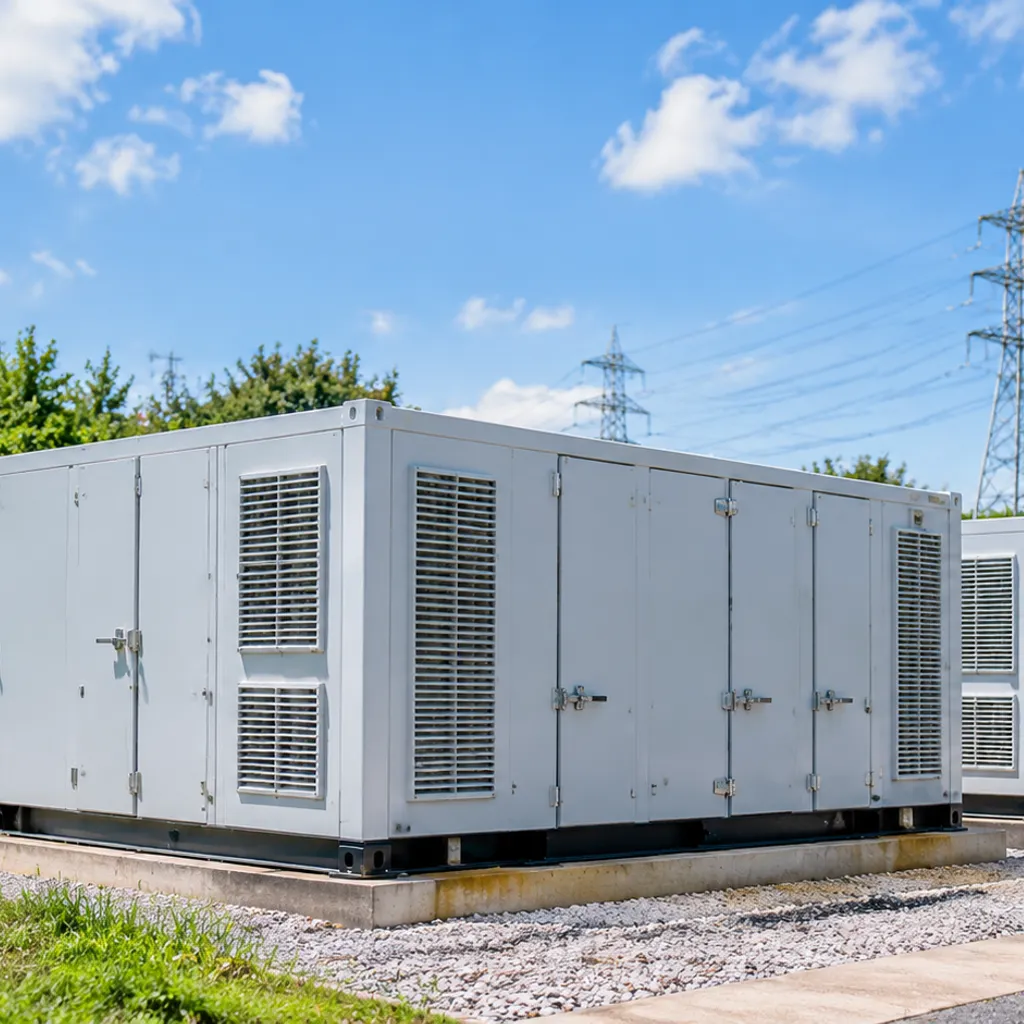
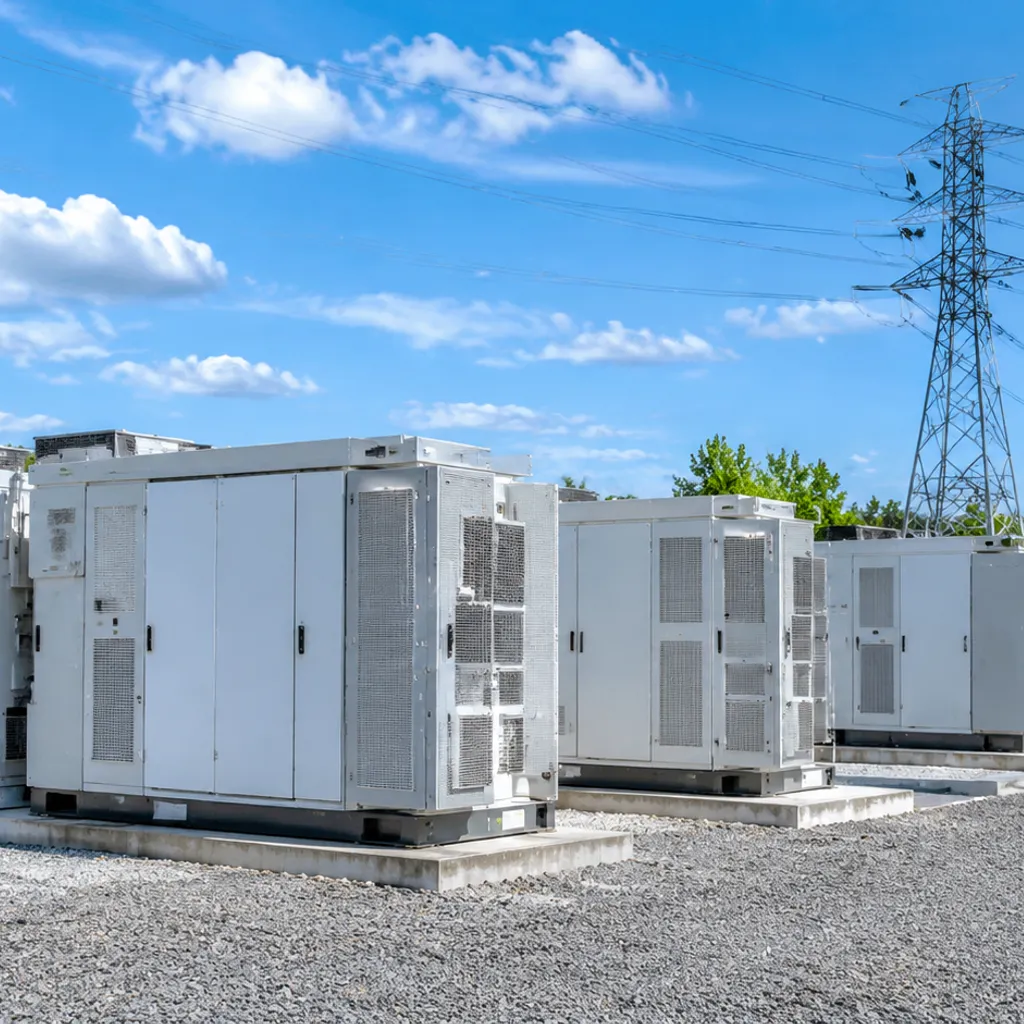
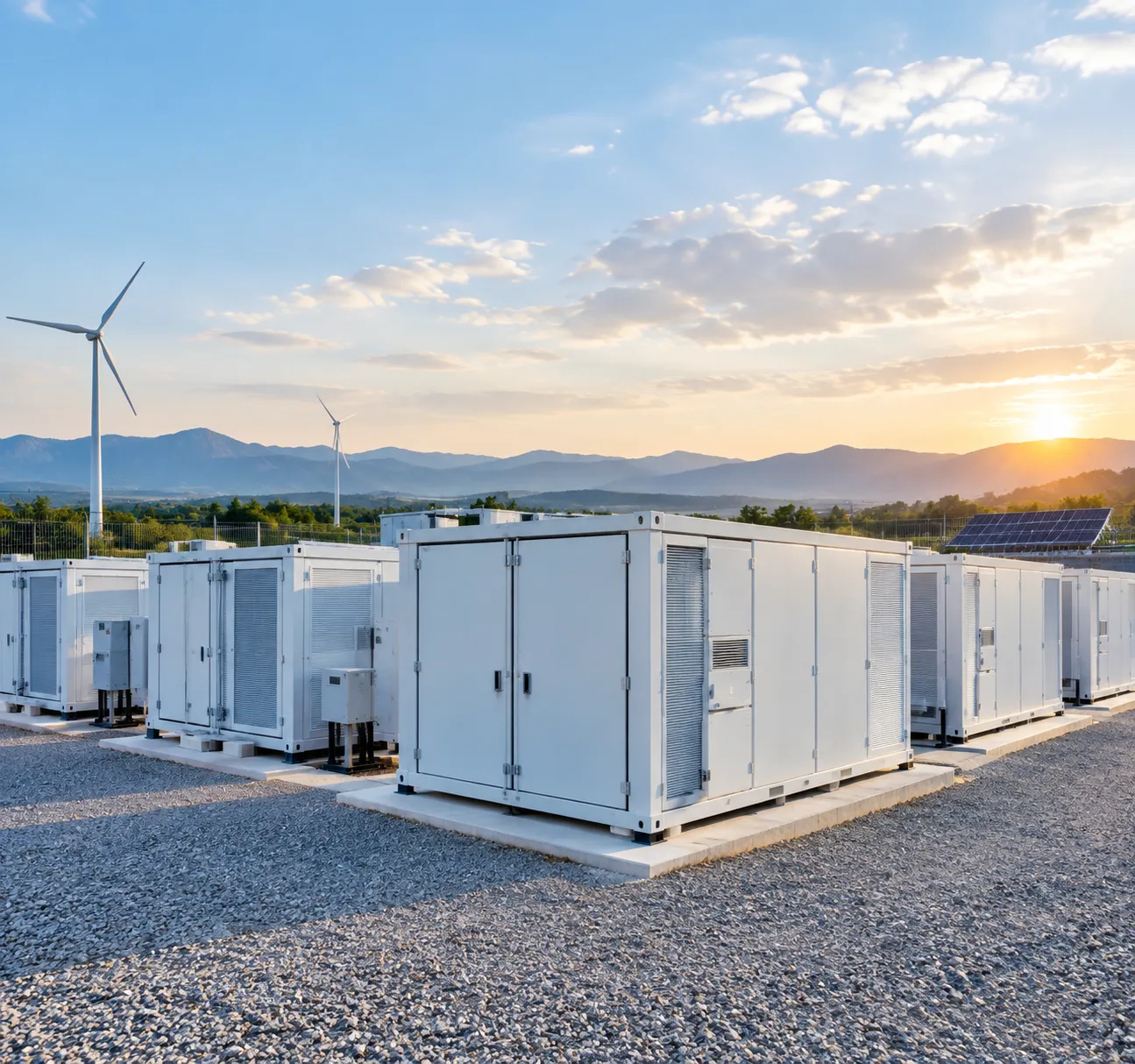
- Enclosure Engineering: Available in standard 20-foot and 40-foot ISO container configurations as well as modular outdoor cabinets. All enclosures feature IP55 / NEMA 3R ingress protection, heavy-gauge anti-corrosion steel, and multi-zone thermal insulation to withstand extreme ambient temperatures from -30°C to 55°C.
- Battery Module & Rack Technology: Built on high-density Prismatic LiFePO4 (LFP) cells configured into high-voltage DC racks (up to 1500V DC). Each string is monitored by an autonomous, three-tier Battery Management System (BMS) that tracks cell-level voltage, temperature, and balancing in real time.
- Active Liquid-Cooling Thermal Management: Industrial-grade closed-loop liquid chillers circulate dielectric fluid directly across cell baseplates. This active thermal control restricts cell-to-cell temperature variance to $Delta$T $le$ 2.5°C, drastically minimizing cell degradation and maximizing cycle efficiency.
- Bi-directional Power Conversion System (PCS): High-efficiency four-quadrant PCS units support both grid-following and grid-forming operation, delivering sub-20ms dynamic active/reactive power injection (P/Q control), black-start capabilities, and synthetic inertia.
- Energy Management System (EMS) & SCADA: Embedded local controllers process dispatch commands, automate peak shaving and energy arbitrage schedules, and interface upstream with utility SCADA via Modbus TCP/IP, IEC 61850, and DNP3 protocols.
- Multi-Layer Fire Safety & Hazard Mitigation: Engineered to meet rigorous safety benchmarks, our design integrates off-gas (hydrogen/CO) sensors, optical smoke detectors, clean-agent total flooding suppression, NFPA 68/69 explosion relief venting, and an integrated water deluge piping system.
Operational Modes of Our Grid Connected Battery Energy Storage System for Sale
Behind-the-Meter (BTM) Commercial & Industrial Applications
For commercial facilities, manufacturing plants, and microgrids, our BTM configurations protect your bottom line by cutting utility penalties and securing power quality:
- Peak Shaving & Demand Charge Management: We automate load-profile clipping to discharge stored energy when site demand spikes. Discover the benefits of peak shaving for lower energy costs to see how significantly this reduces monthly capacity billing.
- Time-of-Use (TOU) Energy Arbitrage: Our energy management software charges the battery bank during low-cost off-peak windows and injects power during peak tariff hours.
- Renewable Self-Consumption: We align local solar PV generation curves with facility consumption, capturing surplus midday solar instead of exporting it at unfavorable net-metering rates.
- Emergency Backup & Microgrid Black-Start: Paired with our commercial and industrial backup power systems, the bi-directional PCS automatically islands the site during utility outages to maintain critical operations without voltage sags.
| Application Mode | Primary Economic Value | Typical C-Rate & Response Time |
|---|---|---|
| Peak Shaving | Cuts utility demand fees | 0.5C to 1C (< 100 ms) |
| Energy Arbitrage | Exploits TOU rate spreads | 0.25C to 0.5C (Scheduled) |
| Solar Self-Consumption | Maximizes on-site clean power | 0.25C to 0.5C (Continuous) |
| Microgrid Islanding | Uninterrupted backup power | 1C to 2C instantaneous (< 20 ms) |
Front-of-the-Meter (FTM) Utility-Scale Applications
For IPPs, project developers, and transmission operators, our utility-grade platforms deliver rapid, high-yield grid stabilization:
- Fast Frequency Regulation & Ancillary Services: Our sub-second bi-directional PCS responds to grid frequency deviations in milliseconds, meeting stringent ancillary market standards (FCR, aFRR, and synthetic inertia).
- Renewable Capacity Firming & Curtailment Mitigation: We eliminate intermittency by buffering wind and utility solar outputs, turning erratic clean energy into predictable, dispatchable block power.
- Transmission & Distribution (T&D) Substation Deferral: Utilities deploy our modular containers at constrained nodes to relieve line congestion during peak hours, deferring millions in expensive substation upgrade capital.
Grid Connected Battery Energy Storage System Specifications & Sizing Matrix
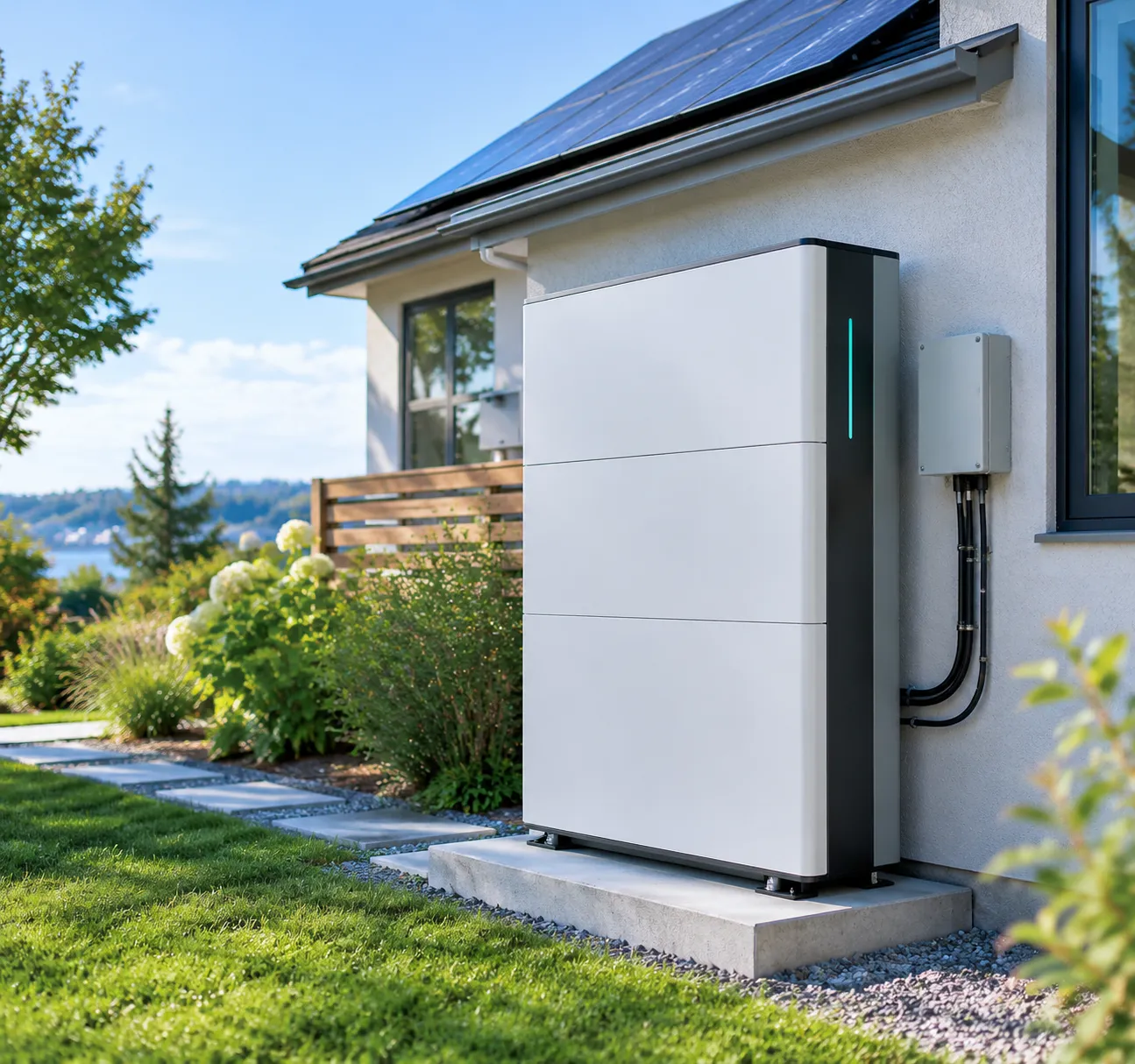
We configure each grid connected battery energy storage system for sale to match specific site loads, interconnection voltages, and operational duties. Whether deploying localized peak shaving for industrial facilities or multi-megawatt capacity firming on the distribution grid, our modular lineup provides predictable performance, high round-trip efficiency (RTE), and rapid field deployment.
If you are evaluating project requirements and matching discharge duration to power demand, refer to our BESS sizing guide to calculate optimal capacity for your site.
Standard System Sizing Matrix: C&I Series vs. Utility Series
Our systems range from compact, all-in-one outdoor cabinets for commercial sites to high-density 20ft and 40ft modular containerized platforms for front-of-the-meter utility installations.
| Parameter | C&I Series (Outdoor Cabinet) | C&I Series (Compact Container) | Utility Series (20ft Container) | Utility Series (40ft High-Density) |
|---|---|---|---|---|
| Rated AC Power | 100 kW – 250 kW | 500 kW – 1,000 kW | 1.0 MW – 1.72 MW | 2.5 MW – 3.45 MW |
| Usable Energy Capacity | 215 kWh – 500 kWh | 1.0 MWh – 2.0 MWh | 2.0 MWh – 3.72 MWh | 5.0 MWh |
| Standard C-Rate Options | 0.5C (2-Hour), 1C (1-Hour) | 0.25C (4-Hour), 0.5C (2-Hour) | 0.25C (4-Hour), 0.5C (2-Hour), 1C | 0.25C (4-Hour), 0.5C (2-Hour) |
| Round-Trip Efficiency (RTE) | $ge$ 89.5% (AC-to-AC) | $ge$ 90.0% (AC-to-AC) | $ge$ 90.5% (AC-to-AC) | $ge$ 91.0% (AC-to-AC) |
| Nominal AC Voltage | 400V / 480V (3-Phase) | 400V / 480V (3-Phase) | 600V / 690V (or MV Step-Up) | 690V to 13.8kV / 34.5kV Skid |
| Frequency Range | 50 Hz / 60 Hz | 50 Hz / 60 Hz | 50 Hz / 60 Hz | 50 Hz / 60 Hz |
| Enclosure Protection | IP55 / NEMA 3R | IP55 / NEMA 3R | IP55 / ISO Container | IP55 / ISO Container |
| Cooling Method | Liquid-Cooled Loop | Liquid-Cooled Loop | Direct Liquid Cooling | Direct Liquid Cooling |
Electrical & Dispatch Specifications
Every system incorporates bi-directional power conversion platforms capable of operating across diverse discharge regimes while maintaining power quality standards at the Point of Interconnection (POI).
- Configurable Discharge Rates (C-Rate):
- 1C (1-Hour Duration): Optimized for high-speed frequency regulation, ancillary services, and fast-response spinning reserve.
- 0.5C (2-Hour Duration): Standard configuration for commercial demand charge management, peak shaving, and energy arbitrage.
- 0.25C (4-Hour Duration): Long-duration format designed for utility-scale capacity firming, transmission deferral, and solar PV clipping recapture.
- AC Output & Transformer Integration: Low-voltage units connect directly to facility distribution switchgear at 480V/400V. For utility interconnections, our containerized battery energy storage units pair directly with integrated medium-voltage transformer skids stepping up to 13.8 kV, 24.9 kV, or 34.5 kV.
- System RTE Performance: High-voltage DC bus architecture combined with direct liquid cooling delivers sustained AC-to-AC Round-Trip Efficiency $ge$ 90%, minimizing parasitic HVAC draw and conversion losses. Learn more about optimizing physical layouts and balance of plant in our energy storage system architecture guide.
SCADA, Telemetry & Communication Protocols
Our native Energy Management System (EMS) and plant controllers support standard industrial and utility telemetry protocols out of the box, ensuring rapid integration with third-party aggregators, ISO/RTO dispatch systems, and plant SCADA:
- Modbus TCP/IP & RTU: Native connection for on-site facility EMS, local power meters, and building management systems (BMS).
- DNP3 (Distributed Network Protocol): Secure, standardized utility-grade communication for FTM sub-station control and remote terminal units (RTUs).
- IEC 61850: High-speed substation automation protocol for intelligent electrical grid integration and automated protection signaling.
Grid Interconnection Compliance & Interoperability
To accelerate local utility sign-offs and permitting approvals, our power conversion systems and controllers are pre-certified under key global and North American grid codes:
- IEEE 1547-2018 & IEEE 1547.1: Full compliance with advanced inverter functions, including active power curtailment, reactive power control (Volt-VAR / Frequency-Watt), and ride-through capabilities.
- UL 1741 Supplement SB (UL 1741-SB): Third-party certified for smart inverter interoperability and rapid utility grid isolation.
- California Rule 21 & HECO Rule 14H: Pre-configured parameter profiles enabled for rapid interconnection compliance in high-penetration renewable utility territories.
Safety Standards, Compliance & Bankability
System Certifications & Electrical Compliance
Our turnkey platforms are pre-certified to simplify the interconnection process with regional utilities and local authorities having jurisdiction (AHJs):
System-Level Standards: Fully certified to UL 9540 (Standard for Energy Storage Systems and Equipment) and IEC 62933 for grid-integrated utility performance.
Cell & Module Safety: Compliant with UL 1973 and IEC 62619, verifying the fundamental lithium iron phosphate battery system safety and cycle life under extreme electrical and thermal stress.
Grid Code Alignment: Factory-configured for IEEE 1547-2018, UL 1741-SB, California Rule 21, and HECO requirements.
UL 9540A Fire Safety & Permitting Readiness
Fast-tracking AHJ approvals requires hard data, not assumptions. We provide comprehensive UL 9540A test reports across cell, module, unit, and installation levels:
Thermal Runaway Mitigation: Proven zero flame spread to adjacent racks without active water suppression engagement.
Deflagration Protection: Integrated NFPA 68-compliant explosion relief panels and NFPA 69 ventilation systems.
Detection & Suppression: Dual-stage optical smoke/gas sensors paired with clean-agent suppression and targeted direct-to-module water deluge manifolds.
| Parameter | Standard Specification | Compliance Level |
|---|---|---|
| System Certification | UL 9540 / IEC 62933 | Complete Turnkey Assembly |
| Core Cell Safety | UL 1973 / IEC 62619 | Prismatic LFP Architecture |
| Fire Testing Report | UL 9540A (4th/5th Edition) | Cell, Module, Unit, Installation |
| Structural Integrity | Seismic Zone 4 / High Wind Load | Standard Enclosure Build |
| Ingress Rating | NEMA 3R / IP55 | Outdoor Extreme Environments |
Structural Ratings, Warranties & Bankability
Securing non-recourse project financing depends directly on hardware bankability and extended asset life:
Environmental & Structural Resilience: Heavy-gauge enclosures built for Seismic Zone 4 conditions and rated to withstand extreme sustained wind loads, salt spray, and desert dust.
Performance Warranties: A standard 10 to 15-year performance warranty guaranteeing >70% capacity retention at 6,000 to 8,000 equivalent full cycles under standard operational profiles.
Tier-1 Bankability: We source critical battery cells, power electronics, and balance-of-plant components exclusively from Tier-1 suppliers, ensuring smooth approvals from independent engineers (IE) and major financial institutions.
Project Economics and Procurement Process for Grid-Connected BESS
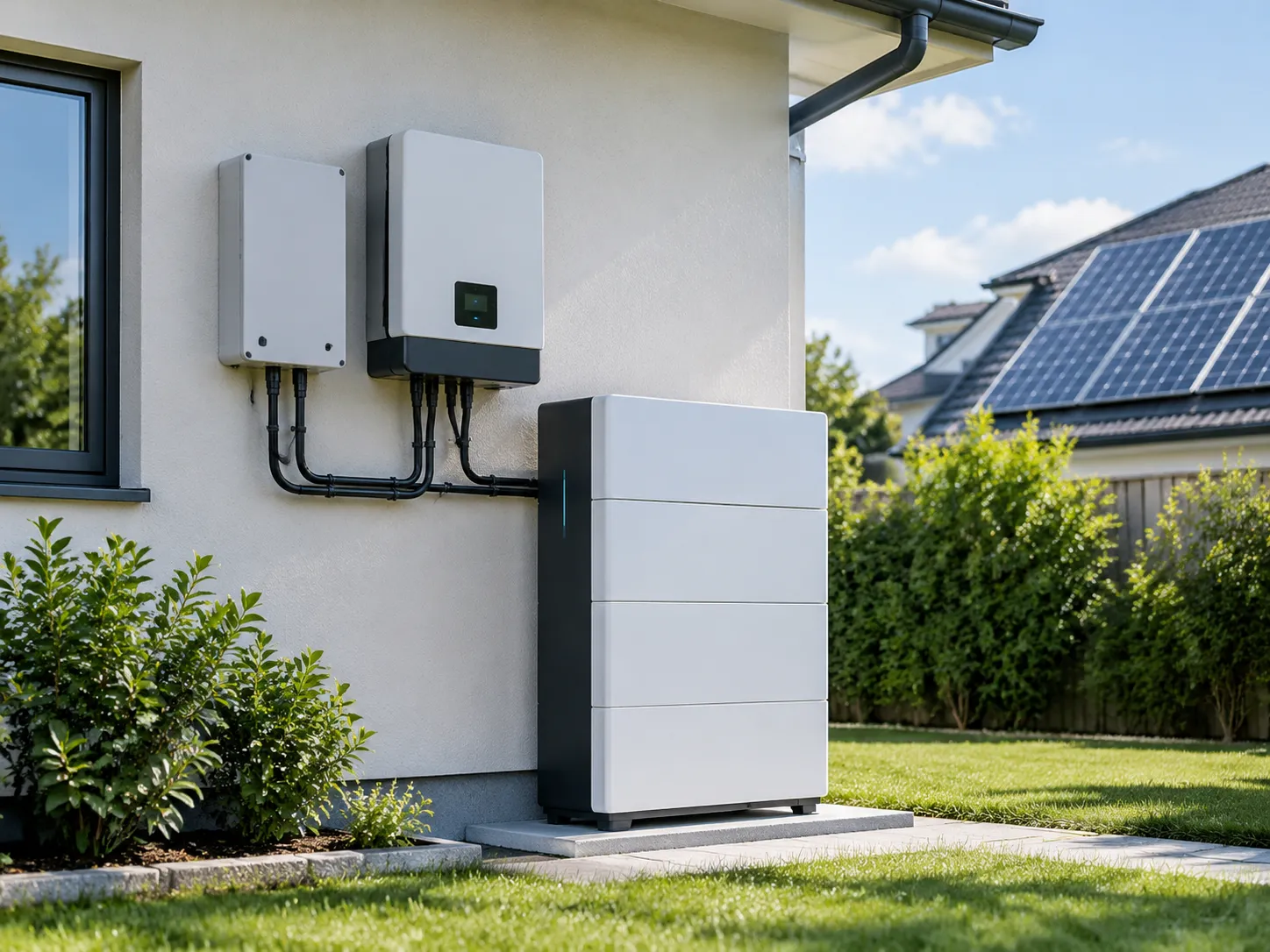
Commercial Sizing & Capex/Opex Cost Drivers
Our turnkey BESS pricing is structured to eliminate surprise costs during deployment. We break down the capital and operational drivers into predictable components:
- Battery Pack & Rack Core (Capex): Modular liquid-cooled LiFePO4 battery enclosures with integrated multi-tier BMS.
- Balance of Plant & Power Conversion (Capex): Bidirectional PCS, medium-voltage transformer step-up, HVAC/liquid chilling loops, and NFPA-compliant fire suppression.
- Engineering, Procurement & Construction (EPC): Foundation civil works, medium-voltage trenching, and grid interconnection hardware.
- Operational Expenditures (Opex): Scheduled maintenance, remote SCADA monitoring, liquid coolant replenishment, and extended performance warranties.
| Cost Driver | Description | Impact on LCOS |
|---|---|---|
| Energy Density (MWh/Footprint) | High-density containerized designs reduce land acquisition and foundation costs. | High reduction in site-prep Capex |
| C-Rate Optimization | Sizing power-to-energy ratios (0.25C to 1C) prevents oversizing battery capacity. | Direct Capex savings |
| Round-Trip Efficiency (RTE $ge$ 90%) | Higher efficiency minimizes auxiliary power consumption and parasitic losses. | Significant lifetime Opex reduction |
| Degradation Guarantees | High cycle life (6,000–8,000 cycles) maintains capacity retention over 10–15 years. | Lower Levelized Replacement Cost |
Federal Incentives & Tax Credits (ITC / IRA Eligibility)
Our grid-tied systems comply with global compliance standards and qualify for major regional clean energy incentives:
- US Inflation Reduction Act (IRA) Standalone Storage ITC: Qualifies for the baseline 30% Investment Tax Credit for standalone energy storage systems without requiring co-located solar.
- Domestic Content & Energy Community Adders: Tiered bonus credits up to an additional 10%–20% based on project location and qualified bill of materials.
- Modified Accelerated Cost Recovery System (MACRS): Allows accelerated 5-year depreciation schedules to significantly lower front-end tax liabilities.
3-Phase Procurement and Deployment Roadmap
We streamline every stage of asset execution through our proven project delivery framework to ensure fast deployment, strict quality control, and smooth utility sign-off.
[Phase 1: Engineering & Sizing] ➔ [Phase 2: FAT & Pre-Commissioning] ➔ [Phase 3: SAT & Interconnection]
- Phase 1: Engineering Assessment, Load Profiling & Site Sizing
- We analyze 15-minute interval utility load data, generation profiles, and tariff structures.
- Perform interconnection feasibility checks, single-line diagram (SLD) designs, and site footprint layout planning.
- Phase 2: Factory Acceptance Testing (FAT) & Factory Pre-Commissioning
- Complete integration of battery racks, PCS, BMS, and liquid-cooling chillers inside the factory enclosure.
- Rigorous pre-shipment FAT verifying electrical insulation, thermal safety, full-power charge/discharge cycling, and SCADA communication protocols.
- Phase 3: Delivery, Site Acceptance Testing (SAT) & Utility Interconnection Sign-Off
- Pad-ready delivery with minimal on-site assembly required.
- On-site SAT, end-to-end telemetry verification with the host utility or ISO, UL 9540 compliance sign-off with the local Authority Having Jurisdiction (AHJ), and commercial operation date (COD) commissioning.
Manufacturer Advantages of Percenec Energy Grid-Connected Solutions
When evaluating a grid connected battery energy storage system for sale, working directly with the original equipment manufacturer cuts project overhead and eliminates deployment bottlenecks. At Percenec Energy, we engineer, manufacture, and factory-integrate our energy storage platforms to deliver unmatched cost efficiency, field reliability, and lifetime operational support.
Direct Manufacturer Pricing with Modular Architecture
By sourcing directly from our factory floor, commercial and utility developers bypass tier-markups and broker fees:
True Factory-Direct Value: Maximize project ROI with competitive commercial BESS price points and optimized levelized cost of storage (LCOS).
Modular Plug-and-Play Design: Scalable cabinet and containerized battery energy storage blocks allow you to expand power and energy capacity seamlessly as site load requirements grow.
Streamlined Supply Chain: Direct access to tier-1 cell sourcing and standardized assembly lines ensures reliable delivery schedules without middleman delays.
Pre-Engineered Systems for Rapid Deployment
On-site labor and lengthy interconnection cycles represent significant soft costs in energy storage procurement. We solve this through factory-level pre-integration:
Factory Acceptance Testing (FAT): Every unit—including our 1 MW battery energy storage system for grid support—undergoes full hardware-in-the-loop (HIL) testing and pre-commissioning before leaving our facilities.
Minimizing On-Site Labor: Enclosures arrive fully wired with integrated liquid cooling, multi-tier BMS, bi-directional PCS, and fire suppression systems.
Accelerated Interconnection: Standardized AC interfaces and pre-configured grid-compliance profiles cut field commissioning timelines by up to 60%.
Dedicated B2B Engineering & Lifetime O&M
Our commitment extends across the entire lifecycle of your asset to ensure sustained uptime and bankability:
Direct Application Engineering: Dedicated B2B support assists your engineering team with load profiling, SLD reviews, and utility interconnection documentation.
24/7 Cloud SCADA Monitoring: Real-time diagnostics track cell-level voltage, module temperatures, and PCS performance around the clock.
Comprehensive O&M Packages: Flexible service-level agreements (SLAs), preventative maintenance schedules, and rapid-response spare parts distribution protect your investment over its full 10-to-15-year operational life.
Frequently Asked Questions: Grid-Connected BESS
What is the typical lead time for Percenec Energy grid-connected BESS procurement?
Our standard factory lead time for standard C&I cabinets and containerized units ranges from 8 to 12 weeks following engineering design freeze. Custom front-of-the-meter (FTM) configurations requiring medium-voltage transformers and specialized switchgear typically dispatch within 14 to 18 weeks, supported by our pre-commissioned plug-and-play manufacturing lines.
Can the system switch seamlessly between grid-tied and islanded microgrid modes?
Yes. Our systems utilize bi-directional, grid-forming power conversion systems (PCS) equipped with high-speed static transfer switches. When a grid outage occurs, the unit transitions to islanded microgrid mode in under 20 milliseconds, maintaining critical load continuity without operational downtime or phase disruption. For multi-megawatt site demands, our scalable battery energy storage system for utilities delivers black-start capability to re-energize localized generation sources independently.
Does Percenec Energy assist with utility interconnection studies and AHJ permitting approvals?
We provide complete engineering and permitting support packages to streamline local Authority Having Jurisdiction (AHJ) reviews and utility interconnection sign-offs:
Testing Documentation: Full UL 9540 system listings, UL 1973 module certifications, and site-level UL 9540A thermal runaway fire test reports.
Electrical Engineering: Stamped single-line diagrams (SLDs), protection coordination studies, and arc flash calculations.
Grid Interconnection: Certified compliance packages for IEEE 1547-2018, UL 1741-SB, and California Rule 21.
What is the difference between AC-coupled and DC-coupled grid configurations for this system?
| Parameter | AC-Coupled Storage | DC-Coupled Storage |
|---|---|---|
| System Architecture | Independent PCS connected to facility AC bus | Shared central inverter with solar PV on DC bus |
| Best Used For | Existing solar retrofits & standalone grid services | New co-located solar + storage installations |
| Installation Flexibility | High; physically separated placement allowed | Medium; close proximity to PV arrays required |
| Efficiency Profile | Optimized for peak shaving and grid arbitrage | Optimized for direct solar clipping capture |
For flexible facility expansions, our modular battery energy storage system for scalable power provides an AC-coupled architecture that integrates directly with existing plant switchgear without altering current generation hardware.
How does liquid cooling improve battery degradation and cycle life compared to air cooling?
Our active liquid-cooling system maintains a cell-to-cell temperature delta of <= 2.5°C throughout intense charge and discharge cycles, compared to the 5°C–8°C gradients typical in forced-air systems. Uniform thermal distribution eliminates localized hot spots, suppresses uneven cell impedance growth, and prevents premature capacity loss. This thermal precision extends system operational life to 6,000–8,000 cycles at 90% Depth of Discharge (DoD), lowering your Levelized Cost of Storage (LCOS) by up to 22% over a 15-year project lifecycle.