
Formula details
Product Details
Overview
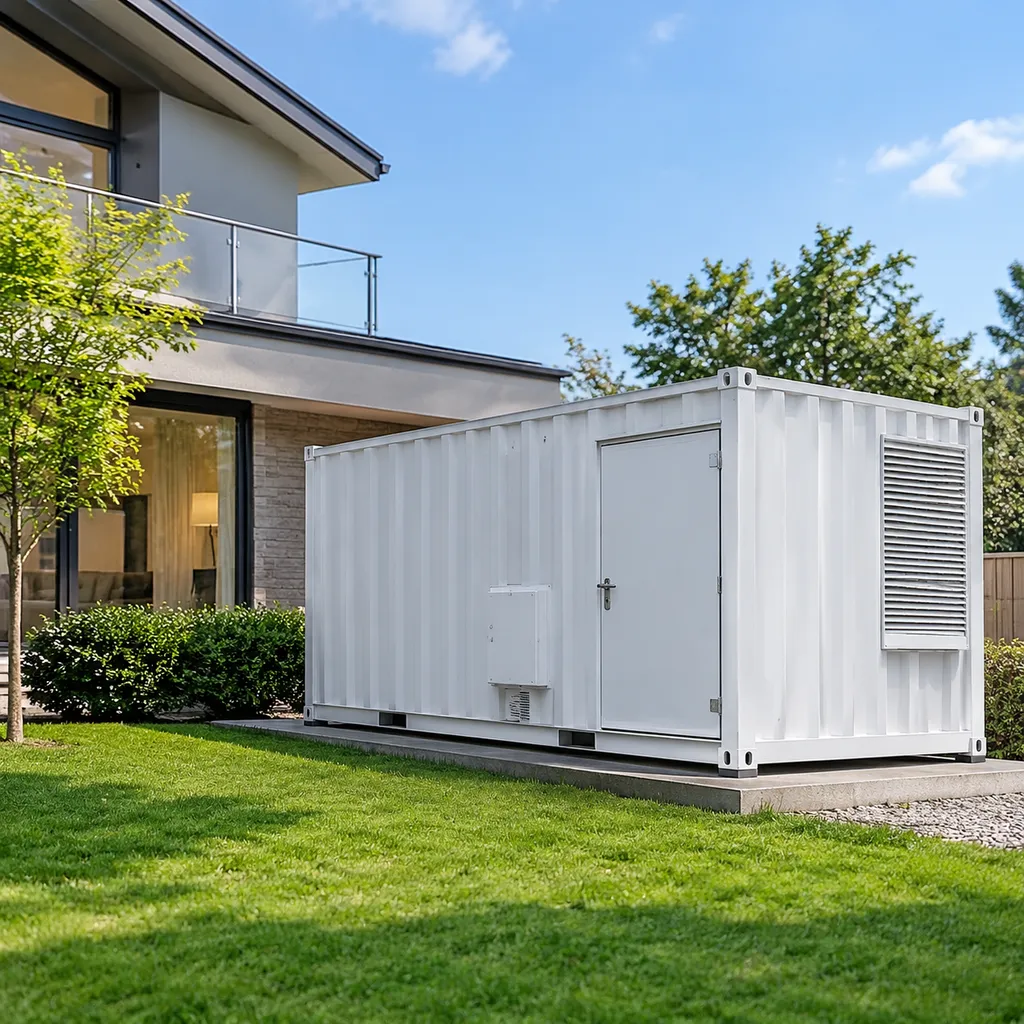
Is a Containerized Battery Energy Storage System Suitable for a House?
A containerized battery energy storage system for house applications is built for properties whose energy demand exceeds what wall-mounted residential batteries can deliver. While a standard single-family home typically uses 10 kWh to 30 kWh per day, large estates, multi-building compounds, and off-grid residences require higher continuous power output and larger storage capacity to run heavy HVAC units, well pumps, workshops, and guest houses simultaneously.
Where Containerized Systems Fit Best
We design and supply containerized energy storage solutions for high-demand residential and semi-residential sites where reliability and high power output are critical:
Large Estates and Villas: Properties with pools, electric vehicle fleets, central climate control, and extensive outdoor lighting.
Multi-Building Properties: Compounds, ranches, and farms where a single centralized power hub feeds a main residence, staff quarters, and agricultural equipment.
Remote and Off-Grid Homes: Locations without utility grid access or areas subject to frequent, multi-day power outages.
Residential Microgrids: Shared energy storage setups serving multiple homes or community facilities alongside solar arrays and backup generators.
How Containerized Systems Differ from Standard Residential Setups
Standard home batteries are compact, wall-mounted units designed for basic household backup and daily solar shifting. In contrast, a containerized energy storage system for residential use integrates high-capacity LiFePO4 battery racks, a Power Conversion System (PCS), a Battery Management System (BMS), an Energy Management System (EMS), thermal management, and fire suppression inside a single weatherproof enclosure. This all-in-one architecture supports higher continuous kilowatt (kW) output, three-phase power loads, and multi-day autonomy without cluttering interior living spaces.
Choosing Between an Outdoor Cabinet, Modular System, and Container
Selecting the right enclosure format depends on available space, total energy storage needs, and future expansion plans:
| System Format | Typical Application | Key Advantage |
|---|---|---|
| Compact Outdoor Cabinet | Large single-family homes needing mid-range backup | Small footprint, straightforward pad installation, lower upfront civil work |
| Modular Battery System | Homes with phased solar or load growth | Flexible capacity expansion by adding battery racks or cabinets over time |
| Containerized BESS | Estates, multi-building sites, and residential microgrids | Highest energy capacity, fully pre-integrated PCS/EMS/safety hardware, and rapid site deployment |
Key Sizing Inputs for Your Property
Before selecting a unit from containerized battery energy storage system manufacturers in China, gather six core site parameters to avoid under-sizing or overpaying:
1. Daily Energy Consumption (kWh): Total kilowatt-hours consumed across a typical 24-hour cycle, including seasonal peaks.
2. Peak Power Load (kW): The maximum simultaneous power draw when heavy appliances, pumps, and compressors start up together.
3. Target Backup Duration: Required runtime during a grid outage (for example, 8 hours overnight versus 72 hours of off-grid autonomy).
4. Critical vs. Non-Critical Loads: Whether the system must power the entire property or only designated essential circuits.
5. Solar Generation Capacity (kW): Existing or planned rooftop or ground-mounted PV array size and inverter specifications.
6. Grid and Generator Access: Utility connection voltage, phase type (single-phase or three-phase), export limits, and any existing backup generator ratings.
How to Share Load Data for Accurate Configuration Guidance
To receive a tailored system configuration and factory quotation, compile your recent utility bills, an electrical single-line diagram (if available), and a list of major inductive loads (such as HVAC tonnage, submersible pumps, or EV chargers). Sharing basic site details—including installation climate, available pad dimensions, and local grid voltage standards—allows our engineering team to match the right enclosure size, PCS rating, and battery capacity to your project.
System Configurations and Capacity Selection
Available System Formats for Residential Properties
We configure residential and estate energy storage across three distinct enclosure tiers:
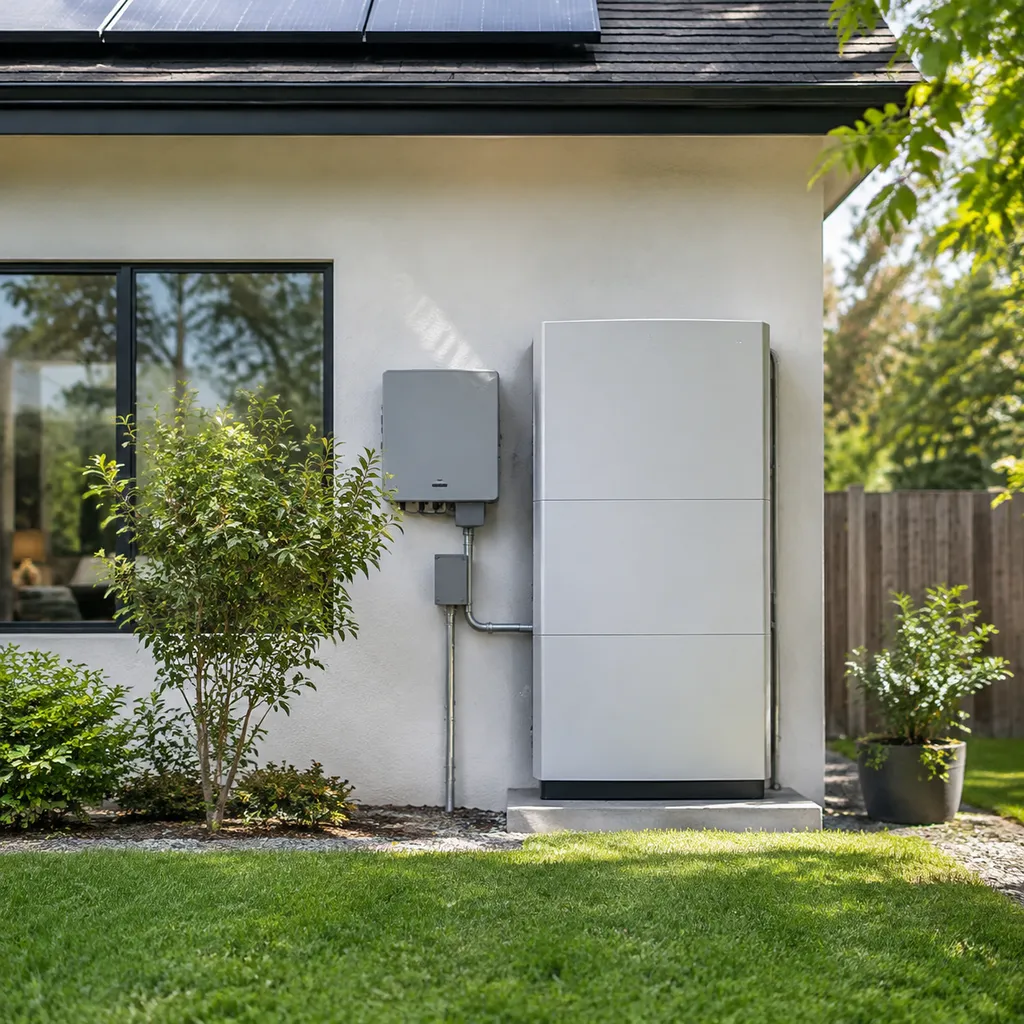
- Outdoor Battery Energy Storage Cabinets: Compact, all-in-one vertical enclosures designed for large single-family homes or guest houses with moderate backup needs and tight installation footprints.
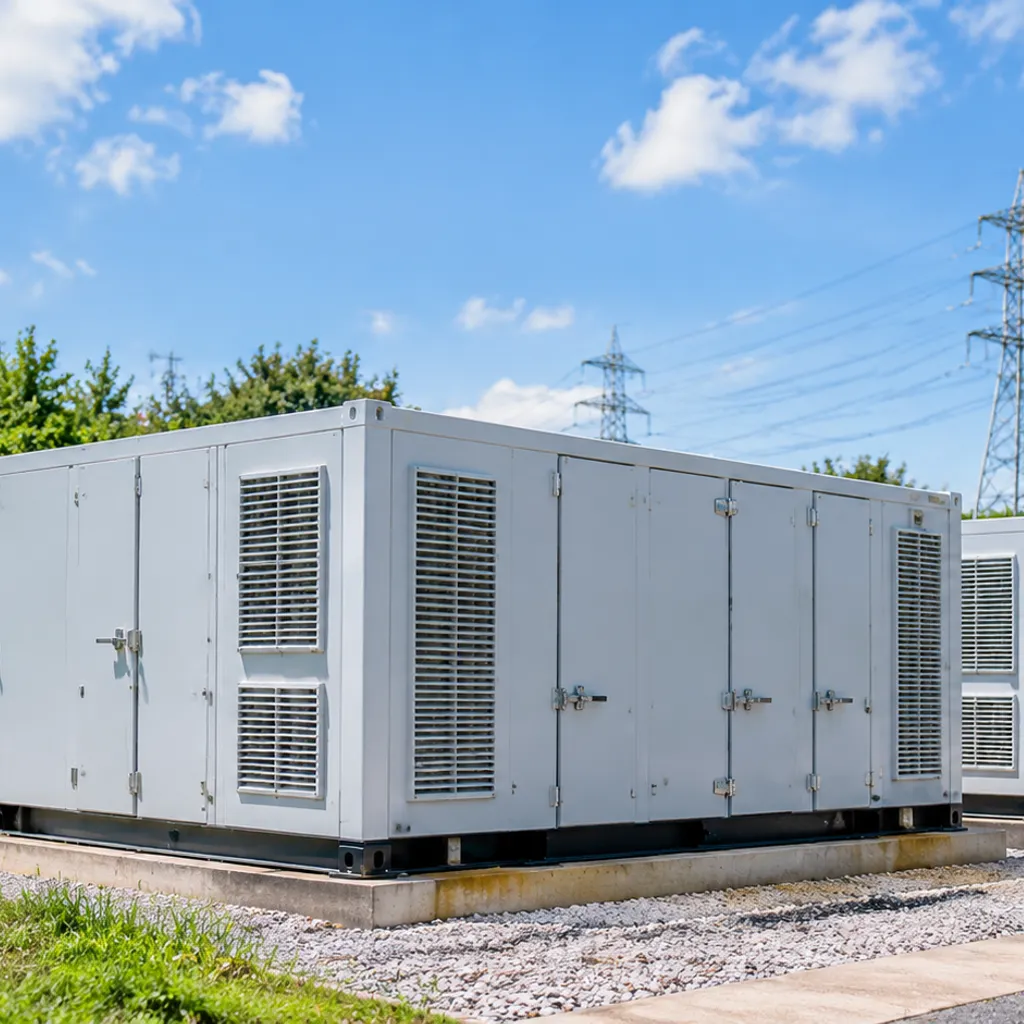
- Compact Storage Containers: Modular 10-foot or 20-foot ISO-style enclosures built for expansive private estates, farms, or off-grid properties requiring extended autonomy and integrated power conversion.
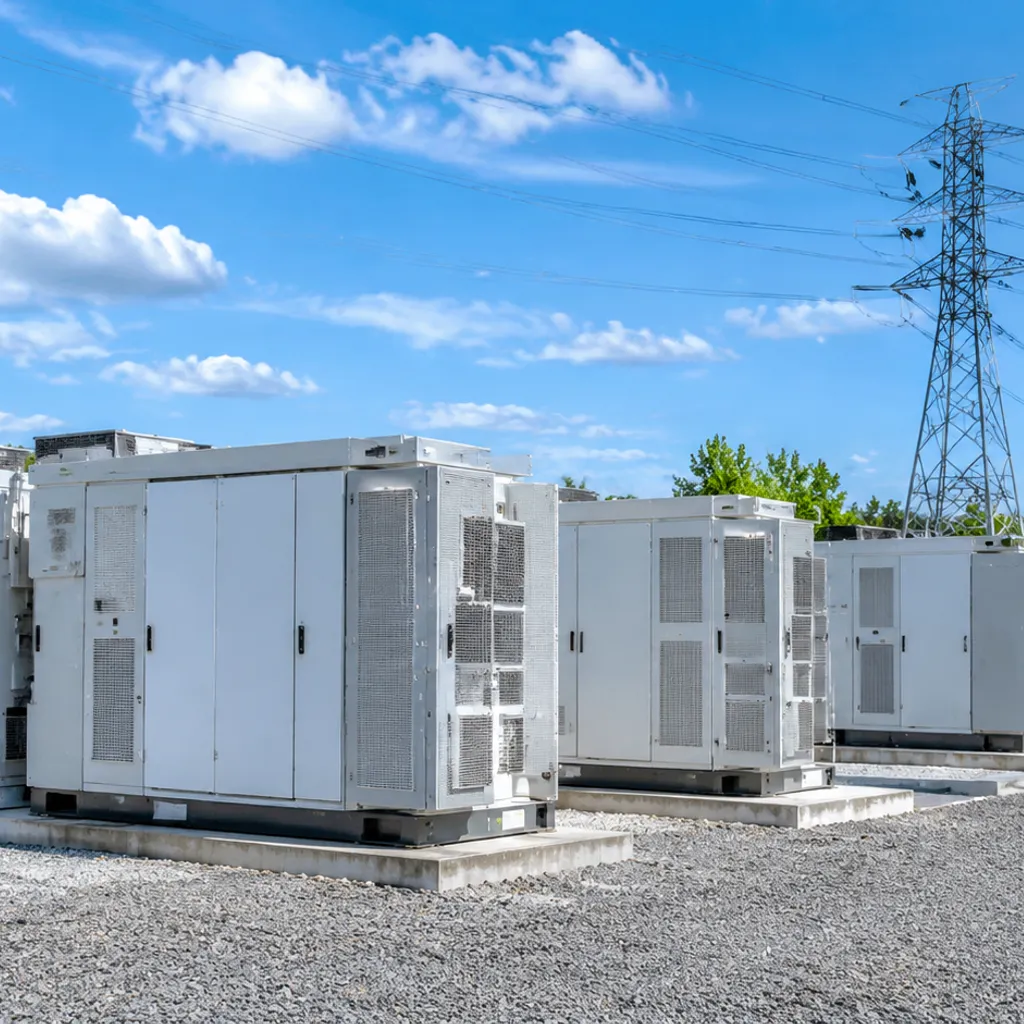
- Residential Microgrid Containers: Full-scale 20-foot to 40-foot containerized units engineered to support multi-building compounds, shared community microgrids, and heavy inductive loads.
Energy Capacity (kWh/MWh) vs. Power Output (kW/MW)
When reviewing proposals from containerized battery energy storage system manufacturers China, buyers must separate power rating from energy capacity:
- Power Output (kW or MW): Determines how many appliances, HVAC units, or pumps can run simultaneously. Higher peak power handles heavy motor startup surges without tripping.
- Energy Capacity (kWh or MWh): Determines how long the battery bank can sustain those loads before needing a recharge from solar panels, the utility grid, or a backup generator.
A home running continuous heavy climate control needs high kW output, while an off-grid property preparing for multi-day cloudy weather needs high kWh storage.
System Expansion and Parallel Operation
Residential energy demands rarely stay static—adding electric vehicles, heat pumps, or secondary structures increases load over time. Our modular architecture supports AC-coupled and DC-coupled parallel expansion. You can commission a baseline outdoor cabinet or compact container today and link additional battery racks or parallel PCS units later without replacing your core switchgear. Reviewing a complete energy storage system architecture and design guide helps clarify how parallel busbars and Energy Management Systems (EMS) balance state-of-charge across expanded banks.
Configuration Comparison by Format and Application
| System Format | Typical Energy Capacity | Typical Rated Power | Enclosure Format | Integration Scope | Best-Fit Applications |
|---|---|---|---|---|---|
| Outdoor Cabinet | 50 kWh – 250 kWh | 25 kW – 125 kW | Compact weatherproof cabinet | Battery modules, BMS, PCS, thermal & fire safety | Large single-family homes, villa backup, EV charging hubs |
| Compact Container | 250 kWh – 1 MWh | 100 kW – 500 kW | 10ft / 20ft containerized enclosure | Full rack system, BMS, PCS, EMS, HVAC, fire suppression | Private estates, remote off-grid homes, agricultural estates |
| Microgrid Container | 1 MWh – 3+ MWh | 500 kW – 1.5+ MW | 20ft / 40ft high-cube ISO container | Multi-rack architecture, high-power PCS, microgrid controller, step-up options | Multi-building compounds, residential microgrids, solar-diesel hybrids |
For larger properties transitioning toward heavy backup autonomy, exploring dedicated commercial and industrial backup power systems provides additional insight into how high-capacity enclosures handle continuous duty cycles.
Product Specifications at a Glance
| Specification Category | Standard Technical Parameters & Configuration Scope |
|---|---|
| Battery Chemistry | Lithium Iron Phosphate (LiFePO4) prismatic cells |
| Energy Capacity | Defined by both nominal capacity (total nameplate kWh) and usable capacity (based on configured Depth of Discharge, typically 80%–90%) |
| Power Rating | Continuous rated power (kW) and short-duration peak/surge power (kW) matched to inverter/PCS sizing |
| System Voltage | High-voltage DC bus architecture; AC output configured to local grid standards (single-phase, split-phase, or three-phase 50/60Hz) |
| Thermal Management | Industrial forced-air HVAC or liquid cooling systems depending on ambient climate and C-rate |
| Ingress Protection | Outdoor-rated enclosures (typically IP54 or IP55 for battery compartments) |
| Communication | Standard industrial protocols including CAN, RS485, Modbus TCP/RTU, and Ethernet |
Battery Chemistry, Capacity, and Power Output
We build our systems exclusively with Lithium Iron Phosphate chemistry to prioritize thermal stability and long operational lifespans. For full technical details on cell behavior, review our guide on lithium iron phosphate battery system safety and cycle life.
- Nominal vs. Usable Capacity: Always verify the usable kWh figure when sizing for home backup. Usable energy accounts for the Battery Management System (BMS) depth-of-discharge limits and inverter conversion losses.
- Rated vs. Peak Power: Rated power dictates how many household appliances can run continuously, while peak power handles brief inductive startup surges from HVAC compressors, well pumps, or EV chargers.
- DC/AC Voltage Ranges: Our systems adapt to regional utility voltages and frequency requirements, ensuring seamless integration with existing residential distribution panels or solar inverters.
Efficiency and Cycle-Life Test Conditions
Performance numbers are only meaningful when paired with clear testing baselines.
- Round-Trip Efficiency: We measure system-level AC-to-AC round-trip efficiency across the PCS, transformers, and auxiliary loads rather than quoting isolated cell-level figures.
- Cycle Life: Cycle ratings are specified under controlled ambient temperatures (typically 25°C), defined charge/discharge C-rates, and a stated End-of-Life (EOL) capacity retention threshold (commonly 70% or 80% State of Health).
Environmental Ratings, Physical Footprint, and Warranty
Outdoor residential installations require durable hardware capable of handling seasonal weather shifts without constant manual oversight.
- Cooling and Climate Control: Depending on site ambient temperatures and humidity levels, we equip enclosures with precision air conditioning or liquid-cooling loops to keep cell temperatures within optimal operating windows.
- Dimensions, Weight, and Installation: Compact outdoor cabinets and 10ft/20ft containerized units ship pre-assembled for crane offloading onto a prepared concrete pad, minimizing on-site wiring.
- Communications and Warranty: Built-in EMS controllers support remote cloud monitoring and local SCADA integration via standard protocols, backed by project-specific product and performance warranties tied to verified operating conditions.
System Architecture and Included Components
When buyers evaluate a containerized battery energy storage system for house estates or residential microgrids, the biggest question is usually what actually comes inside the box versus what requires separate site work. As direct containerized battery energy storage system manufacturers in China, we build these units as pre-integrated, factory-tested enclosures rather than loose parts. Understanding how our internal architecture fits together helps your engineering team plan site installation and verify system reliability before delivery.
Core Energy Components: LiFePO4 Cells, Modules, and Racks
Every containerized LiFePO4 battery storage system starts with the electrochemistry and mechanical packaging. We use Lithium Iron Phosphate (LiFePO4) chemistry because of its thermal stability and long cycle life under daily residential charge-discharge cycles.
- Battery Cells: Prismatic LiFePO4 cells selected for consistent internal resistance and voltage matching.
- Battery Modules: Cells are grouped into rigid, insulated modules equipped with integrated voltage and temperature sensors.
- Battery Racks and Cabinets: Modules are stacked into heavy-duty steel racks wired in series and parallel to meet the required DC bus voltage, forming the backbone of our battery energy storage systems.
Control and Conversion: BMS, PCS, and EMS
Hardware alone does not manage power flow. Our integrated battery storage container with PCS relies on a three-tier control architecture to keep energy moving safely and efficiently between your solar array, the utility grid, and home loads.
- Battery Management System (BMS): Monitors cell-level voltage, current, and temperature in real time, actively balancing cells and disconnecting racks if operating limits are exceeded.
- Power Conversion System (PCS): Acts as the bidirectional inverter, converting DC power from the battery racks into grid-compliant AC power for household circuits and vice versa during charging.
- Energy Management System (EMS): Coordinates the entire battery container with BMS and EMS, executing dispatch schedules, solar self-consumption logic, and peak-shaving rules.
Safety and Auxiliary Hardware
High-capacity energy storage requires dedicated protection systems built directly into the enclosure. Depending on the container footprint and project requirements, our safety and auxiliary hardware includes:
- Thermal Management: Industrial HVAC air-cooling or closed-loop liquid cooling systems designed to hold battery cells within their optimal temperature window.
- Fire Detection and Suppression: Multi-sensor smoke, heat, and off-gas detectors paired with automated fire suppression agents and explosion-relief venting.
- Electrical Protection: DC fuses, molded-case circuit breakers (MCCBs), surge protection devices (SPDs), and emergency stop switches.
- Remote Monitoring: Local HMI touchscreens alongside cloud-connected gateways for remote diagnostics and firmware updates.
Standard Included Equipment vs. Optional Project Add-Ons
To keep quoting transparent, we separate factory-standard components from site-specific options. While exact configurations vary by capacity and local electrical codes, the breakdown generally follows this structure:
| System Category | Standard Included Equipment | Optional Project-Specific Add-Ons |
|---|---|---|
| Energy Storage | LiFePO4 battery modules, steel racks, DC combiner boxes, inter-rack cabling | Extended capacity expansion racks, custom cell brand selection |
| Power & Control | Integrated BMS, local EMS controller, internal auxiliary power distribution | Built-in PCS/inverter, static transfer switch (STS) for seamless backup |
| Safety & Enclosure | Insulated weatherproof container, industrial HVAC, standard fire detection/suppression | Liquid cooling upgrade, UL/NFPA-specific venting, cold-climate heating kits |
| Grid & Generation | Standard Modbus/CAN communication interfaces | Integrated MPPT solar charge controllers, isolation transformers, generator ATS |
Operating Modes and Residential Energy System Integration
A containerized battery energy storage system for house and estate projects is only useful if it adapts smoothly to how your property generates and consumes electricity throughout the day. Whether your priority is cutting high utility bills, keeping critical circuits alive during grid blackouts, or running completely off-grid, our integrated Energy Management System (EMS) coordinates battery charge and discharge cycles automatically based on your site settings.
Solar Self-Consumption and Time-of-Use Load Shifting
When paired with a rooftop or ground-mounted solar array, the system prioritizes storing excess daytime PV generation instead of exporting it at low feed-in rates. In regions with variable utility tariffs, we configure time-of-use (TOU) schedules so the batteries charge during off-peak hours and discharge during expensive peak windows.
- Solar Self-Consumption: Captures surplus midday solar energy to power air conditioning, pool pumps, and EV chargers after sunset.
- Peak Shaving and TOU Shifting: Reduces demand charges and peak-rate electricity bills by dispatching stored energy during high-tariff hours.
Automatic Backup Power for Critical Residential Loads
Grid outages rarely happen at convenient times. Our containerized systems monitor incoming utility voltage and frequency continuously, transferring designated residential distribution panels to battery power automatically when a grid failure occurs. Depending on your inverter topology and transfer switch setup, switchover happens rapidly to protect sensitive home electronics, HVAC systems, security gates, and well pumps without manual intervention.
Off-Grid Operation and Remote Microgrid Support
For remote estates, island properties, and multi-building residential compounds lacking reliable utility access, a containerized setup functions as the central power hub of a residential microgrid. Using an advanced grid-forming inverter battery energy storage system, the container establishes a stable local voltage and frequency reference, allowing solar inverters to keep generating power even with zero utility grid connection.
Grid-Connected Operation, Generator Integration, and Local Compliance
Every project site faces different utility rules and backup requirements. When working directly with experienced containerized battery energy storage system manufacturers in China, you can specify the exact electrical interfaces and control logic needed for your local grid code before shipment.
- Grid-Connected Compliance: Configured to meet regional interconnection standards, including anti-islanding protection, export limitation controls, and local voltage/frequency ride-through settings.
- Diesel-Generator Hybrid Control: Equipped with dry-contact or Modbus signals to start a backup diesel generator automatically if battery state-of-charge (SOC) drops below a preset threshold during extended cloudy weather, then shut the generator down once batteries reach target capacity.
- Multi-Source Coordination:
- Balances solar PV, utility power, and backup generators seamlessly through a single grid-connected battery energy storage system.
Residential and Microgrid Applications
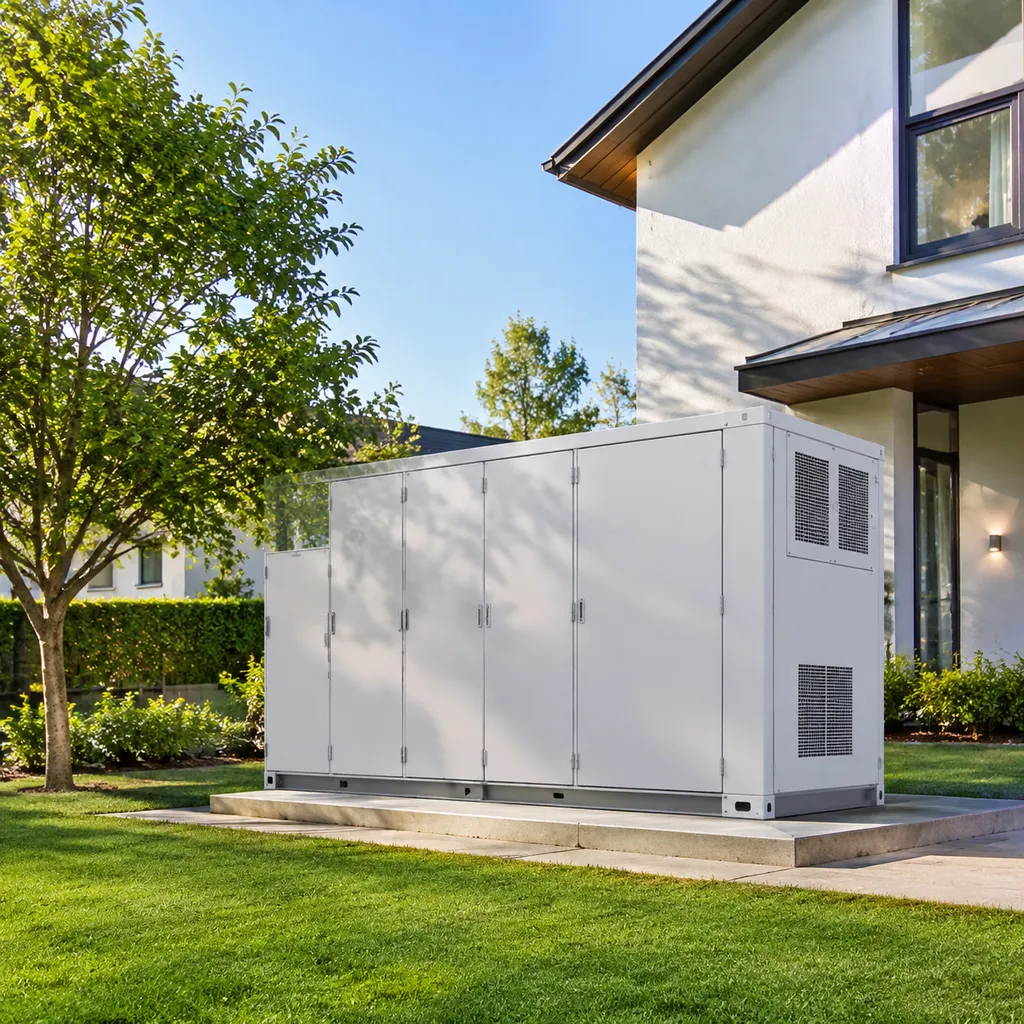
Buyers often ask whether a full-scale container is overkill for residential use or if it actually solves real power bottlenecks. While standard wall-mounted batteries handle everyday suburban homes, a containerized battery energy storage system for house projects fits best when energy demands, site layouts, or backup requirements outgrow compact indoor setups.
As direct containerized battery energy storage system manufacturers China buyers work with for custom builds, we configure these systems across four primary residential and community scenarios:
- Large Single-Family Homes and Private Estates: Luxury residences with central HVAC, heated pools, EV chargers, and guesthouses draw high continuous loads. A single enclosure centralizes storage outdoors, keeping living spaces quiet and free of bulky electrical gear.
- Remote and Off-Grid Residential Properties:
Cabins, ranches, and rural homes without reliable utility access depend on self-contained power. Pairing solar arrays with an off-grid energy storage system with battery reserves ensures multi-day autonomy without indoor battery rooms.
- Residential Compounds and Multi-Building Sites: Family compounds, farms, and small housing clusters share a single central energy hub rather than buying and maintaining separate battery units for every roof.
- Solar-Plus-Storage Projects, Community Microgrids, and Diesel-Generator Hybrid Systems:
Neighborhood networks and remote settlements combine solar generation, battery storage, and backup generators. Deploying a dedicated microgrid energy storage solution cuts fuel runtime, stabilizes voltage, and keeps shared infrastructure running during extended grid outages.
Safety, Standards, and Export Documentation
Applicable Certifications and Third-Party Test Reports
Different regions enforce distinct electrical and battery safety rules. Rather than making blanket claims, we match project configurations to the specific standards required at your installation site and provide third-party lab verification upon request.
- Cell and Module Safety: Testing aligned with IEC 62619 for stationary lithium battery applications and UL 1973 where North American standards apply.
- System-Level Safety and Grid Compliance: Configuration support for UL 9540 / UL 9540A thermal runaway testing, IEC 62477-1 power converter safety, and regional grid interconnection codes (such as IEEE 1547 or EN 50549, depending on inverter selection).
- Quality Management:
Production facilities operating under ISO 9001 quality management systems, backed by our documented quality and compliance standards.
Battery Safety and International Transport Documentation
Lithium iron phosphate containers are classified as Class 9 dangerous goods (UN 3480 or UN 3536, depending on whether the batteries are shipped installed inside the cargo transport unit). Before your containerized LiFePO4 battery storage system leaves our factory, we supply the complete export compliance package:
| Document / Report | Purpose in Shipping & Customs |
|---|---|
| UN38.3 Test Summary | Verifies battery cells and modules passed altitude, thermal, vibration, shock, and short-circuit transport tests. |
| MSDS / SDS | Material Safety Data Sheet detailing chemical composition, safe handling, and emergency response measures. |
| Dangerous Goods Declaration (DGD) | Required maritime or freight paperwork confirming proper UN classification, labeling, and packing group compliance. |
| Packing List & Certificate of Origin | Standard commercial customs documents for smooth import clearance and tariff verification. |
Built-In BMS Protections, Thermal Control, and Fire Safety
For residential compounds and remote properties, physical safety inside the enclosure is non-negotiable. Every lithium iron phosphate BESS container we build combines active electronic monitoring with passive hardware safeguards:
- Multi-Level BMS Protection:
Continuous cell-level voltage and temperature monitoring with automatic disconnect triggers for over-charge, over-discharge, over-current, short circuits, and insulation faults. To understand how hardware and software layers interact, review our LFP battery safety and lifespan guide.
- Electrical Safeguards: Dedicated DC fuses, string-level circuit breakers, AC surge protection devices (SPD), and emergency stop buttons mounted externally for first responders.
- Thermal Management: Industrial HVAC air conditioning or liquid-cooling loops sized to keep cells within optimal operating temperatures and prevent thermal drift.
- Fire Detection and Suppression: Early-warning smoke, heat, and combustible gas sensors linked to automatic aerosol or clean-agent fire suppression systems, paired with explosion-venting panels where specified.
- Multi-Level BMS Protection:
Destination Market Requirements and Technical File Access
Because local utility rules and building codes vary by country, state, and municipality, we confirm your target certification scope before finalizing the bill of materials. During technical review, we give your engineering team or local installer direct access to single-line diagrams, enclosure layout drawings, BMS communication protocols, and available test reports so you can verify local permitting eligibility upfront.
Site Installation and Project Requirements
Installing a containerized battery energy storage system for a house or private estate requires proper civil, electrical, and environmental planning before the unit leaves our factory. As a containerized battery energy storage system manufacturer in China, we provide detailed site layout drawings so your local contractor can prepare the ground safely and efficiently.
Site Access, Concrete Foundation, and Clearance
Because a battery container arrives via flatbed truck and requires a crane or heavy forklift for placement, clear road access and solid ground support are non-negotiable.
- Delivery Access: Ensure sufficient road width, turning radius, and overhead clearance for transport vehicles and lifting equipment.
- Concrete Foundation: Pour a level, reinforced concrete pad engineered to support the total operating weight of the enclosure and prevent ground settling.
- Service Clearance: Leave unobstructed space around all access doors, ventilation intakes, and exhaust louvers so technicians can open cabinet panels and service cooling units safely.
- Fire Separation: Maintain required setback distances from main residential structures, property lines, and combustible materials according to local codes.
Electrical Connection and System Interfaces
Your licensed electrical contractor handles the external wiring between the container's main AC/DC termination points and your property's power infrastructure.
- Protection Design: Install external AC/DC circuit breakers, surge protection devices, and proper earthing grids matched to the system's fault current rating.
- Power Interfaces: Integrate dedicated tie-in points for your residential main distribution panel, rooftop or ground-mounted solar inverters, utility meter, and backup generator transfer switch.
- Communication Cabling: Run shielded control and network cables between the container's Energy Management System (EMS), smart meters, and local internet router.
Ventilation, Drainage, and Environmental Preparation
Outdoor residential microgrid battery storage units operate continuously, making site drainage and airflow critical for equipment longevity.
- Drainage Grading: Slope the surrounding ground away from the concrete pad to prevent rainwater pooling around the container base or cable trenches.
- Airflow Management: Keep air intakes clear of foliage, snow buildup, and walls that could recirculate hot exhaust air back into the HVAC or liquid-cooling system.
- Cable Routing: Seal all underground conduit entries to block moisture, dust, and pests from entering the electrical compartments.
Commissioning, Maintenance, and Permitting Responsibilities
We divide project execution clearly between factory engineering support and on-site local responsibilities. For more details on how we structure field execution and handover, review our end-to-end project delivery workflow.
| Project Task | Typical Responsibility | Key Deliverable / Action |
|---|---|---|
| Local Permitting | Buyer / Local Contractor | Building permits, utility interconnection approval, and fire-safety sign-off |
| Civil & AC Wiring | Local Contractor | Concrete pad, grounding grid, external trenching, and grid/load tie-ins |
| Commissioning | Manufacturer + Local Team | Pre-energization checks, EMS parameter setup, and protection testing |
| Remote Monitoring | Manufacturer / Buyer | Cloud platform setup for real-time state-of-charge and fault alerts |
| Routine Maintenance | Local Technician / Owner | Periodic air-filter cleaning, visual seal checks, and cooling inspection |
Containerized BESS Manufacturing in China: OEM/ODM and Quality Control
Sourcing a containerized battery energy storage system from overseas raises practical concerns around build consistency, technical fit, and delivery reliability. Working directly with containerized battery energy storage system manufacturers in China lets project buyers and residential developers access integrated factory assembly without middleman markups, while retaining control over engineering specifications.
Factory Manufacturing Capabilities and Direct Project Supply
We manufacture and assemble containerized energy storage systems directly at our production facilities in China, handling battery module integration, rack wiring, thermal management installation, and enclosure outfitting under one roof. Direct factory supply eliminates intermediary handoffs and aligns production schedules directly with project timelines.
OEM/ODM Customization Options
Residential microgrids, estate backup systems, and regional distribution partners rarely share identical electrical or site requirements. Our OEM containerized energy storage system manufacturing supports tailored configurations across hardware, software, and branding:
| Customization Area | Available Options |
|---|---|
| Energy Capacity & Power | Configured kWh storage capacity and kW/MW PCS output matched to site load profiles |
| Enclosure Design | Compact outdoor cabinets, standard ISO container footprints, and site-specific ingress protection or anti-corrosion coatings |
| Electrical Interfaces | Local grid voltage and frequency adaptation, AC/DC coupling layouts, and generator or solar input terminals |
| Communication Protocols | Modbus, CAN, Ethernet, and custom EMS/SCADA integration interfaces |
| Branding & Documentation | Private-label exterior branding, custom nameplates, and localized user manuals |
Production Quality-Control Checkpoints and FAT
Every unit passes structured inspection gates before leaving the factory floor, backed by documented verification evidence for buyer review:
- Incoming Component Inspection: Verification of LiFePO4 battery cell consistency, BMS hardware, PCS units, and electrical protection components prior to assembly.
- In-Process Assembly Checks: Torque verification on busbars and terminals, insulation resistance checks, and wiring harness continuity testing during rack and container integration.
- Factory Acceptance Testing (FAT): Full functional simulation of charge/discharge cycles, BMS protection triggers, thermal control response, and EMS communication prior to shipment.
- Verification Evidence: Buyers receive FAT test reports, serial-number traceability records, inspection checklists, and pre-shipment photo or video documentation.
End-to-End Project Workflow
We follow a clear, milestone-driven process from initial sizing through post-delivery support:
- Technical Review: Evaluation of site load data, backup duration targets, solar or generator inputs, and local grid codes.
- System Configuration: Selection of battery rack layout, PCS sizing, thermal management, and safety hardware.
- Formal Quotation: Itemized commercial proposal detailing equipment scope, lead time, and shipping terms.
- Production & Assembly: Scheduled manufacturing with regular progress updates.
- Pre-Shipment Inspection: Execution of FAT protocols and third-party inspection support if required by the buyer.
- Export Logistics: Export-compliant packaging, transport documentation preparation, and sea or land freight coordination.
- Commissioning Support: Remote technical guidance, parameter setup assistance, and troubleshooting during on-site startup.
How to Evaluate and Source from a Chinese BESS Manufacturer
Product Traceability, Cell Grading, and BOM Transparency
A reliable China BESS supplier provides full visibility into what goes inside the enclosure before production begins. When reviewing proposals, confirm these core documentation standards:
- Cell Grading and Origin: Require documented proof of fresh, Grade-A LiFePO4 cells with traceable batch serial numbers from the original cell manufacturer, rather than unverified or repurposed stock.
- Bill of Materials (BOM) Disclosure: Ask for a clear component list specifying the exact brands and models used for the Battery Management System (BMS), Power Conversion System (PCS), circuit breakers, thermal units, and fire suppression modules.
- Module-to-Container Traceability: Every battery module and rack should carry scannable serialization linked to factory cell-matching and capacity-testing logs.
Verifying Certifications, Test Evidence, and Factory Inspections
Compliance claims should always be backed by verifiable third-party documentation rather than simple declarations. For further procurement checklists, review our BESS buying guide.
- Applicable Standards and Reports: Request copies of relevant test certificates—such as UN38.3 for transport safety and applicable IEC or UL standards for cells, modules, and PCS units—matching the exact model numbers quoted.
- Factory Acceptance Testing (FAT): We conduct pre-shipment FAT covering insulation resistance, BMS communication checks, charge/discharge cycling, and protection trip tests, sharing full test reports with your engineering team.
- Inspection Options: Buyers can attend in-person factory audits, appoint accredited third-party inspection agencies, or join live video walkthroughs prior to final balance payment and dispatch.
Warranty Scope, Spare Parts, and After-Sales Support
Clear service terms protect your residential or microgrid asset over its operational lifespan. Evaluate support commitments across these practical criteria:
- Warranty Conditions: Review separate warranty periods for battery cells (typically tied to cycle count and state-of-health thresholds under defined temperature and C-rate conditions) versus PCS and auxiliary electronics.
- Exclusions: Confirm operating boundaries—such as ambient temperature limits, grid voltage tolerances, and required maintenance intervals—so coverage remains valid.
- Spare Parts and Technical Support: Ensure critical consumables and high-wear parts (fuses, contactors, sensors, cooling fans, or communication boards) can be supplied in a recommended spare-parts kit, backed by remote diagnostics and clear response-time commitments.
Incoterms, Export Logistics, and Contractual Responsibilities
International shipment of large lithium battery enclosures involves strict dangerous-goods compliance and clear risk allocation.
| Sourcing Element | What to Confirm in the Contract |
|---|---|
| Incoterms | Define risk transfer and cost splits clearly (e.g., EXW, FOB, CIF, or DDP) based on your local customs brokerage capabilities. |
| Export Packaging | Verify weatherproof sealing, shock indicators, and seaworthy container locking or crating suited for ocean freight. |
| Customs Documentation | Confirm delivery of UN38.3 test summaries, MSDS, Dangerous Goods Declaration (DGD), commercial invoice, packing list, and certificate of origin. |
| Schedule & Milestones | Tie payment stages to verifiable events: design freeze, cell procurement, FAT completion, and bill of lading issuance. |
| Site Responsibilities | Clarify whether unloading, crane rigging, civil works, local utility permitting, and on-site commissioning are handled by your local contractor or supported remotely/on-site by our engineers. |
Pricing Factors and Requesting a Configured Quote
Key Cost Drivers
- Energy Capacity and Power Rating: Total battery capacity (kWh/MWh) and inverter/PCS output (kW/MW) make up the largest share of hardware costs, especially when sizing for long off-grid autonomy or heavy motor loads.
- Integration Scope:
Fully integrated turnkey containers—pre-wired with BMS, PCS, EMS, thermal management, and fire suppression—require more upfront investment than basic DC battery racks, though they reduce on-site installation labor. If you are designing a smaller backup setup instead of a full container, a low voltage energy storage system for solar backup offers a lower entry cost.
- Certifications and Compliance: Testing and documentation tailored to regional grid codes, safety standards, and transport rules affect component selection and engineering time.
- OEM/ODM Customization: Custom enclosure sizes, climate-specific cooling upgrades, tailored electrical interfaces, or private-label branding add engineering and production adjustments.
- Shipping and Commissioning: Ocean freight, destination port handling, Incoterms (such as EXW, FOB, CIF, or DDP), and optional remote or on-site commissioning support factor into the landed cost.
Essential RFQ Details for an Accurate Quote
To get a clear, itemized proposal and configuration recommendation from our engineering team, include these project details in your request:
- Project Location and Climate: Country, nearest port, ambient temperature range, and installation altitude.
- Grid Conditions: Grid voltage, frequency, phase configuration (split-phase or three-phase), or confirmation of a 100% off-grid site.
- Load Profile: Average daily energy consumption (kWh), peak surge power (kW), and critical backup loads.
- Backup Duration: Required runtime during utility outages or low-solar days.
- Existing Generation Specs: Solar PV array capacity, inverter details, and backup diesel or gas generator ratings.
- Delivery Timeline: Target shipment window and desired Incoterms.
Frequently Asked Questions
Can a containerized battery system power a single house?
Yes, a containerized battery energy storage system for house applications can power a single residence, though it is typically suited for large estates, remote properties, or homes with high continuous power demands rather than standard suburban houses.
When is a container system preferable to a residential battery cabinet?
A container is preferable when your project requires higher energy capacity, multi-day backup power, or full integration of inverters, switchgear, and thermal controls inside one weatherproof enclosure. For smaller single-family loads, a compact outdoor cabinet or a modular battery energy storage system for scalable power is usually more practical.
How do I estimate the capacity needed for my property?
Start by reviewing your daily electricity usage (kWh), peak running loads (kW), and desired backup hours. Multiply your critical load power by the required backup duration, then account for depth-of-discharge limits and inverter efficiency to determine usable vs. nominal capacity.
Can the system work with solar panels and a backup generator?
Yes. Our systems integrate with rooftop or ground-mounted solar arrays and backup diesel or gas generators. The energy management system coordinates solar charging, battery discharge, and automatic generator start-stop based on battery state of charge.
Can a containerized BESS operate completely off-grid?
Yes. With grid-forming inverter capabilities and sufficient solar or generator charging input, a residential microgrid battery storage container can run completely off-grid to supply stable AC power to remote homes and multi-building compounds.
What components are pre-integrated inside the container?
Depending on your selected configuration, we pre-integrate LiFePO4 battery racks, Battery Management System (BMS), Power Conversion System (PCS), Energy Management System (EMS), thermal management (HVAC or liquid cooling), fire detection and suppression, and AC/DC electrical protection.
What safety certifications and transport documents are provided?
Because requirements vary by destination and system configuration, we supply applicable compliance test reports, international shipping documents such as UN38.3 and MSDS, and technical documentation aligned with your project's target market standards.
Can a Chinese manufacturer customize the system for local grid standards?
Yes. As one of the specialized containerized battery energy storage system manufacturers China buyers work with for direct project supply, we configure voltage, frequency, phase setup, enclosure layout, and communication protocols to match local utility and site requirements.
What information is needed to receive an accurate project quotation?
To prepare a tailored configuration and quote, share your project location, grid voltage and frequency, daily kWh consumption, peak kW demand, required backup duration, solar or generator specifications, and target delivery timeline.
What are the typical lead times, warranty terms, and service arrangements?
Production lead times, warranty coverage, spare-parts packages, and remote commissioning or after-sales technical support depend on system capacity, customization scope, and contract terms, all of which are confirmed in writing before order finalization.