Are you struggling to find a safe, long-lasting power setup for your solar project, RV, or energy storage installation?
Traditional options either degrade too fast or carry dangerous thermal runaway risks.
A lithium iron phosphate battery system changes everything.
Famous for exceptional thermal safety, an incredible 5,000+ cycle life, and zero cobalt toxicity, LiFePO4 chemistry has become the gold standard for reliable solar energy storage and off-grid performance.
In this guide, you’ll discover how LFP battery systems work, how they stack up against NMC and lead-acid, and how to choose the perfect system for your energy needs.
Let's dive right in.
Understanding Lithium Iron Phosphate Chemistry
Molecular Stability: The Olivine Crystal Advantage
The resilience of our LiFePO4 cell chemistry stems directly from its 3D olivine crystal lattice. Strong covalent phosphorus-oxygen (P-O) bonds securely bind oxygen within the molecular frame. Unlike layered oxide chemistries, oxygen atoms are locked into place and do not release during high-voltage or high-temperature stress, removing the primary catalyst for thermal runaway.
| Performance Metric | Lithium Iron Phosphate (LFP) | Nickel Manganese Cobalt (NMC) | Lead-Acid |
|---|---|---|---|
| Crystal Structure | 3D Olivine Lattice | Layered Oxide | Monolithic Plate |
| Thermal Runaway Onset | > 270°C | ~210°C | N/A (Sulfation risk) |
| Nominal Cell Voltage | 3.2V | 3.6V – 3.7V | 2.0V |
| Cycle Life (80% DoD) | 6,000 – 10,000+ | 2,000 – 3,000 | 500 – 1,200 |
| Toxic Heavy Metals | None (Cobalt/Nickel-Free) | High (Cobalt/Nickel) | High (Lead/Acid) |
By utilizing cobalt-free and nickel-free designs, we eliminate exposure to volatile raw material price spikes and supply chain bottlenecks. This reduces environmental liability and simplifies end-of-life recycling compliance for enterprise projects.
Thermal and Electrochemical Safety Profiles
In our lithium iron phosphate battery system, core safety is built into the material physics before digital controls even engage.
- High Thermal Runaway Threshold: LFP cells withstand structural temperatures up to 270°C (518°F) before degradation occurs, compared to standard ternary lithium cells that break down above 210°C.
- Broad Temperature Envelope: Operates reliably across a wide operating range of -20°C to 60°C (-4°F to 140°F), minimizing active thermal management overhead in extreme climates.
- Minimal Self-Discharge: Maintains standby efficiency with self-discharge rates below 1.5% to 2% per month.
- Controlled Off-Gas Profile: Under extreme forced-failure testing, LFP produces significantly lower concentrations of combustible gases than NMC chemistries, preventing rapid enclosure pressurization.
Core Lithium Iron Phosphate Battery System Architecture
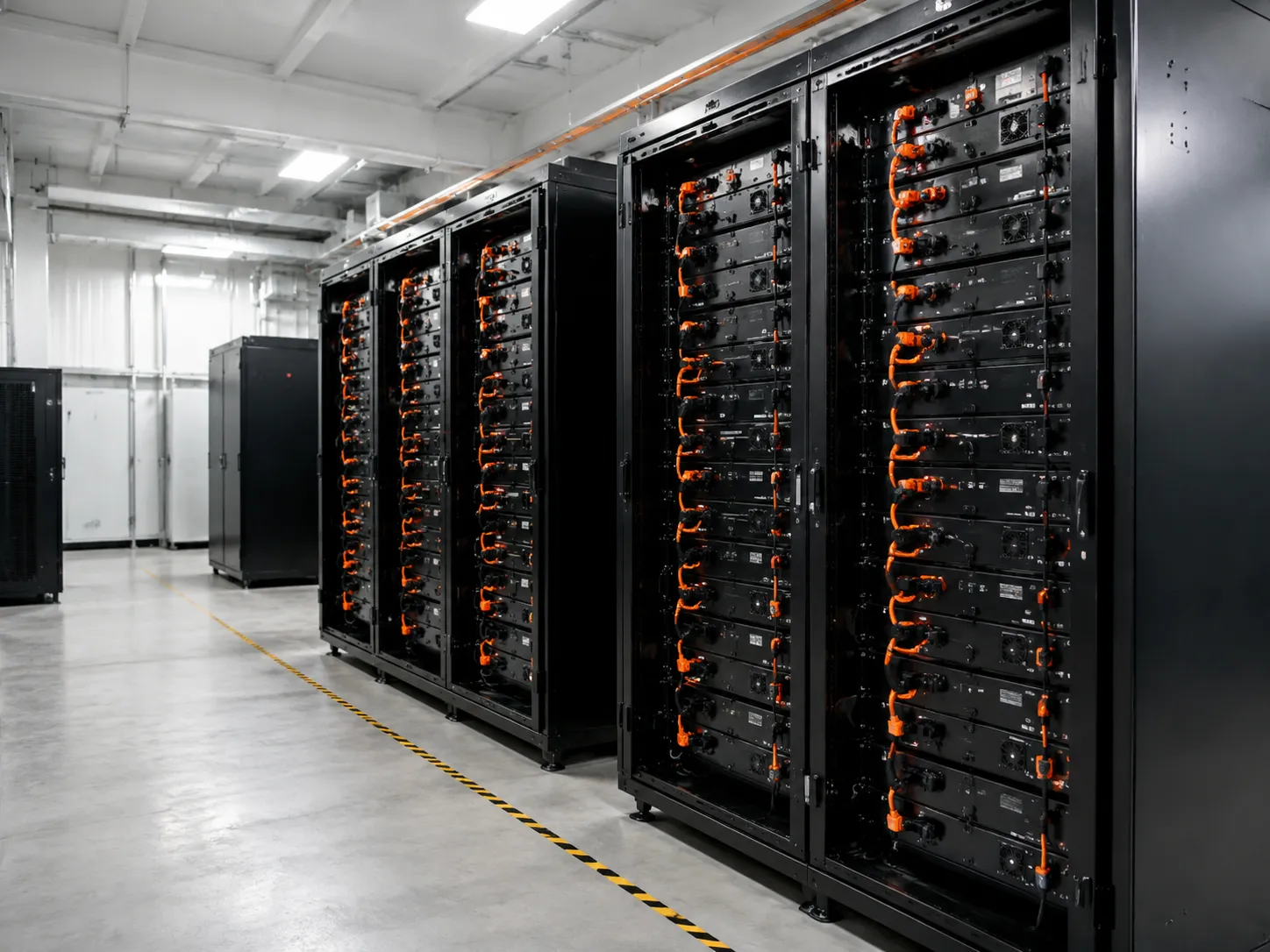
Cell safety is only half the equation when designing an enterprise-grade energy asset. You need full operational oversight, tight thermal control, and multi-layered fault isolation from the individual cell level up to the utility interconnection point. We build every lithium iron phosphate battery system around a modular, resilient architecture detailed in our energy storage system architecture and design guide.
Multi-Tier Battery Management Systems (BMS)
To guarantee real-time asset protection and precise performance tracking, we execute a three-tier BMS hardware topology:
- Tier 1 (Cell Level): Real-time monitoring of State of Charge (SoC), State of Health (SoH), and active voltage balancing to eliminate individual cell capacity bottlenecks.
- Tier 2 (Rack Level): Dedicated string protection, automated overcurrent limits, and continuous isolation monitoring to block localized electrical faults.
- Tier 3 (System Level): Master controller integration interfacing with plant-level SCADA and Energy Management Systems (EMS) via industrial Modbus TCP and CAN bus protocols.
Active Liquid Cooling vs. Air Cooling
High-rate charging and discharging produce heavy thermal loads. Uncontrolled heat distribution creates cell-to-cell thermal deltas, leading to uneven degradation and reduced lifetime asset value.
| Performance Metric | Air Cooling Systems | Active Liquid Cooling |
|---|---|---|
| Temperature Delta | Delta > 5.0°C between cells | Delta ≤ 2.5°C across all modules |
| Parasitic Load | High fan energy consumption | Low fluid pump power draw |
| System Footprint | Requires wider air channels | High-density compact rack design |
| Operational Longevity | Accelerated capacity fade | Maximized cell life and uniform aging |
An active liquid cooling system maintains a tight temperature envelope (≤ 2.5°C variance), ensuring long-term operational stability even during high C-rate discharge cycles.
Fire Protection and Containment Standards
We mitigate thermal risk by pairing physical isolation barriers with automated, early-stage suppression mechanisms built into every enclosure.
- Off-Gas & Smoke Detection: Integrated multi-sensor arrays identify trace gas venting minutes before thermal escalation can occur.
- Pack-Level Suppression: Targeted aerosol fire suppression units deliver immediate localized discharge to neutralize threats at the individual pack level.
- Regulatory Compliance: Fully verified and certified under UL 9540A (thermal runaway fire propagation testing), UL 1973 (stationary energy storage safety), and IEC 62619 (industrial lithium safety standards).
C&I Applications and Performance of the Lithium Iron Phosphate Battery System
Peak Shaving & Demand Charge Management
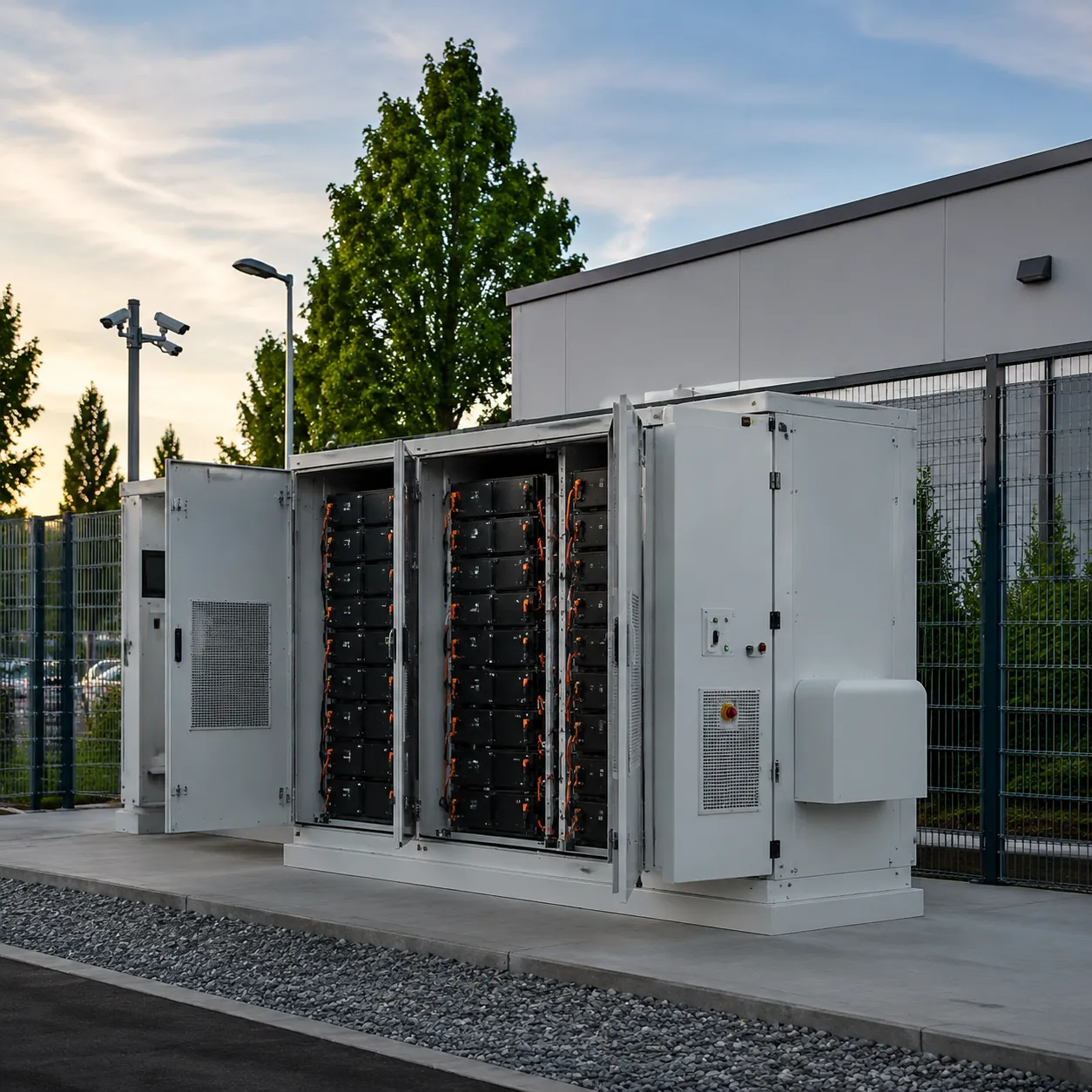
Unpredictable power spikes drive up utility charges, often accounting for up to 50% of an industrial electric bill. Our automated management profiles detect heavy motor starts or production ramp-ups and inject stored energy into your facility instantly.
- Automated Spike Clipping: Real-time monitoring discharges stored energy the exact millisecond load thresholds are breached.
- Quantifiable Savings: Achieves up to a 35% reduction in overall demand charges by flattening facility power draw.
- OpEx Reduction: Discover the direct benefits of peak shaving for lower energy costs to see how automated discharge profiles protect monthly operational budgets.
Solar + Storage Integration & Energy Arbitrage
Pairing local renewables with robust C&I energy storage unlocks maximum solar self-consumption and financial yield from existing assets.
- Maximize Daytime Yield: Captures excess midday solar generation for later use rather than exporting it back to the grid at low feed-in tariffs.
- Time-of-Use (TOU) Arbitrage: Automatically charges during low-cost, off-peak hours and discharges during peak rate windows to bypass elevated utility rates.
- Grid Independence: Protects facility operations from dynamic electricity price surges.
Emergency Backup & Microgrid Resilience
Power outages lead to costly downtime, equipment damage, and lost production cycles. We engineer rapid-response storage configurations to preserve operational continuity.
- Instantaneous Response: Integration with our tailored microgrid energy storage solutions delivers a seamless grid-to-island switchover in under 10 ms, keeping critical facility loads operational without rebooting delicate machinery.
- EV Infrastructure Buffering: Serves as a power buffer during high-power multi-vehicle charging events, protecting local transformers and utility infrastructure from severe voltage sags.
Financial Lifetime Value: Degradation, Cycles, and Payback
Cycle Life and Depth of Discharge (DoD) Dynamics
System longevity depends on how cell degradation is managed under heavy daily cycling. We engineer our pack architectures to ensure maximum operational durability:
- Real-World Longevity: Our systems achieve ≥ 6,000 to 10,000 full cycles at 80% Depth of Discharge (DoD), significantly outperforming ternary lithium alternatives.
- Active Bidirectional Cell Balancing: Integrated BMS active balancing continuously redistributes energy between individual cells during charge and discharge, preventing cell imbalance and preserving usable capacity across a 15-to-20-year operational life.
- Predictable Capacity Retention: Controlled electrochemical stress keeps retention rates above 70% even after a decade of daily primary cycling. Review our detailed LFP battery energy storage system guide on safety and lifespan to examine our long-term degradation curves.
Total Cost of Ownership (TCO) & Levelized Cost of Storage (LCOS)
Evaluating energy storage requires looking beyond initial capital expenditure (CapEx) to focus on Levelized Cost of Storage (LCOS) over the asset lifecycle.
| Financial & Operational Metric | Legacy Storage Technologies | Our Lithium Iron Phosphate Battery System |
|---|---|---|
| Design Lifespan | 5 to 8 Years | 15 to 20 Years |
| Cycle Count (@ 80% DoD) | 1,500–3,000 Cycles | 6,000–10,000+ Cycles |
| OpEx & Maintenance Overhead | High (frequent module swaps, heavy HVAC power draw) | Low (active liquid cooling, zero scheduled cell replacements) |
| Levelized Cost of Storage (LCOS) | High ($0.12–$0.20 / kWh) | Lowest ($0.04–$0.07 / kWh) |
| Capital Payback Window | 7 to 10 Years | 3 to 5 Years |
While alternative chemistries offer initial pack volume reductions, LFP yields a vastly lower operational expenditure (OpEx). By combining high lfp cell cycle life with minimal auxiliary power requirements, our financial modeling consistently yields a 3 to 5-year capital recovery window. For facility-specific ROI calculations and load matching, refer to our framework on how to select BESS key factors and sizing.
Selecting and Deploying a Turnkey Lithium Iron Phosphate Battery System
Modular Cabinets vs. Containerized Energy Storage Systems
Whether you need targeted demand charge reduction for a single factory or multi-megawatt grid support, form factor drives project success:
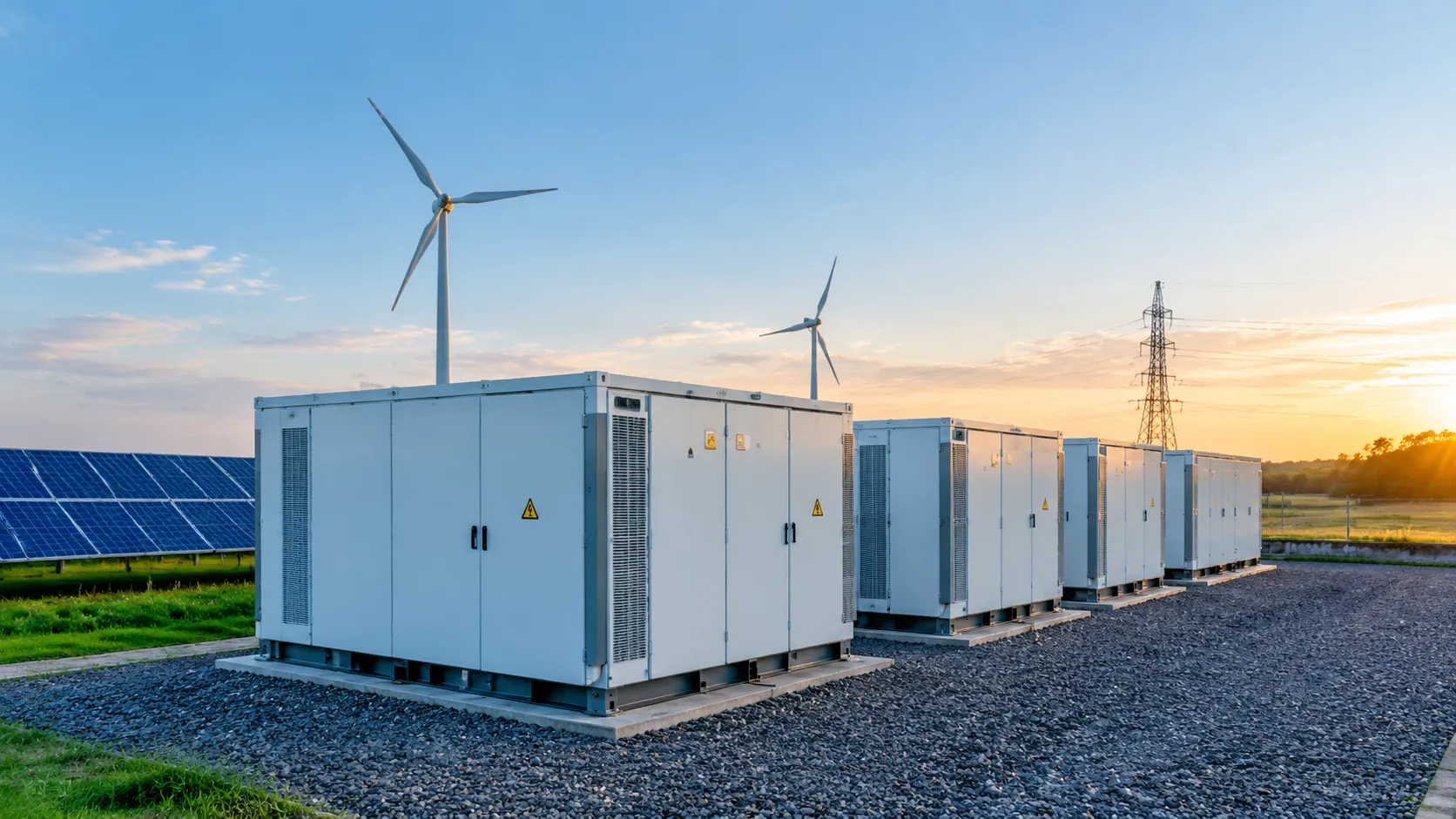
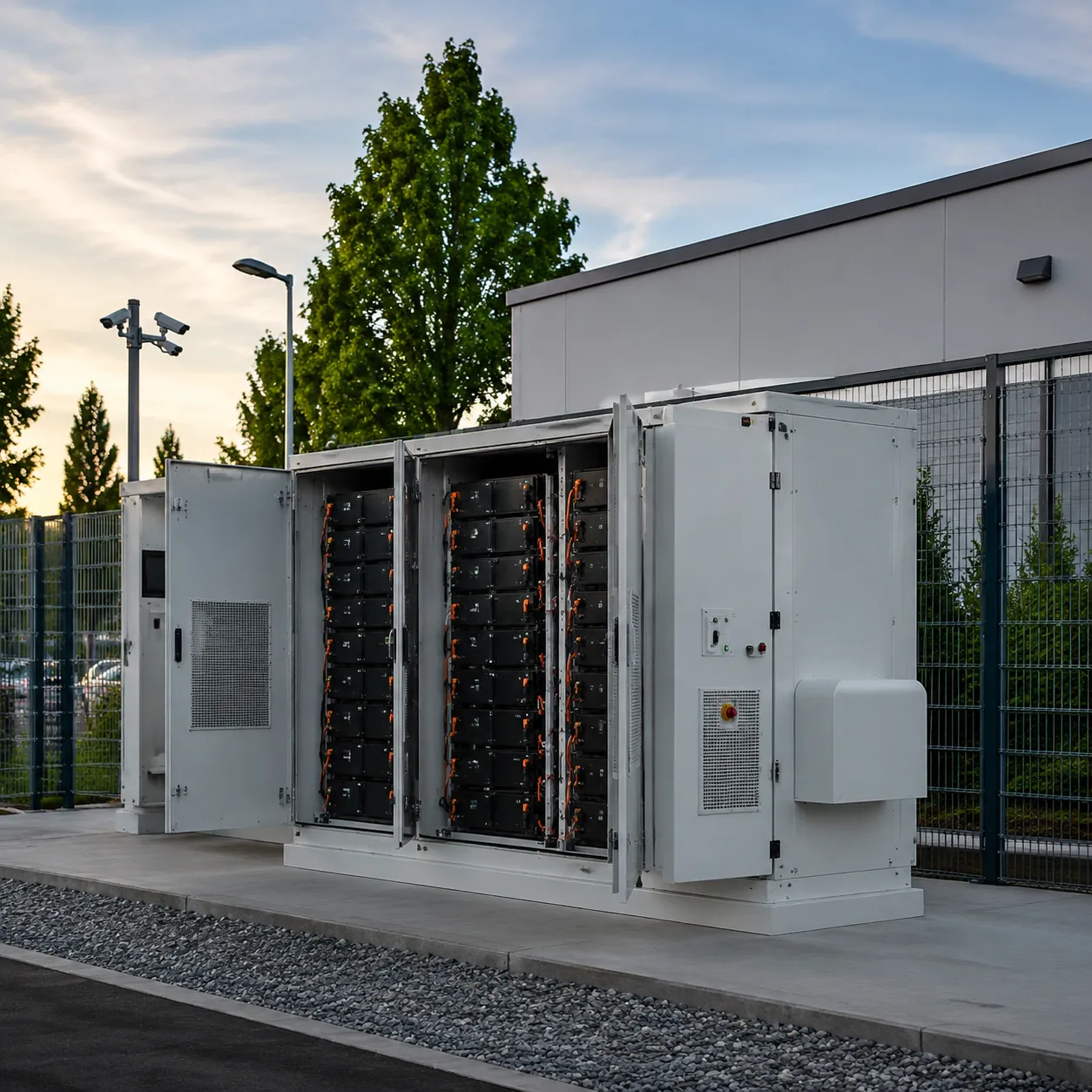
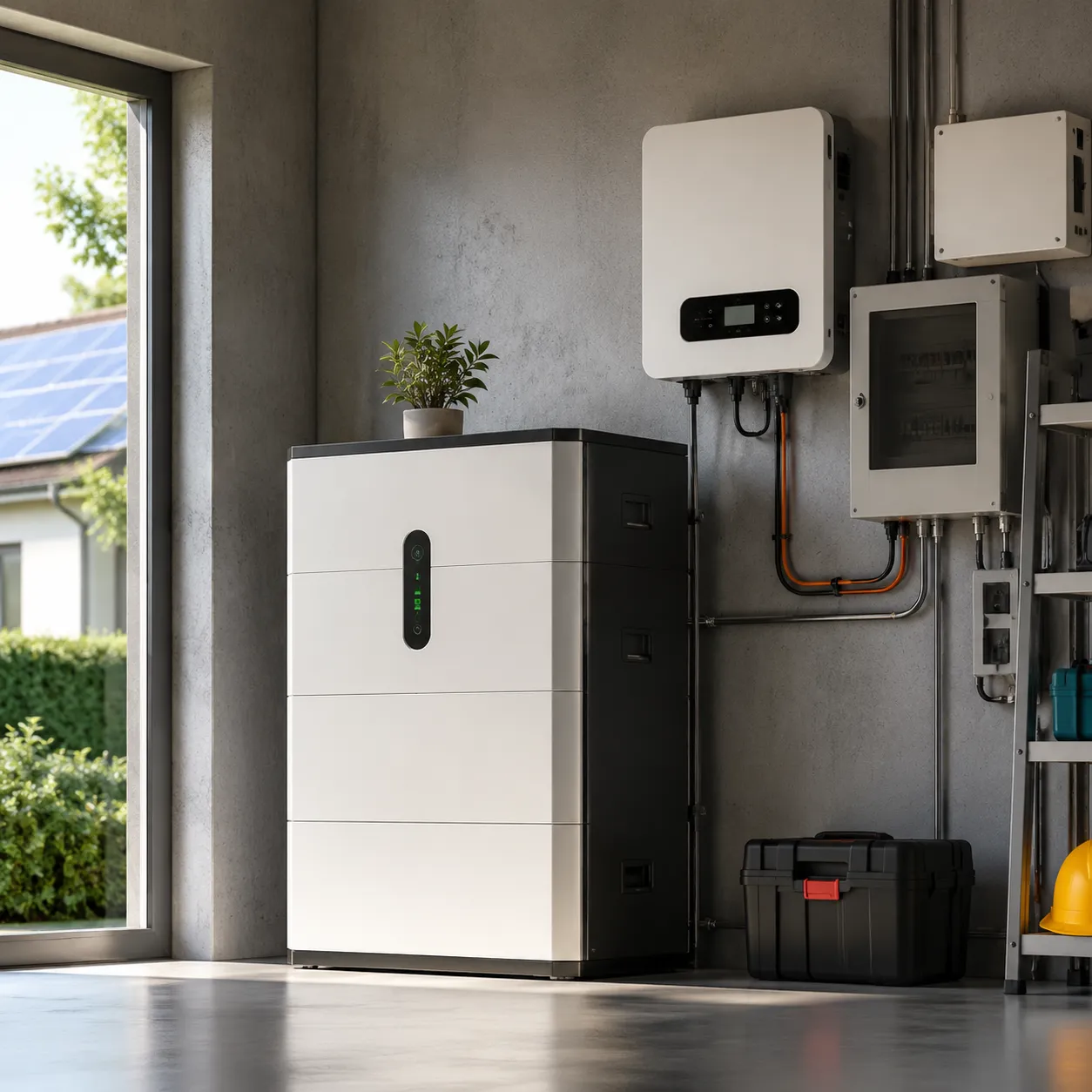
- Modular C&I Cabinets: Designed for tight spatial constraints and indoor or outdoor footprints. These units allow incremental parallel scaling, making them the ideal choice among commercial and industrial energy storage systems where power demands expand over time.
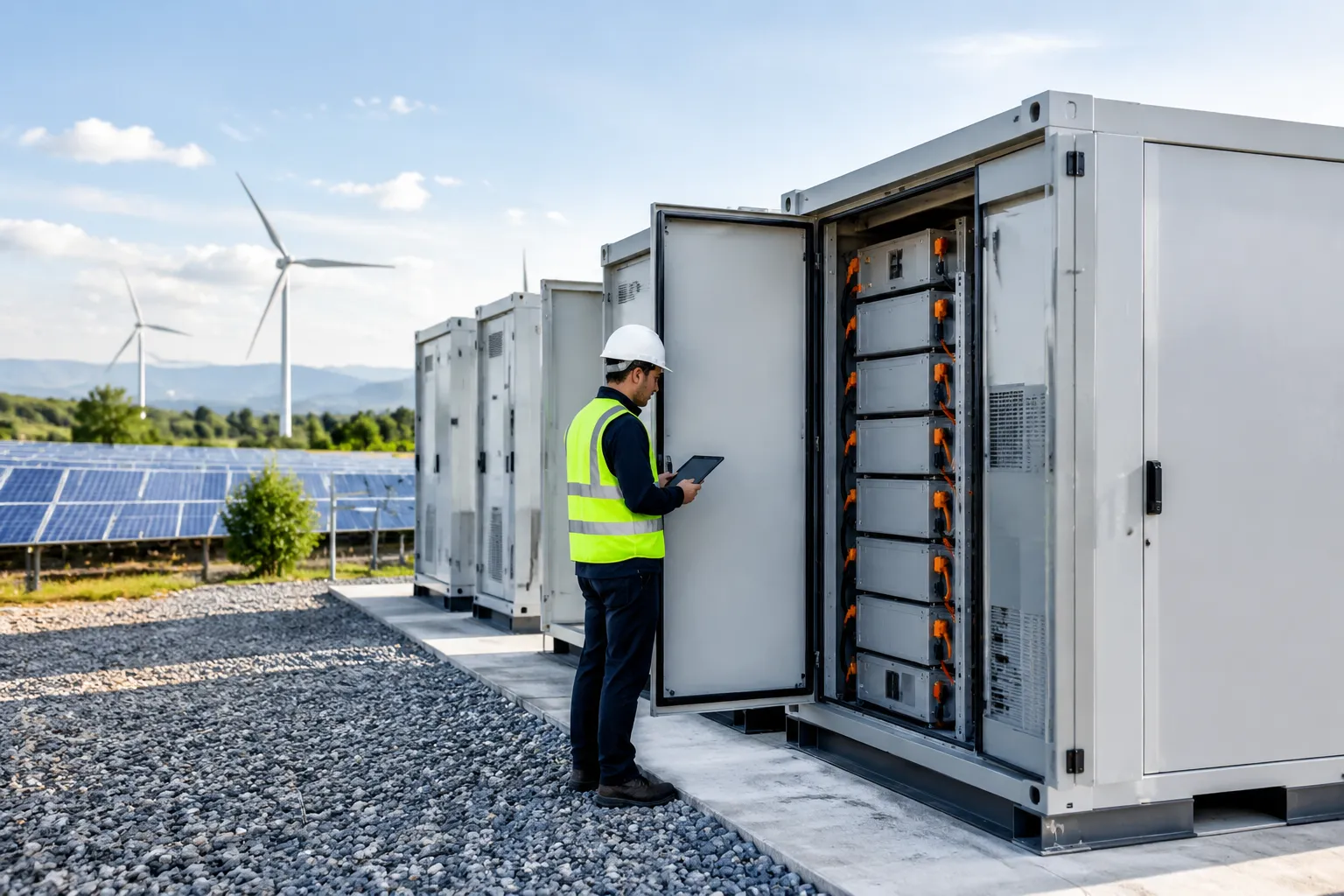
- High-Density Containerized BESS: Built for utility-scale applications and power-heavy industrial plants. Our high-density containerized energy storage systems deliver up to 5MWh in standard ISO footprints, pre-integrated with active liquid cooling, string-level BMS, and turnkey fire suppression.
| Feature | Modular C&I Cabinets | High-Density Containerized BESS |
|---|---|---|
| Typical Capacity | 100kWh to 500kWh per block | 2.5MWh to 5MWh+ per container |
| Footprint | Compact, flexible indoor/outdoor footprint | Standardized 20ft / 40ft ISO enclosure |
| Scalability | Plug-and-play parallel cabinet addition | Multi-container megawatt-scale expansion |
| Target Use Case | Manufacturing, retail, EV buffering | Large utilities, heavy industry, solar farms |
The 6-Phase Turnkey Execution Framework
We de-risk deployment through a field-tested, standardized implementation protocol:
- Site Assessment & Load Profile Analysis: We analyze your 15-minute interval utility data and facility electrical layouts to pinpoint exact peak demand thresholds.
- Custom Engineering & ROI Financial Modeling: Our team configures the system voltage, transformer matching, and enclosure layouts while providing transparent ROI projections.
- Automated Manufacturing & Factory Acceptance Testing (FAT): Every lithium iron phosphate battery system undergoes rigorous thermal, electrical, and BMS functional testing before shipping to eliminate site surprises.
- Field Deployment & Grid Interconnection: On-site pad placement, high-voltage wiring, and local utility interconnect compliance are executed according to regional grid codes.
- Commissioning & Cloud-Edge Optimization: We calibrate cell balancing algorithms, configure the Energy Management System (EMS), and initiate cloud telemetry for real-time control.
- 24/7 Global O&M Support: Continuous cloud monitoring, predictive failure alerts, and localized field service keep your asset operating at peak efficiency over its 15-to-20-year lifespan.
Frequently Asked Questions
Operational Lifespan & Cycle Count
What is the expected operational lifespan and cycle count of a lithium iron phosphate battery system?
- Cycle Life: Delivers 6,000 to 10,000+ full cycles at 80% Depth of Discharge (DoD).
- Operational Lifespan: Designed for 15 to 20 years of continuous daily service when managed by active cell balancing.
- Capacity Retention: Retains over 70–80% of original nominal capacity after a decade of high-frequency cycling.
Active Liquid Cooling vs. Air Cooling
How does active liquid cooling compare to air cooling in preventing thermal runaway?
- Thermal Uniformity: Liquid cooling restricts cell-to-cell temperature deltas to ≤ 2.5°C, while forced air cooling allows variations of 5°C to 8°C.
- Hot-Spot Elimination: Rapid heat extraction directly through coolant plates prevents localized heat accumulation during high C-rate operation.
- Parasitic Load Reduction: High-density setups, including our 5MWh liquid-cooled battery energy storage system, consume up to 30% less parasitic power than traditional HVAC forced-air containers.
Essential Safety Certifications
What safety certifications are required for commercial LFP energy storage systems?
- UL 1973: Verifies safety and mechanical integrity at the battery cell and module level under intense electrical and physical stress.
- UL 9540A: Crucial thermal runaway fire propagation testing that proves fire will not spread beyond an isolated module or rack.
- IEC 62619: Global safety standard for industrial energy storage, ensuring reliable fault protection within a complete commercial lithium battery energy storage system with BMS.
Typical ROI & Payback Timeline
What is the typical ROI and payback timeline for a C&I lithium iron phosphate battery system?
- Payback Window: Achieves full capital recovery within 3 to 5 years under standard commercial utility tariffs.
- Value Stacking: Accelerates financial returns by combining automated peak shaving, demand charge suppression, and solar price arbitrage.
- Lifetime Savings: Generates sustained operational savings for 10–15 years past initial payback due to low degradation and negligible annual maintenance costs.