Formula details
Product Details
Overview
What Is a Low Voltage Energy Storage System?
A low voltage energy storage system (low voltage ESS) is a decentralized battery solution engineered to operate under 60V DC, typically using a standard 48V or 51.2V architecture. We design these systems primarily for residential solar applications, small businesses, and off-grid setups where electrical safety, installation simplicity, and long-term durability are critical.
Solar PV Panels
↓
DC Power
↓
Low-Voltage Hybrid Inverter
↙ Bi-Directional DC (48 V / 51.2 V)
Low-Voltage Battery
LiFePO₄ Modules + BMS
↘ AC Power
Home Loads / Grid
Critical Circuits
Standard 48V to 51.2V Architecture
Our low voltage systems use a 16S (16 cells in series) lithium iron phosphate configuration, yielding a 51.2V nominal voltage (operating between 44.8V and 57.6V). This sub-60V threshold delivers vital technical advantages:
Inherent Electrical Safety: Keeps the system well within the Extra-Low Voltage (ELV) safety limits, significantly reducing touch-voltage hazards during installation and maintenance.
Streamlined Compliance: Avoids the stringent high-voltage conduit and isolation equipment mandates required for systems above 100V DC.
Core System Components
A complete low voltage residential energy storage system integrates three essential hardware layers:
- Grade-A LiFePO4 Battery Modules: Built with thermal-stable Lithium Iron Phosphate cells, providing high usable capacity, high thermal runaway thresholds, and deep discharge resilience.
- Intelligent Battery Management System (BMS): Acts as the central protection hub, continuously managing cell balancing, overcharge, over-discharge, short circuits, and multi-point temperature thresholds.
- Low Voltage Hybrid Inverter: Converts direct current (DC) from rooftop solar panels and the battery into alternating current (AC) for household appliances, utilizing CAN/RS485 communication protocols to synchronize with the BMS.
How Low Voltage Battery Storage Works in Home Solar Setups
During the day, rooftop solar panels generate DC electricity. The low voltage hybrid inverter routes this power directly to household loads.
- Surplus Charging: Excess solar electricity charges the 51.2V LiFePO4 battery bank safely at low voltage.
- Evening Discharge: When sunlight fades, the battery discharges stored energy back through the inverter to power household circuits, minimizing grid reliance.
- Instant Backup Protection: During a grid blackout, the BMS and inverter switch seamlessly to backup mode, delivering uninterrupted power to designated critical circuits.
Key Advantages of a Low Voltage Energy Storage System
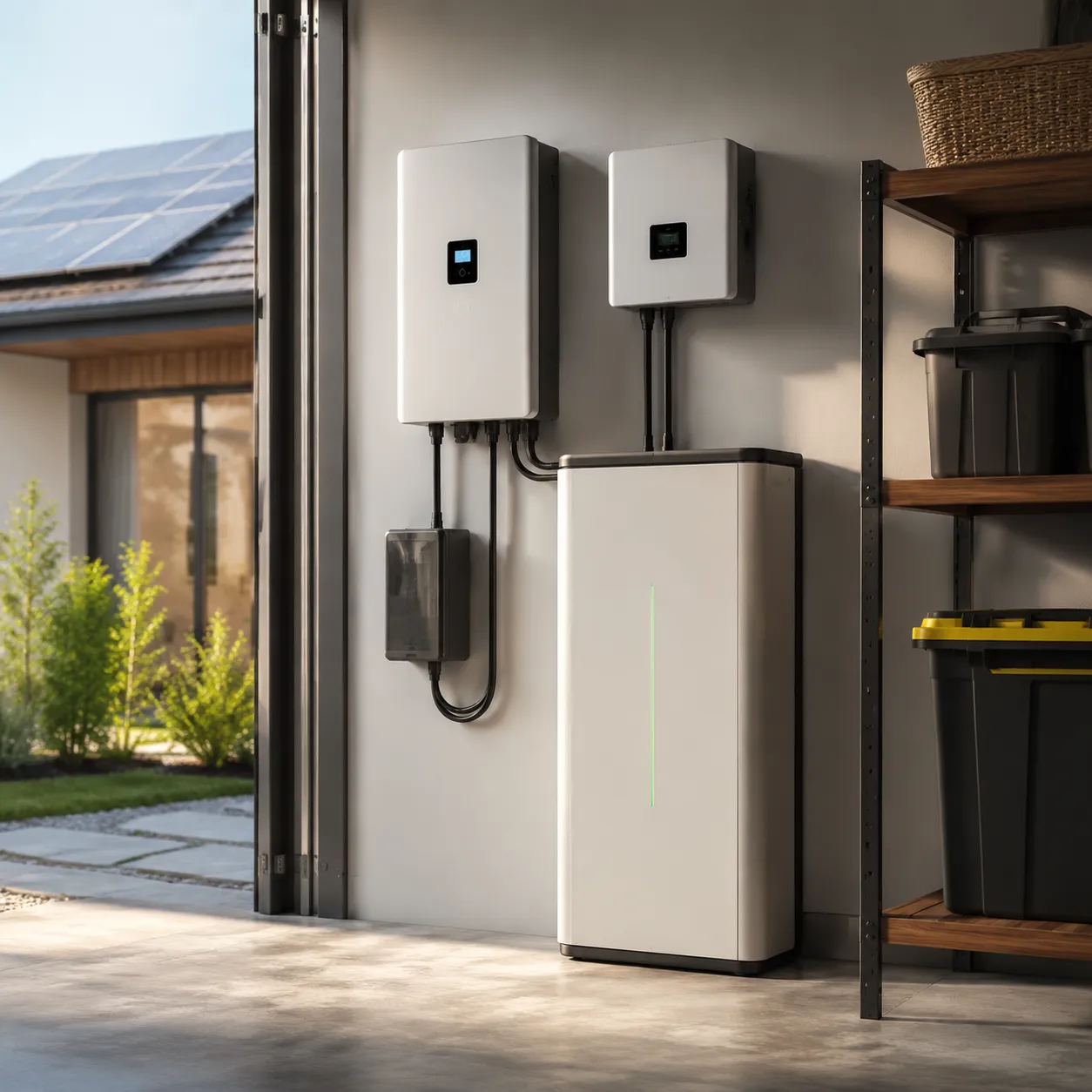
Enhanced Electrical Safety and Low Touch-Voltage Risks
Operating at a standard 48V to 51.2V DC range keeps the entire setup well within the international Safety Extra-Low Voltage (SELV) threshold. This design minimizes severe arc-flash and touch-voltage hazards during installation and routine maintenance:
Inherent cell stability: Built with Tier-1 automotive-grade LiFePO4 cells to prevent thermal runaway.
Intelligent BMS protection: Multi-tier hardware and software defenses actively monitor cell voltage, current, and temperature anomalies.
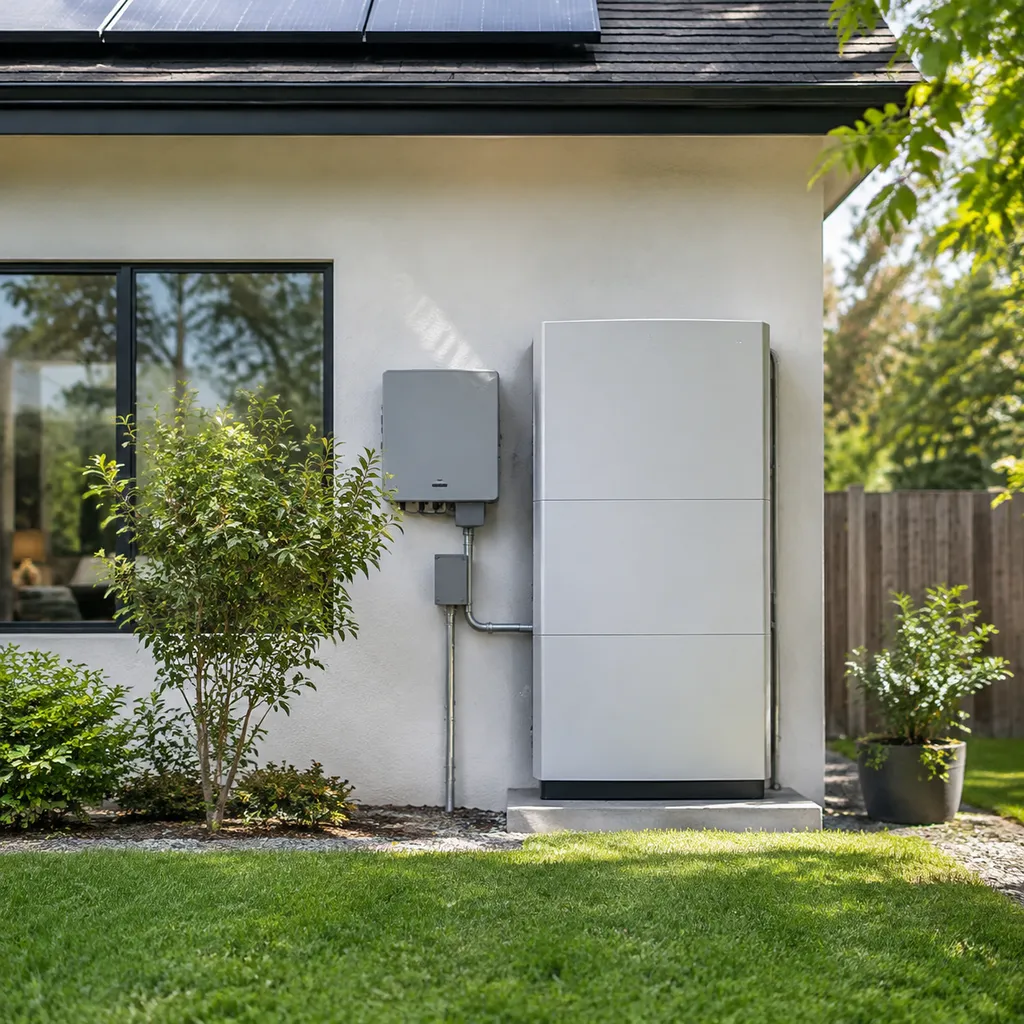
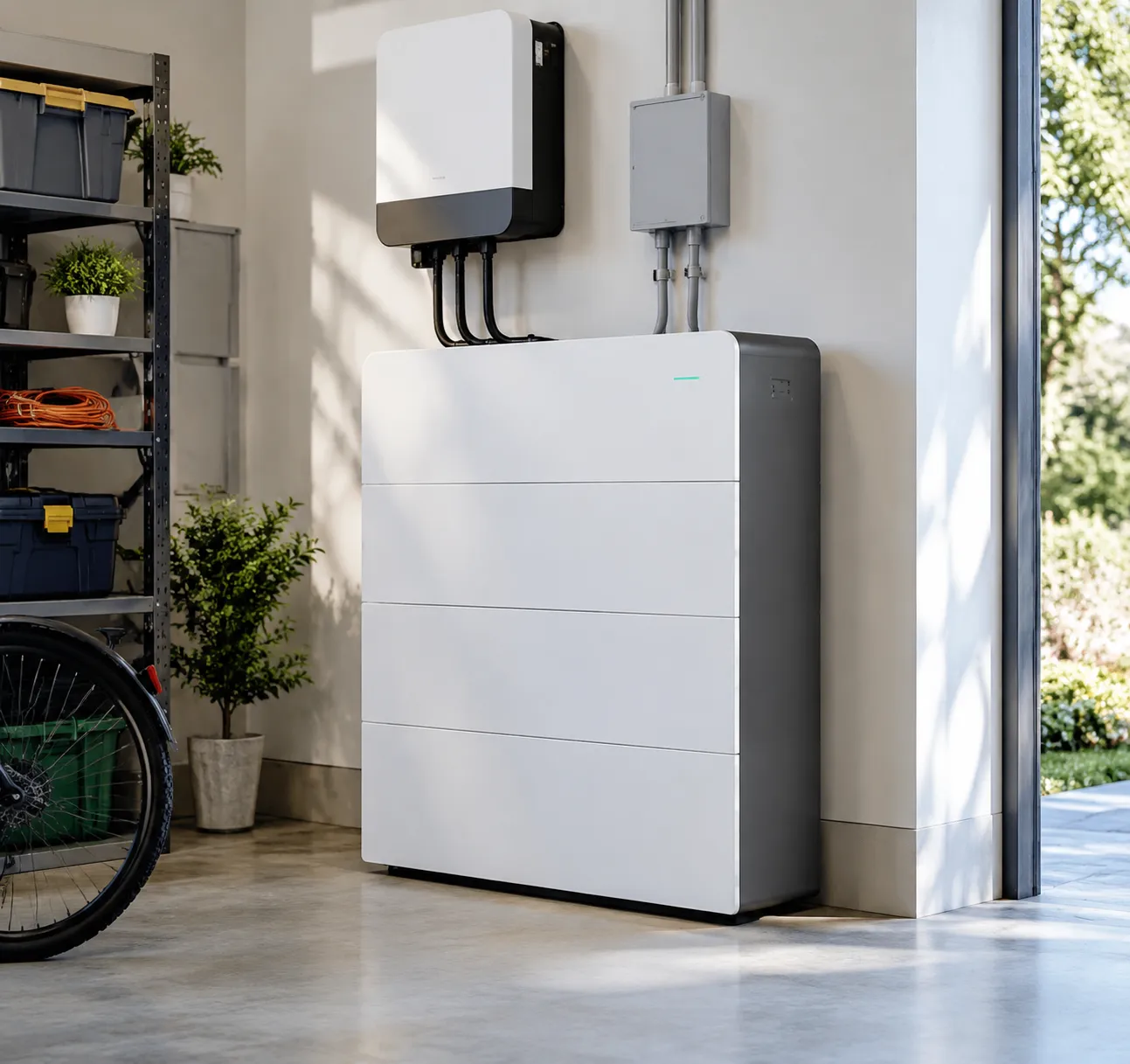
Safer home integration: Safe for indoor utility closets, garages, and residential spaces.
Simple Modular Expansion with Parallel Battery Wiring
A major benefit of a 48V solar battery setup is painless scalability. Instead of reconfiguring complex high-voltage strings, our systems rely on straightforward parallel battery bank wiring:
Tool-free capacity scaling: Easily add modular home battery backup units as your household energy consumption grows.
Independent module operation: Expanding or servicing a single module does not bring down the entire system.
Flexible form factors: Choose between stackable floor units, rack-mounted modules, or wall-hung enclosures to fit any space.
Low-Voltage Modular Architecture
Battery Unit 1 ↔ Battery Unit 2 ↔ Battery Unit N
↓
48 V / 51.2 V Common DC Bus
↓
Low-Voltage Hybrid Inverter
Lower Upfront Installation and Maintenance Costs
Low-voltage hardware significantly lowers the barrier to entry for home energy security. Evaluating key battery energy storage system advantages and disadvantages shows that low voltage ESS configurations deliver a remarkably low Levelized Cost of Energy (LCOE):
Standardized components: Standard DC disconnects, standard-gauge cabling, and widely available balance-of-system parts keep installation costs low.
Simplified maintenance: Individual pack replacement is straightforward and avoids the costly specialized labor often required by high-voltage stacks.
Broad Compatibility with Mainstream Hybrid Inverters
Seamless communication between the battery management system and the power conversion equipment ensures smooth operation. Our low voltage battery storage systems feature universal CAN2.0 and RS485 communication protocols, ensuring out-of-the-box matching with leading global low voltage hybrid inverter brands for dependable on-grid self-consumption and off-grid backup power.
Low Voltage vs High Voltage Energy Storage Systems
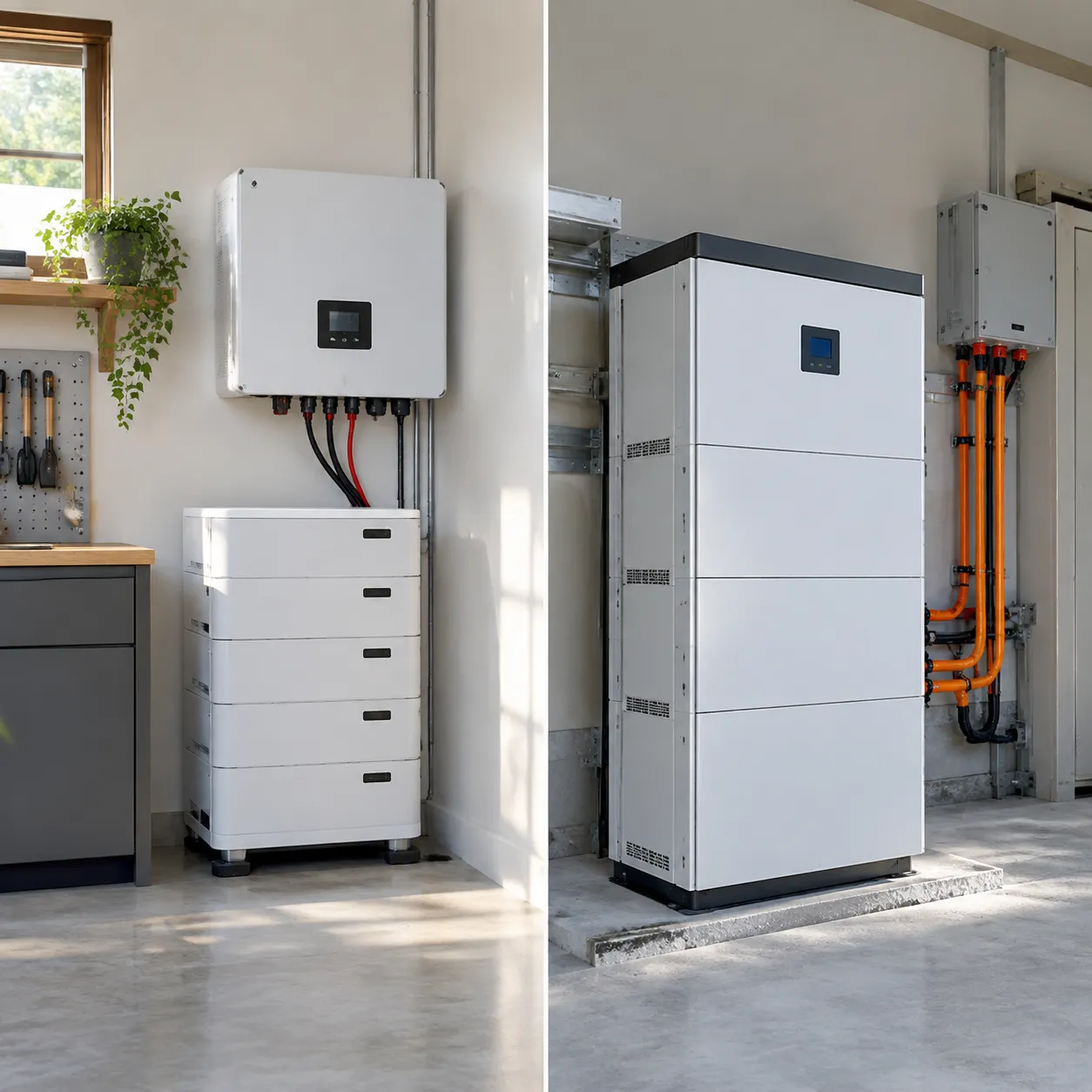
When choosing the right battery architecture, comparing a low voltage energy storage system (typically 48V to 51.2V) against high voltage (HV) alternatives (100V to 400V+) comes down to safety, budget, and power requirements. Understanding your overall energy storage system architecture and design makes it easy to select the right platform for your energy goals.
Quick Comparison: Low Voltage vs. High Voltage
| Feature | Low Voltage ESS (48V / 51.2V) | High Voltage ESS (100V–400V+) |
|---|---|---|
| Operating Voltage | 48V – 51.2V DC (Touch-safe) | 100V – 400V+ DC |
| System Complexity | Plug-and-play, standard DC wiring | Higher protection & specialized components |
| Hardware & Install Cost | Lower upfront cost, budget-friendly | Higher initial investment |
| Cable Gauge | Thicker cables needed for higher current | Thinner cables due to lower operating current |
| Expansion Method | Simple parallel battery bank additions | Series stacking with strict voltage matching |
| Ideal Application | Residential homes, off-grid cabins, backup | Heavy commercial microgrids, high-draw loads |
Working Voltage, Conversion Efficiency, and Energy Loss
Low voltage battery systems operate below the 60V DC threshold, making them fundamentally touch-safe for residential spaces. While HV systems experience slightly less heat loss during DC-to-AC conversion due to lower current, modern 51.2V LiFePO4 battery systems deliver round-trip efficiencies well above 95% across typical home load cycles.
Cable Gauge, Installation Complexity, and Hardware Costs
- Cabling & Hardware: A low voltage system uses thicker cable gauges to handle higher operating amperage safely, but the balance-of-system (BOS) hardware—such as breakers, disconnects, and fuses—remains widely available and cost-effective.
- Installation Simplicity: You do not need specialized high-voltage certified installers for standard 48V setups, which directly cuts down labor costs and setup time.
Best Use Cases: Residential Setups vs. Commercial Microgrids
- Residential & Off-Grid Living: A modular low voltage system is the standard choice for daily home solar self-consumption, emergency backup, and off-grid builds where affordable scalability is key.
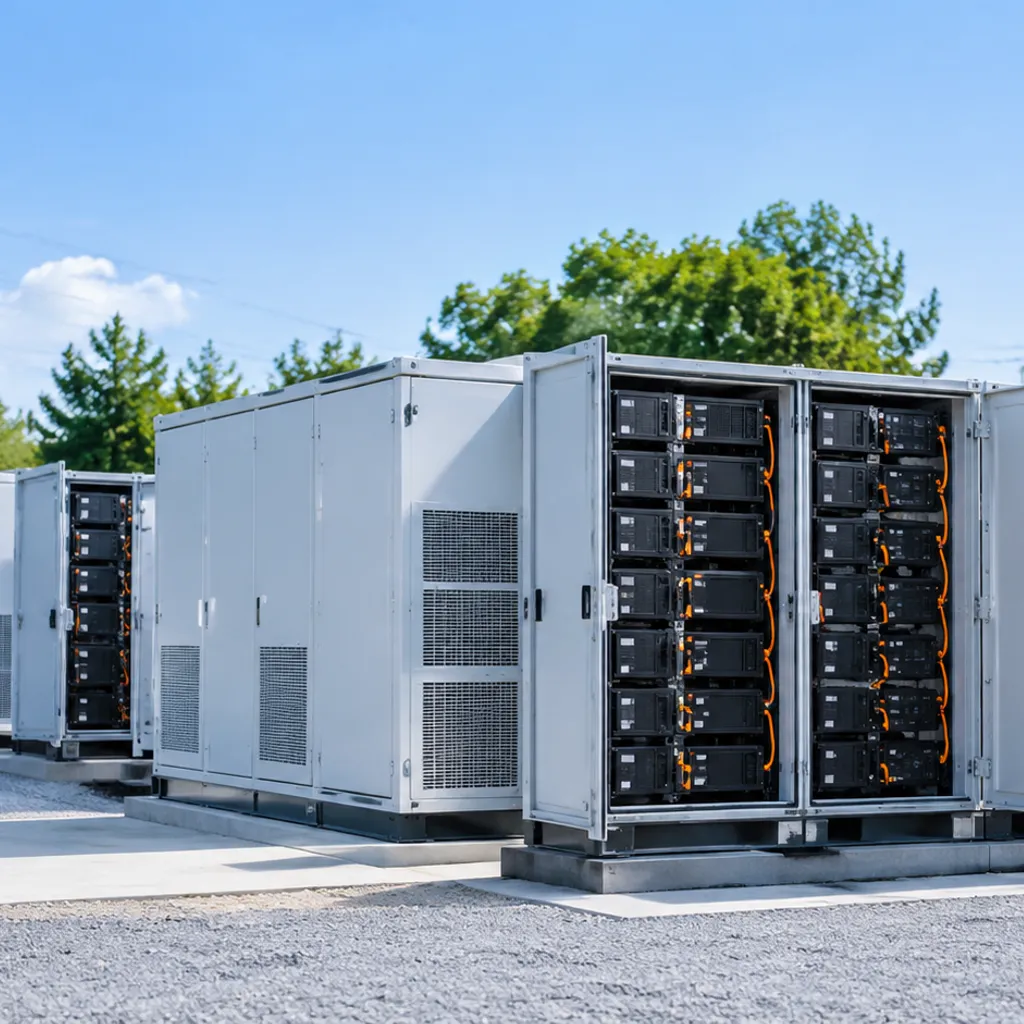
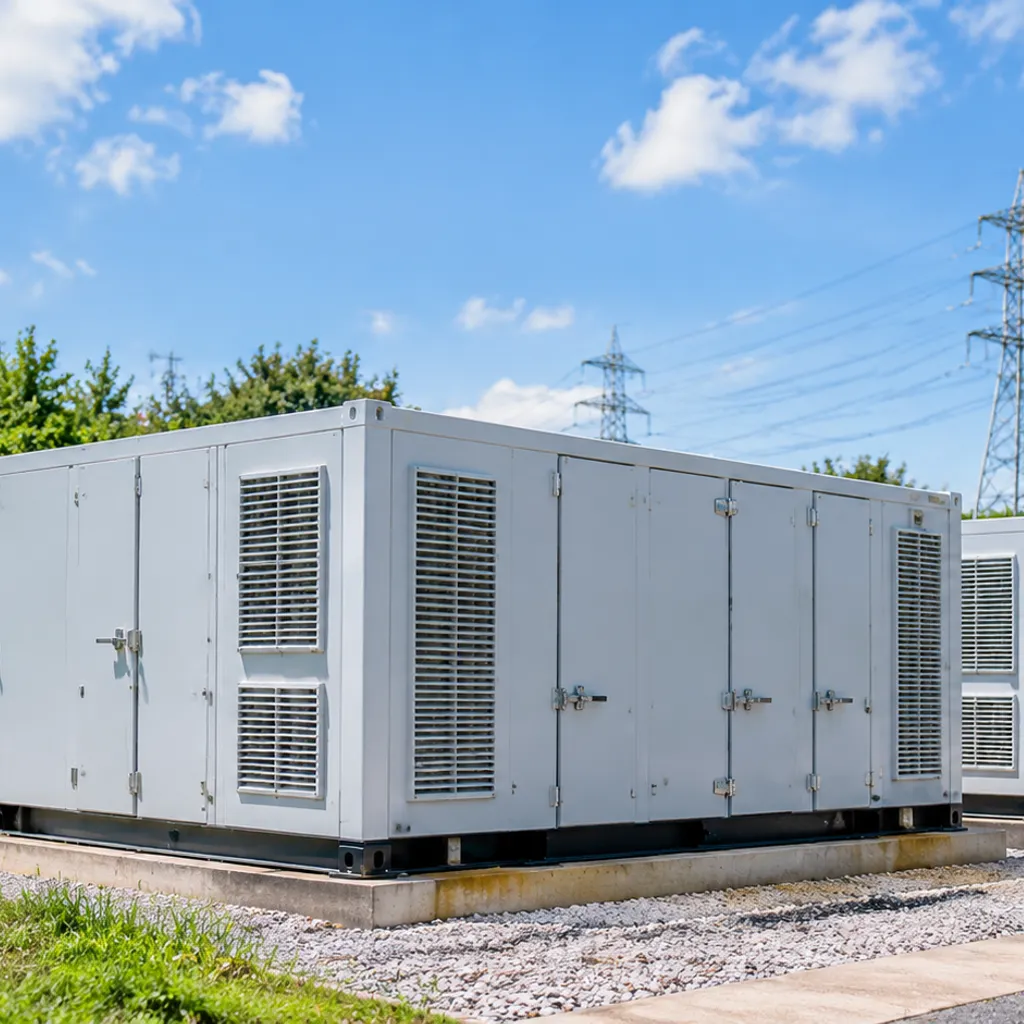
- Large Commercial Projects: If you run heavy multi-kilowatt industrial machinery, commercial facilities, or utility-scale setups, deploying a dedicated high-voltage energy storage cabinet provides the continuous high-voltage throughput required for large power demands.
Key Specifications to Check in a Low Voltage Energy Storage System
1. Battery Chemistry: LiFePO4 Reliability
We build low voltage systems around Grade-A automotive-standard Lithium Iron Phosphate (LiFePO4) chemistry. LFP cells provide superior thermal and chemical stability compared to standard NMC alternatives, eliminating thermal runaway risks under normal operating environments. Understanding lithium iron phosphate battery system safety and cycle life helps homeowners evaluate long-term thermal performance and degradation rates under constant cycling.
2. Usable Storage Capacity and Depth of Discharge (DoD)
Nominal capacity is the total energy stored, but usable capacity determines actual power delivery.
Look for systems supporting 90% to 95% Depth of Discharge (DoD).
High DoD ratings allow homeowners to utilize the full advertised capacity without accelerating cell degradation.
Modular 5.12 kWh and 10.24 kWh units let users scale their usable storage in parallel as household energy demands increase.
3. Cycle Life and Service Longevity
A premium 51.2V LiFePO4 battery provides a rated lifespan of ≥ 6,000 cycles at 80% DoD under standard operating temperatures. Calculated at one complete discharge-and-recharge cycle per day, this yields 15+ years of operational life, substantially lowering the overall Levelized Cost of Energy (LCOE).
4. Continuous Charge and Discharge Capabilities
Peak ratings only matter for initial motor startup surges. Verify continuous charge/discharge current limits to ensure your residential energy storage system can sustain key household circuits—such as water pumps, refrigeration, and cooking appliances—simultaneously without triggering thermal throttling.
5. Built-In Smart BMS and Inverter Communication
A multi-tier battery management system (BMS) prevents operational faults before hardware damage occurs:
Active Fault Protection: Real-time monitoring of cell voltages, overcurrent, overcharge, overdischarge, short circuits, and ambient cell temperatures.
Seamless Inverter Handshake: Pre-configured dual CAN2.0 and RS485 communication protocols ensure plug-and-play closed-loop integration with mainstream residential hybrid inverters.
How to Size and Set Up a Low Voltage Energy Storage System
Calculating Daily Household Power Consumption and Backup Needs
To find the right system size, start by reviewing your daily power habits and identifying non-negotiable loads during grid outages:
- Audit Daily Consumption: Check your electric bills to find your average daily kilowatt-hour (kWh) usage. Typical homes consume between 15 kWh and 30 kWh per day.
- Isolate Critical Circuits: If whole-home backup is not required, tally the wattage of essential circuits (refrigeration, lighting, internet routers, and well pumps) multiplied by running hours.
- Factor in Autonomy: Decide how many days or hours of backup you need during cloudy weather or prolonged blackouts. For an in-depth breakdown of calculations, follow our BESS sizing guide.
Determining Battery Bank Capacity and Parallel Unit Limits
A standard 48V/51.2V LiFePO4 battery module generally delivers 5.12 kWh of nominal capacity. When sizing your parallel battery bank:
- Account for Depth of Discharge (DoD): We recommend utilizing a 90% DoD threshold. A 10.24 kWh nominal bank delivers approximately 9.2 kWh of usable daily storage.
- Scale in Parallel: Multiple battery modules connect in parallel to increase amp-hour (Ah) capacity while keeping system voltage at a safe 51.2V. Implementing a modular battery energy storage system allows you to start with one or two units and add modules as household energy demands grow.
- Check BMS Parallel Limits: Always adhere to maximum parallel unit guidelines (typically 8 to 15 units per cluster) to maintain synchronized battery management system (BMS) communication.
| Target Usable Storage | Recommended Battery Setup (5.12 kWh Units) | Typical Application |
|---|---|---|
| 4.6 kWh | 1 × 5.12 kWh Module | Basic emergency backup (lights, router, fridge) |
| 9.2 kWh | 2 × 5.12 kWh Modules | Standard evening solar self-consumption |
| 13.8 kWh – 18.4 kWh | 3 to 4 × 5.12 kWh Modules | Whole-home essential backup + extended autonomy |
| 23.0+ kWh | 5+ Parallel Modules | Large residential setups or light commercial microgrids |
Matching Low Voltage Batteries with Inverters and Charge Controllers
Achieving peak efficiency requires correct pairing between your DC battery bank and your low voltage hybrid inverter:
- Voltage Compatibility: Ensure your inverter or solar charge controller accepts a standard 40V–58V DC operating window.
- Continuous Discharge Ratings: Match the inverter's maximum continuous power draw with your battery bank’s continuous discharge rating. A 5 kW inverter drawing from a 48V bank pulls roughly 100A; ensure your battery and cabling supply this comfortably.
- Closed-Loop Communication: Connect the battery BMS directly to the inverter using CAN or RS485 protocols to automate charge parameters, prevent cell over-voltage, and maintain real-time state-of-charge (SoC) tracking.
Essential Installation Tips: Cabling, Fusing, and Ventilation
Because low voltage systems operate at high current levels, correct mechanical and electrical installation is critical:
- Heavy-Gauge DC Cables: Use appropriately sized, fine-strand copper cables (such as 2/0 or 4/0 AWG depending on distance and amperage) to minimize voltage drop and heat buildup.
- Busbar Distribution: Connect parallel battery modules to a central DC busbar rather than daisy-chaining to ensure even current sharing across all cells.
- Proper Overcurrent Protection: Install fast-acting DC-rated fuses (such as Class T or NH-type fuses) and a dedicated DC disconnect switch between the battery bank and inverter.
- Ventilation and Environment: Mount battery units in a clean, dry, climate-controlled space. Maintain at least a few inches of clearance around all enclosures to allow unobstructed airflow for optimal passive heat dissipation.
Frequently Asked Questions About Low Voltage Energy Storage
Can I expand my low voltage battery bank in the future?
Yes. Seamless parallel scalability is one of the biggest advantages of a low voltage energy storage system. You can readily add extra 48V or 51.2V battery modules in parallel to expand your total usable kWh storage capacity as your household energy demands increase. Reviewing our types of battery energy storage systems comparison guide illustrates how modular low-voltage configurations offer far simpler plug-and-play expansion than rigid high-voltage series setups.
How many years will a 48V low voltage LiFePO4 battery last?
A quality 48V/51.2V Lithium Iron Phosphate (LiFePO4) battery system typically delivers 6,000+ cycles at 80% to 90% Depth of Discharge (DoD) under standard operating conditions.
- Daily Cycling: One full cycle per day translates to 10 to 15+ years of dependable service life.
- Retained Capacity: Even after 6,000 cycles, the battery generally retains around 70% to 80% of its initial rated capacity.
Are low voltage energy storage systems safe for indoor use?
Yes, they are engineered specifically for residential safety.
- Low Touch Voltage: Operating within the standard 48V–51.2V DC range significantly minimizes electrical shock and arc hazards compared to 400V+ setups.
- Stable Chemistry: We use Tier-1 LiFePO4 cells, which are chemically stable and highly resistant to thermal runaway.
- Intelligent Protection: An integrated multi-tier Battery Management System (BMS) continuously monitors cell temperatures, currents, and voltages, making these units safe for installation in garages, utility rooms, or basements.
Can a low voltage system run high-power appliances like air conditioners?
Yes. A low voltage battery system can reliably power heavy inductive loads—including central air conditioners, heat pumps, and well pumps—provided your hybrid inverter and battery bank are sized correctly.
- Inverter Output: Ensure the continuous and surge wattage ratings of your inverter match the peak startup current of your appliances.
- Discharge Capacity: Paralleling multiple battery modules distributes the continuous discharge load, ensuring sufficient amperage delivery without overstressing individual battery cells.