Formula details
Product Details
Overview
Full-Scope Turnkey BESS EPC Delivery Framework
Front-End Engineering & Grid Interconnection Design (FEED)
Our engineering team builds optimized, bankable system architectures tailored to specific site constraints and revenue models:
Feasibility & Sizing: Detailed modeling of degradation profiles, duty cycles, and energy capacity requirements.
Electrical Engineering: Complete single-line diagrams (SLDs), short-circuit analysis, arc flash studies, and protection coordination.
Grid Interconnection Studies: Dynamic simulation modeling to ensure strict compliance with local Transmission System Operator (TSO) and Distribution System Operator (DSO) grid codes.
Civil & Structural Design: Foundation engineering, site grading, thermal spacing, and seismic design calculations.
Tier-1 Hardware Procurement & Component Integration
We leverage an established supply chain to source and integrate validated, tier-1 hardware components:
Lithium Iron Phosphate (LFP) Cells: High-stability LiFePO4 chemistry designed for thermal resilience and extended cycle life.
Battery Management Systems (BMS): Multi-tiered monitoring delivering cell-level diagnostics, state of charge (SOC), and state of health (SOH) tracking.
Power Conversion Systems (PCS): High-efficiency bidirectional inverters supporting grid-forming and grid-following configurations.
Energy Management Systems (EMS): Intelligent control layers for automated dispatch, frequency response, and revenue stacking.
Auxiliary Subsystems: Factory-integrated liquid cooling, HVAC, and multi-stage fire detection and suppression systems.
Civil, Electrical & Balance of Plant (BOP) Construction
We execute all on-site construction works with rigorous quality and safety protocols:
Site Preparation: Excavation, containment foundations, equipment pads, drainage, and security fencing.
Medium/High-Voltage Infrastructure: Sourcing and installing step-up transformers, switchgear, circuit breakers, and metering skids.
Cable Management & Termination: DC collection cabling, AC medium-voltage trenching, SCADA fiber optics, and grounding grid networks.
Enclosure Rigging & Placement: Precision placement and mechanical anchoring of containerized and modular BESS units.
Commissioning, Site Acceptance Testing (SAT) & Interconnection
Our field engineers oversee testing and energization to ensure immediate performance from day one:
Cold & Hot Commissioning: Rigorous point-to-point wiring checks, insulation resistance testing, and pre-energization verification.
Site Acceptance Testing (SAT): Comprehensive verification of thermal management performance, BMS/EMS communication integrity, and automated shutdown loops.
Interconnection & Compliance Testing: Grid synchronization, reactive power capability testing, fault ride-through (FRT) verification, and utility witness testing.
Asset Handover: Delivery of as-built documentation, digital twins, operating manuals, and formal transfer to operations.
Standardized & Custom BESS Product Configurations
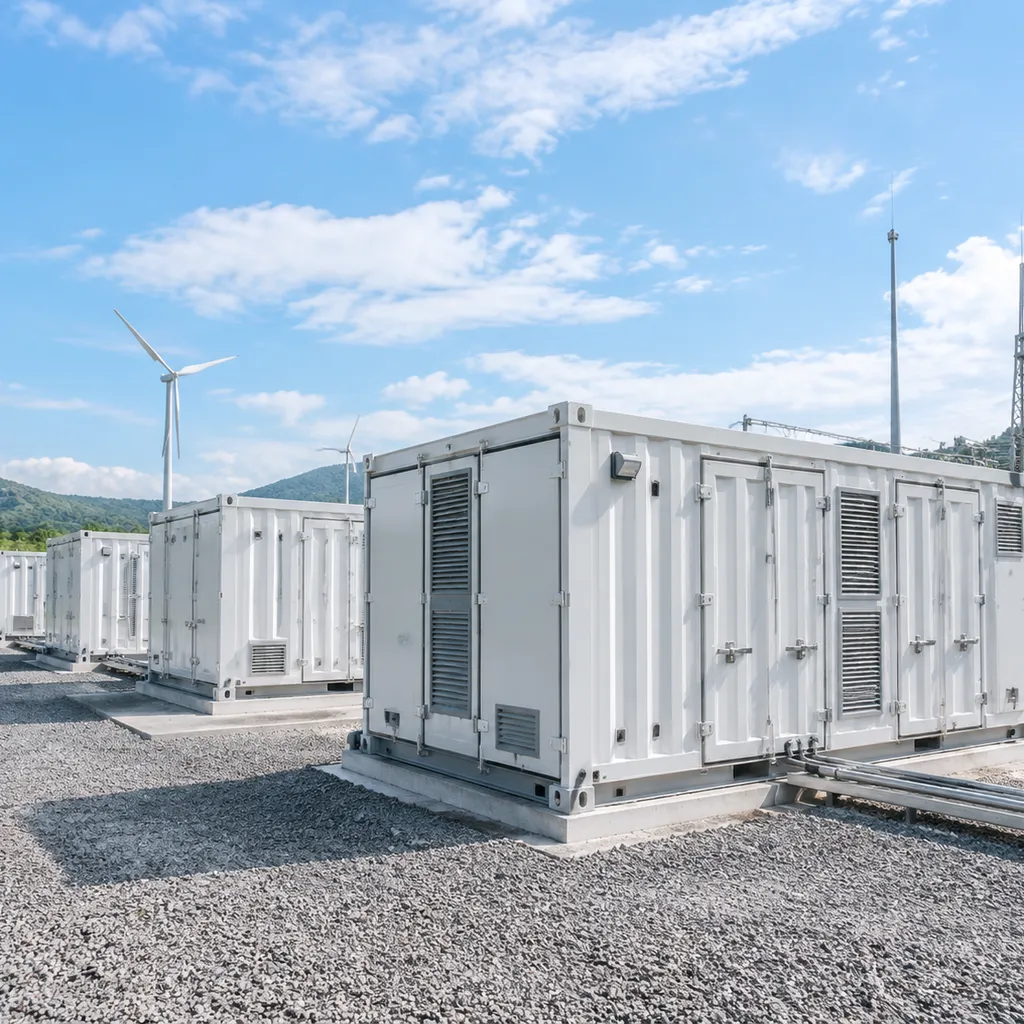
As an integrated battery energy storage EPC contractor, we engineer and supply pre-assembled, factory-tested storage architectures tailored to specific site footprints, grid codes, and operational demands. Our modular platforms simplify balance of plant (BOP) works, accelerate on-site installation, and reduce civil work complexity.
Utility-Scale Containerized BESS (20ft / 40ft ISO Form Factors)
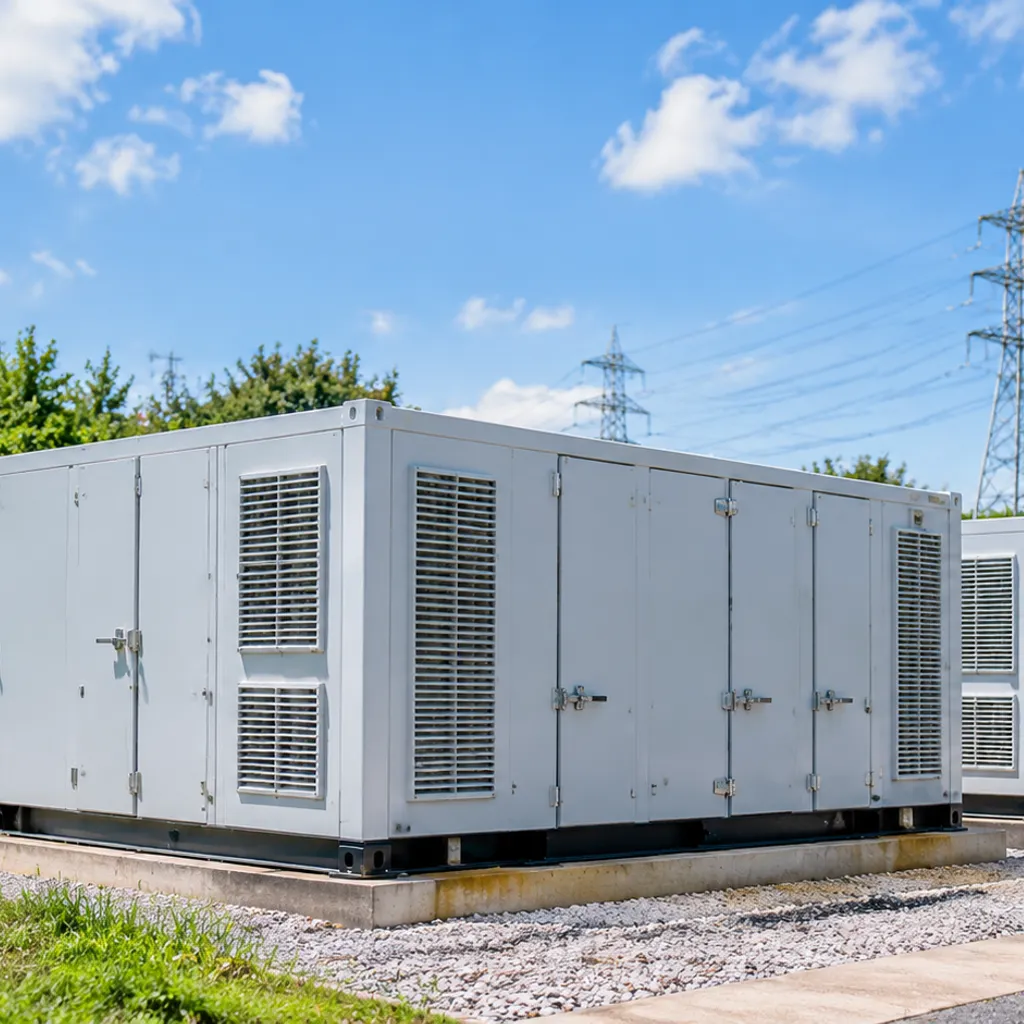
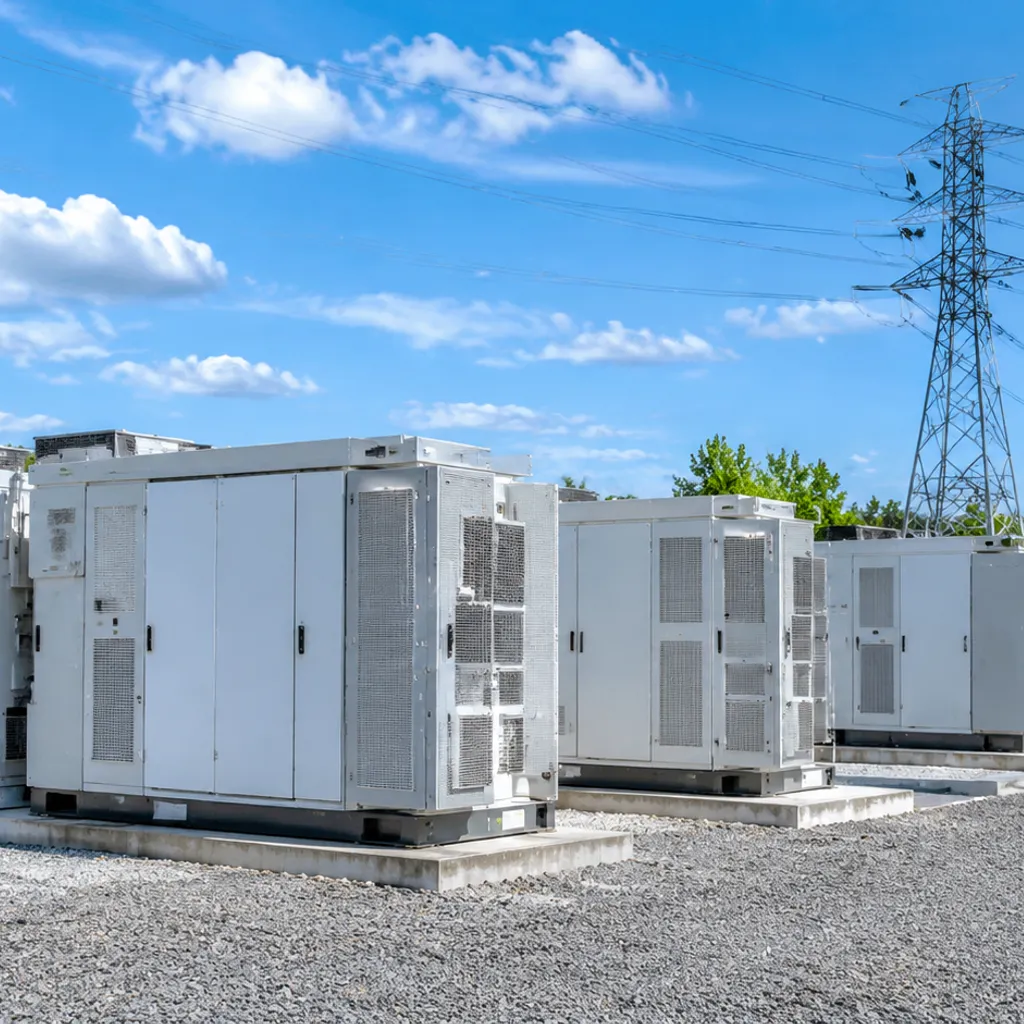
For front-of-the-meter (FTM) applications, we deploy standardized 20ft and 40ft ISO container configurations built for high energy density and harsh environmental conditions. Engineered as standalone, fully integrated DC blocks or complete AC turnkey setups, these systems streamline multi-MWh deployments.
- Turnkey Architecture: Built-in modular racks using stable Lithium Iron Phosphate (LiFePO4) chemistry, battery management systems (BMS), bidirectional power conversion systems (PCS), and auxiliary systems.
- Thermal Management: Advanced liquid-cooled and precision HVAC options ensure minimal cell-to-cell temperature differentials, protecting round-trip efficiency (RTE) and extending cycle life.
- Rapid Deployment: Pre-wired and pre-commissioned containers minimize on-site civil and electrical assembly time.
- Utility-Grade Compliance: Fully compatible with regional grid codes, substation interconnections, and high-voltage transmission networks. For centralized projects, we provide complete utility-scale turnkey storage systems engineered for seamless balance-of-plant integration.
Commercial & Industrial (C&I) Modular Outdoor Cabinets
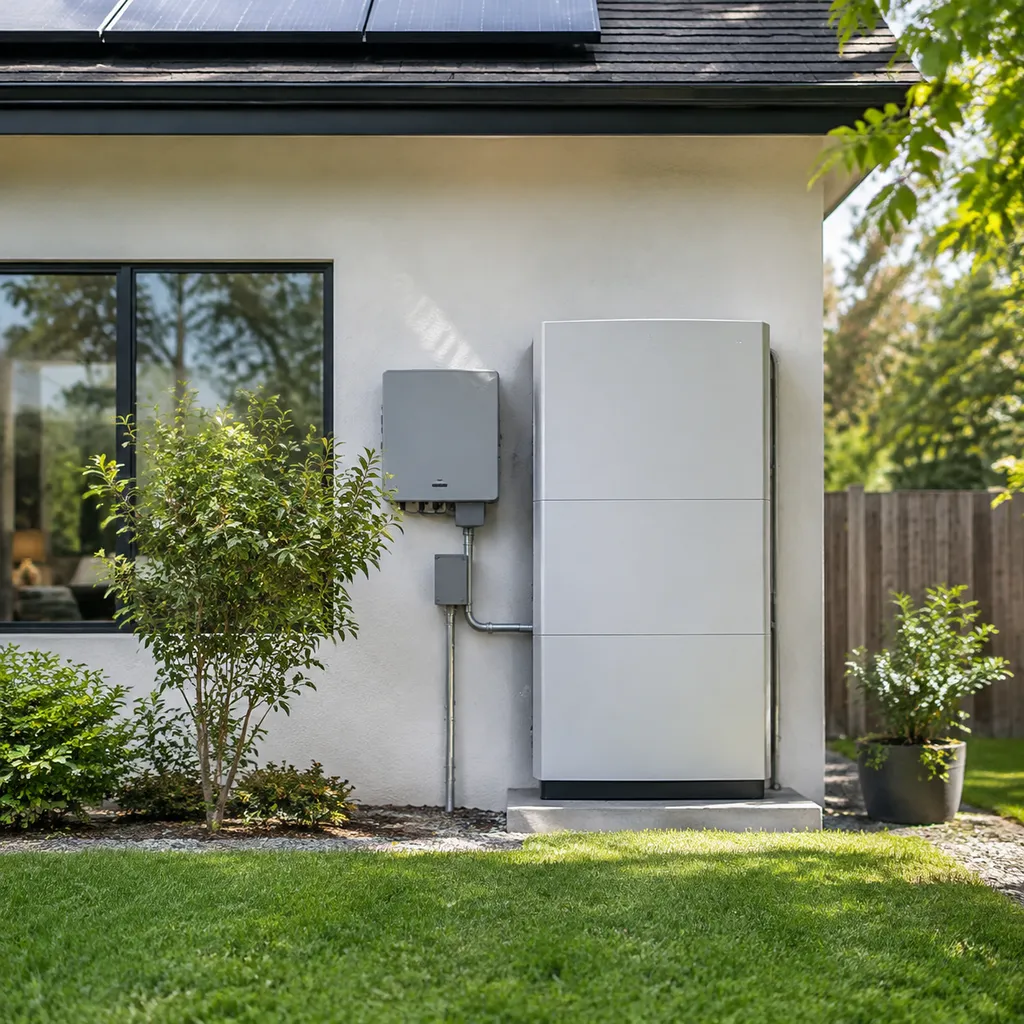
For behind-the-meter (BTM) commercial facilities, manufacturing plants, and microgrids, we deliver compact, all-in-one outdoor battery cabinets. These units feature a minimal physical footprint while offering flexible, plug-and-play capacity scaling.
- All-in-One Enclosure Design: Integrates battery modules, BMS, smart EMS controllers, and localized fire suppression inside an outdoor-rated, weather-resistant enclosure.
- Scalable DC/AC Coupling: Easily expands from tens of kilowatt-hours to multi-megawatt configurations by paralleling standardized cabinet units.
- Optimized for Facility Integration: Designed for rapid interconnection with existing on-site distribution panels, backup generators, and commercial rooftop solar arrays. Selecting the right configuration depends on project load profiles and peak power demands, which can be evaluated through our BESS key factors and sizing guide.
| Feature | Utility-Scale Containers | C&I Outdoor Cabinets |
|---|---|---|
| Form Factor | 20ft / 40ft Standard ISO Container | Modular Weatherproof Enclosure |
| Target Capacity | Multi-MWh utility deployments | 50 kWh to 2 MWh commercial projects |
| Cooling Method | Industrial Liquid Cooling / HVAC | Intelligent Air / Liquid Cooling |
| Integration Level | Centralized or string PCS integration | All-in-one plug-and-play setup |
| Primary Use Cases | Frequency regulation, solar-plus-storage, arbitrage | Peak shaving, backup power, demand management |
Technical Specifications & Performance Metrics
High-Voltage DC Bus Architecture & LiFePO4 Chemistry
We deploy Lithium Iron Phosphate (LiFePO4) chemistry across all commercial, industrial, and utility-scale installations. LFP delivers exceptional chemical stability, structural resilience against thermal events, and lower total lifecycle degradation.
- High-Voltage Architecture: Configured for 1000V DC and 1500V DC platforms to minimize balance-of-plant wiring losses and optimize PCS inverter efficiency.
- Cell-Level Security: We prioritize Tier-1 prismatic cells integrated with our multi-tier Battery Management System (BMS) for granular cell voltage, current, and temperature monitoring.
- Chemical Durability: Review our detailed engineering breakdown on lithium iron phosphate battery system safety and cycle life to see how cell chemistry impacts project longevity.
Round-Trip Efficiency (RTE) & C-Rate Flexibility
Our BESS engineering minimizes parasitic auxiliary loads to maximize overall system efficiency and commercial yield.
- Round-Trip Efficiency (RTE): High system-level RTE achieved through optimized power electronics, low-loss transformers, and intelligent auxiliary controls.
- C-Rate Adaptability: Tailored charge and discharge configurations from 0.25C to 1C+ for 1-hour, 2-hour, 4-hour, or multi-hour durations.
- Operational Versatility: Seamless dispatch across peak shaving, energy arbitrage, frequency regulation, and microgrid islanding.
Enclosure Protection Ratings & Thermal Management Systems
Field reliability depends on robust environmental protection and precision thermal control. We engineer both modular cabinets and 20ft/40ft containerized platforms for extreme ambient conditions.
- Enclosure Standards: Rugged IP55 / NEMA 3R rated outdoor enclosures built to withstand dust, heavy moisture, and corrosive coastal air.
- Liquid-Cooled Technology: Advanced liquid cooling plates maintain cell-to-cell temperature differentials within tight operating thresholds (≤3°C), preventing localized hot spots.
- Air-Cooled Solutions: High-efficiency industrial HVAC thermal loops tailored for specific C&I footprint constraints.
- Modular Integration: Explore our pre-engineered outdoor battery energy storage system with LiFePO4 battery configurations for turnkey commercial deployments.
Cycle Life Performance & Depth of Discharge (DoD) Standards
To safeguard asset value and minimize the Levelized Cost of Storage (LCOS), our systems are built around aggressive cycling parameters and high depth of discharge.
| Performance Metric | Engineering Standard | Operational Advantage |
|---|---|---|
| Chemistry | Lithium Iron Phosphate (LiFePO4) | High thermal runway threshold and non-toxic profile |
| Depth of Discharge (DoD) | Up to 90% – 100% Usable | Maximizes active daily capacity without accelerating wear |
| DC Voltage Range | 1000V / 1500V DC Platforms | Reduced cable losses and optimized conversion efficiency |
| Thermal System | Precision Liquid or Air Cooling | Extends operational cell life and prevents thermal stress |
| Protection Rating | IP55 / NEMA 3R Outdoor Rated | Full ingress protection across harsh outdoor environments |
| Integration | Standardized 20ft/40ft & C&I Cabinets | Modular footprint engineered for scalable multi-MWh expansion |
Multi-Layer Safety Architecture & Hazard Mitigation
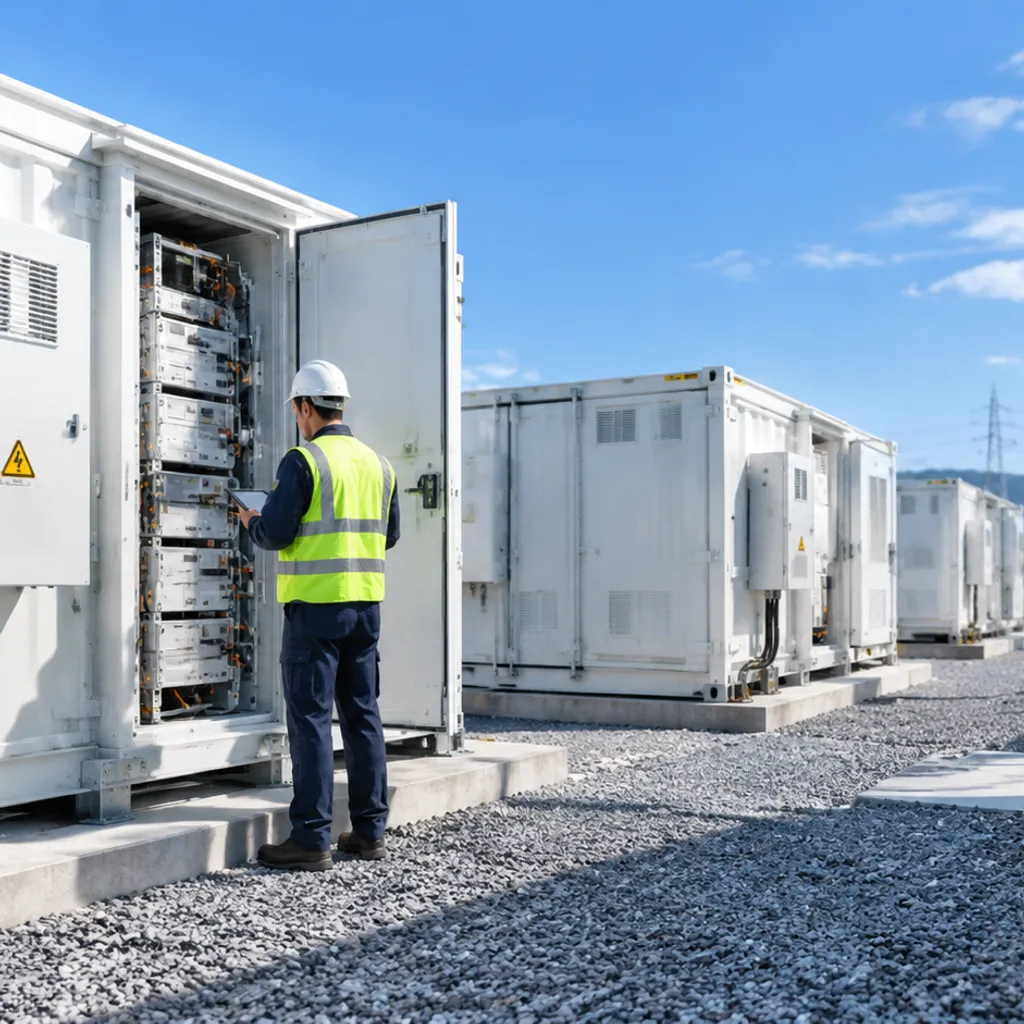
Prevention & Thermal Runaway Early Detection
Early detection stops abnormal thermal events long before conventional fire alarms activate. We integrate intelligent monitoring at every physical tier of the DC block:
- Cell-Level Sensor Telemetry: High-precision temperature and voltage sensors at the module level feed real-time data into the multi-tier BMS to catch localized micro-shorts or over-temperature conditions instantly.
- Early Off-Gas Monitoring: Advanced gas detection modules identify trace electrolyte off-gassing (such as CO, H2, and VOCs) minutes prior to smoke or open flame emergence. Integrating certified battery storage fire detection with off-gas sensors allows automated electrical isolation while the battery remains in an initial venting phase.
- Liquid-Cooling Thermal Containment: Continuous glycol-water circulation prevents hotspot formation across tightly packed cells, keeping cell-to-cell delta-T within strict operational limits.
Fire Suppression & Deflagration Protection Standards (NFPA 855 / UL 9540A)
Our system enclosures comply with strict international fire codes and undergo rigorous large-scale fire testing to protect site assets, adjacent infrastructure, and emergency responders.
| Safety Layer | Engineering Standard / Technology | Action Mechanism |
|---|---|---|
| System-Level Certification | UL 9540 / UL 9540A | Unit-level and installation-level testing proving zero thermal runaway propagation to adjacent racks. |
| Site Compliance | NFPA 855 Standard | Fixed setback clearances, spill containment integration, and dedicated hazard mitigation analysis (HMA). |
| Active Suppression | Clean Agent / Aerosol + Water Deluge | Total-flooding gas suppression (e.g., FK-5-1-12) for rapid flame extinguishment paired with dry-pipe water sprinkler connections for external fire department hookups. |
| Deflagration Venting | NFPA 68 / NFPA 69 Panels | Roof- and side-mounted blast relief panels designed to safely discharge overpressure upwards, mitigating enclosure structural rupture. |
| Emergency Shutdown | Automated Hardware Interlocks (EPO) | Instantaneous DC contactor trip, PCS shutdown, and auxiliary ventilation lockouts upon positive fire loop confirmation. |
By standardizing on NFPA 855 compliant battery storage hardware and validated safety controls, our turnkey engineering ensures straightforward permitting with local Authorities Having Jurisdiction (AHJs) and smooth project underwriting with global insurance carriers.
BESS Application Scenarios & Revenue Stacking
Maximizing the return on investment for an energy storage asset requires intelligent system design that supports multiple use cases. As an experienced battery energy storage EPC contractor, we engineer both utility-scale and distributed storage systems to capture stacked revenue streams while ensuring system reliability and asset longevity.
Front-of-the-Meter (FTM) Utility & Renewable Assets
Our utility-scale BESS EPC projects integrate seamlessly into transmission and distribution networks to optimize asset performance:
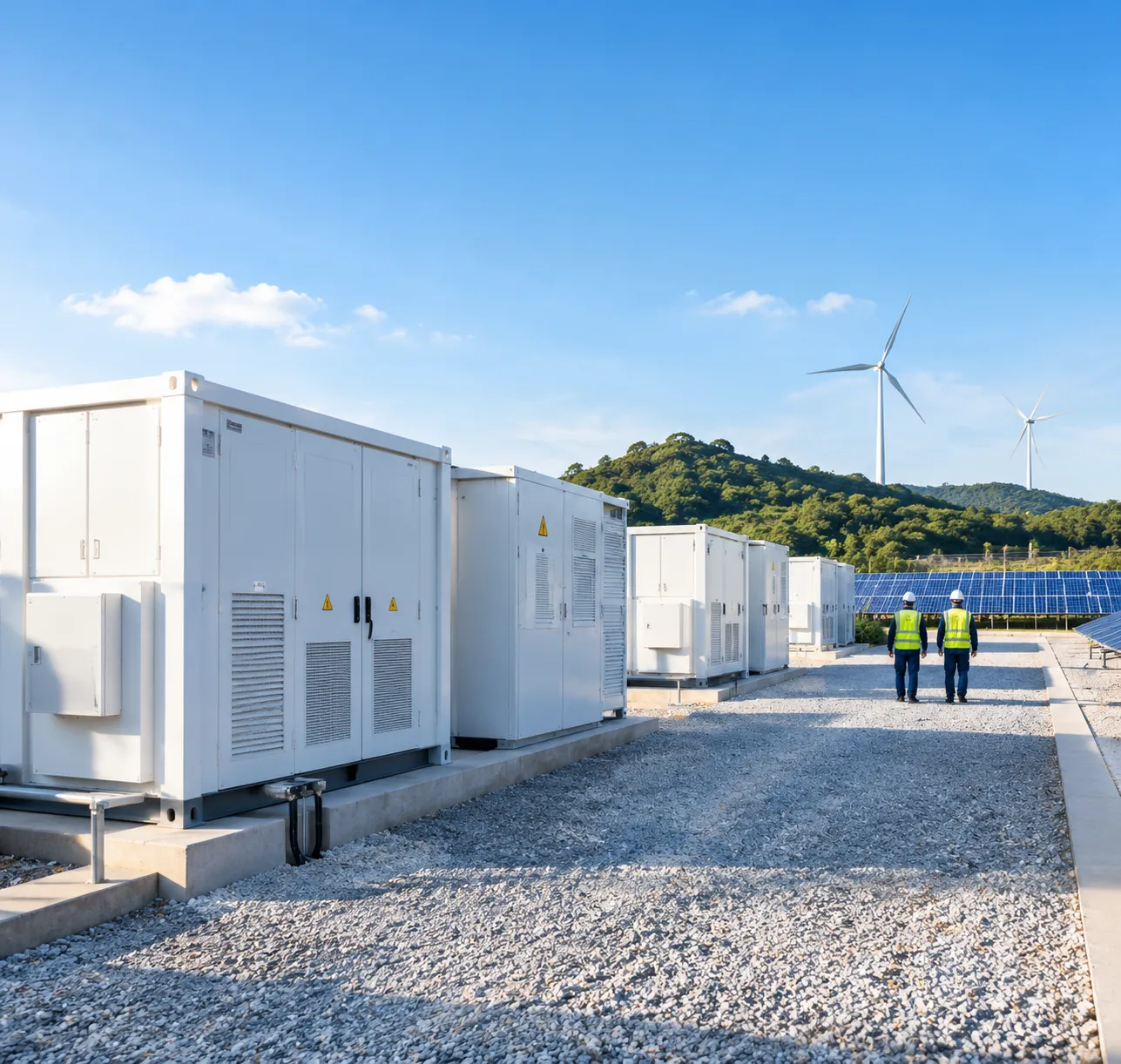
- Renewable Smoothing & Capacity Firming: Eliminating intermittency from co-located solar and wind assets to deliver steady, dispatchable green power to the grid.
- Grid Ancillary Services: Providing sub-second frequency regulation, spinning reserves, and voltage support to meet transmission system operator (TSO) requirements.
- Wholesale Energy Arbitrage: Storing low-cost off-peak or surplus renewable electricity and discharging during high-value peak market hours.
Behind-the-Meter (BTM) Commercial & Industrial Applications
For commercial facilities, manufacturing plants, and microgrids, our turnkey commercial & industrial energy storage systems target site-specific energy challenges:
- Demand Charge Reduction: Utilizing automated peak shaving and load shifting algorithms to lower utility demand charges during peak draw periods.
- Solar Self-Consumption: Storing excess rooftop or ground-mount PV generation for use during high-tariff operational windows.
- Microgrids & Resilient Backup: Transitioning seamlessly to islanded mode during grid disruptions to maintain continuous power for critical operational infrastructure.
Post-Commissioning Asset Management & Lifecycle O&M
24/7 Cloud-Based Monitoring & Predictive Diagnostics
We deploy continuous, cloud-connected supervisory software that tracks system health down to the individual cell level:
- Real-Time Telemetry: Continuous tracking of cell voltages, temperatures, State of Charge (SoC), State of Health (SoH), and Power Conversion System (PCS) operating parameters.
- Predictive Anomaly Detection: Automated algorithms flag subtle thermal anomalies, micro-imbalances in DC strings, or auxiliary component wear before they escalate into unplanned outages.
- Centralized EMS/SCADA Visibility: Seamless integration with our factory energy management solution for real-time monitoring provides asset managers with instant access to round-trip efficiency, revenue tracking, and dispatch readiness metrics.
Preventive Maintenance, SLA Guarantees & Capacity Augmentation
To ensure steady performance and mitigate degradation over a 15–20 year operational timeline, we deliver systematic on-site servicing backed by bankable service level agreements (SLAs):
- Routine Preventive Servicing: Scheduled maintenance protocols covering liquid-cooling fluid levels, HVAC mechanicals, torque testing on electrical terminations, and certified fire suppression inspections.
- Rigorous SLA Guarantees: Performance-backed commitments on system availability, round-trip efficiency (RTE), and rapid on-site emergency dispatch.
- Planned Capacity Augmentation: Modular hardware engineering allows us to add DC capacity in scheduled phases, cost-effectively offsetting cell degradation without requiring full balance-of-plant (BOP) redesigns.
Why Partner with Percentec Energy as Your BESS EPC Contractor
Selecting the right battery energy storage EPC contractor directly impacts your project's commercial viability, grid compliance, and asset lifespan. We combine deep engineering capabilities with turnkey execution to eliminate project risk and accelerate time-to-commercial operation (COD).
Single-Point Accountability Across the Entire Project Lifecycle
We manage the entire deployment process under a unified contract, removing vendor overlap and coordination delays:
- End-to-End Scope: We handle front-end engineering design (FEED), balance of plant (BOP) construction, utility interconnection, and site acceptance testing (SAT).
- Direct Risk Transfer: We absorb integration and schedule risks, ensuring projects meet strict grid-connection deadlines and technical milestones.
- Unified Interface: One dedicated engineering and project management team handles all permits, utility negotiations, and system certifications.
Bankable Supply Chain for Seamless Financing and Underwriting
Securing non-recourse debt and tax equity requires proven, Tier-1 hardware integration and fully auditable safety standards:
- Tier-1 Integration: We source vetted Lithium Iron Phosphate (LiFePO4) battery modules, certified power conversion systems (PCS), and smart energy management platforms (EMS).
- Underwriting Compliance: Deployments meet strict international safety standards, including UL 9540A and NFPA 855, satisfying technical advisors and insurance underwriters.
- Bankable Performance Guarantees: Clear, back-to-back availability, capacity, and round-trip efficiency (RTE) metrics back our EPC contracts.
Optimized Levelized Cost of Storage (LCOS) Engineering
Our system designs minimize lifecycle operational expenditures while protecting revenue-generating capacity:
- Thermal & Electrical Efficiency: Optimized cooling architectures preserve cell health, cut auxiliary loads, and sustain high RTE across varying duty cycles.
- Degradation Mitigation: Intelligent BMS/EMS controls balance charge-discharge profiles to extend asset lifespan.
- Future-Proof Augmentation: Using a scalable battery energy storage system for utilities allows planned capacity additions without major civil or balance-of-plant redesigns.
Technical Frequently Asked Questions (FAQ)
What is the standard lead time for a turnkey BESS EPC project from FEED to COD?
Lead times typically range from 9 to 14 months, depending on interconnection queue position and balance of plant (BOP) procurement timelines:
| Project Phase | Standard Duration | Key Deliverables |
|---|---|---|
| FEED & Engineering | 6–10 Weeks | System sizing, single-line diagrams (SLD), grid impact studies |
| Procurement & Manufacturing | 16–24 Weeks | Tier-1 LFP cells, PCS integration, container assembly |
| Civil & Electrical Construction | 8–12 Weeks | Foundation, switchgear installation, trenching, wiring |
| Commissioning & SAT to COD | 4–6 Weeks | Cold/hot commissioning, grid compliance, COD sign-off |
As an integrated battery energy storage EPC contractor, we mitigate long-lead hardware risks by securing PCS and cell allocations early during initial design phases.
How do we ensure grid compliance with local TSO/DSO requirements?
We handle end-to-end grid interconnection engineering to satisfy strict transmission and distribution system operator codes. Our scope includes:
- Static and Dynamic Grid Modeling: Running full simulations in PSS/E and PSCAD for voltage support, frequency response, and fault ride-through (FRT).
- Power Quality Testing: Managing total harmonic distortion (THD), power factor correction, and reactive power control (Volt/VAR, Frequency/Watt).
- Utility Witness Testing: Executing on-site protocols alongside grid operators to secure final operating permissions and intertie sign-offs for our utility-scale battery storage containers for solar and wind.
What fire protection and safety certifications come standard with our deployments?
Safety is engineered at every layer of our hardware supply chain. All deployments comply with top international safety benchmarks:
- NFPA 855 Compliance: Full compliance with installation standards for stationary energy storage systems, addressing spacing, hazard reviews, and water supplies.
- UL 9540 & UL 9540A: Tested at the cell, module, and container levels to guarantee thermal runaway mitigation and verify deflagration containment.
- Integrated Suppression Systems: Multi-point gas detection (CO, H2, smoke) coupled with clean-agent suppression and targeted water deluge manifolds.
How are battery degradation and augmentation managed over a 15–20 year asset lifespan?
To maintain project capacity without overpaying on upfront capex, we offer structured capacity modeling and mid-life augmentation plans:
- Real-Time Degradation Tracking: Cloud-based telemetry measures actual round-trip efficiency (RTE), cycle count, and state-of-health (SoH) at the rack level.
- Oversizing vs. Augmentation Strategy: We balance initial DC oversizing with planned module additions at Year 7 to 10, keeping the levelized cost of storage (LCOS) optimized throughout project life.
- Drop-In Compatibility: Our standardized DC-bus configurations accommodate next-generation cell densities without redesigning the balance of plant.
What warranties and performance guarantees are backed under the EPC and O&M contract?
Our turnkey agreements unite equipment and field execution under a single accountability model:
- Workmanship Warranty: Full EPC balance-of-plant workmanship coverage for standard warranty periods.
- Capacity & RTE Guarantees: Guaranteed usable energy capacity and round-trip efficiency backed by cell manufacturer warranties.
- Availability SLAs: High system uptime guarantees supported by preventive maintenance and continuous remote diagnostics for both utility installations and commercial and industrial backup power systems.