Formula details
Product Details
Overview
Utility Scale Battery Energy Storage System Manufacturer
High-Density Utility-Scale BESS Overview
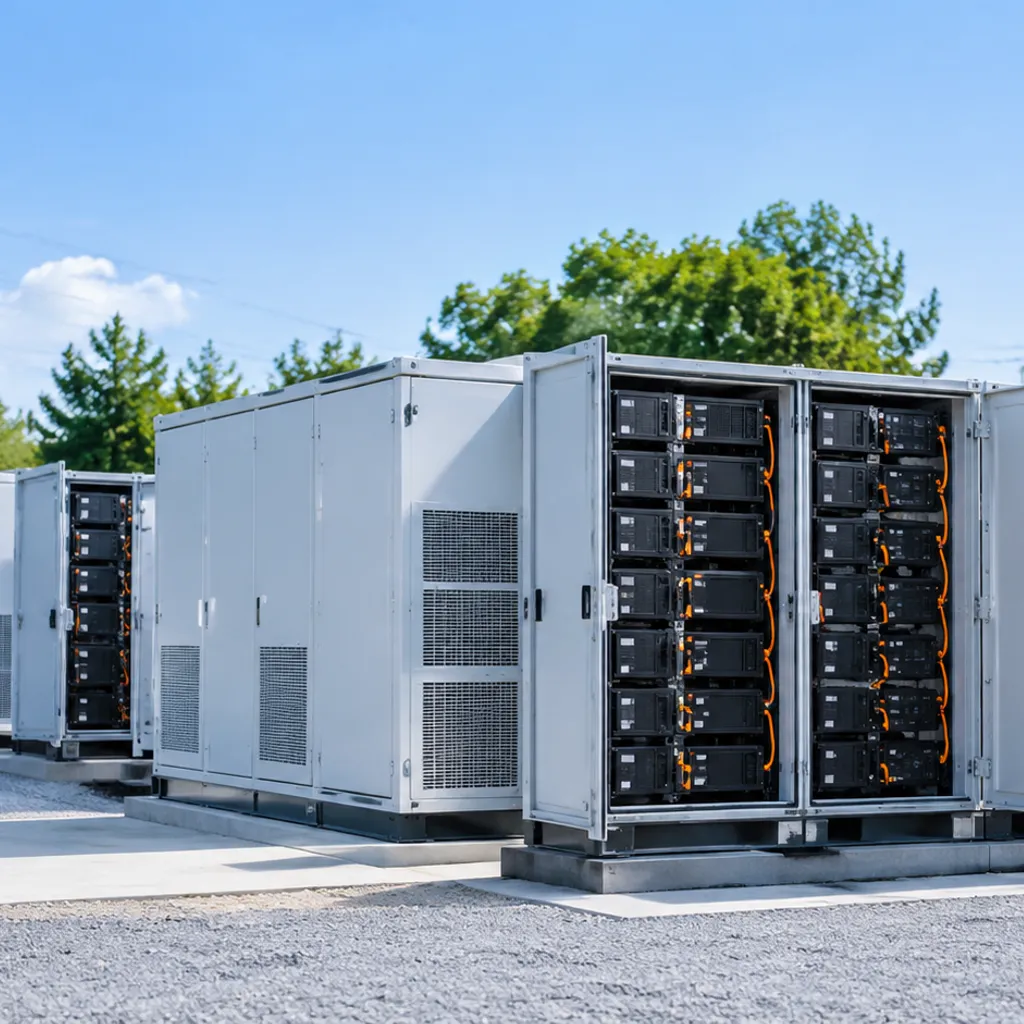
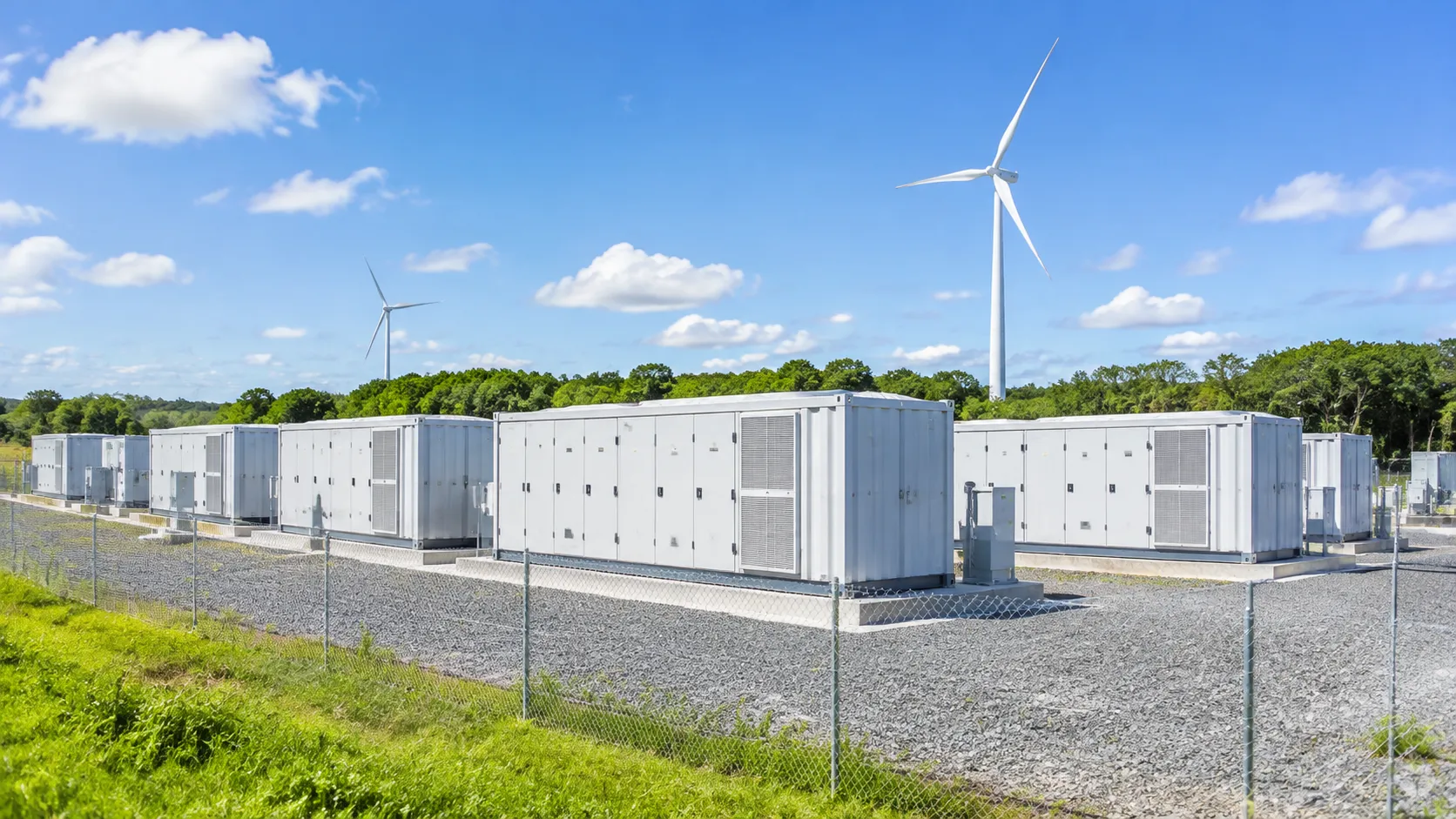
We design, engineer, and manufacture utility-scale battery energy storage systems (BESS) built to stabilize, balance, and reinforce modern electrical grids. Our containerized platforms deliver high energy density within standardized modular footprints, enabling straightforward scaling from standalone multi-megawatt systems to multi-gigawatt-hour (GWh) bulk storage projects.
By vertically integrating advanced battery chemistry, precision liquid cooling, and intelligent power electronics, our utility platforms solve front-of-the-meter integration challenges while reducing balance-of-plant (BOP) complexity.
Modular Architecture: 20ft & 40ft Enclosures
Our manufacturing lines produce factory-integrated, standardized enclosures designed for rapid site deployment:
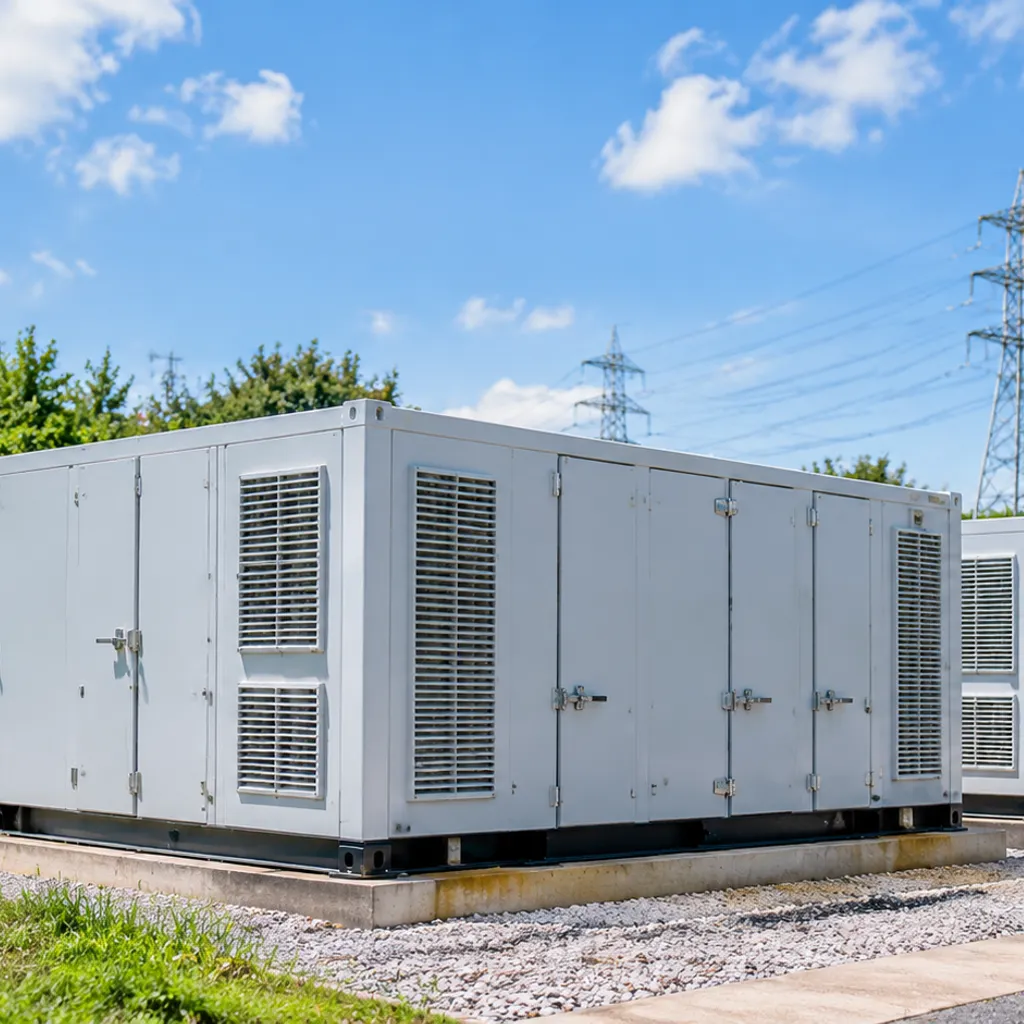
- Modular Form Factors: Pre-assembled in standard 20ft and 40ft ISO container footprints to streamline maritime shipping, highway freight, and civil foundation work.
- System Architectures: Available as standalone high-voltage DC blocks or turnkey AC-integrated energy storage platforms complete with integrated transformers and switchgear.
- Scalability for GWh Infrastructure: Standardized interconnects allow seamless parallel configurations to support large-scale transmission and distribution nodes.
Core Battery Chemistry & System Integration
Reliability and operational lifespan govern our system design. We vertically integrate all core components to ensure seamless interaction across electrical and thermal layers:
- Lithium Iron Phosphate (LFP) Chemistry: Selected for proven cyclic durability, structural integrity, and superior intrinsic thermal stability under rigorous duty cycles.
- Closed-Loop Liquid Thermal Management: Dedicated liquid-cooling circuits regulate core module temperatures, maintaining system-wide temperature variance within ≤2.5°C. This uniformity significantly mitigates uneven cell degradation and extends operational service life.
- Three-Tier Battery Management System (BMS): Provides multi-layer operational safety via cell-, module-, and rack-level monitoring, continuous passive/active balancing, and predictive fault diagnostics.
- Integrated PCS & EMS: Factory-coupled Power Conversion Systems (PCS) and onboard Energy Management Systems (EMS) deliver rapid sub-second to millisecond dispatch response times for critical grid stabilization routines.
| System Parameter | Technical Baseline |
|---|---|
| Footprint Standards | 20ft / 40ft High-Cube ISO Containers |
| Cell Chemistry | Lithium Iron Phosphate (LFP) |
| Thermal Control | Dedicated closed-loop liquid cooling |
| Thermal Uniformity | ≤2.5°C across all modules |
| Architecture Options | Modular DC Blocks or AC Turnkey Systems |
| Control Integration | Native 3-Tier BMS + Integrated PCS/EMS |
Industrial Safety and Multi-Layer Hazard Mitigation
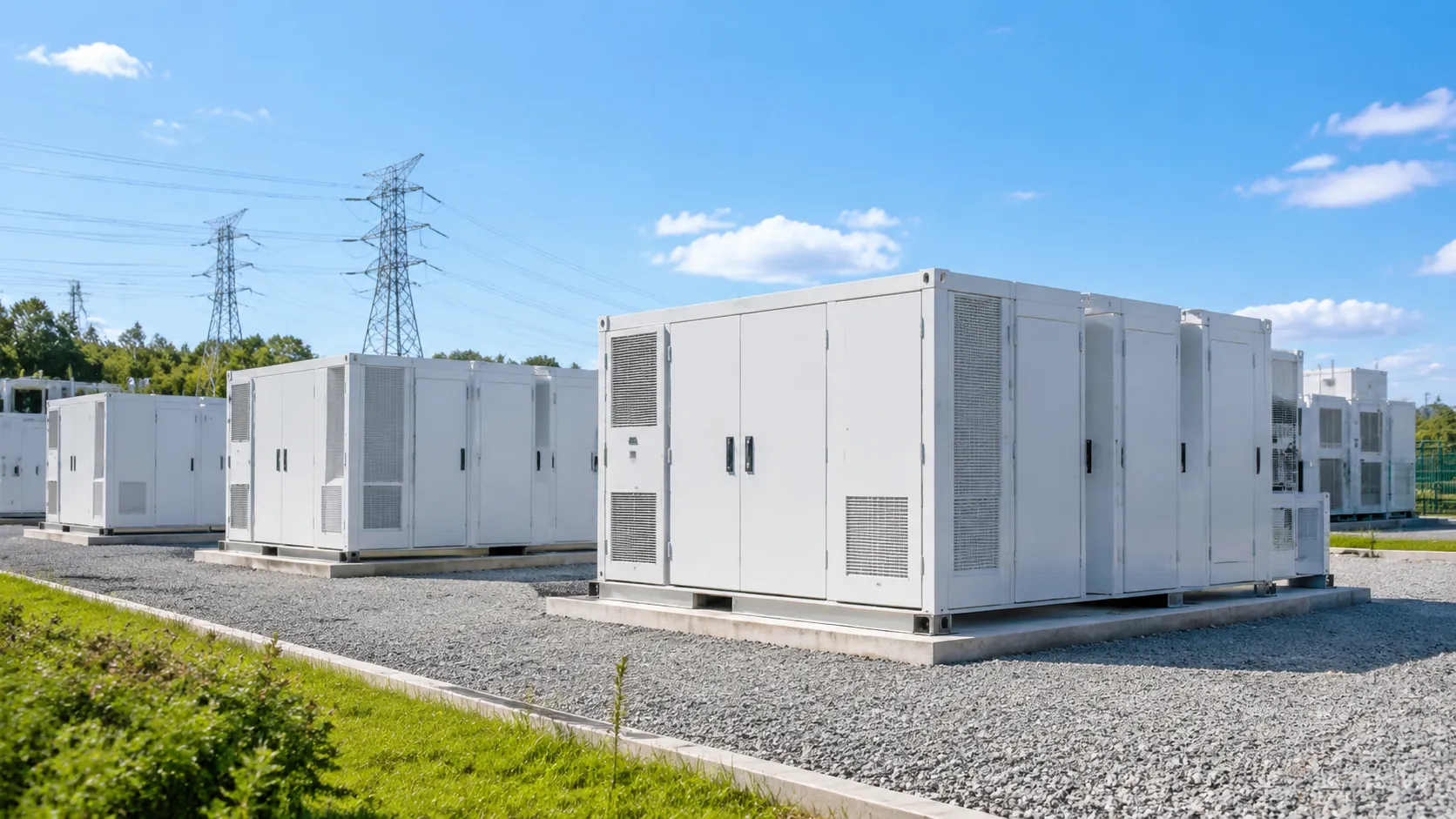
Module-Level Isolation and Fire Prevention
- Thermal Runaway Barriers: High-performance aerogel insulation and ceramic partition plates isolate individual cells, preventing thermal propagation across the module rack.
- Liquid-Cooled Thermal Control: Our liquid-cooled battery energy storage systems maintain uniform cell temperatures, preventing hot spots that trigger degradation or thermal stress.
Environmental Monitoring and Gas Purge Systems
- Multi-Gas Detection Arrays: Continuous sensing tracks hydrogen ($H_2$), carbon monoxide ($CO$), and optical smoke density to detect early off-gassing long before temperature spikes occur.
- Automated Exhaust and Ventilation: Detection triggers high-volume exhaust dampers to purge combustible gases, keeping the enclosure atmosphere well below lower flammability limits (LFL).
Active Fire Suppression and Explosion Relief
- Clean Agent Suppression: Specialized gaseous suppression (Novec 1230 / FM-200) floods the internal volume to extinguish electrical fires within seconds without leaving residue.
- Secondary Water Deluge: Integrated dry-pipe sprinkler systems interface directly with site water supplies to provide structural boundary cooling if external exposure occurs.
- Deflagration Panels: Roof-mounted pressure relief panels engineered to NFPA 68 and NFPA 69 standards direct overpressure upward, safeguarding operations personnel and neighboring battery blocks.
Testing and Codes Compliance
We design all grid-scale equipment in full accordance with recognized safety protocols. You can examine our technical breakdown of BESS protection and safety requirements standards to see how our engineering satisfies project risk profiles:
| Standard | Scope and Verification |
|---|---|
| UL 1973 | Cell, module, and battery pack electrical/mechanical safety certification |
| UL 9540 | Full system-level safety certification for utility energy storage installations |
| UL 9540A | Large-scale fire test reports proving zero thermal runaway propagation |
| NFPA 855 | Enclosure spacing, fire protection protocols, and site setback compliance |
Grid Applications and Operational Dispatch Modes
Our utility scale battery energy storage system manufacturer solutions are designed to support complex grid requirements and diverse operational dispatch modes. We provide the technical backbone for modern energy infrastructure through the following applications:
- Renewables Integration: We facilitate capacity firming for co-located solar and wind projects, smoothing intermittent generation to match load requirements.
- Ancillary Grid Services: Our systems provide high-speed support, including Fast Frequency Response (FFR) and Frequency Containment Reserve (FCR), to maintain grid stability.
- Transmission and Distribution Support: We assist grid operators with peak shaving, transmission line deferral, and black start capabilities to ensure reliable power delivery.
- Market Optimization: Our technology enables energy arbitrage and revenue stacking, allowing operators to participate effectively in competitive capacity markets.
For those planning the deployment of utility scale battery energy storage system manufacturer solutions, our systems are engineered to handle these high-demand operational cycles with precision and reliability.
Utility Storage Technical Specifications
| Specification Parameter | Standard Platform Rating |
|---|---|
| System Configurations | High-voltage DC enclosures & turnkey AC-integrated blocks |
| Dispatch Flexibility | 0.25C to 1C (1-hour, 2-hour, and 4-hour configurations) |
| System Round-Trip Efficiency (RTE) | High system-level RTE with optimized parasitic loads |
| Operating Ambient Temperature | -30°C to +55°C |
| Enclosure Protection | IP55 / NEMA 3R enclosure with C5-M marine-grade coating |
| Control & Communication Protocols | Modbus TCP, DNP3, IEC 61850 |
Operational Performance & Environmental Resilience
Our containerized platforms are engineered to meet strict utility requirements without excessive balance of plant (BOP) overhead:
- Configurable Discharge Rates: Supports 1-hour, 2-hour, and 4-hour discharge windows to match wholesale arbitrage, peak shaving, and capacity firming needs. For projects requiring specific duration packaging, platforms such as our 930 kW 4-hour battery energy storage system demonstrate standard utility-oriented layout dimensions.
- Low Parasitic Consumption: Closed-loop liquid cooling targets heat at the module level, reducing auxiliary load consumption and maintaining high system-level round-trip efficiency during heavy cycling. Detailed structural integration details are covered in our energy storage system architecture and design guide.
- Harsh Environment Rating: Designed for deployment across extreme thermal zones (-30°C to +55°C). Certified IP55/NEMA 3R housings with heavy-duty C5-M anti-corrosion exterior coatings resist salt-fog, dust ingress, and industrial ambient conditions.
- Substation SCADA Compatibility: Native integration with standard utility protocols—including Modbus TCP, DNP3, and IEC 61850—ensures direct interoperability with transmission operators, EMS platforms, and plant-level controllers.
Manufacturing Standards and Quality Assurance
As a dedicated utility scale battery energy storage system manufacturer, we maintain rigorous control over every stage of production to ensure long-term grid reliability. Our commitment to excellence begins with a vertically integrated approach, covering precision cell matching, module packing, and automated container assembly.
- End-to-End Traceability: We utilize comprehensive tracking protocols for every component, documenting the lifecycle from initial cell delivery to the final integrated skid.
- Factory Acceptance Testing (FAT): Every system undergoes stringent validation, including full-power load cycling and high-voltage insulation verification to confirm performance benchmarks before shipment.
- Turnkey Commissioning: We provide pre-engineered, modular assembly processes designed to minimize Balance of Plant (BOP) site labor and accelerate project timelines.
By leveraging our BESS company for utility-scale turnkey storage systems, developers benefit from standardized manufacturing quality that meets the rigorous demands of front-of-the-meter (FTM) storage environments. Our facility ensures that each grid level energy storage system is built to withstand the operational stressors of modern, high-capacity utility infrastructure.
Lifecycle Services, Warranties, and EPC Support
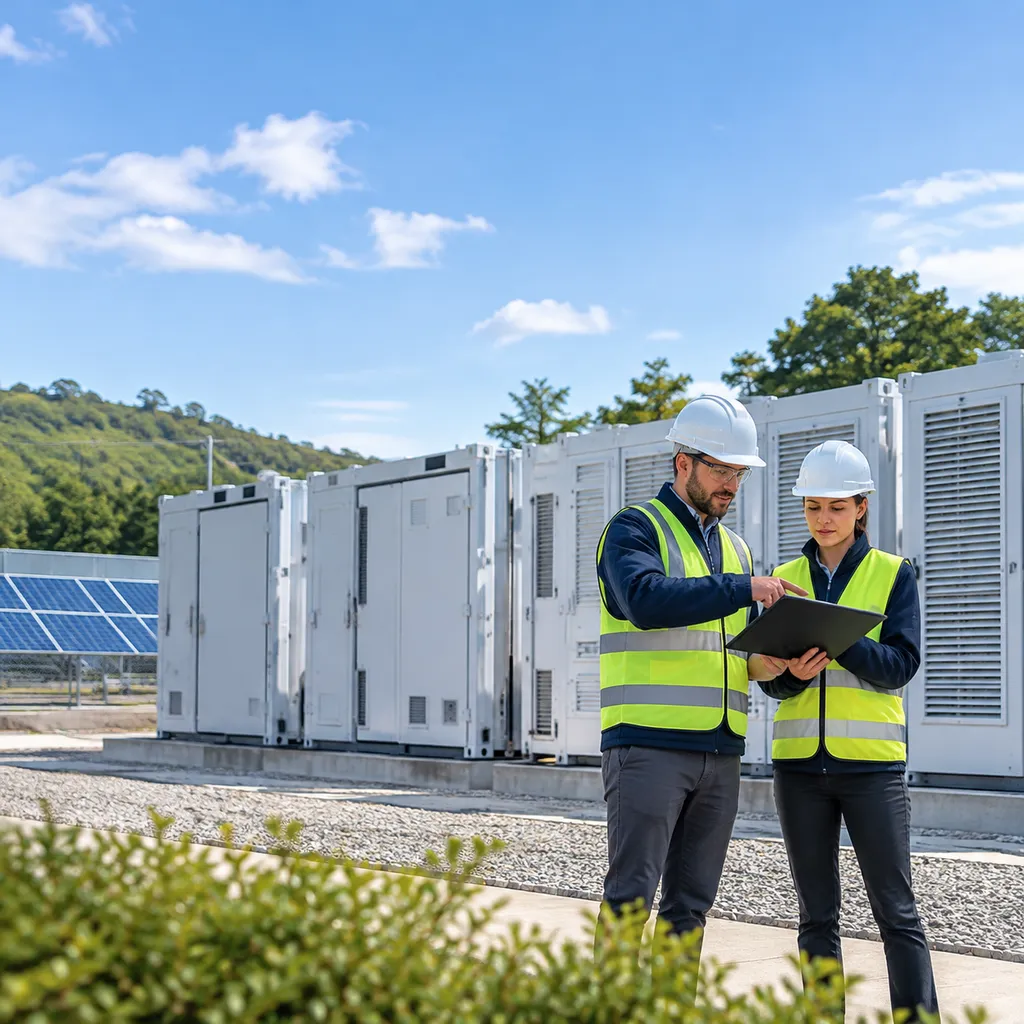
As a dedicated utility scale battery energy storage system manufacturer, our engagement continues long after hardware delivery. We partner directly with developers and engineering teams, delivering dedicated solutions for EPC contractors to de-risk installation schedules, streamline grid interconnects, and ensure consistent asset uptime over multi-decade operating horizons.
Turnkey Deployment and Interconnect Verification
We eliminate integration friction between the balance of plant and factory-assembled hardware. Our field service engineers oversee on-site deployment to ensure systems operate safely and within defined warranty boundaries:
- Engineering Oversight: Comprehensive review of foundation layouts, medium-voltage skid matching, and auxiliary power supplies.
- Site Commissioning: End-to-end hot and cold commissioning, including DC insulation resistance checks and full-loop liquid thermal cooling tests.
- Interconnect Verification: Grid compliance support, validation of power conversion system (PCS) response curves, and seamless communication mapping via Modbus TCP, DNP3, or IEC 61850 protocols.
- Role Alignment: Clear operational boundaries established across our teams, whether acting as pure hardware providers or coordinating through standard BESS integrator vs EPC contractor vs equipment supplier project frameworks.
Bankable Warranties and Long-Term SLAs
Utility-scale energy storage assets demand predictable revenue models and strict degradation management:
| Service / Coverage Area | Operational Metric / Deliverable |
|---|---|
| Linear Degradation Warranty | Multi-year guaranteed capacity retention baseline tied directly to your dispatch profiles and daily equivalent full cycles (EFC). |
| System Availability SLA | Guaranteed availability targets up to 98%, backed by round-the-clock remote monitoring and rapid response protocols. |
| Thermal Loop Integrity | Liquid cooling loop performance standards to prevent thermal imbalance across high-density battery racks. |
Preventative Maintenance and Spare Parts Logistics
Our field support architecture limits downtime and keeps projects operating at peak efficiency:
- Scheduled Preventative Maintenance: Routine inspections covering coolant fluid quality, valve seals, HVAC performance, torque testing on high-voltage busbars, and safety sensor recalibrations.
- Rapid Field Support: Qualified technicians dispatched for rapid on-site troubleshooting and diagnostics.
- Critical Spares Management: Strategic regional stocking of PCS components, battery management system (BMS) controllers, contactors, fuses, and pump assemblies to minimize Mean Time to Repair (MTTR).
Frequently Asked Questions for Project Developers
What is the typical manufacturing and delivery lead time for utility-scale BESS platforms?
As a vertically integrated utility scale battery energy storage system manufacturer, our production schedules reflect full-lifecycle oversight from cell sorting to integrated system assembly:
- Engineering & Submittals: 4 to 6 weeks for site-specific electrical single-line diagrams (SLDs), communication topologies, and foundation interface plans.
- Factory Production: 16 to 24 weeks depending on overall project capacity, component pipeline, and custom configuration requirements.
- Factory Acceptance Testing (FAT): 1 to 2 weeks for full-power functional validation, safety lockout verification, and insulation testing.
- Logistics & Delivery: Coordinated in staged blocks directly to the project substation or pad to align with your Balance of Plant (BOP) schedule.
How does liquid cooling reduce total cost of ownership (TCO) compared to air cooling?
Our liquid-cooled battery energy storage systems actively stabilize cell operating environments, directly tackling degradation and auxiliary overhead:
| Operational Metric | Air Cooling Systems | Our Liquid-Cooled Architecture |
|---|---|---|
| Cell Temperature Uniformity | Typically ΔT ≤ 5°C to 8°C | Precision balanced at ΔT ≤ 2.5°C |
| Auxiliary Power Consumption | High parasitic fan loads | Up to 30% reduction in auxiliary power draw |
| Volumetric Energy Density | Lower due to airflow spacing | Higher density footprint; saves pad space |
| Asset Service Life | Accelerated degradation on hot spots | Extended cyclic longevity with linear fade |
By preventing localized hot spots, our liquid thermal management maximizes throughput, preserves multi-year project capacity guarantees, and reduces ongoing operational expenses.
How do your systems comply with NFPA 855 setback and separation requirements?
Standard NFPA 855 guidelines prescribe 10-foot separation between outdoor energy storage containers and adjacent exposures. We assist developers in achieving reduced separation distances through verified safety compliance:
- UL 9540A Unit-Level Data: Comprehensive fire test reports validating that module-level thermal events do not propagate to adjacent units or cause external flaming.
- Deflagration Venting: Enclosures engineered to meet NFPA 68 standards for deflagration venting and NFPA 69 for explosion prevention.
- Hazard Mitigation Analysis (HMA): Project-specific safety dossiers submitted for local Authority Having Jurisdiction (AHJ) approval to streamline footprint siting.
When assessing how utility-scale battery storage providers compared perform in real-world permitting, validated UL 9540A testing remains the primary requirement for reducing footprint setbacks safely.
Do you offer both AC-coupled and DC-coupled utility system architectures?
Yes. We manufacture both configurations to suit front-of-the-meter (FTM) use cases and co-located generation facilities:
- Turnkey AC-Coupled Platforms: Engineered with pre-integrated power conversion systems (PCS) and skid transformers, ideal for grid-level ancillary services, transmission line deferral, and standalone capacity dispatch.
- High-Voltage DC Blocks: Optimized for direct coupling with central solar inverters to capture clipped energy in PV-plus-storage facilities, such as our dedicated lithium battery energy storage system for solar applications.
What engineering documentation and test data are supplied for local AHJ approvals?
We supply an exhaustive technical permitting package with every contracted system:
- Certification Reports: UL 9540 system listing and third-party UL 9540A test summaries.
- Safety & Compliance Plans: System-level Hazard Mitigation Analysis (HMA), Emergency Operations Plans (EOP), and Safety Data Sheets (SDS).
- Electrical & Mechanical Prints: Stamped container layouts, foundation loading specs, anchor bolt calculations, and electrical schematics.
- Factory Test Records: Serialized Factory Acceptance Testing (FAT) documentation, including dielectric withstand tests and BMS communication audits prior to shipping.