Formula details
Product Details
Overview
Turnkey Battery Energy Storage System Architecture & Subsystems
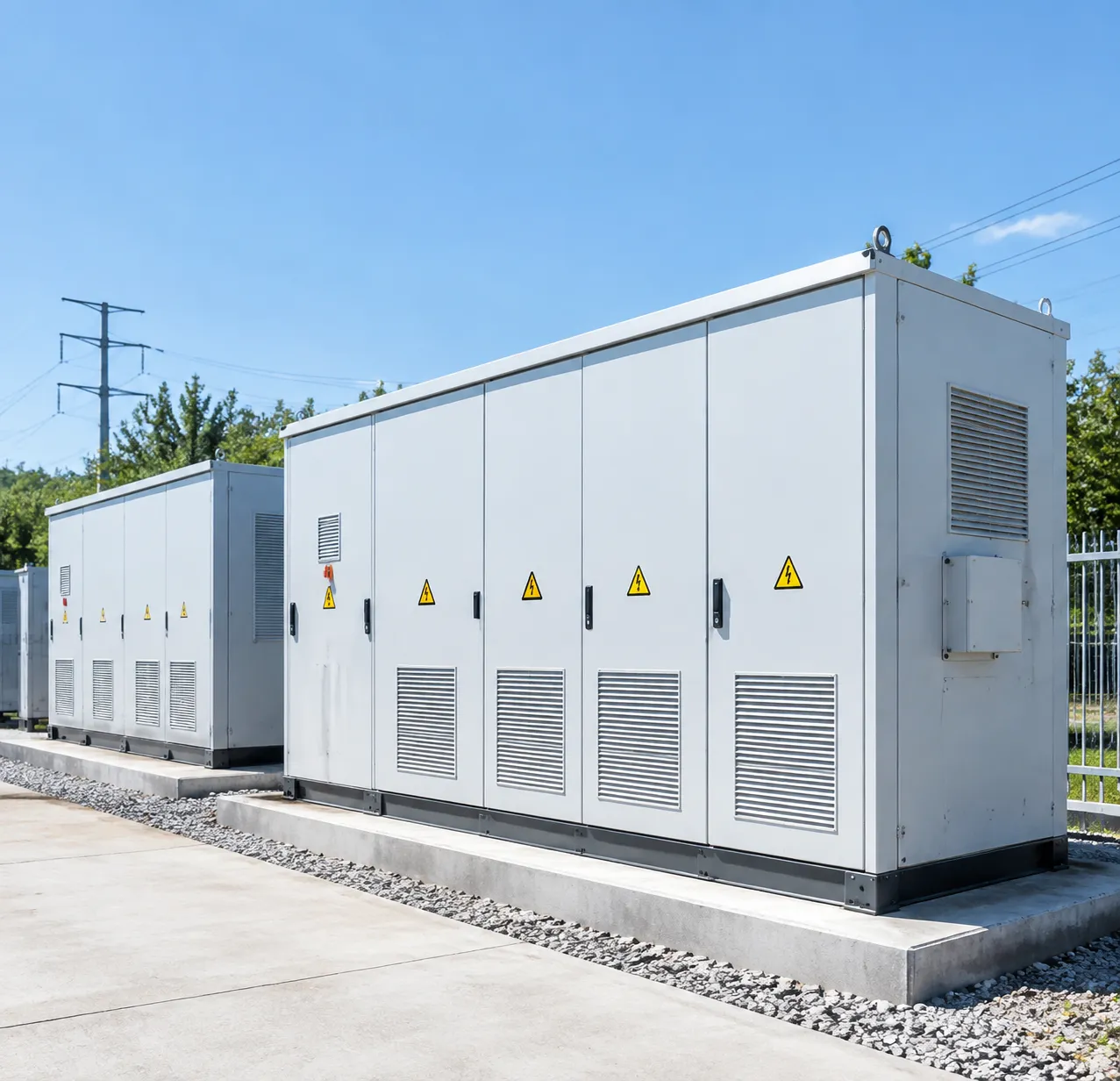
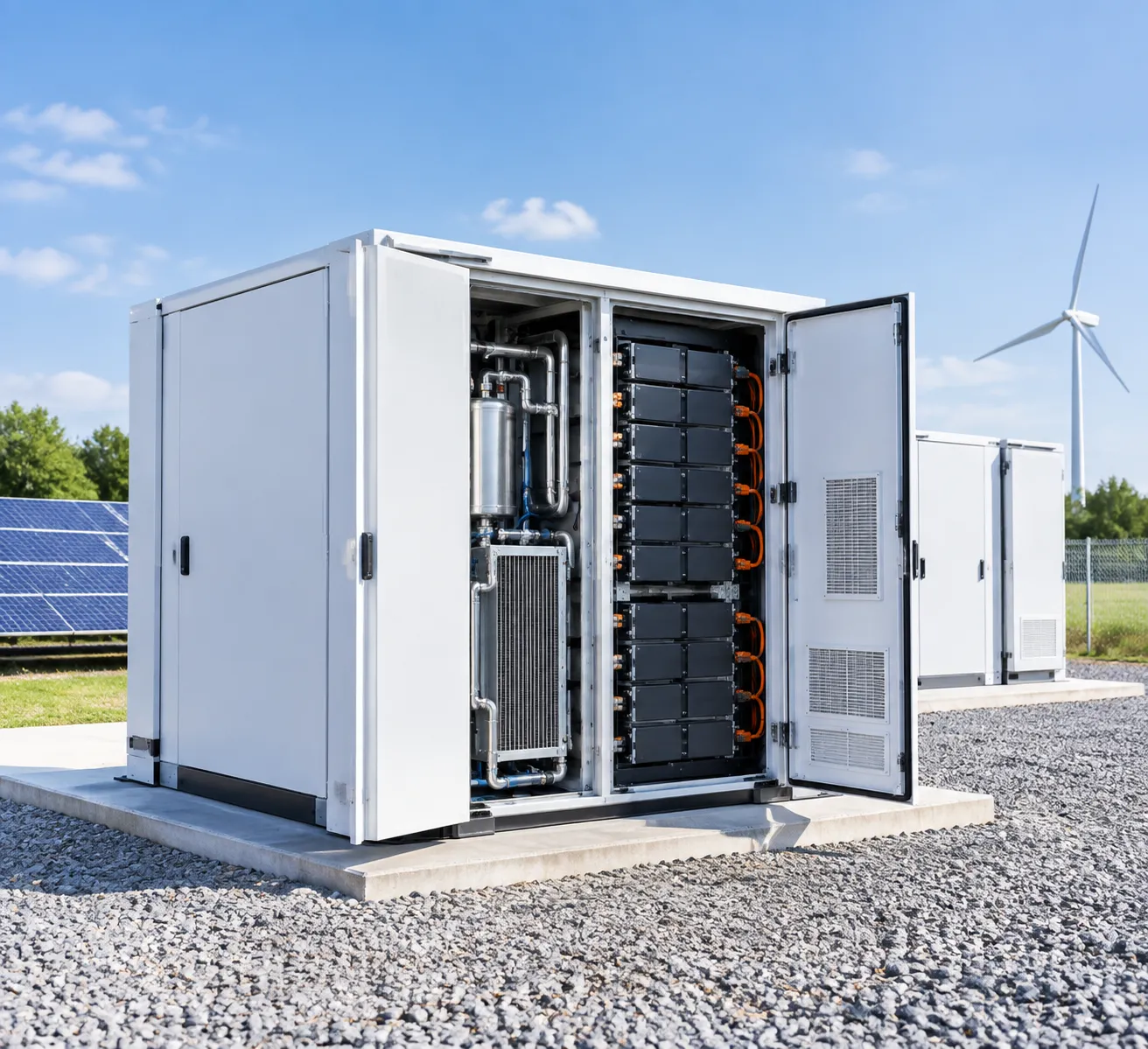
We engineer our turnkey battery energy storage system architectures as fully integrated, factory-assembled platforms designed for rapid deployment and minimal on-site balance-of-plant (BOP) work.
Tier-1 LFP Chemistry and Modular DC Battery Blocks
We standardize on Tier-1 Lithium Iron Phosphate (LFP) chemistry across our all-in-one battery energy storage systems to maximize thermal stability, cycle longevity, and total cost of ownership (TCO).
Modular DC Architecture: Scalable battery racks and field-replaceable DC blocks support flexible voltage and capacity sizing without complex re-engineering.
Cell Safety & Longevity: High chemical resilience against thermal runaway, delivering over 6,000 to 8,000 cycles at 80% Depth of Discharge (DoD).
Granular Battery Management System (BMS): Three-tier BMS architecture monitors voltage, current, and temperature at the cell, module, and rack levels with real-time balancing.
Bi-Directional Power Conversion Systems (PCS) and Inverter Topology
Our power conversion architecture utilizes high-efficiency bi-directional PCS units engineered for dynamic grid-tied and off-grid performance.
Flexible Inverter Topologies: Available in central or modular string PCS configurations to optimize availability and minimize single-point failure risks.
Four-Quadrant Operation: Delivers full active and reactive power (P-Q) control to support power factor correction, voltage stability, and frequency support.
Grid-Forming Capabilities: Native support for both grid-following and grid-forming modes, enabling virtual synchronous generator (VSG) behavior, seamless microgrid islanding, and black-start execution.
Intelligent Closed-Loop Liquid Cooling Thermal Management
To ensure uniform cell degradation and maximize round-trip efficiency (RTE), we implement closed-loop liquid cooling across all high-density DC enclosures.
Uniform Temperature Distribution: Maintains cell-to-cell temperature deviations within 2.5°C across the entire battery rack.
Auxiliary Power Optimization: Variable-speed pumps and intelligent fan cycling lower parasitic loads by up to 30% compared to traditional air-cooled enclosures.
Extended Asset Lifespan: Consistent thermal regulation suppresses cell hot spots, directly extending calendar and operational lifespan in extreme climates.
Multi-Layer Fire Detection, Suppression, and Deflagration Mitigation
Safety is integrated into every mechanical and electrical layer of our factory-integrated battery storage containers.
Multi-Stage Detection: Combines early off-gas sensors (hydrogen, carbon monoxide), optical smoke detectors, and rate-of-rise heat sensors for early-stage fault isolation.
Active Fire Suppression: Total flooding clean-agent or aerosol suppression systems, backed by integrated dry-pipe water deluge systems for emergency fire department hookups.
Deflagration Venting: Certified structural blast relief panels and automated exhaust systems vent combustible off-gases before explosive thresholds are reached.
Integrated Energy Management System (EMS) and SCADA Edge Control
Our turnkey energy storage solution features an embedded edge controller paired with an industrial-grade EMS and SCADA interface for autonomous local optimization and secure remote dispatch.
Sub-Second Edge Response: Millisecond-level telemetry execution for fast frequency response, microgrid balancing, and dynamic curtailment mitigation.
Standard Industrial Protocols: Native support for Modbus TCP/IP, DNP3, IEC 60870-5-104, and IEC 61850 for integration with utility networks and industrial distributed control systems (DCS).
Bankable Monitoring: Comprehensive cloud and on-premise monitoring dashboards provide real-time state of health (SOH), state of charge (SOC), revenue logging, and predictive maintenance alerts.
Turnkey Subsystem Integration Matrix
| Subsystem | Architecture & Components | Direct Operational Impact |
|---|---|---|
| DC Battery Block | Tier-1 LFP cells, 3-tier BMS, modular DC racks | High thermal safety, zero cobalt risk, long cycle life |
| PCS Inverter | Bi-directional, multi-string / central topology | 98.5%+ efficiency, sub-cycle P-Q control, black-start ready |
| Thermal System | Closed-loop liquid cooling distribution | Cell ΔT ≤ 2.5°C, lower parasitic draw, uniform cell aging |
| Safety & Fire | Multi-gas sensing, clean-agent suppression, blast panels | Rapid thermal runaway mitigation and localized safety |
| EMS & SCADA | Edge-embedded controller with multi-protocol support | Autonomous asset dispatch and real-time utility telemetry |
Turnkey Engineering and Project Execution Scope
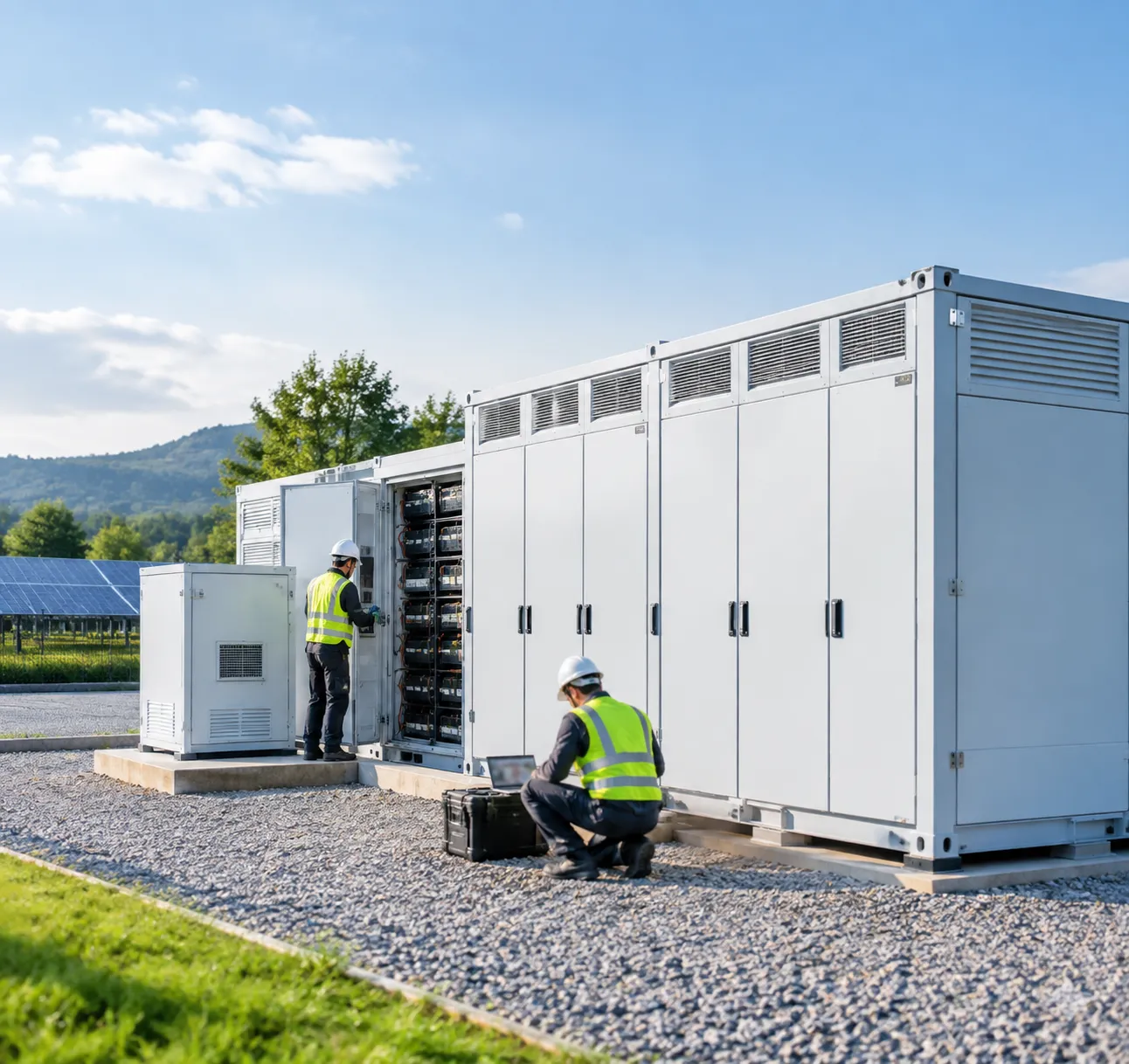
Site Load Analysis, System Modeling, and Interconnection Feasibility
Before deploying hardware, our engineering team performs comprehensive site evaluations to eliminate technical risk:
Load Profile & Dispatch Modeling: Detailed analysis of 15-minute or hourly interval meter data to size power (MW) and energy (MWh) accurately.
Interconnection Studies: Power flow simulations, short-circuit calculations, and coordination with local utilities to secure grid approvals.
Layout & Civil Engineering: Space optimization, thermal clearance design, and setback planning based on our energy storage system architecture and design guide.
Factory-Integrated Assembly and Factory Acceptance Testing (FAT)
We minimize costly on-site labor and unpredictable field conditions by assembling our systems in a controlled factory environment. Every pre-assembled energy storage enclosure undergoes rigorous FAT protocols:
Full mechanical integration of DC battery racks, liquid cooling loops, PCS units, and auxiliary switchgear.
End-to-end pre-commissioning of the BMS, EMS edge controllers, and fire suppression loops.
Complete factory functional testing to verify communication protocols, thermal stability, and safety tripping before dispatch.
Turnkey Logistics, Mechanical Landing, and Electrical Integration
We handle heavy logistics and field installation to deliver a ready-to-run asset:
Specialized Heavy-Haul Logistics: Route surveys, DOT permits, and coordinated site delivery for containerized footprints.
Rigging and Pad Landing: Precision crane placement onto pre-cast or poured-in-place concrete foundations.
Interconnection Connections: MV/LV cable landing, auxiliary power tie-ins, grounding grid connections, and fiber optic communication wiring for utility-scale battery storage containers for solar and wind.
| Project Phase | Key Deliverables & Activities | On-Site Impact |
|---|---|---|
| Pre-Engineering | Feasibility analysis, grid modeling, permit drawings | Zero site disturbance |
| FAT & Manufacturing | Fully integrated enclosure, factory burn-in testing | Off-site quality verification |
| Delivery & Rigging | Pad placement, structural anchor bolting | 1–3 days per unit |
| Electrical Integration | AC/DC termination, switchgear hookup, SCADA ties | Minimal field wiring |
| Commissioning (SAT) | Utility witness testing, energization, performance sign-off | Direct path to COD |
Site Acceptance Testing (SAT), Energization, and Utility Commissioning
Field commissioning validates that your turnkey energy storage solution performs seamlessly under real-world grid conditions:
Cold & Hot Commissioning: Insulation resistance checks, torque verification, loop checks, and safe busbar energization.
Utility Witness Testing: Inverter compliance validation for voltage/frequency support, ramp-rate controls, and anti-islanding.
SCADA & EMS Operational Tuning: End-to-end telemetry verification with local grid operators, plant controllers, and remote monitoring centers.
Long-Term Service Agreements (LTSA) and Augmentation Planning
We protect your long-term return on investment with structured lifecycle services:
Preventative & Corrective O&M: Routine liquid coolant inspections, filter replacements, calibration of safety sensors, and 24/7 remote diagnostic support.
Guaranteed Availability & Capacity: Comprehensive performance warranties covering energy capacity retention, round-trip efficiency, and system uptime.
Multi-Year Capacity Augmentation: Engineered modular DC block expansion plans to offset standard cell degradation and maintain target energy output across the full 15- to 20-year project lifespan.
Operational Modes and Target Applications for Turnkey Battery Energy Storage Systems
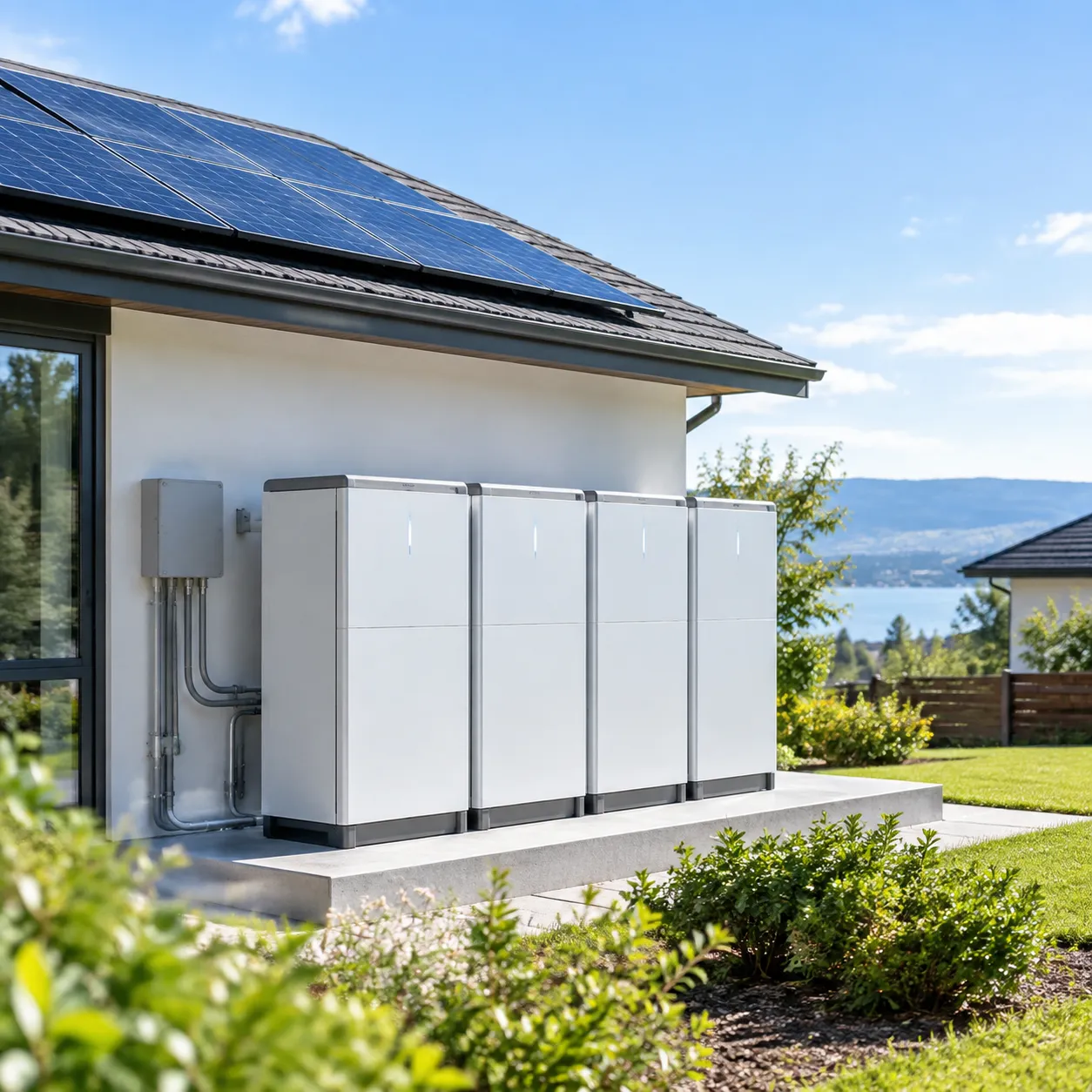
Commercial and Industrial Peak Shaving and Demand Management
Utility demand charges and volatile Time-of-Use (TOU) tariffs can represent up to 50% of a facility's monthly electricity bill. Our commercial and industrial (C&I) BESS solutions automate power delivery to reduce these overheads:
Demand Charge Reduction: The system discharges automatically during peak consumption spikes to suppress meter demand thresholds. Evaluating the proven benefits of peak shaving for lower energy costs allows facilities to target rapid project payback.
Energy Arbitrage: Stores low-cost power during off-peak hours or from on-site renewables and discharges during peak-rate periods.
Power Quality Regulation: Corrects voltage dips, sags, and power factor imbalances to protect sensitive industrial loads.
Renewable Co-Location, Power Smoothing, and Curtailment Mitigation
Connecting our turnkey energy storage solution alongside commercial solar PV or wind assets turns intermittent green energy into steady, dispatchable power:
Generation Ramp-Rate Smoothing: Buffers sudden solar drops caused by cloud cover or fluctuating wind speeds.
Curtailment Prevention: Captures excess generation when local production exceeds interconnection export limits, storing energy for later use rather than wasting it.
Capacity Firming: Delivers predictable, contract-compliant energy blocks to the local grid or facility.
Microgrid Resilience, Seamless Islanding, and Black-Start
For manufacturing plants, data centers, and remote operations where downtime is not an option, our turnkey microgrid battery storage platform delivers complete energy independence. Pairing facility operations with reliable commercial and industrial backup power systems provides continuous operational security:
Sub-20ms Transfer Times: High-speed static transfer switches isolate the local microgrid during utility outages without dropping sensitive loads.
Black-Start Capability: Grid-forming inverters re-energize local circuits and synchronize auxiliary generators without needing an active utility reference voltage.
Generator Optimization: Supplements diesel or gas gensets to run engines at peak efficiency, cutting fuel consumption and maintenance cycles.
Utility Ancillary Services and Grid Stabilization
For front-of-the-meter assets, our utility-scale turnkey energy storage systems respond instantly to wholesale market signals and grid support commands:
Fast Frequency Response (FFR): Delivers full power injection or absorption in milliseconds to stabilize grid frequency variations.
Spinning Reserves: Supplies immediate capacity on demand during sudden transmission or generator trips.
Voltage Support (Volt/VAR Control): Injects or absorbs reactive power dynamically to maintain transmission voltage stability.
Standard Product Configurations and Technical Specifications
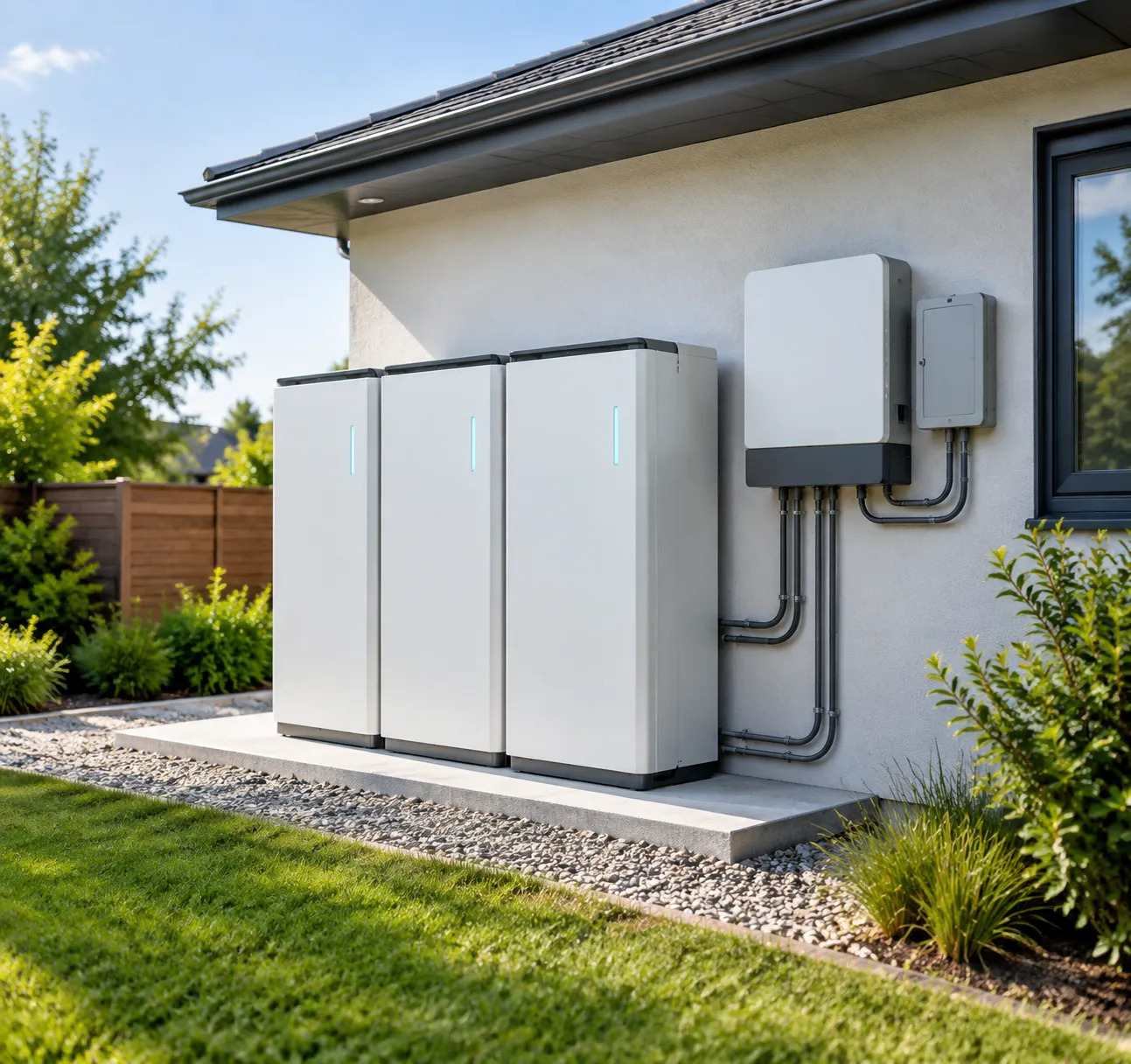
Compact C&I Cabinet Systems (200 kWh – 500 kWh)
Engineered for space-constrained commercial and industrial facilities, our compact cabinet systems provide decentralized power management with zero structural overhead.
Target Applications: Demand charge management, backup power, EV fast-charging support, and behind-the-meter solar optimization.
Architecture: Integrated all-in-one enclosure housing LFP battery modules, bi-directional inverter, HVAC/liquid cooling, and multi-tier aerosol fire protection.
Footprint: Small pad footprint suitable for placement directly adjacent to facility switchgear or parking structures.
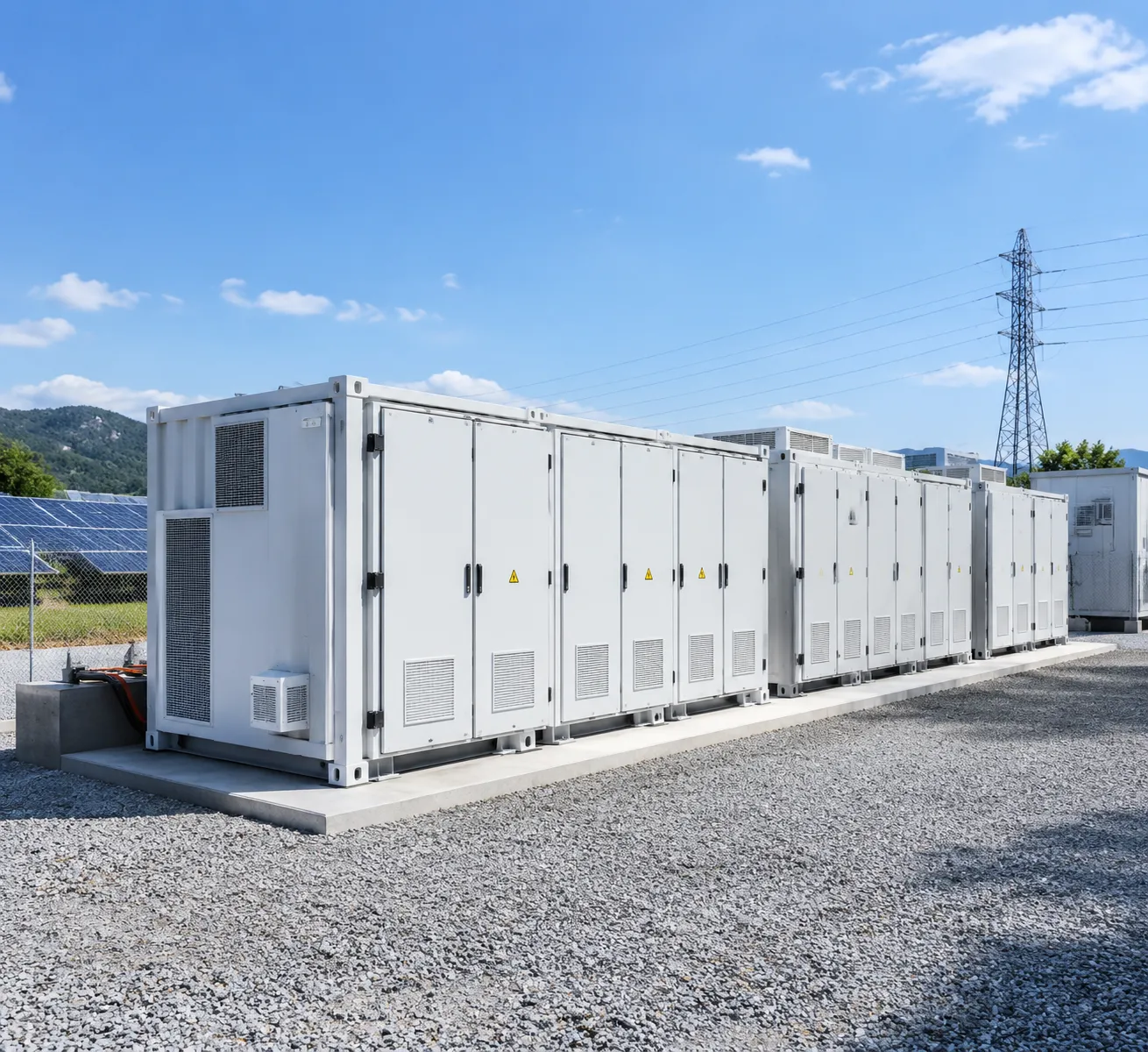
20ft Containerized Turnkey Energy Storage Solutions (1.5 MWh – 3.72 MWh)
Our 20ft container platform balances transportability and energy density for distributed generation, microgrids, and medium-voltage substation tie-ins. For projects requiring maximum density in a standardized shipping envelope, our 20ft battery energy storage system 5MWh liquid-cooled platform maximizes MWh-per-acre metrics while maintaining safe cell-to-cell thermal separation.
Target Applications: Industrial microgrids, renewable firming, peak shaving, and energy arbitrage.
Architecture: Pre-engineered ISO container enclosure featuring plug-and-play DC disconnects, intelligent liquid cooling loops, and integrated auxiliary power supplies.
40ft High-Density Grid-Scale BESS Units (5.0 MWh – 6.0 MWh)
Built for utility-scale deployment, our 40ft platforms minimize balance-of-plant (BOP) costs and installation labor for large energy shifting projects. Alongside our ultra-dense modular blocks, platforms like our 40ft battery energy storage system container deliver high-capacity reliability for front-of-the-meter grid support.
Target Applications: Utility-scale transmission support, wholesale market arbitrage, spinning reserves, and bulk renewable curtailment capture.
Architecture: High-capacity DC containerized layout optimized for centralized multi-megawatt inverter blocks and medium-voltage step-up transformers.
Performance Metrics, RTE, and Enclosure Ratings
| Specification | Compact C&I Cabinet | 20ft Containerized BESS | 40ft Grid-Scale BESS |
|---|---|---|---|
| Rated Energy Capacity | 200 kWh – 500 kWh | 1.5 MWh – 3.72 MWh (up to 5 MWh) | 5.0 MWh – 6.0 MWh |
| Battery Chemistry | Tier-1 LFP (LiFePO4) | Tier-1 LFP (LiFePO4) | Tier-1 LFP (LiFePO4) |
| Nominal C-Rate Options | 0.5C / 1.0C | 0.25C / 0.5C / 1.0C | 0.25C / 0.5C |
| System RTE (AC-to-AC) | ≥ 88.0% | ≥ 89.5% | ≥ 90.0% |
| Thermal Management | Closed-loop Liquid / Precision Air | High-efficiency Liquid Cooling | High-efficiency Liquid Cooling |
| Enclosure Protection | IP55 / NEMA 3R | IP55 / NEMA 3R or 4X (C5 Coastal) | IP55 / NEMA 3R or 4X (C5 Coastal) |
| Operating Ambient Temp | -30°C to +55°C | -30°C to +55°C | -30°C to +55°C |
| Safety Certifications | UL 9540, UL 1973, NFPA 855 | UL 9540, UL 9540A, NFPA 855 | UL 9540, UL 9540A, NFPA 855 |
Compliance, Safety Standards, and Bankability for Turnkey BESS
Securing project financing, insurance, and local authority approvals requires strict adherence to international safety and grid codes. We engineer every turnkey battery energy storage system to meet rigorous safety certifications, fire safety codes, and grid interconnection benchmarks.
Unit and System Safety Certifications
Our battery storage architectures undergo rigorous multi-level testing to prevent thermal events and ensure electrical reliability:
- UL 9540: Full system certification covering the safety of integrated battery packs, inverters, and control software as a unified system.
- UL 9540A: Unit-level and system-level thermal runaway testing data validating that fire will not propagate between cells, modules, or adjacent enclosures. For deeper insights into thermal thresholds and cell longevity, review our LFP battery energy storage system safety and lifespan guide.
- UL 1973: Certification for stationary battery packs and energy storage modules, verifying mechanical integrity, electrical insulation, and environmental durability.
- IEC 62619 & IEC 62477-1: International safety standards governing secondary lithium cells and power conversion electronics for industrial installations.
Fire Prevention and Enclosure Safety Standards
Permitting a containerized energy storage project requires end-to-end fire safety integration. We construct our factory-assembled enclosures to meet all major fire safety codes:
- NFPA 855: Standard for the Installation of Stationary Energy Storage Systems, addressing setback distances, maximum allowable quantities (MAQ), and spatial separation.
- NFPA 68 & NFPA 69: Integrated deflagration venting panels and active combustible gas extraction to prevent hazardous pressure build-ups.
- NFPA 72 & Clean Agent Suppression: Early-detection multi-sensor arrays (smoke, heat, off-gas) coupled with targeted aerosol or Novec 1230 suppression systems.
| Standard / Code | Scope & Focus | Project Benefit |
|---|---|---|
| UL 9540 / 9540A | System safety & thermal runaway testing | Fast-tracks AHJ permitting and reduces insurance premiums |
| NFPA 855 | Installation spacing & fire mitigation | Eliminates zoning bottlenecks and ensures site safety compliance |
| IEEE 1547-2018 | Distributed energy resource (DER) grid interface | Assures utility interconnection approval without redesigns |
| UL 1741 SB / SA | Smart inverter grid support functions | Supports advanced grid-forming and voltage/frequency ride-through |
Grid Interconnection Compliance
Connecting a turnkey energy storage solution to the utility network demands full compliance with evolving grid interconnection rules:
- IEEE 1547-2018: Standard for interconnection and interoperability of distributed energy resources, ensuring real-time response to voltage and frequency fluctuations.
- UL 1741 SB / SA: Advanced inverter testing for smart grid support, including autonomous power curtailment, reactive power control, and dynamic grid support during system disturbances.
- Grid Code Compliance (GCC): Factory-validated controls ready for local grid code compliance across transmission and distribution interfaces worldwide.
Frequently Asked Questions (FAQs)
What components make a battery storage system fully turnkey?
A complete turnkey battery energy storage system delivers all essential hardware, controls, and safety systems pre-assembled inside a certified enclosure. Our scope covers:
DC Battery Blocks: Tier-1 LFP cell racks with multi-level Battery Management Systems (BMS).
Power Conversion System (PCS): Bidirectional inverters engineered for grid-forming and grid-following operations.
Thermal & Fire Safety: Closed-loop liquid cooling, aerosol/clean-agent suppression, gas detection, and deflagration venting.
Intelligent Controls: Integrated Energy Management System (EMS) and edge SCADA for autonomous dispatch.
Full Project Delivery: Factory Acceptance Testing (FAT), civil-electrical site landing, utility interconnection, and commissioning. Partnering with an experienced BESS company for utility-scale turnkey storage systems eliminates multi-vendor coordination risks.
How does liquid cooling lower lifecycle costs compared to air cooling?
Liquid-cooled architectures manage thermal dissipation at the cell level far more effectively than forced-air systems:
Minimized Cell Degradation: Maintains uniform cell temperatures within a tight delta (under 3°C), preventing localized hot spots and extending asset lifespan.
Reduced Parasitic Load: Liquid cooling systems draw up to 30% less auxiliary power, directly improving round-trip efficiency (RTE).
Smaller Footprint: High thermal efficiency allows for tighter cell packaging, saving up to 40% in site footprint and civil balance-of-plant costs. Explore our types of battery energy storage systems comparison guide to evaluate thermal management across different enclosure designs.
How is capacity augmentation executed over a 15 to 20-year project lifespan?
To account for standard electrochemical degradation without excessive upfront overbuilding, we plan augmentation directly into the initial electrical architecture:
Pre-Engineered Expansion Bays: System layouts reserve civil footprint, busbar connections, and inverter capacity for future rack additions.
String-Level DC/DC Isolation: Prevents cross-charging and circulating currents between new, high-capacity battery blocks and degraded original blocks.
Predictable LTSA Scheduling: We schedule module additions around years 6 to 8 to maintain guaranteed energy capacity while flattening your Levelized Cost of Storage (LCOS).
What are the standard delivery lead times and on-site commissioning schedules?
Because our systems are fully integrated and tested prior to shipment, we significantly compress field timelines:
Engineering, Sourcing, & FAT: 16 to 24 weeks based on project size and transformer requirements.
Transit & Site Placement: 2 to 4 weeks for crane landing onto pre-cast concrete pads.
SAT & Grid Energization: 2 to 3 weeks for on-site acceptance testing, protection verification, and utility witness testing—cutting field installation time by over 50% compared to site-built alternatives.